Sterling Sharpe Belongs In The Hall of Fame

As those in and Packerland celebrate the team’s 13th championship in NFL history, the mind travels back to when Green Bay was the desolate outpost that few players wanted to go to.  The team had a celebrated past yet the years after Vince Lombardi’s team won Super Bowl II were lean with very few postseason appearances.

Everyone points to the hiring of GM Ron Wolf  or Mike Holmgren, or Reggie White’s free agent signing in 1993, or even Brett Favre being picked up in 1992 as the first step in the team returning to prominence.  Each were significant but weren’t the first step.  That distinction belongs to former All Pro receiver Sterling Sharpe who became the preeminent receiver of his time and was outplaying the legendary Jerry Rice at the time of his forced retirement because of a neck injury.

The Packers selected Sharpe in the ’88 NFL Draft and he played for 7 seasons. During that time he would go on to produce….nope not going to tell the story in that fashion. This was Terrell Owens before Terrell Owens meaning he would run over cornerbacks who tried to jam him or tackle him on slants.  I can still see the touchdown in ’92 when he drug CB Darryl Henley and half the LA Rams secondary into the endzone from the 5 yard line, knocking out Safety Pat Terrell in the process.

In an era where receivers were sleek, run and shoot quick guys like Earnest Givins, Drew Hill, & Andre Rison as the preferred types.  Michael Irvin and Sterling Sharpe were breaking in a new mold later carried on by Detroit’s Herman Moore and Minnesota’s Cris Carter.  The muscular intermediate receiver who were physical with cornerbacks then would slip by them for 40 yard gains later in the game once they beat up on them a bit.

Sterling started rather slow with a 55 catch rookie season where he only scored 1 touchdown and vowed to improve his approach to the game.  He felt the media was harsh in how they treated him and nearly went the rest of his career without granting an interview…well almost.  In 1989 he burst onto the national scene with 90 receptions for 1,423 yards and 12 TDs, earning the first of his 5 Pro Bowl and All Pro appearances.

He teamed with Don Majkowski to power The Pack to a stellar record of 10-6 which included a late season win over the World Champion 49ers in Candlestick.  He became the focal point of Head Coach Lindy Infante’s offense and gave the Packers a legitimate star to help attract Plan B free agents. Sharpe went on to Pro Bowl and All Pro status in the 1990, 1992-1994 seasons.

The greatness of this talent was showcased in 1992, he had to learn a new offense from a new coach in Mike Holmgren and during the third game learn to play with first time starter Brett Favre. How did he perform?

Well he went on to break Art Monk’s all time NFL record of 106 catches in a season, going for 108.  He totaled a career high 1,461 yards and scored another 13 TDs.  Sharpe won the triple crown as he led the NFL in receptions, yards, and touchdowns in 1992 which is amazing considering the coach & quarterback scenario.

Think about it for a sec… Jerry Rice’s most prolific years were 1987 and 1995 where he totaled 22 TDs receiving (87) and 122 catches / 1,808 yards gained in 1995.  These were achieved with league MVPs & Super Bowl MVPs Joe Montana and Steve Young in their 8th and 5th seasons as starters respectively. So naturally he would get better in the ensuing years with a new system in place right?

In 1993, his second year in Holmgren’s system, he broke his previous All Time NFL record of 108 catches going for 112 rec., 1,274 yard and 11TDs.  He also introduced “turf toe” as an injury to the sporting world lexicon which was a dislocated large toe basically.  The painful injury not only kept him from practicing ALL YEAR, he had to wear a shoe 1 1/2 sizes larger on the foot with the injury. What would he have done had he been able to hone his pass routes in practice?

sterling-sharpe-record-glovesThe Packers went 9-7 and made the playoffs as a wild card.  They played their division rival Detroit Lions in the Silverdome and Sharpe electrified with a 5 rec., 101 yd 3TD performance.  His 3TD receptions tied the NFL All-Time Post season record which still stands.  The last of which (pictured above) was a 40 yard TD from Favre with less than a minute to play.  Not bad for his first playoff game huh? It was a day so interesting and exciting that he broke his 5 year boycott of granting interviews and spoke at the post game press conference.

The next week the Packers lost to the world champion Dallas Cowboys 27-17 yet Sharpe caught 6 passes for 128 yards and 1 TD.  He showed he was a prime time performer even in the postseason.  He had led the league in receptions in back to back years and was still improving with a young up and coming quarterback.  What more could the future hold?

Yet 1994 proved to be the last season in the NFL for Sterling Sharpe. A promising career cut short with a serious neck injury that robbed us of viewing the best receiver in the league at the time. Really? Yes really! Sharpe went out with a bang. In ’94 he amassed 94 rec. for 1,119 yards and an astounding 18 touchdowns.

The 18 receiving TDs were the second most in NFL history (at that time) tying the old all time record with Mark Clayton (who did it in ’84) and who ironically was Sharpe’s teammate in ’93.  Along the way there was a much ballyhooed showdown on Thanksgiving in Dallas to show the nation Sharpe and the Packers had arrived.  They lost 42-31, but again Sharpe dazzled the nation with a 9 rec. 122 yards and 4 TDs on the league’s #1 defense,  totally outperforming counterpart Michael Irvin.  Both players, along with Andre Rison, battled Jerry Rice in the stat sheets for league supremacy at receiver in the early 90’s.  However Sharpe missed the playoff rematch and retired after the season.

Sterling Sharpe left the game after 7 super productive seasons with 595 rec. for 8,134 yards and 65 TDs which doesn’t truly paint the full picture. In his last 3 years he caught 314 passes for 3,854 yards and 42 TDs averaging 104 receptions per season. At that rate over 3 more seasons he would have crossed 900 catches for almost 12,000 yards and 107 TDs which he easily would have done.  How do we know this? Brett Favre’s next three years in ’95,’96, and ’97, not only was he league MVP all 3 years, he threw for 38, 39 and 35TDs in those seasons.

Those three seasons the Packers lost the NFC Championshp Game in ’95 yet made the Super Bowl the next two years. It’s a shame that the team he led back to NFL prominence would go on to be league champion without him.  Ironically his brother Shannon gave him his first Super Bowl ring when the Broncos defeated the Packers in Super Bowl XXXII, citing Sterling as his greatest male influence.

How do you gauge impact? Well you need to ask yourself a few questions.  In 1992 Mike Holmgren was the hottest coaching commodity when the Vikings, Steelers, and Packers were vying for his services.  Seeing that Holmgren wanted to install his “west coast offense”, don’t you think Green Bay won out by having Sterling Sharpe as his Jerry Rice already in tow to play his “Z” receiver?  What happens if the star receiver wasn’t on hand to aid a nervous young Brett Favre, allowing him to gain confidence?

If he would have struggled, Don Majkowski gets his job back 7 weeks later and we may never have known of Brett… think about it. Favre only became the NFL’s all time quarterback in ….well everything. In fact it was Sharpe who got Favre rolling in his first start against Pittsburgh absolutely scorching Rod Woodson on a stutter-go 76 yard touchdown to settle Favre down.  Without Sterling Sharpe, NFL history and certainly Green Bay Packers history would have been altered drastically.

20170922_131551

This was a talent that blocked in the running game and didn’t dance in the endzone when he did score.  He didn’t jump up signaling first down when he made a catch.  He was the absolute antithesis of the “me” receiver that has overtaken the league over the last 20 years.  After Charlie Hennigan in 1961 ( 101 rec. /AFL’s Houston Oilers), Art Monk in ’84 (106 rec. / Washington Redskins), and ’90 Jerry Rice (100 rec. / San Fran 49ers) it was Sharpe who made the 100 catch season a staple in league totals, going for 108 receptions then 112 the following year.

The fact that he didn’t self promote on every television camera he saw yet isn’t in the Hall of Fame, may give way to why we see receivers that do.  Gale Sayers isn’t the only great player to have his career cut short by injury so Sharpe needs to be more than considered.  His play and on field conduct was a celebration of how and why football is played and loved by millions.

Please lend your thoughts as well by writing in to the Pro Football Hall of Fame to the address below. Please be respectful and positively lend your voice:

Please write & nominate #84
Send letters to:
Pro Football Hall of Fame
Attention: Senior Selection Committee
2121 George Halas Dr NW, Canton, 
OH 44708

Thanks for reading and please share the article.

corey harris

Kevin Greene Belongs In The Hall of Fame: War Damn Eagle – HOF Edition

Originally Published 3, March 2011 w/ Postscript 10, August 2016 

There are players that come along and break the mold and there are those that totally destroy it.  Enter Kevin Greene, one of my personal favorite players and one of the reason I love football (all sports) in the first place.  He broke molds, stereotypes, changed perceptions as much as any player over the last 25 years.  What am I talking about? Do you realize that of all the outside linebackers, the player with the most sacks in a career is Kevin Greene?  Do you realize that Kevin Greene had double digit sacks for FOUR different pro football teams? Yet I digress…

As the 1980s beckoned, the 3-4 defense became the choice of many teams as the best way to attack NFL offenses.  All that changed with the 1985 Chicago Bears march to the Super Bowl. As teams started to revert back to the 4-3 defense as a staple, a lessor known talent started to lay his foundation out west with the Los Angeles Rams in 1986.

Kevin Greene started to rush as an outside linebacker in 1986 and recorded 7 sacks that year. Yet he didn’t gain notoriety until 1988 when he bested Lawrence Taylor with 16 1/2 sacks to 15 1/2 for the NFC lead at linebacker.  Whereas the majority of the modern age athletic linebackers were black, Kevin Greene was a white defensive player who broke that mold and with his crazy “War Eagle” Auburn attitude he was a great pass rusher from that season on.  A player that other Rams looked to on game day to lead them on and off the field.

Kevin in 1994 during his Blitzburgh days.

However by the time we move to 1993, very few teams employed the 3-4 defense. Then the Steelers went looking for a linebacker to match Greg Lloyd that would be more effective than Jerrol Williams.  Kevin Greene signed, and Pittsburgh became Blitzburgh.

The Steelers had two outstanding linebackers to crash the pocket.    The last bastion of 3-4 defense at the time and Greene was the impetus of a chaotic defense.  Who should blitz? Who should drop? Dick Lebeau, Dom Capers, and Bill Cowher tinkered with different zone blitzing schemes that became the scourge of the league.  He helped the ’94 and ’95 teams to the AFC Championship and Super Bowl XXX respectively.  During his 3 years in Pittsburgh he recorded 12.5 sacks in ’93,  14 sacks in ’94, and 9 sacks in ’95.  It was Kevin Greene’s arrival that made the Steelers defense lethal.

Even after outplaying the Cowboys in Super Bowl XXX and poised to return to the title game from a personnel standpoint, the Steelers let Greene go for a younger Jason Gildon. He rejoined Dom Capers who moved on to become head coach of the expansion Carolina Panthers. There he tag teamed with Lamar Lathon, formerly of the Houston Oilers, to form a 1-2 linebacker punch equal to that of Blitzbugh.

In his single season in San Fran, Greene helped the ‘Niners to the 1997 NFC Championship against Green Bay.

He recorded his second highest career sack total, at the time, with 14.5 in Carolina. He led the league with Lathon coming in second in sacks with 13.5.  Again he was the impetus of a veteran laden defense that dethroned the champion Dallas Cowboys in a divisional playoff and made it to the 1996 NFC Championship Game where they lost to Green Bay.  The Carolina Panthers made it to the NFC Championship Game in only their second season.  Wow.

After a falling out with Carolina brass following that 1996 season, for which owner Jerry Richardson later apologized, he signed a 1 year deal in San Francisco where he was a pass rushing specialist and only started four games.  Yet amazingly he still compiled 10.5 sacks and helped the 49ers to the 1997 NFC Championship game where they fell to the Packers 23-10.  See a pattern here?  After the apology from Richardson, Greene re-signed with Carolina and played on for two more years for them recording 15 sacks in 1998 and 12 in 1999.

Kevin Greene was a street fighter tough player who brought that attitude to any team he played for.  He was a blood and guts player that teamed with Greg Lloyd and Lamar Lathon, each had their best years across from Greene.

What was the most puzzling aspect of Kevin Greene’s career was how teams kept thinking they’d replace him even though he was super productive and I wonder would he have moved around so much had he been a black outside linebacker.  I don’t think he would have.  You can’t tell me race had nothing to do with it either.  He was athletic, strong, tenacious and for the life of me can’t figure why teams  thought they’d replace him.  Do you realize that for 4 straight years, Kevin Greene was a defensive stalwart on 3 different teams that made it to the conference championship game?  Twice is a coincidence, four is a pattern.  He was a winner.

Greene, making his presence felt early in the 1994 AFC Championship Game.

How do you gauge impact?  The most sacks in NFL history for a linebacker with 160 and third all time behind Reggie White and Bruce Smith.  He was a 5 time Pro Bowl participant and made the All Pro team twice. He led the league in sacks twice during his career. If that’s not enough… Add the fact Greg Lloyd and Lamar Lathon’s best sack totals of their careers came when they teamed with Greene.  Lloyd had 10 sacks in 1994 and the aforementioned Lathon’s 1996 total of 13.5 in Carolina.

Each team he left had a defensive dropoff in production and wins.  The ’96 Steelers barely made the playoffs and were run out of town in New England when they got there, thanks to Curtis Martin’s 166 yards rushing, losing 28-3.  The 97 & 2000 Panthers didn’t make the playoffs. The 98 49ers were scored upon heavily even though they made it to the divisional round.  Even then they needed Steve Young’s miracle throw to T.O. to beat the Packers in the Wildcard Game to get there.

So if the greatest defensive player in NFL history is Lawrence Taylor, rightfully so, who finished with 132 sacks in his career, where does that put Kevin Greene and his 160?? Happened in the same era, so that can’t be argued.  Quite simply he belongs.

For induction into the Pro Football Hall of Fame, I present to you, Kevin Greene.

EPILOGUE:  I am getting the greatest kick out of watching the growth of Clay Matthews III.  Its like watching some weird Frankenstein thats part Clay Matthews the father (Browns) and Kevin Greene.  The style of play and to watch them interact.

I was fortunate enough to be on the Ravens sideline pregame and front row seats behind the Baltimore Ravens bench when they played the Arizona Cardinals in 2003. I watched how Mike Singletary and Ray Lewis interacted and see much the same in Greene and Matthews.  When the television mic caught Greene conveying to Matthews during the 4th quarter of Super Bowl XLV that it was time for him to put his imprint on the game.  Then to watch him force the Mendenhall fumble two plays later gave me goosebumps.  To watch him so in tune with his protege’ is cool and can’t wait to watch their encore.

Greene and protege’ Clay Matthews III

Postscript August 10, 2016: Fast forward 5 years and here we are a couple days removed from Kevin’s enshrinement into The Pro Football Hall of Fame. I had the great opportunity to be there at both the Gold Jacket Ceremony and The Enshrinement as his guest. For the small role I had in advocating his candidacy may have been the sole reason for Taylor Blitz Times in the first place. It was an honor to do it and I am grateful to Kevin and his wife Tara for inviting me.

kev.ticketHowever they set a football fanatic loose on the unsuspecting city of Canton. I had the chance to meet with former teammates and coaches that have known him over his football life. His coaches from high school all the way through to the NFL. I jumped in and made sure to get down into where the fans were and wound up becoming the 1st person to pay for his authenticated by the Pro Football Hall of Fame autograph.

chancellor.kevTo watch him receive his Gold Jacket was an emotional moment as a big time fan. To hear his impassioned speech gave credence to all that I knew and heard over the last few days from his Auburn, Rams, and Steelers’ teammates, his father at the airport with Coach Vermeil, his high school freshman coach Nick Petrillo, to meeting Lamar Lathon at the after party who was recalling this very article with Thurman Thomas.

It was great to see Kevin take his rightful place and become one of the giants of the game and one of it’s great ambassadors. It’s been an unbelievable 5 year ride as you’ve taken your place as one of pro football’s immortals. Congratulations Pro Football Hall of Famer Kevin Greene!!

As for that ticket… he signed a white Steelers #91 Greene jersey. The whereabouts of the ticket?? I gave it to Kevin who put it in his Hall of Fame Gold Jacket interior pocket… Mission accomplished.

Thanks for reading and please share the article.

kg.jersey3

Robert Brazile Should Be in The Hall of Fame – HOF Edition

Dr. DoomOriginally Published 2, March 2011 w/ Postscript 21, August 2018 

There are many former NFL players swept into the dustbin of history who aren’t given their due. There are those that are victims of where they play as much as who they lost to that defined how they are remembered historically by the sporting press.

Enter Robert Brazille.  During the late 1970s the Houston Oilers were overshadowed by the perennial champion Pittsburgh Steelers and the players that comprised those teams that bested them in the ’78 and ’79 AFC Championship games.

Whereas the Pittsburgh Steelers had one of the greatest strong side outside linebackers in Jack Ham in a 4-3 defense, the Houston Oilers fielded the epitome of the weakside linebacker in Robert Brazile for the 3-4 defense.  Yet we must go back to NFL rule changes earlier in the decade that necessitated changes that had repercussions for years to come.

The 1974 NFL season saw several rule changes, kickoffs were moved back to the 35 yard line, goalposts were moved to the back of the end zone and the hash marks were narrowed on the field.  This brought the necessity for more speed to cover additional field at outside linebacker, where a new type of player was needed.  Enter the thought process of deciding if it was best to go after the passer or cover the flank from the outside linebacker position.

Several teams adopted the “53 defense” that the perennial champion  Miami Dolphins instituted part time which saw DT Bill Heinz replaced with LB Bob Matheson, who wore #53, and could rush the passer as well as drop back into coverage. This change from 3 linebackers to 4 linebackers clogged the underneath passing routes.  Many teams that were desperate for a winner went for this new tactical defensive adaptation of the old’50’s  “Oklahoma” Bud Wilkinson defense full time.  The 3-4 was just the old “Wilkinson 5-2” which had the two ends take their hand off the ground and become trackers.

Robert Brazile was the first truly great outside linebacker that was based out of the 3-4 alignment and was the start of a new breed of linebacker.  He was the 1975 NFL Defensive Rookie of the Year and broke the mold for what was expected from the outside linebacker position. He took home 5 defensive and rookie of the year honors. Before him, the Jack Ham 6’1 215 lbs outside LB, was the prototypical build, Brazile was the breaking of that mold weighing in at 6 ft 3 inches and 235 lbs. More like Bobby Bell and David Robinson from the 1960s.

He was strong enough to take on offensive tackles and tight ends at the point of attack, speed to chase down ball carriers from behind and power to rush the passer.  Brazile was the only player to make All-Pro from 1976-1980 at any position and was the player that the late George Young envisioned when he drafted North Carolina’s Lawrence Taylor.

This talent, who was a collegiate teammate of Walter Payton, played at a time where sacks weren’t recorded as a statistic. It wasn’t until 1982 when sacks became official stats. Had this happened earlier, Brazile could have gained more acclaim as the best outside linebacker of his era.  In fact do you realize Robert Brazile is a member of the all decade team of the 1970s as voted by the Pro Football Hall of Fame?? In fact he’s on their 2nd all decade team right next to Jack Lambert who is inducted, and remains the only linebacker within that group, not elected to the Pro Football Hall of Fame. An injustice that needs to be corrected.

Again Robert Brazile was the prototype to the heavier more athletic linebacker, bred to cover a wider field circa 1974 to the present, that played with an intensity that Lawrence Taylor,  Andre Tippett, Hugh Green, Rickey Jackson, and E.J. Junior carried into 1980’s stardom.  Yet that notoriety started because Lawrence Taylor landed in New York and the sporting press lauded him as the greatest defensive player ever.  Rightfully so… If that’s the case, what do you call or gauge the 7 time Pro Bowl member of the All Decade team of the 70’s, 5 consecutive year All Pro linebacker selection he replaced and was patterned after??
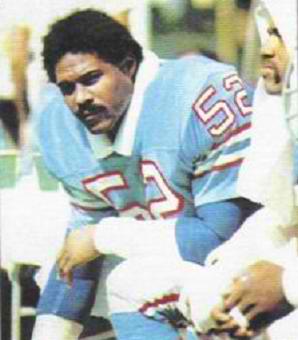
Brazile,Robert4The biggest difference is the Oilers didn’t realize what they had and should have sent him crashing off the corner more. He should have been blitzing 40 – 50% of the time. Even though statistics on sacks weren’t kept until 1982, he finished that year with 6.5 sacks when the strike shortened the year to 9 games. It was the last of his 7 straight trips to Hawaii.

Robert “Dr. Doom” Brazile, an all time great that should not be swept into the dustbin of history because he played in Houston and not Dallas.  The fact that the sporting press has failed to stand up for a great player who didn’t play for a great team or self promoted gives way to why we see those players who do.

Understand this, the next time you see Clay Matthews Jr., James Harrison, LaMarr Woodley blitz off the corner from a 3-4 linebacker spot, you’re watching what started with Robert “Dr. Doom” Brazile in 1975 and not Lawrence Taylor and 1981.  For the Hall of Fame, I present Robert Brazile… an all time classic.

Postscript August 21, 2018: Just a few weeks removed from a glorious trip to Canton. He was presented by his father and Brazile let us know how he had lost the love of football and now the game was showing him it loved him back.
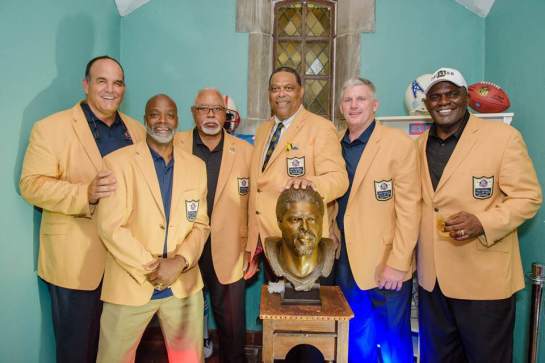
brazile.partyIt was great to hear Lawrence Taylor share the phrase “He was LT before LT” …now where had we heard that before?? Even Black College Football Hall of Fame LB Thomas Henderson was in the house for Brazile’s induction and The Chancellor got to catch up to him.
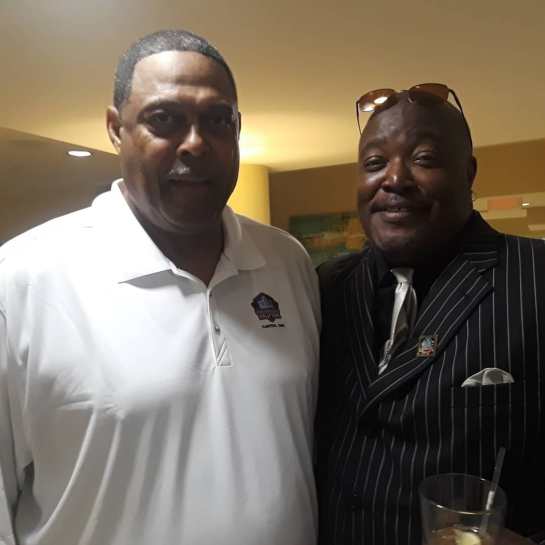
brazile.chancellorIts an honor for me that Brazile was the very 1st player written about in this series of all players who belonged in Canton who had yet to make it. Keep in mind when Brazile went into The Gridiron Greats Hall of Fame in 2016 the words of this article before this postscript were read to introduce him on that June night. It was great to catch up to him late in the evening after The Gold Jacket Dinner at the hotel, right as he was leaving the stage after the ceremony, and again at the airport as we were all leaving Canton.
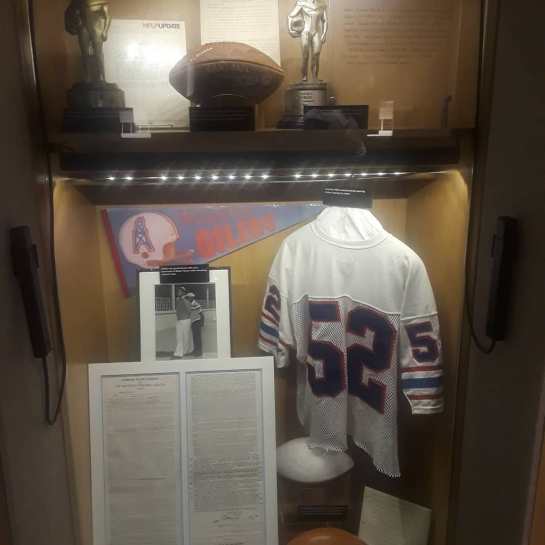
brazile.lockerCongratulations on your induction and I told you I’d be there. You’re forever in the Pro Football Hall of Fame now.

Thanks for reading and please share the article!

Deion Sanders Makes Pro Football Hall of Fame

Deion Sanders Makes the Hall of Fame

Judging a book by its cover usually gets you in trouble.  There are so many players who have press clippings before they have done anything and I thought here was another one when I first heard of Deion Sanders.  He was still at Florida State and was “Neon”, “Prime Time”, etc…

Now being a Miami Hurricane fan I shouldn’t be turned off by the flash he displayed on and off the field yet I was.  I didn’t think the game was as important to him as being a winner.  That was my initial thought of Deion.  The comparisons to Bo Jackson for playing both baseball and football were not accurate.  Bo was hit on every play being a runner compared to a cornerback who can go a whole game without being hit.  So went my opinion.

I remembered his first game in 1989, the first time he got on the field after being shuttled in from his baseball sojourn and took a punt back 68 yards for a TD against the Rams.  Now you have to give credit where credit was due, that was pretty big for one that hadn’t practiced or even got used to performing in those pads.  He would have flashes and I started to notice how great he played against great players.  He was the first one that “wanted” to line up against Jerry Rice in his prime.

In 1990 Rice scored 5TDs against Atlanta CB Charles Dimry in a game and Deion vowed that wouldn’t happen to him.  This started a series beginning in 1991 where Jerry Rice would battle tooth and nail with Sanders.  Deion shut Rice down in both games in 1991, which led to Atlanta wresting the NFC West division title from San Francisco that year.  You had to notice that Sanders was the spirit of that team and I started to become a fan. Yet this paled in comparison to the performance that turned me around completely.

No, I’m not talking of his ’94 season where he was NFL Defensive Player of the Year I’m talking about the best team transforming performance ever.  It was 1993 and Deion was still playing baseball and Jerry Glanville’s Atlanta Falcons were spiritless.  They had no fight and were 0-6 without him.  They were in the midst of being blown out on Monday Night Football by the Pittsburgh Steelers when the announcers turned their narration to things other than the game in front of them.  How could they turn their season around?  Would Glanville be on the chopping block?  What would happen with Deion Sanders coming back?  It was expressed his impact would be minimal being a cornerback to which I agreed.

Just like a little brother who perks up playing sports when he discovers his big brother and dad are watching, Atlanta completely changed their temperament with his arrival.  He came in and brought a moxie that had been missing.  He was smothering Lawrence Dawsey of the Tampa Bay Buccaneers and a huge fight broke out after a punt return where Deion was hit late. You saw the fight and the bench cleared to protect their best player and from that point on, the team that had been getting laughed at galvanized behind his brazen spirit.

A team that was being laughed out of their own stadium on a Monday night in October was playing the most spirited football this side of Buddy Ryan’s 46 defense led Houston Oilers and finished 6-4 over the final 10 games. One of those losses came to that Oiler team that finished with 11 straight wins.  Pundits and everyone noticed he was more than a shut down corner.  He had to be a great locker room teammate to pull that off.  That fight with Dawsey in a game that meant absolutely nothing showed that the game meant something to Sanders.  It was the year he garnered respect as a football player and galvanizing force as a teammate.

Later that year after his Pro Bowl selection, the media descended on Atlanta for Super Bowl XXVIII for Buffalo v. Dallas.  He enjoyed a celebrity that was borne of the respect he showed in turning around the Falcons that season. Folks wanted to know who he thought would win the game as much as be entertained by his personality.  He was the defacto master of ceremonies and everyone from Inside the NFL, ESPN, to NBC had specials with him talking football and showcasing great spots in Atlanta.

On the field before the game NBC asked a panel of current players about the Super Bowl.  There was speculation on would he return or not.  Deion elaborated “Here is the Super Bowl in Atlanta and I’m watching it. I want to play in one.”  You saw in his face that he meant it and felt it on live camera with the Super Bowl being minutes away.  He wanted to be recognized as a winner and not just the flashy corner / return man and he wouldn’t be back in Atlanta.  No season turned around the perception of Deion Sanders as a football player like 1993.

No season cemented his legacy like 1994.

The baseball strike relegated Deion to being slightly bored and needing something to do.  He had been a Cincinnati Red yet was being courted by New Orleans Saints and such as a free agent in football.  The Saints had the best free agent offer on the table for Sander’s services with a 4 year, $17 million contract.  He was going to be a Saint right? Wrong!  Remember that on field admission of wanting to be a champion before Super Bowl XXVIII in Atlanta? Well Carmen Policy convinced him to join the San Francisco 49ers for 1 year with a $1.1 million contract, the last $170,000 of which was Jerry Rice sacrificing his own money so they would sign him under the cap. What showed that the championship was more important than to sacrifice $15.8 million for a one year chance at the brass ring? That was a tremendous risk…..so what happened?

Deion joins the team in week 3 and displayed the cover corner prowess that allowed him to intercept 6 passes, returning 3 for touchdowns.  He set the records for return yards (303) in an individual season; two 90 yard TD interception returns in a season…and ran away with NFL Defensive Player of the Year Award.  His complete smothering of Alvin Harper, then the NFL all time yardage per reception leader in the playoffs actually ruined Harper’s career.  Or at least the descent of Harper’s career can be traced to the 1994 NFC Championship Game and the first few series. Deion became a Super Bowl champion that year which cemented his legacy and he didn’t have to apologize for anything the rest of his career.

He subsequently moved on to sign a 5 year $35 million dollar contract with the Dallas Cowboys where he won another Super Bowl and had stints with the Washington Redskins and the Baltimore Ravens to help influence a slew of young players with his will, verve, and spirit.  He is a Hall of Famer and is recognized among the greatest cornerbacks in the history of football.  He was an All Time great and earned his way to the Hall of Fame on the field.  Cornerbacks still emulate him yet can’t turn an interception into instant offense like he could.  He was big and his hand-eye coordination stymied not only the great Jerry Rice, Michael Irvin, and later Andre Rison.  Sorry Sterling Sharpe used to get him….yet I digress.  He finished with 53 interceptions, had 19 combined return touchdowns and 1,331 yards in returns.  Just an electrifying performer.  An all time great?  Absolutely!

Deion Sanders, one of the all time great cornerbacks and now:  Pro Football Hall of Famer!!  Congrats on your selection.