This was the bauble the Vikings won making it to Super Bowl VIII. Once there they lost to Miami 24-7 yet polished off Dallas 27-10 in the NFC Championship Game. It was the first of 3 in a 4 year run after drafting Chuck Foreman (The U) and acquiring Fran Tarkenton in a trade with the Giants.
This was the Purple People Eaters at their best. They threatened to have an undefeated season until a late season upset at the hands of the Atlanta Falcons on a Monday night. The Vikings were 9-0 and the last unbeaten team. Although they finished 12-2, Pete Rozelle’s schedule makers were trying to negate their cold weather home field advantage. They played 4 of their last 5 on the road where their 2 losses came. They were very close to going undefeated had they a more fair schedule.
Could this have been backlash against Bud Grant for saying Don Shula had an unfair advantage being on the NFL competition committee??
Chuck Foreman was rookie of the year with 1,363 total yards from scrimmage and 15 TDs. John Gilliam was a tremendous deep threat with 42 receptions, 907 yards and 8 touchdowns. The play action was set up by the 6th best rushing attack that ran for 2,275 yards in 1973. Aside from Foreman, Oscar Reed (401 yds), Ed Marinaro (302 yds of 80’s tvHill Street Blues fame), Dave Osborn (216 yds), Bill Brown (206 yds), and even Fran Tarkenton pitched in with (202 yds) and everyone had a better than 4.0 avg per rush.
Bud Grant’s ball control offense rested the NFC’s sixth best defense. Led by Carl Eller, Jim Marshall, Alan Page (NFL MVP in ’71), and Gary Larsen, they were still the best front four in football and were in the midst of a division dominance that ruled the NFC Central for the better part of 8 years.
They came up short in Rice Stadium vs the Dolphins but with their offense intact they would have a few more chances. Everyone was still in their prime Carl Eller, Jim Marshall, and Chuck Foreman should ALL be in the Hall!!
The NFL’s first dynasty after Vince Lombardi’s Packers was Don Shula’s Miami Dolphins. The only dynasty we never got to see reach its conclusion on the field. After compiling a 32-2 record including two Super Bowls, RBs Larry Csonka, Jim Kiick, and WR Paul Warfield signed contracts with the rogue WFL. It brought the end to an era where Shula’s ground game and “No Name Defense” ruled the NFL.
The most dominant team of 1972 & 1973 would be broken up losing two Hall of Famers in Csonka and Warfield. However their WFL contracts wouldn’t take effect until 1975 meaning the team would be intact for one final season.
The heartbeat of the Dolphin dynasty was its ground game. In the perfect season of ’72, Larry Csonka and Mercury Morris became the first backfield tandem to each rush for 1,000 yards in the same season. They nearly repeated that feat in ’73 when Morris rushed for 954 to Csonka’s 1,003.
With the team being breaking up an inevitability, Miami had a threepeat in their sight in ’74. After an 11-3 record there was a feeling the Dolphins were vulnerable. Several defensive starters were out due to injury. Six of their wins were by 7 points or less. Where in ’73, all 12 wins were by more than a touchdown. The wear and tear of upholding that championship mantle had brought them back to the pack.
The divisional playoff game would be in Oakland against the revenge minded Raiders. Although Miami defeated them in the AFC Championship Game at home in ’73, the Raiders beat them in the regular season in Berkeley. That win halted the Dolphins 18 game winning streak which was an NFL record at the time. So into the Oakland Coliseum they went…
The game became known as “The Sea of Hands” one of the most famous games in NFL history. The Dolphin dynasty came to an end with Kiick, Warfield, and Csonka jumping to the new league the following season. No one knew Don Shula would go on to be the winningest coach in NFL history. Even more surprising, he would coach through the 1995 season and would not win another Super Bowl.
For the coach on the losing end of Super Bowl III, to the coach who drove his team to the NFL’s only undefeated season, to the man that led his team to 3 of the next 5 title games, culminating with this ring. The second NFL championship ring that crowned a dynasty. Don Shula had taken his place among the greatest coaches in NFL history.
There are several definitions of a champion and fewer for what constitutes a Hall of Fame player. When asked a week or so ago what I thought a Hall of Fame player was I responded “If you were to talk about a decade or era in which a player participated and you couldn’t talk about that time frame without that person’s mention. If you can’t he’s a Hall of Famer.” Chuck Foreman was such a player.
Has there ever been a running back that was more emulated than this 1970s icon?? When you look back at Foreman’s numbers, they don’t jump out at you. However it was his immediate impact on the entire football landscape that made him important. Every NFL fan can remember his spin moves and patented lateral side step moves that left linebackers reaching for him instead of getting a full on shot. If you close your eyes right now you can picture the famous shot from Super Bowl XI against the Raiders as he spun off two defenders. He was one of the breath-taking runners of the 1970’s…and before we get into the full argument, remember he spent his years as a fullback. Yes, at fullback!
What impact are we talking about?? For starters the 1972 Minnesota Vikings were a run by committee team that only averaged 3.7 yards per rush as they gained 1,740 yards. Foreman’s insertion into the line-up as a rookie catapulted those numbers to 4.2 yards and a team total of 2,275 yards. Although he missed two games, he led the team with 801 yards while opening up the passing game being such a threat from the backfield. The Vikings went from 7-7 and fading from the promise of a Super Bowl IV appearance a few years back, to 12-2 and NFC Champions in 1973. Foreman reinvigorated the franchise.
Over the next three seasons, Foreman was as strong a force the NFL had seen when it comes to scoring production. He rushed for over 1,000 yards each season. Not only did he lead the Vikings back to the Super Bowl two more times, he set the standard for running back catching passes out of the backfield.
Did you know in 1975 he led the NFL with 73 receptions?? It was only the 2nd time a RB led the NFL and was a record at the time for catches out of the backfield. This accounted for 691 yards and 9 scores.
When you plug in his 1,070 yards on the ground with 13 trips to the endzone, Foreman accounted for an astounding 22 touchdowns. This tied the old record of 22 in a season with Gale Sayers because during the same game, OJ Simpson pushed the record to 23.
Not to be outshown Foreman scored 4TDs that afternoon while facing off against another great back. This was one of the landmark games in NFL history. Not only did OJ and Foreman (172 total yards & 4TDs) put on a show, Fran Tarkenton broke the NFL’s all time touchdown record by John Unitas throwing his 291st.
During the period 1974-1976, Foreman scored a league high 51 touchdowns. This was Chuck in his prime and before you compare his best 3 year period with any other running back’s best 3 year period remember this… Foreman had these numbers in a 14 game season, not the 16 game campaign.
Chuck Foreman – 1974-1976 : 51 touchdowns
OJ Simpson – 1973-1975 : 39 touchdowns
Franco Harris – 1975-1977 : 36 touchdowns
Jim Brown – 1963-1965: 45 touchdowns *all were 14 game seasons
Marshall Faulk – 1999-2001: 59 touchdowns *Set TD record at 26 in 2000
Emmitt Smith – 1994-1996: 62 touchdowns *Set TD record at 25 in 1995
Barry Sanders – 1989-1991: 47 touchdowns
However a closer look at his touchdown numbers reveal that his totals for ’74-’76 project to a whopping 57 scores had he maintained the same pace for a 16 game season. He measures up fairly well with these 6 Hall of Fame backs when it comes to scoring. That is the name of the game isn’t it?? It’s not just yards, its scoring, impact on the game, and winning. Even when you look at OJ Simpson’s yardage for his career it’s really a 5 year period that his work was condensed from 1972-1976.
So to talk about a players career in a condensed time frame in their prime isn’t foolish. OJ had five 1,000 yard seasons to Foreman’s three. If that was enough to make OJ NFL Films “Hero of the Decade” for the 1970s, where does that leave Foreman whose spin move was copied by fellow 70’s runners Walter Payton and Tony Dorsett?? Who also clearly outscored Simpson during their heyday.
His Vikings went to 3 Super Bowls in 4 years and only the “Hail Mary” playoff loss to Dallas kept them from going to 4 straight.
He changed the way the game was played from the running back position. It was the Vikings realizing they could free him from the logjam of the line of scrimmage by throwing it to him instead of quick traps or dives. For his career he caught 50 or more receptions in a season five times during his career. Compare that to only 2 for Lynn Swann who is in the Hall of Fame as a receiver in the same era. For his career he ran for 5,950 yards 53TDs, which doesn’t include another 3,156 yards and another 23 scores receiving. In the end, Foreman was burned out before his time.
Yet when you have a player match Gale Sayers for the second best touchdown total of 22 in a season.
Won the 1973 NFL Rookie of The Year
Made 5 straight Pro Bowls (1973-’77)
Led the NFL in TDs in both 1974 & 1975.
Led the NFL in receptions w/ a record 73 in 1975.
He immediately turned a fading Vikings team into the winningest team in the NFC over a four-year period 45-10-1 and 3 conference championships.
If it’s about making an immediate impact and being an unforgettable talent, than Chuck Foreman needs to take his place with other great backs. One trend which has gone on too long is the omission of Minnesota Vikings from the 1970s not making the Hall of Fame because of Super Bowl losses. Foreman sits within that abyss and the situation needs to be rectified. As a one of a kind talent from “The [[_]]”, his playing style was mimicked by a generation of up & coming running backs and he hasn’t been forgotten by legions of NFL fans. If that is not enough, we have to redefine the definition of a Hall of Famer.
For induction into the Pro Football Hall of Fame, I present to you: Chuck Foreman
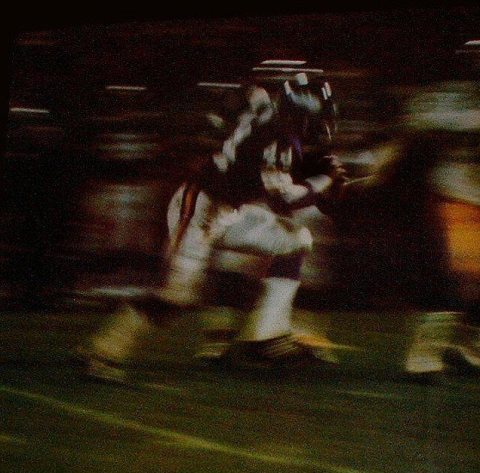
Chuck Foreman in motion. Just as we remembered him…compliments of Tony Janetto
If you want to get in touch with Chuck…and more on this talent hit him up on his Facebook page or his official shop.
Please lend your thoughts as well by writing in to the Pro Football Hall of Fame to the address below. Please be respectful and positively lend your voice:
Please write & nominate #44
Send letters to:
Pro Football Hall of Fame
Attention Senior Selection Committee
2121 George Halas Dr NW, Canton,
OH 44708

 This was the Purple People Eaters at their best. They threatened to have an undefeated season until a late season upset at the hands of the Atlanta Falcons on a Monday night. The Vikings were 9-0 and the last unbeaten team. Although they finished 12-2, Pete Rozelle’s schedule makers were trying to negate their cold weather home field advantage. They played 4 of their last 5 on the road where their 2 losses came. They were very close to going undefeated had they a more fair schedule.
 Bud Grant’s ball control offense rested the NFC’s sixth best defense. Led by Carl Eller, Jim Marshall, Alan Page (NFL MVP in ’71), and Gary Larsen, they were still the best front four in football and were in the midst of a division dominance that ruled the NFC Central for the better part of 8 years.
 They came up short in Rice Stadium vs the Dolphins but with their offense intact they would have a few more chances. Everyone was still in their prime Carl Eller, Jim Marshall, and Chuck Foreman should ALL be in the Hall!!
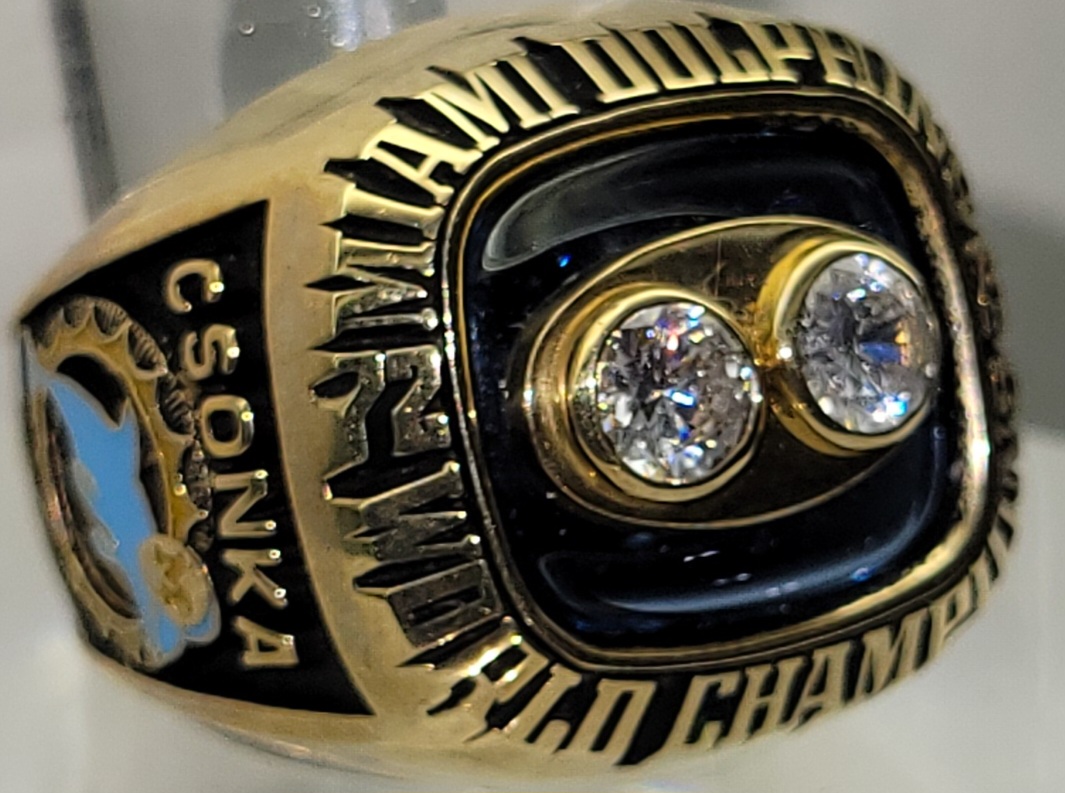 The most dominant team of 1972 & 1973 would be broken up losing two Hall of Famers in Csonka and Warfield. However their WFL contracts wouldn’t take effect until 1975 meaning the team would be intact for one final season.
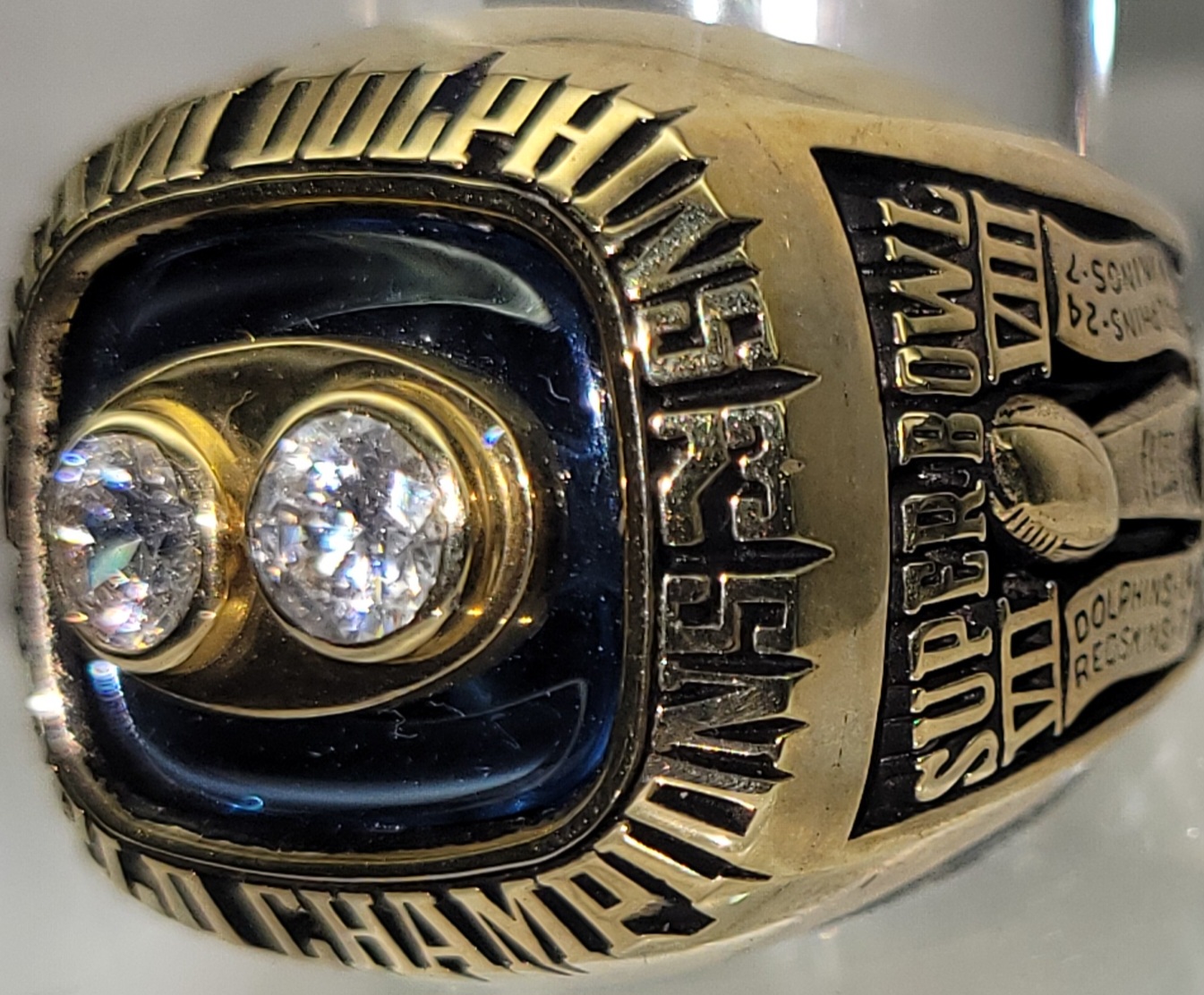 With the team being breaking up an inevitability, Miami had a threepeat in their sight in ’74. After an 11-3 record there was a feeling the Dolphins were vulnerable. Several defensive starters were out due to injury. Six of their wins were by 7 points or less. Where in ’73, all 12 wins were by more than a touchdown. The wear and tear of upholding that championship mantle had brought them back to the pack.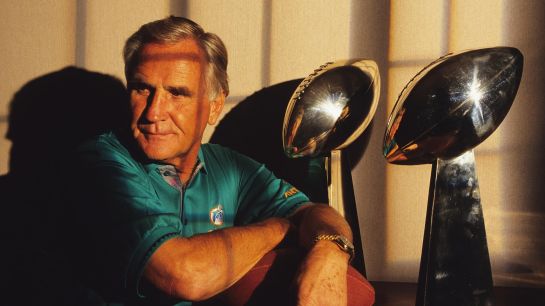

 There are several definitions of a champion and fewer for what constitutes a Hall of Fame player. When asked a week or so ago what I thought a Hall of Fame player was I responded “If you were to talk about a decade or era in which a player participated and you couldn’t talk about that time frame without that person’s mention. If you can’t he’s a Hall of Famer.” Chuck Foreman was such a player.
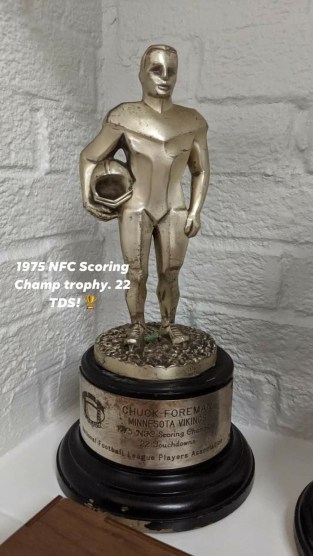 When you plug in his 1,070 yards on the ground with 13 trips to the endzone, Foreman accounted for an astounding 22 touchdowns. This tied the old record of 22 in a season with Gale Sayers because during the same game,


You must be logged in to post a comment.