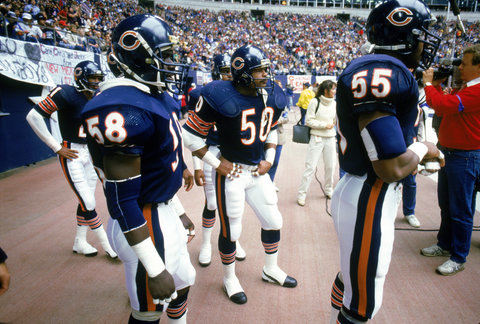
Top Ten Single Season Defenses in NFL History : #10 1986 Chicago Bears

Welcome to the second installment on the 10 greatest defenses in NFL history. We are off to a rousing start as folks are putting in their reasons for their teams and why the honorable mention units should have made the top ten list. Truth of the matter is all bias has to be removed and the great equalizers lie in the season statistics, play against strongest offenses during their year, and what precedents they set.  If one team is sitting in front of another for having set a precedent, a team with less stature or ranking cannot sit above them on the list.

So now we have to countdown to the single season defenses in NFL history starting with #10.

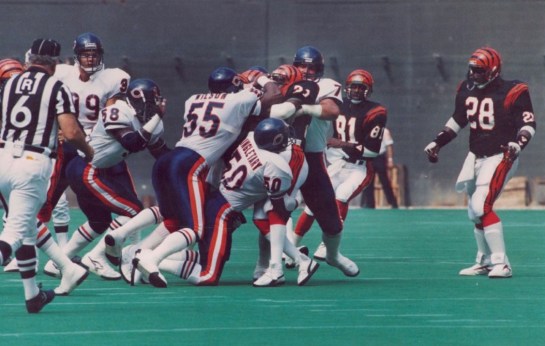
The best trio of linebackers in the game in Mike Singletary, Wilber Marshall, and Otis Wilson.

The best trio of linebackers in the game in Mike Singletary, Wilber Marshall, and Otis Wilson.

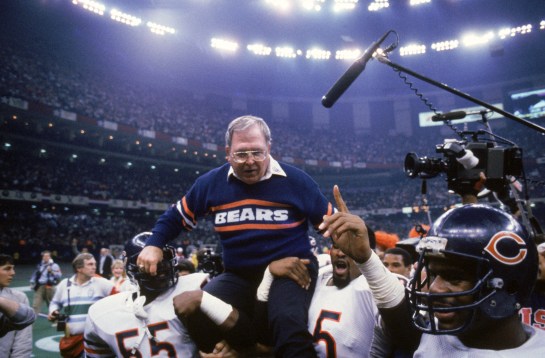
10. 1986 Chicago Bears –  A season after bludgeoning their way to the NFL title, this group was poised to repeat. If Mike Ditka would have stayed the course and not played Doug Flutie at quarterback who was on the team for four weeks, they would have. Having done so he robbed NFL fans of the greatest 2 year dynasty the NFL had ever seen. They were 15-1 in 1985 then went 14-2 which tied for the best record in the league that year. 29-3 over two seasons?? So why is this group in and the ’86 Giants and ’02 Bucs left off??

  • ’86 Bears – 187 pts allowed *NFL record / 10 of 16 opponents held to 10 or fewer points / 258.1 yds per game (1st) / 62 sacks (2nd) / 31 int. (2nd)
  • ’86 Giants- 236 pts allowed / 5 of 16 opponents held to 10 or fewer points *2 more in playoffs* / 297.3 yds per game (2nd) / 59 sacks (4th / 24 int. (tied 7th)
  • ’02 Bucs – 196 pts allowed / 9 of 16 opponents held to 10 or fewer points / 252.8 yds per game (1st) / 43 sacks (6th) / 31 int. (1st)

Furthermore in compiling these statistics the yardage difference between #1 & #2 in 1986 (258.1 to 297.3) is the second biggest difference since 1970. No way in hell you could say the Giants defense in 1986 was better than Chicago’s…no way.

In a year where two future Hall of Famers Dan Hampton (10 sacks) and Richard Dent (11.5 sacks) didn’t make the Pro Bowl, LB Wilber Marshall, DT Steve McMichael, late SS Dave Duerson, and MLB Mike Singletary did. All this before we bring up FS Gary Fencik. They were 2-1 against Pro Bowl quarterbacks. They split with the Vikings and Tommy Kramer beating him once 23-0.

Then they pasted Boomer Esiason and the NFL’s #1 offense 44-7 on the road. By the way the Bengals were 10-6 that year and the Browns were 12-4 and played for the AFC Championship. The Bears beat them also. In fact they were 4-1 on the year vs top ten offenses.

This group had to drag a Bears offense that had been handicapped by the loss of Jim McMahon through several qbs that couldn’t complete 50% of their passes. The true reason the ’86 Bears didn’t win Super Bowl XXI and the ’86 Giants did was this incident right here.

The defense drug a team with no offensive continuity to the best record in the NFL at 14-2. However since the 2 losses came within the NFC and only 1 of the Giants had, New York got homefield advantage. The Bears fell to the Redskins in the divisional round 27-13 behind 3 turnovers on their own side of the 50 in the 2nd half. Even the 10th best defense in NFL history could save them from that. As for would the ’86 Bears have beaten the ’86 Giants had they played?? The first game of 1987 had both teams healthy and the Bears, without McMahon again, won 34-19. Two of New York’s touchdowns were on defense and special teams. Couple this with the fact the Bears shut out New York in the ’85 playoffs 21-0. The Bears would have taken them as New York couldn’t score on this defense.

The Bears season in microcosm was this game against the Lions:

This defense really should be higher but we’re starting the top ten off with a bang. Thanks for reading and please share the article.

Missing Rings: 1993 Houston Oilers

Everyone can tell you when an era ends but when was its zenith?? The truly great teams burn bright for some time while winning championships. Others burn almost as bright for a long time but memory fades on those that don’t bring home Super Bowl rings. When it comes to the case of the Houston Oilers between 1987-1993, the zenith came at the end and the fall was so dramatic it killed the franchise.

Yet as we look back at the Houston Oilers of 1993, you have to stretch back a little further and remember what happened during the playoffs of 1991 and 1992.

The Oilers had become one of the most talented teams in football. They were the vanguard of the teams that ran the Run & Shoot offense. Their trigger man, Warren Moon had made it into the upper echelon of NFL quarterbacks. He had orchestrated the league’s #1 offense in 1990 and 1992. in 1991 they dropped to second in the league behind the K Gun of the Buffalo Bills.

Warren Moon was building his Hall of Fame resume with Pro Bowl performances 8 straight years.

Moon was starting at a time when black quarterbacks were just getting their start in the NFL on a league wide basis. Yet despite those pressures he approached Dan Marino’s passing records with 4,689 yards in 1990, and 4,690 yards in 1991. However his team coming up short in the playoffs was starting to become an issue. Similar to what was once a concern of Peyton Manning and continues to dog Tony Romo, Moon had only won 1 playoff game between 1987-1990. In reality, the Oilers were expected to ascend to be the best team in the AFC as they stockpiled talent around him. Make no mistake Moon was playing to erase the stigma that a black quarterback could lead his team to a championship. It hadn’t been done since Doug Williams in 1987.

He had diminutive and quick receivers in Ernest Givins, the late Drew Hill, Curtis Duncan, and a tall wideout in Haywood Jeffires. In 1991, 4 yards kept Moon from having 3 – 1,000 yard receivers as the Oilers opened 7-1 and looked like the AFC’s best rival to knock off the defending champion Bills.  However they ran into John Elway and the Denver Broncos in the AFC Divisional Playoff. On a mission they ran out to a 21-6 lead in Mile High Stadium. However Elway rallied his team back to a last second 26-24 win that sent the Oilers home after a total collapse. A team with 7 Pro Bowlers and 3 All Pros was sent home by a hodgepodge rebuilding Denver team that hadn’t made the playoffs in 1990 and wouldn’t in 1992.

Andre Reed scores the go ahead touchdown in the greatest comeback in NFL history.

Andre Reed scores the go ahead touchdown in the greatest comeback in NFL history.

The team was still in it’s prime as they approached 1992. Age was becoming a factor as the 36 year old Moon missed 6 games during the middle of the year. Houston entered the playoffs with a 10-6 record courtesy of a 27-3 win over Buffalo in a Sunday night finale. It set up a rubber match at Rich Stadium in a wild card game against the two time defending AFC Champion.

Not only were the Bills without future Hall of Fame quarterback Jim Kelly, they would be without Pro Bowlers Cornelius Bennett and Thurman Thomas as well. Moon had a first half for the ages as he went 18 of 22 for over 220 yards and 4 touchdowns in the first half. At an 81% completion rate, broadcasters Charlie Jones and Todd Christensen waxed philosophical about the possibility of breaking the record of 88% Phil Simms had accomplished in Super Bowl XXI. Houston was up 28-7 at the half and then SS Bubba McDowell returned an interception to give the Oilers a 35-3 lead in the 3rd quarter.  They had outscored the Bills 62-6 in 6 quarters in less than a week. They were hitting on all 8 cylinders.

Then came the greatest collapse in the history of the NFL. A 32 point lead was washed away as Buffalo just put on a performance for the ages in a 41-38 win. Once the Bills took the momentum from the shell-shocked Oilers the game was almost inevitable. Moon’s crispness in the first half, where he led the Oilers to touchdowns on all four of their drives, went 3 and out on the first four of the second half. Also completely befuddled was defensive coordinator Jim Eddy, who never changed the nickle package or calls for the entire second half of that game. Bills receivers and backup QB Frank Reich knew exactly which plays would work and kept waiting for adjustments that didn’t come.

If the Oilers would have won a Super Bowl between 1987-1993, would Ray Childress be in the Pro Football Hall of Fame??

If the Oilers would have won a Super Bowl between 1987-1993, would Ray Childress be in the Pro Football Hall of Fame??

Psychologically, the jury was in on the Houston Oilers of that era for many pundits. They just couldn’t win the big game despite the talent they had on the field. Pro Bowl defenders Ray Childress, Al Smith were possibly tarnishing Hall of Fame careers at this point. Former Pro Bowl talents such as CB Cris Dishman, DE Willam Fuller, and DE Sean Jones were all on the field in Buffalo and none could make a play to turn that game around. Just as they hadn’t in Denver the year before.

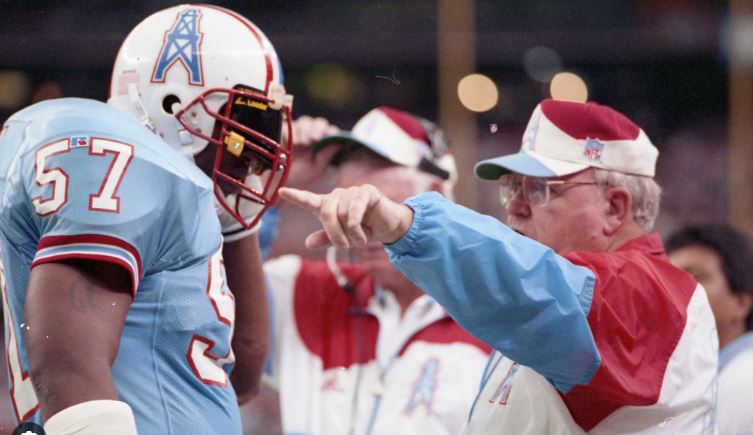
Owner Bud Adams had seen enough and decided the defense was the reason for the collapse and hired Buddy Ryan. That’s right the same Defensive Coordinator of the 1985 Bears and former Head Coach of the Philadelphia Eagles. Adams did this and forced him onto then Head Coach Jack Pardee. Ryan had total autonomy just as he had in Chicago. In fact he was able to hire his own assistants and player requests. In came former Ryan disciple Wilber Marshall, a fiery linebacker that was one of the unsung performers on that ’85 Bears team.

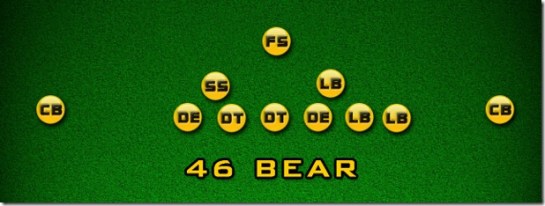
Ryan also forced the team to draft a MLB in Miami Hurricane Michael Barrow and draft a tight end in John Heny Mills. With a defense that had 6 former pro bowlers on it and a soon to be Pro Bowler Lamar Lathon at that point, this was going to be a sight to behold. Ryan resurrected the 46 defense deep in the heart of Texas yet how much of the leadership of that team was stripped of Pardee?? 1993 looked like the last year for the Oilers to make it to the Super Bowl or the team would be broken up. All or nothing.

When Buddy Ryan brought in former All Pro Wilber Marshall, the defense took on a totally different tone.

When Buddy Ryan brought in former All Pro Wilber Marshall, the defense took on a totally different tone.

The preseason began with Ryan firing off comments about Offensive Coordinator Kevin Gilbride and the Run & Shoot offense. The “Chuck & Duck” Ryan scoffed at the high penchant for passing and not running the football and prone to turnovers.

The team however sputtered out of the gate as the defense had some growing pains and the offense started slow.

In fact, a 1-4 start to the 1993 season looked similar to the Houston Texans of this year. A lot of talent, although a little old and they should be able to turn it around. That fourth loss came in a return trip to Buffalo. With Warren Moon’s benching, it looked to all the world this era of Oilers football was about to come to a crashing end.

However the defense not only grew into it’s shoes, it became the scourge of the league. Gone was the passive 4 man rushes of the Jim Eddy defense and in was the confusing blitz packages Ryan had made famous in Chicago. His Philadelphia Eagles didn’t use as many packages as he did in Houston. Over the next eight games they had 35 sacks, 30 takeaways and had knocked 5 quarterbacks from the game. A defense full of star quality talent left opponents without a focal point to game plan against. The league hadn’t seen heavy focus on the 46 defense in over 5 years. They also hadn’t played against this personnel in these new positions. Teams were thoroughly over matched as the last 11 opponents never scored beyond 20 points.

As the defense helped turn the season around Warren Moon came off the bench when his backup Cody Carlson was injured in week 6. His play was more efficient than it was spectacular as defenses had caught up to the Run & Shoot by ’93. However the Oilers were running the ball more and inserted a bigger back to try and wear down defenses. Former special teamer Gary Brown took over due to injuries and rushed for 1,002 yards on 195 carries. He was the first player in league history to rush for 1,000 yards while only starting half the season. Gone was the scat back presence of Lorenzo White and Allen Pinkett and a bruiser was now running the football in the Run & Shoot. Now teams couldn’t go with pass specialists at linebacker with a hammer in the backfield.

However all wasn’t rosey.

The team operated in the awkward vacuum of two camps within a football squad. Buddy Ryan had complete autonomy with his players and coaches. The season long tension was always there as Ryan said what he wanted to at press conferences, even if it wasn’t supportive of the offensive side of the ball or the team as a whole. Head Coach Jack Pardee and Offensive Coordinator Kevin Gilbride acquiesced some of their game planning to accomodate Ryan. Think not?? Brown in half of the ’93 season carried the ball nearly 200 times where in 1991, Allen Pinkett started all 16 games and only ran it 171 times.

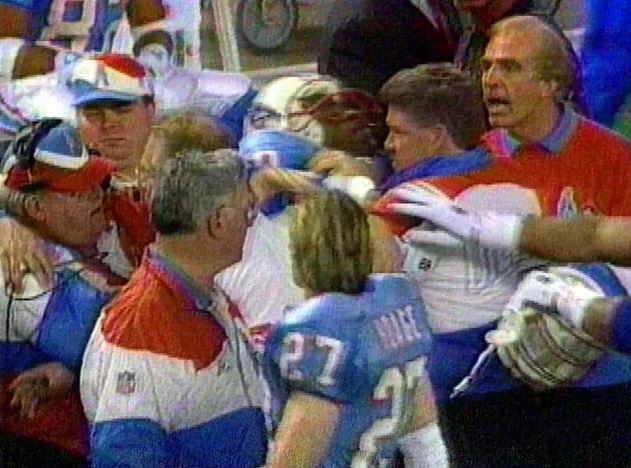
What bothered Ryan the most was the offense continuing to pass the football at the end of halves when they should have run the clock out and gone into the locker room. This resulted in two of his starting defensive backs being lost for the season on meaningless plays right before halftime. So when starting FS Marcus Robertson was injured with just seconds left before the half in the last game, Ryan exploded and threw a punch at Gilbride. Now heading into the NFL playoffs he would be missing 3 of his 4 starters in the secondary.

The Oilers of 1993 were a lab experiment about how a team with such disjointed chemistry could actually band together to be the tough minded team no one thought of them as. They survived “Baby-gate” when OT David Williams missed a game early in the season to witness the birth of a child. Media scrutiny was less intense and more forgiving when DT Jeff Alm committed suicide before their week 14 match-up with the Pittsburgh Steelers. Dedicating the game ball to his parents and their fallen teammates memory, they went on the road and whipped the Steelers 26-17 to capture the AFC Central.  Ten months after a collapse branded this team as one of the psychologically weak teams in modern history, they had forged an identity tougher than any could remember.

Houston concluded the regular season 12-4, finishing on an 11 game winning streak. Which had only been equaled by the ’72 Dolphins, the ’69 Minnesota Vikings, and the 1934 Chicago Bears in all of NFL history. No question did they look across state and see a possible match-up with the defending champion Cowboys. When they went out and hit Steve Young so often in a 10-7 win out in Candlestick on Christmas Day, league wide fear of this team only grew. This was not going to be the same team that wilted under playoff pressure come playoff time in 1993.

Everyone feared this group except one team, the Kansas City Chiefs. The Oilers had run over the Chiefs 30-0 early in the season and had talked a big game while doing it. As the AFC Divisional slate put these two together again, talk of knocking out Chief quarterback Joe Montana drew the ire of Chief defenders. The late Derrick Thomas and Neil Smith talked about their knocking Moon out if Montana left the game simiarly. What hadn’t been thought of was beating the bully at their own game.

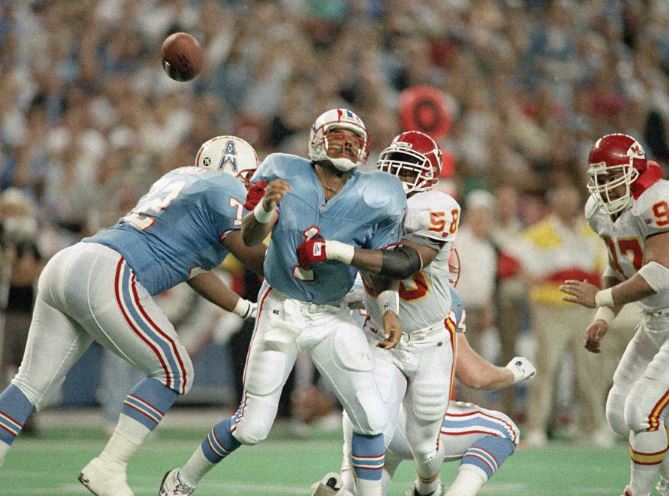
The Chiefs came into the game as a team that didn’t blitz a lot. They stayed with bookend pass rush All Pros Smith and Thomas and played coverage behind them…or so the Oilers thought. The Chiefs threw blitzes at Warren Moon tying an NFL playoff record with 9 sacks and knocking the offense out of continuity from the very start. They held the Oilers to only 277 yards of offense. Their season low?? 246 yards ironically against the Chiefs in their 30-0 loss to the Oilers at the beginning of the season.

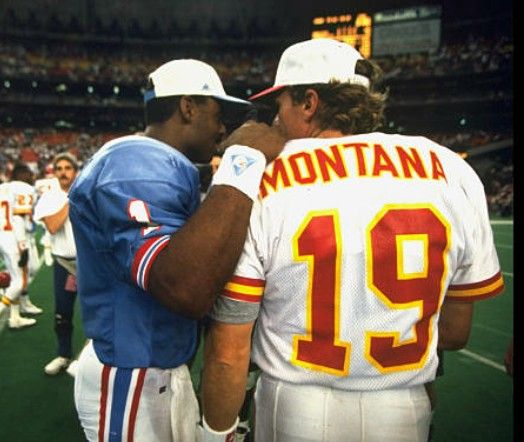
It was Joe Montana and moving on half rollouts away from the blitz that kept him upright in this game. A veteran of 20 previous playoff games, with a 15-5 record that featured 4 Super Bowl championships, he may have played his best game at 37 years of age. He completed 22 of 38 passes for 299 yards 3 TDs and 2 interceptions. Once he adjusted to the Oilers and their fleet of second string people in the secondary, he and Marcus Allen kept the ball away from Moon in the second half. The 28-20 win by the Chiefs came at great delight to both Buffalo and Dallas who no longer had to think of facing this monster team from Houston. They would go on to play each other in a second straight Super Bowl once Buffalo DID knock Montana from the AFC Championship Game.

As for the Oilers, they were broken up after 1993. Gone was Warren Moon who went on to sign with the Minnesota Vikings. Buddy Ryan received another Head Coaching position in Arizona taking Wilber Marshall with him. The defense was turned over to Ryan disciple Jeff Fisher, who would succeed Jack Pardee once he was fired in week 10 of 1994. Present Titans coach Mike Munchak played his last game for the Oilers in that 93 playoff loss and began his coaching career that same year. Former Offensive Coordinator Kevin Gilbride was let go once Pardee was dismissed. They had been the men responsible for bringing the Run & Shoot to Houston and it left with them.

Ironically the offense that didn’t win it all as a complete scheme lived on in offenses around the league. It was Gilbride teaching some of the Run & Shoot principles to New York Giant receivers as they have won Super Bowls XLII and XLVI. Even the team of the 2000’s, the New England Patriots run variations of offensive principles that were a staple of Gilbride’s down in Houston. Especially the screen plays that Gilbride designed. Below is a copy of one of the pages from the Patriots Super Bowl playbook of 2003 and you can clearly read “Run and Shoot screen”. 

RunAndShootScreen

The largest fall had been with the fan base that was there from the Luv ya Blue days through this era of Oiler football. The heart of the fan base drained drastically as the team fell to 2-14 in 1994. Within two years, Bud Adams moved the team to Tennessee and renamed the franchise the Titans. It was a sad and sudden end to the Oiler franchise but it came off the heels of promise that was the best team in Oiler history that didn’t make it to the Super Bowl.

Thanks for reading and please share the article.
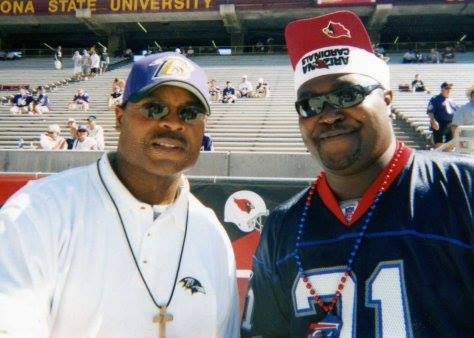
CoachP.LLathonandChancellor

Met Lamar Lathon with Coach Petrillo at 2016 HoF party for KG