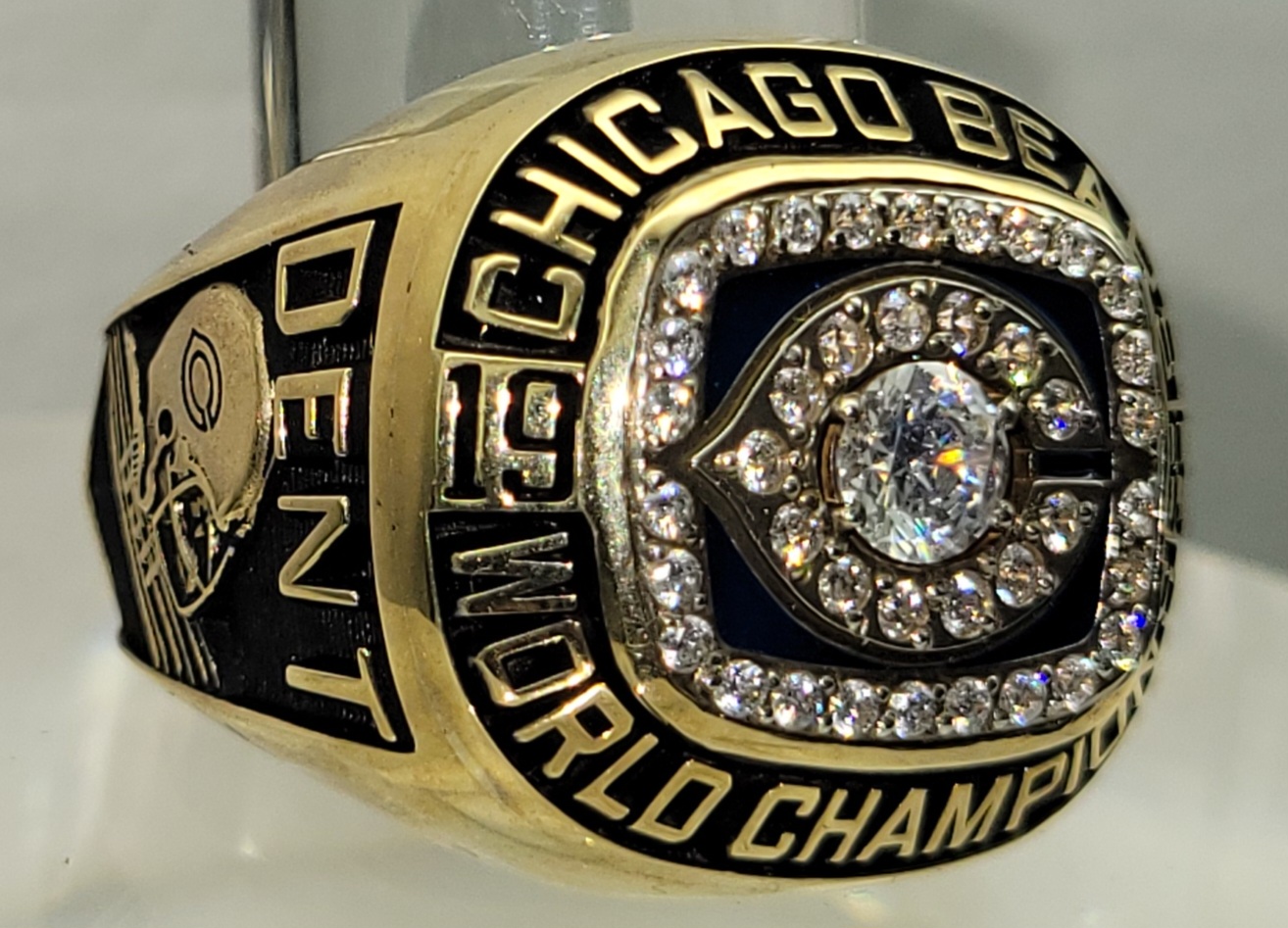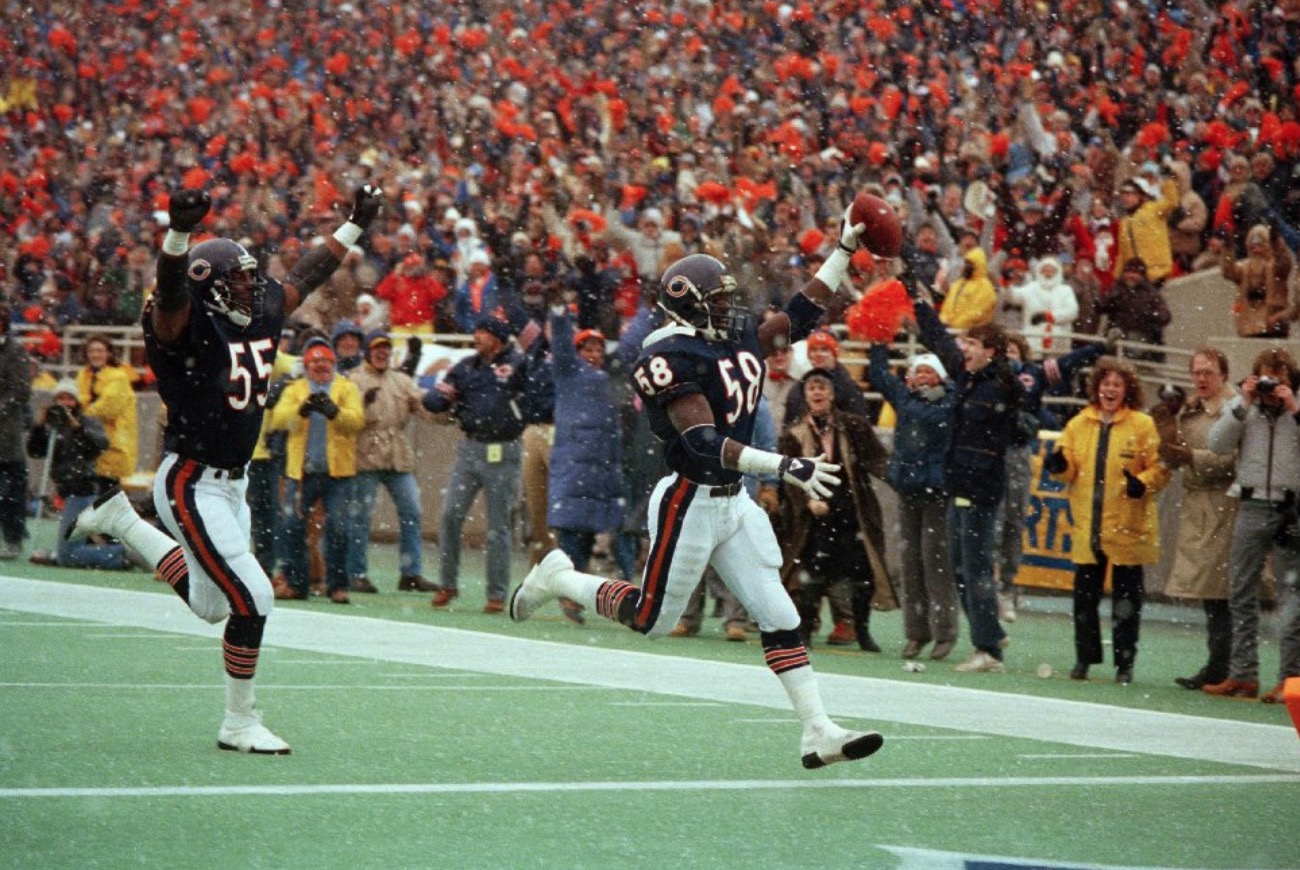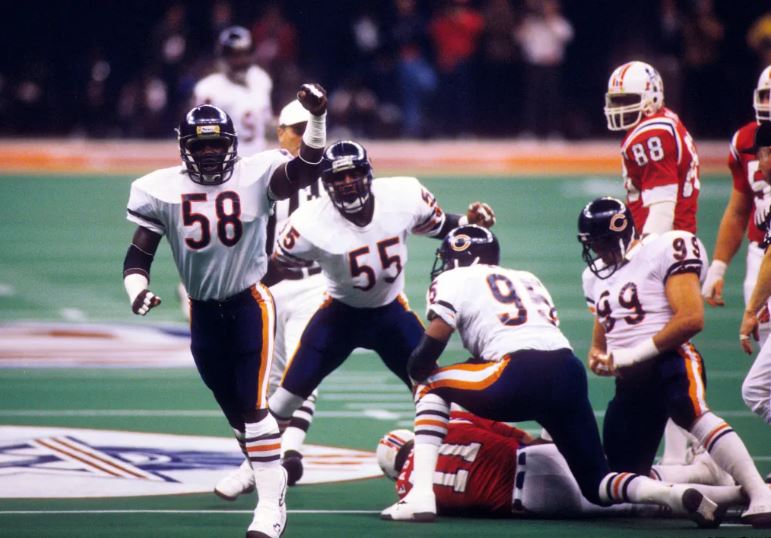
SUPER BOWL XX CHAMPIONS 1985 CHICAGO BEARS

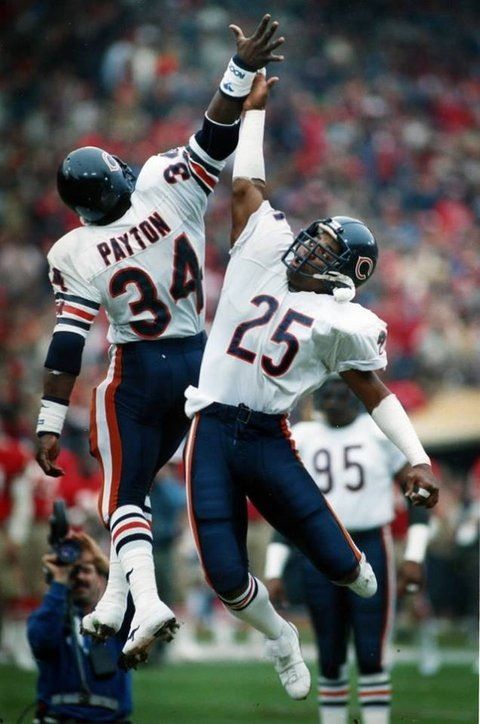
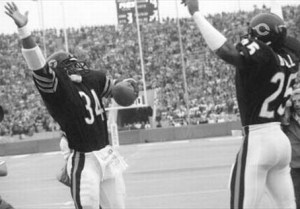
Walter Payton and the ’85 Bears defense got this championship ring for routing New England 46-10 in Super Bowl XX.

In The Chancellor of Football’s estimation, this is still the #1 team in history over 1 season.  Yes I was a ridiculous fan of the 46 defense, which they screw up on Madden, see the two lineback…..yet I digress.

Before we get into Sweetness, Jimmy Mac, “Danimal”, Singletary, “Mongo” McMichael, Wilber, Otis, Dent, Hilgenberg, VanHorne, Moorehead, Suhey, Gault, Fencik, Duerson, Head Coach Mike Ditka, and the beat goes on…let’s show you why I think they were the strongest team ever. Did you know they did this while 1984 All Pro Safety Todd Bell held out??

Look at the competition they faced and look what they did to them. In 1985 the NFC East champion Cowboys were trounced 44-0, wildcard Giants 21-0 in the playoffs, and the 10-6 Redskins slaughtered 45-10. That’s 110-10 against the “best division in football” yikes!!

Then you have the NFC West Champion LA Rams killed 24-0 in the NFC Championship, and the last wildcard team? The defending champion San Francisco 49ers, who were pounded 26-10 in Candlestick.  Funny thing was the 49er touchdown was a Carlton Williamson interception, so the 49er offense scored 3 at home.

* So the Bears gave up 20 points combined to the 5 best teams in their conference and avg. more than 4TDs margin of victory (31-4 avg. score)…damn!

Then of course each division faces another division in the other conference which in the 85 Bears case was the AFC East.  Thank God they didn’t play my Bills… The AFC East Dolphins won 38-24, but both wildcards in the AFC went to the Jets and Patriots.  What happened to those teams you ask?  The Jets were clobbered in the Meadowlands 20-6 and the Patriots twice. The Bears beat the Patriots 20-7 in week 2, then the 46-10 smashing in Super Bowl XX.

Copy (2) of Copy of sbRoundhouseSuperBowlRing*So the only loss was to defending AFC Champion Miami & where did the Dolphins season conclude?  They lost the AFC Championship at home to the Patriots where had they won, there would have been a rematch with the Bears in the Super Bowl…so u could say that they were a pretty strong team…fair to say?

The Bears beat EVERY playoff team in 1985 from the NFC, and faced three from the AFC…all teams had 10 wins or more and the Bears basically laughed at ’em.  This is what a heavyweight champion should look like!!

When comparing the best ever teams none come close to this for beating strong competition none.  In fact the ’72 Miami Dolphins who went undefeated only faced 3 teams with winning records during the season.  That’s not their fault but it has to be a factor in deciding who was stronger as a team.

In 2000 when the Ravens gave up 165 points and the question was raised- “Were they better than Buddy Ryan & the ’85 Bear’s 46 defense?”  HELL NO!!! A group that finished ranked #1 in 9 of 14 defensive categories?? The Ravens didn’t face 1984 MVP Dan Marino, 3-time Super Bowl MVP Joe Montana, Super Bowl MVP Phil Simms, 1983 MVP Joe Theismann, and Danny White had been a pro bowl quarterback as Ken O’Brien of the Jets had been in 1985. All were in their prime!

super-bowl-logo-1985Had the 2000 Ravens seen these quarterbacks they give up another 150 points easy and wouldn’t make the mythical Super Bowl if they played the 85 Bears schedule!! Spurgeon Wynn. Who? Spurgeon Wynn, Tim Couch, Anthony Wright, Kent Graham, Gus Frerotte, Brian Griese, Ryan Leaf, Scott Mitchell, and Akili Smith were some of the QBs those Ravens faced so….no way do they get this nod. I loved those Ravens don’t get me wrong, but what would the ’85 Bears have given up against the 2000 Ravens schedule? That’s frightening to think about.

Thanks for reading and please share the article.

SUPER BOWL XI RUNNER UP 1976 MINNESOTA VIKINGS

January 9, 1977 was a day that the Minnesota Vikings again fell short of the Super Bowl win they so desperately wanted.  The 32-14 loss to the Oakland Raiders was the last hurrah for a team that dominated the NFC for much of the 1970s. They almost went to 4 Super Bowls in a row.  That famous “Hail Mary” against Dallas in the ’75 NFC Divisional playoff should have been called pass interference on Drew Pearson.

vikxiThink of how rewritten the 1970s in the NFL would have been had they won those Super Bowls…

  • Had they won Super Bowl IV against the Chiefs there would still be talk of inferiority between the AFL and NFL even though they were merging the following year.
  • Had they won Super Bowl VIII in Chuck Foreman’s (The U) rookie year the Dolphins do not repeat and do not become a dynasty.
  • Had they won the next year in Super Bowl IX the Steelers dynasty does not take place.
  • Which leads to Super Bowl XI, had the Vikings won that gamevikxi.1 it would have added to Oakland’s (at that time) failed legacy and would have handed them their 8th loss in AFL or AFC Championship games including 2 Super Bowls in 10 years.


This team has never received their due.  They dominated the black and blue division and were the scourge of the NFC for many years.  The legacy of the players was too damaged for not winning the Super Bowl.  Come on, the length of time it took for Paul Krause, the NFL’s all time leading interceptor, to get into the Hall of Fame was ridiculous.  The fact that Jim Marshall and Chuck Foreman aren’t in the Hall is a travesty.

11This team was one of the best in the 1970s and this team was the last one to reach the Super Bowl.  Buddy Ryan coaxed a good year out of a “Purple People Eater’s” defense that was aging. Ahmad Rashad and Sammy White were decent receivers and the aforementioned Chuck Foreman (The U) teamed with Fran Tarkenton (the all time touchdown and yardage leader at the time) to form a formidable offense.

An interesting contrast in handling coming up short in the Super Bowl is between Fran Tarkenton and Head Coach Bud Grant. Tarkenton told NFL Films how those games have haunted him all these years. How it robbed the Vikings of their dignity and celebrity which cost teammates Hall of Fame votes. Where Bud Grant said he never looked at any of them on field and it doesn’t bother him one bit. Always looking ahead.

super-bowl-logo-1976Yet if you catch the end of Super Bowl XI as the cameras panned the Viking sideline, you could see a deep hurt in every Viking player’s face. It was as though you could see the last of their prime as an elite team evaporate from the players as the final moments ticked down. Unlike the Buffalo Bills 4 year Super Bowl run, this one lasted 8 years starting with their appearance in IV.

Chuck Foreman only had 1 more 1,000 yard season in 1977 before his career wound down. DT Alan Page was with the Chicago Bears in 1978, Jim Marshall, Carl Eller, and Fran Tarkenton were gone after 1979. Even Metropolitan Stadium was gone by 1982 as the team moved indoors with the Metrodome. The end of an era for a once proud franchise. One last look back is in order:

This was the last conference championship ring the Minnesota Vikings won.  1976 NFC Champions.

Thanks for reading and please share the article.

Top Ten Single Season Defenses in NFL History : #1 1985 Chicago Bears

This is The Chancellor of Football’s choice for the NFL’s greatest single season defense and there is a serious gap between #1 and the #2 Baltimore Ravens. We’ll cover why at the end of this article. However welcome to the perfect storm of dynamic personnel, innovative defensive tactics and an intensely focused unit. One interesting aspect of the 1985 Chicago Bears performance is they did so without ’84 All Pro Safety Todd Bell who held out that season.

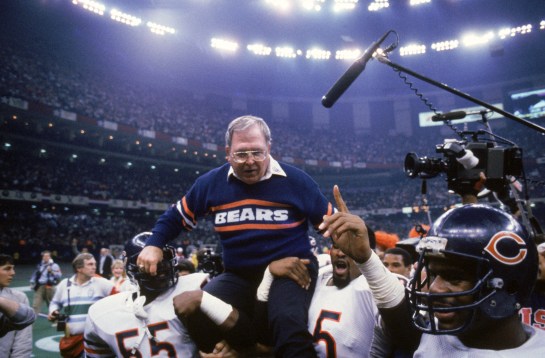
Defensive Coordinator Buddy Ryan was also carried off after Super Bowl XX.

Defensive Coordinator Buddy Ryan was also carried off after Super Bowl XX.

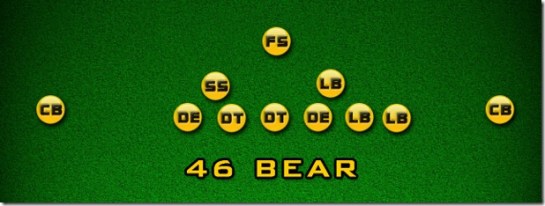
This was the era of the 46 Defense of Buddy Ryan. A Nickle defense where DBs were substituted for more athletic linebackers which allowed Ryan to use it as an every down formation. He could spring it on a team at any time without substitution.

Contrary to misinformed sportswriters he had been using the defense since 1981. Considering he named the formation for the number Safety Doug Plank wore which moved him into a Linebackers position. Plank’s last full season was 1981 and was replaced by Bell in 1982.

The 46 covered the Guard, Center, Guard which kept the MLB from being blocked. Furthermore if either the Center or Guard pulled, a DLineman would be in the backfield to disrupt any running play.

The 46 covered the Guard, Center, Guard which kept the MLB from being blocked. Furthermore if either the Center or Guard pulled, a DLineman would be in the backfield to disrupt any running play.

Although this formation gave the Bears an edge over their competition they only used it 30-40% of the time. It was the element of surprise that caught the NFL off guard. What is overlooked is how great the personnel fit every scheme Ryan used. In 1984, this group set the NFL record for sacks with 72. After he departed they set the record for fewest points allowed in 1986 yielding 187 points. It’s the season in between, 1985, that was their crowning achievement.

Take a look at a few stats:

  • #1 overall ranking
  • #1 against the run #3 against the pass
  • #1 in turnovers w/ 54 forced
  • #1 in interceptions w/ 34
  • #1 in passer rating allowed w/ 51.4
  • #1 in points allowed: 198 for the season
  • #1 in 1st downs allowed per game: 14.8
  • #1 in opp. completion percentage allowed 47.7%
  • #1 in touchdowns allowed w/ 23
  • #1 in rushing touchdowns allowed w/ 6

Now add to the fact they were #3 in sacks with 64, #3 against the pass giving up yardage in garbage time with blowout leads. It was the venomous way they attacked strong competition that makes this defense the valedictorian of NFL units.

Look at the competition they faced and look what they did to them. In 1985 the NFC East champion Cowboys (10-6) were trounced 44-0, the wildcard Giants (10-6) 21-0 in the playoffs, and the 10-6 Redskins slaughtered 45-10. Outscoring them 110-10 when they were the “best division in football” yikes!! Then you have the NFC West Champion LA Rams (11-5) killed 24-0 in the NFC Championship, and the last wildcard team? The defending champion San Francisco 49ers (10-5-1), who were pounded 26-10 in Candlestick.  Funny thing was the 49er touchdown was a Carlton Williamson interception, so the 49er offense scored 3 at home.

* So the Bears gave up 20 points combined to the 5 best teams in their conference and avg. more than 4TDs margin of victory (31-4 avg. score)…damn! All were 10 win teams.

Then of course each division faces another division in the other conference which in the 85 Bears case was the AFC East.  Thank God they didn’t play my Bills… The AFC East champion Dolphins won 38-24, but both wildcards in the AFC went to the Jets and Patriots.  What happened to those teams you ask?  The Jets (11-5) were clobbered in the Meadowlands 20-6 and the Patriots (11-5) twice. The Bears beat the Patriots 20-7 in week 2, then the 46-10 smashing in Super Bowl XX.

*So the only loss was to defending AFC Champion Miami & where did the Dolphins season conclude?  They lost the AFC Championship at home to the Patriots where had they won there would have been a rematch with the Bears in the Super Bow. So you could say that they were a pretty strong team…fair to say? The Bears beat EVERY playoff team in 1985 from the NFC, and faced three from the AFC…all teams had 10 wins or more and the Bears basically laughed at ’em.  This is what a heavyweight champion should look like!!

They were 4-1 against top 10 offenses and in those 4 wins held each team to less than 10 points. In fact, the ’85 Bears held 11 of their 16 opponents to less than 10 points and recorded back to back shutouts over the Falcons and Cowboys. In the playoffs they set another record not allowing a point in back to back playoff shutouts to make it to Super Bowl XX. Once there they set records for holding the Patriots to -19 yards at the half, 7 yds rushing for the game, record 7 sacks, and allowed the fewest yards in Super Bowl history with 127.

This second look shows a few plays from the 46 front look but the final play with Steve McMichael’s sack was one of the secrets of the ’85 Bears. They lined up in a 3-4 and had DE Richard Dent the rushing weakside ‘backer a la Lawrence Taylor. Ironically the 46 defense didn’t die it evolved into teams running it from 3-4 alignments and not 4-3 alignments as Buddy Ryan originated this from. If you’ve watched the Steelers over the last 15 years they have used DEs that were built like DTs and would squeeze them down to cover the Guard,Center, Guard and position an Inside Linebacker right next to the Strong side Linebacker. They just made it interchangeable in elements to surprise their opponents from time to time.

They had NFL Defensive Player of the year and Hall of Famer Mike Singeltary, All Pro Gary Fencik, Hall of Fame DEs Richard Dent and Dan Hampton. Pro Bowl Linebacker Otis Wilson and OLB Wilber Marshall who should be in the Hall of Fame.

In 2000 when the Ravens gave up 165 points and the question was raised- “Were they better than the ’85 Bears defense?”  HELL NO!!! The Ravens didn’t face 1984 MVP Dan Marino, 3-time Super Bowl MVP Joe Montana, Super Bowl MVP Phil Simms, 1983 MVP Joe Theismann, and Danny White was a pro bowl quarterback as was Ken O’Brien of the Jets. ALL WERE IN THEIR PRIME!  Had the 2000 Ravens seen these quarterbacks they give up another 150 points easy and wouldn’t make the mythical Super Bowl if they played the 85 Bears schedule!!

Spurgeon Wynn. Who?? Spurgeon Wynn, Tim Couch, Anthony Wright, Kent Graham, Gus Frerotte, Brian Griese, Ryan Leaf, Scott Mitchell, and Akili Smith were some of the QBs those Ravens faced so….no way do they get this nod. I loved those Ravens don’t get me wrong, but what would the ’85 Bears have given up against the 2000 Ravens schedule? That’s frightening to think about.

me and singeltary

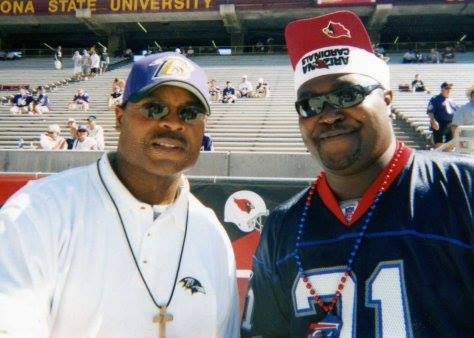
Hall of Fame linebacker Mike Singletary and The Chancellor of Football on the Ravens sideline in 2003.

The best ever defense from the historian view of The Chancellor of Football’s view was the 1985 Chicago Bears hands down. How badly they trounced sound competition has resonated for decades. In compiling this list every #1 defense from 1960 to the present was used, every championship defense, and every record setting defense with the nod going to those that played since the merger in 1970. Hundreds of defenses boiled down to the 1985 Bears sitting atop as the best.

Dedicated to the memory of James David “Buddy” Ryan (February 17, 1931 – June 28, 2016)

Thanks for reading and please share the article.

Missing Rings: 1993 Houston Oilers

Everyone can tell you when an era ends but when was its zenith?? The truly great teams burn bright for some time while winning championships. Others burn almost as bright for a long time but memory fades on those that don’t bring home Super Bowl rings. When it comes to the case of the Houston Oilers between 1987-1993, the zenith came at the end and the fall was so dramatic it killed the franchise.

Yet as we look back at the Houston Oilers of 1993, you have to stretch back a little further and remember what happened during the playoffs of 1991 and 1992.

The Oilers had become one of the most talented teams in football. They were the vanguard of the teams that ran the Run & Shoot offense. Their trigger man, Warren Moon had made it into the upper echelon of NFL quarterbacks. He had orchestrated the league’s #1 offense in 1990 and 1992. in 1991 they dropped to second in the league behind the K Gun of the Buffalo Bills.

Warren Moon was building his Hall of Fame resume with Pro Bowl performances 8 straight years.

Moon was starting at a time when black quarterbacks were just getting their start in the NFL on a league wide basis. Yet despite those pressures he approached Dan Marino’s passing records with 4,689 yards in 1990, and 4,690 yards in 1991. However his team coming up short in the playoffs was starting to become an issue. Similar to what was once a concern of Peyton Manning and continues to dog Tony Romo, Moon had only won 1 playoff game between 1987-1990. In reality, the Oilers were expected to ascend to be the best team in the AFC as they stockpiled talent around him. Make no mistake Moon was playing to erase the stigma that a black quarterback could lead his team to a championship. It hadn’t been done since Doug Williams in 1987.

He had diminutive and quick receivers in Ernest Givins, the late Drew Hill, Curtis Duncan, and a tall wideout in Haywood Jeffires. In 1991, 4 yards kept Moon from having 3 – 1,000 yard receivers as the Oilers opened 7-1 and looked like the AFC’s best rival to knock off the defending champion Bills.  However they ran into John Elway and the Denver Broncos in the AFC Divisional Playoff. On a mission they ran out to a 21-6 lead in Mile High Stadium. However Elway rallied his team back to a last second 26-24 win that sent the Oilers home after a total collapse. A team with 7 Pro Bowlers and 3 All Pros was sent home by a hodgepodge rebuilding Denver team that hadn’t made the playoffs in 1990 and wouldn’t in 1992.

Andre Reed scores the go ahead touchdown in the greatest comeback in NFL history.

Andre Reed scores the go ahead touchdown in the greatest comeback in NFL history.

The team was still in it’s prime as they approached 1992. Age was becoming a factor as the 36 year old Moon missed 6 games during the middle of the year. Houston entered the playoffs with a 10-6 record courtesy of a 27-3 win over Buffalo in a Sunday night finale. It set up a rubber match at Rich Stadium in a wild card game against the two time defending AFC Champion.

Not only were the Bills without future Hall of Fame quarterback Jim Kelly, they would be without Pro Bowlers Cornelius Bennett and Thurman Thomas as well. Moon had a first half for the ages as he went 18 of 22 for over 220 yards and 4 touchdowns in the first half. At an 81% completion rate, broadcasters Charlie Jones and Todd Christensen waxed philosophical about the possibility of breaking the record of 88% Phil Simms had accomplished in Super Bowl XXI. Houston was up 28-7 at the half and then SS Bubba McDowell returned an interception to give the Oilers a 35-3 lead in the 3rd quarter.  They had outscored the Bills 62-6 in 6 quarters in less than a week. They were hitting on all 8 cylinders.

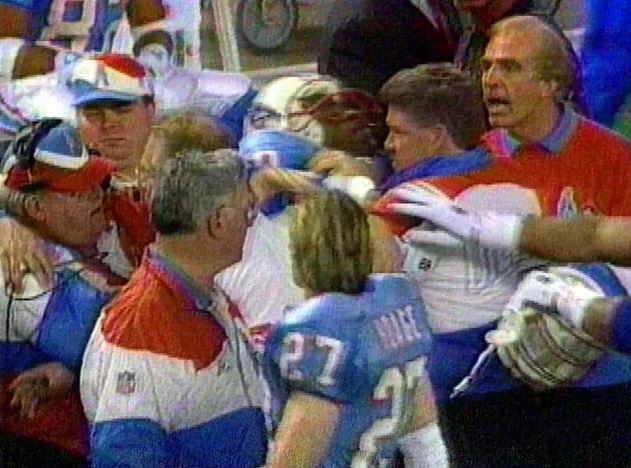
Then came the greatest collapse in the history of the NFL. A 32 point lead was washed away as Buffalo just put on a performance for the ages in a 41-38 win. Once the Bills took the momentum from the shell-shocked Oilers the game was almost inevitable. Moon’s crispness in the first half, where he led the Oilers to touchdowns on all four of their drives, went 3 and out on the first four of the second half. Also completely befuddled was defensive coordinator Jim Eddy, who never changed the nickle package or calls for the entire second half of that game. Bills receivers and backup QB Frank Reich knew exactly which plays would work and kept waiting for adjustments that didn’t come.

If the Oilers would have won a Super Bowl between 1987-1993, would Ray Childress be in the Pro Football Hall of Fame??

If the Oilers would have won a Super Bowl between 1987-1993, would Ray Childress be in the Pro Football Hall of Fame??

Psychologically, the jury was in on the Houston Oilers of that era for many pundits. They just couldn’t win the big game despite the talent they had on the field. Pro Bowl defenders Ray Childress, Al Smith were possibly tarnishing Hall of Fame careers at this point. Former Pro Bowl talents such as CB Cris Dishman, DE Willam Fuller, and DE Sean Jones were all on the field in Buffalo and none could make a play to turn that game around. Just as they hadn’t in Denver the year before.

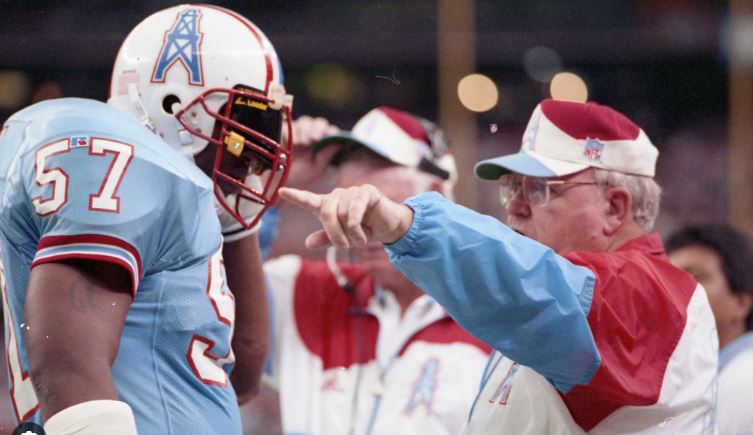
Owner Bud Adams had seen enough and decided the defense was the reason for the collapse and hired Buddy Ryan. That’s right the same Defensive Coordinator of the 1985 Bears and former Head Coach of the Philadelphia Eagles. Adams did this and forced him onto then Head Coach Jack Pardee. Ryan had total autonomy just as he had in Chicago. In fact he was able to hire his own assistants and player requests. In came former Ryan disciple Wilber Marshall, a fiery linebacker that was one of the unsung performers on that ’85 Bears team.

Ryan also forced the team to draft a MLB in Miami Hurricane Michael Barrow and draft a tight end in John Heny Mills. With a defense that had 6 former pro bowlers on it and a soon to be Pro Bowler Lamar Lathon at that point, this was going to be a sight to behold. Ryan resurrected the 46 defense deep in the heart of Texas yet how much of the leadership of that team was stripped of Pardee?? 1993 looked like the last year for the Oilers to make it to the Super Bowl or the team would be broken up. All or nothing.

When Buddy Ryan brought in former All Pro Wilber Marshall, the defense took on a totally different tone.

When Buddy Ryan brought in former All Pro Wilber Marshall, the defense took on a totally different tone.

The preseason began with Ryan firing off comments about Offensive Coordinator Kevin Gilbride and the Run & Shoot offense. The “Chuck & Duck” Ryan scoffed at the high penchant for passing and not running the football and prone to turnovers.

The team however sputtered out of the gate as the defense had some growing pains and the offense started slow.

In fact, a 1-4 start to the 1993 season looked similar to the Houston Texans of this year. A lot of talent, although a little old and they should be able to turn it around. That fourth loss came in a return trip to Buffalo. With Warren Moon’s benching, it looked to all the world this era of Oilers football was about to come to a crashing end.

However the defense not only grew into it’s shoes, it became the scourge of the league. Gone was the passive 4 man rushes of the Jim Eddy defense and in was the confusing blitz packages Ryan had made famous in Chicago. His Philadelphia Eagles didn’t use as many packages as he did in Houston. Over the next eight games they had 35 sacks, 30 takeaways and had knocked 5 quarterbacks from the game. A defense full of star quality talent left opponents without a focal point to game plan against. The league hadn’t seen heavy focus on the 46 defense in over 5 years. They also hadn’t played against this personnel in these new positions. Teams were thoroughly over matched as the last 11 opponents never scored beyond 20 points.

As the defense helped turn the season around Warren Moon came off the bench when his backup Cody Carlson was injured in week 6. His play was more efficient than it was spectacular as defenses had caught up to the Run & Shoot by ’93. However the Oilers were running the ball more and inserted a bigger back to try and wear down defenses. Former special teamer Gary Brown took over due to injuries and rushed for 1,002 yards on 195 carries. He was the first player in league history to rush for 1,000 yards while only starting half the season. Gone was the scat back presence of Lorenzo White and Allen Pinkett and a bruiser was now running the football in the Run & Shoot. Now teams couldn’t go with pass specialists at linebacker with a hammer in the backfield.

However all wasn’t rosey.

The team operated in the awkward vacuum of two camps within a football squad. Buddy Ryan had complete autonomy with his players and coaches. The season long tension was always there as Ryan said what he wanted to at press conferences, even if it wasn’t supportive of the offensive side of the ball or the team as a whole. Head Coach Jack Pardee and Offensive Coordinator Kevin Gilbride acquiesced some of their game planning to accomodate Ryan. Think not?? Brown in half of the ’93 season carried the ball nearly 200 times where in 1991, Allen Pinkett started all 16 games and only ran it 171 times.

What bothered Ryan the most was the offense continuing to pass the football at the end of halves when they should have run the clock out and gone into the locker room. This resulted in two of his starting defensive backs being lost for the season on meaningless plays right before halftime. So when starting FS Marcus Robertson was injured with just seconds left before the half in the last game, Ryan exploded and threw a punch at Gilbride. Now heading into the NFL playoffs he would be missing 3 of his 4 starters in the secondary.

The Oilers of 1993 were a lab experiment about how a team with such disjointed chemistry could actually band together to be the tough minded team no one thought of them as. They survived “Baby-gate” when OT David Williams missed a game early in the season to witness the birth of a child. Media scrutiny was less intense and more forgiving when DT Jeff Alm committed suicide before their week 14 match-up with the Pittsburgh Steelers. Dedicating the game ball to his parents and their fallen teammates memory, they went on the road and whipped the Steelers 26-17 to capture the AFC Central.  Ten months after a collapse branded this team as one of the psychologically weak teams in modern history, they had forged an identity tougher than any could remember.

Houston concluded the regular season 12-4, finishing on an 11 game winning streak. Which had only been equaled by the ’72 Dolphins, the ’69 Minnesota Vikings, and the 1934 Chicago Bears in all of NFL history. No question did they look across state and see a possible match-up with the defending champion Cowboys. When they went out and hit Steve Young so often in a 10-7 win out in Candlestick on Christmas Day, league wide fear of this team only grew. This was not going to be the same team that wilted under playoff pressure come playoff time in 1993.

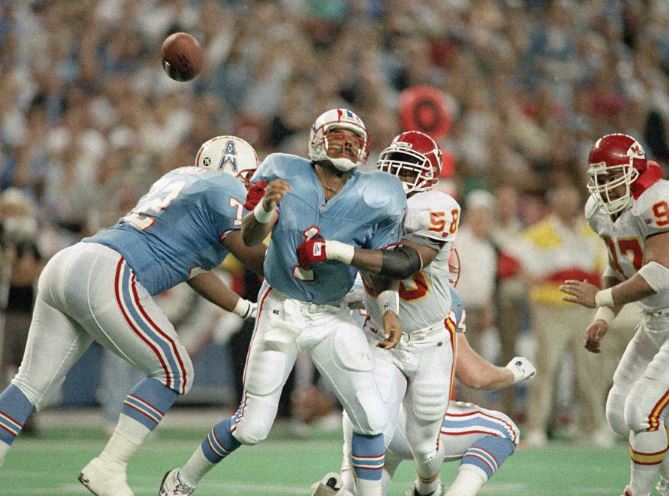
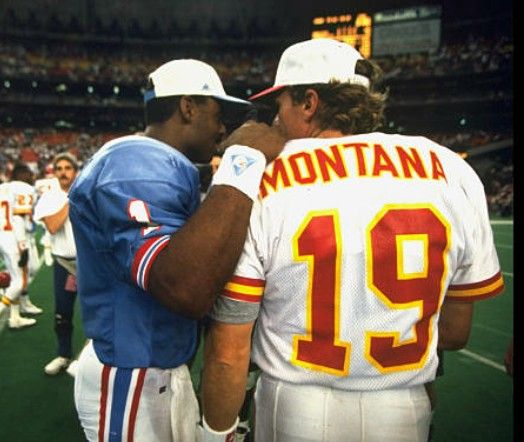
Everyone feared this group except one team, the Kansas City Chiefs. The Oilers had run over the Chiefs 30-0 early in the season and had talked a big game while doing it. As the AFC Divisional slate put these two together again, talk of knocking out Chief quarterback Joe Montana drew the ire of Chief defenders. The late Derrick Thomas and Neil Smith talked about their knocking Moon out if Montana left the game simiarly. What hadn’t been thought of was beating the bully at their own game.

The Chiefs came into the game as a team that didn’t blitz a lot. They stayed with bookend pass rush All Pros Smith and Thomas and played coverage behind them…or so the Oilers thought. The Chiefs threw blitzes at Warren Moon tying an NFL playoff record with 9 sacks and knocking the offense out of continuity from the very start. They held the Oilers to only 277 yards of offense. Their season low?? 246 yards ironically against the Chiefs in their 30-0 loss to the Oilers at the beginning of the season.

It was Joe Montana and moving on half rollouts away from the blitz that kept him upright in this game. A veteran of 20 previous playoff games, with a 15-5 record that featured 4 Super Bowl championships, he may have played his best game at 37 years of age. He completed 22 of 38 passes for 299 yards 3 TDs and 2 interceptions. Once he adjusted to the Oilers and their fleet of second string people in the secondary, he and Marcus Allen kept the ball away from Moon in the second half. The 28-20 win by the Chiefs came at great delight to both Buffalo and Dallas who no longer had to think of facing this monster team from Houston. They would go on to play each other in a second straight Super Bowl once Buffalo DID knock Montana from the AFC Championship Game.

As for the Oilers, they were broken up after 1993. Gone was Warren Moon who went on to sign with the Minnesota Vikings. Buddy Ryan received another Head Coaching position in Arizona taking Wilber Marshall with him. The defense was turned over to Ryan disciple Jeff Fisher, who would succeed Jack Pardee once he was fired in week 10 of 1994. Present Titans coach Mike Munchak played his last game for the Oilers in that 93 playoff loss and began his coaching career that same year. Former Offensive Coordinator Kevin Gilbride was let go once Pardee was dismissed. They had been the men responsible for bringing the Run & Shoot to Houston and it left with them.

Ironically the offense that didn’t win it all as a complete scheme lived on in offenses around the league. It was Gilbride teaching some of the Run & Shoot principles to New York Giant receivers as they have won Super Bowls XLII and XLVI. Even the team of the 2000’s, the New England Patriots run variations of offensive principles that were a staple of Gilbride’s down in Houston. Especially the screen plays that Gilbride designed. Below is a copy of one of the pages from the Patriots Super Bowl playbook of 2003 and you can clearly read “Run and Shoot screen”. 

RunAndShootScreen

The largest fall had been with the fan base that was there from the Luv ya Blue days through this era of Oiler football. The heart of the fan base drained drastically as the team fell to 2-14 in 1994. Within two years, Bud Adams moved the team to Tennessee and renamed the franchise the Titans. It was a sad and sudden end to the Oiler franchise but it came off the heels of promise that was the best team in Oiler history that didn’t make it to the Super Bowl.

Thanks for reading and please share the article.

CoachP.LLathonandChancellor

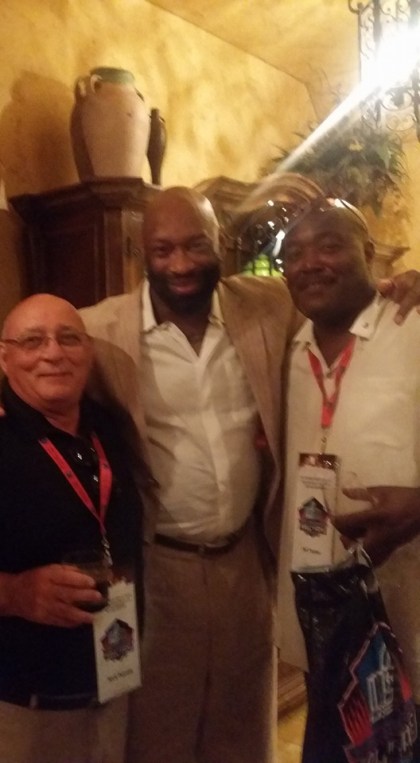
Met Lamar Lathon with Coach Petrillo at 2016 HoF party for KG

The Soul Of The Game: Todd Bell

When you talk about the NFL’s greatest defenses ever, our CEO’s pick is the 1985 Chicago Bears. When asked why he tells us “they set the modern standard for great defense without they’re best player.” How can this be?? Hall of Fame players Richard Dent, who went on to be Super Bowl XX MVP, and Mike Singletary (1985’s NFL Defensive Player of the Year) were front and center. Then you have blitzing linebacker Otis Wilson, Dan Hampton, Wilber Marshall, and Gary Fencik. To know who their best player was you have to return to the season before and a player that defensive co-ordinator Buddy Ryan raved about… SS Todd Bell

Bell was a hard-hitting strong safety drafted out of Ohio St in 1981. The Chicago Bears were an average team with one superstar, the incomparable Walter Payton. Who at the time, was being recognized as he approached 10,000 yards and the inevitable question began: Could Walter break Jim Brown’s all time rushing record of 12,312?? As the media glare intensified following Payton’s pursuit of Brown’s record, some attention was being paid toward a very aggressive nickel defense that featured lots of blitzing.

Buddy Ryan was the architect of the 46 defense and he had a young safety coming into his own. He was a ferocious hitter and much like Ronnie Lott in San Francisco he was the emotional leader of that group. After finishing the 1983 season winning 5 of 6 games and with Payton on the cusp of history, media descended upon Soldier Field for 1984. Bell shined in 1984 as the Bears set an NFL record with 72 sacks (still stands) and finished #1 in defense.

For all their blitzing they needed a safety who could cover, adjust on the run and be a good open field tackler. He amassed 4 sacks, 4 interceptions and delivered countless big hits as the Bears fought for league wide respect. Not only was he voted to the Pro Bowl, in some circles he was in discussions for NFL Defensive Player of the Year.

As the season went on, media attention shifted from Payton breaking Jim Brown’s record to a confusing defense wreaking havoc and…could the Bears win their first division championship since 1963??  A question that seems goofy now but back in 1984, you have to remember Chicago was thought of nationwide as the Cleveland Browns or Buffalo Bills are now. Twenty one years without any distinction as a team will do that for you. The current Bills and Browns have been like that ONLY 13 years… so you have to understand.

What made Todd Bell was not the statistics but the moments. Those where a football game is teetering when it comes to balance…momentum, or who is going to dominate?? Who is going to establish tone?? The only way to do so in contact /collision sports of yesteryear was to have your main player deliver a thunderous hit to intimidate the opponent, and this was where Bell established himself.

In a week 10 win over the defending champion LA Raiders, it was Todd Bell’s fight with Todd Christenson that got the Bears going. They went on to sack Raider QBs 9 times in a 17-6 win. Four weeks after a rousing win against Minnesota, the Bears traveled to Minnesota with a chance to win that first division title since the merger. It was Todd Bell that sent the message that Chicago came to dominate. In the vignette below, on the second to the last play shown, you’ll see Bell’s hit on Vikings RB Ted Brown that broke his ribs and the Vikings spirit where Chicago went on to win 34-3.

After this win came the FIRST gatorade shower in the NFL between Head Coach Mike Ditka from Todd Bell, Dan Hampton, and Steve McMichael. It was the 1984 Chicago Bears that first performed this…not the 1986 Giants the New York based media has fed to the nation….yet we digress. It was Bell’s hit that changed the course of the game. Yet now they made the playoffs for the first time and NFL pundits thought the Bears reached as far as they could go. With a 10-6 record they were relegated to traveling to Washington for the divisional playoff.

The Redskins were two-time defending NFC Champions and had they won Super Bowl XVIII, would have gone back to back as one of the great teams in NFL history. So they had won it all once and played in the Super Bowl the year before and here they were on their way to possibly a third straight Super Bowl against the overmatched Bears at home. A season before, they had the highest scoring offense in NFL history (541 points) …surely they could best the #1 defense the following year right??

Well the Redskins were ahead 3-0 and driving in a tense game where they were about to wrest control over Chicago. The had crossed midfield when at the 35 yard line Bell struck with the single greatest hit of the last generation. Had this hit happened in New York and not Washington it would be as famous as Chuck Bednarik’s hit on Frank Gifford in 1960.

The Redskins offense was intimidated the rest of the day and we didn’t see of Joe Washington any after that. His team gained so much confidence from that shot they went on to win 23-19 and moved on to the 1984 NFC Championship Game. Shamefully he and Bears management couldn’t agree to terms on his demands in 1985.

He sat out the season and the Bears, whom he helped give ultimate confidence to soared to new heights without him. Bell’s story is a cautionary tale. To what heights would he have gone to had he been there for the 1985 season??

As they used to do before every Bears game during player introductions, the late Walter Payton and Todd Bell used to high five as Payton was introduced last. This high five was when Bell was the first to greet Payton at midfield after he became the NFL’s All Time Leading rusher during a game against the Saints on October 7, 1984.

How many fewer points and shutouts would they have achieved had they had their hatchet man patrolling the secondary?? For 1984, 1985, and 1986 the Bears fielded the NFL’s #1 defense. They set the NFL record with 72 sacks in 1984. They led in nine of fourteen defensive categories as the great ’85 team won it all. Then they were 14-2 in 1986 and the team set the NFL record for fewest points allowed with 187 in the new 16 game season format. How would Todd Bell’s career have gone had he stayed on the field and gained momentum from his 1984 season leading into 1985?? Leaves you to wonder how his meteoric rise would have played out.

Prologue: Bell returned to the team in 1986. During his holdout, many Bears were disgruntled by management’s unwilling to negotiate agreeable terms to such a proven player yet could give a $1.35 million contract to William “Refrigerator” Perry for being a 1st round draft choice. To which Defensive Co-Ordinator Buddy Ryan scoffed “We should have given the money to Todd Bell and the pros we know who can play and we should have forgotten about Perry.”

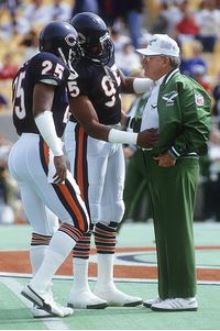
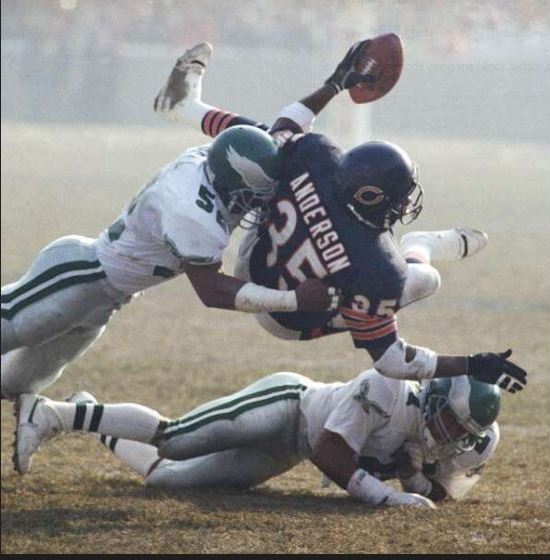
After his contract was up Ryan signed Bell to play for his Philadelphia Eagles where he was converted to linebacker just to get him on the field. A safety converting to linebacker in the pros?? That is a rarity and shows what kind of confidence Ryan had in Bell. The Eagles played the Bears in the 1988 playoffs and Bell starred intercepting two passes in what has come to be known as the Fog Bowl. Yet Bell’s career ended the following year (1989) with a broken leg ironically at Soldier Field again.

Todd Bell left us in 2005 after he suffered a heart attack… Bell was 46, the same number of the defense he helped make famous in Chicago. A ferocious hitter. Gone but not forgotten.


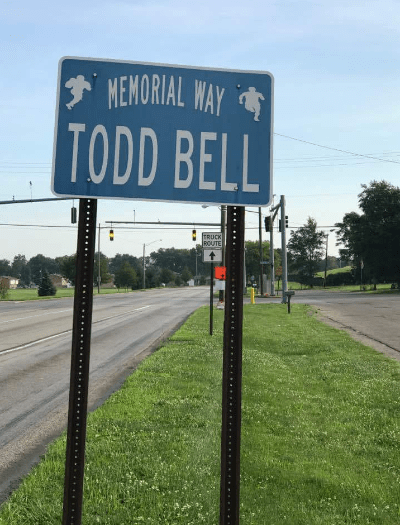
todd.bellwayDedicated in memory of Todd Anthony Bell: (November 28,1955 – March 16, 2005)

Thanks for reading and please share the article.


Death Becomes the Run & Shoot on a Monday Night

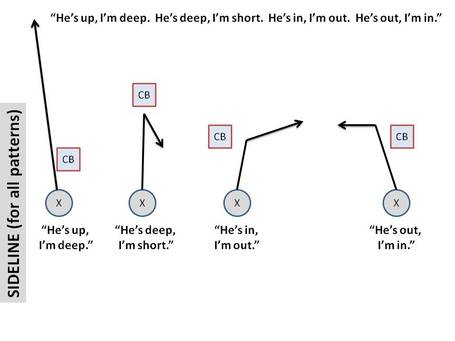
Single outside receiver site adjustments from the Run and Shoot

Whatever happened to the Run & Shoot as a pro offense?? You remember in the early 90s, when several downtrodden franchises looked to this offense to gain a tactical advantage on the competition.  Atlanta, Detroit, Houston, and Seattle deployed 4 receivers who ran their routes according to how defenses were playing them.  Borrowing on a concept from Bill Walsh’s offense, it was up to both the receiver and quarterback to read the defense, then adjust the route accordingly.

The truth of the matter is for each team with 4 receivers; the 3rd and 4th receivers were better than the opposing 3rd and 4th defensive backs that were normally platooned to cover them.  These teams started racking up yards by the bushel and along with Buffalo’s “K Gun offense”, the zenith of the Run & Shoot was 1991 when each team, except Seattle. who abandoned the offense in 1990, made the playoffs.  The Bills set offensive records for TDs scored and 33TD passes in a season by Jim Kelly.  In fact Thurman Thomas was NFL MVP with over 2,100 combined yards from scrimmage.

Everyone thought of the Bills “No Huddle” offense as an offshoot of the Run & Shoot because of option routes run by Andre Reed in the slot and Thurman Thomas out of the backfield.  Teams had a hard time adjusting and no matter how your corner played any of these receivers, the receiver would change his route and use the corner’s position against him.

For instance if the corner played outside position in a cover 3 zone, the adjustment would be a seam route by the slot receiver, or a skinny post for the outside receiver.  That same corner came up in press one on one, the receiver would try for an outside release and run a fly pattern.   In a cover 2 where the corner was off, he would adjust and run a hook with the underneath receiver running a down and out underneath his pattern, as the outside receiver occupied the corner.  What could a defense do to combat an offense that used your very choices against you?

Enter the NFC East.  This was the division that each team fielded twin 200 lbs. safeties receivers were funneled to. Whether it was Myron Guyton / Greg Williams with the New York Giants, Danny Copeland / Brad Edwards of the Washington Redskins, or the more punishing Andre Waters / Wes Hopkins duo that was on patrol in Philadelphia’s Veteran Stadium.

Where most teams were employing mainly dime defenses that were off the receiver, these teams started fielding nickel and dime defenses with cover two over the top and bludgeoned smaller  run and shoot receivers.  Many pundits look back to the Giants 1990 Super Bowl XXV defeat of the Buffalo Bills and their use of a 2 man line nickle and dime variations to slow down Buffalo’s no huddle / run and shoot tactics.

However thats misleading…the Giants conceded the run to the Bills (see Thurman Thomas’ 135 yards rushing) to set the tone punishing receivers with hits from the linebackers and safeties.  It was more of a victory based on the strong time of possession difference from the methodical Giants offense more than defensive tactics. A 40:31 to 19:29 possession time difference as a matter of fact.  Although Super Bowl XXV, at the end of the 1990 season, did set the blueprint for playing physical defense against this speed type offense.  So when and where was the run and shoot conquered as an offense??

The signature game that signaled the death of the Run & Shoot as an offense, came in week 14 of the 1991 season.  A Monday night matchup where the Houston Oilers hosted the Philadelphia Eagles.  The Eagles as a defense had come to full fruition as a unit originally put together by Buddy Ryan and now run by defensive coordinator Bud Carson.  They had high hopes that 1991 would be their year: they returned ’90 NFL MVP Randall Cunningham and an improving defense, yet torn ligaments to Cunningham’s knee courtesy of Bryce Paup in the season opener, sent the Eagles season spiraling.  Not quite…

A defense that ranked near the bottom in ’88, Buddy Ryan helped their esprit de corp when he drafted only four players in 1989 citing he liked his guys.  The team grew defensively into a giant by 1991 although Ryan was no longer with them.  The defense kept them in games week after week and they came into this matchup 7-5.  Could they best the #1 passing offense in the league? Could they do it on the road?

The Houston Oilers were the vanguard of the run n shoot teams and with Warren Moon had put up the most prolific numbers. In 1990 Moon passed the Oilers to the playoffs with 4,689 yards and 33 TDs.  The most since Dan Marino’s record setting 1984 and he missed 1 full game and time in 2 others.  Along the way he passed for 514 yards against the playoff bound Chief’s #6 ranked defense. Coming within 41 yards of Norm Van Brocklin’s 50 year old record of 554. Alas Moon suffered a broken thumb and missed the Oiler’s playoff loss to Cincinnati.

Going into 1991, Moon was on a near record setting pace again and some thought this, and not Buffalo was the strongest AFC team.  The Redskins were 8-0 and the Oilers 7-1 when they met in a week 8 slugfest with the eventual world champion Redskins. The game was won  by Washington 20-17 in RFK, yet they showed they indeed were ready to stand toe to toe with the best the NFC offered. Going into the Monday Night tilt against the beat up Philadelphia Eagles at home, many thought the Oilers juggernaut offense would roll in this game too.

What took place over the next three hours was one defensive masterpiece that many defensive affecionados remember reverently to this day. The Eagles employed a 4-2-5 nickel variation with OLB Seth Joyner and MLB Byron Evans, who was lanky for a middle backer yet had great range, for most of the night.

Occasionally they’d bring in the dime defense (6 defensive backs) yet what they did differently was press the receivers and blitz off short corners. The hitting was vicious with Wes Hopkins and Andre Waters leading the way.  They knocked out both Ernest Givins and Drew Hill out of the game twice each. The first vicious shot was a dirty elbow from Wes Hopkins that broke Givins nose, yet set the tone for the night.

Joyner played his way to the Pro Bowl and almost the Hall of Fame that night with 2 sacks, a forced fumble and a fumble recovery to keep the game close.  Reggie White, Jerome Brown (The U), Mike Golic, and Clyde Simmons swallowed Allen Pinkett’s attempts to run holding the Oilers to a paltry 21 yards rushing for the game.  They also provided a serious rush that they supplemented with the occasional blitz that beat Houston into total submission before a stunned audience of millions. When dime back Otis Smith’s thunderous hit on Drew Hill, on an outside swirl route, forced Houston’s fifth fumble of the night. The rest of the league were on their second tablet from taking notes. The Eagles won 13-6 in front of a shocked audience.

Early 90s pic of Eagles L-R: Clyde Simmons, Eric Allen, Jerome Brown, Seth Joyner, and Reggie White

The beating was so decisive it ruined the Oilers season and this game was the complete blueprint on how to stop the run and shoot. Going into the game the Oilers were averaging 307 yards passing, just off pace needed to break Marino’s passing record, yet staggered away from this game only averaging 232 the rest of the season. The 226 they gained through the air against the Eagles was their season low.

The average was also down for the Falcons and Lions over the last 4 weeks of the season as well. The Oilers went down in the divisional round of the ’91 playoffs 26-24 to Denver, and the lone run n shoot playoff winner was Detroit who went on to whip Dallas 38-6. In fact the Cowboys had lost 4 games to run n shoot teams in 1991. The next year the Cowboys drafted a rangy MLB Robert Jones, in a Byron Evans mold, and brought in CB Kevin Smith, SS and former rangy college linebacker Darren Woodson, to stop those offenses the next year. The first of their 3 Super Bowl wins in the 90s and it started with that 1992 draft to mimick what the Eagles fielded in 1991.

As for the run n shoot, its effectiveness was diminished and the race for the record book was over.  In 1991 Houston passed for 4,621 yards where in 1992 that number dropped to 4,029. In ’92 neither the Lions or the Falcons came within 3 games of the playoffs and the Lions and Bills started to alter their offensive approach. The Oilers along with the Falcons ran the offense until 1993, yet the Falcons never returned to the playoffs…and the Oilers?? Well they went into the 1992 wildcard and took a 28-3 halftime lead on Buffalo who was playing with 6 & 7 DBs on the field.  Warren Moon at the half was 19 of 22 for almost 300 yards and 4 TDs and ballooned the lead to 35-3.

In the 3rd quarter, the Bills decided to play it the same way the Eagles had in ’91 inserting rangy MLB Carlton Bailey #54 and Darryl Talley #56 and they shut Houston down in the second half enroute to the greatest comeback in NFL history winning 41-38 in OT. Couple these landmark events with the system’s inability to score in the red zone and the run n shoot’s fate was sealed.  Even now the run n shoot receiving principles of WR route running based on options lives on in playbooks, just not in a 4 receiver set, nor as an entire offensive approach.

As for the Philadelphia Eagles defense that was the architect of the run n shoot’s demise? They went on to become the last great defense to finish #1 against the run, #1 against the pass, and #1 overall.  A distinction the ’85 Bears, ’86 Giants, ’76 Steelers, ’78 Steelers, ’08 Steelers, nor ’00 Ravens could match.  They finished the season winning 7 of 8 games and finished 10-6 and narrowly missed the playoffs.

The combined quarterback rating for their final 6 QBs was less than 40.0, and their principle line rushers R. White, Jerome Brown(The U), and Clyde Simmons combined for 37 sacks (which if they played last year would rank 11th in the NFL by themselves), and all 3 were Pro Bowlers and 1st team All Pro. Seth Joyner and Eric Allen earned Pro Bowl distinctions in 1991 as well.  They don’t receive the recognition of those other great defenses because they didn’t win the Super Bowl. Who would have operating with 5 different starting quarterbacks? They were one of the best defenses in NFL History.  Had Randall Cunningham not been injured…

Prologue: The impact of the players of this era in Eagle history were felt throughout the decade…
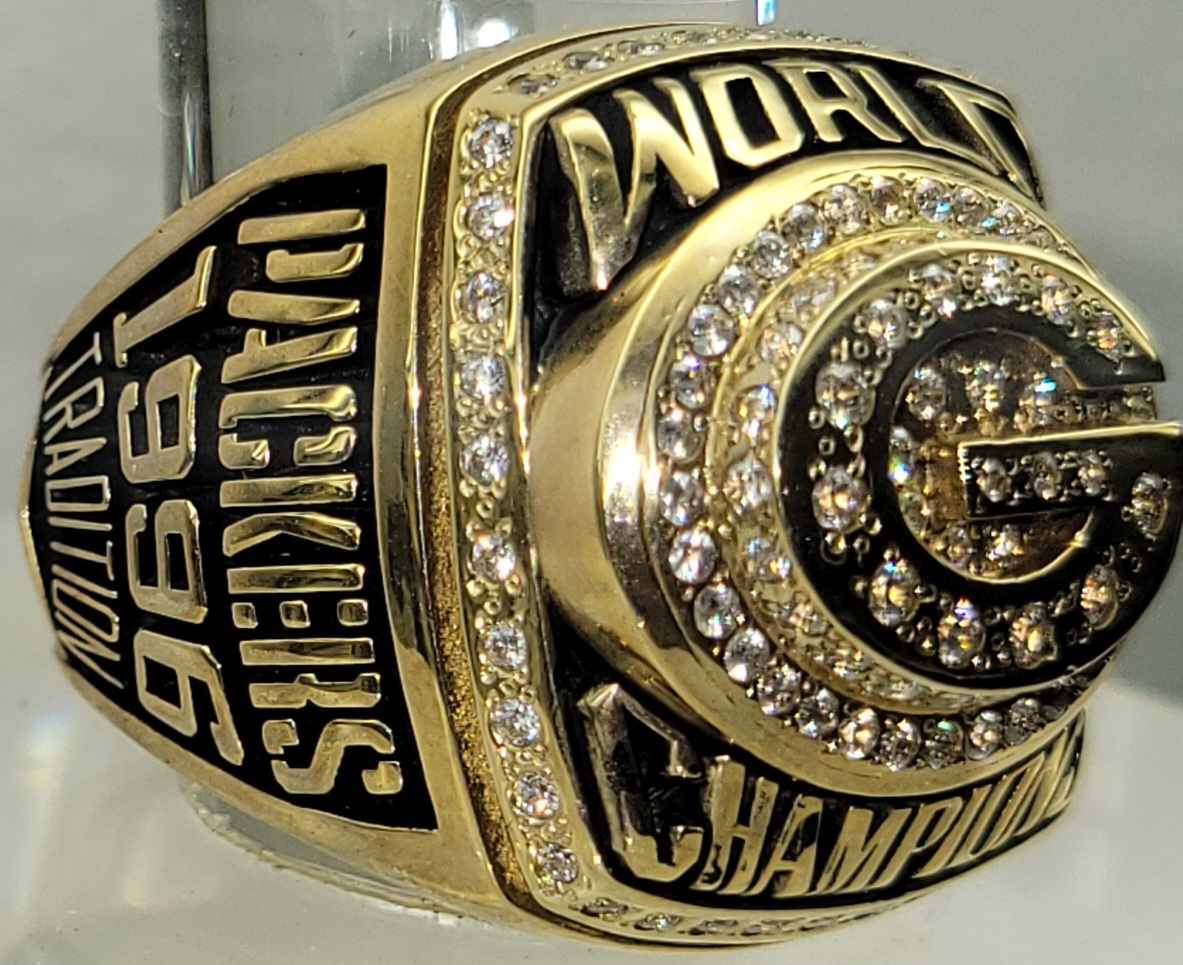
Reggie White-Became the main prize in 1993’s free agent derby, signed with Green Bay and went on to become the NFL’s all time sack leader. Recorded 3 sacks in Super Bowl XXXI when he became a champion with Green Bay along with former Eagle TE Keith Jackson. They bested the New England Patriots who had former Eagle RB Keith Byars and CB Otis Smith on the team. White passed on the week of Christmas 2004 which cast a pall over the playoffs that year. He was inducted into the Hall of Fame posthumosly in 2006. RIP Reggie White.
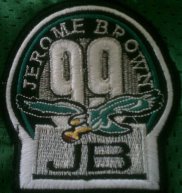
Commemorative patch worn by the 1992 Philadelphia Eagles in Jerome Brown’s memory.

Jerome Brown– An all pro talent who passed away the following June. He’s still one of the most beloved Miami Hurricanes and missed by Hurricane fans everywhere. The 1992 Eagles dedicated their season to his memory and wore this commemorative patch on their jerseys the entire season. They also kept an equipped locker for him throughout the season and set it up on road trips also. His locker was with the ’92 Eagles in the Superdome as they won their first playoff game in 15 years.

Brown was the predecessor to fellow Hurricanes DTs Cortez Kennedy Russell Maryland, and Warren Sapp. Kennedy, who changed his number to 99 in honor of Jerome and went on to win NFL Defensive Player of the Year in his honor in 1992 while playing for the Seahawks. Every Hurricane playing in the NFL during 1992 wore a black #98 on their helmet that year including several that played for the Dallas Cowboys. The next time you watch Super Bowl XXVII where Dallas beats Buffalo you’ll see the black #98 on the back of many helmets. Jerome was alos the inspiration and reason former Hurricane Warren Sapp wore #99 during his entire NFL career. R.I.P Jerome Brown

Seth Joyner & Clyde Simmons– Were twin free agent prizes that signed with Buddy Ryan and the Cardinals in 1994. I wrote the Buffalo Bills organization and suggested we grab Simmons and Joyner to join Bruce Smith and Cornelius Bennett to fortify our defense to get to our fifth Super Bowl…yet I digress Joyner went on to join White with the Packers (1997) in their bid to repeat as champions yet they lost to Denver in Super Bowl XXXII.

Well if you can’t beat ’em, join ’em, and when Denver (1998) went on to become back to back champions a year later. Seth Joyner was a Bronco and guess what number he wore?? Number 99. He is a motivational speaker in Arizona now http://sethjoyner.com/ runs youth football clinics and is a coach himself. Just launched his show and podcast “The Seth Joyner Show” where you can hear his commentary along with a host of former Eagles.


Eric Allen– Played on through the 2001 season finishing with the Raiders. A popular notion is he should have been 1993’s NFL Defensive Player of the Year for his 64 tackles 6 interception performance in which returned 4 of them for touchdowns.  The most famous being a 91 yard interception against the Jets. After weaving his way into the endzone, he handed the ball to teammate Randall Cunningham who was on crutches having been injured earlier in the game. His last game as a player was the famous “Tuck Game” in New England in the 2001 playoffs. Former teammate Otis Smith was a Patriot CB. He’s currently an ESPN analyst.

Byron Evans-Played 8 years with the Eagles through the ’94 season and was an underrated talent. Has an internet radio show he does with former teammate CB Mark McMillan on the Voice of America Network. http://www.voiceamerica.com/show/1475/hard-hittin-radio

Andre Waters– The hard hitting safety went on to join Simmons and Joyner in Arizona for the ’94 and ’95 seasons. He had gone into coaching yet passed away in 2006 R.I.P. Andre Waters

Otis Smith-Was an Eagle dimeback in ’91. He went on to be the wily CB for a veteran laden Patriot team that lost Super Bowl XXXI to Green Bay. Yet was a Patriot 5 years later man handling Tory Holt and Isaac Bruce to stop the Greatest Show on Turf as he became a champion in Super Bowl XXXVI.

Mike Golic– finished his career with Miami and is half of the popular duo Mike and Mike on ESPN television and radio in the morning.

Taylor Blitz Times new logo!!

Taylor Blitz Times new logo!!