Roger Craig Should Be In Pro Football Hall of Fame

When you think back to Bill Walsh’s great 49er teams, who are the first players you think of?? Right there with the Joe Montanas, the Jerry Rices, and Ronnie Lotts it only takes a fraction of a second to think of Roger Craig. His high knee running style brought a physicality to the San Francisco offense that was seen as a finesse group up until his arrival. In fact he came to San Francisco as a fullback when they drafted him from Nebraska before the 1983 season.

In college he had been primarily a blocking back in the Cornhuskers wishbone offense. Normally he paved the way for Jarvis Redwine and then Mike Rozier. Yet when Bill Walsh decided to revamp San Francisco’s dismal backfield after a 3-6 season in 1982, he drafted Craig in the second round.

Although the 49ers had won it all in 1981, it had become apparent Bill Ring, Amos Lawrence, Walt Easley, and Earl Cooper just wasn’t cutting it in the backfield. To raise the stakes in the NFC for 1983, Craig and newly acquired Wendell Tyler would form a more potent backfield.

After posting the worst yards per carry average (3.4) and yardage (742) in 1982, the new backfield duo of Craig and Tyler turned that around completely. The much improved ground game of 1983 ranked 8th with 2,257 yards rushing and a gaudy 4.4 yard average. Ironically just ahead of the Los Angeles Rams, who had traded Tyler to San Francisco so they could draft Eric Dickerson.

You had to give the nod to Craig who ran for 783 yards a team leading 8 TDs, while catching 42 passes for 427 yards and another 4 scores. This more dynamic backfield, along with Joe Montana, powered San Francisco to the NFC Championship Game. A 24-21 loss to the Washington Redskins was shrouded in controversy, thanks to some questionable calls, yet Walsh had the backfield he envisioned. Craig had reinvented himself from a collegiate player who rarely touched the football to a dual threat pro.
The 1984 49ers were a juggernaut becoming the first team to go 15-1 during the regular season. Everyone of the 49 man roster played their role so no one had outstanding stats. However once the 49ers moved past the New York Giants and Chicago Bears during the playoffs, the stage was set for a coming out party in Super Bowl XIX. With all eyes on Joe Montana’s possible second Super Bowl trophy and the electrifying record setting Dan Marino, Craig’s name didn’t even make the marquee.


Roger Craig graces the cover of Sports Illustrated after his record breaking performance in Super Bowl XIX.

Roger Craig graces the cover of Sports Illustrated after his record breaking performance in Super Bowl XIX.

It was his 1985 that set Craig apart as he amassed his 1,000/ 1,000 yard seasons both rushing and receiving. The first player in league history to do so. Some 27 years later, only Hall of Famer Marshall Faulk shares that accomplishment when he did it in 1999. How dominating was his performance?? Well his 1,050 yards rushing doesn’t jump out at you until you realize he only ran 214 times for a whopping 4.9 yards per carry. The league average is always around 4.0.

Oh by the way, he led the NFL in receiving that year with 92, which set a record for running backs, that amassed 1,016 more yards. His 15 total touchdowns was second to Joe Morris and was 1 better than NFL MVP Marcus Allen. In fact many pundits, including our CEO believes Craig should have been the MVP in 1985 with that dominating performance.

Now buoy his 1985 record setting season not culminating with the league MVP, on the backdrop of a Super Bowl record 3 TDs yet not winning that MVP and you’ll see where we’re going in a minute. Don’t forget he did this on a 10-6 San Francisco team that was a defending champion with Jerry Rice being a rookie that didn’t have 1,000 yards receiving and only 3 touchdowns. Craig quite simply fueled that offense.

Once the 49ers won Super Bowl XIX, they were forced to retool and become a bigger physical team. In 1985, the Chicago Bears emerged with one of the most imposing defenses in NFL history. The Giants followed suit with an overwhelming defense that featured 4 linebackers in the 250 lbs category. When Bill Walsh and his 49ers were dominated 49-3 in the 1986 NFC Divisional Playoffs by the Giants something had to be done.

These were teams the 49ers had beaten on their way to the ’84 championship, now they had taken the game to a new level of brute force. In reinventing the offense from a size perspective, it was Craig who was switched from fullback to halfback to allow for the insertion of Tom Rathman at fullback. The entire offensive line was overhauled.

You have to keep in mind the average career for a runner in pro football is less than 4 years. Yet here Craig was making the switch in year 5 to a position that called for him to be quicker. This at a time where he should have been slowing down from a physical standpoint. Yet he, Jerry Rice and Joe Montana spearheaded one of history’s most accomplished runs. From 1987-1990 the 49ers went 51-12 in the regular season, winning back to back Super Bowls in ’88 & ’89 and were the prohibitive favorites to win it all in 1987 as well as 1990. They finished #1 in offense in ’87 and ’89 and #2 in ’88 and ’90. In each year they made it to at least the divisional round of the playoffs and 3 straight NFC Championship Games as they were trying to threepeat.

Playing in only 12 games due to the ’87 strike, Craig ran for 815 yards which projects out to 1,086 over a full season. The 13-2 Niners were poised to become the greatest team of the modern era yet were upset by the Vikings in the playoffs. They were #1 in both offense and defense yet proved fallible in the playoff loss. Craig went on to his greatest performance in the 1988 campaign. In rushing for a career high and club record 1,502 yards, he also caught 76 passes for an additional 534  yards for his second season with over 2,000 yards from scrimmage. More important, he powered San Francisco to another Super Bowl championship with a win over Cincinnati in the XXIII’d edition.

Roger Craig was a hard nosed runner.

Roger Craig was a hard nosed runner.

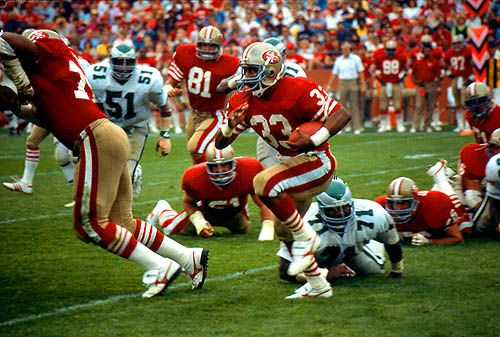
Yet go back to 1988 being his second season with more than 2,000 yards from scrimmage. Keep in mind this was no sleek, make ’em miss halfback. He brought a punishing style to his position where he bludgeoned the opposition. As you’re reading this you can picture his high knee running style like when he trampled through the Rams on his most famous run in 1988.

Yet did you know that Emmitt Smith, Thurman Thomas, and Barry Sanders only had 2 different seasons amassing 2,000 yards from scrimmage also?? Did you also know that Marcus Allen and Adrian Peterson have only had one?? Only Edgerrin James, Marshall Faulk, Ladainian Tomlinson, and Eric Dickerson had more. What do all of these runners have in common?? Peterson and Tomlinson will be in the Hall of Fame and all the others are in. Roger Craig is right there with them.

Now going into the Hall of Fame is based on impact on the game. By the time we bring up the 1989 team that won Super Bowl XXIV, Craig was a driving force behind the team of the decade. Again he was a 1,000 yard rusher as the team won their fourth Super Bowl and Roger had his 3rd ring. When he left the game in 1993, his 566 career receptions was #1 among running backs all time and still remains 7th.

He is in the linear line of great NFL running backs when it comes to catching the football and is a part of the game’s evolution. He took the mantle from Chuck Foreman and propelled it forward. Since then, only a handful of every down running backs have provided that type of versatility. Now everyone has a receiving running back who comes in on 3rd downs where Roger was in every play.

It was Craig’s play that allowed a young Jerry Rice to flourish as teams concentrated their efforts to stop him. If Craig’s move to halfback in 1987 hadn’t panned out, what would have been the legacy of Bill Walsh’s “West Coast Offense”?? It was the run from 1987-1990 that made the offense spread it’s wings throughout the National Football League. During this time is when it proved it could take on the big bad Chicago Bears defense (see 41-0 1987 Monday Night shutout) and 28-3 NFC Championship win in Soldier Field in ’88. Then you add the rivalry with the New York Giants.

From Mike Holmgren to Denny Green to Mike White to Jon Gruden ( who had just begun coaching on the 1990 SF coaching staff) and George Seifert succeeding Bill Walsh. They all could attribute their Head Coaching jobs to some extent to Craig’s performance along with Montana and Rice. Yet the foundation of that offense running and receiving along with goal line and short yardage was #33.

By the way, when did Roger Craig become the the first running back to have a 100 yard receiving game in a Super Bowl?? You guessed it… Super Bowl XXIII against Cincinnati and not his record setting performance against Miami. Now had he won the Super Bowl XIX MVP, or the 1985 NFL MVP, would that have propelled him to winning the NFL MVP in 1988?? Give it some thought.

For induction into the Pro Football Hall of Fame, I present to you…Roger Craig

Hell Hath No Empathy Like An NFL City Scorned

Alright NFL fans, answer this question:  Who was the first NFL team to play in Chicago?? The city where George Halas, long thought of as the NFL’s founder had his team?? Yup that’s right The Arizona Cardinals when they were the Chicago Cardinals and the Bears were in Decatur Illinois. You missed that?? Well the Bears were the Decatur Staleys back then. What made us think of it was joining the Facebook group Bring Back the Los Angeles Rams and it made our CEO ponder: Why isn’t there a group asking to bring back the Cleveland Rams?? or the St Louis “football” Cardinals??

Bring Back The Rams. Booster Clubs still exist.

Bring Back The Rams. Booster Clubs still exist.

Its crazy when you find out you’re the rebound boyfriend or girlfriend, but that’s the scorn left in the wake. You weren’t the original love nor were you the person once love blossomed anew. You’re just the one without. Its happened to NFL cities and it’s ironic that St Louis and Los Angeles both sat in this cauldron of long forgotten feelings.

For once upon a time, the Chicago Cardinals battled with the Bears, who moved in from Decatur in 1920 for the hearts of the city of broad shoulders. George Halas and the Bears won that particular battle and the Cardinals moved to St. Louis in 1960. Then the Bidwell’s moved the franchise again in 1987 to the city of Phoenix.

Before the Los Angeles Rams moved to St. Louis there were fans there that missed their football team. Yet the internet wasn’t in full bloom nor was there a mass media outlet to show this missing sign of support, but it existed. Otherwise why would Georgia Frontiere move the Rams there before the 1995 season??

Then you had the Cleveland Rams who never dominated the landscape of the NFL, have a powerhouse of a team in the Cleveland Browns playing in the rival All American Football Conference. A precursor to the American Football League. This was the late 1940’s when America had just returned home triumphant in the second world war and began to enjoy pro football as entertainment that would soon rival baseball. How do we know this?? The ink hadn’t dried on the Potsdam Declaration ending WWII when the AAFC was formed in 1946. In four short years the Browns dominated and won all four championships before the league folded and were absorbed into the NFL along with the 49ers and Baltimore Colts in 1950.

Hall of Fame quarterback Otto Graham tries to avoid a Ram defende in the 1950 NFL Title Game.

Hall of Fame quarterback Otto Graham tries to avoid a Ram defende in the 1950 NFL Title Game.

In another round of “this town ain’t big enough for the both of us” the Rams decided to move to Los Angeles knowing they couldn’t compete with the champion Browns for the hearts of Cleveland. The only time a team left Cleveland and Art Modell wasn’t to blame…yet we digress. Ironically in that first season of both teams playing in the NFL, they played each other for the NFL Championship in 1950. One of the greatest games in NFL history.  It would be assumed that old Ram fans became Browns fans in Cleveland

The forgotten aspect of both situations in St Louis and Los Angeles is they were not the first city these teams played in. They were the rebound fling and Angelinos are pining for the Rams to come back west. Yet where was all this support when the Rams were in Anaheim?? In 1994 the Rams hosted the Los Angeles Raiders, in the last year both teams were in Southern California, their game drew 60 K but 2 weeks later drew a home crowd of only 34,000. Yet like a scorned love those fans wish for their lost team to come back to them and forget how little support was shown when the relationship existed.

Art Modell being presented with the Vince Lombardi Trophy after winning Super Bowl XXXV.

Art Modell being presented with the Vince Lombardi Trophy after winning Super Bowl XXXV.

St Louis had their pining for the departed Cardinals filled after just 8 years when the Rams moved east for the 1995 season. In 44 years in Los Angeles, the Rams won only 1 NFL championship in 1951, yet only made St Louis fans wait just 4 years before The Greatest Show on Turf took the title in 1999. Those fans in Los Angeles were the first to watch their former team win a Super Bowl championship in a new city. The following year it was Cleveland’s turn as they watched the Baltimore Ravens win Super Bowl XXXV. Former Browns fans watched with horror as the late Art Modell hoisted the Lombardi Trophy just 5 years after moving to Baltimore.

Here is the real issue… The NFL thrives as an entity because of the revenue generated from television more than it does from the gate. The gate is important but a team is nothing more than a company and if the gate isn’t there, it will seek greener pastures. The teams split that gate 65/35 for the home and away teams. The personal seat licenses (PSL) and luxury boxes are the revenues that a team can keep to themselves. Hence we saw the boom in new stadiums from the mid 1990’s on. The other revenue streams a team can keep to themselves are the stadium naming rights, parking, and concessions. If the team can’t draw fans to the stadium, they will fall behind their competition when it comes to financial competitive balance. You do want your team to sign that free agent tackle next year…right??

At one time it was thought the NFL needed Los Angeles, with the nation’s #2 television market, to have a team. Our CEO contended then as he does now that it doesn’t. We just kicked off our 18th NFL season without a team in Los Angeles and it doesn’t seem to bother Vance Lockett who is watching games on NFL Sunday Ticket in Columbus, Ohio. Yet to the attending fan cheering for their team living where they have the chance to go to the actual games. Go when you can. The rules are set up to get you to the stadium in the first place.  In a direct television market, NFL city with a team, you are only guaranteed to be able to watch the road games in a particular season. Any concurrent broadcast of another game on the other network, Fox or CBS, will not be shown because you belong to that team. Hence a week ago The Chancellor of Football was stuck watching the Cardinals face the Lions instead of the Manning Bowl in New York… So instead of the 3 free broadcast games you only get 2 before the Sunday night game.

You only get to see the home games in those NFL cities if the game is sold out. This is when you hear of the “blackout being lifted” in television jargon. They’re figuring is: Why watch it on television when you can go down and pay your way to see the game?” So while our CEO (in Columbus, Ohio at the time) was able to watch and record the 1992 Wild Card Game, where Buffalo came from a 35-3 deficit to beat the Houston Oilers 41-38 in the greatest comeback in NFL history, people that lived 3 blocks from Ralph Wilson Stadium did not. The game wasn’t a sell out.

Just like those forlorn fans that pine for teams that once were in Cleveland, Los Angeles, St Louis, Houston, and especially Jacksonville for that matter: Get to the stadium and go watch a game! If that team gets down financially and decides to leave, it’s gone and it’s gone forever. Ask those Houston Oiler fans or even the Rams fans pictured about the despair that replaces the cheers once the team plays elsewhere. Los Angeles is nothing more than a bargaining chip for NFL teams to leverage their present cities and our CEO doubts the NFL ever returns there. Los Angeles is an overpopulated aging decaying city that is destined to feel old.

Along with the fact there is no space and it would be cost prohibitive to build a new stadium, people in Los Angeles are front runner fans that won’t support a non winner. After the 1994 game when BOTH Los Angeles teams played and drew 65 K, the Rams attracted less than 60 K in the 2 remaining games combined. This is before we even talk about the travel restraints thanks to overcrowded freeways. Corporations know better than to take those risks and that’s what NFL teams are…corporations.

Even the Chancellor of Football moved the Taylor Blitz Times headquarters out of congested Southern California to the beautiful clean open area of Glendale, Arizona. Why take the financial risk of moving to Los Angeles, when you can get between 10-15 million in the nation’s #2 television market to purchase NFL Sunday Ticket anyway?? You’d have more of a chance moving the Los Angeles Dodgers back to Brooklyn…oops we forgot those first reasons are exactly why the Dodgers left Brooklyn 56 years ago. See?? We’ve been here before.

Thanks for reading and please share the article.

Lester Hayes Belongs In The Hall of Fame

As the NFL changed the rules in 1978 to liberate the passing game, many thought the big physical cornerback would give way to smaller quicker men. Those who could turn and run with receivers after the 5 yard “chuck” zone (The Mel Blount Rule) would be highly sought after. Yet one team held steadfast to the belief of not allowing that receiver a free ride off the line of scrimmage.

The Oakland Raiders who in 1977, just one year removed from winning Super Bowl XI, selected Lester Hayes out of Texas A&M. Where the league saw smaller cornerbacks at 175-180 lbs enter the league at that time. Hayes was a converted college safety who stood 6’0 and weighed 200 lbs.

Does he have on enough stickum??

His inclusion into the Raiders organization was at the right time as Hall of Fame cornerback Willie Brown retired and took over as secondary coach. Under his tutelage Hayes became a master of bump and run coverage and with his size, manhandled receivers at the line of scrimmage. Sure a receiver could run free after 5 yards but he had to get there first.

Another retiring Hall of Fame Raider was WR Fred Biletnikoff who went against Hayes in practice. Fred ran crisp routes and was a slower version of Steve Largent or a Charlie Joiner. Going up against he and Cliff Branch, who was the one of the league’s perennial deep threats, honed his skills to that of one of the greatest cornerbacks the game had ever seen. He also borrowed Biletnikoff’s use of stickum and took it to obscene levels. Take a look at the pic on the right if you think we’re joking.

Stickum talk aside, his true coming out party was the 1979 season where he led the team with 7 interceptions, returning 2 for touchdowns in the only losing season for the Raider organization during the 1970’s. John Madden had retired and Tom Flores had taken over as Head Coach and the Raiders were a team in transition.

Most teams make a transition in personnel with a defensive leader being a linebacker or a star defensive lineman being a marquee player yet here was a cornerback just starting to make a name for himself at the helm. However he couldn’t unseat Louis Wright of Denver, Mel Blount of Pittsburgh, or Mike Haynes of New England on the 1979 AFC Pro Bowl roster. Naturally you’ll conclude they had better seasons yet Blount and Haynes made it on reputation with only 3 interceptions each and Wright only had 2. A gross injustice just because Hayes team had slipped that year.

Enter the greatest single season for a cornerback in NFL history and the greatest coaching job in NFL history…the 1980 Oakland Raiders. In the second season for Tom Flores, the Raiders became the first team to win the Super Bowl from a wildcard position. The team had replaced nine defensive starters from a Super Bowl team just four years before.

Lester Hayes intimidating style at cornerback belied his agility to cover the fastest and best route runners in the NFL.For the season, he picked off 13 passes, just one short of the NFL record by “Night Train” Lane in 1951.  Not only was that the highest total in 29 years, no cornerback has come within 2 of that performance since then (Everson Walls in 1981). He returned those passes for 273 yards and one touchdown and went on to be the Associated Press NFL Defensive Player of the Year.

He was the first player to receive the award while playing for a team that didn’t finish as a top 10 defense with the Raiders finishing 11th. He did this while facing Hall of Fame WRs Steve Largent in Seattle, Charlie Joiner and Kellen Winslow in San Diego, and the electrifying John Jefferson also of the Chargers with whom he had epic battles with.

During the 1980 season teams kept testing him and coming up snake eyes. If you added his 4 interceptions during the playoffs he finished with 17 interceptions in one season. If you look at that against the year Hall of Famer Deion Sanders won his NFL MVP (1994 with San Francisco) from the same position, 6 interceptions for 303 yards and 3 TDs with 2 more ints. in the postseason, it dwarfs it tremendously. Sanders needed another NINE interceptions just to tie him!!!  You would have to add Deion’s next FOUR seasons with Dallas just to tie him with 17!! Tremendous

Oakland went on to win Super Bowl XV and the 80 playoffs began with a wildcard battle against Houston and former quarterback Ken Stabler. The Raiders prevailed 27-7 with the final points scored on Hayes intercepting Stabler and returning it 20 yards hand held high to send the Raiders to Cleveland and the divisional round.

He intercepted Stabler twice then intercepted 1980 NFL MVP Brian Sipe twice in the 14-12 upset of the Browns. In the AFC Championship against the Chargers and the Super Bowl with the Eagles, Dan Fouts and Ron Jaworski just didn’t throw into his area. How do we know this?? In Super Bowl XV Hayes was the left cornerback. Jaworski threw exclusively to his left and Right OLB Rod Martin picked off a Super Bowl record 3 interceptions in a 27-10 win.

The NFL outlawed stickum after that 1980 season in anther decision that Raider loyalist felt was the offspring from the court battle between Raiders’ owner Al Davis and commissioner Pete Rozelle. Some thought that Hayes inability to use stickum had a lot to do with his interception total dropping, when in fact quarterbacks just flat didn’t throw into his area. He never intercepted more than 3 passes in a season from that point forward.

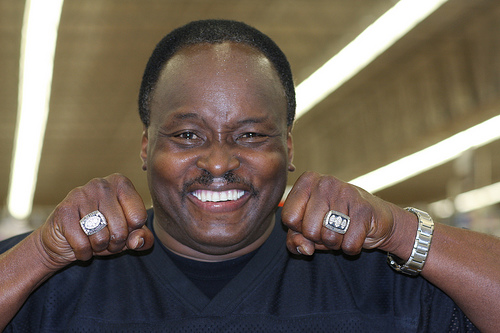
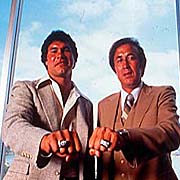
Lester Hayes showing off both rings from Super Bowl XV and XVIII

After being overshadowed by Mike Haynes for that 1979 Pro Bowl slot, he was joined by his former counterpart in 1983 to form one of the greatest CB tandem in NFL history. In that year the Washington Redskins became the highest scoring team in NFL history scoring 541 points on their way to Super Bowl XVIII. Washington’s quarterback Joe Theismann was the NFL’s MVP and the Redskins were being hailed as the greatest team in NFL history…yet they had to defend their title against Los Angeles.

The Raiders started their charge in the 83 playoffs with a 37-10 devastation of the Pittsburgh Steelers which ironically began with Hayes getting the team started with an 18 yard TD interception return. After a 30-14 win against the Seahawks in the AFC Championship experts had the Redskins winning a high scoring game.

What took place in Super Bowl XVIII was a dismantling of epic proportions. Charlie Brown, who had caught 78 for 1,225 and 8 TDs during the regular season, was smothered along with Art Monk and held to a combined 4 receptions by Hayes and Haynes. The coverage was so superb the Raiders blitzed their linebackers and recorded 6 sacks as Joe Theismann had his worst game of the year. His stat-line?? Theismann was held to 16 of 35 for 243 yards and 2 ints. Only one pass was completed in Lester Hayes area the entire day. He won his second championship ring as the Raiders won in dominating fashion 38-9.

Hayes at this point was the best cornerback in all of football. He played in 5 straight Pro Bowls from 1980-1984 and was the player most future NFL’ers modeled their game after. Most notably Hanford Dixon of the Cleveland Browns. Everything from the three foot long towel hanging from his waist to his aggressive play against a receiver at the line. Dixon and Frank Minnifield are the tandem that Lester Hayes and Mike Haynes are most often compared to. As a combo… Dixon and Minnifield were the best tandem in NFL history. Yet the man who coined the Brown’s “Dawg Defense”, was a 3 time Pro Bowler who modeled himself to be like Lester, what would you call Hayes?? In The Chancellor’s book, he’s a Hall of Famer.

Please lend your thoughts as well by writing in to the Pro Football Hall of Fame to the address below. Please be respectful and positively lend your voice:

Please write & nominate #37 Lester Hayes
Send letters to:
Pro Football Hall of Fame
Attention Senior Selection Committee
2121 George Halas Dr NW, Canton, 
OH 44708

For induction into the Pro Football Hall of Fame, I present to you Lester Hayes

lester

Tom Flores Belongs In The Hall of Fame

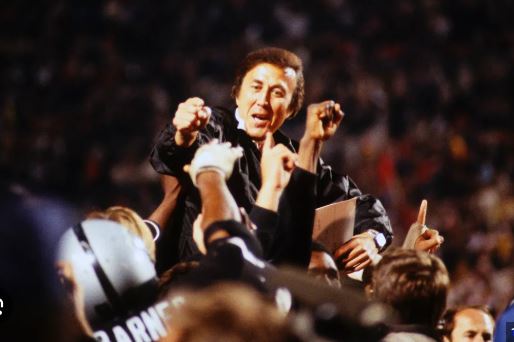
Tom Flores with his team before player introductions in the L.A. Coliseum

When you think of the short list of coaches in NFL History that have won multiple Super Bowls, who comes to mind?? Of course you think of Vince Lombardi, Don Shula, Tom Landry, Chuck Noll, Bill Walsh, or even Bill Parcells and Bill Belichick. Throw in Joe Gibbs and his three rings.  Do you realize there are only two eligible coaches that have won multiple Super Bowls that are NOT in the Pro Football Hall of Fame??
Think about it a second, we’re talking about a coach with as many victories as six eligible Hall of Fame coaches and you don’t consider Tom Flores great?? Only Jimmy Johnson,Vince Lombardi and Bill Walsh can best Flores in shortest coaching careers who achieved 2 Super Bowl victories.  Landry, and Shula coached 29 and 33 years respectively to achieve the same number of championships.

Tom Flores and Jim Plunkett showing off Super Bowl rings.

For some it’s the fact that his winning percentage of .527 isn’t that high. However Bill Parcells is almost a shoo-in finalist this year with a winning percentage of .570. Also, before his stint as Seahawks head coach, he left the Los Angeles Raiders with a winning percentage of .610 which is better than Bill Walsh at .609. Something to think about.

It’s fair to compare him to Bill Walsh since he is in the Pro Football Hall of Fame and coached in the same era. Walsh led the team of the 80’s to 3 Super Bowl wins in San Francisco to Flores’ 2 championships. Yet in head to head competition, Flores Raider’s were 2-1 against Walsh’s 49ers. Now throw in the fact Flores had a better winning percentage before he left for Seattle and it’s hard to argue his candidacy.

After following in the footsteps of another Hall of Fame coach in John Madden, some mistakenly think Flores won with Madden’s guys. Which isn’t close to being true. In today’s market of free agency we’re used to a lot of movement, yet between winning Super Bowl XI (Madden’s team) and Super Bowl XV only WR Cliff Branch and Mark Van Eeghen remained of the skill positions. WR Fred Biletnikoff, QB Ken Stabler, and RB Clarence Davis were all gone. Ken Stabler was traded to the Houston Oilers. He won with (at the time draft bust) Jim Plunkett at quarterback who was with his 3rd team. Stop and think about that.. That’s the equivalent of the Colts trading away  Peyton Manning and bringing in Matt Leinhart and winning the Super Bowl.

Furthermore 9 of the 11 starters on defense for Super Bowl XI were gone by Super Bowl XV. Jack Tatum, Willie Brown, Monte Johnson, all gone with the holdovers being John Matuszak andTed Hendricks. He won Super Bowl XV with a quarterback the world had forgotten about. A little known RB in Kenny King and 14 new players in only his second season as a head coach?? Might be the single greatest coaching performance in NFL history.

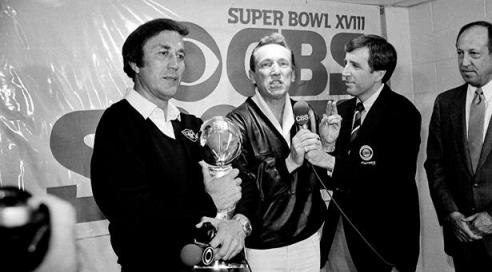
Tom Flores and Al Davis receiving the Vince Lombardi Trophy following Super Bowl XVIII

Although winning it all in 1980 was the crowning jewel of a season, his triumph in 1983 should have catapulted him to legendary status. It was his ’83 Raiders that stopped the defending champion Washington Redskins and MVP Joe Theismann dead in their tracks. The ’83 Redskins were the highest scoring team in NFL history and going into Super Bowl XVIII, pundits were hailing them as the best team ever. Yet in a dominant performance the Raiders ushered in the era of the Super Bowl blowout winning 38-9. After that game we had the string of 13 consecutive NFC Super Bowl winners. Yet if you looked at the era from 1980-1996, ONLY Tom Flores won a Super Bowl for the AFC side of the ledger and he did it twice. How is that for impact??

Yet why is he constantly overlooked for his coaching performance when it comes to greatness?? Is it because of the shadow cast by former owner Al Davis?? Even in the NFL Films Super Bowl XVIII video, they lauded Raider assistant Charlie Sumner for the defensive play that put the Redskins hopelessly behind. The Jack Squirek interception for a touchdown to make it 21-3 at the half. Why didnt they give Flores the credit for that move??

Logic tells us that a part of it could be the fact that he’s Hispanic and the sporting press doesn’t view him in the same light as fellow coaches. We hope to be wrong in this assessment yet it’s the ONLY discernible difference between he and every other coach listed above.  Tom Flores, for his career had 97 wins, 87 losses and was 8-3 in the postseason. He had the AFC’s best record (12-4) also in 1985 with MVP Marcus Allen but they were upset in the playoffs by the Patriots. To some, those aren’t great numbers but neither were Joe Namath’s 173 TDs and 220 interceptions and he’s in.

It’s about impact and contribution to the game. Being the only AFC coach to win a Super Bowl in a 17 year period qualifies for impact. Another interesting fact; Of the first 20 Super Bowl winners, his 1980 Oakland Raiders are the ONLY  team that doesn’t have a skill player in the Hall of Fame. Cliff Branch being in there is another argument for another time. Again we call that one of the greatest coaching performance in NFL history. It’s time to give Tom Flores the credit and distinction he deserves.

Please lend your thoughts as well by writing in to the Pro Football Hall of Fame to the address below. Please be respectful and positively lend your voice:

Please write & nominate Tom Flores
Send letters to:
Pro Football Hall of Fame
Attention Senior Selection Committee
2121 George Halas Dr NW, Canton, 
OH 44708

For induction into the Hall of Fame, I present Tom Flores

Thanks for reading and share the article.

Dynasty Lost

SUPER BOWL XVIII RUNNER UP 1983 WASHINGTON REDSKINS <———- Click Link