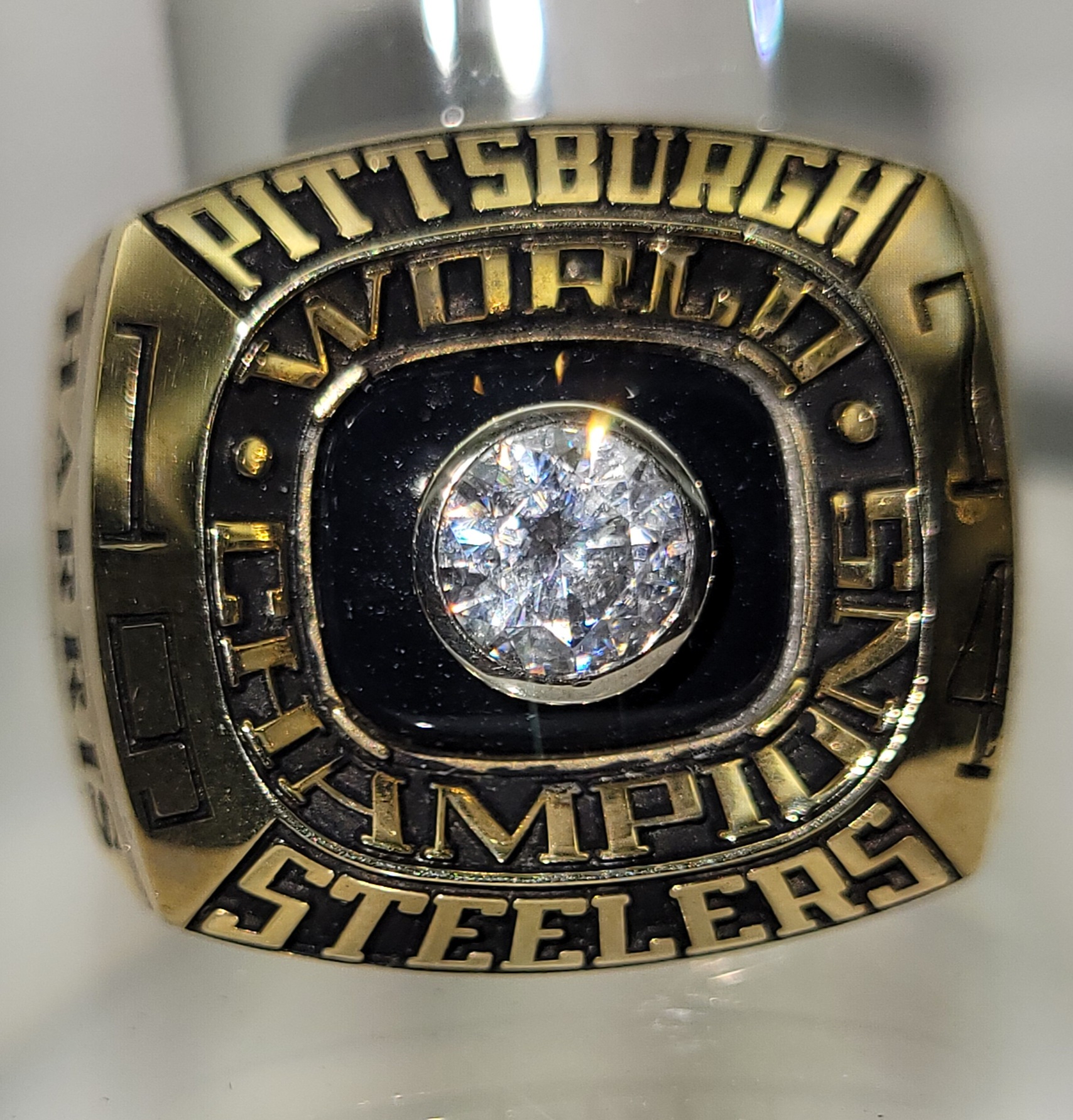
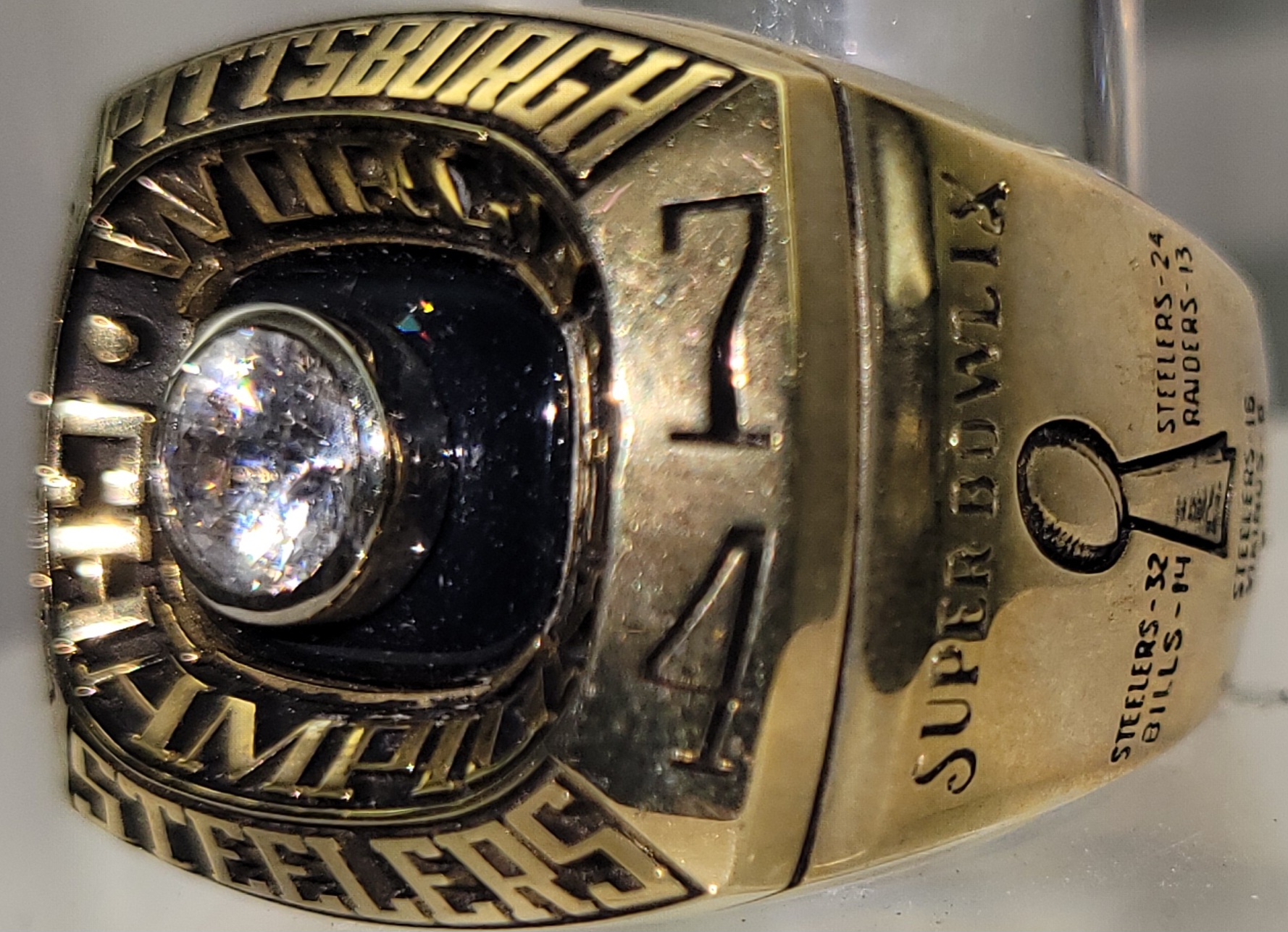
SUPER BOWL IX CHAMPION 1974 PITTSBURGH STEELERS

The first NFL championship in 42 years where the game ball was given to Steeler patriarch, the late Art Rooney. It had been a long time coming for all the decades of despair this team had been through. From the war time merging with the Philadelphia Eagles to form the “Steagles”. To the failed ability to recognize quarterback talent by cutting future Hall of Famers Len Dawson and Johnny Unitas. Nothing good had happened for this organization for decades.

Enter Chuck Noll.

Noll was hired to be the Head Coach after serving under Don Shula’s Baltimore Colts regime in 1969. His last game with the organization was the loss to the New York Jets in Super Bowl III. By then Noll was defensive coordinator after serving for years as a defensive line coach, most notably with the early 60’s San Diego Chargers in the AFL.

They say the player is the father to the coach a man becomes and Noll had been a lineman in his playing days. So instead of building his team first with a quarterback or featured runner, he drafted defensive tackle Joe Greene. He would build his defensive masterpiece from the ground up. A point often forgotten is the selection of LC Greenwood in the 10th round that same year.
In 1970, quarterback Terry Bradshaw was selected as the #1 overall pick. They finally had their quarterback of the future but the chief building block was Noll’s defense and in particular his defensive line. Five years later they were the best in pro football and came to be known as “The Steel Curtain”

Of course the Steelers had the great class of 1974 to put the finishing touch on what would become a football dynasty. However a look back and you can truly see how Pittsburgh’s first NFL championship had AFL roots.
If the AFL hadn’t been around to offer Chuck Noll his first coaching job at the professional level in 1960, would he have been in place to take the Steelers job in 1969?? Also look at the make up of the Steeler team from a draft and racial standpoint. Mining talent from historically black colleges and smaller schools was an AFL trait, not an NFL one. What Noll did in Pittsburgh was recreate the San Diego defensive line of the early 1960s he wasn’t allowed to in Baltimore.Steel_Curtain_Time_Magazine

  • Joe Greene – North Texas St.
  • LC Greenwood – Arkansas AM & N
  • Ernie Holmes – Texas Southern
  • Dwight White – East Texas State

So think of Joe Greene as a latter day Earl Faison or Ernie Ladd who had come from Grambling. By the time we include the late quarterback “Jefferson Street” Joe Gilliam from Tennessee State, Mel Blount from Southern, and John Stallworth from Alabama A&M, this team resembles the 1965 San Diego Chargers or 1969 Kansas City Chiefs of the AFL more than it did the 1968 Baltimore Colts.
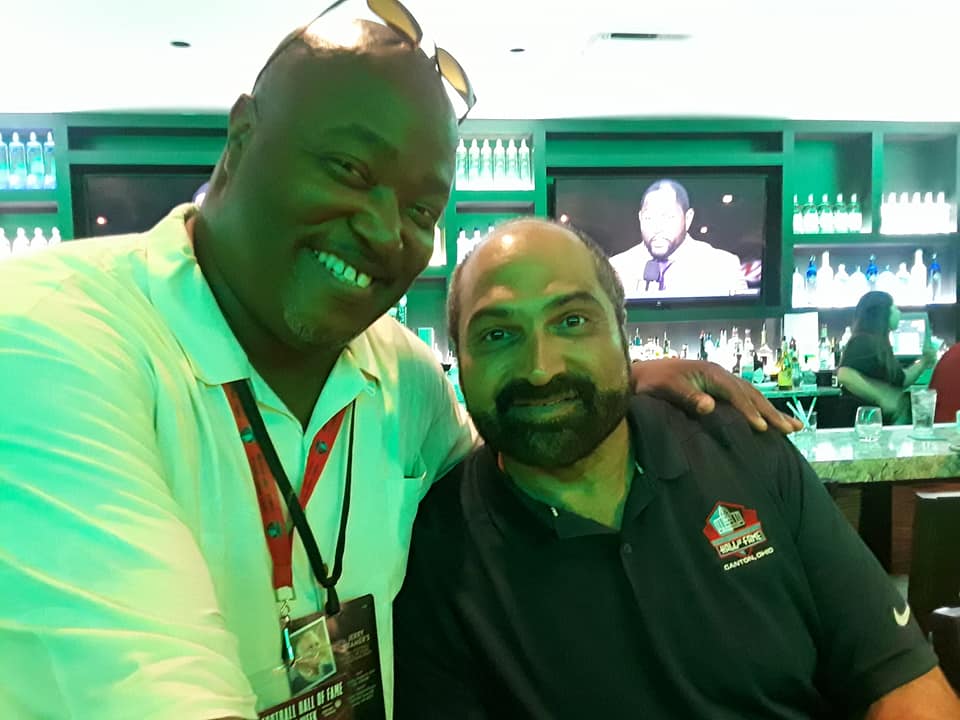
The Chancellor with Franco Harris, MVP of Super Bowl IX.

super-bowl-logo-1974Many former players have talked about the racial quota that existed in the NFL back when. Well along with Vince Lombardi and Hank Stram, Chuck Noll broke that system for good and let talent flourish. First the Steelers took $1 million to move in with the AFL teams to form the AFC in 1970 with the league merger. Than Chuck Noll built the best AFL team he could through the draft.

In doing so he brought Pittsburgh a championship it so desperately sought. It would not be the last.

RIP Coach Noll

RIP Coach Noll

Thanks for reading and please share the article.

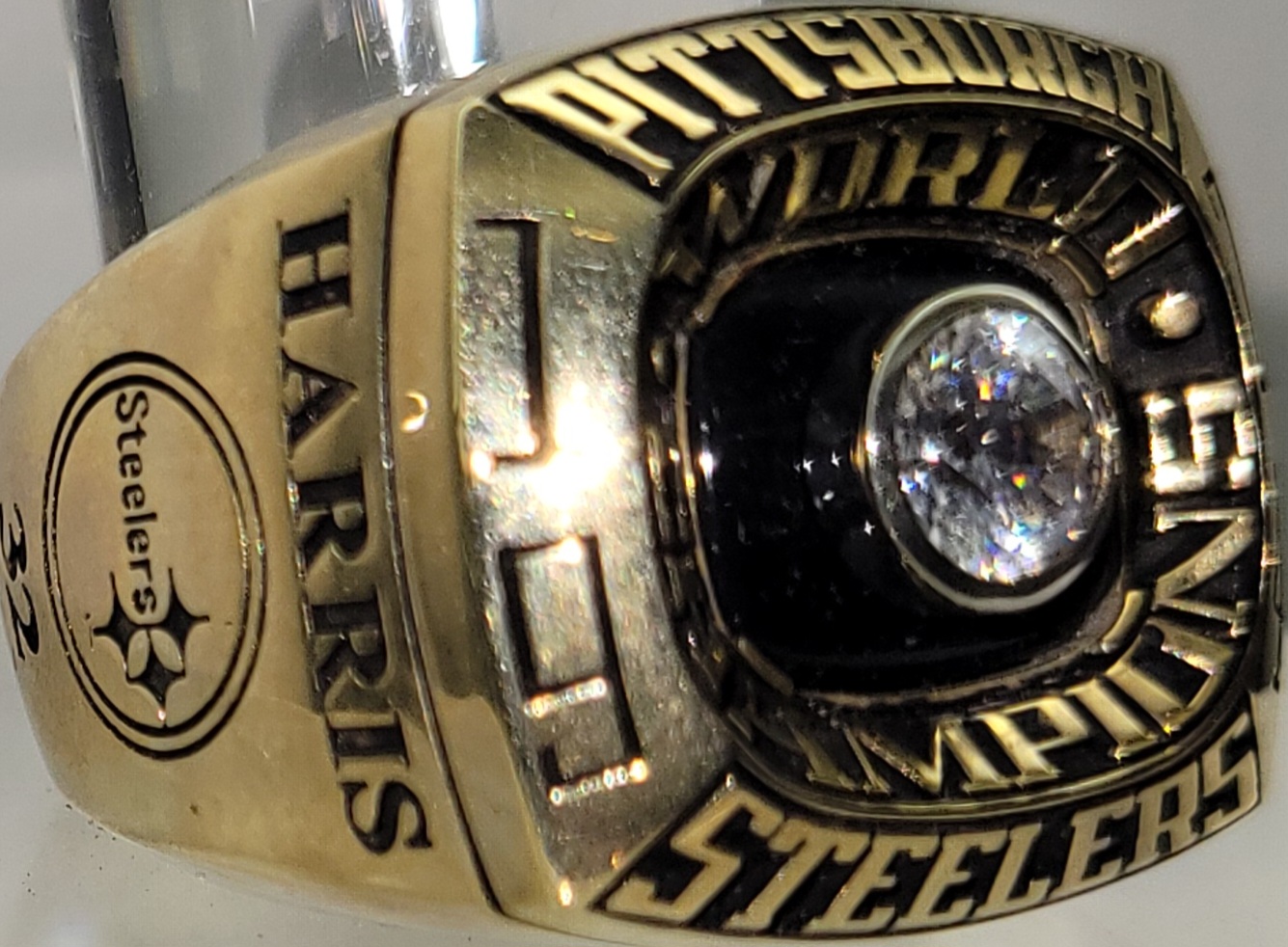
This bauble was what each player and coach received after their 16-6 win vs the Minnesota Vikings in Super Bowl IX.

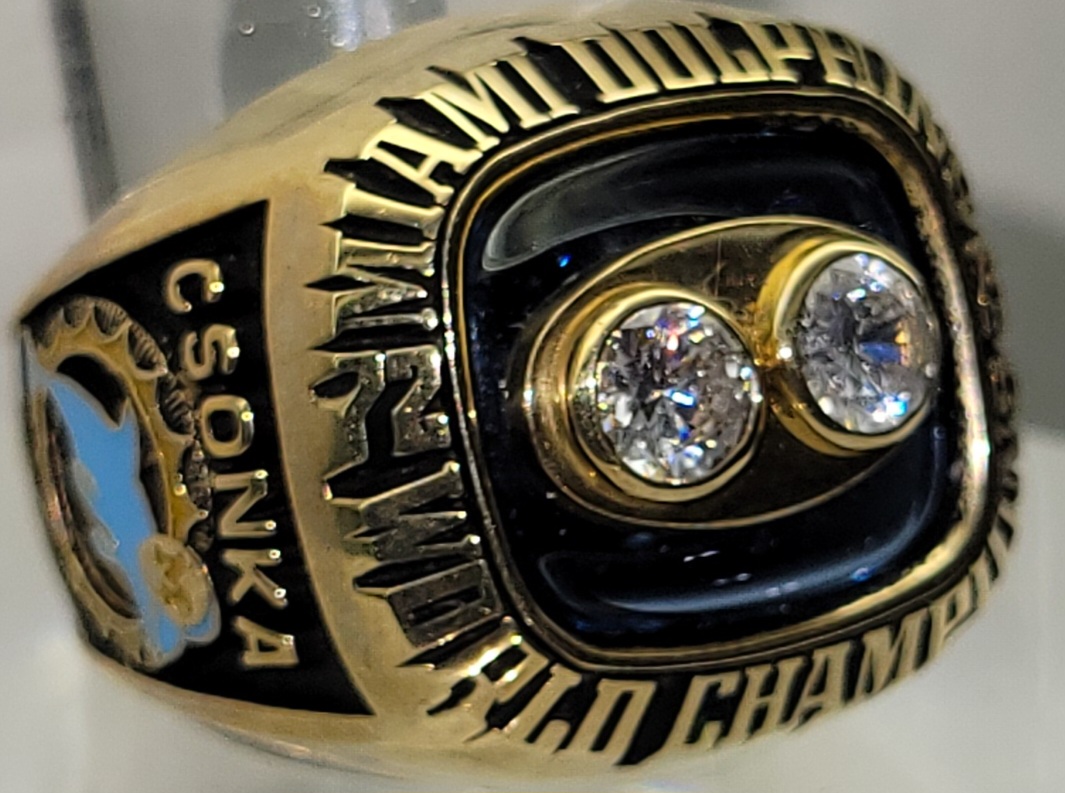
SUPER BOWL VIII CHAMPION 1973 MIAMI DOLPHINS

The NFL’s first dynasty after Vince Lombardi’s Packers was Don Shula’s Miami Dolphins. The only dynasty we never got to see reach its conclusion on the field. After compiling a 32-2 record including two Super Bowls, RBs Larry Csonka, Jim Kiick, and WR Paul Warfield signed contracts with the rogue WFL. It brought the end to an era where Shula’s ground game and “No Name Defense” ruled the NFL.

The most dominant team of 1972 & 1973 would be broken up losing two Hall of Famers in Csonka and Warfield. However their WFL contracts wouldn’t take effect until 1975 meaning the team would be intact for one final season.
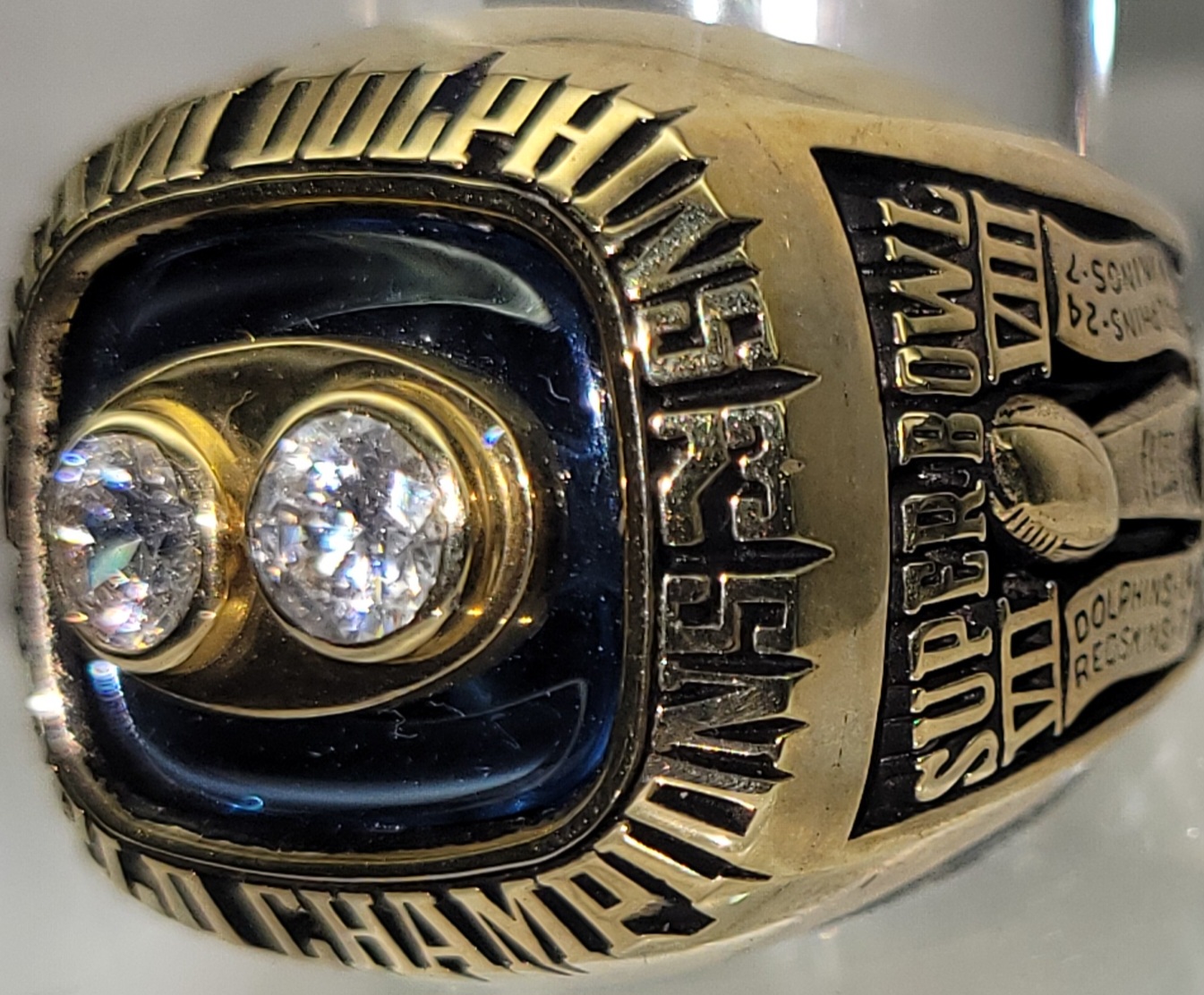
The heartbeat of the Dolphin dynasty was its ground game. In the perfect season of ’72, Larry Csonka and Mercury Morris became the first backfield tandem to each rush for 1,000 yards in the same season. They nearly repeated that feat in ’73 when Morris rushed for 954 to Csonka’s 1,003.

With the team being breaking up an inevitability, Miami had a threepeat in their sight in ’74. After an 11-3 record there was a feeling the Dolphins were vulnerable. Several defensive starters were out due to injury. Six of their wins were by 7 points or less. Where in ’73, all 12 wins were by more than a touchdown. The wear and tear of upholding that championship mantle had brought them back to the pack.
super-bowl-logo-1973The divisional playoff game would be in Oakland against the revenge minded Raiders. Although Miami defeated them in the AFC Championship Game at home in ’73, the Raiders beat them in the regular season in Berkeley. That win halted the Dolphins 18 game winning streak which was an NFL record at the time. So into the Oakland Coliseum they went…

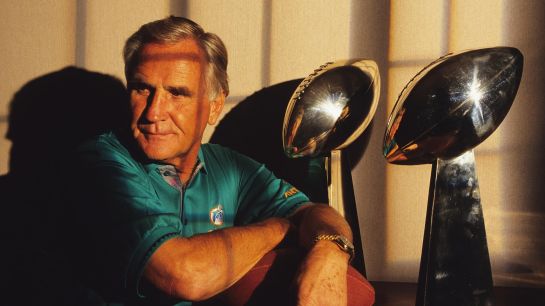
The game became known as “The Sea of Hands” one of the most famous games in NFL history. The Dolphin dynasty came to an end with Kiick, Warfield, and Csonka jumping to the new league the following season. No one knew Don Shula would go on to be the winningest coach in NFL history. Even more surprising, he would coach through the 1995 season and would not win another Super Bowl.

For the coach on the losing end of Super Bowl III, to the coach who drove his team to the NFL’s only undefeated season, to the man that led his team to 3 of the next 5 title games, culminating with this ring. The second NFL championship ring that crowned a dynasty. Don Shula had taken his place among the greatest coaches in NFL history.

Thanks for reading and please share the article.

The Soul of The Game: Ernie Stautner

Last night during the retirement of Joe Greene’s #75, it was revealed his was only the second number retired in Steelers history. When they announced the other number belonged to Ernie Stautner, only the real old timers remembered him as a player.  Some knowledgeable Steeler fans would remember him from his days as a defensive line coach for the Dallas Cowboys during the Super Bowl years of the 1970’s.

Stautner was a 9 time Pro Bowl DT who eventually made it to the Hall of Fame.

Stautner was a 9 time Pro Bowl DT who eventually made it to the Hall of Fame.

However an earlier incarnation of Stautner was the greatest Steeler during those 42 years of losing before Super Bowl IX. During his 15 year career with the Steelers he was the lone standout as he made the Pro Bowl nine times. Stautner was voted to the All Decade Team of the 1950’s.

He was revered as the strongest defensive tackle at the point of attack. In the video you’re about to watch, you’ll see he alternated between defensive end and tackle. He only weighed 235 lbs for most of his career. The same weight as Hall of Fame running back Jim Brown. Yet through his intensity and technique he was the greatest defensive player of the Pittsburgh Steelers first 42 years of existence.

Speaking of technique, he went on to be the defensive line coach of the Dallas Cowboys for over 20 years. He taught them all from Hall of Famer Bob Lilly, Jethro Pugh, George Andrie, and on through Harvey Martin, Ed “Too Tall” Jones, and Hall of Famer Randy White. He spanned both Doomsday I and II and only departed once Jimmy Johnson brought his own coaching staff to Dallas in 1989.

The late Stautner giving some gameday tips to the late Harvey Martin in 1978.

The late Stautner giving some gameday tips to the late Harvey Martin in 1978.

Yet it’s his first NFL incarnation of one of the greatest defensive linemen of his era. He was voted to the Pro Football Hall of Fame in 1969 which ironically was the year the Steelers drafted Joe Greene.

Dedicated to the memory of  Ernie Stautner (Apr 20, 1925- Feb 16, 2006)

Thanks for reading and please share the article.

Legends Of The Fall: OJ Simpson

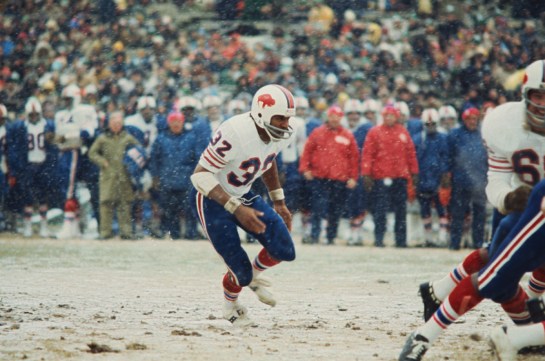
There is no more polarizing name in the history of the NFL than that of OJ Simpson. Once upon a time he was the greatest halfback in the history of professional football. A former Heisman Trophy winner from USC who was drafted #1 by the AFL’s Buffalo Bills in 1969. He restored respectability to a once great franchise.

Yet he is known now more for the events that transpired June 12, 1994 and the subsequent trial of the century. Simpson’s was a tragic fall and one we’ll get into later. Right now we want to focus on his previous life as the most electrifying running back the NFL had ever seen.
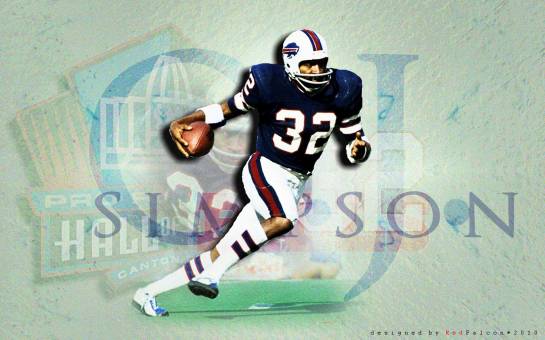
One interesting  note is he finished his career with 11,236 yards rushing, or 1,076 yards short of then all time rushing champion Jim Brown. Head coach John Rauch, who had been fired by Al Davis in Oakland, wanted to prove his genius and played OJ at wingback. So for his first three years he played in a position he was primarily misused until Rauch was replaced by incoming Bills coach Lou Saban.

Finally freed to play tailback as he had at USC, Simpson grabbed the imagination of NFL fans everywhere. He broke breath taking runs. His impromptu style brought shoulder fakes and make ’em miss moves that the casual fan could identify with. To watch him battle against defenses that feared the big play element he brought to bare was a thing of beauty. He was the prototype to the bigger half back at 220lbs that had the speed to break the big play.

Although he burst into the nation’s consciousness with 1,251 yards in 1972, it was his legendary 1973 season that he became an all time classic. His 2,003 yard season was marveled at, lionized, and written about ad nauseum for eclipsing a number no one thought possible. He did this in a 14 game season and raised the bar in an era where great backs got the ball 30 times a game.

Simpson was a superstar of the highest magnitude as he led the NFL in rushing 4 times in a 5 year span. It was his 1975 season that propelled Simpson to the Pro Football Hall of Fame as he broke numerous records including the most TDs in a season with 23. As for rushing for 2,000 yards?? He didn’t do that but he did gain 2,243 yards from scrimmage… Take a look

For the most part, Simpson’s work was condensed in the 5 years from 1972-1976. In these 5 years he rushed for 7,699 of his 11,236 yards or 68.5% of his overall total. He put in work against some great defenses too. He had several 100 yard performances against Miami’s “No Name Defense.”

Against the Steel Curtain in 1975, by the way #9 on our list of Greatest Ever Defenses, Simpson crushed ’em for 227 yards in Three Rivers Stadium no less. This was great considering he was within 24 yards of the all time single game rushing record. By the way he held that record also with a 250 yard rushing performance against the Patriots in 1973. Then he broke that record with a 273 yard performance against Detroit Thanksgiving 1976.

By this time the wear and tear began to erode his skill and ability to cut and change direction. Multiple knee surgeries followed an injury plagued 1977 where “The Juice” played in only 7 regular season games. He was dealt to his hometown San Francisco 49ers where he finished out his career. As the 1979 season came to it’s conclusion, it was time for OJ to say goodbye to the game.

NFL Films named Simpson pro football’s hero of the decade. Think about that a second.  Not Roger Staubach…not Terry Bradshaw… OJ was their choice and it was a logical one. His feats scaled the record books and he had gone where no other runner had gone before. He only played in one playoff game during his career, yet Pete Rozelle made sure he had primetime games to showcase his talents.

OJ Simpson….one of the best runners and greatest players in NFL history.

OJ Simpson…an all time great runner.

Epilogue: Once the events that took place on June 12, 1994, with the murder of Ron Goldman and Nicole Brown Simpson, it threw every Bills fan in a weird place. To see his descent into this tragic figure ripped our hearts out. It happened right after the Bills had lost our 4th straight Super Bowl in which he was a part of each NBC telecast.

The Chancellor of Football's pilgrimage to Buffalo. Bills v Cowboys 9 22 1996

The Chancellor of Football’s pilgrimage to Buffalo. Bills v Cowboys 9 22 1996

Regardless what you think of him now, I wanted to put up an article featuring what he once was. He left an impression on me as a young fan and why I’m still a Buffalo Bill fan to this day. I can remember going to Rich Stadium, named after the late Ralph Wilson now, and asking where his name was on the ring of fame. That was Sept. 22, 1996 when Buffalo was hosting the Dallas Cowboys, so the emotions were still raw. Especially among the season ticket holders where I sat.

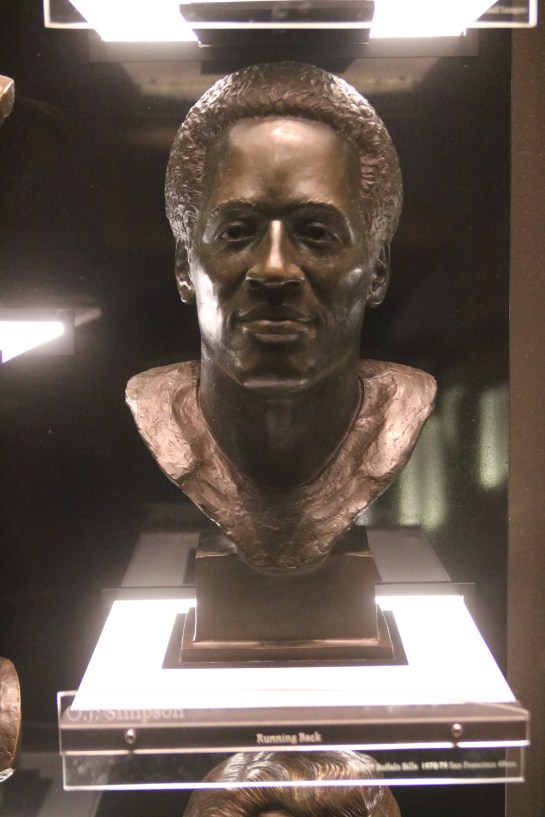
So here it is, 18 years to the day later and as The Chancellor of Football thinking back to that day. Which had a mixed set of emotions as it always does now when OJ’s name is brought up. I remember when the late Tim Russert of Meet The Press fame, spoke of seeing his bust at the Pro Football Hall of Fame the first time after the double murders. His expression was much the same as I would suspect with every other Bills fan.

Many people remember it as the murder and court case of the 20th century. No one outside of Bills fans think of it as the fall of a franchise’s greatest player. We live with that more than the 4 Super Bowl losses in the 1990s. Don’t forget…they happened at the same time.

hof-oj-simpson

Thanks for reading and please share the article.

Legend of The Fall: Walter Payton

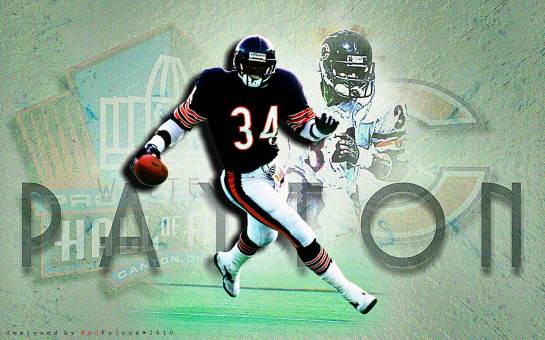
It has been 27 years since Walter Payton suited up for an NFL game. Before his passing in 1999 the question could be raised was he the greatest legend the game had known?? After his passing his legend is unmatched by any player of the last 60 years. “Sweetness” as a nickname is synonymous with those of “The Galloping Ghost” the “Steel Curtain” that will be shared with football fans forever.

The legendary

Payton

Although he is no longer the NFL’s leading rusher whenever you see a runner fighting for more yardage, you think of Payton. In The Chancellor of Football’s estimation during a majority of his career he was overshadowed by Tony Dorsett then Eric Dickerson since they were more flashy runners. It was grit and determination that made Payton special. Unlike other runners one man couldn’t bring him down nor could someone shoulder him down. Payton’s spirit was that of a great warrior and it took more than one man to stop him.

If you were to travel back to the 1980’s the standard bearer for runners was the great Jim Brown. He set the NFL’s all time rushing yardage mark with 12,312 yards when he retired in 1965. Only OJ Simpson came close to passing him finishing with 11,236 when he ran out of gas in 1979. Payton’s career long assault had him within reach as 1984 beckoned. Before he could eclipse Brown’s mark the comparisons started. Who was better?? Jim Brown or Walter Payton??

The video you just watched had been produced before Payton had become the all time leading rusher. They edited it before the second week of the 1986 season and re-aired it. He was about to score his 100th touchdown in the famous “Buddy Bowl”, where Buddy Ryan who had been the architect of the Chicago Bears championship defense the year before.  He returned as head coach of the Philadelphia Eagles.

Not only did Payton score his touchdown, he had his last true great game as he gouged the Eagles for 177 yards. It was his 75th 100 yard game. Much like Marvin Hagler in boxing, national media showcased Payton in the twilight of his career. Of course it was once he surpassed Jim Brown and his unbreakable all time rushing record was when he finally was afforded that status. That moment took place October 7, 1984.

At one time he had the greatest rushing performance in an NFL game with 275 yards and pushed the all time rushing record to 16,726 yards. Each of these have been broken but who embodied the spirit of the determined runner fighting a defense fighting to stop him?? Emmitt Smith and Corey Dillon come close but none matched his fury. Looking back on all these careers it was as though other runners were playing a role created for them by Payton. As thought they were all trying to impersonate him. Make no mistake about it he was The Chancellor of Football’s favorite player during his career.

The poignant moment that was etched in my mind wasn’t his sitting alone on the bench after his last game in the 1987 playoffs. It was his sitting on the bench by himself toward the end of the 1984 NFC Championship Game. Chicago was losing 23-0 to the San Francisco 49ers and it looked like this was the closest Payton would make it to the Super Bowl.

In an instant the flash entered my mind that his career would be over soon and he hadn’t been a champion. Then the great ’85 Bears stormed to the Super Bowl XX championship. He rushed for over 1,300 yards in 1986 then let it be known during 1987 it would be his last season. Sure he wasn’t the same runner as he split time with heir apparent Neil Anderson. It was at this time you had to reflect back on how great Walter had been over the years.

Friday would have been Walter Payton’s 60th birthday and he’s still missed by football fans everywhere. Yet we know the trials he faced toward the end of his life. Its better to focus on his play and the bright personality that we remembered him for.

Walter Payton soaring as he is in heaven above.

Walter Payton soaring as he is in heaven above.

Happy 60th birthday Walter Payton from a true fan that didn’t get a chance to meet you. Its fun to share vids for those who were younger that didn’t get to see you play or see the footage of your exploits. My gift to those fans in your honor started on your birthday. RIP Sweetness. Thanks for reading and please share the article. Epilogue: An extra video on Walter Payton’s 1984


Thanks for reading and please share the article.

Payton reflecting on the bench after the ’87 playoff loss to Washington. His last game.

Top Ten Single Season Defenses in NFL History : #2 2000 Baltimore Ravens

The bludgeoning Baltimore Ravens in 2000 was one of the greatest defenses in NFL history and lands at #2 on The Chancellor of Football’s list. Aside from winning Super Bowl XXXV, their greatest accomplishment was setting the record for fewest points allowed in a season with 165. Do you realize allowing 3, 10, and 3 in the AFC playoffs, that in 19 games they still bested the old 16 game record of the ’86 Bears 187 points with only 181?? Remember the Giants touchdown in Super Bowl XXXV was a kick return and not allowed by the defense. Still that is 188 points in 20 games!!

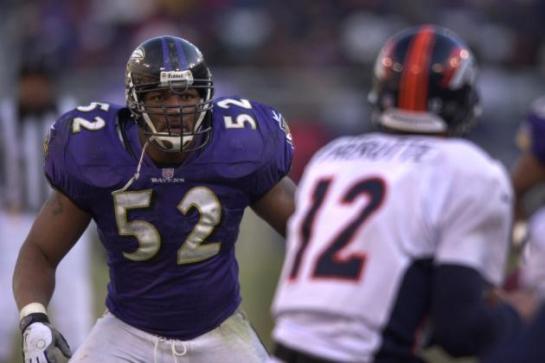
Ray Lewis' greatest season was the 2000 campaign.

Ray Lewis’ greatest season was the 2000 campaign.

To fully appreciate the Ravens season as a whole you have to understand how anemic an offense they carried. Their 16th ranked offense was the 2nd lowest of all Super Bowl champions.

For the season they were ranked 2nd overall allowing 247.9 yards per game. Yet #1 against the run setting the record for fewest yards allowed rushing in a 16 game season with only 970. Yielding a paltry 2.7 yds per carry when league average was 4.0. Baltimore held 11 of their 16 regular season opponents to 10 or fewer points. Four of which were shutouts. By the way, they also held all four of their postseason opponents to 10 or fewer for a total of 15!!

  • 2000 Baltimore Ravens allowed 970 yds rushing
  • 1985 Chicago Bears allowed 1,319 yds rushing
  • 1991 Philadelphia Eagles allowed 1,136 yds rushing
  • 1976 Pittsburgh Steelers allowed 1,457 yds rushing *14 games
  • 1977 Dallas Cowboys allowed 1,651 yds rushing *14 games
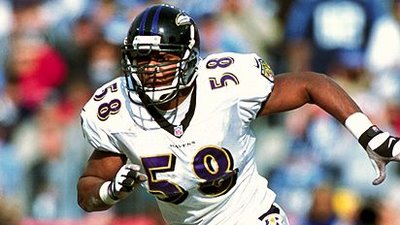
Boulware off the edge was a staple of Baltimore's pass rush.

Boulware off the edge was a staple of Baltimore’s pass rush.

This was a physically imposing defense that started with mountains in the middle in DTs Tony Siragusa and Sam Adams. Keeping blockers off 2000’s NFL Defensive Player of the Year in Ray Lewis. Who roamed free garnering 137 tackles, 3 sacks and an interception. It was one of the most dominating performances by a defensive player in league history. From The [[_]]

Fellow Linebackers Jamie Sharper (72 tackles /5 forced fumbles) and Peter Boulware clogged passing lanes, stuffed the run, and blitzed effectively. Boulware had 7 sacks as a Nickle rushing end. DE Rob Burnett led the team with (10.5 sacks) was a holdover from the Cleveland Browns days. He and fellow DE Michael McCrary were steady rushers that couldn’t be moved off the ball.

The most underappreciated aspect of this defense was the secondary. Led by Hall of Fame Safety Rod Woodson (77 tackles/ 4 forced fumbles /4 ints) this group was never out of position. They ranked 8th against the pass in 2000 yet were 2nd in passing TDs allowed with 11 while snatching 17 of the team’s 23 interceptions. Chris McAlister (4ints) and Duane Starks (6ints – The [[_]]) were top shelf corners and SS Kim Herring, Corey Harris, and Robert Bailey (The [[_]]) pounded TEs and slot receivers when teams went to multiple receiver sets.

During the season the Ravens were 1-1 against Pro Bowl quarterbacks and 2-0 against top 10 offenses. They held the NFL’s #2 offense to 3 points in their AFC Wildcard win. Yet this group was ranked #2 in 2000 and on their way to Super Bowl XXXV when they took on the #1 defense in the Tennessee Titans in the divisional round.

After vanquishing the Titans the Ravens had to go on the road to face the Oakland Raiders for the AFC Championship. In Oakland they faced the 6th best offense in football and the #1 rushing offense with 154.4 yards per game. Strength vs strength in a battle to make it to Super Bowl XXXV.

With their 16-3 win, you do realize this was only the 2nd time in the Super Bowl era a team hosted the conference championship and couldn’t score a touchdown, right?? Only the Los Angeles Ram did this with their 9-0 win over Tampa Bay in the 1979 NFC Championship Game prior to Super Bowl XIV. That is only twice in 70 games! That is only twice in 70 games!

Oh… by the way, that #2 defense againt the Raiders and the #1 rushing attack averaging 154.4 yards per game?? Baltimore suffocated Oakland holding them to 24 yards rushing in the AFC Championship Game. Yikes!

The 2000 Baltimore Ravens were the greatest defensive 11 in NFL history and are #2 on The Chancellor of Football’s list. Why weren’t they #1?? That will be explained in the next article.

chancellor.hallofame.marvinlewis

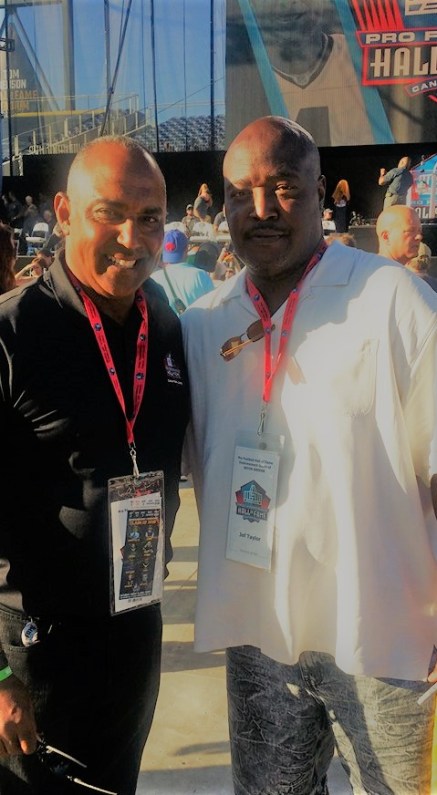
At the 2016 Hall of Fame Induction Ceremony, ran into current Cincinnati Head Coach Marvin Lewis. The Defensive Coordinator of the 2000 Baltimore Ravens record setting defense.

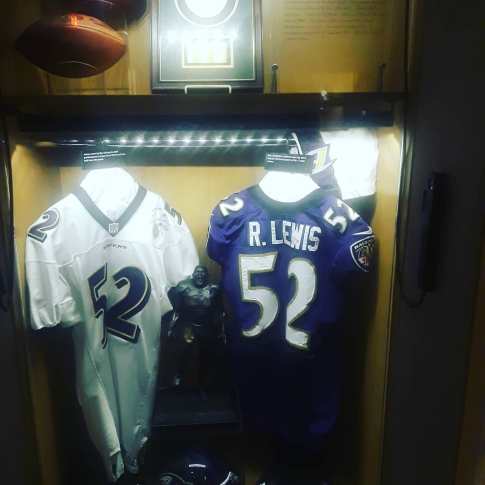
Ray Lewis locker at PFHOF enshrinement weekend 2018 w Super Bowl XXXV jersey.

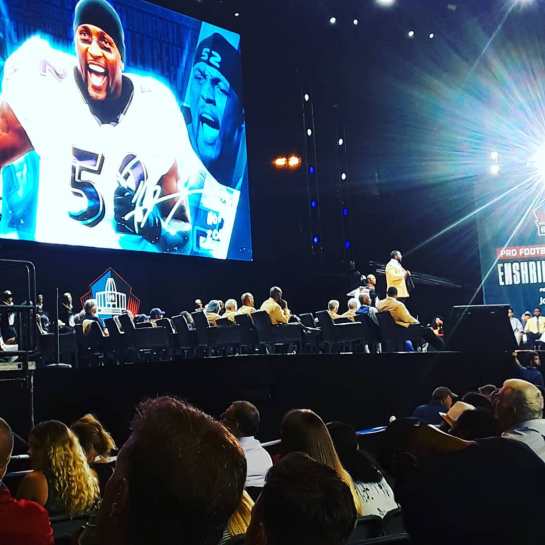
When Ray came out with the wireless mic… sigh. My dude! LOL

Thanks for reading and share the article for once would ya’