Legends of The Fall: Thomas “Hollywood” Henderson

Article Reissue

When I came up with  The Legends of The Fall, my thoughts were to remember Hall of Fame players of yesteryear, and those whose “what if” legacies due to injuries or circumstances that kept them from becoming all time greats. Yet we still talk about them because they were supernovas that burned bright in our collective mind when we think of their transcendent play. One of those players was Thomas Henderson.

Now everyone remembers Henderson as one of the most flamboyant players of the 1970’s and he was. However lost in why he was so acclaimed were the distinctions he brought to pro football many observers obscure. Not this historian…and we’re going to take you through a few today.

One of those was his becoming one of the social icons of his times as a man of the 1970’s. A black cultural icon of transcendent play, outspoken black identity, and a reach that went beyond the football field.

In 1974 the NFL instituted several rule changes, the most visible had been the goal post moved to the back of the endzone. A more subtle change was the narrowing of the hashmarks which eliminated the short side of the field as you still see in college football. This called for Outside Linebackers with greater lateral speed and range play after play to either side.

Artwork by Clarence Pointer signed by Hollywood Henderson available.

Another subtle NFL rule change in 1974 made it illegal for all but the outside players on the punt team to leave before the ball was kicked. Enter Thomas Henderson. The Cowboys second #1 draft pick in 1975 who had been discovered out of Langston by Red Hickey. It was his speed and athleticism that led to his being used to help revolutionize the game from a tactical standpoint. This gave birth to the modern gunner where Henderson was also used. His size allowed him to bull through the two DBs as he came off the ball in pursuit of the punt returner

He was a special teams standout on a veteran laden ball club that had to get him on the field. He flashed downfield to make tackles and was used on reverses. A Linebacker on reverses?? Do you remember his reverse on the opening kickoff of Super Bowl X??

It was one of the first glimpses into what he was doing down in Texas. By 1977 Henderson had become the starting OLB where his speed was on display to match with some of the NFL’s best athletes covering backs out of the backfield and covering TEs out in space. The NFL was speeding up as a sport on astroturf and Henderson was among the new breed of athletes being moved to defense.

What most pundits don’t realize is how 1 penalty altered the perception of Hollywood Henderson.

Over the next four years Henderson’s Cowboys were the best team in the NFC as they became Super Bowl champions in 1977 and repeated as NFC Champions in 1978. In those two seasons the Flex defense was ranked #1 and #2 in the NFL and going into Super Bowl XIII were ranked higher than the #3 ranked Steel Curtain. If they win they become a dynasty as back to back champions and Henderson, who had made his 1st Pro Bowl, would have been lionized instead of the team being scrutinized because of the loss.

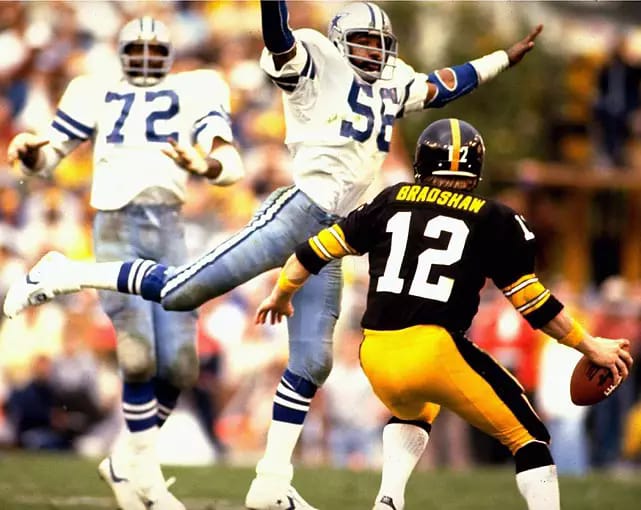
We all remember Super Bowl media day when Henderson claimed Terry Bradshaw was so dumb he couldn’t spell cat if you spotted him the “c” and the “a”. Well think back to the game. Henderson made a huge play when he sacked Bradshaw and Mike Hegman stole the ball to give the Cowboys a 14-7 lead. Their only lead of the game.

In what became known as a seesaw game it really was one the Cowboys defense had taken over. They dominated the 2nd half as Pittsburgh couldn’t move the ball. It was the bogus pass interference penalty on Benny Barnes that changed the field position and put the Steelers in scoring position at the 22 late in the 4th quarter. Then a fumbled kickoff, two quick scores and they were up 35-17 en route to a 35-31 win.

That pass interference, which is now called incidental contact and no penalty, caused Henderson and the Cowboys to be scrutinized because of the loss. He had played a tremendous game but now pundits pointed to the press conference and even an on field altercation with Franco before his 4th quarter touchdown as turning points. Great story telling but very…very inaccurate accounting of the facts.

The history books don’t tell you Dallas had set a record holding the winning team to just 75 second half yards. Nor the fact Henderson is the only person in the 51 year history of the Super Bowl to be involved in scoring plays in both the conference championship and subsequent Super Bowl on defense. In the video above when he scored against the Rams, it was the finishing touch on a 28-0 win out in Los Angeles.

That Benny Barnes pass interference penalty made the Steelers the Team of the Decade and sent 10 Steelers to the Hall of Fame and only 4 of the Cowboys from that era.
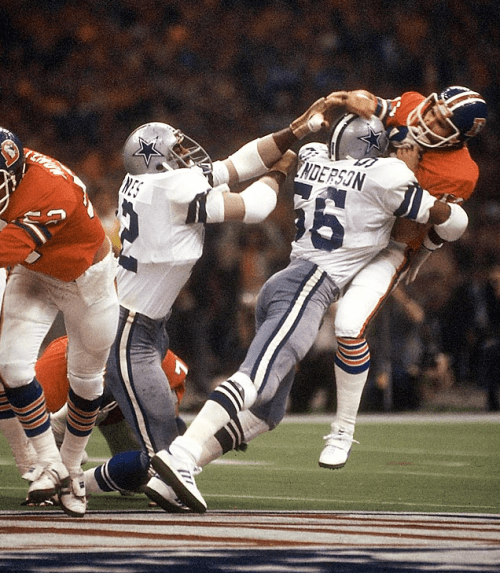
Henderson smashes into Denver QB Norris Weese in Super Bowl XII.

We know of the pressures and build up to his release in Dallas but where would he have been had they become back to back champion?? Greatest defense in history?? No one has been #1 on offense and #1 on defense and champion since his ’77 Cowboys. How much did the fallout from Super Bowl XIII lead to his dismissal in Dallas??

Keep in mind Tom Landry in his A Football Life episode said on stage had he handled the situation with Henderson differently we could have won 6 or 7 Super Bowls. Dallas went on to lose the ’80, ’81, & ’82 NFC Championships without him. When you look back at those losses Dallas didn’t have a defensive playmaker on the field. Not like they had in 1977 and 1978. In fact he would have been in his prime going into his 6th, 7th, and 8th seasons. Lawrence Taylor & Bruce Smith recorded defensive player of the year honors in that 6th season.

Would Joe Montana have all that time to scramble to the sideline and find Dwight Clark with The Catch in the 81 NFC Championship had Hollywood been chasing him??
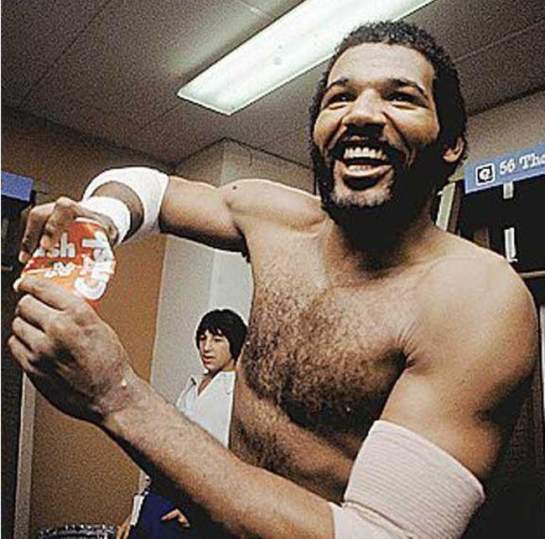
henderson.crush

I’m still mad at him for this…he ruined 2nd grade for a kid in Denver.

Henderson was still in the NFL…just not in Dallas where they would have featured him. What could have been?

Epilogue: Last Saturday on February 10, 2018, Thomas Henderson was inducted into the Black College Football Hall of Fame. An incredible honor. If you think I was waxing hyperbole when I opined he would have made the Pro Football Hall of Fame had his career stayed on the same arc…guess where the BCFHOF is moving to?? Try Canton, Ohio inside the Pro Football Hall of Fame.
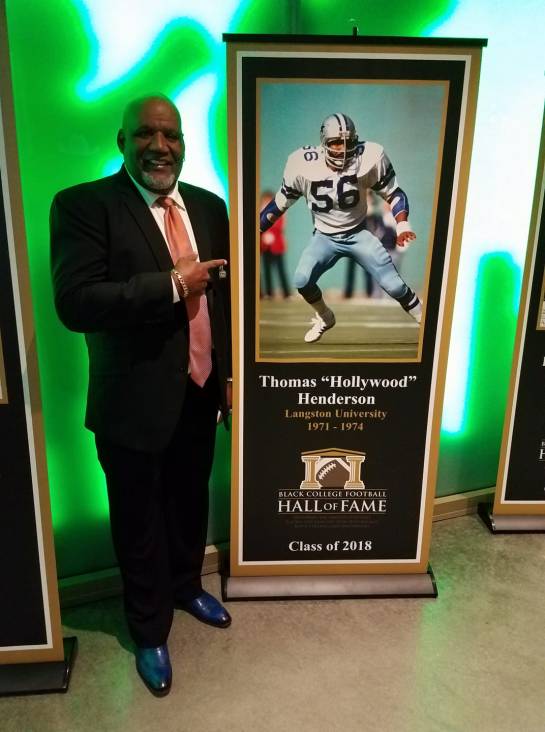
hollywood.hall

Congratulations on your induction Thomas Henderson!! A supernova! A Hall of Famer!
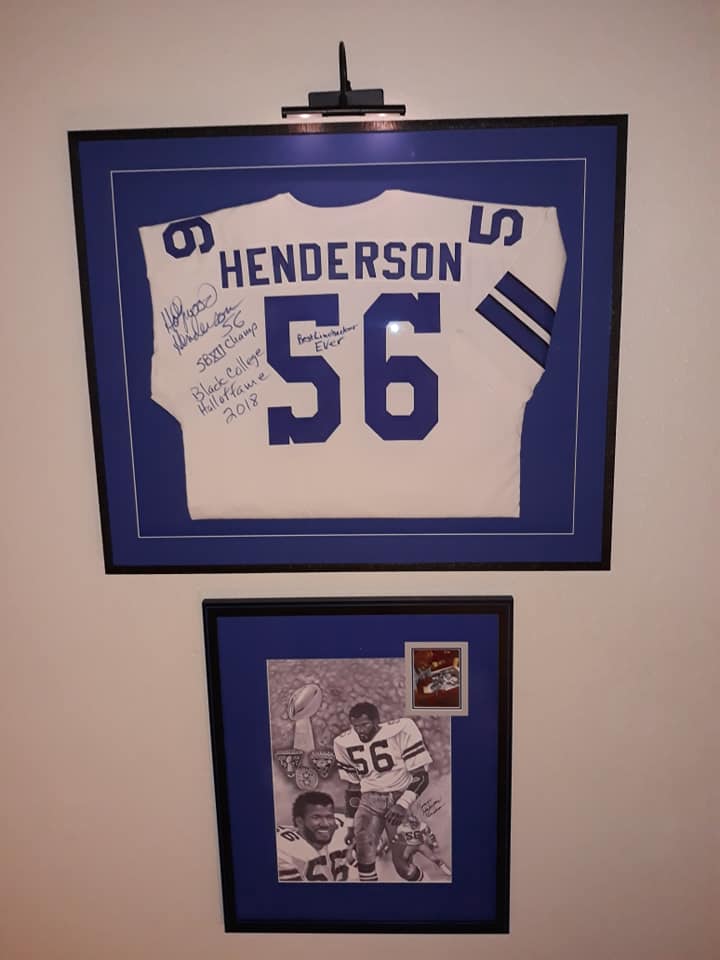
 

Thanks for reading and please share the article. hollywood.chancellor

Top Ten Single Season Defenses in NFL History : #1 1985 Chicago Bears

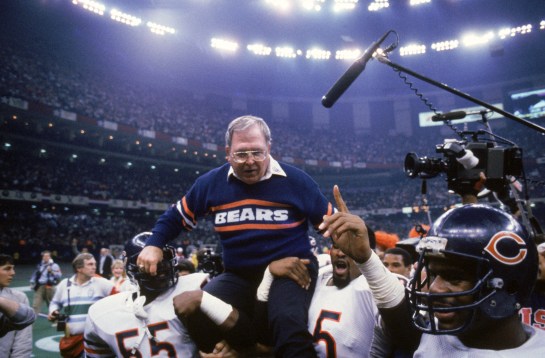
Defensive Coordinator Buddy Ryan was also carried off after Super Bowl XX.

Defensive Coordinator Buddy Ryan was also carried off after Super Bowl XX.

Reissued Article

“In this study every season’s #1 defense, record setting defenses, trend setting defenses, and every Super Bowl & NFL championship defenses dating back to 1960. The nod would lend to those post the AFL/NFL merger of 1970. That wasn’t enough as now lets take each defense and cover what they did vs Pro Bowl QBs that season, 1,000 yard rushers, and playoff teams and talk about their effectiveness along with their statistics. Here turnovers forced is a big marker. Nothing watered down so a favorite team can be given favor. So The Chancellor of Football took over 200 defenses and boiled it down to this 11 article series and this valedictorian is the culmination of that study…

This is The Chancellor of Football’s choice for the NFL’s greatest single season defense and there is a serious gap between #1 and the #2 Baltimore Ravens. We’ll cover why at the end of this article. However welcome to the perfect storm of dynamic personnel, innovative defensive tactics and an intensely focused unit. One interesting aspect of the 1985 Chicago Bears performance is they did so without ’84 All Pro Safety Todd Bell who held out that season.

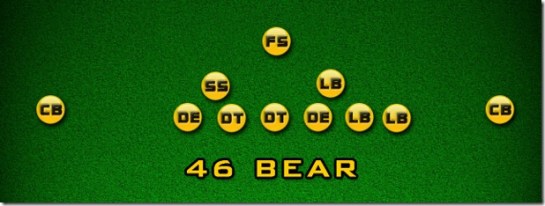
This was the era of the 46 Defense of Buddy Ryan. A Nickle defense where DBs were substituted for more athletic linebackers which allowed Ryan to use it as an every down formation. He could spring it on a team at any time without substitution.

Contrary to misinformed sportswriters he had been using the defense since 1981. Considering he named the formation for the number Safety Doug Plank wore which moved him into a Linebackers position. Plank’s last full season was 1981 and was replaced by Bell in 1982.

The 46 covered the Guard, Center, Guard which kept the MLB from being blocked. Furthermore if either the Center or Guard pulled, a DLineman would be in the backfield to disrupt any running play.

The 46 covered the Guard, Center, Guard which kept the MLB from being blocked. Furthermore if either the Center or Guard pulled, a DLineman would be in the backfield to disrupt any running play.

Although this formation gave the Bears an edge over their competition they only used it 30-40% of the time. It was the element of surprise that caught the NFL off guard. What is overlooked is how great the personnel fit every scheme Ryan used. In 1984, this group set the NFL record for sacks with 72. After he departed they set the record for fewest points allowed in 1986 yielding 187 points. It’s the season in between, 1985, that was their crowning achievement.

Take a look at a few stats:

  • #1 overall ranking
  • #1 against the run #3 against the pass
  • #1 in turnovers w/ 54 forced
  • #1 in interceptions w/ 34
  • #1 in passer rating allowed w/ 51.4
  • #1 in points allowed: 198 for the season
  • #1 in 1st downs allowed per game: 14.8
  • #1 in opp. completion percentage allowed 47.7%
  • #1 in touchdowns allowed w/ 23
  • #1 in rushing touchdowns allowed w/ 6

Now add to the fact they were #3 in sacks with 64, #3 against the pass giving up yardage in garbage time with blowout leads. It was the venomous way they attacked strong competition that makes this defense the valedictorian of NFL units.

Look at the competition they faced and look what they did to them. In 1985 the NFC East champion Cowboys (10-6) were trounced 44-0, the wildcard Giants (10-6) 21-0 in the playoffs, and the 10-6 Redskins slaughtered 45-10. Outscoring them 110-10 when they were the “best division in football” yikes!! Then you have the NFC West Champion LA Rams (11-5) killed 24-0 in the NFC Championship, and the last wildcard team? The defending champion San Francisco 49ers (10-5-1), who were pounded 26-10 in Candlestick.  Funny thing was the 49er touchdown was a Carlton Williamson interception, so the 49er offense scored 3 at home.

* So the Bears gave up 20 points combined to the 5 best teams in their conference and avg. more than 4TDs margin of victory (31-4 avg. score)…damn! All were 10 win teams.

Then of course each division faces another division in the other conference which in the 85 Bears case was the AFC East.  Thank God they didn’t play my Bills… The AFC East champion Dolphins won 38-24, but both wildcards in the AFC went to the Jets and Patriots.  What happened to those teams you ask?  The Jets (11-5) were clobbered in the Meadowlands 20-6 and the Patriots (11-5) twice. The Bears beat the Patriots 20-7 in week 2, then the 46-10 smashing in Super Bowl XX.

*So the only loss was to defending AFC Champion Miami & where did the Dolphins season conclude?  They lost the AFC Championship at home to the Patriots where had they won there would have been a rematch with the Bears in the Super Bowl. So you could say that they were a pretty strong team…fair to say? The Bears beat EVERY playoff team in 1985 from the NFC, and faced three from the AFC…all teams had 10 wins or more and the Bears basically laughed at ’em.  This is what a heavyweight champion should look like!!

They were 4-1 against top 10 offenses and in those 4 wins held each team to less than 10 points. In fact, the ’85 Bears held 11 of their 16 opponents to less than 10 points and recorded back to back shutouts over the Falcons and Cowboys. In the playoffs they set another record not allowing a point in back to back playoff shutouts to make it to Super Bowl XX. Once there they set records for holding the Patriots to -19 yards at the half, 7 yds rushing for the game, record 7 sacks, and allowed the fewest yards in Super Bowl history with 127.

This second look shows a few plays from the 46 front look but the final play with Steve McMichael’s sack was one of the secrets of the ’85 Bears. They lined up in a 3-4 and had DE Richard Dent the rushing weakside ‘backer a la Lawrence Taylor. Ironically the 46 defense didn’t die it evolved into teams running it from 3-4 alignments and not 4-3 alignments as Buddy Ryan originated this from. If you’ve watched the Steelers over the last 15 years they have used DEs that were built like DTs and would squeeze them down to cover the Guard,Center, Guard and position an Inside Linebacker right next to the Strong side Linebacker. They just made it interchangeable in elements to surprise their opponents from time to time.

They had NFL Defensive Player of the year and Hall of Famer Mike Singeltary, All Pro Gary Fencik, Hall of Fame DEs Richard Dent and Dan Hampton. Pro Bowl Linebacker Otis Wilson and OLB Wilber Marshall who should be in the Hall of Fame.

In 2000 when the Ravens gave up 165 points and the question was raised- “Were they better than the ’85 Bears defense?”  HELL NO!!! The Ravens didn’t face 1984 MVP Dan Marino, 3-time Super Bowl MVP Joe Montana, Super Bowl MVP Phil Simms, 1983 MVP Joe Theismann, and Danny White was a pro bowl quarterback as was Ken O’Brien of the Jets. ALL WERE IN THEIR PRIME!  Had the 2000 Ravens seen these quarterbacks they give up another 150 points easy and wouldn’t make the mythical Super Bowl if they played the 85 Bears schedule!!

Spurgeon Wynn. Who?? Spurgeon Wynn, Tim Couch, Anthony Wright, Kent Graham, Gus Frerotte, Brian Griese, Ryan Leaf, Scott Mitchell, and Akili Smith were some of the QBs those Ravens faced so….no way do they get this nod. I loved those Ravens don’t get me wrong, but what would the ’85 Bears have given up against the 2000 Ravens schedule? That’s frightening to think about.

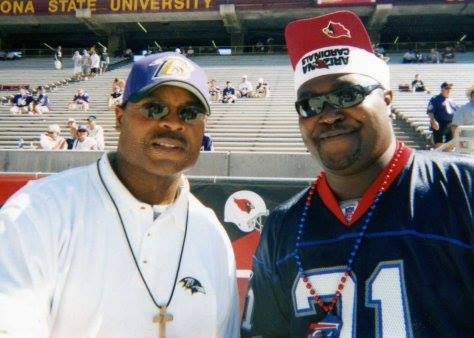
me and singeltary

Hall of Fame linebacker Mike Singletary and The Chancellor of Football on the Ravens sideline in 2003.

The best ever defense from the historian view of The Chancellor of Football’s view was the 1985 Chicago Bears hands down. How badly they trounced sound competition has resonated for decades. In compiling this list every #1 defense from 1960 to the present was used, every championship defense, and every record setting defense with the nod going to those that played since the merger in 1970. Hundreds of defenses boiled down to the 1985 Bears sitting atop as the best.

Dedicated to the memory of James David “Buddy” Ryan (February 17, 1931 – June 28, 2016)

Thanks for reading and please share the article.

Top Ten Single Season Defenses in NFL History : #2 2000 Baltimore Ravens

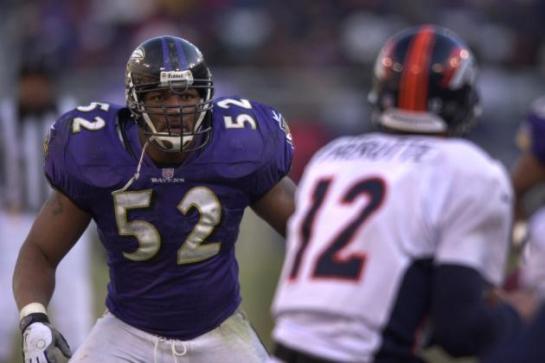
Ray Lewis' greatest season was the 2000 campaign.

Ray Lewis’ greatest season was the 2000 campaign.

Reissued Article

“In this study every season’s #1 defense, record setting defenses, trend setting defenses, and every Super Bowl & NFL championship defenses dating back to 1960. The nod would lend to those post the AFL/NFL merger of 1970. That wasn’t enough as now lets take each defense and cover what they did vs Pro Bowl QBs that season, 1,000 yard rushers, and playoff teams and talk about their effectiveness along with their statistics. Here turnovers forced is a big marker. Nothing watered down so a favorite team can be given favor. So The Chancellor of Football took over 200 defenses and boiled it down to this 11 article series and this salutatorian is the 10th in this countdown”


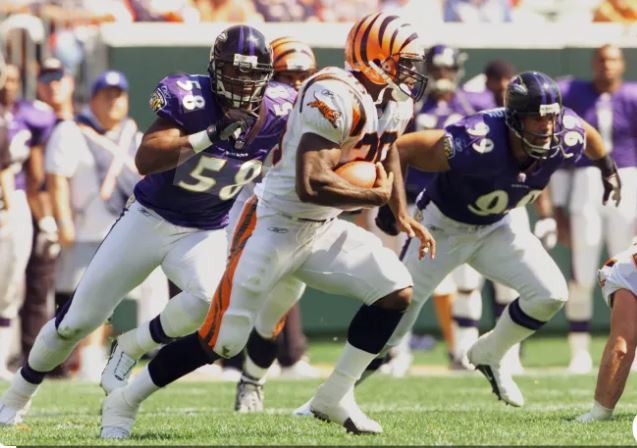
The bludgeoning Baltimore Ravens in 2000 was one of the greatest defenses in NFL history and lands at #2 on The Chancellor of Football’s list. Aside from winning Super Bowl XXXV, their greatest accomplishment was setting the record for fewest points allowed in a season with 165. Do you realize allowing 3, 10, and 3 in the AFC playoffs, that in 19 games they still bested the old 16 game record of the ’86 Bears 187 points with only 181?? Remember the Giants touchdown in Super Bowl XXXV was a kick return and not allowed by the defense. Still that is 188 points in 20 games!!

To fully appreciate the Ravens season as a whole you have to understand how anemic an offense they carried. Their 16th ranked offense was the 2nd lowest of all Super Bowl champions.

For the season they were ranked 2nd overall allowing 247.9 yards per game. Yet #1 against the run setting the record for fewest yards allowed rushing in a 16 game season with only 970. Yielding a paltry 2.7 yds per carry when league average was 4.0. Baltimore held 11 of their 16 regular season opponents to 10 or fewer points. Four of which were shutouts. By the way, they also held all four of their postseason opponents to 10 or fewer for a total of 15!!

  • 2000 Baltimore Ravens allowed 970 yds rushing
  • 1985 Chicago Bears allowed 1,319 yds rushing
  • 1991 Philadelphia Eagles allowed 1,136 yds rushing
  • 1976 Pittsburgh Steelers allowed 1,457 yds rushing *14 games
  • 1977 Dallas Cowboys allowed 1,651 yds rushing *14 games

This was a physically imposing defense that started with mountains in the middle in DTs Tony Siragusa and Sam Adams. Keeping blockers off 2000’s NFL Defensive Player of the Year in Ray Lewis. Who roamed free garnering 137 tackles, 3 sacks and an interception. It was one of the most dominating performances by a defensive player in league history. From The [[_]]

Fellow Linebackers Jamie Sharper (72 tackles /5 forced fumbles) and Peter Boulware clogged passing lanes, stuffed the run, and blitzed effectively. Boulware had 7 sacks as a Nickle rushing end. DE Rob Burnett led the team with (10.5 sacks) was a holdover from the Cleveland Browns days. He and fellow DE Michael McCrary were steady rushers that couldn’t be moved off the ball.
The most underappreciated aspect of this defense was the secondary. Led by Hall of Fame Safety Rod Woodson (77 tackles/ 4 forced fumbles /4 ints) this group was never out of position. They ranked 8th against the pass in 2000 yet were 2nd in passing TDs allowed with 11 while snatching 17 of the team’s 23 interceptions. Chris McAlister (4ints) and Duane Starks (6ints – The [[_]]) were top shelf corners and SS Kim Herring, Corey Harris, and Robert Bailey (The [[_]]) pounded TEs and slot receivers when teams went to multiple receiver sets.

During the season the Ravens were 1-1 against Pro Bowl quarterbacks and 2-0 against top 10 offenses. They held the NFL’s #2 offense to 3 points in their AFC Wildcard win. Yet this group was ranked #2 in 2000 and on their way to Super Bowl XXXV when they took on the #1 defense in the Tennessee Titans in the divisional round.

After vanquishing the Titans the Ravens had to go on the road to face the Oakland Raiders for the AFC Championship. In Oakland they faced the 6th best offense in football and the #1 rushing offense with 154.4 yards per game. Strength vs strength in a battle to make it to Super Bowl XXXV.

With their 16-3 win, you do realize this was only the 2nd time in the Super Bowl era a team hosted the conference championship and couldn’t score a touchdown, right?? Only the Los Angeles Ram did this with their 9-0 win over Tampa Bay in the 1979 NFC Championship Game prior to Super Bowl XIV. That is only twice in 70 games!

Oh… by the way, that #2 defense againt the Raiders and the #1 rushing attack averaging 154.4 yards per game?? Baltimore suffocated Oakland holding them to 24 yards rushing in the AFC Championship Game. Yikes!

The 2000 Baltimore Ravens were the greatest defensive 11 in NFL history and are #2 on The Chancellor of Football’s list. Why weren’t they #1?? That will be explained in the next article.

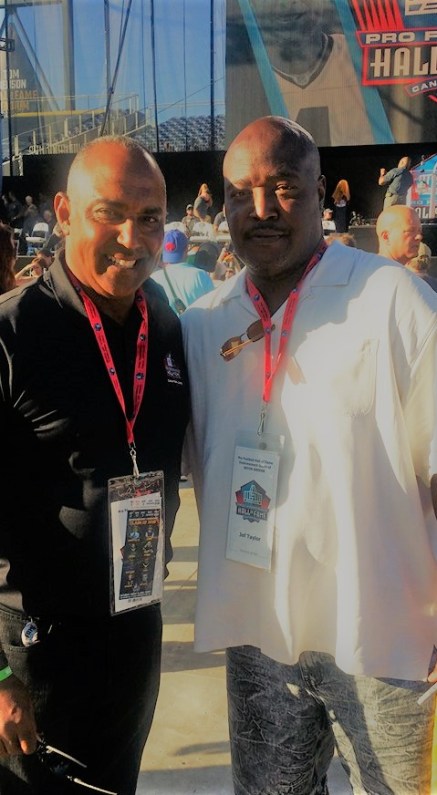
chancellor.hallofame.marvinlewis

At the 2016 Hall of Fame Induction Ceremony, ran into current Cincinnati Head Coach Marvin Lewis. The Defensive Coordinator of the 2000 Baltimore Ravens record setting defense.

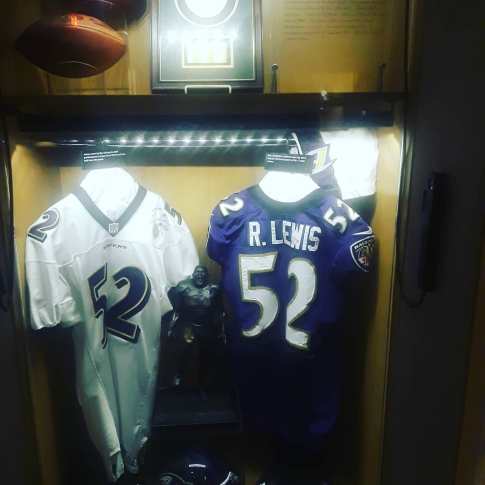
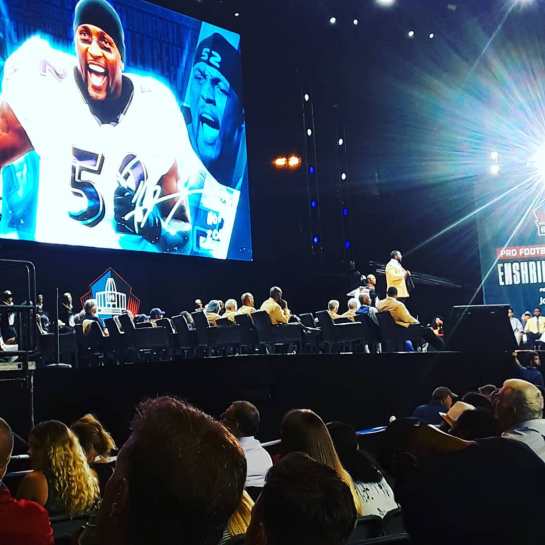
Ray Lewis locker at PFHOF enshrinement weekend 2018 w Super Bowl XXXV jersey.

When Ray came out with the wireless mic… sigh. My dude! LOL

Thanks for reading and share the article for once would ya’

Top Ten Single Season Defenses in NFL History : #4 1976 Pittsburgh Steelers

Reissued Article

“In this study every season’s #1 defense, record setting defenses, trend setting defenses, and every Super Bowl & NFL championship defenses dating back to 1960. The nod would lend to those post the AFL/NFL merger of 1970. That wasn’t enough as now lets take each defense and cover what they did vs Pro Bowl QBs that season, 1,000 yard rushers, and playoff teams and talk about their effectiveness along with their statistics. Here turnovers forced is a big marker. Nothing watered down so a favorite team can’t be given favor. So The Chancellor of Football took over 200 defenses and boiled it down to this 11 article series and this was the 8th..”

Now how could we have a category on the best defenses and defenders in NFL history and not include the Pittsburgh Steelers?? As we moved into the 1970′s following the merger, we saw the hashmarks narrowed in 1974 and the goal posts moved to the end line to provide offenses more room to operate. Scoring had been down for much of the first half of the decade and it was thought this additional field to cover would hamper defenses. Especially those with burly MLB types that had limited range tracking sideline to sideline, or defending the pass.

Enter Jack Lambert. A converted outside linebacker who stood 6’4 and stayed at a playing weight of 220 lbs. the majority of his career. What he brought to the table was the speed to get further back than the Willie Lanier’s and the Dick Butkus’, a prior generation’s middle linebackers who were mainly there to stuff the run. His ability to get past twenty yards in pass defense was the impetus for the Steelers to run what is NOW misnamed the “Tampa 2″.

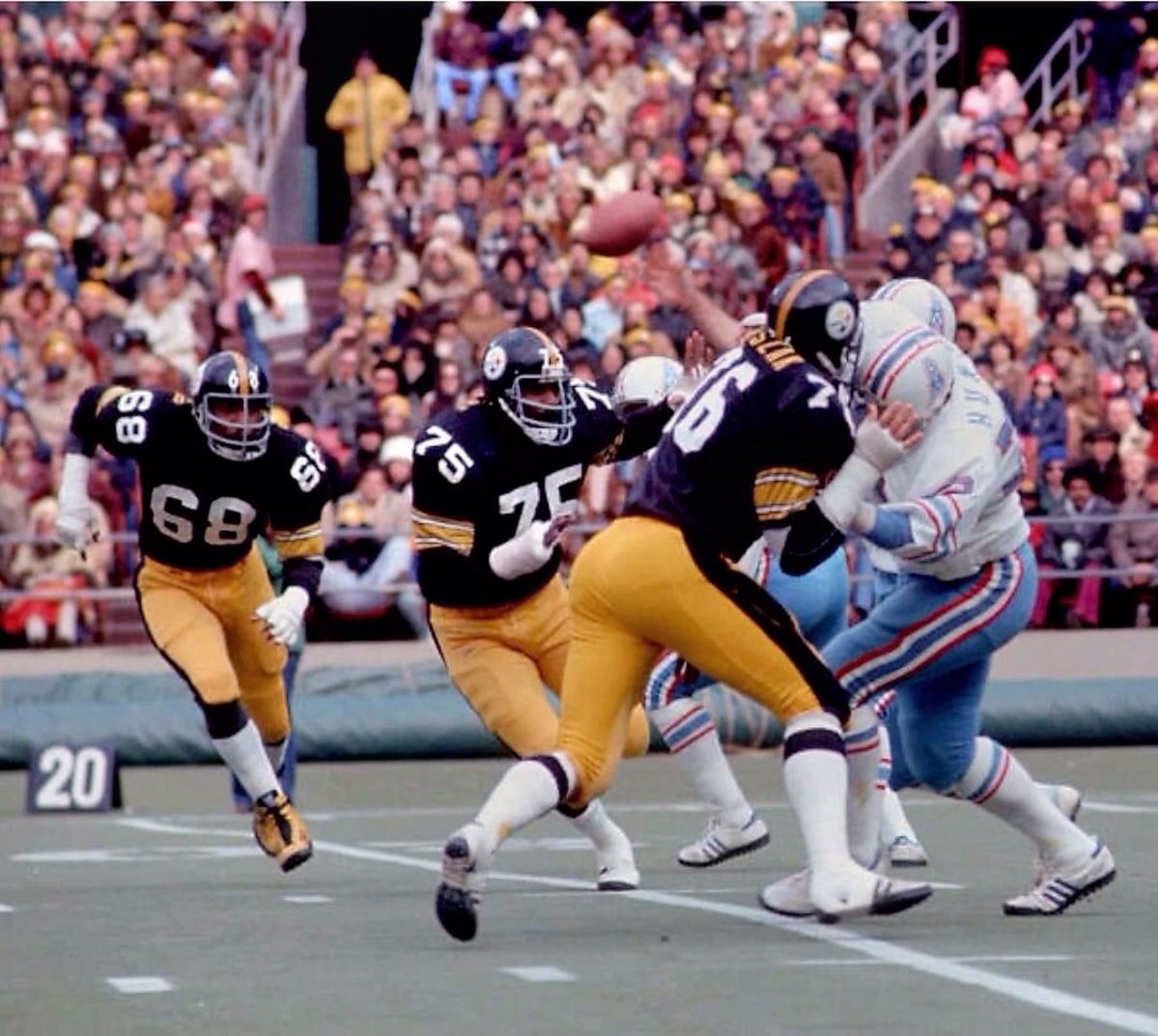
It started in Pittsburgh because against the run and rushing the passer, Ernie Holmes, Joe Greene, Dwight White, and LC Greenwood were the finest front four of their era….possibly football history. Lambert, along with outside linebackers Andy Russell, and Jack Ham, only needed to clean up against the run and were already a step back ready to clog the middle and flat areas against the slower tight ends of that era. The result??

No one could run on the '76 Steelers

No one could run on the ’76 Steelers

A defense put together from astute drafting grew into one of menace that powered the Steelers to victories in both Super Bowls IX and X. In Super Bowl IX the Steelers held the Vikings to just 17 yards rushing for the game. A record that stood until Super Bowl XX. They stood tall and defended against a frantic last second effort in Super Bowl X. So strong was the Steeler defense, Coach Chuck Noll ran the ball on 4th and 9 and let the Cowboys have the ball at their own 40 yard line leaving it up to the defense to win the game. While winning a second straight world title they set the Super Bowl record for sacks with 7.

A young team with an unprecedented chance to win a third straight Super Bowl went into the 1976 season with their front four in their prime.With Terry Bradshaw growing up as a quarterback and growing receivers John Stallworth and Lynn Swann with one of history’s finest defense….What would they do for an encore?? Could they threepeat??


However there were a couple issues as this defemse was 2-2 against Pro Bowl QBs. They lost to Fran Tarkenton and Minnesota 17-6, and Ken Stabler’s Raiders 31-28 in a wild come back out by the East Bay. Another notch against the Steelers was their performance against 1976’s Top Ten offenses where they went 1-3 in the regular season.  They allowed the 2nd ranked Raiders 31 in a loss. The Vikings were 6th in offense and lost 17-6 and New England’s 8th ranked offense dropped 30 in a loss (30-27) at Three Rivers no less.

The only win was against the Kansas City Chiefs who had the league’s 7th best offense. The one thing they did do was blow out the #1 offense in the Baltimore Colts 40-14 but that did come in an AFC Divisional  Playoff and they didn’t hold any To; Ten offense to 10 points or less. Another best ever defense hallmark.

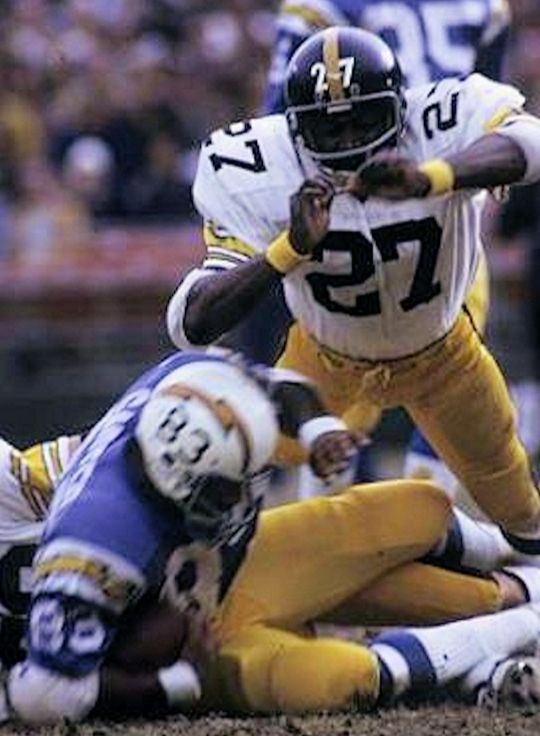
Glen Edwards laid the wood at FS on those Steeler defenses. A forgotten player.

These bleemishes against top ten offenses dropped this unit out of out Top 3. This is for statistical dominance over a season not just a particular streak that happened during one. How did you fare against Pro Bowl QBs & Top Ten offenses is a staple to this study to eliminate biases.

One thing to note, this team was primarily responsible for the upcoming rule changes of 1978 and this was their best season. For the year they were #1 overall (237.4 y/pg) gave up just 138 points and held 7 of 8 straight opponents to 10 points or less. Five of those came by shutout and the first modern team to record 3 in a row. In fact they only allowed 2 touchdowns in the last 10 games and those came in the same game. A 32-16 win over the Oilers.

They had a string of 22 uqarters where they didn’t allow a touchdown. They were so good they had to be legislated out of business.

Starting in 1978 they instituted the “Mel Blount Rule” where receivers could only be jammed / hit within the first five yards of the scrimmage line. Blount was bludgeoning receives all down the field until the pass was thrown. Pass protectors were allowed to extend their arms to better protect against the Steel Curtain. The head slap was another tactic taken away from Pittsburgh’s charging front four in 1978. All of these rule changes can be traced back to this group.

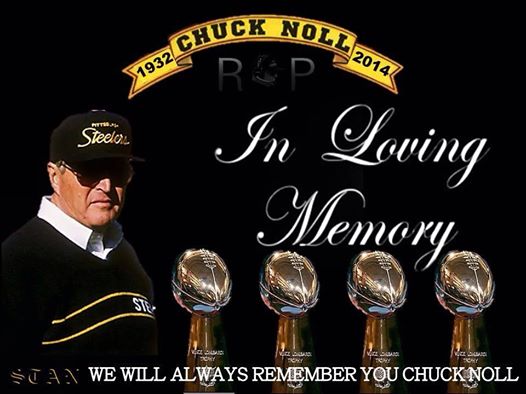
RIP Coach Noll

RIP Coach Noll

One of the best in history and number 4 on The Chancellor of Football’s list.

Dedicated to the memories of Art Rooney, Chuck Noll, Ernie Holmes, LC Greenwood, & Dwight White.

Roger Craig Should Be In Pro Football Hall of Fame

Article Reissue: “There have been several leaks stating Roger will make it in and announced this Thursday. I hope  this is true!”

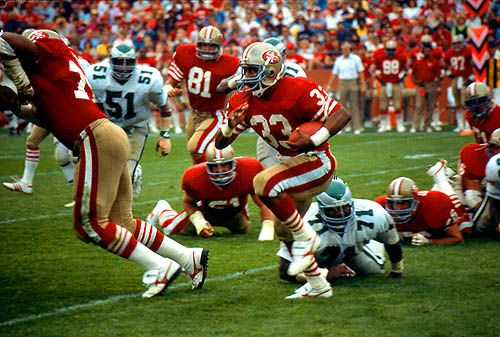
When you think back to Bill Walsh’s great 49er teams, who are the first players you think of?? Right there with the Joe Montanas, the Jerry Rices, and Ronnie Lotts it only takes a fraction of a second to think of Roger Craig. His high knee running style brought a physicality to the San Francisco offense that was seen as a finesse group up until his arrival. In fact he came to San Francisco as a fullback when they drafted him from Nebraska before the 1983 season.

In college he had been primarily a blocking back in the Cornhuskers wishbone offense. Normally he paved the way for Jarvis Redwine and then Mike Rozier. Yet when Bill Walsh decided to revamp San Francisco’s dismal backfield after a 3-6 season in 1982, he drafted Craig in the second round.

Although the 49ers had won it all in 1981, it had become apparent Bill Ring, Amos Lawrence, Walt Easley, and Earl Cooper just wasn’t cutting it in the backfield. To raise the stakes in the NFC for 1983, Craig and newly acquired Wendell Tyler would form a more potent backfield.

After posting the worst yards per carry average (3.4) and yardage (742) in 1982, the new backfield duo of Craig and Tyler turned that around completely. The much improved ground game of 1983 ranked 8th with 2,257 yards rushing and a gaudy 4.4 yard average. Ironically just ahead of the Los Angeles Rams, who had traded Tyler to San Francisco so they could draft Eric Dickerson.

You had to give the nod to Craig who ran for 783 yards a team leading 8 TDs, while catching 42 passes for 427 yards and another 4 scores. This more dynamic backfield, along with Joe Montana, powered San Francisco to the NFC Championship Game. A 24-21 loss to the Washington Redskins was shrouded in controversy, thanks to some questionable calls, yet Walsh had the backfield he envisioned. Craig had reinvented himself from a collegiate player who rarely touched the football to a dual threat pro.

The 1984 49ers were a juggernaut becoming the first team to go 15-1 during the regular season. Everyone of the 49 man roster played their role so no one had outstanding stats. However once the 49ers moved past the New York Giants and Chicago Bears during the playoffs, the stage was set for a coming out party in Super Bowl XIX. With all eyes on Joe Montana’s possible second Super Bowl trophy and the electrifying record setting Dan Marino, Craig’s name didn’t even make the marquee.


Roger Craig graces the cover of Sports Illustrated after his record breaking performance in Super Bowl XIX.

Roger Craig graces the cover of Sports Illustrated after his record breaking performance in Super Bowl XIX.

It was his 1985 that set Craig apart as he amassed his 1,000/ 1,000 yard seasons both rushing and receiving. The first player in league history to do so. Some 27 years later, only Hall of Famer Marshall Faulk shares that accomplishment when he did it in 1999. How dominating was his performance?? Well his 1,050 yards rushing doesn’t jump out at you until you realize he only ran 214 times for a whopping 4.9 yards per carry. The league average is always around 4.0.

Oh by the way, he led the NFL in receiving that year with 92, which set a record for running backs, that amassed 1,016 more yards. His 15 total touchdowns was second to Joe Morris and was 1 better than NFL MVP Marcus Allen. In fact many pundits, including our CEO believes Craig should have been the MVP in 1985 with that dominating performance.

Now buoy his 1985 record setting season not culminating with the league MVP, on the backdrop of a Super Bowl record 3 TDs yet not winning that MVP and you’ll see where we’re going in a minute. Don’t forget he did this on a 10-6 San Francisco team that was a defending champion with Jerry Rice being a rookie that didn’t have 1,000 yards receiving and only 3 touchdowns. Craig quite simply fueled that offense.

Once the 49ers won Super Bowl XIX, they were forced to retool and become a bigger physical team. In 1985, the Chicago Bears emerged with one of the most imposing defenses in NFL history. The Giants followed suit with an overwhelming defense that featured 4 linebackers in the 250 lbs category. When Bill Walsh and his 49ers were dominated 49-3 in the 1986 NFC Divisional Playoffs by the Giants something had to be done.

These were teams the 49ers had beaten on their way to the ’84 championship, now they had taken the game to a new level of brute force. In reinventing the offense from a size perspective, it was Craig who was switched from fullback to halfback to allow for the insertion of Tom Rathman at fullback. The entire offensive line was overhauled.

You have to keep in mind the average career for a runner in pro football is less than 4 years. Yet here Craig was making the switch in year 5 to a position that called for him to be quicker. This at a time where he should have been slowing down from a physical standpoint. Yet he, Jerry Rice and Joe Montana spearheaded one of history’s most accomplished runs. From 1987-1990 the 49ers went 51-12 in the regular season, winning back to back Super Bowls in ’88 & ’89 and were the prohibitive favorites to win it all in 1987 as well as 1990. They finished #1 in offense in ’87 and ’89 and #2 in ’88 and ’90. In each year they made it to at least the divisional round of the playoffs and 3 straight NFC Championship Games as they were trying to threepeat.

Playing in only 12 games due to the ’87 strike, Craig ran for 815 yards which projects out to 1,086 over a full season. The 13-2 Niners were poised to become the greatest team of the modern era yet were upset by the Vikings in the playoffs. They were #1 in both offense and defense yet proved fallible in the playoff loss. Craig went on to his greatest performance in the 1988 campaign. In rushing for a career high and club record 1,502 yards, he also caught 76 passes for an additional 534  yards for his second season with over 2,000 yards from scrimmage. More important, he powered San Francisco to another Super Bowl championship with a win over Cincinnati in the XXIII’d edition.

Roger Craig was a hard nosed runner.

Roger Craig was a hard nosed runner.

Yet go back to 1988 being his second season with more than 2,000 yards from scrimmage. Keep in mind this was no sleek, make ’em miss halfback. He brought a punishing style to his position where he bludgeoned the opposition. As you’re reading this you can picture his high knee running style like when he trampled through the Rams on his most famous run in 1988.

Yet did you know that Emmitt Smith, Thurman Thomas, and Barry Sanders only had 2 different seasons amassing 2,000 yards from scrimmage also?? Did you also know that Marcus Allen and Adrian Peterson have only had one?? Only Edgerrin James, Marshall Faulk, Ladainian Tomlinson, and Eric Dickerson had more. What do all of these runners have in common?? Peterson and Tomlinson will be in the Hall of Fame and all the others are in. Roger Craig is right there with them.

Now going into the Hall of Fame is based on impact on the game. By the time we bring up the 1989 team that won Super Bowl XXIV, Craig was a driving force behind the team of the decade. Again he was a 1,000 yard rusher as the team won their fourth Super Bowl and Roger had his 3rd ring. When he left the game in 1993, his 566 career receptions was #1 among running backs all time and still remains 7th.

He is in the linear line of great NFL running backs when it comes to catching the football and is a part of the game’s evolution. He took the mantle from Chuck Foreman and propelled it forward. Since then, only a handful of every down running backs have provided that type of versatility. Now everyone has a receiving running back who comes in on 3rd downs where Roger was in every play.

It was Craig’s play that allowed a young Jerry Rice to flourish as teams concentrated their efforts to stop him. If Craig’s move to halfback in 1987 hadn’t panned out, what would have been the legacy of Bill Walsh’s “West Coast Offense”?? It was the run from 1987-1990 that made the offense spread it’s wings throughout the National Football League. During this time is when it proved it could take on the big bad Chicago Bears defense (see 41-0 1987 Monday Night shutout) and 28-3 NFC Championship win in Soldier Field in ’88. Then you add the rivalry with the New York Giants.

From Mike Holmgren to Denny Green to Mike White to Jon Gruden ( who had just begun coaching on the 1990 SF coaching staff) and George Seifert succeeding Bill Walsh. They all could attribute their Head Coaching jobs to some extent to Craig’s performance along with Montana and Rice. Yet the foundation of that offense running and receiving along with goal line and short yardage was #33.

By the way, when did Roger Craig become the the first running back to have a 100 yard receiving game in a Super Bowl?? You guessed it… Super Bowl XXIII against Cincinnati and not his record setting performance against Miami. Now had he won the Super Bowl XIX MVP, or the 1985 NFL MVP, would that have propelled him to winning the NFL MVP in 1988?? Give it some thought.

For induction into the Pro Football Hall of Fame, I present to you…Roger Craig

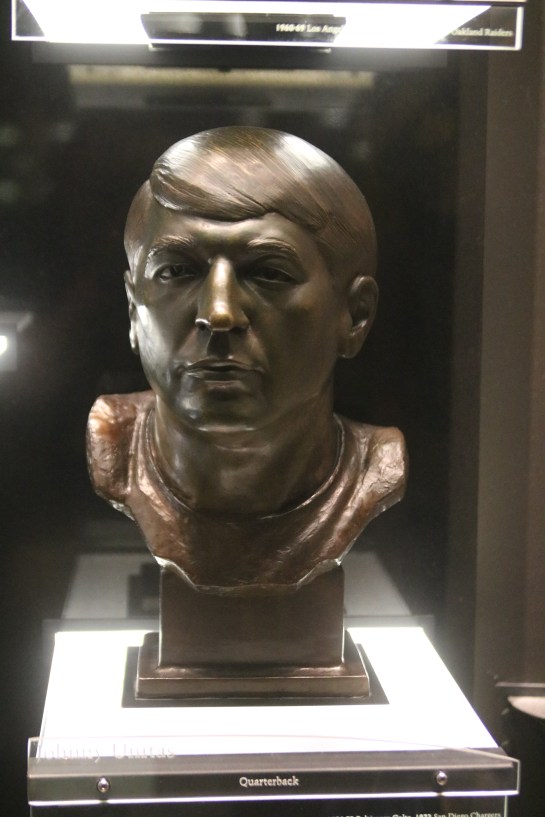
Legends of The Fall: John Constantine Unitas (Johnny Unitas)

Article Reissue

The name that comes to mind when it comes to quarterback – John Constantine Unitas…or Johnny Unitas.  I can’t remember hearing his complete name for the first time, yes I can, it was when his presenter at the Pro Football Hall of Fame said it, but feel it needs to be brought up for the fans who need to know the greatness of this man. So glad they finished the documentary in 1999 before he passed. An old school hero. The best ever quarterback conversation has this man’s name in it. Not Peyton Manning and Tom Brady where all the rules have been changed to manufacture what looks like greatness.

At the time of Unitas retirement, he held the record for passing yards (40,239) & touchdown passes (290). He was the first NFL quarterback to throw for 3,000 yards in 1960 and once held the record for TD passes in a 12 game season with 32. In an era where the NFL game was rooted in the ground, Unitas took to the air where purists scoffed he was ruining the game. Through it all he raised quarterbacking to an art form by the way he played, his play calling ability, and field generalship in leading the Baltimore Colts. In fact, it was Unitas that invented the 2 minute drill in the most important game in NFL history…. the 1958 NFL Championship.

The ’58 NFL Championship ignited the passion for pro football for the masses as it overtook baseball for America’s heart. Lamar Hunt after this game decided to start the American Football League on the heels of this game’s popularity. A sense of irony between the AFL and Unitas’ would come to the fore later. Yet it was Unitas that became a superstar. Football had been booming with television in the 1950’s and it culminated with his championship heroics.

For an encore, when all eyes were upon him, he had his greatest season in 1959. Johnny U went 193 of 367 (52.6%) for 2,899 yards 32 touchdowns to just 14 interceptions in leading the Colts to a 2nd consecutive championship. By the way for those keeping score, this was in a 12 game season and the yardage and touchdowns were NFL records at the time. At the pace he was on, had it been a 16 game season, he would have thrown for 42 touchdowns. This was in an era where his receivers were hit everywhere on the field not just within a 5 yard contact zone. Legacy cemented.

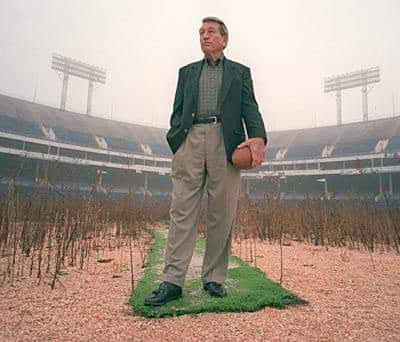
His 47 straight games with a touchdown pass stood for nearly 50 years. After 40 of those years no one had come within 18 of that record. Drew Bees finally broke it because of all the rule changes…but if you dared to say Brees is in league with Unitas, you and I can’t talk football anymore. A final look back at his jersey retirement at Baltimore’s Memorial Stadium in 1977.

In watching the HBO documentary Unitas is where I first learned the plight of former players fighting for benefits from the NFL. When the elbow injury came up I immediately yelled out “1968!” That was the year he tore the tendons that attached the lower and upper arm, causing him to sit out the season and the late Earl Morrall played in his absence. They wound up losing Super Bowl III. Unitas wound up losing the ability to fully use the right hand that made the NFL what it is today. Not only was that a travesty but the anger that swelled in me is why I back all the former player’s groups, Footballer’s Wives, Dignity After Football, and Gridiron Greats to this day.

Sports Illustated cover featuring Johnny U.

Sports Illustated cover featuring Johnny U.

Whenever the mantle of greatness at the quarterback position is cheaply thrown around, as a historian I bristle. What would Unitas accomplish playing in the rules set up today?? How much greater would he have become training all year around like today’s players?? What would his stats look like if he played where he could hardly be hit??  He dwarfs all quarterbacks without the changes. With them he would have left marks that quarterbacks would still be chasing.

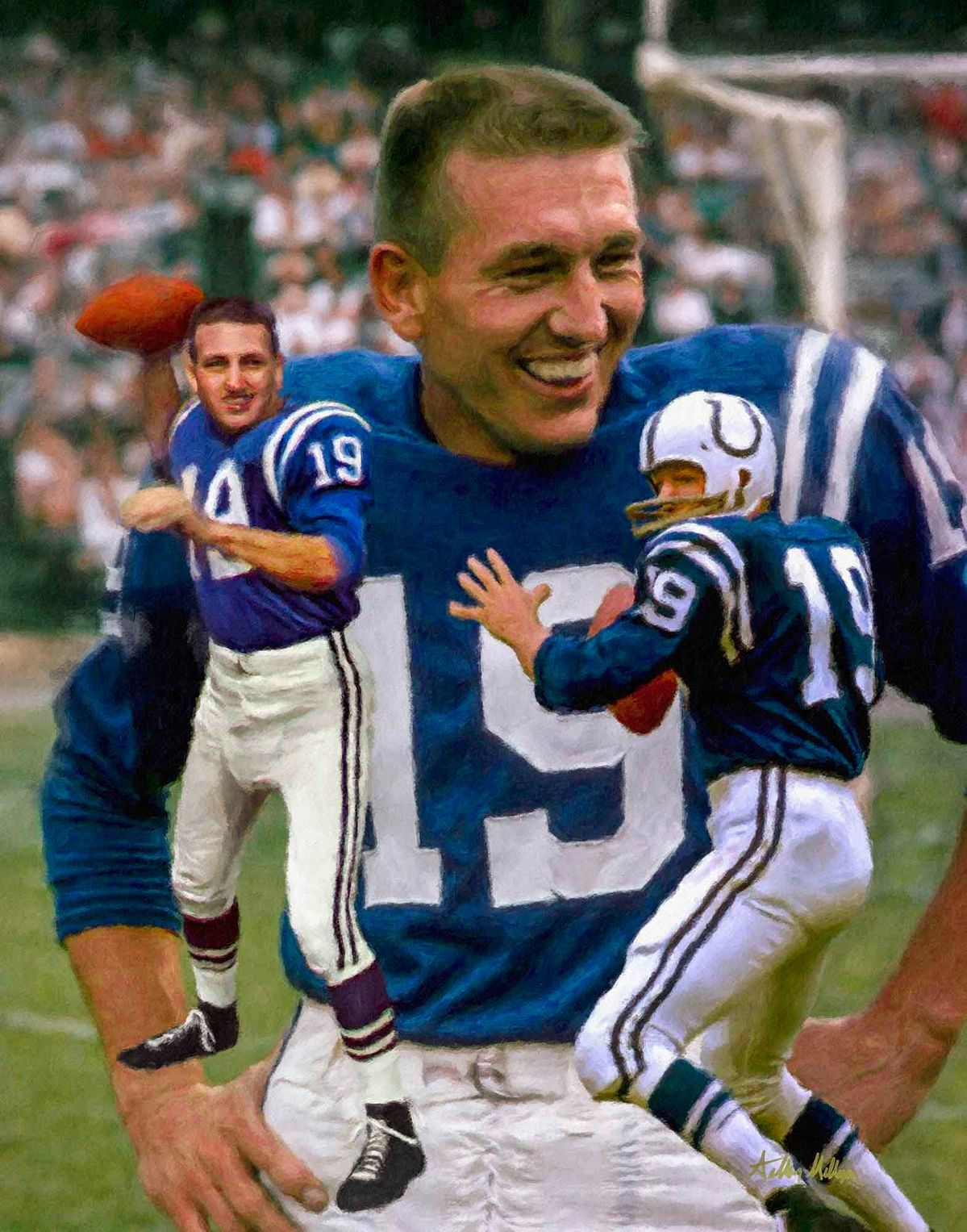
In youth as we remember him.

Unitas and his receivers, Lenny Moore, and Raymond Berry all made it into the Pro Football Hall of Fame. The next time someone mentions greatest ever quarterbacks, start with Unitas and work your way down.

hof-unitasJohn Constantine Unitas: May 7, 1933- September 11, 2002

Thanks for reading and please share the article.