Ken Stabler Belongs In The Hall of Fame – HOF Edition

Originally Published 12, July 2015 w/ Postscript 9, May 2019

When it comes to who should be in the Pro Football Hall of Fame, most inductees are in for the stellar performance over their careers entirety. Others are in based upon producing some of the greatest moments in football history. A third definition in the eyes of the The Chancellor is “Can we talk about the era in which a player performed without his name coming up?”  Ken Stabler of the Oakland Raiders fits the bill in all 3 of these categories.

KennyStablerHere in Taylor Blitz Times we have chronicled the long time bias against former Raiders when it comes to enshrinement. Head Coach John Madden’s field general has yet to be elected to Canton. Stabler was a throwback QB who called his own plays and routinely led the Raiders into the playoffs during the 1970’s. Along with Fan Tarkenton, Roger Staubach, and Terry Bradshaw, these four ruled the 1970’s and arguably Stabler had the most legendary moments.

On December 23,1972 in the AFC Divisional Playoff in Pittsburgh, Stabler, whom Madden had been grooming since 1968, was the wild card needed to change the tide of a game down 6-0. Desperate for some offense, John Madden inserted a young, mobile Kenny “The Snake” Stabler in for an anemic Daryle Lamonica which produced immediate results.

On a last second desperation drive, the Raiders came scrambling downfield with a young quarterback in his first significant action in an NFL playoff game. At the Steelers 30 with less than 1:30 to go, Stabler avoided the Steel Curtain, took off and scored on a 30 yard TD run to give the Raiders their first lead of the game 7-6. “The Snake” had done it!! A hero was born!! There was bedlam on the Oakland sideline and with 1:13 to go began to make reservations for they would host the AFC Championship Game against the undefeated Miami Dolphins.

However this was overshadowed by The Immaculate Reception that happened 4 plays later. Then later that day Roger Staubach had his 1st famous comeback in a 30-28 win in San Francisco. Yet Oakland knew they had their quarterback of the future and he could perform in pressure situations. Like a young George Blanda, who had a magical run during 1970, the Raiders could depend upon Stabler’s heroics for years to come.

Over the next 5 seasons as the starter, Stabler guided the Raiders to the AFC Championship Game. An NFL record. He was a daring quarterback who was a true river boat gambler. This led to some interceptions but even more daring touchdowns. He was old school yet enjoyed wine, women, and song out in the nightlife. He still came in and put in his work and teammates respected him and would follow him anywhere.

In 1973 Stabler completed an unheard of 62.7% of his passes, for 1,997 yards 14 TDs and 10 interceptions. The Raiders won the AFC West and got revenge on the Pittsburgh Steelers with a 33-14 win in the playoffs. The Miami Dolphins, on their way to back to back championships, beat them in the ’73 AFC Championship 27-10. Take a wild guess who was there to get revenge in the 1974 AFC Divisional Playoff?


Stabler ended the Dolphin dynasty with the touchdown to Clarence Davis in what became known as The Sea of Hands. One of the most famous games in NFL history.

Although the Raiders lost the AFC Championship the next two years to the rival Steelers, they came back in’76 with a vengeance. They recorded a 13-1 record and sought revenge on those Steelers yet needed another “Snake” come from behind miacle win in the AFC divisional round to get there.
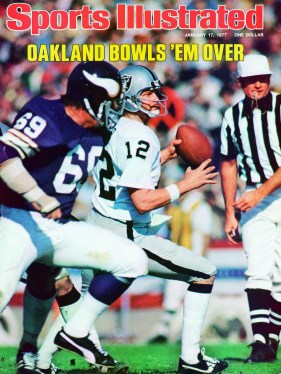
 

1977-01-17 CoverThe Raiders would go on to win the AFC Championship 24-7 over Pittsburgh, then Super Bowl XI over Minnesota 32-14. He had guided the Raiders to that elusive championship in an era when it seemed they would be destined to always be the bridesmaid. He had several great performances left but becoming a champion was the ultimate.

In defending that championship in 1977, Stabler guided Oakland to a record 5th straight AFC Title game in Denver. They fell short 20-17 in getting to Super Bowl XII. How much did that have to do with the fatigue from the 6 quarter epic, Ghost To the Post 37-31 victory over the Baltimore Colts 1 week before??


Stabler’s Raider career was filled with great highlights and one important Super Bowl championship. In 1976 he had one of the greatest season a QB could have. He went 194 of 291 for 2,737 yards 27 TDs and 17 ints and an astonishing completion rate of 67.7% and a 103.4 passer rating. Remember this is a guy who extolled the Raiders philosophy of pressure football while throwing the ball deep.

However Stabler’s career wasn’t a series of statistics. He was one of the NFL’s most visible and recognizable personalities. He did make four Pro Bowls, was voted NFL MVP in 1974, was All Pro twice, and led the league in touchdown passes on 2 occasions. Furthermore,”The Snake” also was voted to the 1970’s NFL All Decade Team and finished with 194 TDs and 222 interceptions. A trade to the Houston Oilers after the 1979 season ended his stint  in Oakland. However he did go out with a bang:


Before his retirement in 1984, he did play for the late Bum Phillips twice in Houston and with the New Orleans Saints. Yet it was the magic he deftly showed out in Oakland that should have him in Canton. You can’t even pick out the best quarterback/receiver combo from the 1970s. Was it Stabler to Cliff Branch who should be in the Hall of Fame?? Would it be Stabler to TE Dave Casper who is in “the hall”?? No…it has to be the obvious in Stabler to Hall of Famer Fred Biletnikoff…right?? If all of his receivers are in and being considered for the Pro Football Hall of Fame what does that make of the quarterback who helped get them there??

Unfortunately with his passing on Wednesday, we will have to lobby for Stabler to be enshrined posthumously.

For the Pro Football Hall of Fame, I present Kenny “The Snake” Stabler

RIP Ken Stabler (December 25, 1945 – July 8, 2015)

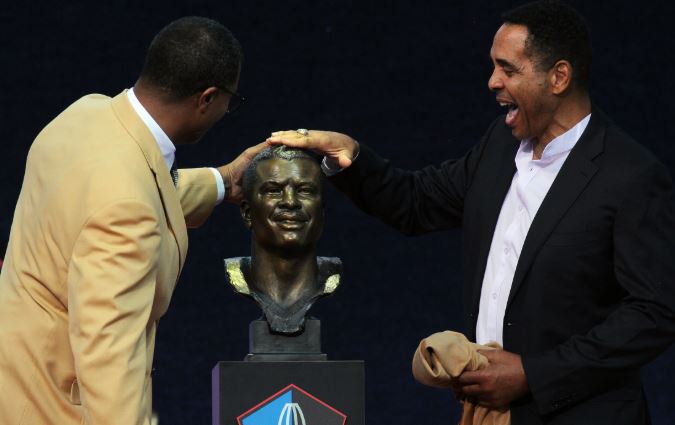
Epilogue: 9, May 2019 When going through the pics and remembering the 2016 enshrinement weekend at the Hall, it was an emotional weekend. During the Gold Jacket Ceremony, one of the “Grandsnakes” came on the stage to receive Stabler’s Hall of Fame crest. Not only did we give a standing ovation, there wasn’t a dry eye in the house. Not in the section I was in.
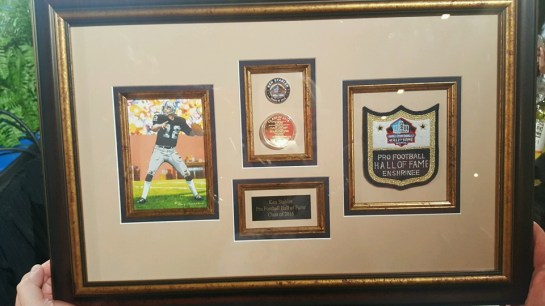
halloffamecrest.stablerIt was impossible to not think how great Kenny would have enjoyed that weekend. He would have shared it with his family and would have definitely included his grandsons to which he was most proud of in everything he did.

Having been to two of the last three ceremonies it’s the stories, the celebrating of a player and a family’s legacy to this great game, and the camaraderie reveling in the accomplishment. The Raider family was out in force and came far and wide to celebrate his enshrinement. Yet the elephant in the room is we all felt cheated out of hearing from the man himself.
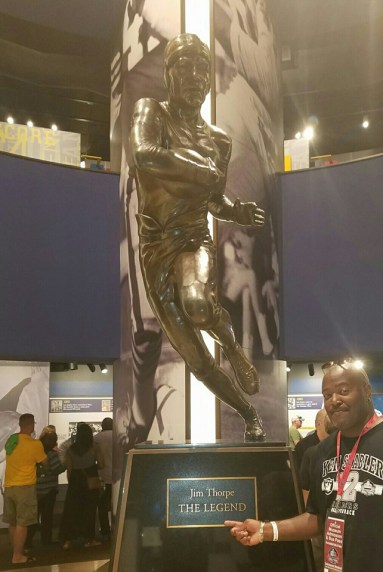
chancellor.hall

I wore a Jerry Kramer jersey into “The Hall” then removed it to reveal a Stabler shirt I picked up after the Gold Jacket ceremony.

For the record I do wish the PFHoF presented Stabler’s family with a ring and gold jacket.

It was bittersweet however its better that Ken Stabler’s Hall of Fame legacy is in Canton where it belongs and no longer being debated.

Thanks for reading and please share the article.

The Soul of The Game: “Mad Dog” Mike Curtis

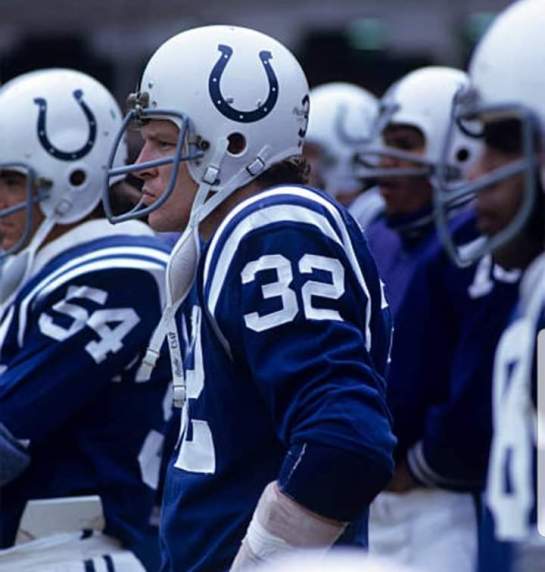
Back when The Chancellor of Football was first developing his love for the sport, most of the stories of great players captivated me. When it came to the savagery of Mike Curtis it was also emblazoned by this photo.

Mike Curtis nearly beheads Roman Gabriel.

Mike Curtis nearly beheads Roman Gabriel.

This sack of Roman Gabriel completely captures the visceral side of pro football. Back then you had images like these that accompanied the stories made Curtis bigger than life in the Punt, Pass, and Kick book series. Ironically the Colts during his time evolved from being known as an offensive team into a defensive one.

Baltimore rose to prominence with the 1958 NFL Championship on the arm of Johnny Unitas. Yet as the 60’s were concluding Unitas was aging and the defense came to the fore. Never was this more prevalent than the 1968 season Unitas missed with an elbow injury and the Colts defense set the record for fewest points in a season with 144. Curtis, an All Pro Outside Linebacker was one of the leading reasons why.

In the vignette you can see Curtis aggressive tackling and hitting. You saw him head hunt on several tackles. All he cared about was getting the runner down.  His intensity is what led those Colts defenses. In fact he was the leader of one of modern history’s finest defense. In my series to find out the greatest defenses in NFL history, his 1971 Colts unit came in at #6.  They allowed the 2nd fewest yards per game mark in the NFL since 1970 with 203.7 yards. With only 140 points allowed, it would have been an NFL record had the ’69 Vikings not broken their old scoring record of 144 with 133.

curtis2.3Led by “Mad Dog” Mike Curtis, Fred Miller, Bubba Smith,  and Rick Volk, this was a record setting defense that was overshadowed and forgotten in the aftermath of Super Bowl III. Even though they came back and won Super Bowl V. Then made it to the AFC Championship Game and nearly made it to Super Bowl VI. They once held the record for fewest points allowed in a season and by 1972 held the #2 & #3 spots. They were led by their tempo setting linebacker who was definitely a Soul Of The Game defender.

How Mike Curtis isn’t enshrined in Canton is a mystery to me and is a byproduct of the Colts losing Super Bowl III. Shame on all those writers who didn’t make this happen. Curtis #32 should be in the Pro Football Hall of Fame…no question

Thanks for reading and please share the article.

Ken Riley Belongs In The Pro Football Hall of Fame

There are several teams that have their best talents go unrecognized by the Pro Football Hall of Fame. The prevailing theme that has emerged are the lack of members from franchises that haven’t won a Super Bowl or an NFL championship in their existence. Even those that compiled impressive numbers during their careers. Enter Ken Riley of the Cincinnati Bengals.

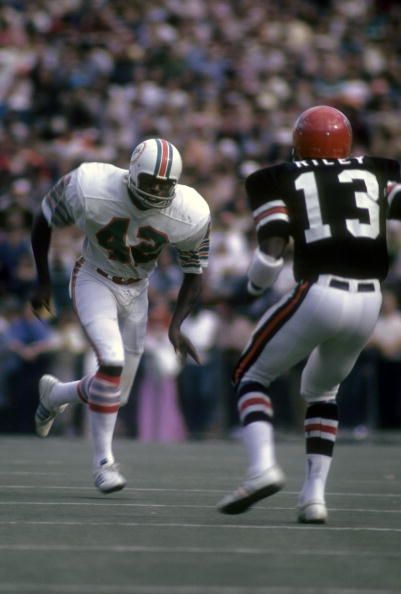
Riley was drafted by the Cincinnati Bengals in the last year of the American Football League in 1969. He teamed with fellow CB Lemar Parrish and FS Tommy Casanova to form one of the best secondaries of the 1970’s. Over a 15 year career ending in 1983, Riley intercepted 65 enemy passes. Good enough for 4th all time at the time of his retirement, and still ranks 5th just behind Rod Woodson.

A quiet player drafted out of Florida A & M, his career was overshadowed by other teammates and playing in a small market in Cincinnati. There were only so many Pro Bowl votes to go around. Many of those went to teammate Parrish with 8 who was also one of the league’s best punt returners… we’ll get back to this.

From 1974-1978 the Bengal defense ranked 4th, 2nd, 3rd, 6th, and 3rd against the pass. The “Soul Patrol” Raider secondary of Jack Tatum and George Atkinson never yielded less yards than this group. The Steelers only outranked them once in ’74, when they were ranked #1. Keep in mind in ’75 & ’76 the Steel Curtain had two of our greatest ever defenses and Cincy was better against the pass.

As for Pro Bowl voting during this time, Parrish who deserves Hall of Fame consideration in his own right, was a mainstay. However Riley was the better pass thief. Riley pirated 22 enemy passes to Parrish’s 6 during the time ’74-77. In fact you’d have to combine all their years together dating back to 1970 to get Parrish in the race with 23 interceptions. However Riley’s number balloons to 36 when you do that.

The biggest Pro Bowl snub came in 1976 when teammate Parrish made it to LA and Riley stayed home. Riley was 2nd in the league with 9 ints which were returned for 141 yards and a touchdown. Parrish and fellow AFC Pro Bowl CB Emmitt Thomas only had 2 respectively. Are you serious?? How does this happen?? Let’s take a look back…first at Riley, then his exploits in one of the finest secondaries in NFL history.

They were the best secondary of the 1970’s. Maybe it was going against Bill Walsh and what would become the “west coast offense” everyday in practice that made them great? Walsh was Cincinnati’s Offensive Coordinator at the time and had Ken Anderson who won passing championships during this time in 1974 & ’75.

kenriley2

What The Chancellor of Football remembers most about Riley was his flawless backpedal. He was a tactician that used the sideline as his friend and was never out of position.

Once Parrish was dealt away to the Redskins and Tommy Casanova retired to attend medical school in 1978, Riley played on in the Bengal secondary. He played through 1983 when in his 15th and final season, was 2nd in the league with 8 interceptions. Most players would have dwindling stats that late in their careers. Riley had a combined 18 interceptions in his final 3 years alone and was 1st team All Pro in his last year.

Did you know Riley never made the Pro Bowl during his career?? However he was voted All Pro in 1975, 1976, 1981, and his final season in 1983. Something has to be said about that type of sustained excellence. Of the top ten interceptors in NFL history, only he and Hall of Famer Dick Lebeau did so for the same team throughout their career. He’s the only corner to have 7 seasons with 5 or more interceptions totaling 65 over 15 years.

Keep in mind it took Darrell Green 20 years to garner 53 interceptions. Hall of Famer Deion Sanders needed 14 years to net 53 picks and Lester Hayes needed 10 years to snatch 39. None of these guys came close to matching the 18 Riley had in his final 3 seasons during their careers.

To circle back, It was interesting the sporting press and coaches made sure Riley made those 4 All Pro teams when there wasn’t space on the Pro Bowl roster. Was Riley overshadowed by Parrish being one of the league’s best punt returners? Over the years corners who starred as return men seem to have a blurring of their special teams exploits and defensive play that collect in the memory. Which could have affected Pro Bowl voting. The NFL didn’t expand to include a special teams player until the 1986 season.

Thinking out loud here…

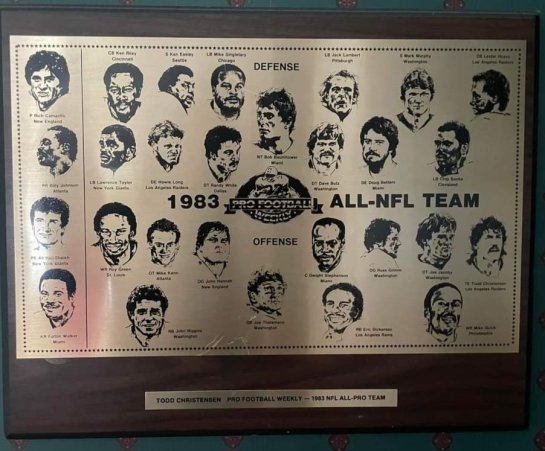
One item shared by Todd Christensen’s son Toby a few weeks back was this plauqe given to the players who made Pro Football Weekly’s All Pro Team for 1983.

When was the last time you saw an NFL cornerback finish his 15 year career as an All Pro? Check the top left… Riley and Lester Hayes.

Just like there is little footage of the Cincinnati Bengals of that era, there just isn’t a lot out there on Ken Riley. He was a great cornerback that played in a time before they expanded Pro Bowl voting to include more players. Yet you can’t take away his numbers. Aside from Hall of Famer Dick “Night Train” Lane no pure cornerback intercepted more passes.

For induction into the Pro Football Hall of Fame, I present Ken Riley.

Please write & nominate #13 Ken “The Rattler” Riley

Send letters to:
Pro Football Hall of Fame
Attention: Senior Selection Committee
2121 George Halas Dr NW, Canton,
OH 44708

Thanks for reading and please share the article.
Overcoaching: Vol 3. Super Bowl XLIX Edition

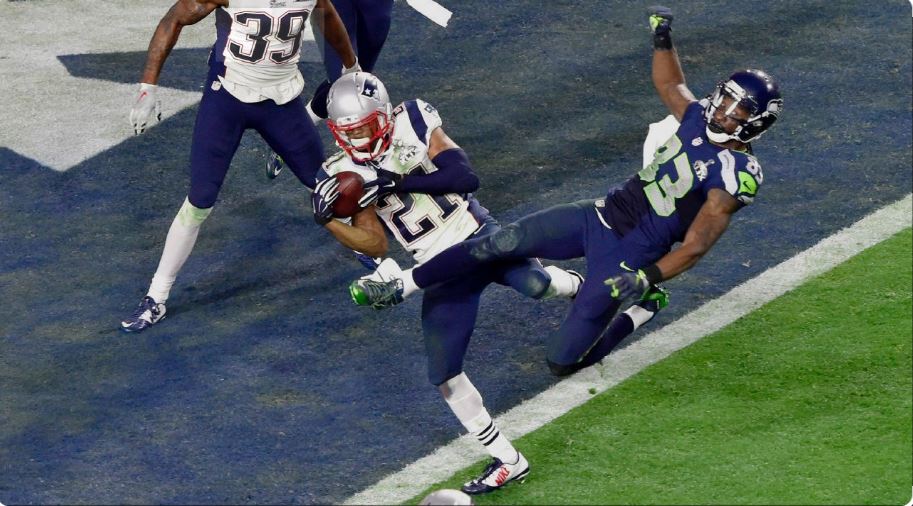
Super Bowl XLIX was a great game but the end left a lot of fans empty as Seattle opted for a pass from the 1 with seconds left to play. Immediately I railed it was the worst play call in Super Bowl history on social media. Many former NFLers agreed. So after a small hiatus my thought hadn’t changed and now it was time to revisit another classic case of overcoaching in the NFL.
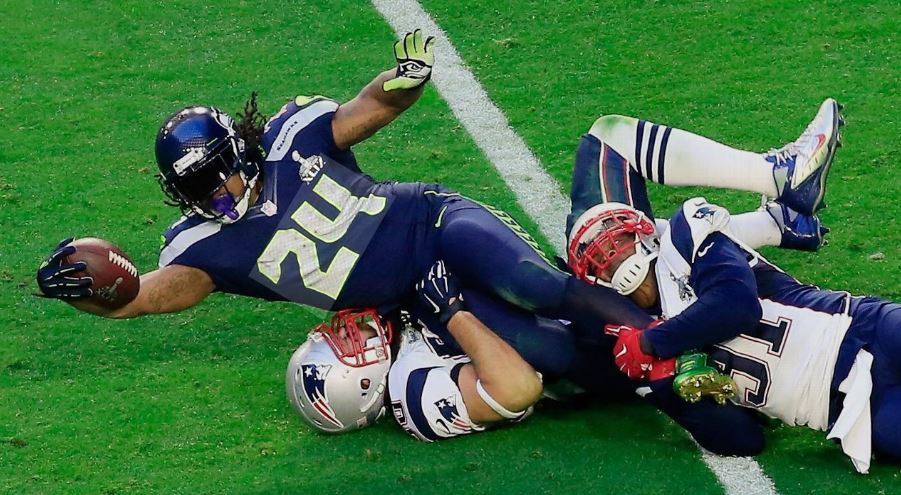
First off… if anyone thinks the Seattle  throwing that pass at the one yard line was the right play call, then they think Vince Lombardi called the wrong play on the final play of the Ice Bowl. Its that simple. One of his philosophies played out at the goal line during the final seconds of both the 1966 & 1967 NFL Championship Games.

Lombardi’s philosophy was in a pressure situation, players would make mistakes in Tom Landry’s complicated offense. The Cowboys had the ball at the 2 with less than 2 minutes to go down 34-27. They had momentum and had just scored on the drive previous. True to form T Jim Bokeim had a false start… remember they did a lot of shifting on the line. On the final play, which was a rollout, RG Leon Donohue ran past Packer LB Dave Robinson instead of blocking him. Robinson hurried Don Meredith into a game ending endzone interception.

The rubber match for the Ice  Bowl (1967 championship) saw the reverse as the Packers were down to the 2 yard line with less than 2 minutes to go. After two plays and a final timeout, Green Bay was at the 1 with :16 left down 17-14. Where Tom Landry was heard yelling “watch Starr on the rollout”, Lombardi’s Packers went with a QB sneak to win the game. A simplified play.  Years later in recalling Lombardi’s philosophy, G Jerry Kramer said “When the game or life is on the line, you don’t gamble and you put your faith in the defensive player’s chest.”

A philosophy the Seattle Seahawks had believed in until the 1 minute mark of Super Bowl XLIX. Some new age philosophies have made coaches overthink and overcoach situations lately. Ever since that Monday Night game where Brian Westbrook had that breakaway run at the end of the game against the Dallas Cowboys and slid down to run out the clock, people have been overcoaching end of game scenarios.

03_ball_grand_canyon_1_hi_nat1366However I said it right after…that was the same play call the Titans went with in Super Bowl XXXIV when Mike Jones tackled Kevin Dyson at the 1 yard line also. That stacked receiver slant is 0-2 in late Super Bowl moments. Truth is they should have run the ball twice with the read option and kept it on the ground. They should have immediately run a play after Lynch made it to the 1.

Fist lets take a look at the early stages of the game when Marshawn Lynch scored to tie the game at 7.

You’ll note the first run Lynch face initial contact at the 9 ans made it to the 6 1/2 yard line. Then on the touchdown he faced initial contact at the two and powered to more than a yard into the endzone. He’s the best contact runner since Corey Dillon and he was constantly falling forward during the game.

Now we get to the fateful last plays of Super Bowl XLIX.

Had Seattle rushed to the line of scrimmage with the 1:06 left (after Lynch made it to the 1) New England may have let them score (another bone head new age move) to ensure Brady would have a chance with the football and more clock. Don’t tell me Belichick doesn’t think that way because he was lauded for his taking a late game safety against Denver 10 years ago so the Patriots would get the ball back with time and field position… Had Seattle got up and rushed to the line, New England also wouldn’t have sent in their goal line 3 corners package where Seattle would have been better suited to block. Wasn’t that why Pete Carroll said they were wasting a play??

By not rushing back to the line the Seahawks overcoached the situation. There comes a time where coaches have to drop those silly play charts and coach on guts. Lynch had gained positive yards after contact on all of his runs. Even his last carry he broke a tackle at the 4 and made it to the 1. Had they hurried and faced the same defense the next play you don’t think he scores from the 1?? That same personnel he powered through for their first touchdown and 3 yards after contact.
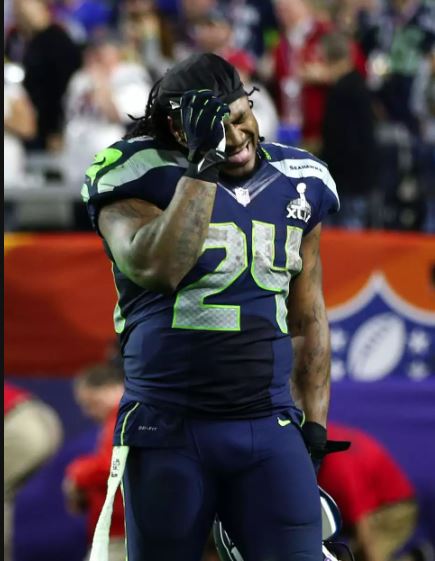
Bill Belichick was saving all of his timeouts and let the clock run down to :32 seconds before Seattle snapped the football.

Yet alas Malcolm Butler ended the Seahawks bid for back to back Super Bowl championships. Coaches have to get back to owning each situation and score first and win the game. Don’t sit and speculate when you can or even if you will score on a later play. You just have to trust your defense. If you can think back to Super Bowl XLVI between the Patriots and the Giants, Ahmad Bradshaw tried not to score when he “accidently” fell in the endzone. Taking a 17-15 lead, the Giant defense held off Tom Brady in that one. You have to rely on your defense.

Another clear case of overcoaching and now Seattle has to let this fester as they ponder an opportunity lost. It could fuel their trip to Super Bowl L in San Francisco’s new stadium. Stay tuned…

Thanks for reading and please share the article.
SUPER BOWL XXIV RUNNER UP 1989 DENVER BRONCOS

Whenever the 1980’s Denver Broncos are brought up the first player that comes to mind is John Elway. Rightfully so as he led one of the NFL’s most successful teams during the decade. However his teams did have some great talent on them. Did you know LB/DE Karl Mecklenburg & FS Dennis Smith have been Pro Football Hall of Fame semifinalists in the last couple years?? Atwater was immortalized in Bronze in 2020.

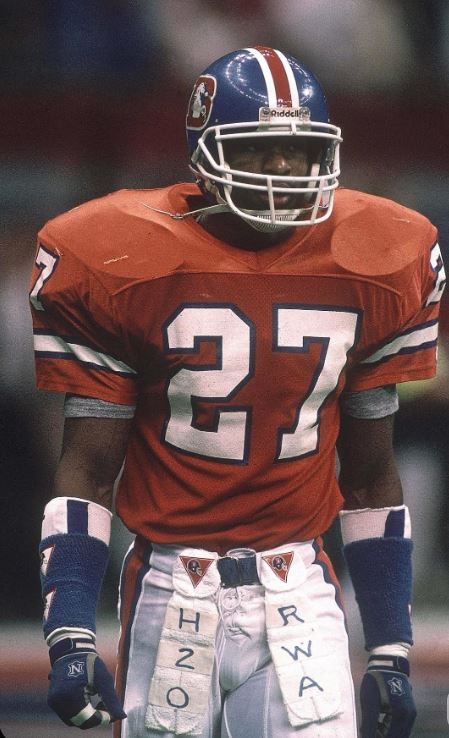
If we rewind the clock to 1989, Atwater was a wide-eyed rookie learning the ropes under Smith’s tutelage. Big hits rang up all year as receivers ducked for cover against these big safeties. Smith was a Pro Bowl player in 1989, the 3rd of 6 trips to Hawai’i after an 82 tackle 2 interception season.

courtesy of Roger Guinn

Atwater was the team’s 1st round draft pick out of Arkansas and passed out big hits like Christmas presents. Much like Jack Tatum you heard Atwater. Whether it was the whole stadium giving a collective “Ooooh!” or thumping of the pads.

With 129 total tackles & 3 interceptions Atwater didn’t make the Pro Bowl but came in 2nd to KC’s Derrick Thomas for NFL Defensive Rookie of the year. Both are in the Pro Football Hall of Fame.

Think back to the ’87 team where Doug Williams consistently beat then FS Tony Lilly for several TDs in the 2nd quarter. They couldn’t stop the bleeding or deliver a big hit to send Redskin receivers a message. Not so 2 years later. In ’89 he rung more bells than a Christmas caroler. The intimidation factor Atwater & Smith brought led the Broncos to a #3 defensive ranking overall or #2 in the AFC, and yielding the fewest points in the league with 226.

Atwater career retrospective

Meanwhile Mecklenburg was a Pro Bowl player with 143 tackles, 7 1/2 sacks, 2 forced fumbles, and 4 fumble recoveries. The 1989 season was the 4th of his 6 Pro Bowl trips and where there are a ton of vids showcasing Smith and Atwater, Mecklenburg is largely forgotten in circles outside of Denver. This vignette from ’86 showcases his talent best

In each of the Denver Broncos Super Bowl seasons they fielded a top 10 defense. Unsung players like Simon Fletcher and Michael Brooks made the back 7 one of the best during this era.

Another factor in 1989 was the Broncos finally landing a top running back in rookie RB Bobby Humphrey out of Alabama. He was Denver’s first true breakaway threat since Floyd Little. He rushed for 1,151 yards and 7 TDs after starting the season on the bench. Denver climbed to #6 in rushing where they had ranked 20th in the 1st Elway era Super Bowl team in 1986.

However history outside Taylor Blitz doesn’t bring up the excellent play from defenders who played with John Elway. When this team is discussed they make it seem as though there was John Elway and nothing else. Ask those receivers, QBs, and running backs on other teams how lethal this defense was. They’re not as heralded as the original “Orange Crush” but shouldn’t be in the dustbin of history either for coming up short in XXIV. It would be great to see Dennis Smith or Mecklenburg from this era make it to Canton since they weren’t on the Super Bowl winning Broncos a decade later.

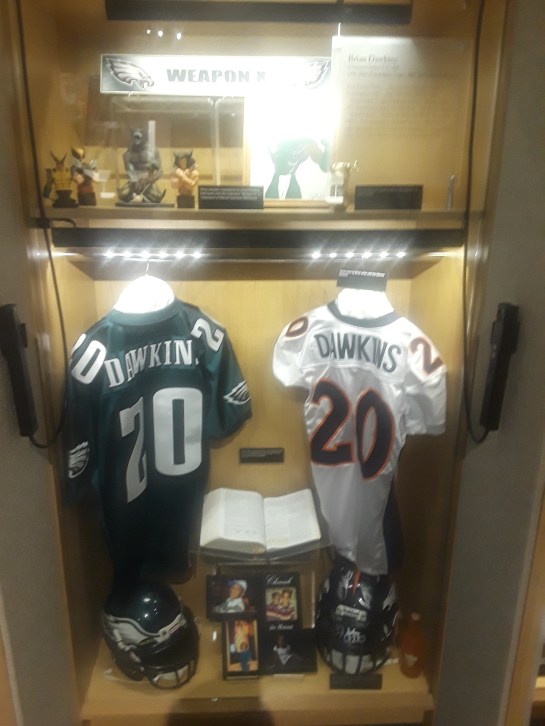
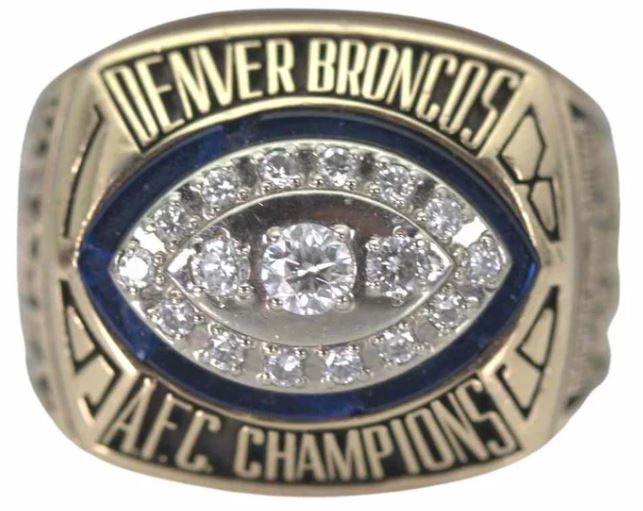
Yet alas this team ran into one of the all time great teams in Super Bowl history. This is the championship ring won by Denver after beating Cleveland for their 3rd AFC championship in 4 years.

Please lend your thoughts as well by writing in to the Pro Football Hall of Fame to the address below. Please be respectful and positively lend your voice:

Write & nominate Karl Mecklenburg / Dennis Smith
Send letters to:
Pro Football Hall of Fame
Attention Hall of Fame Selection Committee
2121 George Halas Dr NW, Canton,
OH 44708

super-bowl-logo-1989Thanks for reading and please share the article.
 

SUPER BOWL XIII RUNNER UP 1978 DALLAS COWBOYS

In the “Battle of Champions”,  XIII on January 21, 1979 the defending Super Bowl champion Cowboys took on the Steelers in deciding who was to be the team of the decade. There have only been a few occasions where a Super Bowl champion came back better the following season. The 1978 Dallas Cowboys were one of those teams.

16568_lg

Of all the teams coached by Tom Landry built by Tex Schramm and Gil Brandt, this was the apex of their work. In 1977 they finished #1 on both offense and defense. Rookies Tony Dorsett (1007 yds) and Tony Hill were just learning the offense and fighting for playing time. 1978 saw them each explode onto the scene as Pro Bowl performers with Dorsett flashing for 1,325 yards and 7 TDs. Hill supplanted Golden Richards, teaming with ’77 Pro Bowler Drew Pearson, gathering in 46 balls for 823 yards and 6 TDs. So they were much more explosive.

Finishing #2 in defense in 1978, nothing really changed from the season before. Pro Bowlers Randy White, Harvey Martin, Charlie Waters, and Cliff Harris were joined by 1st timer “Hollywood” Henderson. Whose athleticism had lethal impact on the Cowboys’ nickle packages. Although the NFL extended the regular season to 16 games in ’78, the Cowboys gave up fewer points (208) than they had as league champion the season before (212).

Did you know the ’78 Cowboys were .5 yards per game from being #1 on offense and 8 yards per game from being#1 on defense for a second straight year?? So when they vanquished the Los Angeles Rams and their #1 ranked defense, on the road 28-0 for the NFC Championship, their trip to Super Bowl XIII was for more than winning a title. They had a chance to finish as a dynasty and arguably the best in history.

The best Super Bowl of the first 25 had the Steelers scoring 1st then the Cowboys answering on the last play of the 1st quarter.

The Doomsday Defense II forced a fumble by league MVP and Super Bowl MVP Terry Bradshaw as the first quarter wore on. Just when the Steeler offense seemed to get it together, Doomsday struck again near midfield to take a 14-7 lead. Courtesy of Hollywood Henderson who taunted Bradshaw in the week preceding Super Bowl XIII.

The Steelers struck back with 2 scores to take a 21-14 halftime lead. Bradshaw had answered with several scoring drives and finished with 253 yards passing. A Super Bowl record… Dallas wasn’t living up to their defensive billing. After the first initial offensive drives, the Steelers had held Staubach and company in check.

Although the game had gone back and forth, the Steelers had outgained Dallas 271 to 102 yards. The teams had combined for 5 turnovers. However 1 aspect of the game had gone in Dallas’ favor, the Steelers trapping running game had been smothered. That trend continued in the second half as the Cowboy offense found it’s bearings. Down 21-14 late in the 3rd, Staubach drove the Cowboys to the Steelers 11 yard line. Poised to tie the game, the fickle hands of fate  interceded…

Having to settle for a 21-17 deficit, the momentum lost affected the Cowboys until late in the 4th quarter. In actuality neither team could move the ball for the balance of the second half. Only a pass interference that had impact beyond this Super Bowl gave the Steelers momentum.

The Steelers scored a few plays later to make it 28-17 on Franco Harris’ 22 yard trap up the middle. Another fickle bounce of the ball happened when kicker Roy Gerela slipped kicking off. It went right to DT Randy White. With a casted hand tried to handle the ball on a return when he fumbled it. The Steelers scored on the next play and viola…they were up 35-17 with 6:41 to go. The Cowboys were undone on a bad pass interference and two strange bounces of the football.

The Cowboys didn’t go quietly into the night.

Staubach led the Cowboys to back to back touchdown drives to cut the score to 35-31. They couldn’t get a second onside kick and the Steelers ran out the clock. The Steel Curtain finished the game on fumes. Dallas couldn’t be stopped on those last 2 drives. Comparing both defenses:

  • Steelers allowed 330 yards, 5 sacks, 2 forced fumbles, 1 int.
  • Cowboys allowed 357 yards, 4 sacks, 3 forced fumble, 1 int and 1 fumble recovery for a TD

sbxiiinew2Not bad when you compare two great defenses. However writers have gunned down hyperbole in the history books as Steeler strength vs Dallas finesse. When in fact the Cowboys were ranked 2nd and the Steelers 3rd on defense. The 86 yards gained by Pittsburgh in the 2nd half was the fewest by a Super Bowl winner. Well at least until XXX when the Steelers held the Cowboys to 61 in their loss.

super-bowl-logo-1978Even though the Steelers had bested Dallas in SuperBowl X, this  could have made things even at 3 wins a piece.  Anyway…to the victor went too many spoils when it comes to Hall of Fame inductions off these teams.  No Harvey Martin, no Drew Pearson?  really…Pittsburgh was better…but not 10 inductions to 3 better!  No chance.

Who knew this would be Tom Landry 's last Super Bowl team.

Who knew this would be Tom Landry ‘s last Super Bowl team.

Thanks for reading and please share the article.