Edgerrin James Belongs In The Hall of Fame – From The [[_]] Hall of Fame Edition

Originally published: 19, January 2013 w/Postscript 16, July 2025
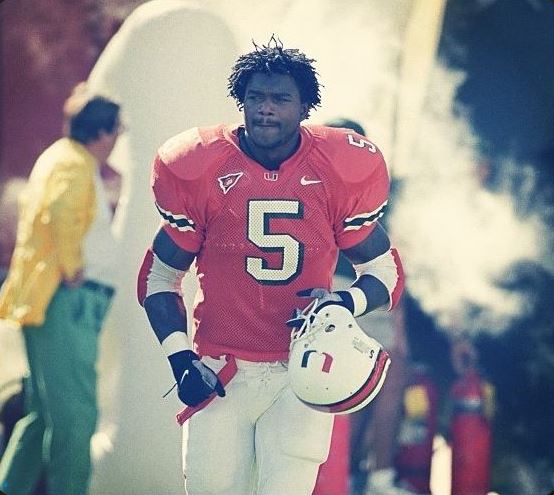
When you stop and think of professional athletes, so few live up to their potential. In the case of Edgerrin James, no other NFL player had to live up to more coming out of college and he had a hurricane to thank. Although he played for the Miami Hurricanes (The [[_]]), it was Hurricane George that postponed a Miami v UCLA game that was supposed to be played in September of 1998 to December 5th. For many, the college football season was over and the nation watched Heisman hopeful Cade McNown and the 10-0 Bruins who were 1 win away from playing for the national championship. In a wild 49-45 upset, James burst onto the national scene with a 39 carry 299 yard 3 touchdown performance that returned the [[_]] to national prominence and made himself a top NFL prospect.
Since Miami had been down for years following NCAA sanctions, this was the first national glimpse of this immense talent. What followed in the April draft 4 months later added more pressure. Everyone forgets the Indianapolis Colts had drafted Marshall Faulk to resurrect the franchise in 1994 and had just drafted Peyton Manning in the previous year. Having traded Faulk away, it was a forgone conclusion they needed a running back in the #4 spot and Heisman winner Ricky Williams from Texas was there for the taking. General Manager Bill Polian opted to take Edgerrin James instead and it was this move that solidified the franchise. Some experts doubted James calling him a one game wonder.

Going into the 1999 NFL season Edgerrin had a lot to live up to. Could he consistently show the power and speed he displayed to a nation when he dismantled UCLA in that landmark game?? How in the world did he get selected ahead of a Heisman winner who just rushed for 2,124 yards and 28 TDs and was considered a can’t miss NFL superstar by pundits and coaches?? If that weren’t enough, Faulk had been a 1,000 yard rusher 4 times in 5 years including 1,319 yards rushing and 908 yards receiving in 1998. Marshall caught 86 passes and had scored 10 touchdowns in a Pro Bowl season and a rookie that wasn’t Ricky Williams was supposed to top that?? The Colts had been 3-13 in 1998 and now Edgerrin is going to be paired with a second year QB that threw an NFL record 28 interceptions as a rookie?? No way….

In leading the NFL in rushing with 1,553 yards and scoring 17 TDs he laid to rest the competition with Ricky Williams who gained 884 and only 2 touchdowns in an injury plagued year. In the video you just heard that he had a rookie year better than 5 of the 6 who had been rookie rushing champions. First include Hall of Fame member Earl Campbell who gained 1,450 yards in his initial campaign. He also outrushed Hall of Fame member Jim Brown in his. Now someone will scoff Brown played in a shorter season and he did, but his 942 yards in 12 games comes out to 78.5 per game. Far fewer than the 97 yards per game James accumulated while helping the Colts go 13-3 and win their first AFC East division championship since 1987.
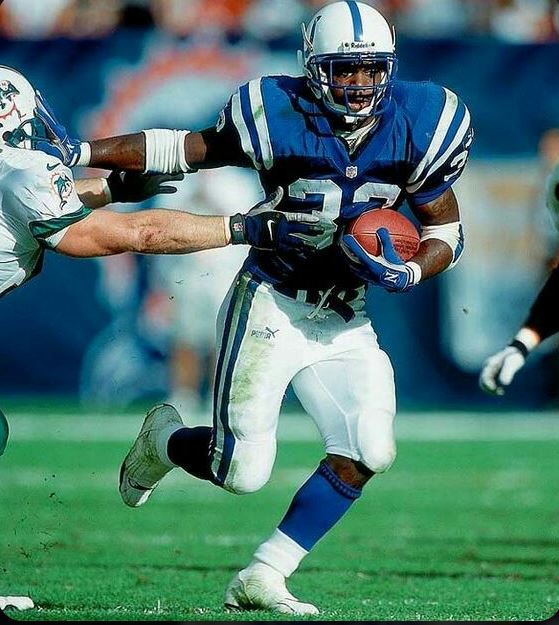
For an encore he became the first back since Eric Dickerson to start his career with back to back rushing titles in 2000. In his greatest season he ran for 1,709 yards with 13 TDs while catching 63 passes for 594 yards and another 5 scores. If you’re keeping score at home that is 4,444 yards from scrimmage and 35 touchdowns in just 2 years. The only back that could compete with that was Marshall Faulk who had gone on to power The Greatest Show on Turf Rams.

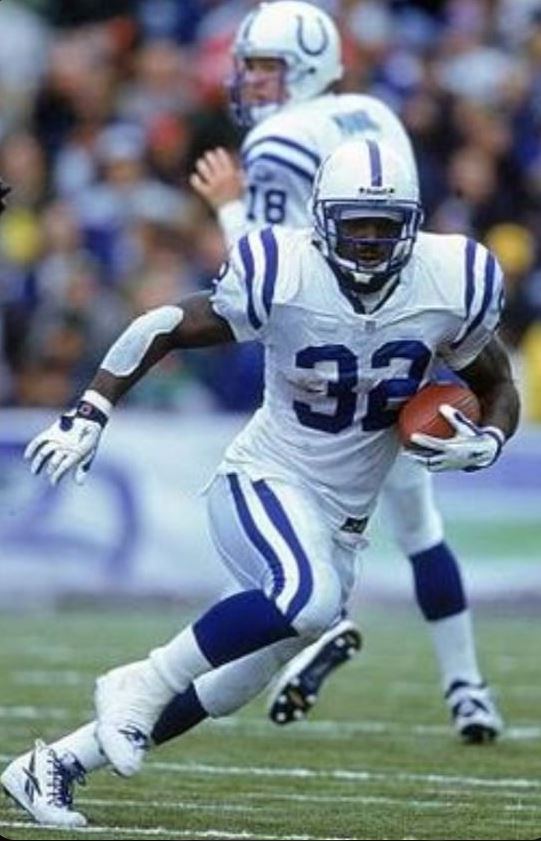
In 2001 James suffered a devastating knee injury and missed 10 games which sank the Super Bowl aspirations of the Colts. In the following season he only rushed for 989 yards and 2 touchdowns. His average had dropped from 4.4 in the previous 3 years to 3.6 and the whispers around the league were he’d never be the same. Not only did he bounce back, over the next 5 seasons he topped 1,000 yards rushing including 2 with over 1,500 yards in 2004 & 2005. Five seasons with over 1,000 yards rushing after reconstructive knee surgery…what was there left to accomplish??

Unfortunately the Colts regular season successes didn’t equal playoff success. The ’99 season ended when Indianapolis was upset 19-13  by the eventual AFC Champion Tennessee Titans. Post season losses to the Jets, Patriots, and finally the Steelers in 2005 kept James from winning it all with Peyton Manning and Marvin Harrison. The three had been the face of the team for 7 years together and his contract was up. The salary they would have to bring him back as a free agent would have crippled the franchise. Yet Colts owner Jim Irsay thought so much of James and his contribution to the organization that when the Colts did win it all in 2006, he presented him with a Colts Super Bowl ring even though he now played for the Arizona Cardinals. A classy move.
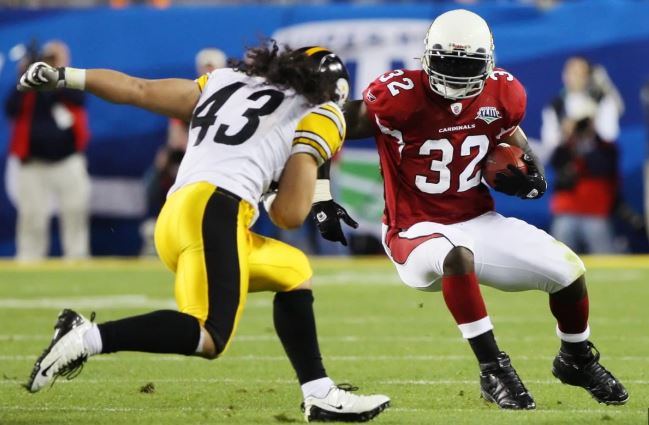
Edge making a move on PFHoF Safety Troy Palamalu in XLIII.

What looked like the swan song for James turned out to be false, he had one more surprise for critics that claimed he had lost a step. In 2007 he teamed with Kurt Warner and Larry Fitzgerald on an improbable run to Super Bowl XLIII the very next year. Most of the publicity went to Warner since he was a reclamation project that arose like Lazarus, yet they don’t make it without James’ 1,222 yards rushing and 7 touchdowns.The combination of James on the ground, Anquan Boldin and Larry Fitzgerald downfield proved too much as the 9-7 Cardinals soared through the playoffs. They beat Atlanta, Carolina, and finally the Philadelphia Eagles 32-25 in the NFC Championship. Only to lose the Super Bowl on a last second touchdown to the Steelers 27-23 in one of the best games ever.

However every good thing must come to an end and James had led an incredible football life. Think about his accomplishments and what can be attributed to him. How many recruits chose to go to Miami after watching his exploits against UCLA that day when all other teams were not playing?? Miami had received the Death Penalty and had been down for four years after dominating college football for a decade. His performance announced the return of Hurricane football. In the next three years after his 1999 graduation, Miami won the Sugar Bowl and played in two straight national championships winning one in 2001. How many running backs went to The [[_]] because of his influence?? Clinton Portis, Willis McGahee, and Frank Gore came right after him. It was alleged he even donated $250,000 to the school at one time.

How about his low-key personality and league wide respect he garnered while he played with the Colts?? He was one of the first superstars that wore dreadlocks and coming from Miami he broke many stigmas that are unfairly attached to Hurricanes from a nation wide perspective. He was never in trouble away from the field and was thought of so highly he was given a Super Bowl ring by the team he no longer played for. Think about that for a second. All of this in the era of the “ME” athlete. When was the last time you heard of such things in the era of free agency?? Did the San Francisco 49ers give Joe Montana a Super Bowl ring when they won in 1994 after Joe left in 1993?? Give that some thought…

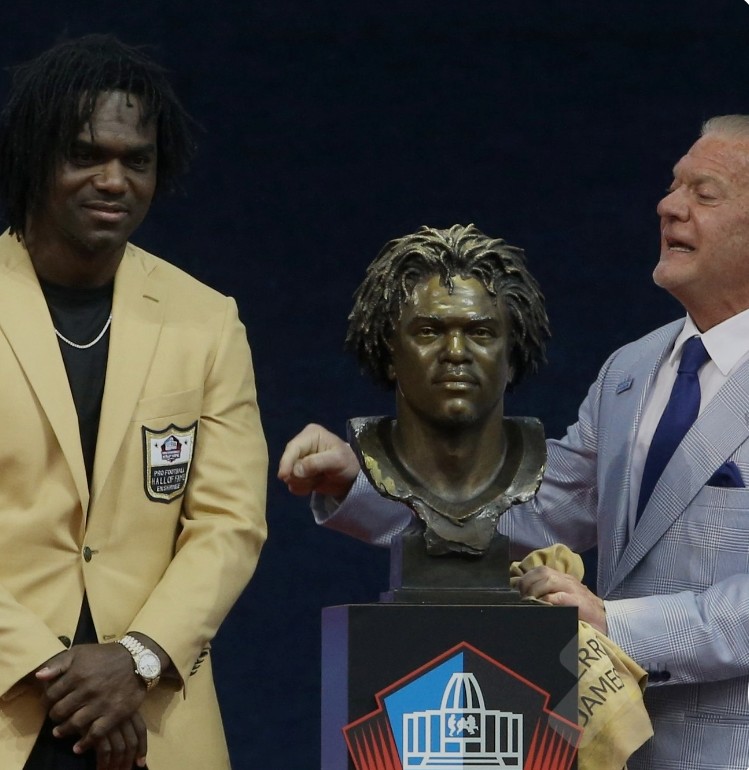
James and Colts Owner Jim Irsay at the Ring of Honor Ceremony.

James and Colts Owner Jim Irsay at the Ring of Honor Ceremony.

He completed his career with seven 1,000 yard seasons.  Finishing with 12,246 yards 80TDs, to go along with 443 receptions 3,364 yards and another 11 TDs. Up until his arrival in 1999 the Indianapolis Colts hadn’t won their division in 12 years. Afterward they won it 5 times during his tenure. In Arizona, the Cardinals had not played for the NFL championship since 1947 until James arrived. 1947??? That is 60 years!! He was voted All Pro four times and led the league in rushing twice. In a Hoosier Dome that once had Eric Dickerson and Marshall Faulk as tenants, it’s James who is the franchise’s all time leading rusher with 9,226 yards and 64 touchdowns. He’s also been inducted into the ring of honor for both the Miami Hurricanes and the Indianapolis Colts.

Did you know James, Barry Sanders, and Eric Dickerson are the only backs since 1980 to have 4 different 1,500 yard seasons?? Do you realize dating back to 1957, only James, Jim Brown, Earl Campbell, and Eric Dickerson are the only runners who began their careers as back to back rushing champions in their first two years?? Did you recognize every back mentioned with him in this paragraph are all in the Pro Football Hall of Fame??

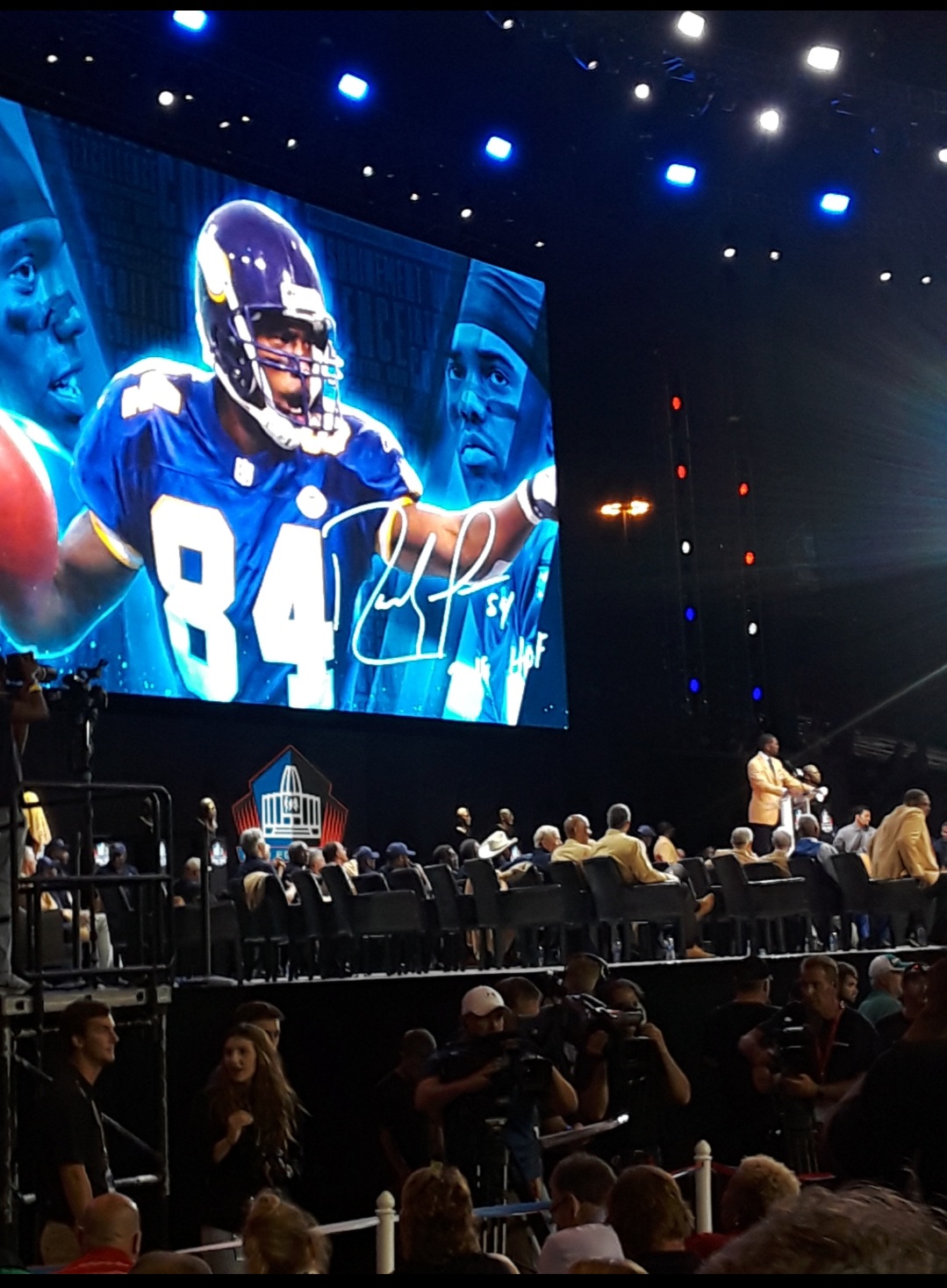
For induction into the Pro Football Hall of Fame, I present to you, from The [[_]], Edgerrin James!!
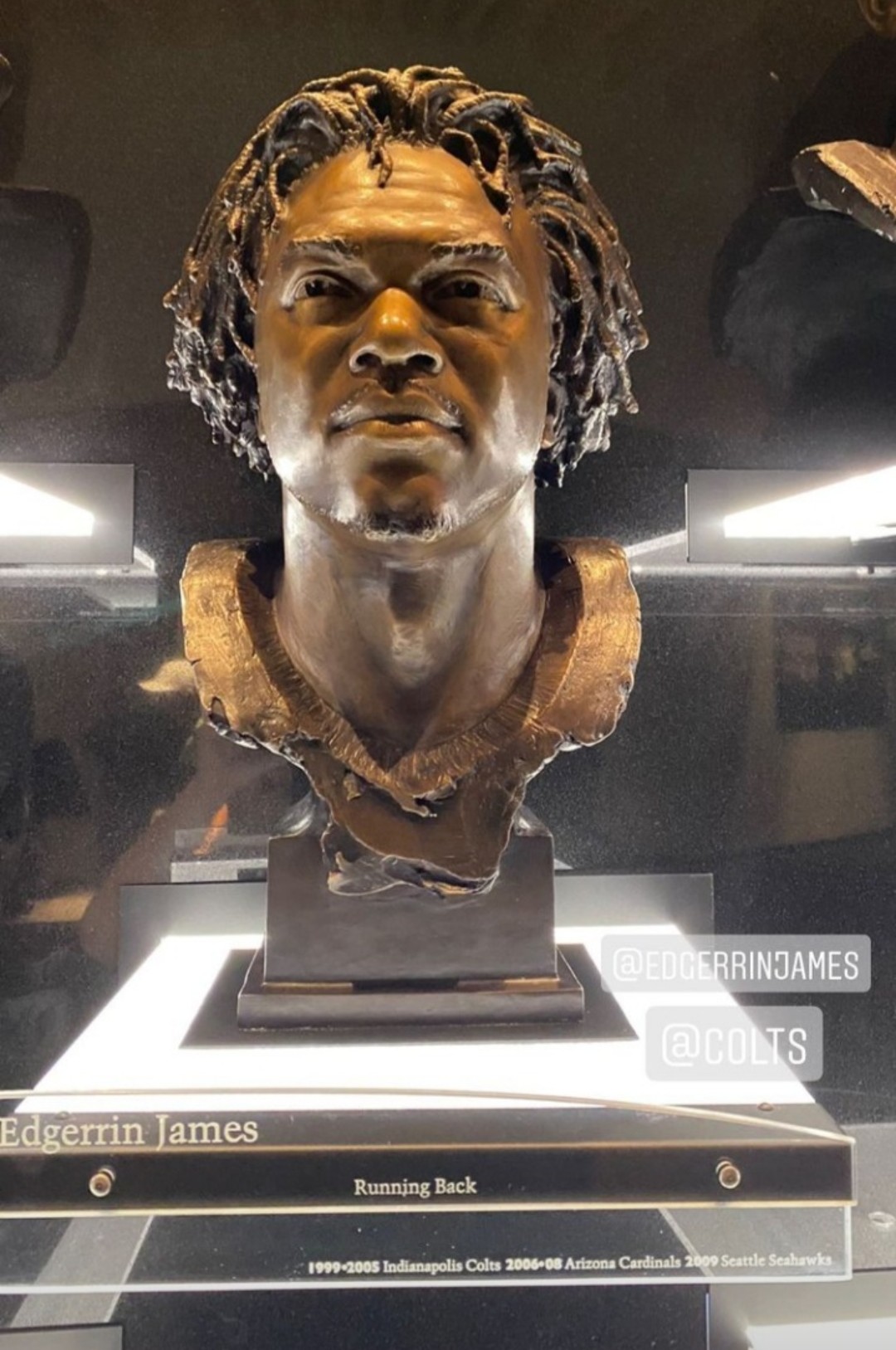
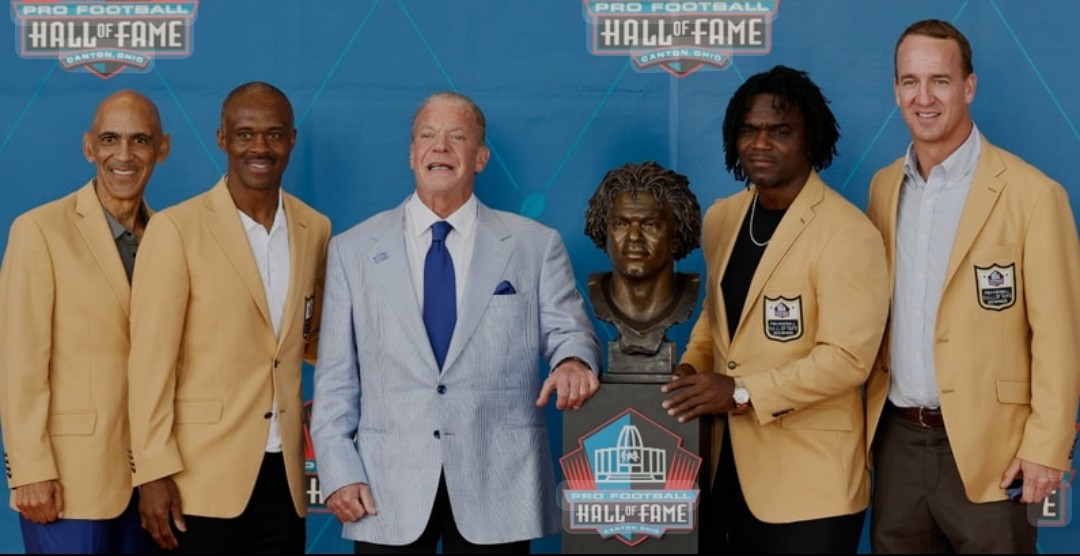
“Started with these gold teeth and ended in this gold jacket.” My man brought the house down with this one. It was a speech that was unmistakably Edge and was surrounded by his teammates including Peyton Manning, Marvin Harrison, and Coach Dungy who preceded him in Canton.

Just as I had described a decade prior his relationship with now deceased Jim Irsay, he had him as his Hall of Fame presenter. The picture above is from his “Ring of Honor” ceremony in Sept. 2012. The one below is Canton.
Now PFHoFs Coach Tony Dungy & Bill Polian have their “triplets” immortalized in Canton with them. Their now teammates on the greatest football team ever. When I began this conversation back in 2013 I’d hear so many tell me he didn’t belong until I explained he was one of only 4 backs to have 4-1,500 yd seasons and you’d see their stance start to bend.

Now he is in Canton forever and a nation of youngsters will read about his exploits. This is what keeps the game going.
Thanks for reading and please share the article.

Past Hall of Fame Articles:

Robert Brazile 2011 (inducted 2018)
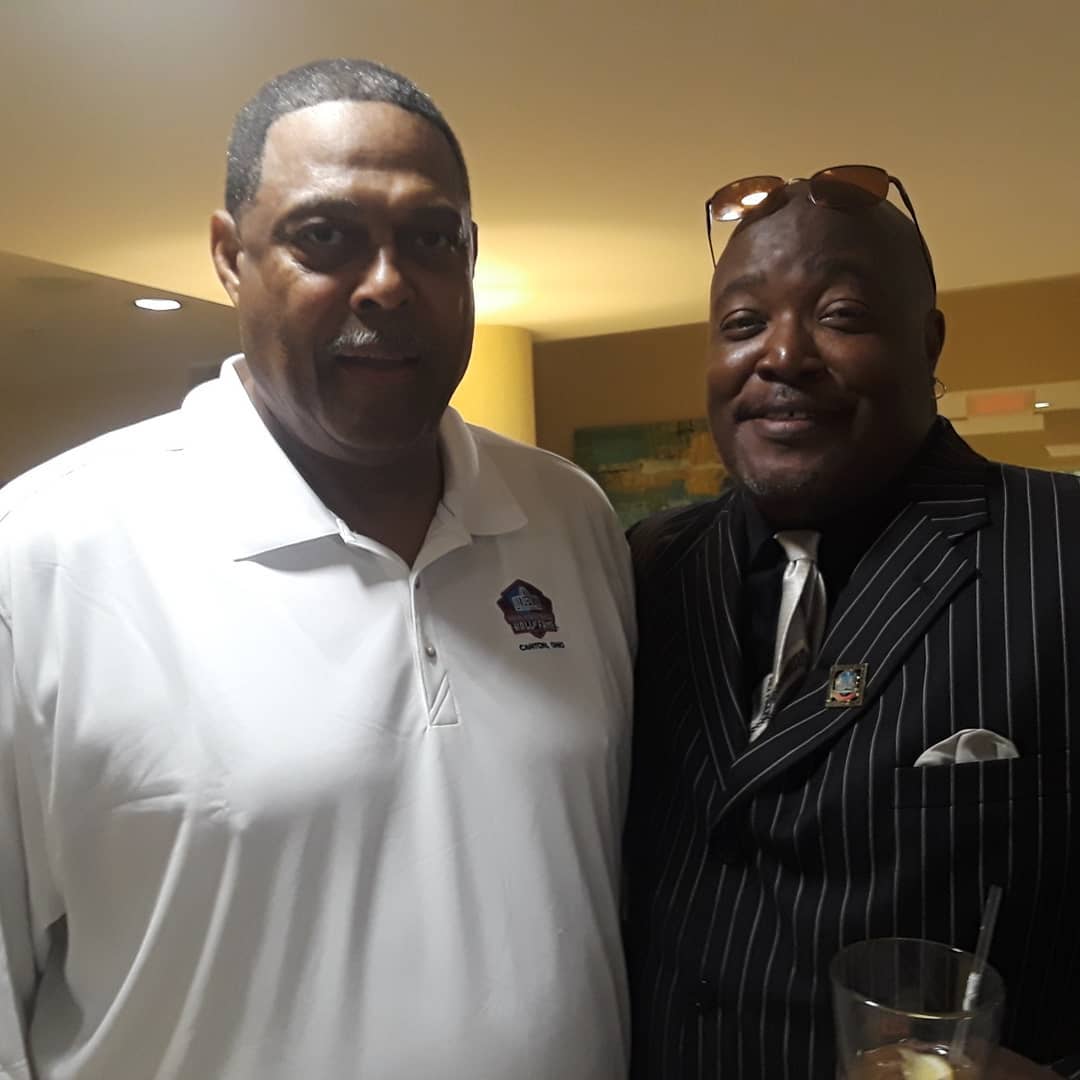
Ran into Brazile at 2018 Gold Jackets Dinner.

Kevin Greene 2011 (inducted 2016)
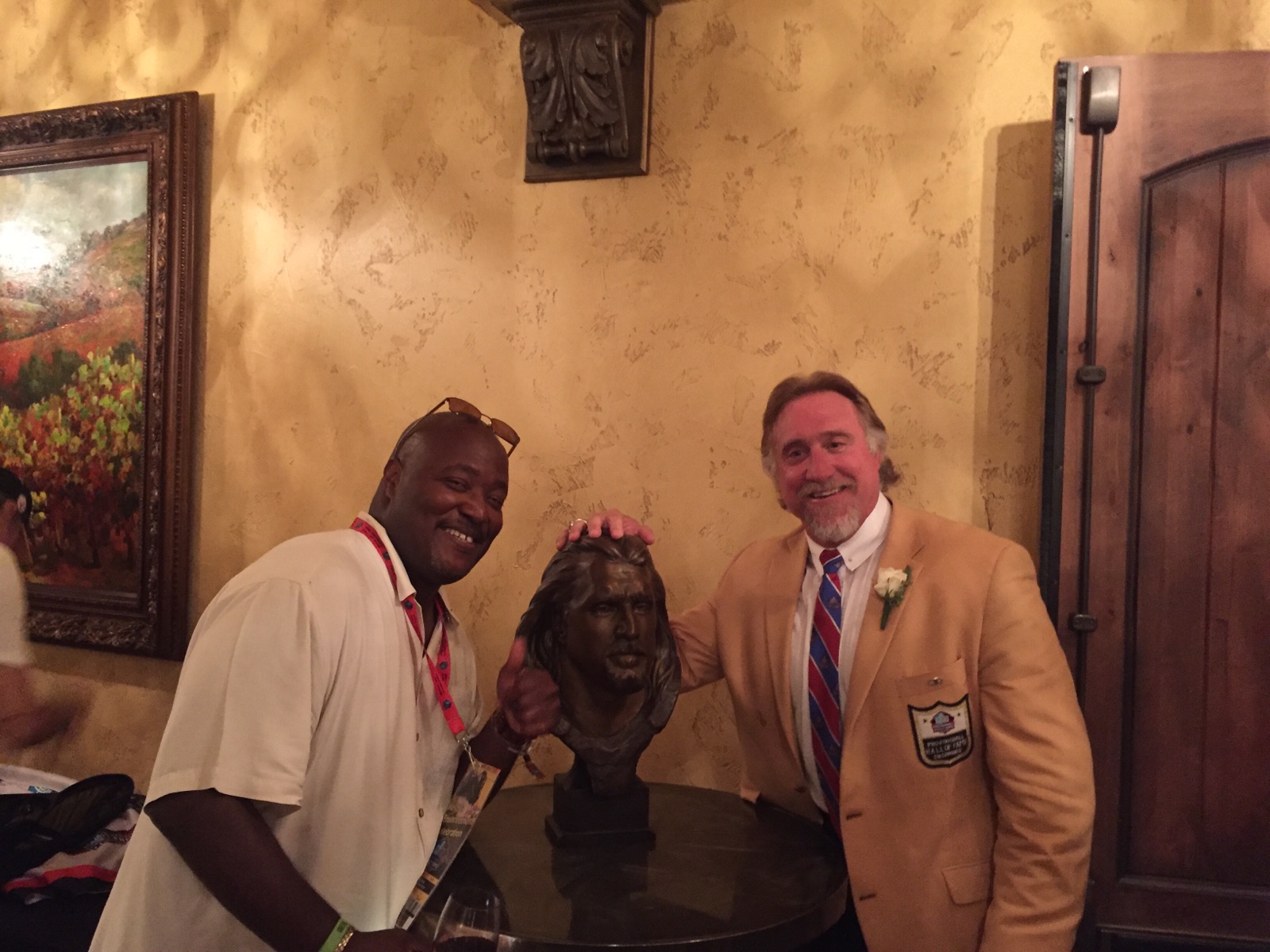
With Kevin Greene after the Induction ceremony.

Sterling Sharpe 2011 (will be inducted 2025)

Terrell Davis 2011 (inducted 2017)

Jerry Kramer 2011 (inducted 2018)
“Hey big guy!”

Everson Walls 2011

Randy Moss 2011 (inducted 2018)

Cris Carter 2011 (inducted 2013)

Tom Flores 2012 (inducted 2021)

Lester Hayes 2012

Chuck Foreman 2012

Edgerrin James 2013 (inducted 2020)

Andre Reed 2013 (inducted 2014) 

Roger Craig 2013

Corey Dillon 2014

Ken Riley 2015 (inducted 2023)

Ken Stabler 2015 (inducted 2016)
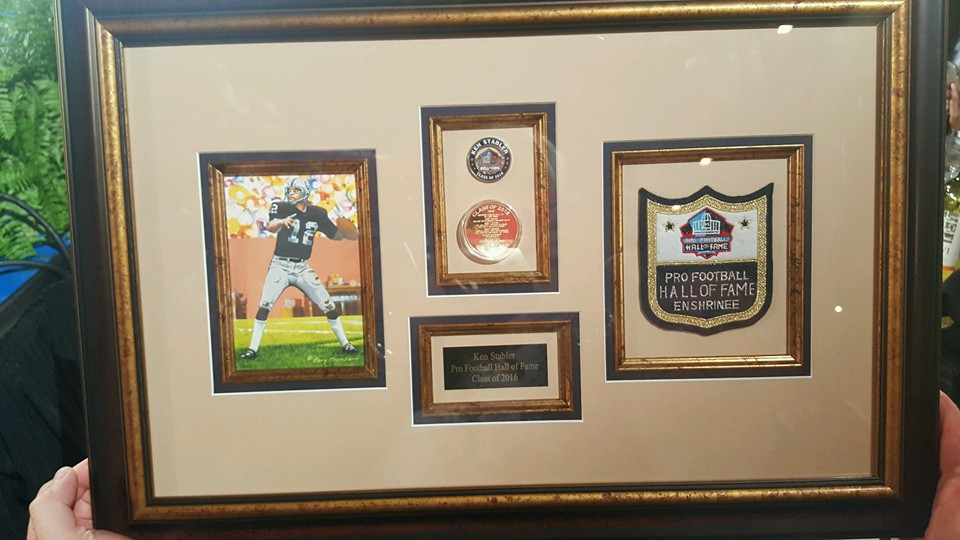
Drew Pearson 2016 (inducted 2021) 

Cliff Branch 2016 (inducted 2022)
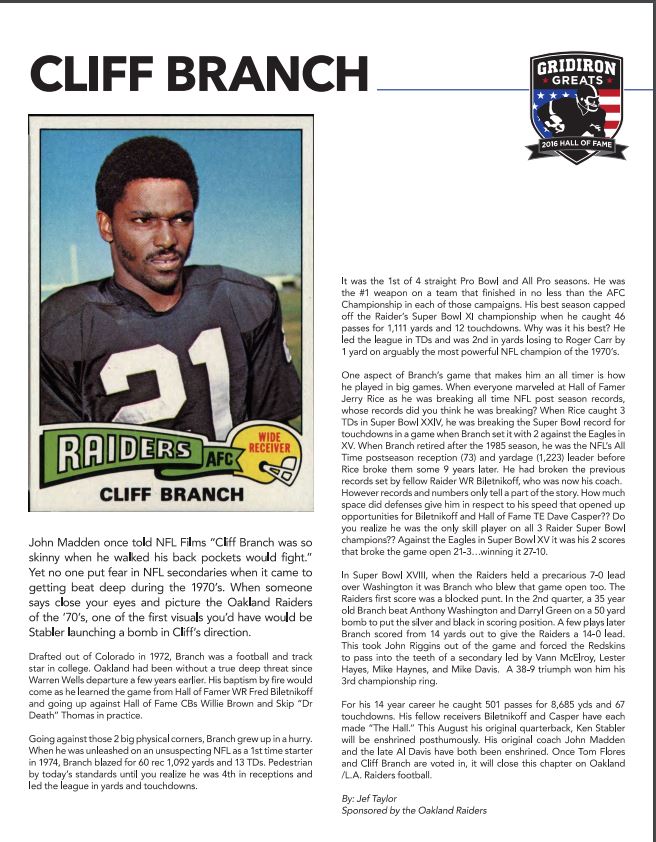
This TBT article was used to induct Cliff Branch into Gridiron Greats Hall of Fame


Todd Christensen 2017

Hardy Nickerson 2020

Wilber Marshall 2024

Mike Holmgren 2025

Chuck Foreman Should Be In The Hall Of Fame

There are several definitions of a champion and fewer for what constitutes a Hall of Fame player. When asked a week or so ago what I thought a Hall of Fame player was I responded “If you were to talk about a decade or era in which a player participated and you couldn’t talk about that time frame without that person’s mention. If you can’t he’s a Hall of Famer.” Chuck Foreman was such a player.
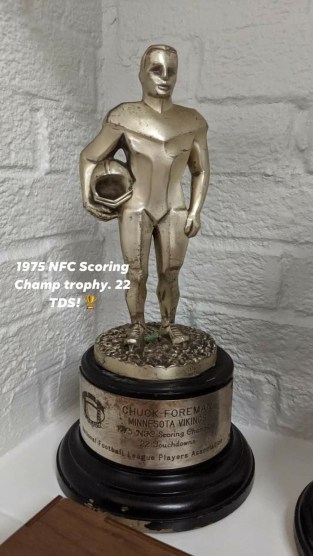
Has there ever been a running back that was more emulated than this 1970s icon?? When you look back at Foreman’s numbers, they don’t jump out at you. However it was his immediate impact on the entire football landscape that made him important. Every NFL fan can remember his spin moves and patented lateral side step moves that left linebackers reaching for him instead of getting a full on shot. If you close your eyes right now you can picture the famous shot from Super Bowl XI against the Raiders as he spun off two defenders. He was one of the breath-taking runners of the 1970’s…and before we get into the full argument, remember he spent his years as a fullback. Yes, at fullback!

What impact are we talking about?? For starters the 1972 Minnesota Vikings were a run by committee team that only averaged 3.7 yards per rush as they gained 1,740 yards. Foreman’s insertion into the line-up as a rookie catapulted those numbers to 4.2 yards and a team total of 2,275 yards. Although he missed two games, he led the team with 801 yards while opening up the passing game being such a threat from the backfield. The Vikings went from 7-7 and fading from the promise of  a Super Bowl IV appearance a few years back, to 12-2 and NFC Champions in 1973.  Foreman reinvigorated the franchise.

Over the next three seasons, Foreman was as strong a force the NFL had seen when it comes to scoring production. He rushed for over 1,000 yards each season. Not only did he lead the Vikings back to the Super Bowl two more times, he set the standard for running back catching passes out of the backfield.

Did you know in 1975 he led the NFL with 73 receptions?? It was only the 2nd time a RB led the NFL and was a record at the time for catches out of the backfield. This accounted for 691 yards and 9 scores.

When you plug in his 1,070 yards on the ground with 13 trips to the endzone, Foreman accounted for an astounding 22 touchdowns. This tied the old record of 22 in a season with Gale Sayers because during the same game, OJ Simpson pushed the record to 23.

Not to be outshown Foreman scored 4TDs that afternoon while facing off against another great back. This was one of the landmark games in NFL history. Not only did OJ and Foreman (172 total yards & 4TDs) put on a show, Fran Tarkenton broke the NFL’s all time touchdown record by John Unitas throwing his 291st.

During the period 1974-1976, Foreman scored a league high 51 touchdowns. This was Chuck in his prime and before you compare his best 3 year period with any other running back’s best 3 year period remember this… Foreman had these numbers in a 14 game season, not the 16 game campaign.

  • Chuck Foreman – 1974-1976 : 51 touchdowns
  • OJ Simpson – 1973-1975 : 39 touchdowns
  • Franco Harris – 1975-1977 : 36 touchdowns
  • Jim Brown – 1963-1965: 45 touchdowns          *all were 14 game seasons
  • Marshall Faulk – 1999-2001: 59 touchdowns *Set TD record at 26 in 2000
  • Emmitt Smith – 1994-1996: 62 touchdowns    *Set TD record at 25 in 1995
  • Barry Sanders – 1989-1991: 47 touchdowns

However a closer look at his touchdown numbers reveal that his totals for ’74-’76 project to a whopping 57 scores had he maintained the same pace for a 16 game season. He measures up fairly well with these 6 Hall of Fame backs when it comes to scoring. That is the name of the game isn’t it?? It’s not just yards, its scoring, impact on the game, and winning. Even when you look at OJ Simpson’s yardage for his career it’s really a 5 year period that his work was condensed from 1972-1976.

So to talk about a players career in a condensed time frame in their prime isn’t foolish. OJ had five 1,000 yard seasons to Foreman’s three. If that was enough to make OJ NFL Films “Hero of the Decade” for the 1970s, where does that leave Foreman whose spin move was copied by fellow 70’s runners Walter Payton and Tony Dorsett?? Who also clearly outscored Simpson during their heyday.

His Vikings went to 3 Super Bowls in 4 years and only the “Hail Mary”  playoff loss to Dallas kept them from going to 4 straight.

He changed the way the game was played from the running back position. It was the Vikings realizing they could free him from the logjam of the line of scrimmage by throwing it to him instead of quick traps or dives. For his career he caught 50 or more receptions in a season five times during his career. Compare that to only 2 for Lynn Swann who is in the Hall of Fame as a receiver in the same era. For his career he ran for 5,950 yards 53TDs, which doesn’t include another 3,156 yards and another 23 scores receiving. In the end, Foreman was burned out before his time.

  • Yet when you have a player match Gale Sayers for the second best touchdown total of 22 in a season.
  • Won the 1973 NFL Rookie of The Year
  • Made 5 straight Pro Bowls (1973-’77)
  • Led the NFL in TDs in both 1974 & 1975.
  • Led the NFL in receptions w/ a record 73 in 1975.
  • He immediately turned a fading Vikings team into the winningest team in the NFC over a four-year period 45-10-1 and 3 conference championships.

If it’s about making an immediate impact and being an unforgettable talent, than Chuck Foreman needs to take his place with other great backs. One trend which has gone on too long is the omission of Minnesota Vikings from the 1970s not making the Hall of Fame because of Super Bowl losses. Foreman sits within that abyss and the situation needs to be rectified. As a one of a kind talent from “The [[_]]”, his playing style was mimicked by a generation of up & coming running backs and he hasn’t been forgotten by legions of NFL fans. If that is not enough, we have to redefine the definition of a Hall of Famer.

For induction into the Pro Football Hall of Fame, I present to you: Chuck Foreman

provided by Tony Janetto

Chuck Foreman in motion. Just as we remembered him…compliments of Tony Janetto

If you want to get in touch with Chuck…and more on this talent hit him up on his Facebook page or his official shop

Please lend your thoughts as well by writing in to the Pro Football Hall of Fame to the address below. Please be respectful and positively lend your voice:

Please write & nominate #44
Send letters to:
Pro Football Hall of Fame
Attention Senior Selection Committee
2121 George Halas Dr NW, Canton, 
OH 44708

Thanks for reading and please share the article.

Lester Hayes Belongs In The Hall of Fame

As the NFL changed the rules in 1978 to liberate the passing game, many thought the big physical cornerback would give way to smaller quicker men. Those who could turn and run with receivers after the 5 yard “chuck” zone (The Mel Blount Rule) would be highly sought after. Yet one team held steadfast to the belief of not allowing that receiver a free ride off the line of scrimmage.

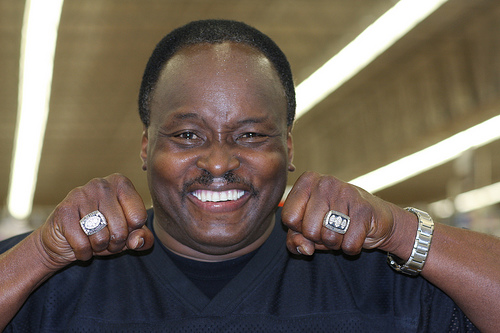
The Oakland Raiders who in 1977, just one year removed from winning Super Bowl XI, selected Lester Hayes out of Texas A&M. Where the league saw smaller cornerbacks at 175-180 lbs enter the league at that time. Hayes was a converted college safety who stood 6’0 and weighed 200 lbs.

Does he have on enough stickum??

His inclusion into the Raiders organization was at the right time as Hall of Fame cornerback Willie Brown retired and took over as secondary coach. Under his tutelage Hayes became a master of bump and run coverage and with his size, manhandled receivers at the line of scrimmage. Sure a receiver could run free after 5 yards but he had to get there first.

Another retiring Hall of Fame Raider was WR Fred Biletnikoff who went against Hayes in practice. Fred ran crisp routes and was a slower version of Steve Largent or a Charlie Joiner. Going up against he and Cliff Branch, who was the one of the league’s perennial deep threats, honed his skills to that of one of the greatest cornerbacks the game had ever seen. He also borrowed Biletnikoff’s use of stickum and took it to obscene levels. Take a look at the pic on the right if you think we’re joking.

Stickum talk aside, his true coming out party was the 1979 season where he led the team with 7 interceptions, returning 2 for touchdowns in the only losing season for the Raider organization during the 1970’s. John Madden had retired and Tom Flores had taken over as Head Coach and the Raiders were a team in transition.

Most teams make a transition in personnel with a defensive leader being a linebacker or a star defensive lineman being a marquee player yet here was a cornerback just starting to make a name for himself at the helm. However he couldn’t unseat Louis Wright of Denver, Mel Blount of Pittsburgh, or Mike Haynes of New England on the 1979 AFC Pro Bowl roster. Naturally you’ll conclude they had better seasons yet Blount and Haynes made it on reputation with only 3 interceptions each and Wright only had 2. A gross injustice just because Hayes team had slipped that year.

Enter the greatest single season for a cornerback in NFL history and the greatest coaching job in NFL history…the 1980 Oakland Raiders. In the second season for Tom Flores, the Raiders became the first team to win the Super Bowl from a wildcard position. The team had replaced nine defensive starters from a Super Bowl team just four years before.

Lester Hayes intimidating style at cornerback belied his agility to cover the fastest and best route runners in the NFL.For the season, he picked off 13 passes, just one short of the NFL record by “Night Train” Lane in 1951.  Not only was that the highest total in 29 years, no cornerback has come within 2 of that performance since then (Everson Walls in 1981). He returned those passes for 273 yards and one touchdown and went on to be the Associated Press NFL Defensive Player of the Year.

He was the first player to receive the award while playing for a team that didn’t finish as a top 10 defense with the Raiders finishing 11th. He did this while facing Hall of Fame WRs Steve Largent in Seattle, Charlie Joiner and Kellen Winslow in San Diego, and the electrifying John Jefferson also of the Chargers with whom he had epic battles with.

During the 1980 season teams kept testing him and coming up snake eyes. If you added his 4 interceptions during the playoffs he finished with 17 interceptions in one season. If you look at that against the year Hall of Famer Deion Sanders won his NFL MVP (1994 with San Francisco) from the same position, 6 interceptions for 303 yards and 3 TDs with 2 more ints. in the postseason, it dwarfs it tremendously. Sanders needed another NINE interceptions just to tie him!!!  You would have to add Deion’s next FOUR seasons with Dallas just to tie him with 17!! Tremendous

Oakland went on to win Super Bowl XV and the 80 playoffs began with a wildcard battle against Houston and former quarterback Ken Stabler. The Raiders prevailed 27-7 with the final points scored on Hayes intercepting Stabler and returning it 20 yards hand held high to send the Raiders to Cleveland and the divisional round.

He intercepted Stabler twice then intercepted 1980 NFL MVP Brian Sipe twice in the 14-12 upset of the Browns. In the AFC Championship against the Chargers and the Super Bowl with the Eagles, Dan Fouts and Ron Jaworski just didn’t throw into his area. How do we know this?? In Super Bowl XV Hayes was the left cornerback. Jaworski threw exclusively to his left and Right OLB Rod Martin picked off a Super Bowl record 3 interceptions in a 27-10 win.

The NFL outlawed stickum after that 1980 season in anther decision that Raider loyalist felt was the offspring from the court battle between Raiders’ owner Al Davis and commissioner Pete Rozelle. Some thought that Hayes inability to use stickum had a lot to do with his interception total dropping, when in fact quarterbacks just flat didn’t throw into his area. He never intercepted more than 3 passes in a season from that point forward.

Lester Hayes showing off both rings from Super Bowl XV and XVIII

After being overshadowed by Mike Haynes for that 1979 Pro Bowl slot, he was joined by his former counterpart in 1983 to form one of the greatest CB tandem in NFL history. In that year the Washington Redskins became the highest scoring team in NFL history scoring 541 points on their way to Super Bowl XVIII. Washington’s quarterback Joe Theismann was the NFL’s MVP and the Redskins were being hailed as the greatest team in NFL history…yet they had to defend their title against Los Angeles.

The Raiders started their charge in the 83 playoffs with a 37-10 devastation of the Pittsburgh Steelers which ironically began with Hayes getting the team started with an 18 yard TD interception return. After a 30-14 win against the Seahawks in the AFC Championship experts had the Redskins winning a high scoring game.

What took place in Super Bowl XVIII was a dismantling of epic proportions. Charlie Brown, who had caught 78 for 1,225 and 8 TDs during the regular season, was smothered along with Art Monk and held to a combined 4 receptions by Hayes and Haynes. The coverage was so superb the Raiders blitzed their linebackers and recorded 6 sacks as Joe Theismann had his worst game of the year. His stat-line?? Theismann was held to 16 of 35 for 243 yards and 2 ints. Only one pass was completed in Lester Hayes area the entire day. He won his second championship ring as the Raiders won in dominating fashion 38-9.

Hayes at this point was the best cornerback in all of football. He played in 5 straight Pro Bowls from 1980-1984 and was the player most future NFL’ers modeled their game after. Most notably Hanford Dixon of the Cleveland Browns. Everything from the three foot long towel hanging from his waist to his aggressive play against a receiver at the line. Dixon and Frank Minnifield are the tandem that Lester Hayes and Mike Haynes are most often compared to. As a combo… Dixon and Minnifield were the best tandem in NFL history. Yet the man who coined the Brown’s “Dawg Defense”, was a 3 time Pro Bowler who modeled himself to be like Lester, what would you call Hayes?? In The Chancellor’s book, he’s a Hall of Famer.

Please lend your thoughts as well by writing in to the Pro Football Hall of Fame to the address below. Please be respectful and positively lend your voice:

Please write & nominate #37 Lester Hayes
Send letters to:
Pro Football Hall of Fame
Attention Senior Selection Committee
2121 George Halas Dr NW, Canton, 
OH 44708

For induction into the Pro Football Hall of Fame, I present to you Lester Hayes

lester

Tom Flores Belongs In The Hall of Fame

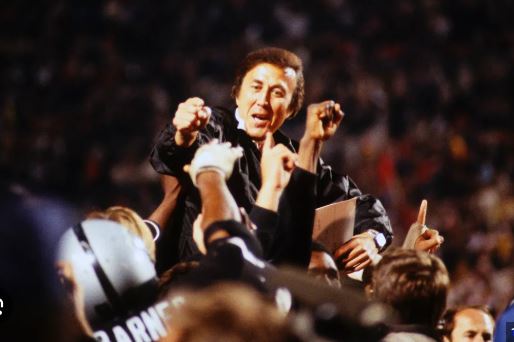
Tom Flores with his team before player introductions in the L.A. Coliseum

When you think of the short list of coaches in NFL History that have won multiple Super Bowls, who comes to mind?? Of course you think of Vince Lombardi, Don Shula, Tom Landry, Chuck Noll, Bill Walsh, or even Bill Parcells and Bill Belichick. Throw in Joe Gibbs and his three rings.  Do you realize there are only two eligible coaches that have won multiple Super Bowls that are NOT in the Pro Football Hall of Fame??
Think about it a second, we’re talking about a coach with as many victories as six eligible Hall of Fame coaches and you don’t consider Tom Flores great?? Only Jimmy Johnson,Vince Lombardi and Bill Walsh can best Flores in shortest coaching careers who achieved 2 Super Bowl victories.  Landry, and Shula coached 29 and 33 years respectively to achieve the same number of championships.

Tom Flores and Jim Plunkett showing off Super Bowl rings.

For some it’s the fact that his winning percentage of .527 isn’t that high. However Bill Parcells is almost a shoo-in finalist this year with a winning percentage of .570. Also, before his stint as Seahawks head coach, he left the Los Angeles Raiders with a winning percentage of .610 which is better than Bill Walsh at .609. Something to think about.

It’s fair to compare him to Bill Walsh since he is in the Pro Football Hall of Fame and coached in the same era. Walsh led the team of the 80’s to 3 Super Bowl wins in San Francisco to Flores’ 2 championships. Yet in head to head competition, Flores Raider’s were 2-1 against Walsh’s 49ers. Now throw in the fact Flores had a better winning percentage before he left for Seattle and it’s hard to argue his candidacy.

After following in the footsteps of another Hall of Fame coach in John Madden, some mistakenly think Flores won with Madden’s guys. Which isn’t close to being true. In today’s market of free agency we’re used to a lot of movement, yet between winning Super Bowl XI (Madden’s team) and Super Bowl XV only WR Cliff Branch and Mark Van Eeghen remained of the skill positions. WR Fred Biletnikoff, QB Ken Stabler, and RB Clarence Davis were all gone. Ken Stabler was traded to the Houston Oilers. He won with (at the time draft bust) Jim Plunkett at quarterback who was with his 3rd team. Stop and think about that.. That’s the equivalent of the Colts trading away  Peyton Manning and bringing in Matt Leinhart and winning the Super Bowl.

Furthermore 9 of the 11 starters on defense for Super Bowl XI were gone by Super Bowl XV. Jack Tatum, Willie Brown, Monte Johnson, all gone with the holdovers being John Matuszak andTed Hendricks. He won Super Bowl XV with a quarterback the world had forgotten about. A little known RB in Kenny King and 14 new players in only his second season as a head coach?? Might be the single greatest coaching performance in NFL history.

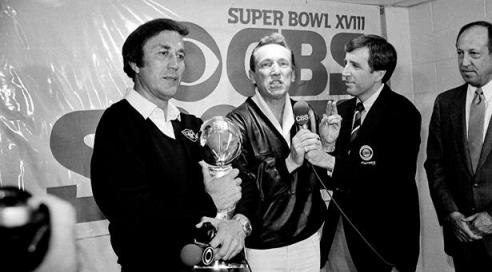
Tom Flores and Al Davis receiving the Vince Lombardi Trophy following Super Bowl XVIII

Although winning it all in 1980 was the crowning jewel of a season, his triumph in 1983 should have catapulted him to legendary status. It was his ’83 Raiders that stopped the defending champion Washington Redskins and MVP Joe Theismann dead in their tracks. The ’83 Redskins were the highest scoring team in NFL history and going into Super Bowl XVIII, pundits were hailing them as the best team ever. Yet in a dominant performance the Raiders ushered in the era of the Super Bowl blowout winning 38-9. After that game we had the string of 13 consecutive NFC Super Bowl winners. Yet if you looked at the era from 1980-1996, ONLY Tom Flores won a Super Bowl for the AFC side of the ledger and he did it twice. How is that for impact??

Yet why is he constantly overlooked for his coaching performance when it comes to greatness?? Is it because of the shadow cast by former owner Al Davis?? Even in the NFL Films Super Bowl XVIII video, they lauded Raider assistant Charlie Sumner for the defensive play that put the Redskins hopelessly behind. The Jack Squirek interception for a touchdown to make it 21-3 at the half. Why didnt they give Flores the credit for that move??

Logic tells us that a part of it could be the fact that he’s Hispanic and the sporting press doesn’t view him in the same light as fellow coaches. We hope to be wrong in this assessment yet it’s the ONLY discernible difference between he and every other coach listed above.  Tom Flores, for his career had 97 wins, 87 losses and was 8-3 in the postseason. He had the AFC’s best record (12-4) also in 1985 with MVP Marcus Allen but they were upset in the playoffs by the Patriots. To some, those aren’t great numbers but neither were Joe Namath’s 173 TDs and 220 interceptions and he’s in.

It’s about impact and contribution to the game. Being the only AFC coach to win a Super Bowl in a 17 year period qualifies for impact. Another interesting fact; Of the first 20 Super Bowl winners, his 1980 Oakland Raiders are the ONLY  team that doesn’t have a skill player in the Hall of Fame. Cliff Branch being in there is another argument for another time. Again we call that one of the greatest coaching performance in NFL history. It’s time to give Tom Flores the credit and distinction he deserves.

Please lend your thoughts as well by writing in to the Pro Football Hall of Fame to the address below. Please be respectful and positively lend your voice:

Please write & nominate Tom Flores
Send letters to:
Pro Football Hall of Fame
Attention Senior Selection Committee
2121 George Halas Dr NW, Canton, 
OH 44708

For induction into the Hall of Fame, I present Tom Flores

Thanks for reading and share the article.

Cris Carter Belongs In The Hall of Fame

Cris Carter graces the cover of The Sporting News

Has there been a better set of hands in the history of Pro Football?? How many ridiculous one handed catches did Cris Carter make during his great career with the Philadelphia Eagles and mainly with the Minnesota Vikings?? At first glance, the numbers stand out with 1,101 receptions for 13,899 yards and 130 touchdowns. Good for 2nd most in NFL history for receptions and receiving touchdowns at the time of his retirement. One of the greatest attributes is that he honed his skill amidst a myriad of pedestrian NFL quarterbacks.

Amazingly he came within inches of washing out after a few seasons in Philadelphia. After leaving THE Ohio State University, he was drafted by Buddy Ryan and the Eagles in 1987. In his three years there he played well but was undisciplined off the field. He was a young player who enjoyed the perks of stardom and indulged off the field in alcohol and partying and was wasting his talent away. He helped the Eagles and a growing Randall Cunningham to a 12-4 record and a 1988 NFC East Championship where he caught 39 receptions for 761 yards and 6 TDs for the season.

However it was the 1989 season where he didn’t show signs of maturity off the field. Despite the fact that he caught 45 passes, his play had regressed to where his effectiveness was relegated to catching passes in the redzone. He caught 11TDs but only gained 605 yards. Head Coach Buddy Ryan had lost faith in his receiver growing as a player and released him and drafted less talented receivers Fred Barnett and Calvin Williams in the 1990 draft. When asked why he released Carter he scoffed “All he does is catch touchdowns.” a line mimicked by Chris Berman and Tom Jackson on ESPN highlight shows for years to come.

The Vikings claimed Carter from the waiver wire for $100!! They nabbed a Hall of Fame wide receiver for half the price of a smartphone. Think about that for a second. With the humbling experience he rededicated himself and gave up his tempestuous ways and became a polished receiver with the Vikings. So polished that he thrived with moderate quarterbacking in Minnesota in the ensuing years. Do you realize that in just 12 years for the Norsemen he caught 1,004 receptions for 12,383 yards and 110 touchdowns?? Do you also realize he did most of this while catching passes from the likes of a moderately successful Sean Salisbury, a decade away from developing Rich Gannon, an eroding (with his fourth team) Jim McMahon, a developing Brad Johnson, and an on the downside late 30’s Warren Moon?? Now why didn’t we place an out of retirement Comeback Player of the Year Randall Cunningham with this group?? Because his three best years came before the famous 1998 Vikings everyone remembers with Cunningham & Randy Moss.

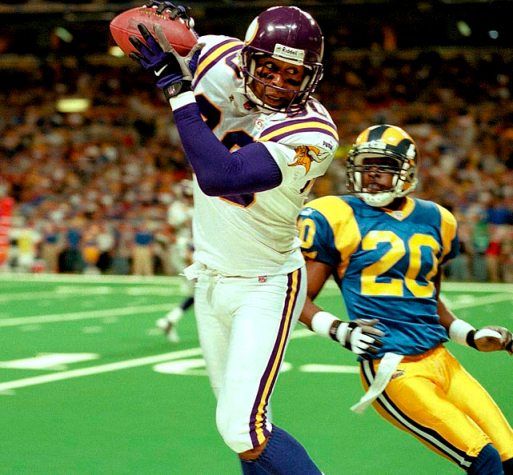
Carter making one of his patented sideline catches against the Rams in the ’99 playoffs.

With the aforementioned quarterbacks in tow, Carter, along with Jerry Rice became the first receivers not named Sterling Sharpe to have 100 receptions in back to back seasons for 1994 & 1995. Carter caught 122 in ’94 then 122 in ’95 as compared to Rice’s 112 and 122 respectively. It was 1994-1996 where Carter did his best work. In 1994 his stat-line was 122 rec. for 1,256 yards and 7 TDs. He followed that up with 122 receptions for 1,371 yards and a career high 17 touchdowns in 1995. Lets compare these numbers with Hall of Famer Jerry Rice and should be Hall of Famer Sterling Sharpe over their best 3 year periods. Where Sharpe’s numbers are 1992-1994, Rice and Carter’s are both from 1994-1996.

  • Cris Carter (1994-1996) 340 receptions, 3,790 yards & 34TDs
  • Jerry Rice (1994-1996) 342 receptions, 4,601 yards & 36TDs
  • Sterling Sharpe (1992-1994) 314 receptions, 3,854yards & 42 TDs

See?? You forgot how great he was. The difference between the three is Carter was not catching passes from a Hall of Fame quarterback in his prime. Carter was in the midst of writing his Hall of Fame credentials with 8 straight 1,000 yard seasons and 5 straight with 10 or more touchdowns. Where Sterling Sharpe was a big receiver who muscled smaller defensive backs, Carter got by on guile. He wasn’t a deep threat, he caught everything thrown his way with many one handed circus catches and was a sideline technician. He always got his feet in and could perform in a phone booth.

What’s forgotten is how he stepped in and mentored a young Randy Moss for Coach Denny Green before the 1998 season. That season the Minnesota Vikings became the highest scoring team in league history with 556 points besting the ’83 Redskins with 541. In that year where he acquiesced a ton of catches for the betterment of a 15-1 team that should have won the Super Bowl. Carter still went on to catch 78 receptions for 1,011 yards and 12 TDs. At the same time Randy Moss was in the midst of catching 69 rec. for 1,313 yds and 17TDs. The Vikings made the NFC Championship game twice in 1998 and 2000 yet fell short of winning it all.

Cris Carter finished his career in 2001, as one of the most respected players in the NFL and in 2000 won the NFL’s Man of the Year Award. He has gone on to speak at the Rookie Symposium every year to keep rookies from falling into the pits that can derail a young man’s career. His leadership was one he grew into and now works for ESPN covering the game he played so well for so long. When you think of a Hall of Famer, you think about an ambassador of the game along with one who was among the best to ever play. Isn’t this what Cris Carter is/ was?? One who made the game great while he played and was a mentor to players who play the game today.  If that isn’t the mettle of what a Hall of Famer is, I don’t know what one looks like.

For induction into the Pro Football Hall of Fame, I present to you “From THE Ohio St University” Cris Carter!

Best NFL Cornerback Tandem Ever: Frank Minnifield & Hanford Dixon! Time to clear up the misreporting of their hand in The Drive.

We have always believed that some of the greatest NFL stories have been left on the cutting room floor when it comes to players that didn’t play for the glamour teams. Such is the case for the best cornerback tandem in modern NFL history. During this offseason of condensed free agency, when it appeared Namedi Asoumgha might wind up with Darelle Revis to form the best conrerback tandem in decades. We had thoughts and images of Frank Minnifield and Hanford Dixon dancing in our heads.  They were the best tandem in league history and yes better than Lester Hayes and Mike Haynes of the Los Angeles Raiders. Dixon and Minnifield starred and went to Pro Bowls together for 3 seasons. The most in NFL history.

The Hayes / Haynes connection really was half a season, or at least it’s zenith. Alright they did have a good 1985 but what happened in 1984?? Haynes joined the team in week 6 of 1983, and played on through the season but look up the Raiders 1984 statistics on defense after Super Bowl XVIII, abysmal. The Raiders were 25th against the pass in a 28 team league. Case and point Dan Marino threw for his 37th TD to break the all time touchdown record for a season and went on to throw for 470 yards and 4 TDs on them. They got scorched … Mark Clayton almost put up 200 on ’em…yet we digress. No one put yards on these two like that during their years together. Yet they don’t get their just due for being the terrific tandem that they were and should be receiving more looks when it comes to Hall of Fame Consideration.

From 1986-1988 these two Cleveland Browns were your Pro Bowl Starters for the AFC in Honolulu Hawai’i. Understand that this was the heydey of the AFC Central as well. Of course Steeler fans will disagree but this is where the entire division reigned near the top of the AFC as a whole. From 1986-1989 there was an AFC Central team in the AFC Championship Game all four years. The Browns in 1986 and 1987, the Bengals made it to the Super Bowl in 1988 and then the Browns returned in 1989 to the title game.

Throughout the division there were stellar receivers in Louis Lipps / John Stallworth of the Steelers, Ernest Givins, Haywood Jeffires, Drew Hill of the Houston Oilers, then Tim McGhee, Cris Collinsworth, and Eddie Brown (The [[_]]) of the Cincinnati Bengals. Dixon and Minnifield kept them under wraps throughout this era.

In fact, in 1986 the only receivers that topped 100 yards against them was Chris Burkett of the Buffalo Bills and Wes Chandler of the San Diego Chargers. Burkett’s numbers were strengthened by a 75 yard TD while Chandler piled up yards in garbage time during a 47-17 loss where many Browns starters were pulled during the finale. They had wrapped up homefield advantage and were in the midst of a celebration.

In fact during the AFC Divisional Playoff double overtime win against the Jets, in 6 quarters, Dixon and Minnifield covered Al Toon and Wesley Walker so tight the Browns produced 9 sacks. An NFL playoff record. Neither receiver went over 100 yards and the touchdown that Wesley Walker scored was on a flea flicker and the safety had coverage.

In ’86, Dixon gathered in 5 interceptions, while Minnifield picked off 3 on their way to their first Pro Bowl together. Along the way they shut down the prominent receivers in their division, Mark Duper and Mark Clayton, who both made the ’86 Pro Bowl, and future Hall of Famer James Lofton. None of which gained over 100 yards against them and by the way…. Duper (1,313 yds 11TDs) and Clayton (1,150 yds 10TDs) battled Dixon and Minnifield on a Monday Night and these two Browns gained the country’s attention and respect with that performance.

In 1986 Dan Marino threw for 44TDs and over 4,700 yards…so he was at his zenith. This was the second time, going back to the previous season’s 21-20 playoff loss to the Dolphins that they did this to Miami. In the playoff loss in 1985, Duper never caught a pass and Mark Clayton only caught one!! And that game was in Miami!!! So they came in with something to prove and got shut down again.

So here comes the most misreported fact in NFL history, The Drive, during the ’86 AFC Championship Game. Keep in mind that Denver only had 216 yards for the game on offense going into that famous last drive. Erroneously and without fact checking these two get blamed for this loss when only 1 pass to Steve Watson at the 2 minute warning at midfield was thrown in their territory. The Brown’s Dave Adolph opted to go into a zone and the main passes thrown by John Elway was a pass over 20 yards to Steve Sewell, a running back going up the seem into Chris Rockins territory.

The other was a pass on 3rd and 17 where Mark Jackson who started on Dixon’s left side cut into an opening on a zone in front of the safety. They were just well executed plays. Throw in 2 scrambles by Elway for first downs because the Browns coverage forced him to and a screen pass to Steve Sewell and they were now at the 5 yard line. Again down in the red-zone, the Browns were in a Nickel zone facing a multiple receiver set. They ran a scissors route and threw the ball inside Nickelback Mark Harper to Mark Jackson for the tying touchdown. Now where was it these two failed to deliver??

Even in overtime on the winning drive by the Broncos the two big plays were a corner route to TE Orson Mobley for over 20 yards and another to Tom Watson for a 22 yard gain where Felix Wright #22 made the tackle in zone coverage. Karlis kicks the winning field goal and Denver was off to the Super Bowl. Yet time and time again, writers and nitwit pundits bring up The Drive without knowing ANY of the evidence. Lionize John Elway, fine, but don’t victimize these excellent players who performed well on that day. Take a look

Who were these two?? Well you had Hanford Dixon, who when he came into the league might have been the fastest cornerback in football.  The Chancellor first caught wind of him when he chased down Buffalo’s Joe Cribbs enroute to a 60 yard touchdown in 1981 as a rookie.  Dixon had been blocked and Cribbs had a 15 yard cushion when this flash of brown and orange tracked him down like Darryl Green on Eric Dickerson. He didn’t prevent the touchdown but he had speed to burn as a young player as that play signified.

Dixon was drafted out of Southern Miss in the 1st round and developed into a top flight man to man cornerback who lined up right in a receivers faces. He was the taller of the two at 5’11 and 186 lbs and was as fluid an athlete that has played corner in the NFL. He could turn and run with anybody that got through his “strike” off the line of scrimmage. He was as effective as a Lester Hayes and had his best year in 1987 when it was recorded that only 7 passes were thrown his way the entire year. He was first team All Pro in 1987 which was the middle year of their 3 year run as well as Pro Bowl teammates with Minnifield.

Hanford “Top Dawg” Dixon one of the all time great cornerbacks.

Mighty Minnie?? Yes that was the nickname for Frank Minnifield on the poster that had he and Dixon atop the roof of the Cuyahoga County Courthouse that sold all over Ohio. Top Dawg and Mighty Minnie were their nicknames. Hanford was the one that coined the phrase “Dawg Defense” during the off-season to motivate the defensive line during training camp in 1985. It caught on full fledged in 1986 so he earned that nickname. Minnifield was the harder hitter of the two.

Frank Minnifield was the shorter of the two at 5’9 180lbs, and had calves as large as his thighs. He had an unbelievable verticle jump as did his brother Dirk Minnifield who starred at the University of Kentucky and later played for the Boston Celtics. Frank played at the University of Louisville and joined the Browns after a 2 year stint in the USFL. He was voted All Pro in 1987 & 1988 and was voted to the Pro Bowl 4 times 1986-1989.

In fact it was his 1988 season that was in our estimation the greatest season by a cornerback in NFL history. With injuries to the Brown quarterbacks that season, the defense had to bear the brunt of the work. In that crucible and facing future Hall of Famers Art Monk, Steve Largent, and ’88 Pro Bowlers Eddie Brown (1,273 yds/9TDs), Mark Clayton (1,129 yards / 14TDs), Drew Hill (1,141 yards  /10TDs), Al Toon (1,067 yards /5TDs), J.T. Smith (986 yards / 5TDs) and Andre Reed (968 yds / 5TDs) Minnifield in 11 of 17 games against this top competition allowed ZERO touchdowns all season. An incredible performance. He allowed ZERO touchdowns for the entire 17 game slate.

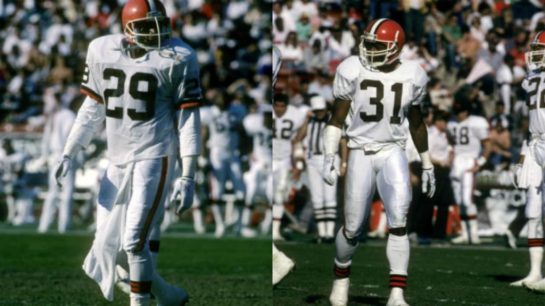
Unfortunately all good things come to an end and the Browns window to the Super Bowl shut without their having earned the trip.  They played in 3 AFC Championship Games in four years but came up short. In all actuality, they were a real good team who almost stretched it to greatness based on the exploits of two tremendous cornerbacks who masked other Brown defensive deficiencies. For their careers Dixon was a Pro Bowler on 3 occasions and Minnifield 4, and each were 1st team All Pro Once. They were intimidating and could cover the field and as a tandem were the best ever. How good would the Cleveland Browns been without them??? How much better would the Cleveland Browns had been had Safety Don Rogers not died from a cocaine overdose the week after Len Bias in summer of ’86??

Below is the middle of their 3 year run in Honolulu when they were 1987’s All Pro cornerbacks.

Thanks for reading and please share the article.