In an era gone by the St Louis Cardinals were a football team that had little success in the 1960s and early 70s. For the most part the cupboard was bare when it came to talent on their roster. However amidst the mediocrity there were two standouts that played for them: Hall of Fame members TE Jackie Smith and FS Larry Wilson. Sometimes great champions don’t come from championship teams.
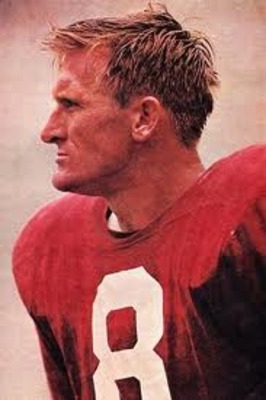
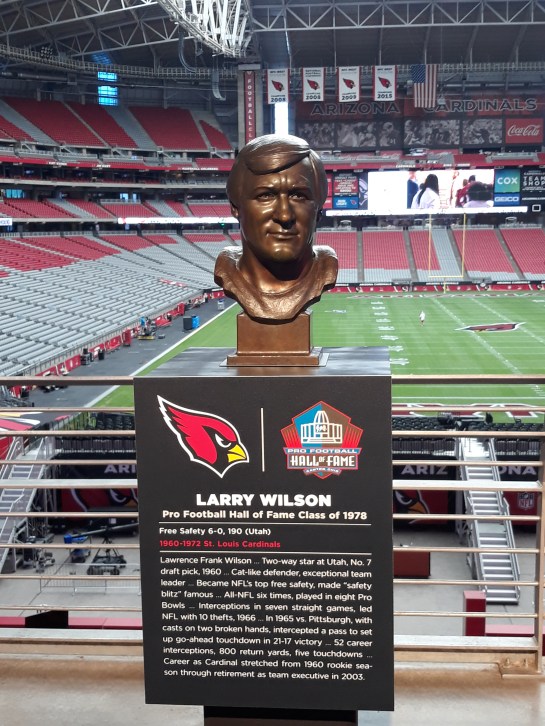
As a safety he played with reckless abandon although he was a ball hawk. When you think of hard-hitting defensive backs you rarely think of them making interceptions. Over his career he intercepted 52 passes which is still a Cardinal record and returned them for five touchdowns. He was a tough as nails player who in 1965, once played with two broken hands with each in a cast. Think about that for a second… His job is to come up and take on runners in the open field or defend the pass and he was playing with broken hands?? That is wanting to play football!!
Early on in his career, he was a pioneer when it came to the safety blitz. A tactic not seen before in the NFL. He registered many sacks although it wasn’t a recorded statistic until 1982. Wilson was everywhere…deep one play, shadowing a TE the next, blitzing the quarterback, or coming up to take on enemy runners. He did not shy away from contact and earned the ultimate respect of his peers. He was voted to (at the time) a record 8 Pro Bowls, made All Pro 8 times, and was the only player selected to the All Decade Team for the 1960s and 1970s. The Cardinals retired his #8 and he was enshrined in the Pro Football Hall of Fame. As for his hitting we present to you exhibit A
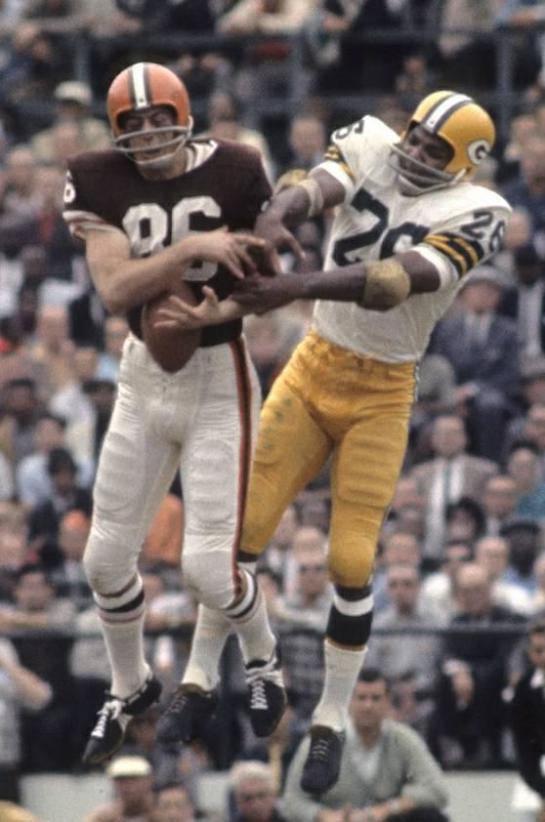
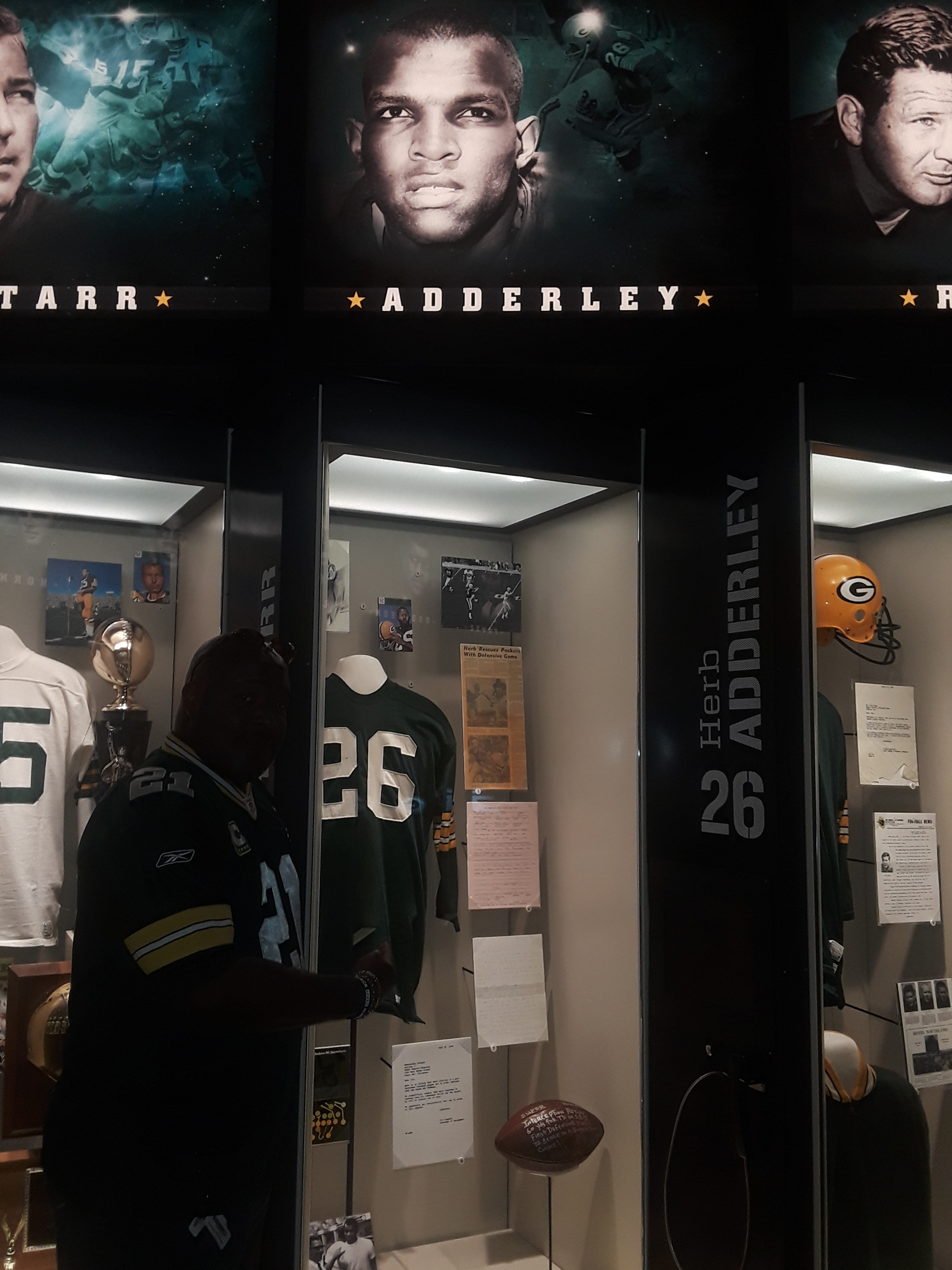
When we look back at NFL history, we know one of the greatest teams was the Green Bay Packers of the 1960’s. Lombardi’s teams were tough teams that played simple football on offense. Defensively they ran the traditional 4-3 and may have had the best set of cornerbacks in Bob Jeter and Herb Adderley. The Packers were always ahead in games and pressure was on the secondary to shut down an opponents passing attack and along with Hall of Fame safety Willie Wood, they performed that task perfectly.
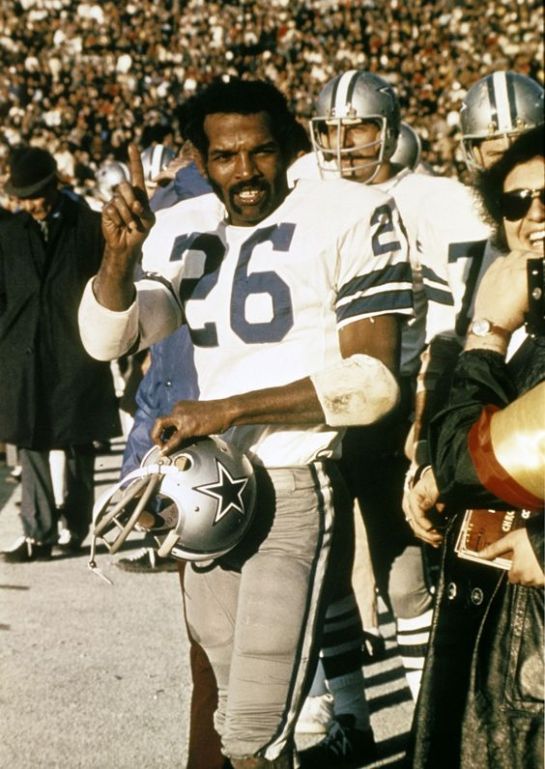
Adderley was one of the best athletes of his era and could blanket receivers and was an aggressive tackler. At 6’0 205 lbs he could run in the open field with the tallest and fastest receivers and compete for the ball. He was the Deion Sanders, the Hanford Dixon, or the Lester Hayes of his day. Or we could call him the Charles Haley of his day. Do you realize he played on 6 NFL championship teams?? Had Jim O’Brien missed a late game field goal in Super Bowl V, it could have been 7!!
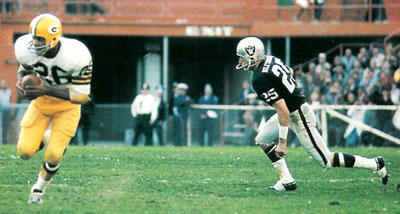
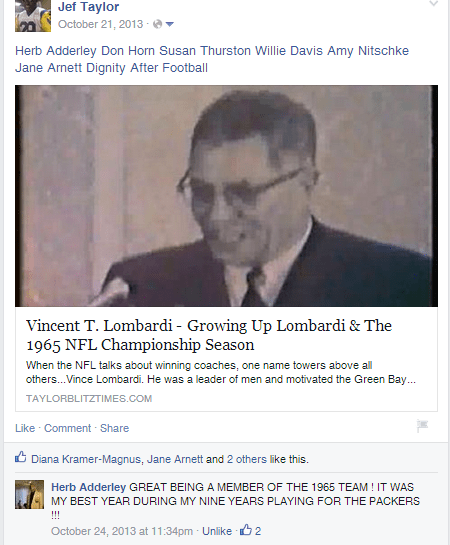
In the 1960s, cornerbacks played a more physical game than they do now. Not only were they able to hit or chuck a receiver all over the field before the ball was thrown, they had to be better tacklers in a run oriented NFL. As you’ll see in the video, Adderley was a hitter. Yet when Packers opponents took to the air Adderley was ready. In his second season (1962) he exploded onto the scene with 7 interceptions in which he returned 132 yards and 1TD. It was the first of his four All Pro selections in Green Bay. Was All Pro 5 times for his career. However he had an even better season in 1965. He picked off 6 passes returning them for 175 yards and 3 touchdowns as the Packers dethroned the Cleveland Browns to become NFL Champions…again. His 3 touchdowns on interception returns was a league record that stood until 1972.
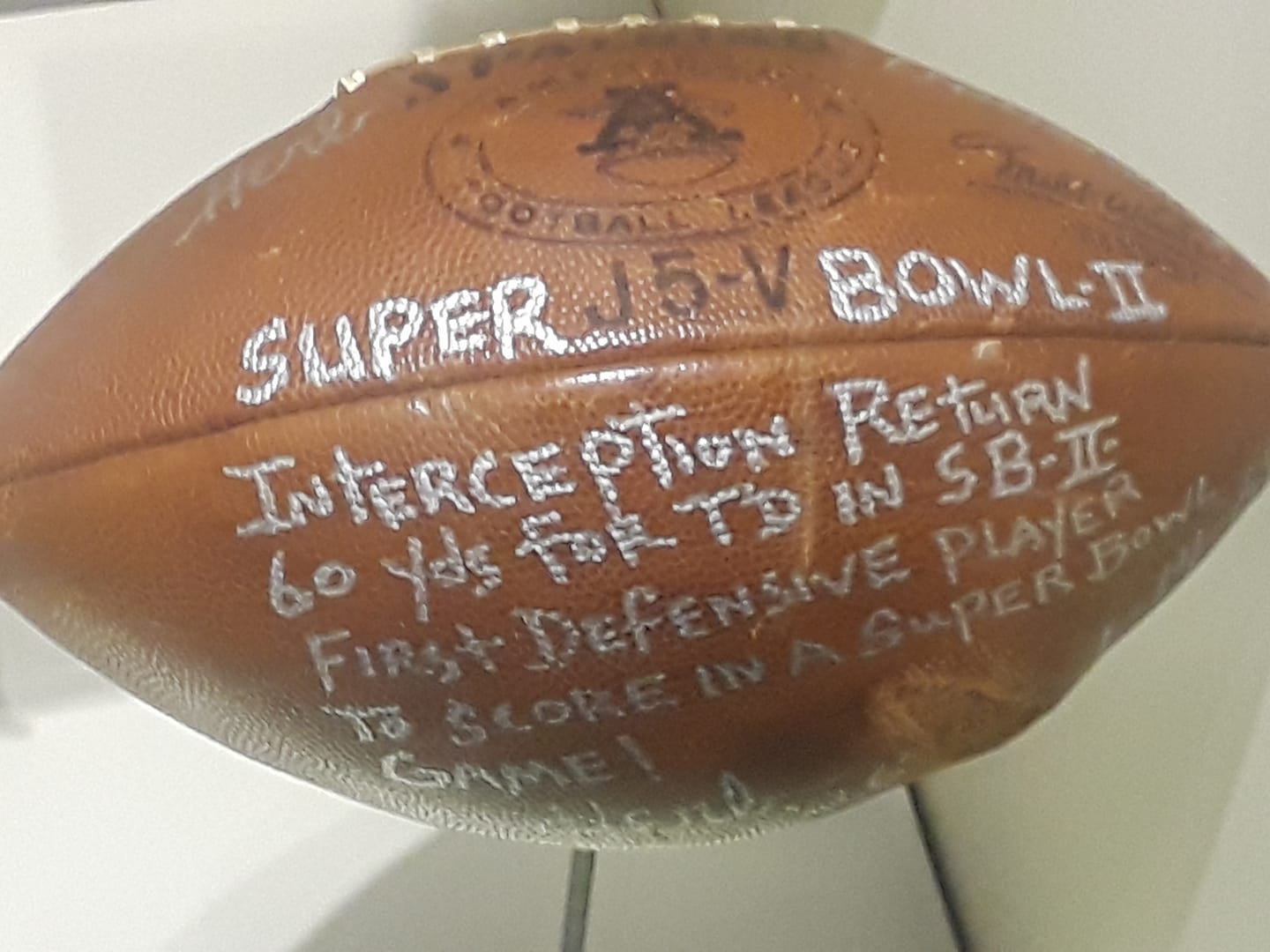
After the Packers championship years the team had aged and Adderley was traded to the Dallas Cowboys and helped that team get over the hump. They lost Super Bowl V yet came back the following year and won it all. For his career he intercepted 48 passes and returned 7 for touchdowns, the most famous, being a 60 yard interception return in Super Bowl II against the Oakland Raiders. He played in 4 of the first 6 Super Bowls. He was a member of the 60’s All Decade team and made the Pro Bowl 5 times. If ever there was a Hall of Fame resume for a career, it was Adderley’s. For all his championships even in his last season in Dallas, they made it to the 1972 NFC Championship Game.
With his speed, instincts, and physicality, Adderley is the one corner that could have played in any era in NFL history.
Herb Adderley was a 6 time world champion. Hall of Fame cornerback who could have played in any era. What would he have looked like in the modern NFL with today’s training methods and equipment??
Prologue: One spoil of war that sits in the Green Bay Packer Hall of Fame inside Lambeau Field is this football.
During the first 4 Super Bowls each team used footballs from their league when on offense. Wilson NFL footballs for Green Bay and Spalding AFL footballs for the Chiefs and Raiders in I & II. When Adderley returned a pass intended for Fred Biletnikoff 60 yards for the 1st defensive touchdown in Super Bowl history, he carried an AFL football with him. It made it to Green Bay where it is on display forever.
The Minnesota Vikings front four was anchored one of the greatest defenses in NFL history. They were the NFL’s first super front four and it’s members consisted of Hall of Famers Carl Eller & Alan Page. Gary Larsen was the other DT, later replaced by Doug Sutherland, and DE and team captain Jim Marshall who should be. Although the 1968 Baltimore Colts were heralded as the greatest defense in NFL history for giving up a record 144 points on the way to Super Bowl III, it was this group that broke that record with 133 allowed in 1969. They also powered the Vikings to 12 straight wins (longest win streak in 35 years) and carried the team on it’s back to Super Bowl IV.
All four made the Pro Bowl in 1969.
This defense made history as well. DT Alan Page was the first defensive player in NFL history to win the MVP of the league in 1971. No player would win that honor again until New York Giants LB Lawrence Taylor, who won the honor in 1986. What is interesting was the year Page won the award the Vikings didn’t make it to the Super Bowl. They lost to the Dallas Cowboys, who went on to win Super Bowl VI.
Yet this team was remembered for having reached the Super Bowl 4 times. Although they came up short in the big game as a team, what this defensive unit was able to do from 1968-1977 was spectacular. The team won 9 division championships on the way to 4 conference championships. It’s possible that they would have won a fifth conference championships and played in 4 straight Super Bowls had Dallas not completed the Hail Mary in the 1975 divisional playoff game. They preceded the Dallas Cowboys Doomsday Defense, the Steelers Steel Curtain, or the Denver Broncos Orange Crush. These were the super defenses of the 1970s immortalized by nicknames to accompany their fierce play. At the head of that pack for a decade of dominance wrests the Purple People Eaters.
Over the course of an NFL career there may not have been a more overlooked Middle Linebacker than the heavy hitting Harry Carson of the New York Giants. For 13 years he was the man in the middle for the Giants, first as the guy in a 4-3 defense. Then once the Giants drafted Lawrence Taylor he shared inside linebacker duties in a 3-4 unit. Adulation and praise for his play was slow and coming from NFL fans everywhere but Giants fans knew his true value. His peers voted him to a record (at the time) nine Pro Bowls with the last coming in 1987.
He was the most physical inside linebacker in the heyday of the NFC East, which at that time had 1,000 yard rushers in Hall of Famer John Riggins of the Redskins, Hall of Famer Tony Dorsett of the Cowboys, Wilbert Montgomery of the Eagles, and Ottis OJ Anderson out of St Louis. The success of the Giants in the early to mid 80s began with Carson stuffing the opponents running game, then unleashing Lawrence Taylor and Leonard Marshall after opposing quarterbacks.
At 6’2 235lbs, Carson looked even bigger in his oversized shoulder pads and thigh pads. He was a more imposing presence in the middle which includes Mike Singletary as one of his contemporaries. Yet make no mistake about it, Carson was a cerebral player who reduced his position to one of angles and leverage. He read offensive blocking schemes and reduced the number of steps needed to get to the ball carrier and never took the wrong angle. In that aspect he was a modern day version of Willie Lanier of the 1960s Kansas City Chiefs.
Carson was the lone defensive stalwart on a losing Giants team for much of his career. Once the Giants surrounded him with other defensive stars during the 1980’s with Taylor, Carl Banks, and Leonard Marshall to go along with long time DE George Martin to form one of the finest defenses of the 1980s. He led them through the losing years, then all the way to the Super Bowl XXI triumph over the Denver Broncos. In 1988 Carson retired and was enshrined in the Pro Football Hall of Fame in 2006.
Steve Sabol with his father Ed, founder of NFL Films
What makes us love NFL football as much as we do? The game itself with its players giving their heart and soul on the field is what keeps us coming back. We love the game, its players, strategies & coaches. Yet it was the work of Ed and Steve Sabol with NFL Films that helped fuel our imagination through great story telling. You were able to get an account of eras gone by that you could only read about. Now most feel as though the book is always better than the movie, well not in this instance. If you’re like me you’ve grown up with these images of iconic figures over the decades. What makes it such an interesting test subject is football is a very visual sport.
I can still remember the day I saw my first NFL Films production back in the summer of 1977, ironically on a Sunday. Living in Denver, Colorado at the time they had just previewed the upcoming Broncos season. I had come inside to cool off when a new show came on featuring The Ice Bowl, the 1967 NFL Championship played in -15* weather between the Packers and Cowboys. The frozen images burned into my mind as John Facenda’s legendary voice gave it such theatrics, I felt like I was watching a monumental event. From that point on I looked for anything NFL Films to supplement reading about players in the old Punt, Pass, and Kick books at the local library.
Through the years everything they did I gobbled up. Whether it be their work in 1982’s History Of Pro Football for HBO, Inside The NFL highlights, NFL Yearbooks on ESPN, Monday Night Matchup on ESPN hosted by Chris Berman, Steve Sabol, and Allie Sherman. It was because of that relationship Chris Berman had instant credibility with me. All of this before we get to the Super Bowl highlights every year and then their own Lost Treasure series starting in 2000.
Yet it’s the images through the years that come to mind when you think of NFL Films. Jackie Smith’s touchdown drop and the call “Bless his heart, he’s got to be the sickest man in America.” You don’t remember that from a live broadcast, this was their work covering Super Bowl XIII. How about Jack Tatum hitting Sammy White in the Super Bowl XI highlight knocking off his helmet then hearing “Helmet flying one way! Chin strap the other! Holy Toledo!” Those were rebroadcast productions with radio voices Verne Lundquist and Bill King layered over slow motion captured video. What’s funny is you can’t remember the call from either NBC broadcast. Yet these legendary calls are playing in your mind as you read this. Dramatic…that was the power of NFL Films
All these images and great story telling helped sell the game to the American public as great as the game itself. Ed Sabol’s induction into the Pro Football Hall of Fame was great to watch for how great an ambassador he and his company had become. What started out as Blair Motion Pictures filming the 1962 NFL Championship between the Green Bay Packers and New York Giants, has become a crown jewel of the NFL. The history of the NFL game can’t be told without them. Thanks Ed and Steve Sabol.
Dedicated to the memory of John Facenda (voice of God) 1913-1984
Re-Dedicated to the memory of Steve Sabol (President of NFL Films and brother in spirit) 1942-2012
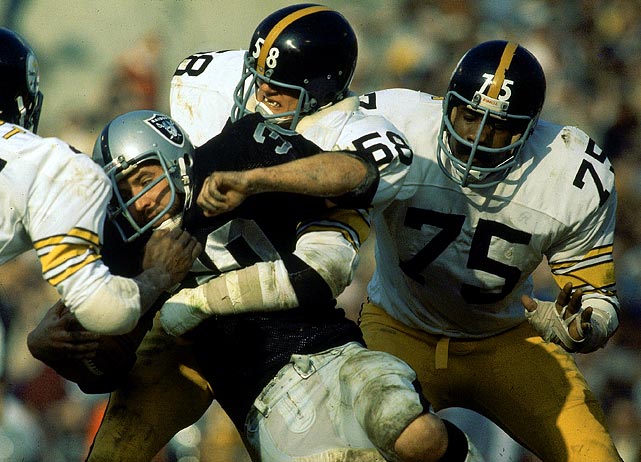
Now how could we have a category on the best defenses and defenders in NFL history and not include the Pittsburgh Steelers?? As we moved into the 1970’s following the merger, we saw the hashmarks narrowed in 1974 and the goal posts moved to the end line to provide offenses more room to operate. Scoring had been down for much of the first half of the decade and it was thought this additional field to cover would hamper defenses. Especially those with burly MLB types that had limited range tracking sideline to sideline, or defending the pass.
Enter Jack Lambert.
A converted outside linebacker who stood 6’4 and stayed at a playing weight of 220 lbs. the majority of his career. What he brought to the table was the speed to get further back than the Willie Lanier’s and the Dick Butkus’, a prior generation’s middle linebackers who were mainly there to stuff the run. His ability to get past twenty yards in pass defense was the impetus for the Steelers to run what is NOW misnamed the “Tampa 2”.
It started in Pittsburgh because against the run and rushing the passer, Ernie Holmes, Joe Greene, Dwight White, and LC Greenwood were the finest front four of their era….possibly football history. Lambert, along with outside linebackers Andy Russell, and Jack Ham, only needed to clean up against the run and were already a step back ready to clog the middle and flat areas against the slower tight ends of that era. The result??
A defense put together from astute drafting grew into one of menace that powered the Steelers to victories in both Super Bowls IX and X. In Super Bowl IX the Steelers held the Vikings to just 17 yards rushing for the game. A record that stood until Super Bowl XX. They stood tall and defended against a frantic last second effort in Super Bowl X. So strong was the Steeler defense, Coach Chuck Noll ran the ball on 4th and 9 and let the Cowboys have the ball at their own 40 yard line leaving it up to the defense to win the game. While winning a second straight world title they set the Super Bowl record for sacks with 7.
A young team with an unprecedented chance to win a third straight Super Bowl went into the 1976 season with their front four in their prime.With Terry Bradshaw growing up as a quarterback and growing receivers John Stallworth and Lynn Swann with one of history’s finest defense….What would they do for an encore?? Could they threepeat??
Well the Steelers didn’t win that Super Bowl and after falling to the Denver Broncos in 1977, they returned to win Super Bowl’s XIII and XIV. It was the impetus to stop this defense along with the Denver Broncos 1977 performance (18 TDs and 148 points allowed) that made the rules makers make changes for the upcoming 1978 season.
In fact the biggest of these rule changes was to nullify Steeler cornerback Mel Blount. Standing 6’3 and weighing in upwards of 200 lbs. he would manhandle receivers as they tried to run their patterns downfield. This new rule only allowed cornerbacks to only chuck a receiver under 5 yards. From there the receiver could run free untouched where in prior years a receiver could get hit by linebackers or safeties as well if the ball hadn’t been thrown. It’s actually referred to as the “Mel Blount Rule”. Another allowed offensive linemen to extend their arms while pass blocking to nullify Pittsburgh’s pass rush.
The Steelers dominance ended after their 1979 championship. The team had aged yet sent linebackers Lambert and Ham to the Hall of Fame along with two time NFL defensive player of the year Joe Greene. Was this the greatest ever defense?? Were they better than the 1985 Chicago Bears?? The 2000 Baltimore Ravens?? The 1969 Minnesota Vikings?? The 1968 Baltimore Colts?? Lets hear from you…
…and by the way, just to stick it to the rules makers who changed the game on them. The Steelers set the record for a 16 game season with only 195 points given up.


 When we look back at NFL history, we know one of the greatest teams was the Green Bay Packers of the 1960’s. Lombardi’s teams were tough teams that played simple football on offense. Defensively they ran the traditional 4-3 and may have had the best set of cornerbacks in Bob Jeter and Herb Adderley. The Packers were always ahead in games and pressure was on the secondary to shut down an opponents passing attack and along with Hall of Fame safety Willie Wood, they performed that task perfectly.
 In the 1960s, cornerbacks played a more physical game than they do now. Not only were they able to hit or chuck a receiver all over the field before the ball was thrown, they had to be better tacklers in a run oriented NFL. As you’ll see in the video, Adderley was a hitter. Yet when Packers opponents took to the air Adderley was ready. In his second season (1962) he exploded onto the scene with 7 interceptions in which he returned 132 yards and 1TD. It was the first of his four All Pro selections in Green Bay. Was All Pro 5 times for his career. However he had an even better season in 1965. He picked off 6 passes returning them for 175 yards and 3 touchdowns as the Packers dethroned the Cleveland Browns to become NFL Champions…again. His 3 touchdowns on interception returns was a league record that stood until 1972.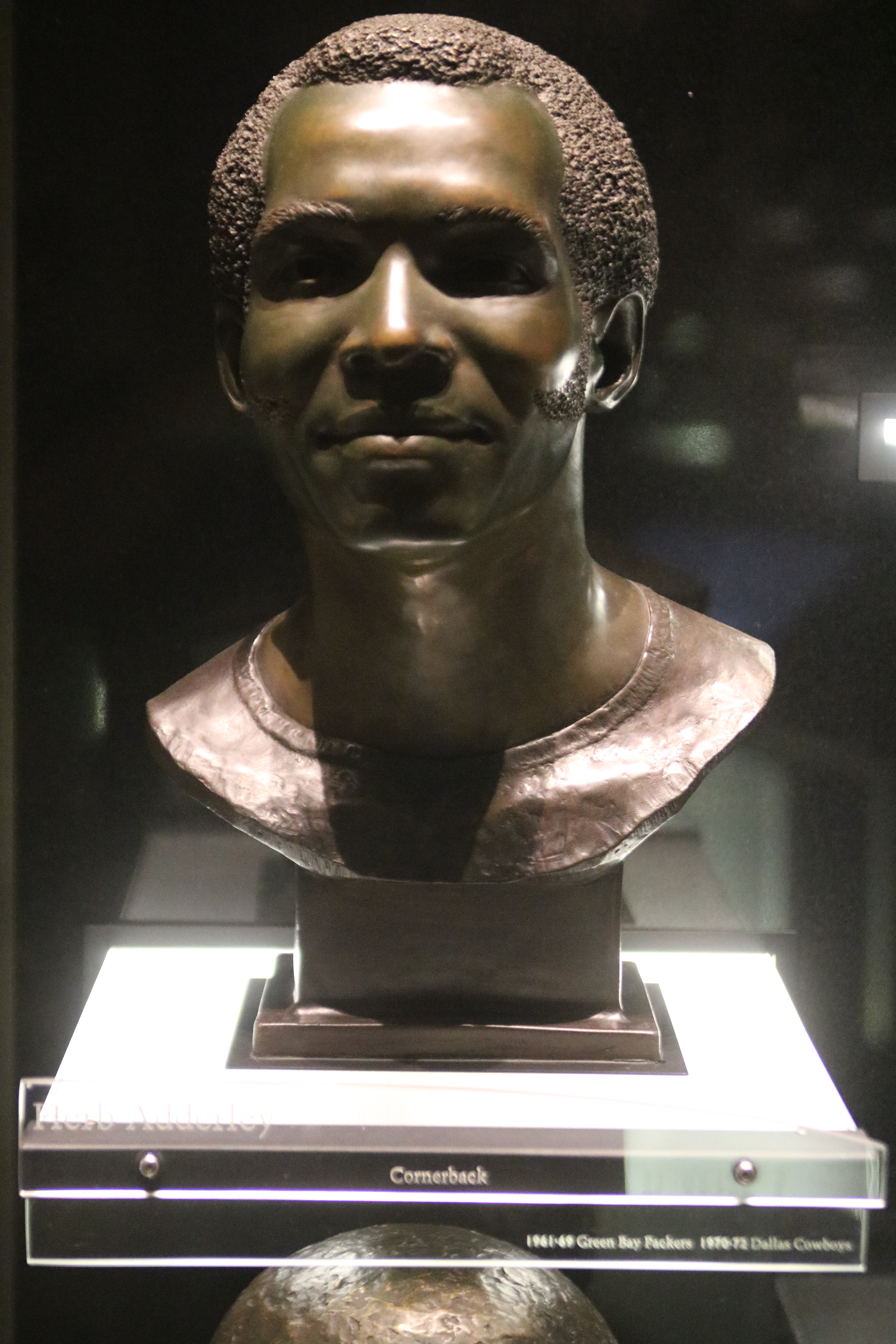


 Over the course of an NFL career there may not have been a more overlooked Middle Linebacker than the heavy hitting Harry Carson of the New York Giants. For 13 years he was the man in the middle for the Giants, first as the guy in a 4-3 defense. Then once the Giants drafted Lawrence Taylor he shared inside linebacker duties in a 3-4 unit. Adulation and praise for his play was slow and coming from NFL fans everywhere but Giants fans knew his true value. His peers voted him to a record (at the time) nine Pro Bowls with the last coming in 1987.
 Thanks for reading and please share the article.




You must be logged in to post a comment.