
Over the last two weeks NFL pundits, including yours truly have been upset at the way the Steelers organization is playing games with TJ Watt. How can you play games with a future Hall of Famer like this? Sign him and go into the 2025 season with optimism and your defensive play maker ready to lead the charge! I joked about it on my Facebook page with a few former players when it hit me… wait a minute we’ve been here before.
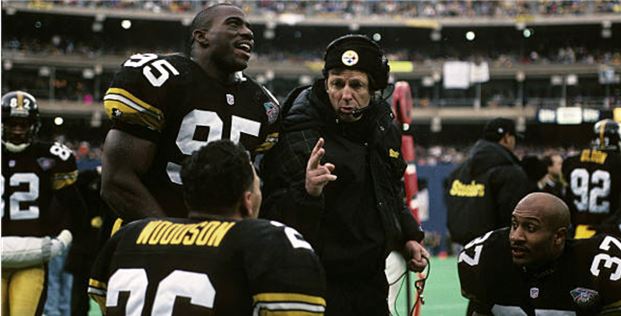 Now all of us historians harken back to the great Steelers defense of the 1970’s and in particular focus on the ’74 draft where they selected 4 future Hall of Famers. Only Jack Lambert on the defense was drafted that year as FS Donnie Shell was an undrafted free agent. The Steel Curtain front four, Linebackers Ham and Russell had been assembled from 1963-74 when they broke through to win Super Bowl IX. Not one group that grew into menace from a single draft class.
Not only did this group achieve accolades but they shaped the next generation of NFL defensive excellence and the Steelers penchant for pinching pennies derailed that group also.
It was their 1987 draft class…. let’s set this up for you:
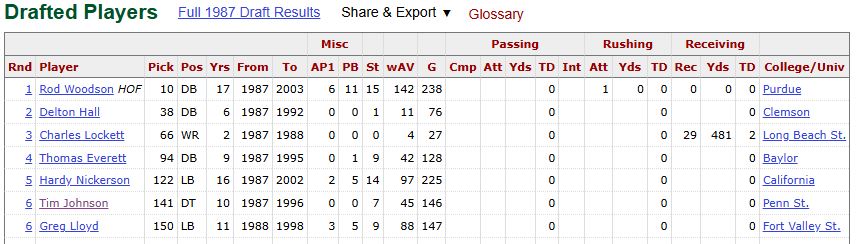
First round selection, HOF CB Rod Woodson went to 7 of his 11 Pro Bowls in the Steel City, won the 1993 NFL Defensive Player of the Year, and made the All Time 75th team in ’94. Woodson came within a few votes from back-to-back NFL Defensive Player of the Year awards & finished in the top 5 – 3 times in 4 years (1993-’96). He was one of the most physically gifted CB which allowed him to excel once he aged and moved to Safety.
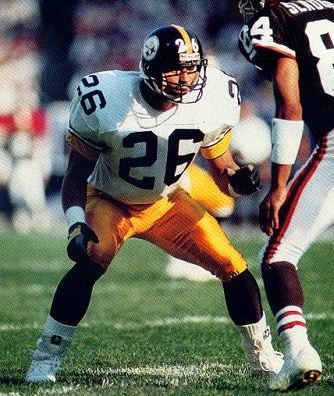 Rod went to the Pro Bowl 4 times at his new position and was All Pro twice for the Baltimore Ravens & Oakland Raiders. He was one of the leaders on one of the greatest defenses in NFL history in 2000 as a mentor to Ray Lewis. A #2 defense that set the record for fewest points in a season (165) and won Super Bowl XXXV going away. Before these stays he started at CB for the ’97 49ers who ranked #3 defensively and made it to the NFC Championship Game. His 2002 Raiders played in Super Bowl XXXVII where at the age of 37, received his 11th Pro Bowl and his 8th All Pro selection after a career high 8 interceptions. In addition to Canton, Woodson was named to The NFL’s All Time 100th Anniversary Team in 2019.

The most intimidating Steeler of them all…. Greg Lloyd
Greg Lloyd came in the 6th round & crashed the pass pocket from his OLB position making 5 straight Pro Bowls (’91-’95). They deployed him in Nickle and Dime situations both off the ball and as an edge rusher. In those 5 seasons he had 37 sacks, 27 forced fumbles and 6 interceptions in what The Chancellor believes was a Hall of Fame career. We’ll cover his total numbers later but we have to introduce everyone. Lloyd matured into the menacing face of the Steelers defense and twice was in the top 3 in NFL Defensive Player of The Year voting. Yes… at the same time as Woodson…in ’94-95.
Not a bad start until you get into the frugal way the Steelers are with homegrown talent. This led to a holdout after 5 years for FS Thomas Everett who was a hard hitter in the secondary who didn’t receive the accolades nationally his teammates had but how valuable was he? The Steelers dealt him to Dallas during his holdout at the start of ’92. #27 was a 4th round selection out of Baylor. The same school that produced HOF Mike Singletary.
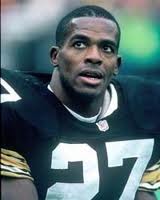 Now you’re thinking “wait, this isn’t greatest ever talent”… well…. going into the 1992 season the Cowboys Achilles’ heel was their secondary. Their draft tells you that picking up SS Darren Woodson, CB Kevin Smith, and CB Clayton Holmes in the first few rounds. In 1991, Dallas had lost to 4 run and shoot teams including a 38-6 drubbing to Detroit in the divisional round of the playoffs. The biggest blowout loss of any NFC team in the 1990’s. They had some coverage issues but Everett solidified the secondary, put players in good spots and made several plays that defined the Super Bowl XXVII rout of my Buffalo Bills. He helped turn the secondary into a team strength.

Not Charles Haley…it was Thomas Everett that pushed the Cowboys over the top back in the early 1990s.
In the 2nd quarter when Buffalo was threatening to take the lead, Dallas had a goal line stand where Buffalo went for it on 4th down from the 1. Who intercepted the ball in the end zone to totally deflate the Bills? Thomas Everett. After halftime down 28-10 and fired up to get back into the game in the 3rd quarter, who read a short route and jumped it returning an interception to Buffalo’s 10 to end the competitive phase of the game? That same Thomas Everett!
They were 3-1 against top 10 passing offenses and rose from 17th in total defense to 1st. Their pass defense rose from 23rd to 5th in their ’92 Super Bowl winning season. Yet he made his only Pro Bowl in 1993 and made a huge play intercepting Steve Young in the 2nd quarter of the NFC Championship setting up the TD to go up 14-0 in a raucous Texas Stadium. Two years with the Cowboys and 2 Super Bowl titles before finishing his career in Tampa. So Everett did help shape NFL history with pivotal plays for The Team of the Decade in championship play. Still sleep on Everett? Watch this
Which brings us to ’87 5th round selection Hardy Nickerson… now where the underpaying Steelers for the 2nd straight year lost a defensive stalwart that wanted out. It was ’93 and free agency had come and where Pittsburgh brass didn’t value Nickerson, former Bengal Head Coach Sam Wyche who had faced him twice a year did signing him to play in Tampa. Yes the Tampa Bay Buccaneers who had just had their NFL record 10th straight season with double digit losses. Nickerson had played well like Everett and didn’t get the recognition nationally his counterparts Lloyd and Woodson had… so what did he do in Tampa?
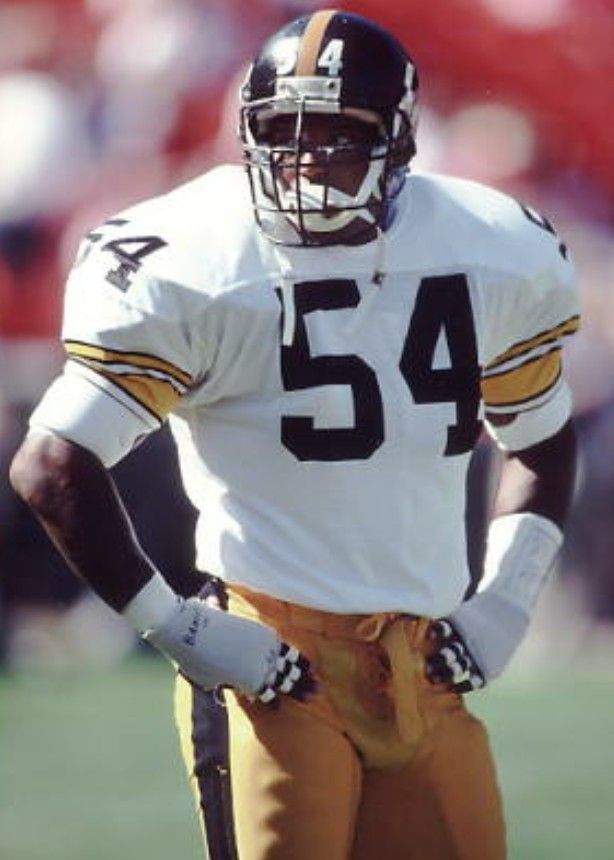 Well… Nickerson became the centerpiece of Defensive Coordinator Floyd Peters’ 4-3 at Middle Linebacker and a terror was set loose. He became a sideline-to-sideline tracker and hit everything in sight. In ’93 he led the NFL in tackles with a leauge record 214 while making his 1st Pro Bowl and voted 1st team All Pro. It was only the 4th time a Tampa Bay defender was voted to the Pro Bowl in Hawai’i and the 2nd All Pro selection since the team’s inception in 1976.
His play was so dominant he broke the team season tackle record in a week 13 win over Chicago. There were still 3 games to go in 1993! So his 1st season ended with 214 tackles, recorded a sack, forced a fumble, recovered a fumble and had an interception.
Or think of it like this… he recorded 96 more tackles than his Hall of Fame teammate Derrick Brooks (118) recorded in ’02 when he was NFL Defensive Player of the Year. Chew on that for a second…
The Chancellor believes this spring boarded Nickerson into what was a Pro Football Hall of Fame career and shared this in a past article Nickerson for Pro Football Hall of Fame.
Nickerson went on to 4 All Pro selections and 5 Pro Bowls in 7 years and once finishing in the Top 10 in Defensive Player of The Year voting. His 4th and final All Pro & Pro Bowl selection came in ’99 when he led the NFL’s 3rd ranked defense to the NFC Championship Game. They were shutting down The Greatest Show on Turf beating them on the road 6-5 (really?) until 4:44 to go when Kurt Warner threw the winning touchdown. This was one of the greatest teams in history & Nickerson’s crew alomst kept them from Super Bowl XXXIV. In that game he had 6 tackles defensed a pass and had a timely interception.
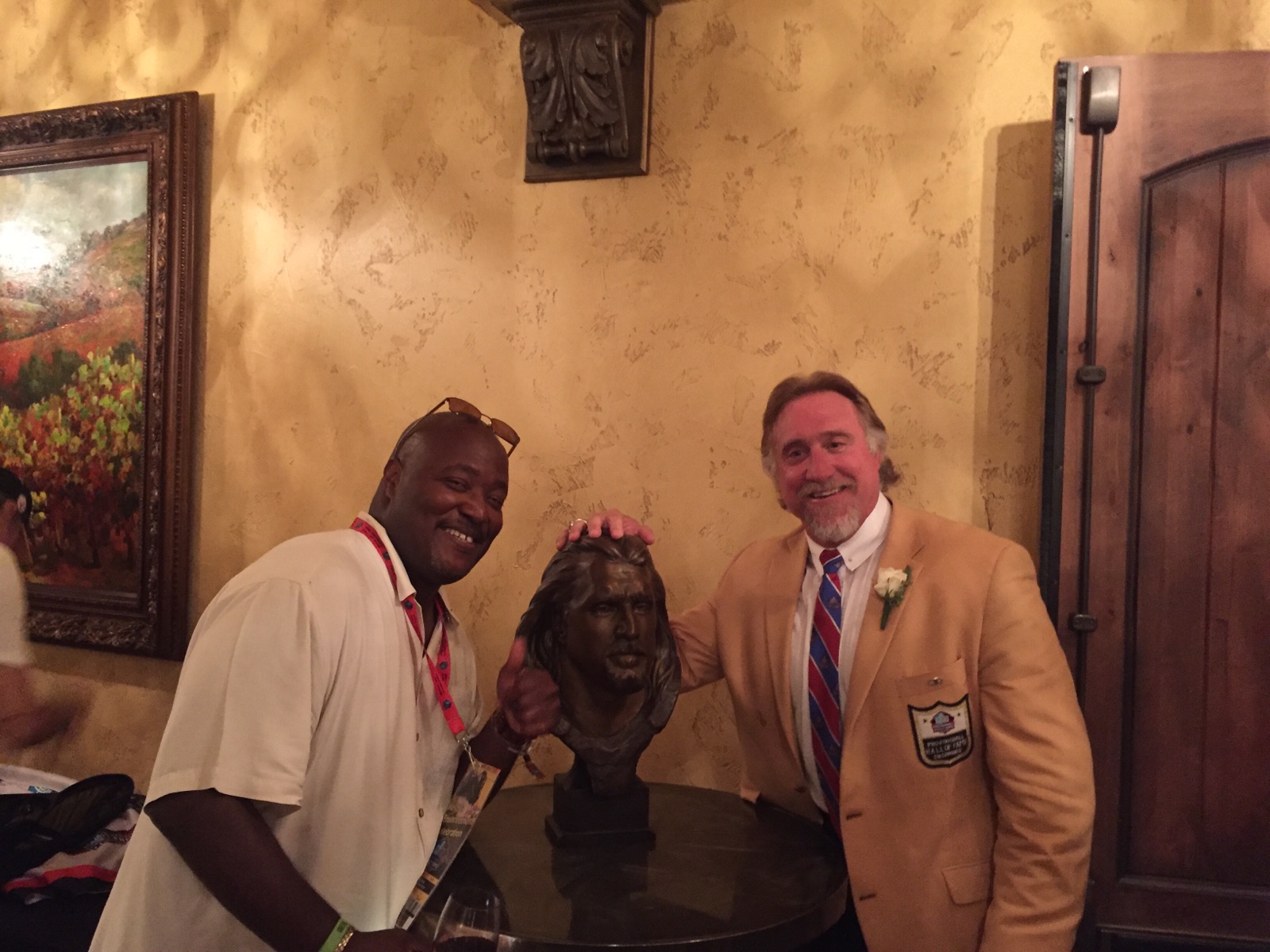
With Kevin Greene after the Induction ceremony.
Why the center of the NFL’s Defensive Universe? The Steelers frugal ways are what kept us from seeing possibly the NFL’s best array of talent on one defense. Keep in mind by 1993 they became Blitzburgh when they signed free agent and Taylor Blitz Pro Football Hall of Fame article alumnus Kevin Greene to the fold. Greene led the NFL in sacks with 14 and went on to be the NFL’s All Time sack leader for a LB with 160. He made the Pro Bowl in 2 of his 3 years in The Blast Furnace and made 1 of his 3 career All Pros there.
Then again the Steelers went cheap and let Greene go to start a younger OLB in Jason Gildon. A damn good player but not the leader that Kevin was coming off that edge across from Lloyd.
For those of you keeping score at home –
Without adding 5 time Pro Bowl/4 time All Pro Strong Safety Carnell Lake & 3-time Pro Bowl and 2 time ILB Levon Kirkland these riches read off like a Madden All Star lineup that doesn’t appear real.
Woodson, Greene, Everett, Nickerson & Lloyd combined for 27 Pro Bowls, 17 All Pro Selections & 7 Top Ten votes for NFL Defensive Player of the Year in various seasons, 2 NFL sack champion totals and 2 enshrined in Canton. Yet the Steelers went cheap and robbed football fans of what would have been one of history’s finest defenses. These players matured into menaces and spread to every corner of the NFL as trained assassins. They were supposed to be the successor to Philadelphia’s Gang Green Defense and would have ruled the 1990s just as the 70’s Steelers dominated their era.
If we add Lake & Kirkland back in these defenders had 24 conference championship appearances 8 Super Bowl appearances winning 3 rings. Anchored by the 1987 Steeler draft class… just think about it:
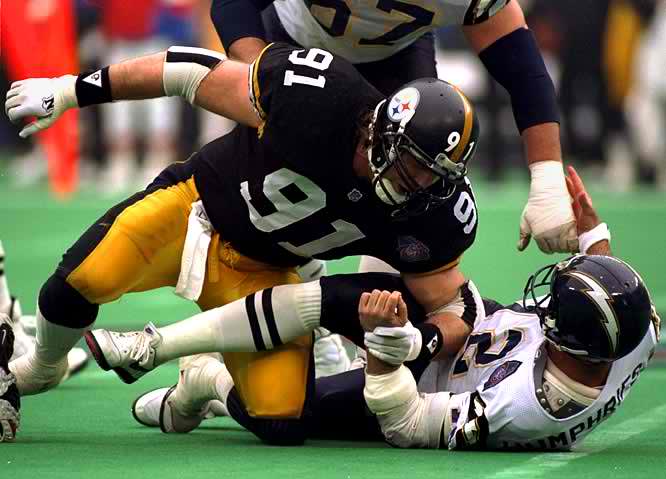
- Greene led the ’96 Panthers to the NFC Championship in their 2nd year leading the league in sacks again.
- Nickerson was the 1st piece and building block for what would become Tampa Bay’s Super Bowl defense.
- Everett was a defensive leader on The Team of The Decade winning 2 Super Bowls in Dallas.
- Woodson’s HOF career saw him switch to Free Safety and play on The Chancellor’s 2nd best defense in NFL history. The 2000 Baltimore Ravens
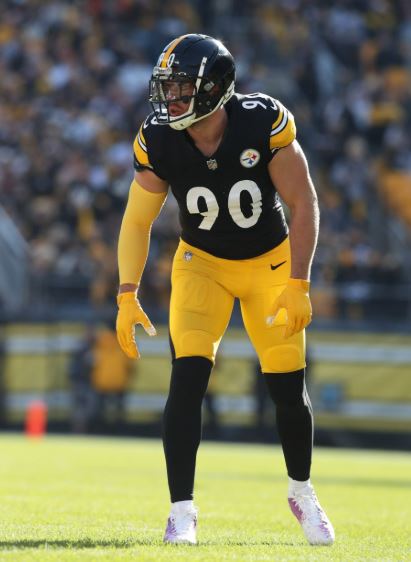
TJ coming off in Kevin’s spot.
So Steeler fans hold your breath with the Steelers playing around with TJ Watt’s contract. They’ve been known to let Hall of Fame level talent go. Do you realize none of these great players finished their careers in Pittsburgh?? Uh oh TJ… and they traded hard hitting FS Minkah Fitzpatrick last week. Sigh… and now Steeler fans are losing it since he was a no-show at minicamp. Stay tuned!
Please lend your thoughts as well by writing in to the Pro Football Hall of Fame to the address below. Please be respectful and positively lend your voice:
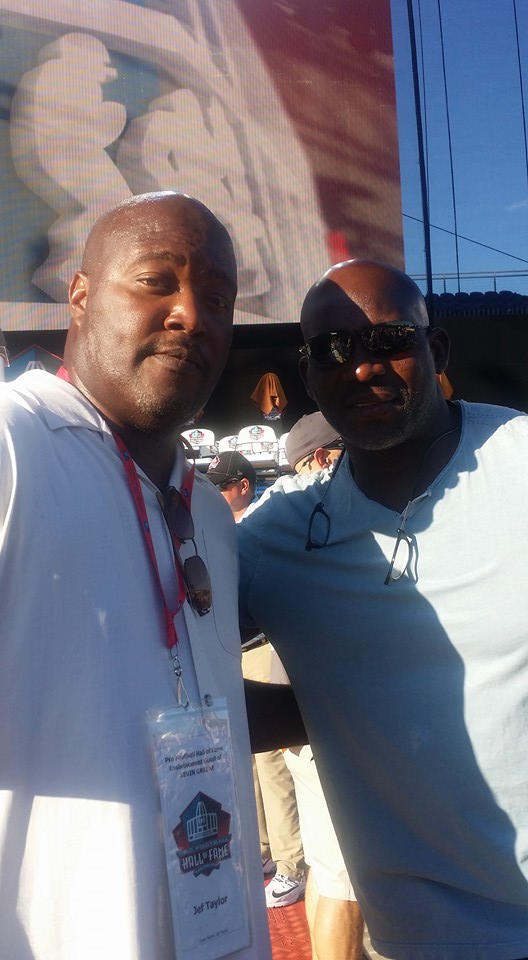
Caught up to Lloyd in Canton.
Write & nominate Hardy Nickerson /Greg Lloyd / Carnell Lake
Send letters to:
Pro Football Hall of Fame
Attention Hall of Fame Selection Committee
2121 George Halas Dr NW, Canton,
OH 44708
Thanks for reading and please share the article.
Dedicated to the memories of Bill Nunn, Chuck Noll, Sam Wyche, Kevin Greene, & Floyd Peters
We have an update on TJ Watt on the 17th of August, a week after this article, he was signed to an extension. About time!
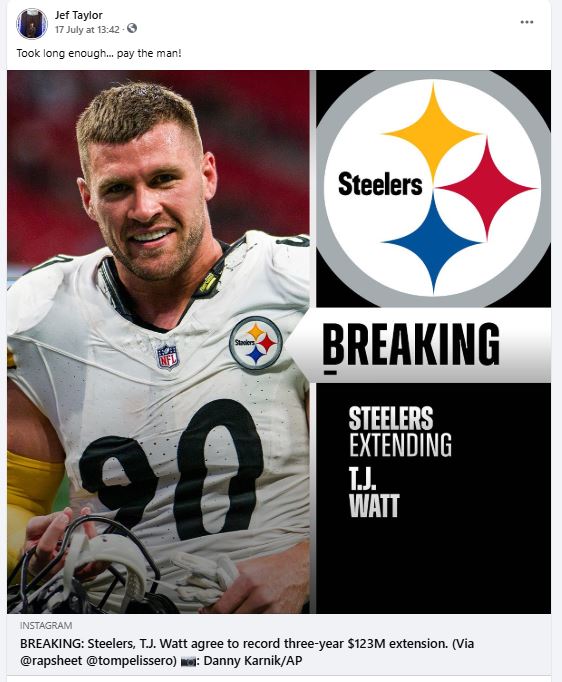
He is a PFHoFer, don’t play around with his contract. A dangerous game.


You must be logged in to post a comment.