When Pittsburgh Was The Center of The NFL’s Defensive Universe

Over the last two weeks NFL pundits, including yours truly have been upset at the way the Steelers organization is playing games with TJ Watt. How can you play games with a future Hall of Famer like this? Sign him and go into the 2025 season with optimism and your defensive play maker ready to lead the charge! I joked about it on my Facebook page with a few former players when it hit me… wait a minute we’ve been here before.
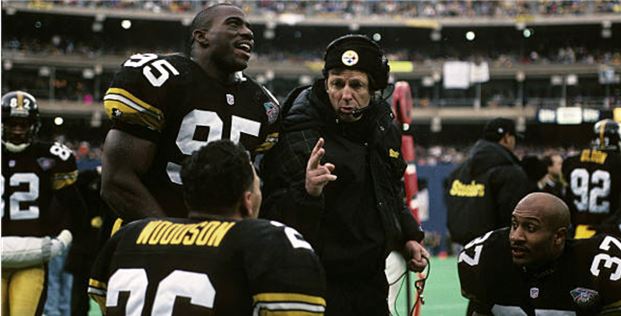
Now all of us historians harken back to the great Steelers defense of the 1970’s and in particular focus on the ’74 draft where they selected 4 future Hall of Famers. Only Jack Lambert on the defense was drafted that year as FS Donnie Shell was an undrafted free agent. The Steel Curtain front four, Linebackers Ham and Russell had been assembled from 1963-74 when they broke through to win Super Bowl IX. Not one group that grew into menace from a single draft class.

Not only did this group achieve accolades but they shaped the next generation of NFL defensive excellence and the Steelers penchant for pinching pennies derailed that group also.

It was their 1987 draft class…. let’s set this up for you:
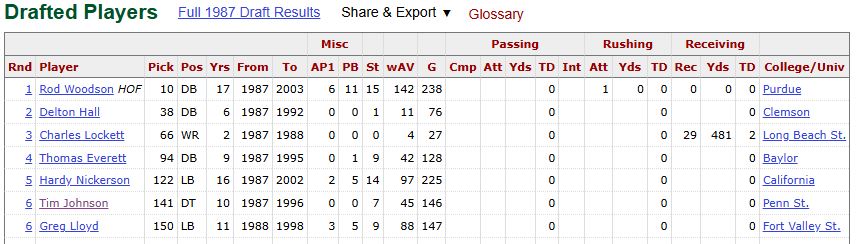
First round selection, HOF CB Rod Woodson went to 7 of his 11 Pro Bowls in the Steel City, won the 1993 NFL Defensive Player of the Year, and made the All Time 75th team in ’94. Woodson came within a few votes from back-to-back NFL Defensive Player of the Year awards & finished in the top 5 – 3 times in 4 years (1993-’96). He was one of the most physically gifted CB which allowed him to excel once he aged and moved to Safety.
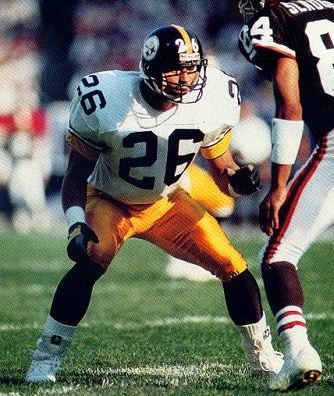
Rod went to the Pro Bowl 4 times at his new position and was All Pro twice for the Baltimore Ravens & Oakland Raiders. He was one of the leaders on one of the greatest defenses in NFL history in 2000 as a mentor to Ray Lewis. A #2 defense that set the record for fewest points in a season (165) and won Super Bowl XXXV going away. Before these stays he started at CB for the ’97 49ers who ranked #3 defensively and made it to the NFC Championship Game. His 2002 Raiders played in Super Bowl XXXVII where at the age of 37, received his 11th Pro Bowl and his 8th All Pro selection after a career high 8 interceptions. In addition to Canton, Woodson was named to The NFL’s All Time 100th Anniversary Team in 2019.

The most intimidating Steeler of them all…. Greg Lloyd

Greg Lloyd came in the 6th round & crashed the pass pocket from his OLB position making 5 straight Pro Bowls (’91-’95). They deployed him in Nickle and Dime situations both off the ball and as an edge rusher. In those 5 seasons he had 37 sacks, 27 forced fumbles and 6 interceptions in what The Chancellor believes was a Hall of Fame career. We’ll cover his total numbers later but we have to introduce everyone. Lloyd matured into the menacing face of the Steelers defense and twice was in the top 3 in NFL Defensive Player of The Year voting. Yes… at the same time as Woodson…in ’94-95.

Not a bad start until you get into the frugal way the Steelers are with homegrown talent. This led to a holdout after 5 years for FS Thomas Everett who was a hard hitter in the secondary who didn’t receive the accolades nationally his teammates had but how valuable was he? The Steelers dealt him to Dallas during his holdout at the start of ’92. #27 was a 4th round selection out of Baylor. The same school that produced HOF Mike Singletary.
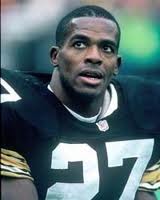
Now you’re thinking “wait, this isn’t greatest ever talent”… well…. going into the 1992 season the Cowboys Achilles’ heel was their secondary.  Their draft tells you that picking up SS Darren Woodson, CB Kevin Smith, and CB Clayton Holmes in the first few rounds. In 1991, Dallas had lost to 4 run and shoot teams including a 38-6 drubbing to Detroit in the divisional round of the playoffs. The biggest blowout loss of any NFC team in the 1990’s. They had some coverage issues but Everett solidified the secondary, put players in good spots and made several plays that defined the Super Bowl XXVII rout of my Buffalo Bills.  He helped turn the secondary into a team strength.

Not Charles Haley…it was Thomas Everett that pushed the Cowboys over the top back in the early 1990s.

In the 2nd quarter when Buffalo was threatening to take the lead, Dallas had a goal line stand where Buffalo went for it on 4th down from the 1. Who intercepted the ball in the end zone to totally deflate the Bills? Thomas Everett. After halftime down 28-10 and fired up to get back into the game in the 3rd quarter, who read a short route and jumped it returning an interception to Buffalo’s 10 to end the competitive phase of the game?  That same Thomas Everett!

They were 3-1 against top 10 passing offenses and rose from 17th in total defense to 1st. Their pass defense rose from 23rd to 5th in their ’92 Super Bowl winning season. Yet he made his only Pro Bowl in 1993 and made a huge play intercepting Steve Young in the 2nd quarter of the NFC Championship setting up the TD to go up 14-0 in a raucous Texas Stadium. Two years with the Cowboys and 2 Super Bowl titles before finishing his career in Tampa. So Everett did help shape NFL history with pivotal plays for The Team of the Decade in championship play. Still sleep on Everett? Watch this

Which brings us to ’87 5th round selection Hardy Nickerson… now where the underpaying Steelers for the 2nd straight year lost a defensive stalwart that wanted out. It was ’93 and free agency had come and where Pittsburgh brass didn’t value Nickerson, former Bengal Head Coach Sam Wyche who had faced him twice a year did signing him to play in Tampa. Yes the Tampa Bay Buccaneers who had just had their NFL record 10th straight season with double digit losses. Nickerson had played well like Everett and didn’t get the recognition nationally his counterparts Lloyd and Woodson had… so what did he do in Tampa?
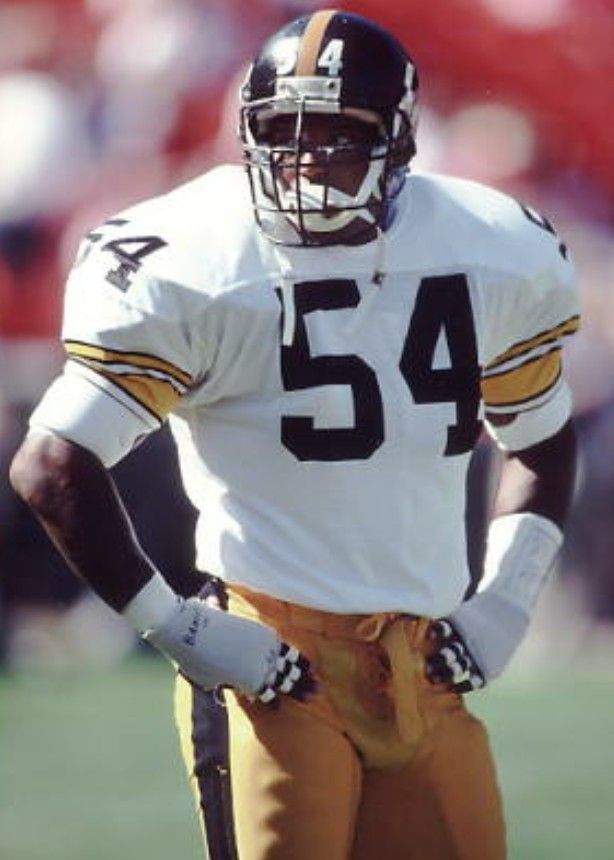
Well… Nickerson became the centerpiece of Defensive Coordinator Floyd Peters’ 4-3 at Middle Linebacker and a terror was set loose. He became a sideline-to-sideline tracker and hit everything in sight. In ’93 he led the NFL in tackles with a leauge record 214 while making his 1st Pro Bowl and voted 1st team All Pro. It was only the 4th time a Tampa Bay defender was voted to the Pro Bowl in Hawai’i and the 2nd All Pro selection since the team’s inception in 1976.

His play was so dominant he broke the team season tackle record in a week 13 win over Chicago. There were still 3 games to go in 1993! So his 1st season ended with 214 tackles, recorded a sack, forced a fumble, recovered a fumble and had an interception.

Or think of it like this… he recorded 96 more tackles than his Hall of Fame teammate Derrick Brooks (118) recorded in ’02 when he was NFL Defensive Player of the Year. Chew on that for a second…

The Chancellor believes this spring boarded Nickerson into what was a Pro Football Hall of Fame career and shared this in a past article Nickerson for Pro Football Hall of Fame.

Nickerson went on to 4 All Pro selections and 5 Pro Bowls in 7 years and once finishing in the Top 10 in Defensive Player of The Year voting. His 4th and final All Pro & Pro Bowl selection came in ’99 when he led the NFL’s 3rd ranked defense to the NFC Championship Game. They were shutting down The Greatest Show on Turf beating them on the road 6-5 (really?) until 4:44 to go when Kurt Warner threw the winning touchdown. This was one of the greatest teams in history & Nickerson’s crew alomst kept them from Super Bowl XXXIV. In that game he had 6 tackles defensed a pass and had a timely interception.
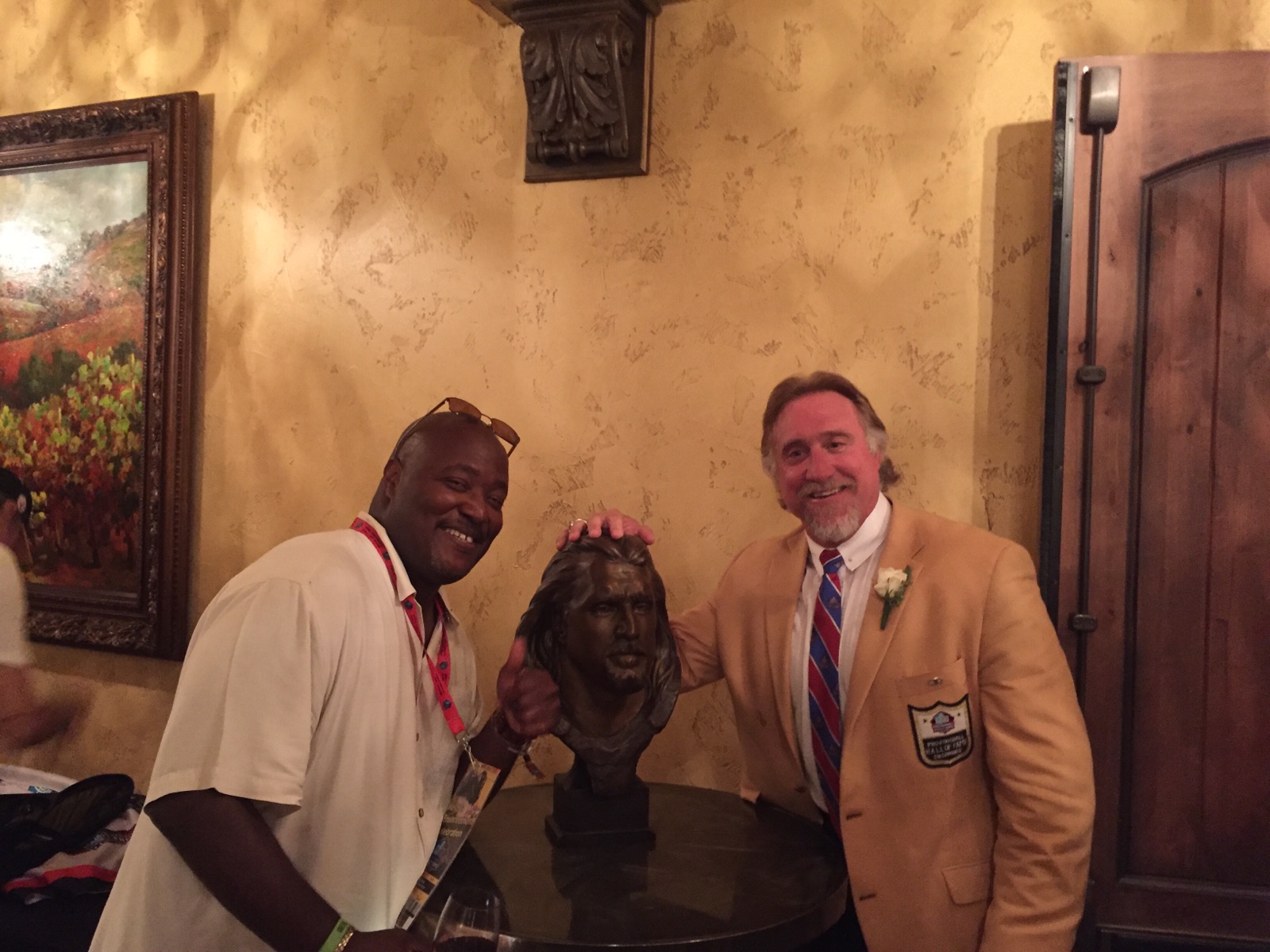
With Kevin Greene after the Induction ceremony.

Why the center of the NFL’s Defensive Universe? The Steelers frugal ways are what kept us from seeing possibly the NFL’s best array of talent on one defense. Keep in mind by 1993 they became Blitzburgh when they signed free agent and Taylor Blitz Pro Football Hall of Fame article alumnus Kevin Greene to the fold. Greene led the NFL in sacks with 14 and went on to be the NFL’s All Time sack leader for a LB with 160. He made the Pro Bowl in 2 of his 3 years in The Blast Furnace and made 1 of his 3 career All Pros there.

Then again the Steelers went cheap and let Greene go to start a younger OLB in Jason Gildon. A damn good player but not the leader that Kevin was coming off that edge across from Lloyd.

For those of you keeping score at home –

Without adding 5 time Pro Bowl/4 time All Pro Strong Safety Carnell Lake & 3-time Pro Bowl and 2 time ILB Levon Kirkland these riches read off like a Madden All Star lineup that doesn’t appear real.

Woodson, Greene, Everett, Nickerson & Lloyd combined for 27 Pro Bowls, 17 All Pro Selections & 7 Top Ten votes for NFL Defensive Player of the Year in various seasons, 2 NFL sack champion totals and 2 enshrined in Canton. Yet the Steelers went cheap and robbed football fans of what would have been one of history’s finest defenses. These players matured into menaces and spread to every corner of the NFL as trained assassins. They were supposed to be the successor to Philadelphia’s Gang Green Defense and would have ruled the 1990s just as the 70’s Steelers dominated their era.

If we add Lake & Kirkland back in these defenders had 24 conference championship appearances 8 Super Bowl appearances winning 3 rings. Anchored by the 1987 Steeler draft class… just think about it:
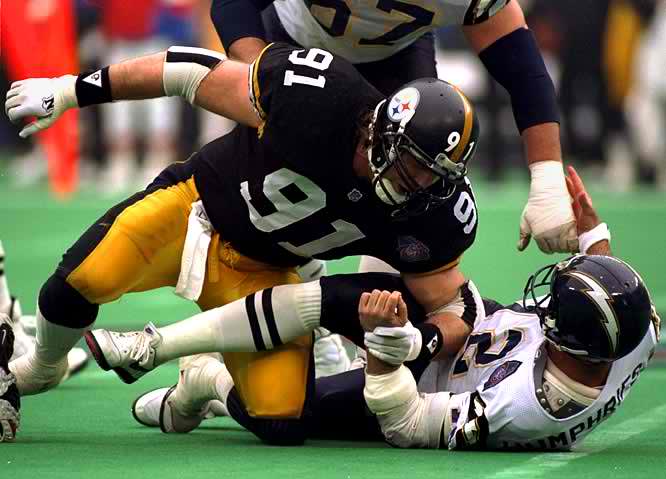
  • Greene led the ’96 Panthers to the NFC Championship in their 2nd year leading the league in sacks again.
  • Nickerson was the 1st piece and building block for what would become Tampa Bay’s Super Bowl defense.
  • Everett was a defensive leader on The Team of The Decade winning 2 Super Bowls in Dallas.
  • Woodson’s HOF career saw him switch to Free Safety and play on The Chancellor’s 2nd best defense in NFL history. The 2000 Baltimore Ravens
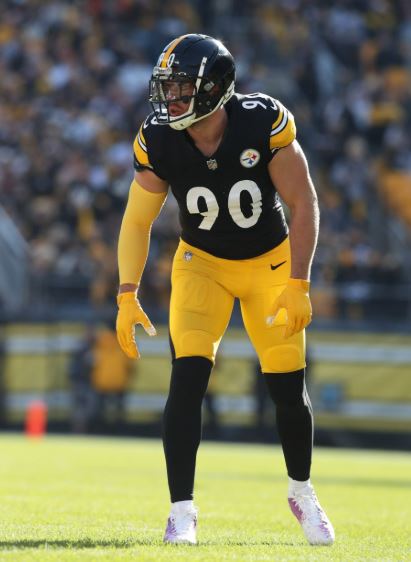
 

TJ coming off in Kevin’s spot.

So Steeler fans hold your breath with the Steelers playing around with TJ Watt’s contract. They’ve been known to let Hall of Fame level talent go. Do you realize none of these great players finished their careers in Pittsburgh?? Uh oh TJ… and they traded hard hitting FS Minkah Fitzpatrick last week. Sigh… and now Steeler fans are losing it since he was a no-show at minicamp. Stay tuned!


Please lend your thoughts as well by writing in to the Pro Football Hall of Fame to the address below. Please be respectful and positively lend your voice:
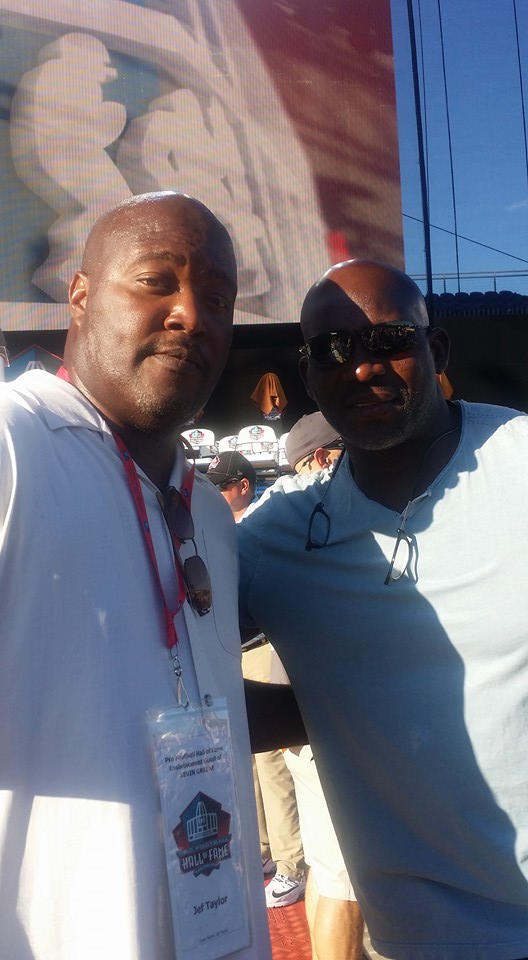
Caught up to Lloyd in Canton.

Write & nominate Hardy Nickerson /Greg Lloyd / Carnell Lake
Send letters to:
Pro Football Hall of Fame
Attention Hall of Fame Selection Committee
2121 George Halas Dr NW, Canton,
OH 44708

Thanks for reading and please share the article.

Dedicated to the memories of Bill Nunn, Chuck Noll, Sam Wyche, Kevin Greene, & Floyd Peters

We have an update on TJ Watt on the 17th of August, a week after this article, he was signed to an extension. About time!
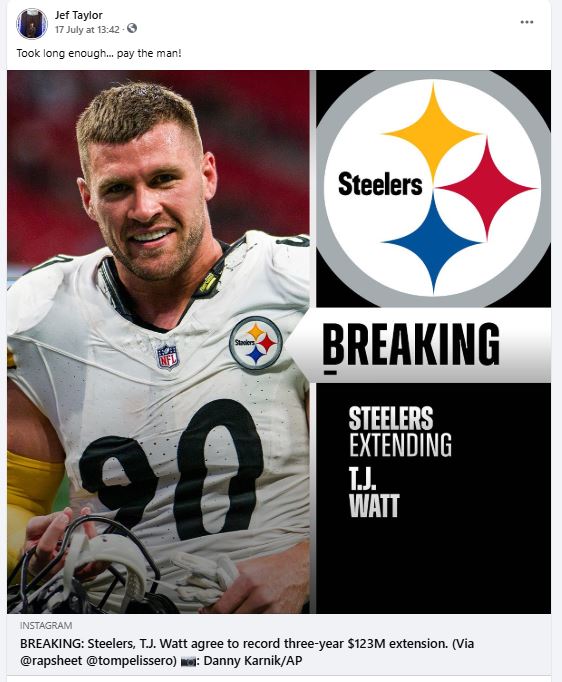
He is a PFHoFer, don’t play around with his contract. A dangerous game.


Death Becomes the Run & Shoot on a Monday Night

Single outside receiver site adjustments from the Run and Shoot

Whatever happened to the Run & Shoot as a pro offense?? You remember in the early 90s, when several downtrodden franchises looked to this offense to gain a tactical advantage on the competition.  Atlanta, Detroit, Houston, and Seattle deployed 4 receivers who ran their routes according to how defenses were playing them.  Borrowing on a concept from Bill Walsh’s offense, it was up to both the receiver and quarterback to read the defense, then adjust the route accordingly.

The truth of the matter is for each team with 4 receivers; the 3rd and 4th receivers were better than the opposing 3rd and 4th defensive backs that were normally platooned to cover them.  These teams started racking up yards by the bushel and along with Buffalo’s “K Gun offense”, the zenith of the Run & Shoot was 1991 when each team, except Seattle. who abandoned the offense in 1990, made the playoffs.  The Bills set offensive records for TDs scored and 33TD passes in a season by Jim Kelly.  In fact Thurman Thomas was NFL MVP with over 2,100 combined yards from scrimmage.

Everyone thought of the Bills “No Huddle” offense as an offshoot of the Run & Shoot because of option routes run by Andre Reed in the slot and Thurman Thomas out of the backfield.  Teams had a hard time adjusting and no matter how your corner played any of these receivers, the receiver would change his route and use the corner’s position against him.

For instance if the corner played outside position in a cover 3 zone, the adjustment would be a seam route by the slot receiver, or a skinny post for the outside receiver.  That same corner came up in press one on one, the receiver would try for an outside release and run a fly pattern.   In a cover 2 where the corner was off, he would adjust and run a hook with the underneath receiver running a down and out underneath his pattern, as the outside receiver occupied the corner.  What could a defense do to combat an offense that used your very choices against you?

Enter the NFC East.  This was the division that each team fielded twin 200 lbs. safeties receivers were funneled to. Whether it was Myron Guyton / Greg Williams with the New York Giants, Danny Copeland / Brad Edwards of the Washington Redskins, or the more punishing Andre Waters / Wes Hopkins duo that was on patrol in Philadelphia’s Veteran Stadium.

Where most teams were employing mainly dime defenses that were off the receiver, these teams started fielding nickel and dime defenses with cover two over the top and bludgeoned smaller  run and shoot receivers.  Many pundits look back to the Giants 1990 Super Bowl XXV defeat of the Buffalo Bills and their use of a 2 man line nickle and dime variations to slow down Buffalo’s no huddle / run and shoot tactics.

However thats misleading…the Giants conceded the run to the Bills (see Thurman Thomas’ 135 yards rushing) to set the tone punishing receivers with hits from the linebackers and safeties.  It was more of a victory based on the strong time of possession difference from the methodical Giants offense more than defensive tactics. A 40:31 to 19:29 possession time difference as a matter of fact.  Although Super Bowl XXV, at the end of the 1990 season, did set the blueprint for playing physical defense against this speed type offense.  So when and where was the run and shoot conquered as an offense??

The signature game that signaled the death of the Run & Shoot as an offense, came in week 14 of the 1991 season.  A Monday night matchup where the Houston Oilers hosted the Philadelphia Eagles.  The Eagles as a defense had come to full fruition as a unit originally put together by Buddy Ryan and now run by defensive coordinator Bud Carson.  They had high hopes that 1991 would be their year: they returned ’90 NFL MVP Randall Cunningham and an improving defense, yet torn ligaments to Cunningham’s knee courtesy of Bryce Paup in the season opener, sent the Eagles season spiraling.  Not quite…

A defense that ranked near the bottom in ’88, Buddy Ryan helped their esprit de corp when he drafted only four players in 1989 citing he liked his guys.  The team grew defensively into a giant by 1991 although Ryan was no longer with them.  The defense kept them in games week after week and they came into this matchup 7-5.  Could they best the #1 passing offense in the league? Could they do it on the road?

The Houston Oilers were the vanguard of the run n shoot teams and with Warren Moon had put up the most prolific numbers. In 1990 Moon passed the Oilers to the playoffs with 4,689 yards and 33 TDs.  The most since Dan Marino’s record setting 1984 and he missed 1 full game and time in 2 others.  Along the way he passed for 514 yards against the playoff bound Chief’s #6 ranked defense. Coming within 41 yards of Norm Van Brocklin’s 50 year old record of 554. Alas Moon suffered a broken thumb and missed the Oiler’s playoff loss to Cincinnati.

Going into 1991, Moon was on a near record setting pace again and some thought this, and not Buffalo was the strongest AFC team.  The Redskins were 8-0 and the Oilers 7-1 when they met in a week 8 slugfest with the eventual world champion Redskins. The game was won  by Washington 20-17 in RFK, yet they showed they indeed were ready to stand toe to toe with the best the NFC offered. Going into the Monday Night tilt against the beat up Philadelphia Eagles at home, many thought the Oilers juggernaut offense would roll in this game too.

What took place over the next three hours was one defensive masterpiece that many defensive affecionados remember reverently to this day. The Eagles employed a 4-2-5 nickel variation with OLB Seth Joyner and MLB Byron Evans, who was lanky for a middle backer yet had great range, for most of the night.

Occasionally they’d bring in the dime defense (6 defensive backs) yet what they did differently was press the receivers and blitz off short corners. The hitting was vicious with Wes Hopkins and Andre Waters leading the way.  They knocked out both Ernest Givins and Drew Hill out of the game twice each. The first vicious shot was a dirty elbow from Wes Hopkins that broke Givins nose, yet set the tone for the night.

Joyner played his way to the Pro Bowl and almost the Hall of Fame that night with 2 sacks, a forced fumble and a fumble recovery to keep the game close.  Reggie White, Jerome Brown (The U), Mike Golic, and Clyde Simmons swallowed Allen Pinkett’s attempts to run holding the Oilers to a paltry 21 yards rushing for the game.  They also provided a serious rush that they supplemented with the occasional blitz that beat Houston into total submission before a stunned audience of millions. When dime back Otis Smith’s thunderous hit on Drew Hill, on an outside swirl route, forced Houston’s fifth fumble of the night. The rest of the league were on their second tablet from taking notes. The Eagles won 13-6 in front of a shocked audience.

Early 90s pic of Eagles L-R: Clyde Simmons, Eric Allen, Jerome Brown, Seth Joyner, and Reggie White

The beating was so decisive it ruined the Oilers season and this game was the complete blueprint on how to stop the run and shoot. Going into the game the Oilers were averaging 307 yards passing, just off pace needed to break Marino’s passing record, yet staggered away from this game only averaging 232 the rest of the season. The 226 they gained through the air against the Eagles was their season low.

The average was also down for the Falcons and Lions over the last 4 weeks of the season as well. The Oilers went down in the divisional round of the ’91 playoffs 26-24 to Denver, and the lone run n shoot playoff winner was Detroit who went on to whip Dallas 38-6. In fact the Cowboys had lost 4 games to run n shoot teams in 1991. The next year the Cowboys drafted a rangy MLB Robert Jones, in a Byron Evans mold, and brought in CB Kevin Smith, SS and former rangy college linebacker Darren Woodson, to stop those offenses the next year. The first of their 3 Super Bowl wins in the 90s and it started with that 1992 draft to mimick what the Eagles fielded in 1991.

As for the run n shoot, its effectiveness was diminished and the race for the record book was over.  In 1991 Houston passed for 4,621 yards where in 1992 that number dropped to 4,029. In ’92 neither the Lions or the Falcons came within 3 games of the playoffs and the Lions and Bills started to alter their offensive approach. The Oilers along with the Falcons ran the offense until 1993, yet the Falcons never returned to the playoffs…and the Oilers?? Well they went into the 1992 wildcard and took a 28-3 halftime lead on Buffalo who was playing with 6 & 7 DBs on the field.  Warren Moon at the half was 19 of 22 for almost 300 yards and 4 TDs and ballooned the lead to 35-3.

In the 3rd quarter, the Bills decided to play it the same way the Eagles had in ’91 inserting rangy MLB Carlton Bailey #54 and Darryl Talley #56 and they shut Houston down in the second half enroute to the greatest comeback in NFL history winning 41-38 in OT. Couple these landmark events with the system’s inability to score in the red zone and the run n shoot’s fate was sealed.  Even now the run n shoot receiving principles of WR route running based on options lives on in playbooks, just not in a 4 receiver set, nor as an entire offensive approach.

As for the Philadelphia Eagles defense that was the architect of the run n shoot’s demise? They went on to become the last great defense to finish #1 against the run, #1 against the pass, and #1 overall.  A distinction the ’85 Bears, ’86 Giants, ’76 Steelers, ’78 Steelers, ’08 Steelers, nor ’00 Ravens could match.  They finished the season winning 7 of 8 games and finished 10-6 and narrowly missed the playoffs.

The combined quarterback rating for their final 6 QBs was less than 40.0, and their principle line rushers R. White, Jerome Brown(The U), and Clyde Simmons combined for 37 sacks (which if they played last year would rank 11th in the NFL by themselves), and all 3 were Pro Bowlers and 1st team All Pro. Seth Joyner and Eric Allen earned Pro Bowl distinctions in 1991 as well.  They don’t receive the recognition of those other great defenses because they didn’t win the Super Bowl. Who would have operating with 5 different starting quarterbacks? They were one of the best defenses in NFL History.  Had Randall Cunningham not been injured…

Prologue: The impact of the players of this era in Eagle history were felt throughout the decade…

Reggie White-Became the main prize in 1993’s free agent derby, signed with Green Bay and went on to become the NFL’s all time sack leader. Recorded 3 sacks in Super Bowl XXXI when he became a champion with Green Bay along with former Eagle TE Keith Jackson. They bested the New England Patriots who had former Eagle RB Keith Byars and CB Otis Smith on the team. White passed on the week of Christmas 2004 which cast a pall over the playoffs that year. He was inducted into the Hall of Fame posthumosly in 2006. RIP Reggie White.

Commemorative patch worn by the 1992 Philadelphia Eagles in Jerome Brown’s memory.

Jerome Brown– An all pro talent who passed away the following June. He’s still one of the most beloved Miami Hurricanes and missed by Hurricane fans everywhere. The 1992 Eagles dedicated their season to his memory and wore this commemorative patch on their jerseys the entire season. They also kept an equipped locker for him throughout the season and set it up on road trips also. His locker was with the ’92 Eagles in the Superdome as they won their first playoff game in 15 years.

Brown was the predecessor to fellow Hurricanes DTs Cortez Kennedy Russell Maryland, and Warren Sapp. Kennedy, who changed his number to 99 in honor of Jerome and went on to win NFL Defensive Player of the Year in his honor in 1992 while playing for the Seahawks. Every Hurricane playing in the NFL during 1992 wore a black #98 on their helmet that year including several that played for the Dallas Cowboys. The next time you watch Super Bowl XXVII where Dallas beats Buffalo you’ll see the black #98 on the back of many helmets. Jerome was alos the inspiration and reason former Hurricane Warren Sapp wore #99 during his entire NFL career. R.I.P Jerome Brown

Seth Joyner & Clyde Simmons– Were twin free agent prizes that signed with Buddy Ryan and the Cardinals in 1994. I wrote the Buffalo Bills organization and suggested we grab Simmons and Joyner to join Bruce Smith and Cornelius Bennett to fortify our defense to get to our fifth Super Bowl…yet I digress Joyner went on to join White with the Packers (1997) in their bid to repeat as champions yet they lost to Denver in Super Bowl XXXII.

Well if you can’t beat ’em, join ’em, and when Denver (1998) went on to become back to back champions a year later. Seth Joyner was a Bronco and guess what number he wore?? Number 99. He is a motivational speaker in Arizona now http://sethjoyner.com/ runs youth football clinics and is a coach himself. Just launched his show and podcast “The Seth Joyner Show” where you can hear his commentary along with a host of former Eagles.


Eric Allen– Played on through the 2001 season finishing with the Raiders. A popular notion is he should have been 1993’s NFL Defensive Player of the Year for his 64 tackles 6 interception performance in which returned 4 of them for touchdowns.  The most famous being a 91 yard interception against the Jets. After weaving his way into the endzone, he handed the ball to teammate Randall Cunningham who was on crutches having been injured earlier in the game. His last game as a player was the famous “Tuck Game” in New England in the 2001 playoffs. Former teammate Otis Smith was a Patriot CB. He’s currently an ESPN analyst.

Byron Evans-Played 8 years with the Eagles through the ’94 season and was an underrated talent. Has an internet radio show he does with former teammate CB Mark McMillan on the Voice of America Network. http://www.voiceamerica.com/show/1475/hard-hittin-radio

Andre Waters– The hard hitting safety went on to join Simmons and Joyner in Arizona for the ’94 and ’95 seasons. He had gone into coaching yet passed away in 2006 R.I.P. Andre Waters

Otis Smith-Was an Eagle dimeback in ’91. He went on to be the wily CB for a veteran laden Patriot team that lost Super Bowl XXXI to Green Bay. Yet was a Patriot 5 years later man handling Tory Holt and Isaac Bruce to stop the Greatest Show on Turf as he became a champion in Super Bowl XXXVI.

Mike Golic– finished his career with Miami and is half of the popular duo Mike and Mike on ESPN television and radio in the morning.

Taylor Blitz Times new logo!!

Taylor Blitz Times new logo!!

2011 Kansas City Chiefs Preview

What produces a good team?  Is it based upon the accumulation of top shelf talent or can you coach a lesser talented team with top shelf coaching?  Head Coach Todd Haley put together a staff with 3 former head coaches with multiple Super Bowl rings from the 00’s Patriots and 1980s New York Giants. Did you know that current defensive coordinator Romeo Crennel has 5 Super Bowl rings?  Yet is overlooked when it comes to credit in formulating defensive gameplans and getting the most out of moderate talent.

The Chiefs lost Charlie Weiss, who went back to the college ranks with the Florida Gators.  Yet the offense he leaves behind was the sparkplug that powered this team to a 10-6 record and the AFC West Divisional Crown.  Haley, who was the former offensive coordinator for the 2008 NFC Champion Cardinals, should have more of a hand in the play calling.  Can the Chiefs improve on the rapid rise and improvement shown in 2010?  Has the talent on this team developed enough to take the next step?

Quarterback: Time to enter the confessional: How many of you were thinking Matt Cassel was the second coming of Scott Mitchell or Rob Johnson? Quarterbacks who filled in for an injured starter, played well, parlayed it into a big free agent contract, then faltered with his new team. Well after a lukewarm 2009 in which Cassel tossed 16 TDs and 16 interceptions, he improved dramatically in his single season under Weiss. Cassel tossed 27 TDs with only 7 interceptions while moving his passer rating to a respectable 8th in the NFL. His improvement from 69.9 in 2009, to 93 was the best turnaround in all of pro football.

These numbers even top his 2008 campaign when he filled in for Tom Brady and led the Patriots to a surprising 11-5 season, which included a 5 game winning streak to conclude the season. Going into his 7th season,, he is entering his prime as a signal caller. One way to get to Cassel is to rush him from his front side.  He seems to throw the ball away or pull it down prematurely at times when he has a split second to complete the throw.  Even though he’s intelligent enough to know when to throw it away, this contributed to his ranking of 18th in passing yards per attempt (6.9yd avg.) along with his dumpoffs. He’s a little quick to move his feet from a throwing position.  So time your front side overload blitzes and jump his short routes when you do.  The Ravens were affective with this in last year’s wildcard playoff loss. Otherwise he can play action pass the Chiefs to efficient drives and to narrow wins. Arrowhead stadium has its most effective quarterback since Len Dawson and quarterback is good in Kansas City.

Offensive Backfield:  This team is set at running back with the continued development of Jamaal Charles. Entering his 4th season he is averaging a whopping 6.0 yards per carry over 3 seasons. His 1,467 yards last year was 2nd in the NFL while snaring 45 receptions for another 468 yards, scoring 8 times overall. His yards per reception average of 10.4 shows you can’t discount Charles in the passing game.  You had better bring some healthy, in shape linebackers to  play Kansas City or you might be in for a long day. At 5’11 199 lbs., it was thought by some that Charles may not be tough enough between the tackles, coming into the NFL.  Last year showed his 1,100 yard season in 2009 was no fluke. He started only 5 games last year and the Chiefs are doing the right thing playing him with 2 backs sharing the workload otherwise Charles might break down.  This keeps Charles fresh and allows him to break big plays once the Chiefs opponents start to wear down. Many good years ahead for this talent from Texas.

One thing we can’t come to grips with at the Taylor Blitz Times is why teams have let Thomas Jones go when he has been so productive? The last two stops he was let go by teams fearing he’d get old on them and not perform which is nuts if you see this guy out of uniform.  In his last year with the Bears in 2006, he led the Bears to the Super Bowl rushing for 1,210 yards. He even ran for 112 yards in Super Bowl XLI, which was the first time since Thurman Thomas in Super Bowl XXV to do so. In his last year with the Jets in 2009, he rushed for 1,402  yards and 14 TDs, leading the Jets to the AFC Championship game.  Then released after those two years?? Are you kiddin’ me? Its no coincidence that Jones physical running style embodied the attitude of his team’s offense on a 3rd successive team that made the playoffs.  Last year was the first time in 6 years Jones didn’t cross the 1,000 yard threshold finishing with 896.

First glance at his 3.7 yard average per rush, you’d think he was slowing down when in reality he carried the ball in all obvious running situations.  The Chiefs may benefit themselves by not telegraphing that they are always going to run when Jones is on the field.  Make no mistake that Jones is in the twilight of his career. Yet this is an extreme physical specimen who keeps himself in great shape with a body weight lifters could be proud of. So even at the age of 32 we expect him to have at least two good years left in him with the current situation.  With teams focusing a little more on Cassel, WR Bowe, and first round draft pick in Pitt wideout Jonathon Baldwin, expect him to cross the 1,000 yard threshold yet again.  As a matter of fact the Chiefs may post the first 1,000 yard rushing tandem in AFC West history.  Rushing the football over 500 times last year, yikes. At running back, Kansas City is Super Bowl quality…better bring some linebackers with “big boy” pads on to play them too.

Receivers: The Chiefs wanted to ensure that teams couldn’t concentrate solely on Dewayne Bowe last year by running effectively, and this year by drafting him a running mate in Pitt’s Jonathon Baldwin.  As for Bowe, he had an explosive year pulling in 72 receptions for 1,162 yards and 15 TDs.  A physical specimen at 6’2 221lbs with good speed, is only going into his 5th season and should be there for the Chiefs for years to come.  With a strong running game to force more 8 man fronts Bowe had a field day against undersized DBs. With the addition of 6’4 228 lbs Baldwin, the Chiefs will field one of football’s largest set of receivers. They will be a team that can move the chains yet we have to see how Bowe comes back after this lockout.  If he’s worked out fiendishly so that his hamstrings hold up, he will be the deep threat with Baldwin the itermediate target. With wideouts this big Oakland had better think twice about Namedi getting out of town as a corner.

The Chiefs are serviceable at TE with Leonard Pope and Tony Moeaki combining for 57 receptions and 5 TDs. Its hard to think of that being productive after Tony Gonzalez manned this spot for so long but these guys are better blockers.  Also 3rd down back Dexter McCluster ate into some of this group’s production running the up and under routes that the tight end would usually run.  With some of the division’s defenses in flux, this should be a good receiving group in Kansas City.

Offensive Line: After leading the NFL in rushing attempts (556), rushing yards (2,627), and finishing tied for 4th in rushing attempts with a 4.7 yards per carry average, this team comes off the ball with consistency.  The seven man sled is alive and well in Kansas City practices.  This team had 72 runs of over 10 yards or more and pushed for first downs on 3rd or 4th and 2, 73% of the time up the gut. Coach Haley has to love that!  How they only had one Pro Bowl lineman in LG Brian Waters is embarrassing.  As always it takes the league 1 year after a performance to recognize emerging talent.  With a heavy dose of running the football, you have to say RG Ryan Lilja and RT Barry Richardson are getting the job done.  They are in their 7th and 3rd years respectively and should be able to maintain their level of play for the foreseeable future.

One of the ways to get after the Kansas City offensive line is to get on top of this team by 7 or more points.  Since they are a heavy run offense they aren’t conditioned to come back or protect the quarterback for extended drives consisting of a majority of passing.  This team ranked 12th in the NFL allowing 32 sacks, and 18th allowing 74 hits on the quarterback.  So they are better suited in pushing off the ball than they are at protecting the passer.  With this line I’d definitely overload blitz in the face of Matt Cassell who gets the ball out a tad early which couples with the tendency that he gets hit a lot on dropbacks.  All told this team has a lot of leads and stays committed to the run so they don’t fall too far behind.  Offensive line is superior in Kansas City and may be a shade better than New England.

Defensive Line: Surprisingly the Chiefs aren’t getting the return they had originally envisioned in DE Glenn Dorsey out of LSU.  This is partially the team’s fault for drafting a 3 technique 4-3 tackle then converting to a 3-4 defense the next season.  He got caught in the middle, just ask former Green Bay Packer DE Aaron Kampman.  Now that isn’t an excuse for an anemic showing with only 2 sacks in nickle situations when they employ 4 man fronts, but he isn’t effective as a DE.  The Chiefs should trade him to a team committed at a 4-3 defense like Chicago, Minnesota, Atlanta, or home to New Orleans and getting something in return.  His build is conducive to be a “rooter”, to shove the middle of a pass pocket and not come from the additional 3 yards away at DE. Since the Chiefs are 14th in rushing yards allowed and average with 1,764 and 4.3 respectively they could use more help on this line.

The combined 5.5 sacks amongst the front 3 needs to be higher, especially for a defense that should be that rested on a team that ran the most in the NFL. DT Ron Edwards and DE Shaun Smith are decent players yet could improve as pass rushers.  The issue is that in year’s 9 and 6 respectively, this is as good as they will be and play for the aging Edwards could slip. To that avail the Chiefs drafted specimen Allen Bailey from Miami to help with that interior push.  The question is where will they play him.  He seems suitable to rush from the inside on nickle and dime packages with his explosion and strength. He should be able to play special teams to keep him engaged in games but again his body type doesn’t lend to a DE, maybe part time DT. He could be disruptive if he learns to fight better with his hands.  The defensive line is slightly below average yet it could make a few strides this season if Bailey disrupts on 3rd down.

Linebackers: The Patriots flat out gave Scott Pioli and the Chiefs brass a gift when they traded Mike Vrabel to them.  A heady linebacker who’s veteran leadership and 3 Super Bowl rings give him the locker room clout to have the ear of his younger teammates. He has shown invaluable in helping the Chiefs grow up fast under Romeo Crennel’s watch.  He is showing signs of wear in not making any splash plays but he just made the right ones yet father time may be catching this 14th year vet. Star of this defense is Tamba Hali closing in at the right side OLB spot.  The Chiefs were hoping he’d improve on his 2009 and he didn’t disappoint charting 14.5 sacks (1st in AFC) and second in the league to DeMarcus Ware with 15. Hali forced 4 fumbles, recovered 2 and knocked down 3 passes and should have been to the Pro Bowl.  He’s only 27 years of age and has steadily improved with now 3 years with over 8 sacks.  Only going to get better.

Inside linebacker Derrick Johnson #56 led the team with 120 combined tackles and returned his only interception for a TD.  He gets to the football and along with Jovan Belcher’s 84 tackles this may be the best younger set of inside ‘backers in all of football.  Combined they had 2 sacks and 4 forced fumbles bringing some thump with their tackles.  Belcher was a rookie and Johnson is only entering his 6th season.  Couple that with the ages of the Jets and Raven’s inside tandem and this could be the AFC’s best within a year or two.  Linebacker is really good in Kansas City.

Secondary: Of all the playoff teams out of the AFC last year, the Chiefs were fair larsonists with 11 interceptions between their starters. They had solid play out of free safeties John McGraw and Kendrick Lewis who combined for 5 interceptions and benefitted from teams throwing away from Pro Bowl SS Eric Berry.  In 2010 Berry had 4 interceptions while making 87 tackles.  Of his 4 interceptions he did take one back for a pick 6 from 54 yards out.  This guy is a playmaker.  At the corner position, high draft pick Javier Arenas could only make the field in obvious passing situations as a nickle back. Why?? Ask the Chiefs brass about the play of corners Brandon Flower with 14passes defensed, and Brandon Carr’s 23.  An active group.  Now throw in Arenas’ 7 passes defensed and 1 interception to go along with the 2 Brandon’s 3 picks and teams had better not throw into this secondary.  With their top three corners all being 24 years old or less, this is the best secondary fielded by the Chiefs since the million dollar secondary of Kevin Ross, Albert Lewis, Lloyd Burrus, and Deron Cherry of mid to late 80s fame.  Superior is the only grade to be given out here and if this team can get another pass rusher to force more errant throws….yikes!!

Overall: Still the best in the AFC West, and if they could take something from the intensity they faced in the wild card round against Baltimore, this team could be headed to the AFC Championship Game or beyond.  Last year early on the question was were they as good as their 3-0 record. They weren’t.  They were better as evidenced by their 5-2 stretch to win the division crown when the pressure was on at the end of the season.  As strong as they are in the phases of running the football and defending the pass, if they get a lead its curtains.  They are well coached and they could make a conference splash this year if age shows up in Pittsburgh and Baltimore.  A team with no obvious weaknesses that has to see Head Coach Haley scout himself and not get pass happy with another big target opposite Bowe. He could get flashbacks to his offensive co ordinator days with the Arizona Cardinals and take to the air.

Careful Coach Haley, you have a good thing building in Kansas City and this team could make a Super Bowl run in these next two seasons.  One of the chances for this team to see growth is in week 10 with a Monday night matchup in New England.  Kansas City comes through with a win there in a championship building block game, this team could be the AFC’s sleeper.  I know that sounds crazy to say of a possible two time division champion, but they are not the sexy pick and most pundits would list them as the 5th or 6th best AFC team. They should finish with a record of 11-5 or 12-4 with another AFC West Title. Plenty of bar-b-que and handwarmers come playoff time in Kansas City.