Drew Pearson Should Be In The Pro Football hall of Fame

When you think of the great NFL teams of the 1970’s, the team that usually comes to mind first are Tom Landry’s Dallas Cowboys. Now Pittsburgh Steeler fans will argue they were the team of the decade and most fans and pundits should think of their team first. Yet think about it… Whenever the 1970’s Steelers are brought up, everyone points to the 2 Super Bowls when they defeated Dallas. Very rarely are the Super Bowls brought up over the Rams or Vikings. Therefore, Dallas was the most visible team. One of the most visible performers on the NFL’s most visible team was standout WR Drew Pearson.

pearson1To the casual observer, Pearson only had two 1,000 yard seasons, 3 All Pro & Pro Bowl seasons. In 1974, only Drew and Cliff Branch topped 1,000 yards that year in receiving in the NFL. Yet if you were cheering against the Cowboys, as many of us were in those years, no one struck more fear in you when the game was on the line.

From playing every year on Thanksgiving, to numerous appearances on Monday Night Football, and annually making the playoffs, we were always watching the Cowboys. The moment Pearson burst onto a nation’s conscience was the 1974 Thanksgiving tilt vs the hated Washington Redskins. Roger Staubach had been knocked from the game thrusting rookie Clint Longley into his 1st significant action.

In a nationally televised game, the Cowboys appeared headed for a loss down 16-3 in the 3rd quarter. Then out of nowhere Longley and the offense got hot. Two touchdown marches gave the Cowboys a 17-16 lead before the 4th quarter began. What gave the game a unique quality was the fact a rookie QB and Pearson, in only his 2nd season, were drawing up plays in the dirt. It was not Landry’s intricate precise passing game leading the charge.

After a Duane Thomas touchdown put the Redskins back on top, Landry’s unknown players had a chance to win it late. As they had turned this game around playing shoot from the hip football, Longley and Pearson drew up another play in the dirt with just seconds to go in the game. George Allen’s Redskins and Landry’s Cowboys coaching staff’s had been in place for 5 years at this point. They knew each other’s playbook. It took Pearson making an adjustment on a “16 Route” in Cowboys terminology, to what amounted to an in and up. The safety bit and Pearson blew by as Longley hit him with a last minute 50 yard bomb and a 24-23 triumph.

Millions of fans digesting Thanksgiving turkey fell out of their Lazy Boy’s as they watched a game still revered in Cowboy lore. Pearson had 5 rec. 108 yards and the game winning touchdown. Bolstered by the heroics performed and notoriety of this game, Pearson was voted All Pro and made his 1st Pro Bowl. In 1975 Pearson was a marked man and had less receptions and yardage yet combined with Staubach for 8 touchdowns during the regular season.

So what makes Drew Pearson Hall of Fame worthy?? The moments. To turn in clutch performances in the final minutes when many players shrink at the moment of truth. How many times have you heard a coach describe how they have to get their player into the game with play calling to keep him engaged?? Well the 10-4 wildcard Cowboys of 1975 made the trip to play the Minnesota Vikings in an NFC Divisional Playoff Game. Against one of history’s best defenses and on target to play in their 3rd straight Super Bowl, the Vikings had held Pearson without a catch. With the game on the line… it was 4th and 17 from their own 25 down 14-10 with :44 left when…

The Hail Mary to win the ’75 playoff in Minnesota not only propelled the Dallas Cowboys to Super Bowl X, it marked Pearson as one of the NFL’s best clutch performers. The next two seasons he was voted to the Pro Bowl and the All Pro team. The second of which the Cowboys won Super Bowl XII to conclude the 1977 season.

As the late ’70’s beckoned, Pearson shared more of the spotlight with newcomers Tony Dorsett and fellow wideout Tony Hill. His numbers suffered but they were a better team as they appeared in back to back Super Bowls in 77 & 78. Everyone thought the magic would be over with the retirement of Hall of Fame QB Roger Staubach after the 1979 season. Pearson had a mediocre season in ’80 (43 rec 568 yds 6TDs) as the Cowboys adjusted to new QB Danny White. Yet when the 12-4 wildcard Cowboys found themselves down 27-17 to the favored Atlanta Falcons in the divisional playoffs, it was Pearson to the rescue again. First he scored to close the gap to 27-24 midway through the 4th quarter.. then this happened with :49 left in the game.

Unfortunately this miracle touchdown didn’t propel the Cowboys to the Super Bowl as they fell in the first of 3 straight NFC Championships. However if you’re keeping count, from 1975-1982 Dallas played in at least the NFC Championship in 6 of 8 seasons and Pearson was the only featured performer on all 6. Staubach was only there for 3 of them. They played in 3 Super Bowls in a 4 year span and Pearson was able to make magic moments happen with 3 different quarterbacks.

Over the length of Drew’s 11 year career, he only scored 48 touchdowns. Yet he seemed to always score the money touchdowns that ruined opponent’s seasons. His career ended after a horrific car accident after the 1983 season and the Cowboys were never the same. In fact the very next year (1984) marked the first non playoff season for Dallas since 1974. In an era where the Dallas Cowboys became America’s Team, how can you talk about that era without mentioning his heroics??

Please lend your thoughts as well by writing in to the Pro Football Hall of Fame to the address below. Please be respectful and positively lend your voice:

Please write & nominate #88
Send letters to:
Pro Football Hall of Fame
Attention Seniors Committee
2121 George Halas Dr NW, Canton, 
OH 44708

For induction into the Pro Football Hall of Fame, I present Drew Pearson.

Epilogue 4/29/2017: In Philadelphia during the NFL draft, Pearson stepped to the mic and offered this passionate delivery in announcing Dallas’ 2nd round selection.  He honored every Dallas Cowboy who has ever played along with owner Jerry Jones and coach Jason Garrett:

Now it’s time for an induction speech from him.

Thanks for reading and please share the article.

Missing Rings: 1979 Houston Oilers – Luv Ya’ Blue

When the gun sounded to end Super Bowl L, much of the attention turned to Peyton Manning and his upcoming decision to continue playing or retire.  Pundits waxed philosophical on where Denver’s defensive performance placed them in history and Manning’s overall legacy. However a small contingent thought of Wade Phillips and the culmination of another legacy. That of the coaching family he hailed from and his father…the late Bum Phillips.

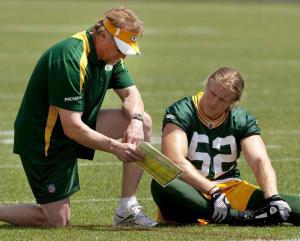
Coach Phillips and Eddie Biles giving instruction to standout linebacker Robert Brazile.

Coach Phillips and Eddie Biles giving instruction to standout linebacker Robert Brazile.

It’s a rich legacy with Bum Phillips and the late 70’s Houston Oilers. Where a father gave a young Wade his first NFL job in 1976 coaching the defensive line. Bum had arrived the year before to resurrect a moribund franchise that hadn’t made the postseason in nearly a decade. Aside from back to back AFL championships in 1960 & ’61, the team mired in mediocrity without any players of distinction.

In an era where most NFL coaches were still emulating the status quo fire and brimstone approach of a Vince Lombardi or a Don Shula, Phillips was more of a player’s coach. Opting for reasoning and taking more of a personable approach, Bum got to know his players and was known for having laid back practices.

Phillips was one of the first to employ the 3-4 defense as a full time tactic which the Miami Dolphins had made famous during their Super Bowl years in the early 70’s. Shula and Bill Arnsparger used the defense part time to maintain an edge when they were ahead. It was actually a variation of the old Oklahoma 5-2 of the 1950’s however the defensive ends were replaced with quicker outside linebackers.

To make it lethal the Oilers drafted Robert Brazile to man the weakside linebacker spot. He was a 5 time all pro between 1976 and 1980 along with his defensive rookie of the year award. He was the prototype size and speed of the 3-4 outside linebacker the Giants made famous 5 years later with Lawrence Taylor. He was the focal point to a defense that led the Oilers to a 10-4 record in ’75 where they narrowly missed the playoffs.

In ’75 QB Dan Pastorini and WR Ken Burrough each made the Pro Bowl. However over the next two years the offense bogged down without a serious running threat. They struck gold in 1978 when they drafted Heisman Award winning running back Earl Campbell out of Texas. Now they had a focal point on the offensive side of the ball. A one man wrecking ball that punished defenses while toting the rock 30 times a game. 

dan_pastorini_drew_brees_nflpa_08302011Having to look up in the AFC Central standings to the perennial champion Steelers, the Oilers seemed to be ready to make their move. They finished 2 games behind the Steelers in ’77, yet it looked like Pittsburgh had come back to the pack having failed to reach the AFC Championship for the first time in 4 years.

The NFL was abuzz with the exploits of Campbell, who was leading the league in rushing, and the state of Texas seemed to be gravitating to this new team on the block. Midway through the ’78 campaign, winners in 4 of their last 5 including a 24-17 win in Pittsburgh, the Oilers played their signature game of the era. A Monday Night match-up with Don Shula’s Miami Dolphins.

This Monday Night matchup would become the showcase where the Oilers proved they belonged among the NFL’s elite. Also it would solidify Earl Campbell’s chances to win rookie of the year honors. After all he came into this week 12 contest with 944 yards rushing.

In one of the transcendent games of the ’70’s the Oilers prevailed 35-30. Campbell became the first rookie to lead the NFL in rushing (1,450 yds) since Jim Brown in 1957. The Oilers finished 10-6 to make the playoffs as a wild card. There they beat the Dolphins in Miami 13-7 and beat New England 31-14 to make it to the AFC Championship Game. There they fell to the eventual Super Bowl champion Steelers 34-5 who taught them how far they had yet to go.

Yet make no mistake… with the strides they made in 1978 it looked like ’79 would be their year.

The verve and spirit were still there the following season yet this team had the weight of expectation upon them. Campbell again led the league in rushing with 1,697 yards and 19 TDs. They stood toe to toe and slugged it out with the Steelers for supremacy of the AFC Central and wrested control with a 20-17 win in week 15. However a loss in the final week gave the Steelers (12-4) the division and the Oilers would have to go in as a wildcard at 11-5.

A shadow of doubt crept in as the Oilers were right back where they had been the season before. Except this time they would have to play the AFC Divisional against the high flying San Diego Chargers. In the wild card round they lost QB Pastorini, Campbell, and WR Burrough. Without their top passer, rusher and receiver they had to face the #5 defense to go along with San Diego’s #1 offense on the road. What would happen??

In The Chancellor of Football’s estimation, Oiler Safety Vernon Perry turned in the greatest defensive performance in NFL history. Perry wound up making 8 tackles while grabbing a playoff record 4 interceptions and blocking a field goal returning it 57 yards. The Oilers needed every one of these plays to escape with a 17-14 upset. One of the biggest in NFL playoff history.

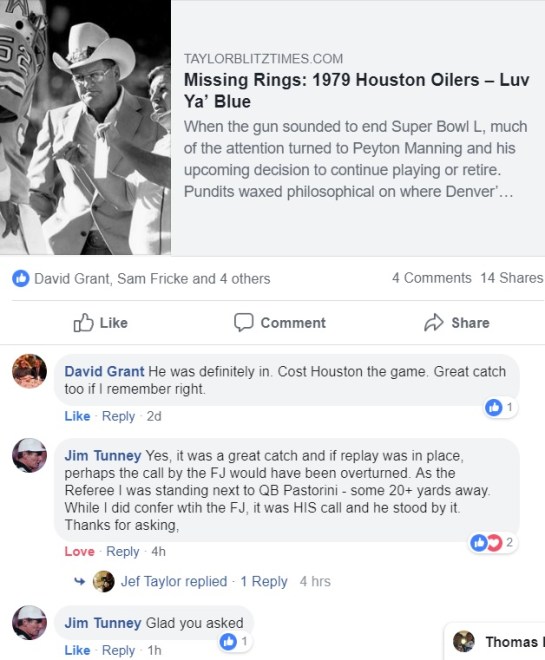
Surprise! The Oilers would be headed to Pittsburgh for the AFC Championship for the 2nd straight year. Unlike the ’78 game where the Oilers were overwhelmed playing in their 1st championship game, this one they were embroiled in a dog fight. With the Steelers up 17-10 and the Oilers driving late in the 3rd quarter, Dan Pastorini lofted a pass for Mike Renfro when…

Sentiment finally came full circle when the refs admitted to the blown call in private but the company line was towed publicly. On that day, a young Chancellor learned about momentum and why the ’79 Championship was tainted by the referee’s blown non call. The officials weren’t allowed to view instant replay in the stadium where we at home clearly saw Mike Renfro in. It lead to a rule change when six years later instant replay was instituted in the NFL.

However that was too late for the Oilers who fell 27-13 that day in which they were clearly cheated. It cast a pall on a day when it seemed as though the game wasn’t settled on the field.

To make that call even more painful, the Oilers never threatened for a Super Bowl again. The following season saw the Oilers deal away starting QB Dan Pastorini for the late Kenny Stabler in an attempt to “kick it in.” This was the adopted slogan for the 1980 season to finally kick the championship door open and make it to the Super Bowl.

Ironically it was Pastorini who won a Super Bowl ring as an injured member of the ’80 Oakland Raiders. In a twist of fate, their first postseason step was a 27-7 win over Stabler and the Oilers in the wildcard round.

It was the last hurrah as 3 losing seasons followed. Bum Phillips had been dismissed in the aftermath of the ’80 Wild Card loss to Oakland. The magic was gone and an era of “Luv ya’ blue” faded into lore. An improbable team with the unlikeliest of characters is still revered in a city where the Oilers left to become the Tennessee Titans, and a new Houston team occupies the city. However the heart of the city of Houston will forever remain with that team of the late 70’s.

“Luv ya’ blue” a legacy indeed…

tunney.exchange

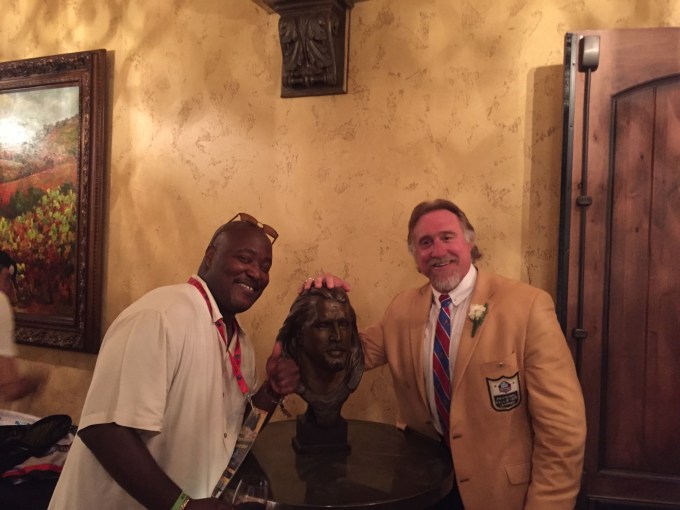
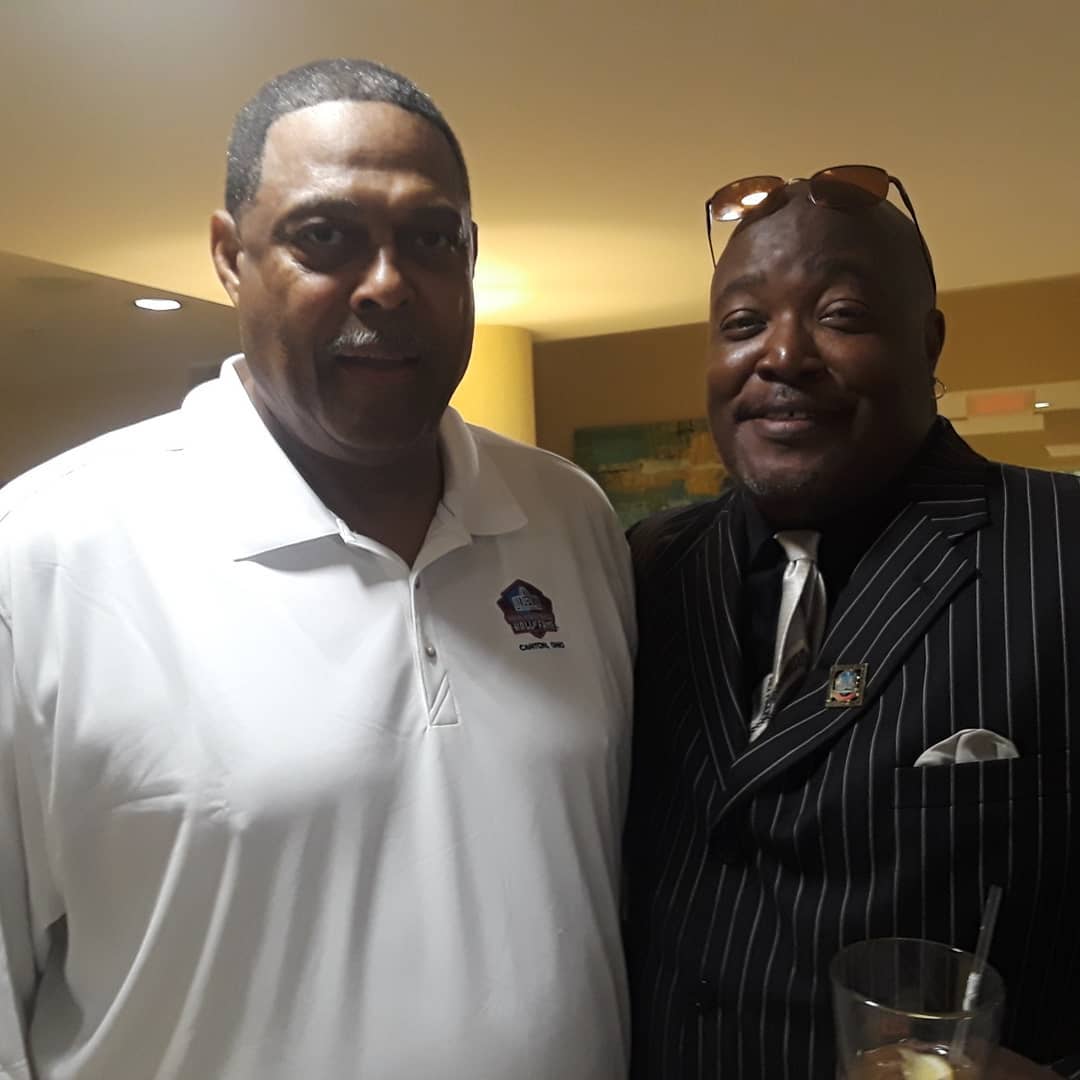
Ran into Robert Brazile after the Gold Jacket Dinner. Great time.

Thanks for reading and please share the article.

Overcoaching: Vol 3. Super Bowl XLIX Edition

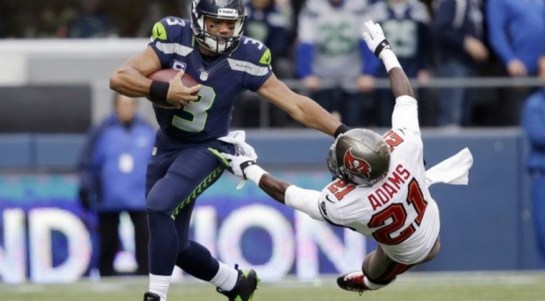
Super Bowl XLIX was a great game but the end left a lot of fans empty as Seattle opted for a pass from the 1 with seconds left to play. Immediately I railed it was the worst play call in Super Bowl history on social media. Many former NFLers agreed. So after a small hiatus my thought hadn’t changed and now it was time to revisit another classic case of overcoaching in the NFL.

First off… if anyone thinks the Seattle  throwing that pass at the one yard line was the right play call, then they think Vince Lombardi called the wrong play on the final play of the Ice Bowl. Its that simple. One of his philosophies played out at the goal line during the final seconds of both the 1966 & 1967 NFL Championship Games.

Lombardi’s philosophy was in a pressure situation, players would make mistakes in Tom Landry’s complicated offense. The Cowboys had the ball at the 2 with less than 2 minutes to go down 34-27. They had momentum and had just scored on the drive previous. True to form T Jim Bokeim had a false start… remember they did a lot of shifting on the line. On the final play, which was a rollout, RG Leon Donohue ran past Packer LB Dave Robinson instead of blocking him. Robinson hurried Don Meredith into a game ending endzone interception.

The rubber match for the Ice  Bowl (1967 championship) saw the reverse as the Packers were down to the 2 yard line with less than 2 minutes to go. After two plays and a final timeout, Green Bay was at the 1 with :16 left down 17-14. Where Tom Landry was heard yelling “watch Starr on the rollout”, Lombardi’s Packers went with a QB sneak to win the game. A simplified play.  Years later in recalling Lombardi’s philosophy, G Jerry Kramer said “When the game or life is on the line, you don’t gamble and you put your faith in the defensive player’s chest.”

A philosophy the Seattle Seahawks had believed in until the 1 minute mark of Super Bowl XLIX. Some new age philosophies have made coaches overthink and overcoach situations lately. Ever since that Monday Night game where Brian Westbrook had that breakaway run at the end of the game against the Dallas Cowboys and slid down to run out the clock, people have been overcoaching end of game scenarios.

03_ball_grand_canyon_1_hi_nat1366However I said it right after…that was the same play call the Titans went with in Super Bowl XXXIV when Mike Jones tackled Kevin Dyson at the 1 yard line also. That stacked receiver slant is 0-2 in late Super Bowl moments. Truth is they should have run the ball twice with the read option and kept it on the ground. They should have immediately run a play after Lynch made it to the 1.

Fist lets take a look at the early stages of the game when Marshawn Lynch scored to tie the game at 7.

You’ll note the first run Lynch face initial contact at the 9 ans made it to the 6 1/2 yard line. Then on the touchdown he faced initial contact at the two and powered to more than a yard into the endzone. He’s the best contact runner since Corey Dillon and he was constantly falling forward during the game.

Now we get to the fateful last plays of Super Bowl XLIX.

Had Seattle rushed to the line of scrimmage with the 1:06 left (after Lynch made it to the 1) New England may have let them score (another bone head new age move) to ensure Brady would have a chance with the football and more clock. Don’t tell me Belichick doesn’t think that way because he was lauded for his taking a late game safety against Denver 10 years ago so the Patriots would get the ball back with time and field position… Had Seattle got up and rushed to the line, New England also wouldn’t have sent in their goal line 3 corners package where Seattle would have been better suited to block. Wasn’t that why Pete Carroll said they were wasting a play??

By not rushing back to the line the Seahawks overcoached the situation. There comes a time where coaches have to drop those silly play charts and coach on guts. Lynch had gained positive yards after contact on all of his runs. Even his last carry he broke a tackle at the 4 and made it to the 1. Had they hurried and faced the same defense the next play you don’t think he scores from the 1?? That same personnel he powered through for their first touchdown and 3 yards after contact.

Bill Belichick was saving all of his timeouts and let the clock run down to :32 seconds before Seattle snapped the football.

Yet alas Malcolm Butler ended the Seahawks bid for back to back Super Bowl championships. Coaches have to get back to owning each situation and score first and win the game. Don’t sit and speculate when you can or even if you will score on a later play. You just have to trust your defense. If you can think back to Super Bowl XLVI between the Patriots and the Giants, Ahmad Bradshaw tried not to score when he “accidently” fell in the endzone. Taking a 17-15 lead, the Giant defense held off Tom Brady in that one. You have to rely on your defense.

Another clear case of overcoaching and now Seattle has to let this fester as they ponder an opportunity lost. It could fuel their trip to Super Bowl L in San Francisco’s new stadium. Stay tuned…

Thanks for reading and please share the article.

SUPER BOWL XIII RUNNER UP 1978 DALLAS COWBOYS

In the “Battle of Champions”,  XIII on January 21, 1979 the defending Super Bowl champion Cowboys took on the Steelers in deciding who was to be the team of the decade. There have only been a few occasions where a Super Bowl champion came back better the following season. The 1978 Dallas Cowboys were one of those teams.

16568_lg

Of all the teams coached by Tom Landry built by Tex Schramm and Gil Brandt, this was the apex of their work. In 1977 they finished #1 on both offense and defense. Rookies Tony Dorsett (1007 yds) and Tony Hill were just learning the offense and fighting for playing time. 1978 saw them each explode onto the scene as Pro Bowl performers with Dorsett flashing for 1,325 yards and 7 TDs. Hill supplanted Golden Richards, teaming with ’77 Pro Bowler Drew Pearson, gathering in 46 balls for 823 yards and 6 TDs. So they were much more explosive.

Finishing #2 in defense in 1978, nothing really changed from the season before. Pro Bowlers Randy White, Harvey Martin, Charlie Waters, and Cliff Harris were joined by 1st timer “Hollywood” Henderson. Whose athleticism had lethal impact on the Cowboys’ nickle packages. Although the NFL extended the regular season to 16 games in ’78, the Cowboys gave up fewer points (208) than they had as league champion the season before (212).

Did you know the ’78 Cowboys were .5 yards per game from being #1 on offense and 8 yards per game from being#1 on defense for a second straight year?? So when they vanquished the Los Angeles Rams and their #1 ranked defense, on the road 28-0 for the NFC Championship, their trip to Super Bowl XIII was for more than winning a title. They had a chance to finish as a dynasty and arguably the best in history.

The best Super Bowl of the first 25 had the Steelers scoring 1st then the Cowboys answering on the last play of the 1st quarter.

The Doomsday Defense II forced a fumble by league MVP and Super Bowl MVP Terry Bradshaw as the first quarter wore on. Just when the Steeler offense seemed to get it together, Doomsday struck again near midfield to take a 14-7 lead. Courtesy of Hollywood Henderson who taunted Bradshaw in the week preceding Super Bowl XIII.

The Steelers struck back with 2 scores to take a 21-14 halftime lead. Bradshaw had answered with several scoring drives and finished with 253 yards passing. A Super Bowl record… Dallas wasn’t living up to their defensive billing. After the first initial offensive drives, the Steelers had held Staubach and company in check.

Although the game had gone back and forth, the Steelers had outgained Dallas 271 to 102 yards. The teams had combined for 5 turnovers. However 1 aspect of the game had gone in Dallas’ favor, the Steelers trapping running game had been smothered. That trend continued in the second half as the Cowboy offense found it’s bearings. Down 21-14 late in the 3rd, Staubach drove the Cowboys to the Steelers 11 yard line. Poised to tie the game, the fickle hands of fate  interceded…

Having to settle for a 21-17 deficit, the momentum lost affected the Cowboys until late in the 4th quarter. In actuality neither team could move the ball for the balance of the second half. Only a pass interference that had impact beyond this Super Bowl gave the Steelers momentum.

The Steelers scored a few plays later to make it 28-17 on Franco Harris’ 22 yard trap up the middle. Another fickle bounce of the ball happened when kicker Roy Gerela slipped kicking off. It went right to DT Randy White. With a casted hand tried to handle the ball on a return when he fumbled it. The Steelers scored on the next play and viola…they were up 35-17 with 6:41 to go. The Cowboys were undone on a bad pass interference and two strange bounces of the football.

The Cowboys didn’t go quietly into the night.

Staubach led the Cowboys to back to back touchdown drives to cut the score to 35-31. They couldn’t get a second onside kick and the Steelers ran out the clock. The Steel Curtain finished the game on fumes. Dallas couldn’t be stopped on those last 2 drives. Comparing both defenses:

  • Steelers allowed 330 yards, 5 sacks, 2 forced fumbles, 1 int.
  • Cowboys allowed 357 yards, 4 sacks, 3 forced fumble, 1 int and 1 fumble recovery for a TD

sbxiiinew2Not bad when you compare two great defenses. However writers have gunned down hyperbole in the history books as Steeler strength vs Dallas finesse. When in fact the Cowboys were ranked 2nd and the Steelers 3rd on defense. The 86 yards gained by Pittsburgh in the 2nd half was the fewest by a Super Bowl winner. Well at least until XXX when the Steelers held the Cowboys to 61 in their loss.

super-bowl-logo-1978Even though the Steelers had bested Dallas in SuperBowl X, this  could have made things even at 3 wins a piece.  Anyway…to the victor went too many spoils when it comes to Hall of Fame inductions off these teams.  No Harvey Martin, no Drew Pearson?  really…Pittsburgh was better…but not 10 inductions to 3 better!  No chance.

Who knew this would be Tom Landry 's last Super Bowl team.

Who knew this would be Tom Landry ‘s last Super Bowl team.

Thanks for reading and please share the article.

SUPER BOWL XIII CHAMPION 1978 PITTSBURGH STEELERS

In the “Battle of Champions”, Super Bowl XIII on January 21, 1979 the defending champion Cowboys took on the Steelers in deciding who was to be the team of the decade. The first Super Bowl with a kickoff pushed back so that it would conclude in front of a primetime audience.

xiiipsThis was arguably one of the best Super Bowls of the first 25 that were played. Even though the Steelers had bested Dallas in Super Bowl X, this could make things even.  The discrepancy of 10 Steelers in the Hall of Fame vs. 3 for Dallas is beyond ridiculous considering Pittsburgh barely won 35-31.  Of course Cowboy fans point to a bogus “incidental contact” pass interference call between Benny Barnes and Lynn Swann, then you have the Jackie Smith dropped pass…nevertheless referee Fred Sweringen blew that interference call…it’s important because John Stallworth was out for the second half and the Steelers couldn’t move the ball.

Let’s take a trip back in time. Aside from Oakland and Miami, the Steelers and Cowboys were viewed as the best teams of the 1970’s.  The Steelers had won it all in 1974 and returned to the Super Bowl as a powerful defending champion. Pittsburgh repeated as champions and established themselves as a dynasty.  They dropped off the championship mantle for ’76 and ’77 yet were poised to return in 1978.

xiiips2In their absence the Dallas Cowboys had retooled themselves and ascended to the Super Bowl XII championship with Heisman Trophy winner Tony Dorsett added to the mix. The young players that joined the Cowboys in 1975 like Thomas “Hollywood” Henderson, and Randy White were now starters and superstars.  Now they were set to do what Pittsburgh had done and repeat as Super Bowl champions.  So for the second time they’d meet in a Super Bowl with one team coming in as a defending champion.

In 1978, the NFL saw rule changes that allowed receivers to only be chucked within 5 yards of the line of scrimmage. This “Mel Blount rule” along with a rule allowing pass blockers to extend their arms liberalized the passing game. Terry Bradshaw and the Steelers became a new team as he led the league with 28 TDs thrown. The Steel Curtain wasn’t as stout as it had been in the mid 70’s yet they allowed the fewest points in the first 16 game season with 195 allowed. Franco Harris was still a 1,000 yard rusher at this time.

So this powerful 14-2 challenger went down to Miami’s Orange Bowl to take on the defending champion Cowboys who finished 12-4. For only the second time in the 13 year history of the Super Bowl, we would have two teams facing that each previously had won the game before. The first was the Steelers meeting the Cowboys in X, so everyone anticipated a great game for XIII. Two prime champions faced off and an epic battle ensued.

The Steelers opened up the scoring 7-0 with a Bradshaw to John Stallworth pass from 28 yards out.

After the Cowboys came back and tied the game with a Staubach to Tony Hill pass, Dallas “Doomsday Defense” struck. “Hollywood” Henderson and Mike Hegman sacked Bradshaw with Hegman stealing the ball and scoring with it. The Steelers were down 14-7 when a few plays later…

Each team’s defense forced multiple turnovers during the first half. The majority of the 2nd quarter had the teams deadlocked at 14 when the Steelers sustained a drive just before halftime. With seconds to go, Bradshaw connected on his 3rd TD of the half with this pass to Rocky Bleier.

Terry finished the first half with 253 yards with his 3 touchdowns and would become the first QB to throw for over 300 in a Super Bowl. Keep in mind this was the same quarterback that had nearly played his way out of a job in 1974. All the footage of his mistake prone ways as a young player were being extinguished in the mind as he put on this bravura performance in the 1st half.

Up 21-14, the Steel Curtain started to crack as Staubach started to move the ball in the 3rd quarter. Right when they were going to tie the game at 21, Jackie Smith dropped a sure touchdown on a 3rd down forcing them to settle for a field goal and a 21-17 deficit. Dallas, demoralized by the turn of events lost momentum for most of the second half.

After the most questionable pass interference in NFL history put the Steelers on the Cowboys 22, Franco scored on this trap to make it 28-17. We were getting late in the 4th quarter also.

Following an accidental squib kick, DT Randy White mishandled the football and fumbled as he was hit by Tony Dungy. Now the Steelers were poised for the kill at the Dallas 18 yard line.

It was not all over… Although the Steelers led 35-17 with a little more than  6 minutes left in the game, Staubach’s championship mettle shone through. The crack in the Steel Curtain became s fissure as the Cowboys scored twice from 90 and 48 yards out respectively. Yet Pittsburgh held on to win 35-31 and unseated the Cowboys as champions.

super-bowl-logo-1978Super Bowl XIII was a celebration with the two best teams facing off in the big game.  Rarely does that happen. Great games like that to climax the season leave you wanting more but you have to wait until next season to get that fix. To think the NFL’s #2 (Cowboys) and #3 (Steelers) ranked defenses were shredded by 35 and 31 points respectively. No one saw that coming.

chancellor.franco

Bradshaw was the runaway MVP as he passed for a Super Bowl records for yardage (318) and touchdown passes (4). Much like Ben Roethlisberger today, it was the defense and the running game that carried the QB to his first Super Bowl win. Terry had a good game in his second, Super Bowl X, but it was this one that validated his career and sent him to the Hall of Fame.

It’s impossible to see this championship ring and not think of the Super Bowl game first.

Thanks for reading and please share the article.

RIP Coach Noll

RIP Coach Noll

SUPER BOWL XII CHAMPION 1977 DALLAS COWBOYS

Super Bowl XII, Cowboys 27-10 over the Denver Broncos…very painful game…didn’t get to watch it…long story …and LIVED in Denver at the time…I’m still upset at my Mom for that!! TV with a blown picture tube and couldn’t go to a friend’s house to watch th……sigh…deep breaths Jef. Remember how many of us played this game over and over on electric football?

xii

This team was known for several firsts:

  • The 2nd Super Bowl champion to finish #1 offensively and defensively. *Updated as the ’72 Dolphins were 1st.*
  • The first Super Bowl where the participants faced each other during the season.
  • Roger Staubach and Tony Dorsett were the first pair of Heisman winners in the backfield of an NFL champion.
  • The Cowboys were the first dome team to win a Super Bowl. Lets face it… Dallas played in a dome with a hole in the roof. It was a cheap way to not have air conditioning at Texas Stadium.
  • It was the first time since the AFL NFL merger where a quarterback faced his former team in the championship game (Craig Morton)
  • Super Bowl XII was the first played in a dome. The first NFL championship game played indoors was actually 1934.

Everyone talks about Dallas and the great train heist that was the Herschel Walker trade… what about the deal to get Tony Dorsett??Seattle traded their #1 pick to Dallas for several picks in 1977. The Cowboys landed Tony D. and Seattle got some substitute teachers and their cars washed. Overnight the Cowboys returned to the league’s elite because they were down in 1974 where they missed the playoffs. Dorsett became the anchor for the Cowboys rushing for 1,000 yards in 8 of the next 9 seasons.

XII3

This game ruined the legacy of the Orange Crush defense because they were special…after 7 turnovers they still only gave up 27 points.

*How did Butch Johnson’s touchdown not be ruled an incomplete pass?*


Enough of that Cowboy haterism….Did you know that this was the only Super Bowl champion to finish the season #1 on offense and #1 on defense in the same year?? To say that the Dallas Cowboys weren’t the best team in football is to deny what was Tom Landry’s best team ever. Pittsburgh was run over in Denver in the 1977 AFC Divisional playoff 34-21, so Steeler fans you gotta stay quiet with this one and they got handled in that game. Randy White, Ed “Too Tall” Jones mixed in with Larry Cole and Harvey Martin were the sickest pass rush in football. Unofficially Martin recorded 26 sacks in just 14 games.

Yet this team had a supernova at OLB with “Hollywood” Henderson. He was easily the fastest linebacker in football blitzing or covering speedy backs on flares and seem routes. He blanketed from sideline to sideline with an athleticism that would come to define the position over the next decade. He flashed everywhere on the football field.

In ’77 he was a defensive anomaly that struck with lethal scores from long distances. Illustrated by his 79 yard pick six against Tampa and returning kicks for TDs on reverses. He was the emerging star on a defense that grew from the “Dirty Dozen” 1975 NFL Draft. This was the year Landry had 12 rookies that now were 3rd year veterans in their physical prime.

Hollywood years later showing off his XII ring to a kid wh was pulling for Denver. LOL

Drew Pearson was in his 5th, while rookie Tony Hill was doing his thing at receiver spelling Golden Richards. Coupled with Hall of Famers: Roger Staubach and Tony Dorsett at RB…they made you hate them with their air of invincibility if you weren’t a Cowboy fan. It was at this point when NFL Films dubbed them “America’s Team” that has stuck to this day…whether or not it bothered you or other players and teams. For one year this was about as powerful a champion as you can find.

super-bowl-12-3

Sour grapes? Maybe but Dallas’ pass rush was ridiculous. Craig Morton should have been the MVP for all the Halloween candy he passed out in interceptions that day. Yet Randy White and the late Harvey Martin earned the honor of the only Co-MVPs in Super Bowl history. Amazingly that gave the Cowboys 2 Super Bowl MVPs wearing the number 54 (Chuck Howley in V). We should have seen the loss coming, for both teams had identical 12-2 records and Dallas beat Denver in the last game of the regular season. So you couldn’t say it was a fluke.

super-bowl-logo-1977

Dallas’ 2nd best team of the 70’s was the team that lost in the chance to repeat in Super Bowl XIII to the Steelers, but this team in 1977, was solid at every position, and spectacular at others, and Staubach quarterbacked them to their second Super Bowl win.

With the Cowboys one of the NFL’s youngest teams, Tom Landry seemed destined to win more Super Bowls.