Top Ten Single Season Defenses in NFL History: Honorable Mention

Reissue of Original Issue 21. June 2014 

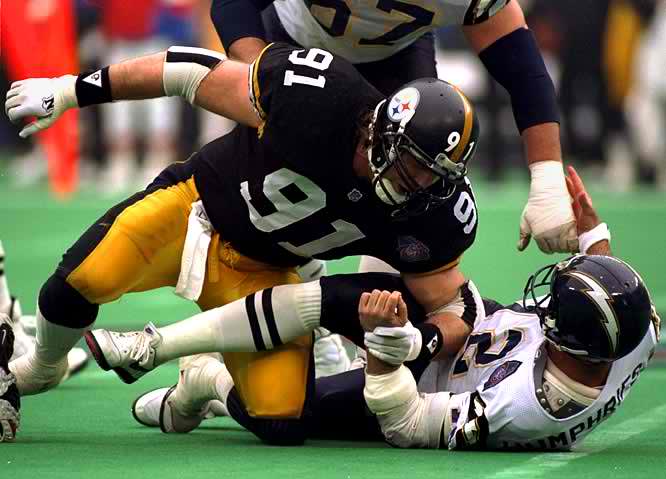
With the Seattle Seahawks back in the NFC Championship with a new iteration of a great defense that could land in Super Bowl LX, here is a blast from the past inspired by The Legion of Boom and where they stood in history. In this study every season’s #1 defense, record setting defenses, trend setting defenses, and every Super Bowl & NFL championship defenses dating back to 1960. The nod would lend to those post the AFL/NFL merger of 1970. That wasn’t enough as now lets take each defense and cover what they did vs Pro Bowl QBs that season, 1,000 yard rushers, and playoff teams and talk about their effectiveness along with their statistics. Here turnovers forced is a big marker. Nothing watered down so a favorite team can’t be given favor. So The Chancellor of Football took over 200 defenses and boiled it down to this 11 article series…

Smith's 69 yard interception in Super Bowl XLVIII ended the competitive phase of the game.

Smith’s 69 yard interception in Super Bowl XLVIII ended the competitive phase of the game and trumpeted the question: Where would you rank Seattle’s defense with  the all-time greats??

When Malcolm Smith crossed the goal line to put Seattle up 22-0 in last February’s Super Bowl, pundits were already arguing where they ranked among the NFL’s greatest defenses. Here at Taylor Blitz Times we wanted to let some time pass before we waxed too philosophical about their exploits. As the keeper of the flame, it’s up to The Chancellor of Football to accurately place each great defense. We will do this in 3 parts.

One of the criteria for greatest ever defenses you have to ask is: How dominant were they at their peak? They had to bring the lumber over an entire season. These defenses had to be stout with a performance that stands the test of time in remembrance. Without further adieu we have to get on with the Honorable Mention. Those right outside the top ten.

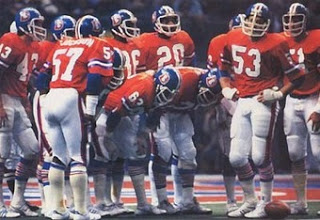
1977 Denver Broncos – The original Orange Crush defense that led the Broncos to Super Bowl XII and Denver’s first ever winning season. This was the first great full time 3-4 defense that yielded only 148 points (10.6 pts / game) and just 18 touchdowns for the season. Holding 7 of their opponents to 10 points or less.
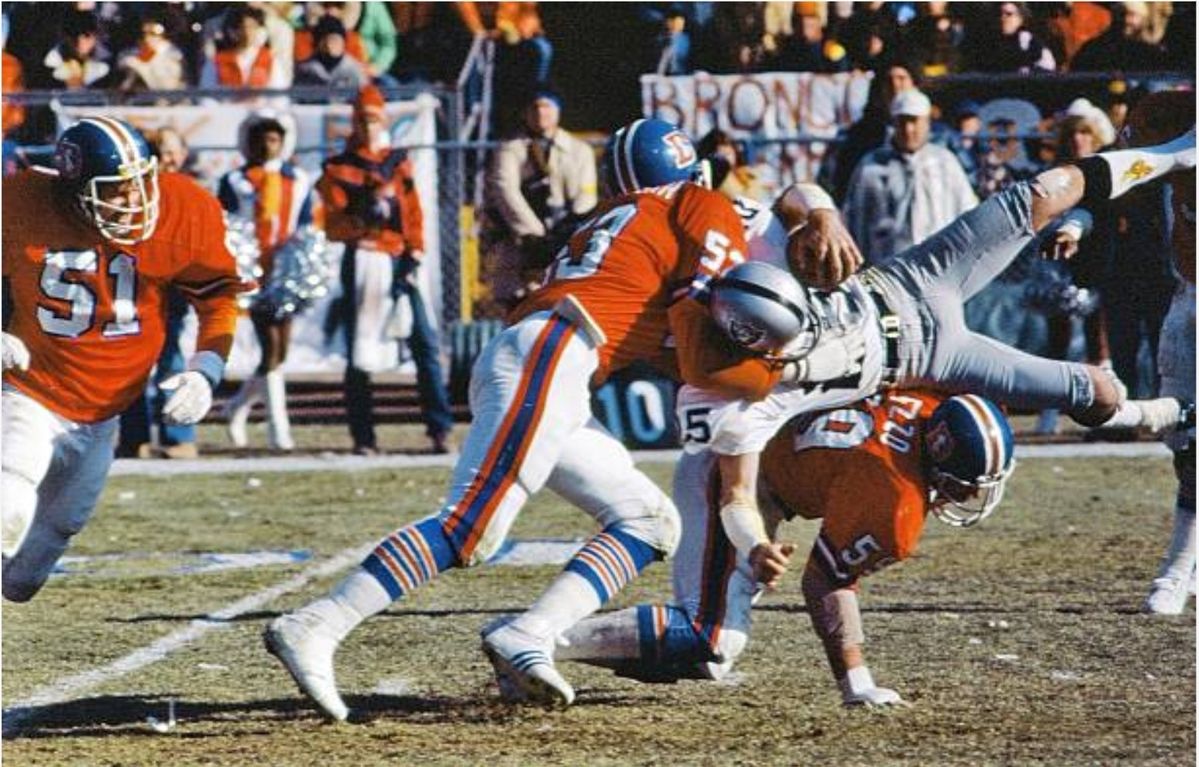
Led by Randy Gradishar, ESPN’s Tom Jackson, and the late Lyle Alzado this defense had an unheard of 4 All Pros concentrated on this defense and 5 Pro Bowlers. This not ready for primetime group came out of nowhere and swallowed the Steelers and Raiders in the playoffs before falling to Dallas in New Orleans in Super Bowl XII. This group swarmed like bees and ushered in the era where 3-4 defenses took over the NFL.

1978 Pittsburgh Steelers – In the first year in which the NFL moved to a 16 game schedule, this group set the new record with fewest points allowed in a season with 195. Powered by the Steel Curtain, they held 8 of 16 opponents to 10 or fewer points. This group did more blitzing than in years past to get to the quarterback. They did have 5 Pro Bowl defenders and 1 All Pro in Jack Ham, but there were stronger incarnations of the Steeler defense.

A fact that gets lost is going into Super Bowl XIII, the consensus was Pittsburgh force vs the finesse Cowboys. Yet it was Dallas whose defense was ranked #2 and Pittsburgh’s #3, For the season they yielded 260.5 yards per game, unofficially had 52 sacks and 27 interceptions which ranked 7th. They peaked in the playoffs holding both Denver and Houston to 10 points and 5 points respectively. Yet gave up some serious candy to the Dallas offense (320 yards & 31 points)

1968 Baltimore Colts – The team that is best known for coming up short in Super Bowl III against the AFL’s New York Jets. In The Chancellor of Football’s estimation, this was the best team that Don Shula ever coached and one of his defensive assistants was the late Chuck Noll. This defense held 10 of 14 regular season opponents to 10 or fewer points. At one point late in the season, they gave up 1 touchdown over 25 quarters including a string of 16 straight quarters w/out a touchdown allowed.
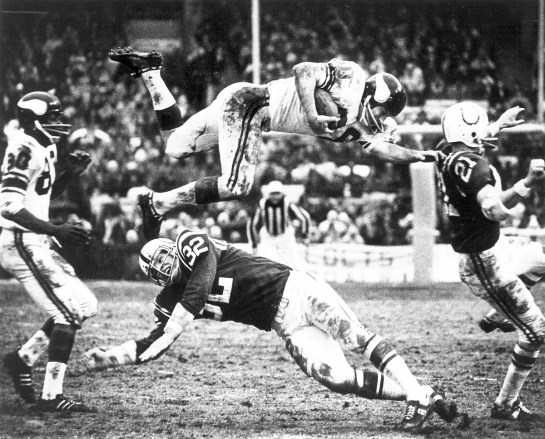
md-darkroom-hutchins-curtisThe Colts of ’68 shut out 3 regular season opponents and the fourth was against the Browns who gave the 13-1 team their only loss. That drubbing was avenged 34-0 in the NFL Championship Game. They even set the record with only 144 points allowed. Between 1967 & 1968 their record was 24-2-2. If only this team had won on January 12th 1969…..but….

2000 Tennessee TitansLost in the delirium over the great 2000 Ravens defense, is the fact they finished #2 to the Titans that year in rankings. Jeff Fisher’s bunch only allowed 238.9 yards per game and held 6 opponents to 10 points or less over the campaign.

Second year DE Jevon Kearse led the team with 11.5 sacks and 4 forced fumbles. Samari Rolle had 7 interceptions he returned for 140 yards and a touchdown. SS Blaine Bishop had 84 tackles to go with 2.5 sacks but 0 interceptions. All three were Pro Bowlers but only Samari was an All Pro Player. One issue is they didn’t force enough turnovers (29) and they finished just +1 in turnover ratio. These are poor marks considering they only saw 1 Pro Bowl quarterback the entire season. Yet they were #1 against the pass (151 yds /gm) and #3 against the run (86 yds /gm).

1987 San Francisco 49ersOne of the last teams to finish with the NFL’s #1 offense and defense happened with this group in 1987. They were gaining momentum allowing only 1 touchdown in the final 16 quarters of the season and none in the final 12 as the playoffs beckoned. They held 5 opponents to 10 or fewer points including two shutouts in their final three games. One of which was a 41-0 hammering of the NFC Central Champion Chicago Bears on Monday Night Football. 

Led by All Pro and Pro Bowler Ronnie Lott (5 ints) this group was #1 against the pass (165 yds /gm) while only yielding 273 yards for the game. What makes this more remarkable are 3 games were played with replacement players due to the strike. Had the season been 16 games instead of 15 and no strike, these numbers could have been even better. They were also #5 against the run (107.4 yds / gm) thanks to All Pro and Pro Bowl Nose Tackle Michael Carter.
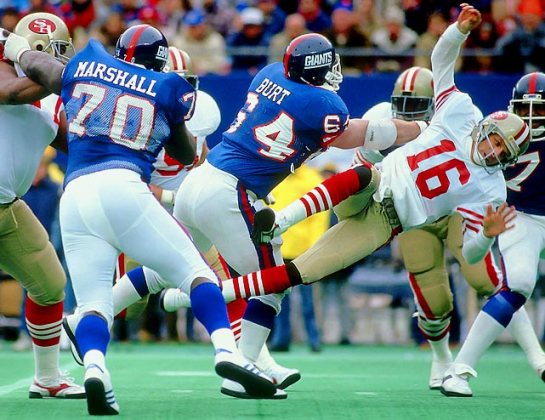
Jim Burt knocking Joe Montana out with a concussion in their 49-3 rout in the '86 playoffs.

Jim Burt knocking Joe Montana out with a concussion in their 49-3 rout in the ’86 playoffs.

1986 New York Giants – A romanticized defense that knocked 5 quarterbacks out on their way to the Super Bowl XXI championship. Yet they were #2 in 1986 and allowed 39 more yards per game than the #1 Chicago Bears with 297.3 yards per game. Second biggest discrepancy between #1 and #2 since 1970.

Led by League MVP and Defensive Player of the Year Lawrence Taylor’s 20 sacks, New York held 5 teams to 10 points or fewer during the regular season. They held their 2 NFC playoff opponents to 3 & 0 points respectively. There were 4 Pro Bowl defenders on this defense in LB Harry Carson, NT Jim Burt, DE Leonard Marshall, and the aforementioned LT.

2008 Pittsburgh Steelers – Close but no cigar. This team finished with the #1 ranking allowing just 237.2 yards per game. They held 8 opponents to 10 or fewer points yet gave up 223 for the season. One mark against them is they only faced 2 Pro Bowl QBs and lost both games. Losing 24-20 to Peyton’s Colts and 21-14 against Eli’s Giants. This was also the year they beat the Patriots 33-10 with Matt Cassel at QB not an injured Tom Brady. Big difference. This group had 51 sacks but only 20 interceptions. The last time we saw them, Kurt Warner passed for 377 yards, 2nd highest in Super Bowl history, and needed Big Ben to bail them out with a game winning pass with :32 left.

This group did have NFL Defensive Player of the Year James Harrison and Pro Bowl SS Troy Palamalu who would win the award 2 years later. Harrison had 16 sacks with 7 forced fumbles. James Farrior (122 tackles) was the 3rd and final Pro Bowler on a talented roster which included LaMarr Woodley (11 sacks).  They were a world champion but this group didn’t perform high enough against the best competition. The top ten is a Sugar Ray Leonard’s list, the honorable mention is where Thomas Hearns resides.
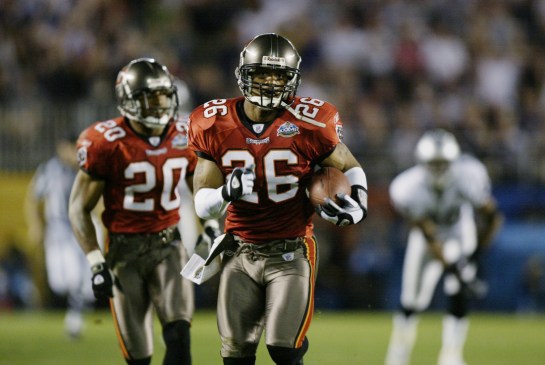
Dwight Smith capped off Super Bowl XXXVII with 2 defensive touchdowns. Should have been the MVP.

Dwight Smith capped off Super Bowl XXXVII with 2 defensive touchdowns. Should have been the MVP.

2002 Tampa Bay Buccaneers – The final team to miss the call to the top ten was the 2002 Buccaneers. The undisputed #1 defense that year. However playing in the new NFC South they feasted on patsies. On 3 occasions they took on top 10 offenses and they lost two of those games to Philadelphia (10th) and Pittsburgh (5th).

This team yielded 252.8 yards per game had 43 sacks and 31 interceptions which ranked 6th and 1st respectively. This team only gave up 196 points while holding 9 regular season opponents to 10 or fewer points. However a closer look reveals they came against offenses ranked 26th, 18th, 14th, 23rd, 31st, 31st, 12th, 14th, and 29th. Chris Redman (who??) quarterbacked the Ravens who was the first in this group. While NFL journeyman Jim Miller led the Bears in the last game.

This team fielded 5 Pro Bowl players in NFL Defensive Player of the Year Derrick Brooks, Shelton Quarles, Hall of Famer Warren Sapp, Simeon Rice (15.5 sacks), and S John Lynch. This group scored on defense. Brooks tied the NFL record with 4 defensive touchdowns and CB Dwight Smith set a Super Bowl record with 2 interception returns for touchdowns. Their numbers and performance should get them in until you look at the competition. Someone reading this is going to describe how they throttled the #1 Raider offense in the Super Bowl. Yet how much do you attribute to Monte Kiffin’s defense or Jon Gruden knowing his former Raider offense and personnel??

Thanks for reading and now its time for the top 10.

Prime Pass Rushers Tilt The Field

I forgot where we were having the conversation but I remember explaining to a football fan that nothing changes a team’s fortunes faster than a prime pass rusher. Not only does it improve your defense against the pass but it masks defensive deficiencies in the secondary. Its one of the reasons Taylor Blitz has Green Bay on its way to at least the NFC Championship Game this year with the acquisition of Micah Parsons.

This has been a lesson passed down from days gone by from two defensive terrorists The Chancellor has met that rushed the passer. Fred Dean & Cedrick Hardman. This especially holds true when a pass rusher in his prime is all of a sudden dropped on to a new team in a new division and I needed to elaborate further.

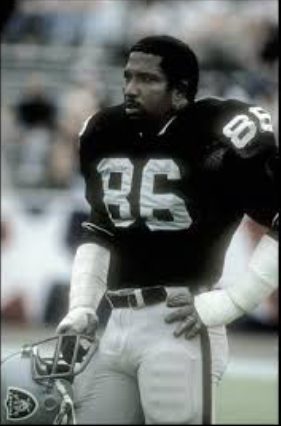
In 5th grade (1980) i remember the Raiders signing veteran Cedrick Hardman to rush the passer #86. He got 9.5 sacks as a designated pass rusher that helped Lester Hayes lead the NFL with 13 interceptions & they won Super Bowl XV.

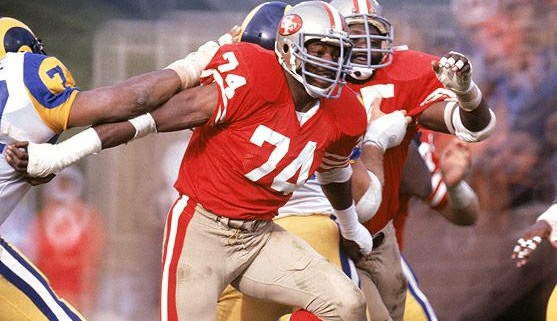
The next year the idiotic move was San Diego sending a prime Fred Dean to San Francisco and they came out of nowhere to win Super Bowl XVI. It was Hardman, Dean and Lawrence Taylor that taught me the effects of great pass rushers.
To further the notion, the 1980 Chargers with Fred Dean was 6th in total defense & led the league with 60 sacks. Without Dean they gave up 1,500 more yards (4,691 to 6,136 yards allowed) and fell to a ranking of 27th and history misremembers them as Air Coryell & a terrible defense. They had finished 5th in ’79 & 6th in ’80 with Dean on the roster.
Other notables:
  • DE Charles Haley in ’92 – Cowboys were 16th in defense and rose to #1 and won Super Bowl XXVII
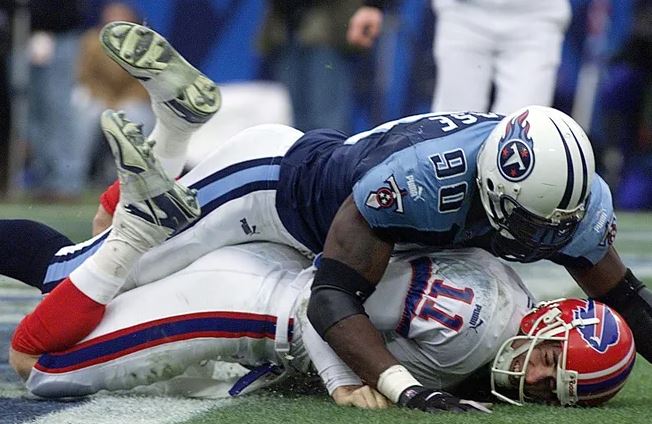
  • DE Jevon Kearse in ’99 – Titans had 30 sacks in ’98, they had 54 as Kearse’s Titans made Super Bowl XXXIV
  • OLB Von Miller in ’21 – Added to the #1 defense from ’20 & had 2 sacks in Super Bowl LVI in Los Angeles.
  • OLB Haason Reddick in ’22 – Improved from 10th to 3rd in defense & 39 sacks to 770 sacks. Went to Super Bowl LVII.

In Kearse’s case he set the NFL Rookie Record with 13.5 sacks and the Titans became one of the league’s most physical defenses. Reddick was Taylor Blitz Times Defensive Player of the Year with 16.5 sacks and spearheaded one of the NFL’s historic sack totals. We hadn’t seen a sack total like that since the ’89 Vikings with 71 sacks, just 1 off the league record of 72 by Chicago. Both the Bears & Vikings were #1 defensively and the Eagles would have been had they not been in so many blowout victories.
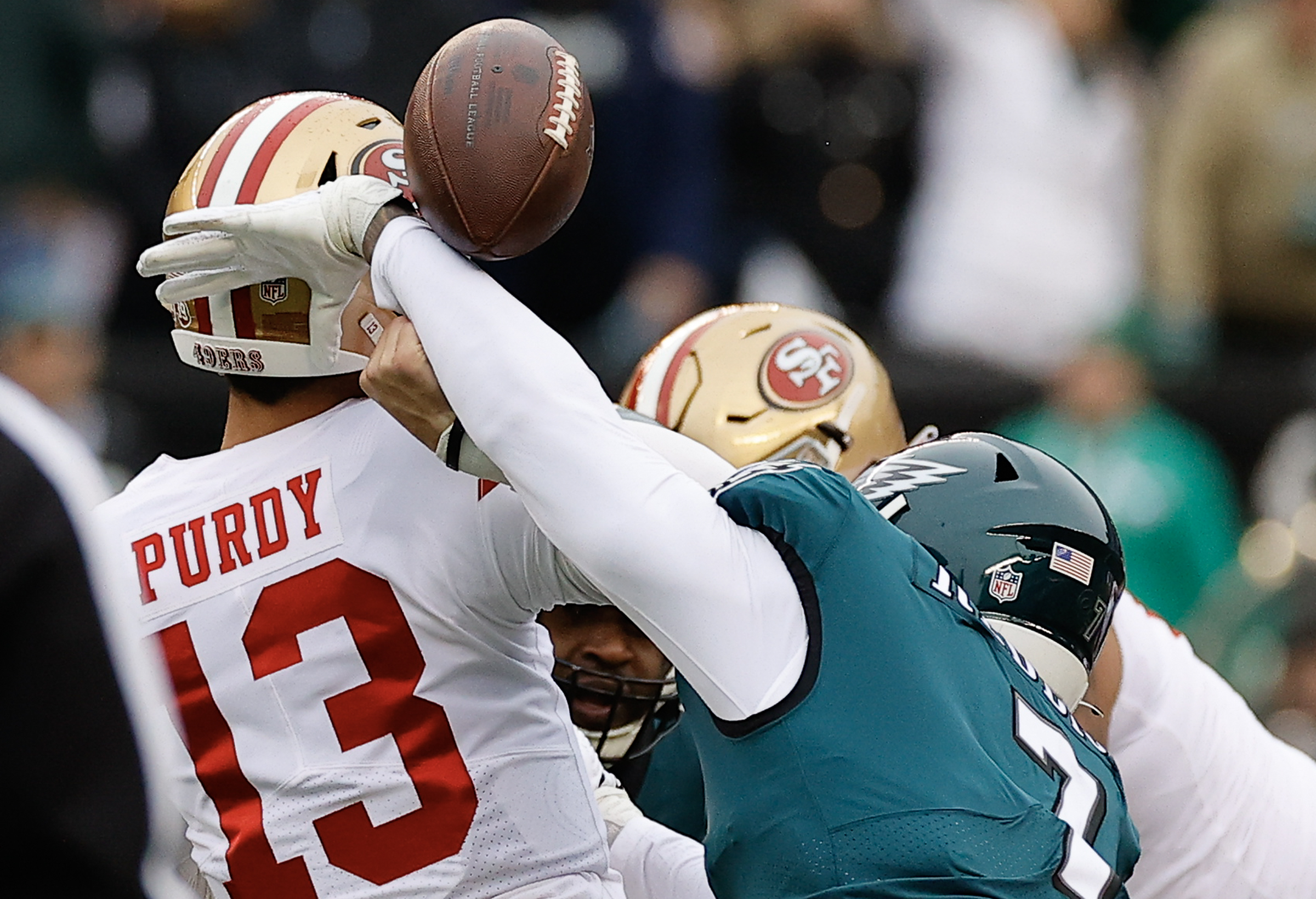
Eagles linebacker Haason Reddick forces a first quarter fumble on San Francisco 49ers quarterback Brock Purdy at Lincoln Financial Field on Sunday, January 29, 2023 in Philadelphia.

The NFL world is still buzzing with the idiotic trade of Dallas prime pass rusher Micah Parsons to the Green Bay Packers. Moves like this completely tilt the field when a defense receives a weapon to bolster its lineup. Especially in this division. We all know of the seismic shift that took place when Green Bay signed the late Reggie White back in 1993, but remember the Bears bringing in PFHOF Julius Peppers to the division in 2010?

Chicago went from 17th in defense in 2009 to 4th and made it to the NFC Championship Game where they hosted Green Bay. Peppers was an All Pro for the 6th time in his career & 4th in NFL DPOY voting.

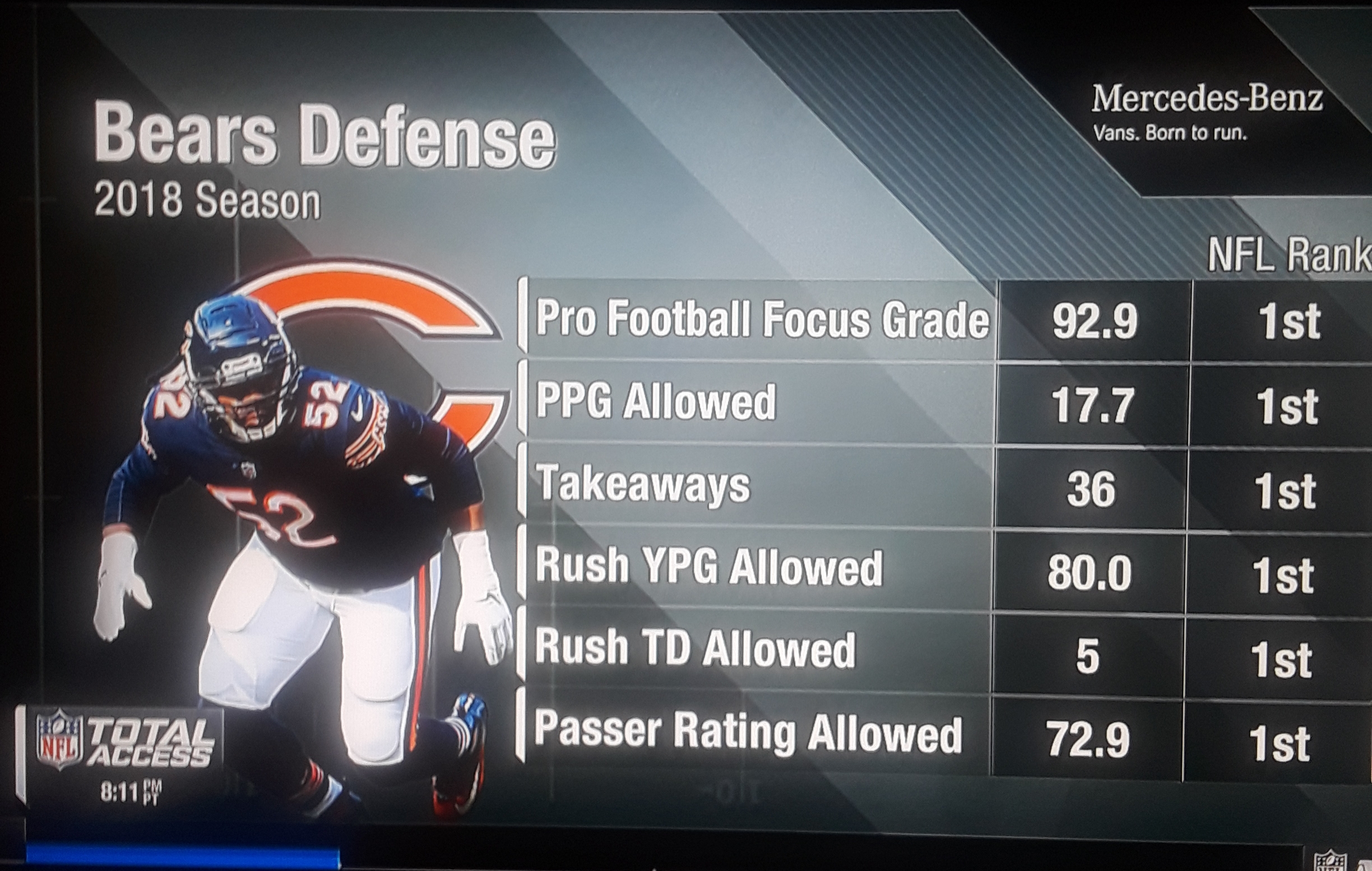
They did it again trading for future PFHoF Khalil Mack in 2018 leaping from 10th in defense to 3rd. They had been #1 for most of the season and Mack made his 5th straight Pro Bowl, 3rd All Pro selection, came in 2nd in voting for NFL DPOY (he won it in 2015) and led the Bears to a 12-4 record and first round bye. Mack was Taylor Blitz Defensive Player of the Year a 2nd time and The Chancellor predicted the carnage he would lay in Green Bay that first game on Monday Night. Why??

Well it was the 2nd coming of what happened when the San Francisco 49ers made the surprise move to pick up PFHoF DE Fred Dean at the start of 1981. Rivals within the division were unable to prepare for this terrorist to be dropped in their lap. They were unable to prepare via the draft or free agent personnel and here comes 4 time All Pro Micah Parsons. They were already the NFL’s 5th best defense in 2024. Yikes!

You could even bring up  PFHoF DeMarcus Ware when he joined Von Miller in Denver to win Super Bowl 50. Yet that was in his 2nd season in Denver and not the surprise element of tilting the field in the 1st.  Same can be said of fellow PFHoF DE Jared Allen. In his 2nd season in Minnesota (2009) he was among the league leaders in sacks (14.5) and led his Vikings to the NFC Championship Game featured here in a “Missing Rings” article.

Same can be said of the late Kevin Greene who tilted the field 3 times aiding 3 teams to either the conference championship or Super Bowl in 4 straight seasons. He led the league in sacks (14) in ’94 leading the Steelers to the AFC Championship then Super Bowl XXX the following season. He then joins the Carolina Panthers in ’96 leading the NFL in sacks again (14.5) and was the impetus in making the NFC Championship Game in their 2nd season of existence. He follows that up going to San Francisco as a designated pass rusher and accumulates another 10.5 sacks as they make the ’97 NFC Championship Game.
Fred Dean, Kevin Greene, Charles Haley, Julius Peppers, Jared Allen, and DeMarcus Ware are all enshrined in Canton. Von Miller will be there one day and with a few more All Pro selections Micah will be there as well. Just understand more than any other position, a prime pass rusher whether from a Defensive End or Outside Linebacker dramatically increases a team’s success more than any other position.
Starting in that 1981 season when I learned the lesson of the importance of the weak side pass rusher. All of a sudden drafting the Left Tackle became a focal point of the offense and many teams lead rebuilds around selecting one in the 1st round. It’s also when you started to see Left Tackle salaries soar. Do you realize in 2025, 23 of the NFL’s 32 teams have their LT in their top 5 highest paid players? If stopping prime pass rushers carries this type of weight what value do the pass rushers have themselves?
Nothing tilts the field for a team’s immediate fortunes like landing a prime pass rusher. Nothing… franchise QBs or all time great running backs don’t get dealt at their zenith.
Again the lessons learned have brought me as a defensive afecionado to writing about these exploits and spreading this with fellow fans. For me it started with Cedrick Hardman & Fred Dean, both of whom I had the chance to meet.
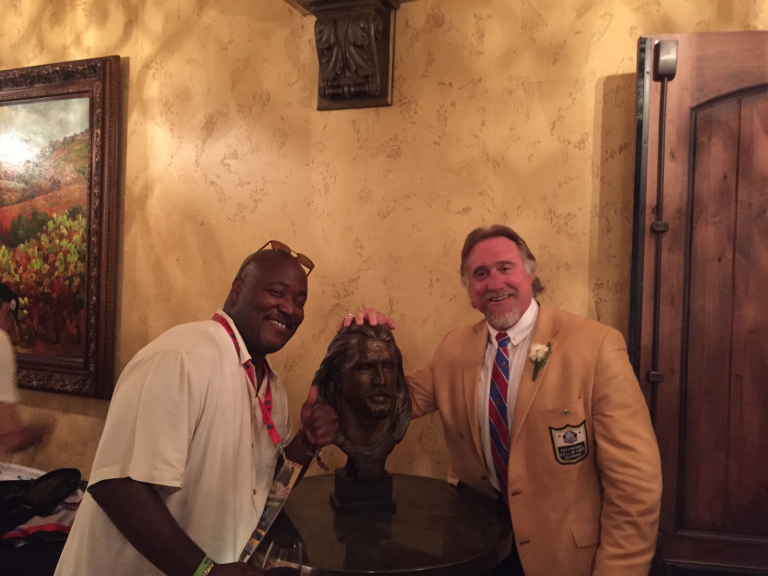
With Cedrick I used to run into him at The White House in Laguna Beach California early 2000s Talked football over many drinks. Same with Fred at the PFHoF hotel in Canton. We’re having a drink at the bar in Canton and I explained the both of them teaching me the lesson of pass rush terrorists and Dean said “Your ass is too young to remember all this zhit” I hit him back… “You know that’s the same muthaphukkin’ thing Cedrick’s ass said.” Great times ….great laughs. I had waited 37 years to shake Dean’s hand and thank him for that lesson.
Thanks for reading and please share the article. Like and subscribe!!

SUPER BOWL XXXIV RUNNER UP 1999 TENNESSEE TITANS

The Jacksonville Jaguars were well on their way to achieving a Super Bowl as a part of their 5 yr plan from expansion. An upset win over Denver in the 96 playoffs was the launching pad and after a few roster improvements were ready to do it in 1999!! They were loaded and would steamroll…*huh?*…I’m supposed to be talkin’ about who?*…alright tell Eddie George I’ll call him back…*ahem*

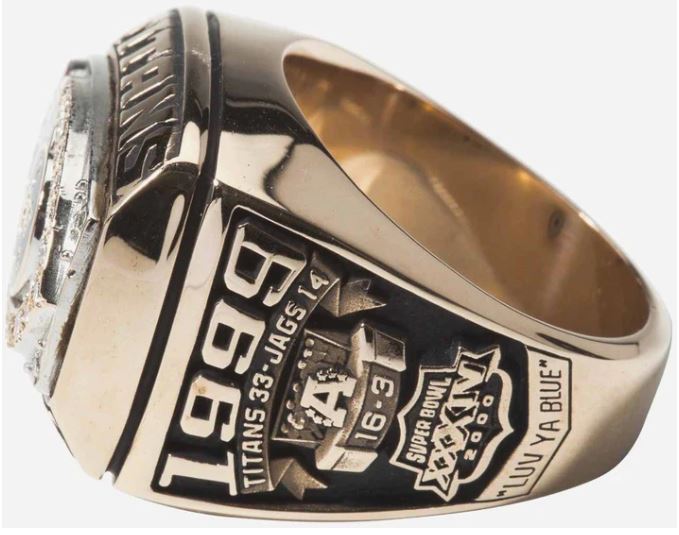
titans_championship_afc_ringWell everything was going according to plan when they traveled north to play their rivals Tennessee Titans with a lot on the line in a week 15 match-up. With the chance to gain homefield advantage, cement that they were the dominant team in the AFC Central (South not created yet), and with only 169 points given up were within striking distance of  the NFL record of 187 points given up by the ’86 Bears.

Man what an asswhoopin’!! The Tennessee Titans lit into them like the Jaguars had stole something from their mother’s house. A 41-14 destruction that ruined the psyche of the Jacksonville franchise while sending a clear message that Tennesse would be a force themselves come playoff time, but surely they wouldn’t see them again…would they??

Oh the agony when I see this ring being a Buffalo fan…sigh   The Music City Miracle was a damn forward lateral…yet I digress. **deep breaths** ahem… where was I?

Ahh yes the 1999 AFC Champion Tennessee Titans.  This team totally derailed the Jacksonville Jaguar franchise.

Although they finished with a 13-3 record, they were the wildcard behind the AFC Central champion Jaguars at 14-2. The two best records ever for two teams in the same division which came with a unique twist: Although the Jaguars lost only 2 games all year, they were both to Tennessee. The Titans finally had a home they could call their own after 3 yrs of wandering the desert once they left the Houston Astrodome in moving to Nashville.

The Titans were powered on offense by Eddie George from Ohio St. who bludgeoned defenders with his running style for over 1,300 yards.  Hall of Famer Bruce Matthews & John Runyan were leaders on a very physical line.  The late Steve McNair was a developing quarterback who had his struggles in 1999 but was a legitimate running threat himself. In that 41-14 thrashing he threw for 5 of his 12 TDs for the season. He had a short to intermediate passing game that complimented their running game.
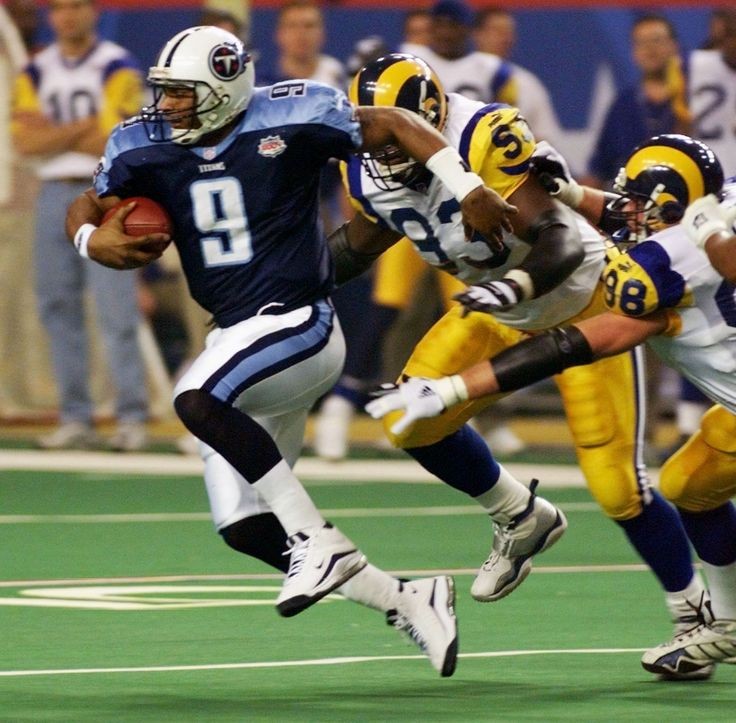
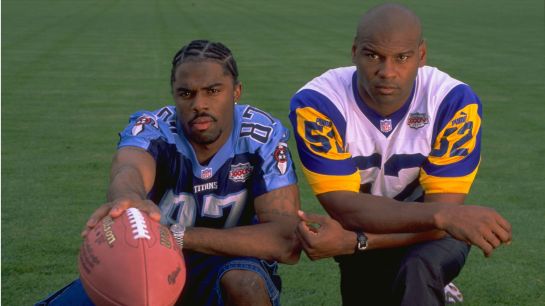
However the story of this team was defense. Led by Blaine Bishop at SS, Barron Wortham LB, Marcus Robertson FS, and who could forget the rookie season of Jevon “The Freak” Kearse DE, who set the league record for sacks as a rookie with 13 1/2.  This team came off the ball with a physicality the AFC hadn’t seen since the Pittsburgh Steelers earlier in the 90s.

Going into the ’99 playoffs there was a changing of the guard.  Gone were the two time champion Broncos and with the upstart Colts in the playoffs there was an air of parity on the AFC side of the ledger. The Titans first step was the wildcard tilt over Buffalo at home. Behind with :22 left and the Bills having just pulled ahead 16-15…*I can get thru this*…. and then the kickoff

34logoIt was a miracle finish of epic proportions and the energy and momentum sent the Titans hurtling through the heavens where they took down the favored Colts in Indianapolis the following week.  Which earned the Titans an all expenses paid trip to Jacksonville for the AFC Championship Game. Even though they ran over Miami 62-7 in the playoffs, they were still fearful of Tennessee.

No way the Titans could come in and outhit them again.  Well by virtue of a 30-14 thrashing.  The Titans owned the Jaguars who were never the same after that ’99 Championship.

Now we know they go on to play a competitive Super Bowl against the Rams and came up one yard short but don’t forget that injuries are a part of the game.  The Titans lost FS Marcus Robertson to injury in the AFC Championship Game after a 1st half interception, and Blaine Bishop SS fell to an injury in the 3rd quarter of the Super Bowl.  Why am I bringing this up??  Kurt Warner’s 73yd touchdown to Isaac Bruce to pull ahead of the Titans 23-16 was his ONLY completion of the 4th quarter, and it was thrown on TWO backup safeties in Perry Phoenix and Anthony Dorsett.

McNair, in a display of immense heart, willed the Titans downfield on a last second drive to bring Super Bowl XXXIV to a crescendo. On the last play with :07 left from the 10, McNair hit Kevin Dyson hoping for another miracle finish. This time Ram Linebacker Mike Jones brought down an outstretched Dyson at the 1 as time ran out.
So did they come up a yard short or a few injuries short??

dyson-jones-012819-sn-ftrjpg_1egrhgfwlnzfu1x891fcq107kz

This is the jewel for their fine season….and it WAS a forward lateral….*sigh*

This article is dedicated to the memories of Steve McNair and owner Bud Adams.

Missing Rings – 2004 Philadelphia Eagles

When you look back at seasons past, many of the NFL champions had a feeling of inevitability to them. You can remember the greatest of champions putting their stamp on the season as they started to separate from other contenders. The inadequacies that kept them from winning it all before, had seemingly been swept away.

Yet when that team runs into a brick wall on the way to what was supposed to be their championship. It becomes the expiration date on their being a legitimate  contender and you’re left with…what if??? Enter the 2004 Philadelphia Eagles.

Head Coach Andy Reid was hired in ’99 from the Green Bay Packers and the Mike Holmgren coaching tree. As Quarterback Coach he oversaw Brett Favre as he accumulated 3 straight NFL MVP trophies, 2 Super Bowl visits, and 1 championship in their final 3 seasons together. By drafting McNabb in year 1 for Reid to develop, the future looked bright.

As the 2000’s began, your Philadelphia Eagles were developing a young Donovan McNabb at quarterback. He was the shining member of the quarterback class of 1999, and he had become a dynamic play maker in Head Coach Andy Reid’s “West Coast Offense”.  Although he was developing as a passer, he would take off on serpentine runs when plays broke down. They ran the ball by committee at RB and relied on a gambling blitzing defense run by the late Jim Johnson.

McNabb eludes Michael Strahan in the 2000 divisional playoff.

McNabb eludes Michael Strahan in the 2000 divisional playoff.

Philadelphia became a wildcard entrant in 2000, where they gained confidence with a 21-3 hammering of the Tampa Bay Buccaneers.  The following week they lost a 20-10 slugfest in the divisional round v the Giants. New York went on to play in Super Bowl XXXV and did so based on 3 wins over Philly. So the die was cast, a little improvement and the Eagles could play in the Super Bowl.

No one knew beginning with the 2001 NFC Championship a new odyssey would begin. Three consecutive losses in the championship game left the Eagles and the city of Philadelphia mired in despair. They lost a tough game in ’01 to The Greatest Show on Turf St Louis Rams 29-24, although they were underdogs on the road.  This was nothing compared to what happened next.

The 2002 NFC Championship had the Eagles hosting in the last game ever in Veterans Stadium.  A title starved city was raucous in anticipation as the Buccaneers were making the trip to The City of Brotherly Love for a 3rd consecutive postseason. The ’00 Wildcard win established the Eagles as the up and coming team in the NFC and not the Bucs. The ’01 Wildcard solidified the notion and Tampa fired Head Coach Tony Dungy.

Ronde Barber sails 95 yards with the game clinching touchdown.

Ronde Barber sails 95 yards with the game clinching touchdown.

The Eagles were planning an NFC Championship coronation with an outdoor trophy presentation. The field was surrounded by police mounted on horseback. One small problem…the Bucs won the game 27-10 thanks to new Coach Jon Gruden’s offense.  Tampa was motivated by those previous playoff losses. They went on to win Super Bowl XXXVII 48-21 over Oakland.

After another NFC Championship flame-out against Carolina in ’03, and it appeared the Eagles had let their championship window close.

Speculation rained down over the organization. Had the Eagles put enough offensive talent around McNabb to become a champion?? Rush Limbaugh was fired by ESPN over comments “the NFL was desirous of a black quarterback doing well.”  Donovan McNabb had thrown for 1 TD & 5 interceptions in the 3 NFC Title losses. Was McNabb given a pass for his poor performances?? Everyone had an opinion…until

Jevon Kearse was one of the league's best quarterback trackers.

Jevon Kearse was one of the league’s best quarterback trackers.

The front office struck a blow in Free agency when they signed DE Jevon Kearse then traded for WR Terrell Owens. These were the two big fish available in the 2004 off-season and Philly nabbed them both. Gone was the attitude the Eagles didn’t need to sign blue chip talent to make it to the Super Bowl. It was all or nothing for 2004.

A perennial top 10 defense returned to form after sliding to 20th in the 2003 season. With Kearse (7.5 sacks) the Eagles returned to form as they garnered 45 sacks and 17 ints in 2014. Up from 35 sacks and 13 picks the season before. Defensive Coordinator Jim Johnson didn’t blitz as often with a dominant presence like Kearse in the lineup.

McNabb, now with the league’s best receiver in T.O., had the best season of his career. In his previous 3 complete seasons he averaged 57% completion rate, 3,272 yards, 22 TDs and 11 interceptions. In ’04 he completed 64% of his passes for 3,758 yards, 31 touchdowns to just 8 picks. He set several club records and Owens was on his way to when he suffered a fractured ankle in week 15 after a dirty horse collar tackle by Roy Williams in a 12-7 win over Dallas.

Before that Owens, and his endzone antics, had shredded the league with 77 receptions for 1,200 yards and 14 scores. He had made a pact with Coach Reid to score 15 TDs and if he did so Reid would have to don a pair of tights. Damn he came close but the real story became what would the 13-3 Eagles do in the upcoming playoffs without their #1 playmaker??

They would have to rely on the receivers from previous years who weren’t thought of as making enough plays to get the Eagles over the top.  Freddie Mitchell, Todd Pinkston, and Greg Lewis. It was Mitchell who scored twice in the 24-14 NFC Divisional playoff win over the Minnesota Vikings. Running back Brian Westbrook (1,515 yards from scrimmage) would be relied upon heavily. Although there was speculation T.O. might make it back if the team made it to the Super Bowl. To do so they would have to make it past their albatross… the NFC Championship Game.

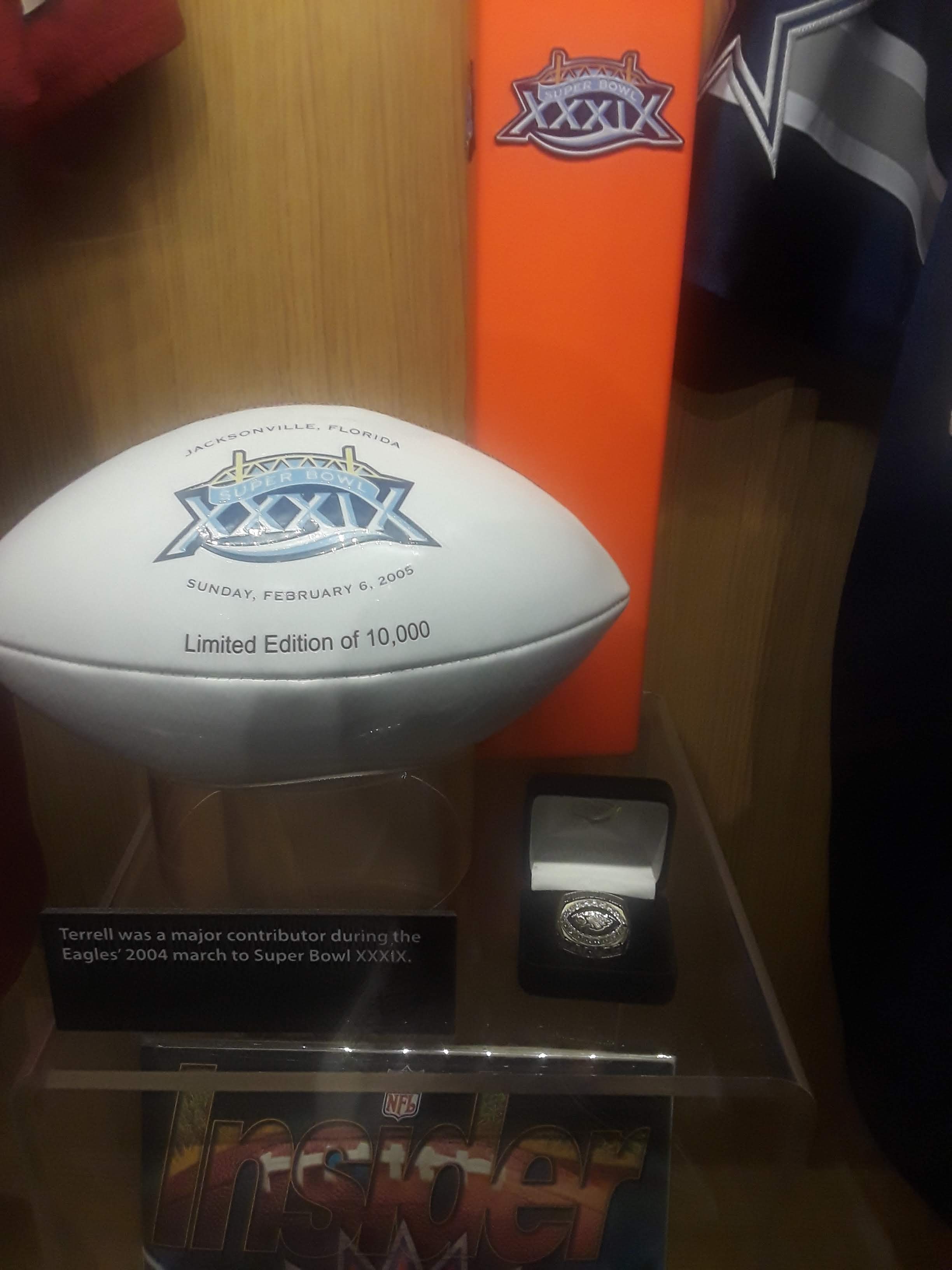
Leading up to Super Bowl XXXIX, the lead story had been would Terrell Owens play in the title games. With several surgical screws in his ankle, and after signing an injury waiver, he was available on center stage.

The Eagles 24-21 loss was a valiant effort. Just 6 weeks after fracturing his ankle, Terrell Owens 9 rec for 122 yards was a sight to behold. They were beaten by the defending champion New England Patriots who were just a step better. McNabb had thrown for over 300 yards but had 3 costly interceptions that were the difference in a close, close Super Bowl. The Eagles were primed to make it back to the big dance in ’05.

McNabb to Owens made the 2004 Eagles.

However the expiration date had come and gone on the Eagles as a personality conflict between T.O. and Donovan McNabb tore at the fabric of the team. Owens would eventually be released for conduct detrimental to the team. After a 3-1 start, the ’05 Eagles fell to a 6-10 record which included a 42-0 road loss to the eventual NFC Champion Seahawks. . The run was over.

Andy Reid coached on through the 2012 campaign with several playoff seasons but none where the Eagles were considered elite. McNabb played on through 2009 before leaving for Washington. He was replaced by Michael Vick, the quarterback he beat for the 2004 NFC Championship.

Donovan McNabb, Terrell Owens and their … “irreconcilable differences” derailed a promising team and the City of Brotherly Love had to wait another 13 years before capturing a title.

Did Donovan McNabb lose his chance at the Pro Football Hall of Fame because of this rift??  Something to ponder…

Thanks for reading and please share the article.

chancellor.reid

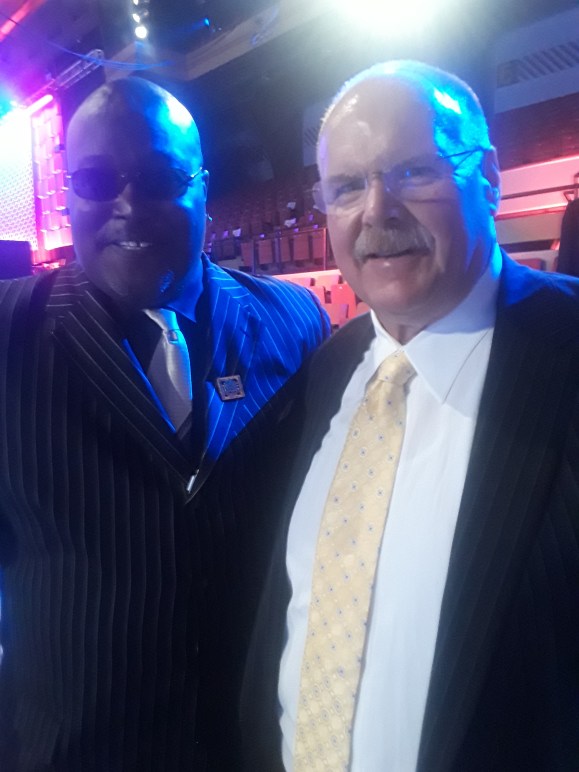
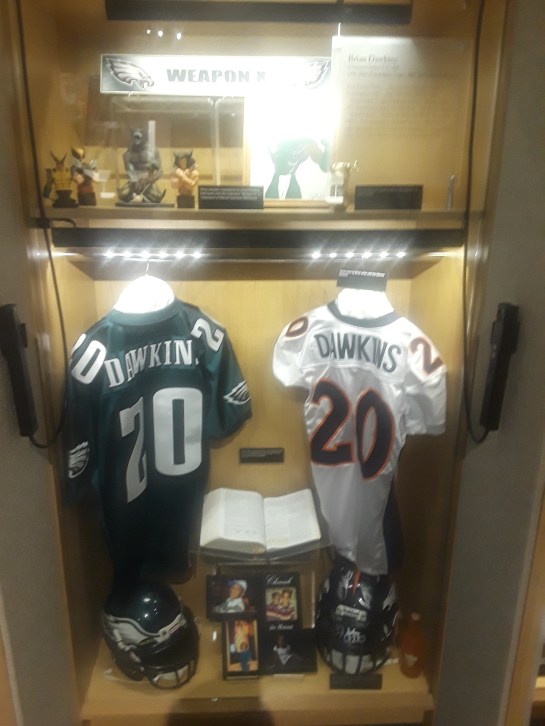
Met Reid at the Gold Jacket Dinner in Canton 2018. Eagles Safety Brian Dawkins had received his Gold Jacket earlier.


Top Ten Single Season Defenses in NFL History: Honorable Mention

When Malcolm Smith crossed the goal line to put Seattle up 22-0 in last February’s Super Bowl, pundits were already arguing where they ranked among the NFL’s greatest defenses. Here at Taylor Blitz Times we wanted to let some time pass before we waxed too philosophical about their exploits. As the keeper of the flame, it’s up to The Chancellor of Football to accurately place each great defense. We will do this in 3 parts.

Smith's 69 yard interception in Super Bowl XLVIII ended the competitive phase of the game.

Smith’s 69 yard interception in Super Bowl XLVIII ended the competitive phase of the game and trumpeted the question: Where would you rank Seattle’s defense with  the all-time greats??

One of the criteria for greatest ever defenses you have to ask is: How dominant were they at their peak? They had to bring the lumber over an entire season. These defenses had to be stout with a performance that stands the test of time in remembrance. Without further adieu we have to get on with the Honorable Mention. Those right outside the top ten.

1977 Denver Broncos – The original Orange Crush defense that led the Broncos to Super Bowl XII and Denver’s first ever winning season. This was the first great full time 3-4 defense that yielded only 148 points (10.6 pts / game) and just 18 touchdowns for the season. Holding 7 of their opponents to 10 points or less.

Even with an offense that turned it over 8 times, the still held Dallas to 27 points in Super Bowl XII.

Even with an offense that turned it over 8 times, the still held Dallas to 27 points in Super Bowl XII.

Led by Randy Gradishar, ESPN’s Tom Jackson, and the late Lyle Alzado this defense had an unheard of 4 All Pros concentrated on this defense and 5 Pro Bowlers. This not ready for primetime group came out of nowhere and swallowed the Steelers and Raiders in the playoffs before falling to Dallas in New Orleans in Super Bowl XII. This group swarmed like bees and ushered in the era where 3-4 defenses took over the NFL.

1978 Pittsburgh Steelers – In the first year in which the NFL moved to a 16 game schedule, this group set the new record with fewest points allowed in a season with 195. Powered by the Steel Curtain, they held 8 of 16 opponents to 10 or fewer points. This group did more blitzing than in years past to get to the quarterback. They did have 5 Pro Bowl defenders and 1 All Pro in Jack Ham, but there were stronger incarnations of the Steeler defense.

A fact that gets lost is going into Super Bowl XIII, the consensus was Pittsburgh force vs the finesse Cowboys. Yet it was Dallas whose defense was ranked #2 and Pittsburgh’s #3, For the season they yielded 260.5 yards per game, unofficially had 52 sacks and 27 interceptions which ranked 7th. They peaked in the playoffs holding both Denver and Houston to 10 points and 5 points respectively. Yet gave up some serious candy to the Dallas offense (320 yards & 31 points)

1968 Baltimore Colts – The team that is best known for coming up short in Super Bowl III against the AFL’s New York Jets. In The Chancellor of Football’s estimation, this was the best team that Don Shula ever coached and one of his defensive assistants was the late Chuck Noll. This defense held 10 of 14 regular season opponents to 10 or fewer points. At one point late in the season, they gave up 1 touchdown over 25 quarters including a string of 16 straight quarters w/out a touchdown allowed.

md-darkroom-hutchins-curtisThe Colts of ’68 shut out 3 regular season opponents and the fourth was against the Browns who gave the 13-1 team their only loss. That drubbing was avenged 34-0 in the NFL Championship Game. They even set the record with only 144 points allowed. Between 1967 & 1968 their record was 24-2-2. If only this team had won on January 12th 1969…..but….

2000 Tennessee Titans – Lost in the delirium over the great 2000 Ravens defense, is the fact they finished #2 to the Titans that year in rankings. Jeff Fisher’s bunch only allowed 238.9 yards per game and held 6 opponents to 10 points or less over the campaign.

Second year DE Jevon Kearse led the team with 11.5 sacks and 4 forced fumbles. Samri Rolle had 7 interceptions he returned for 140 yards and a touchdown. SS Blaine Bishop had 84 tackles to go with 2.5 sacks but 0 interceptions. All three were Pro Bowlers but only Samari was an All Pro Player. One issue is they didn’t force enough turnovers (29) and they finished just +1 in turnover ratio. These are poor marks considering they only saw 1 Pro Bowl quarterback the entire season. Yet they were #1 against the pass (151 yds /gm) and #3 against the run (86 yds /gm).

1987 San Francisco 49ers – One of the last teams to finish with the NFL’s #1 offense and defense happened with this group in 1987. They were gaining momentum allowing only 1 touchdown in the final 16 quarters of the season and none in the final 12 as the playoffs beckoned. They held 5 opponents to 10 or fewer points including two shutouts in their final three games. One of which was a 41-0 hammering of the NFC Central Champion Chicago Bears on Monday Night Football. 

Led by All Pro and Pro Bowler Ronnie Lott (5 ints) this group was #1 against the pass (165 yds /gm) while only yielding 273 yards for the game. What makes this more remarkable are 3 games were played with replacement players due to the strike. Had the season been 16 games instead of 15 and no strike, these numbers could have been even better. They were also #5 against the run (107.4 yds / gm) thanks to All Pro and Pro Bowl Nose Tackle Michael Carter.

Jim Burt knocking Joe Montana out with a concussion in their 49-3 rout in the '86 playoffs.

Jim Burt knocking Joe Montana out with a concussion in their 49-3 rout in the ’86 playoffs.

1986 New York Giants – A romanticized defense that knocked 5 quarterbacks out on their way to the Super Bowl XXI championship. Yet they were #2 in 1986 and allowed 39 more yards per game than the #1 Chicago Bears with 297.3 yards per game. Second biggest discrepancy between #1 and #2 since 1970.

Led by League MVP and Defensive Player of the Year Lawrence Taylor’s 20 sacks, New York held 5 teams to 10 points or fewer during the regular season. They held their 2 NFC playoff opponents to 3 & 0 points respectively. There were 4 Pro Bowl defenders on this defense in LB Harry Carson, NT Jim Burt, DE Leonard Marshall, and the aforementioned LT.

2008 Pittsburgh Steelers – Close but no cigar. This team finished with the #1 ranking allowing just 237.2 yards per game. They held 8 opponents to 10 or fewer points yet gave up 223 for the season. One mark against them is they only faced 2 Pro Bowl QBs and lost both games. Losing 24-20 to Peyton’s Colts and 21-14 against Eli’s Giants. This was also the year they beat the Patriots 33-10 with Matt Cassel at QB not an injured Tom Brady. Big difference. This group had 51 sacks but only 20 interceptions. The last time we saw them, Kurt Warner passed for 377 yards, 2nd highest in Super Bowl history, and needed Big Ben to bail them out with a game winning pass with :32 left.

This group did have NFL Defensive Player of the Year James Harrison and Pro Bowl SS Troy Palamalu who would win the award 2 years later. Harrison had 16 sacks with 7 forced fumbles. James Farrior (122 tackles) was the 3rd and final Pro Bowler on a talented roster which included LaMarr Woodley (11 sacks).  They were a world champion but this group didn’t perform high enough against the best competition. The top ten is a Sugar Ray Leonard’s list, the honorable mention is where Thomas Hearns resides.

Dwight Smith capped off Super Bowl XXXVII with 2 defensive touchdowns. Should have been the MVP.

Dwight Smith capped off Super Bowl XXXVII with 2 defensive touchdowns. Should have been the MVP.

2002 Tampa Bay Buccaneers – The final team to miss the call to the top ten was the 2002 Buccaneers. The undisputed #1 defense that year. However playing in the new NFC South they feasted on patsies. On 3 occasions they took on top 10 offenses and they lost two of those games to Philadelphia (10th) and Pittsburgh (5th).

This team yielded 252.8 yards per game had 43 sacks and 31 interceptions which ranked 6th and 1st respectively. This team only gave up 196 points while holding 9 regular season opponents to 10 or fewer points. However a closer look reveals they came against offenses ranked 26th, 18th, 14th, 23rd, 31st, 31st, 12th, 14th, and 29th. Chris Redman (who??) quarterbacked the Ravens who was the first in this group. While NFL journeyman Jim Miller led the Bears in the last game.

This team fielded 5 Pro Bowl players in NFL Defensive Player of the Year Derrick Brooks, Shelton Quarles, Hall of Famer Warren Sapp, Simeon Rice (15.5 sacks), and S John Lynch. This group scored on defense. Brooks tied the NFL record with 4 defensive touchdowns and CB Dwight Smith set a Super Bowl record with 2 interception returns for touchdowns. Their numbers and performance should get them in until you look at the competition. Someone reading this is going to describe how they throttled the #1 Raider offense in the Super Bowl. Yet how much do you attribute to Monte Kiffin’s defense or Jon Gruden knowing the Raider offense and personnel??

Thanks for reading and now its time for the top 10.