
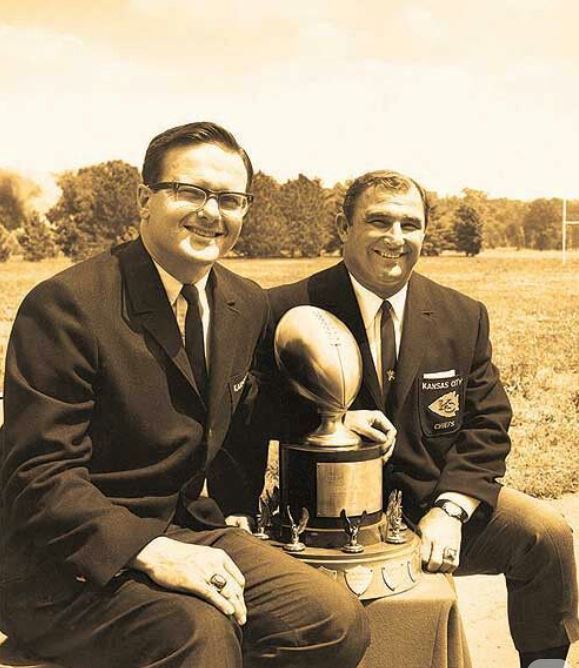
AFL Founder / Chiefs Owner Lamar Hunt with Hank Stram and the the 1966 AFL Trophy.
As we just cleared the last hurdle on our way to Super Bowl LX in Santa Clara, its time to take a look back to the Super Bowl’s origins. The 1960’s when the upstart National Football League met its match with the American Fooball League horning into their territory. Keep in mind all of this started with a series of championship ring stories on social media a millenia ago. Without further adieu…
Unlike other leagues that popped up and died, the American Football League lives on in the American Football Conference of the modern NFL. With a burgeoning economy after World War II, Americans turned their attention to a life of leisure during the 1950s. Sports became the outlet for most of America.
There was a clamor by many who felt slighted when it came to big league sports. The furthest point west on the map where major professional sports was played, was Wisconsin & St Louis Missouri. Then something happened to change the landscape. The AAFC football league folded and the San Francisco 49ers joined the NFL in 1950, along with the champion Cleveland Browns and Baltimore Colts.
This event helped propel the Cleveland Rams west to Los Angeles, where they joined San Francisco to be the first pro teams in California. Now other western cities wanted in on the action and all the other sports started to broaden their minds toward relocation. Soon moves were made by an L.A. Councilwoman who massaged the beginnings of what came to be the Brooklyn Dodgers and New York Giants move to California in 1957. Expansion was on soon with the Lakers in 1960 moving from Minneapolis. Now Texans wanted an NFL team and had the money to gain an NFL franchise or so Lamar Hunt thought.
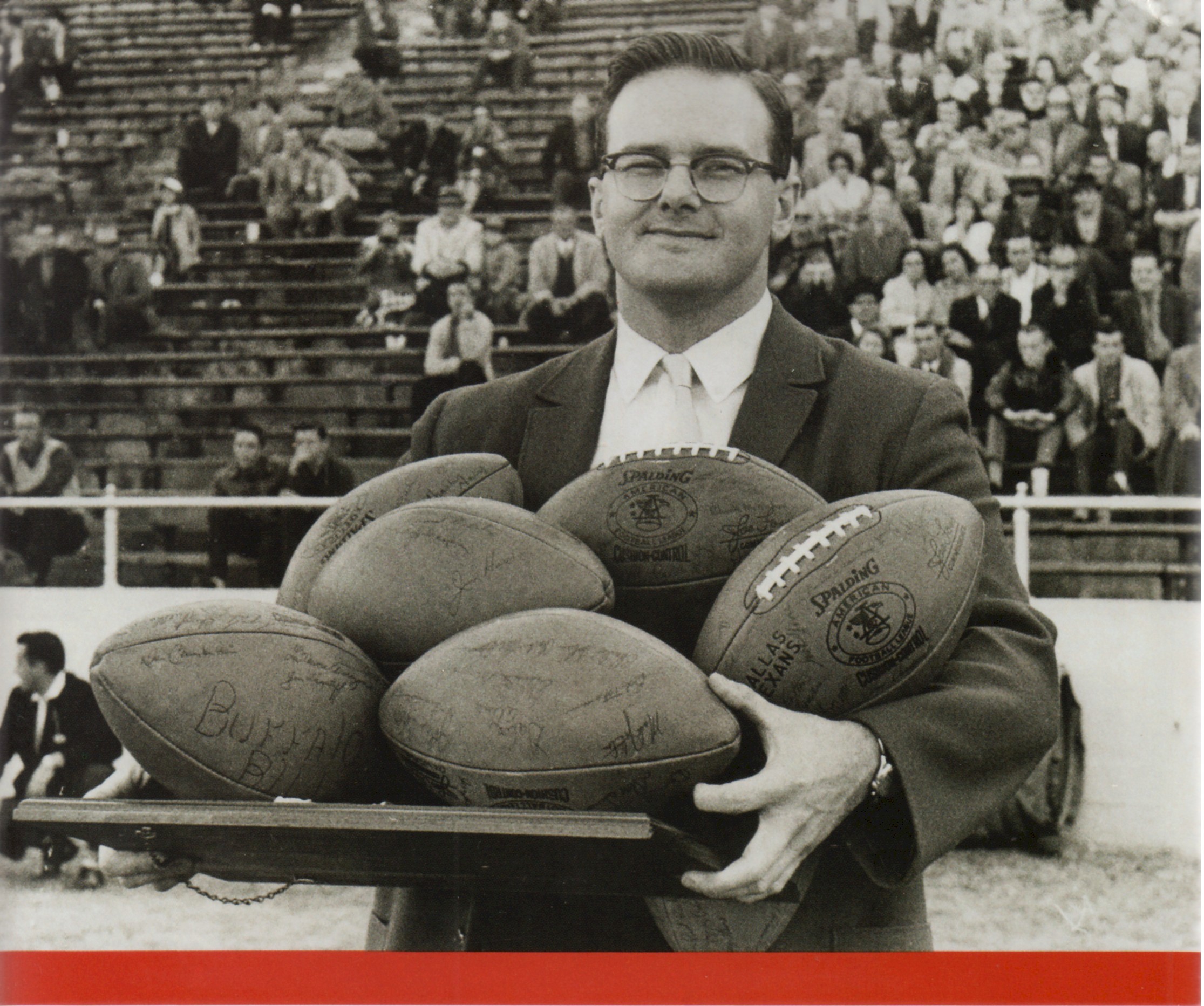
AFL and Kansas City Chief founder Lamar Hunt holding a platter of AFL footballs.
Then the NFL had the landmark 1958 NFL Championship overtime game between the New York Giants and Baltimore Colts that transformed the spark of interest into a flame. Hunt and principles moved quickly to form the American Football League since the NFL had thwarted their attempts to bring football to Texas. Now you have to understand who we’re talking about here for a second. Lamar Hunt was son of H.L. Hunt of Hunt Brothers Oil! We’re talking seriously deep pockets here. The NFL in its arrogance thought they would outlast a fledgling league like the AAFC just a decade before….damn were they wrong.
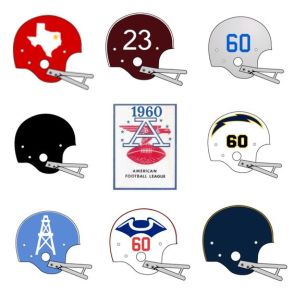
Once the idea of the AFL gained momentum, the NFL turned to espionage and tricky double dealing to sink the new league. The eight cities that Hunt and the other AFL owners decided on were Dallas, Houston, Denver, Boston, New York, Los Angeles, Minneapolis, and Buffalo. However the NFL bent the ear of the Minnesota ownership group, and told them they would give them an NFL franchise if they would decieve their brethren, by defecting to the NFL at the last minute. It almost worked but the AFL scrambled to move the eighth team to its new home in Oakland. Meanwhile the NFL put a team in Dallas to compete with Hunt’s Dallas Texans, they were called the Cowboys.
The AFL had some seriously rich men that wanted to see it succeed in Bud Adams, Ralph Wilson, Lamar Hunt, and Barron Hilton yet there were other ownership groups that struggled to make ends meet as the league got off the ground in 1960. Many teams were losing money at record rates, some to the tune of a million dollars or more.
It was former Boston Patriot owner Billy Sullivan who coined the phrase “The Foolish Club” when listening to his colleagues joke about revenues lost. However John Madden recalled a reporter asking Lamar’s father H.L. Hunt “What did he think of his son losing $1 million a year??” Hunt’s answer was cryptic to the NFL and the sporting establishment’s ears when he replied “Well, he’ll be ok. At that rate he’ll only be able to go on for another 150 years.” Damn!! On 1960’s dollars?? Yikes!!
Although the NFL had been around forever, for the first time they were up against wealthy men who gained their fortunes as titans of industry outside of football. NFL owners George Halas, Carroll Rosenbloom, Tim and Wellington Mara, George Preston Marshall, and Art Modell were primarily football men and knew their asses were in trouble. If it came down to the AFL’s pockets they would be in for a battle they couldn’t win.
The first few years had the established sporting press scoffing at the league’s style of play, uniforms, retread players and coaches, you name it. This is an era where if you went against the establishment, you had more than an uphill battle just for acceptance….I mean the radical 60’s were not yet underway. Yet here they were continuing the plan on expanding professional football to more points within the United States.
 One of the first items the AFL did was secure a television contract to assist the teams that had financial problems like the Titans and Raiders. The Raiders had also come to a point of folding when they contacted their fellow teams and said they couldn’t sustain operation financially. Buffalo’s Ralph Wilson stepped in and lent the Raiders $450,000 to stay afloat because the league couldn’t operate with only 7 teams. As for the Titans and Harry Wismer, the Jets needed an ownership group that had the pockets and vision to rival that of the New York Giants. Enter Sonny Werblin.
Werblin spearheaded a group that purchased the bankrupt New York Titans, renamed them the Jets and helped negotiate the most lucrative television contract to date with NBC. Over $1.8 million dollars went to each team in 1965 and with all of their teams solvent for future operation, new stadiums went up in San Diego (Los Angeles), Oakland, & Denver. Now the next move Werblin spearheaded was to draft Joe Namath and pay him a ridiculous $427,000 contract to be the star in New York. Uh oh…this single shot turned the draft into a who is going to pay the most for a players services between the two leagues. Talk about impact.
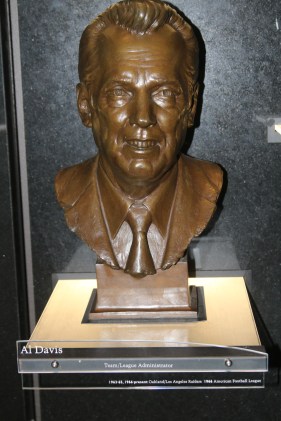
An unwritten agreement existed between the two leagues to not sign each others current players. Yet the NFL went underhanded, yet again, when the New York Giants signed kicker Pete Gogolak from the two time AFL Champion Buffalo Bills. The AFL retaliated big time. It was recounted by Lamar Hunt, the founder of the Texans who had moved his team to Kansas City and renamed them the Chiefs, to meet Tex Schramm and discuss a possible merger. Hunt still lived in Dallas. They met at Love Field under the Texas Ranger statue and when the meeting was over, Hunt flew to Houston to elect Al Davis AFL Commissioner. Joe Foss had been a good commissioner but now they needed a “war time President”. Al Davis quickly helped teams realize they could bring the NFL to its knees if they created a bidding war by signing away their superstars.
The moves of signing away San Francisco quarterback John Brodie, Los Angeles’ Roman Gabriel, and Chicago’s Mike Ditka were the straw that broke the camel’s back. The bidding for player’s talents had driven contracts up dramatically and the NFL grudgingly came to the table. Al Davis was away about to sign another player when Hunt told him that they were going to meet the next day about a merger and they didn’t need the headlines. *Pay attention because this is the birthplace of the Chiefs / Raiders rivalry and the Al Davis against the world mentality takes place* Davis signs the player which angers Hunt.
In the subsequent negotiations, the leagues agree to a merger with the two league’s champions playing in a new championship game, the Super Bowl, for the first four years and realignment into one all inclusive league in 1970. Pete Rozelle remained commissioner over all of football, there was a common draft starting in 1966… and Al Davis….?? They left him out in the cold sort of…
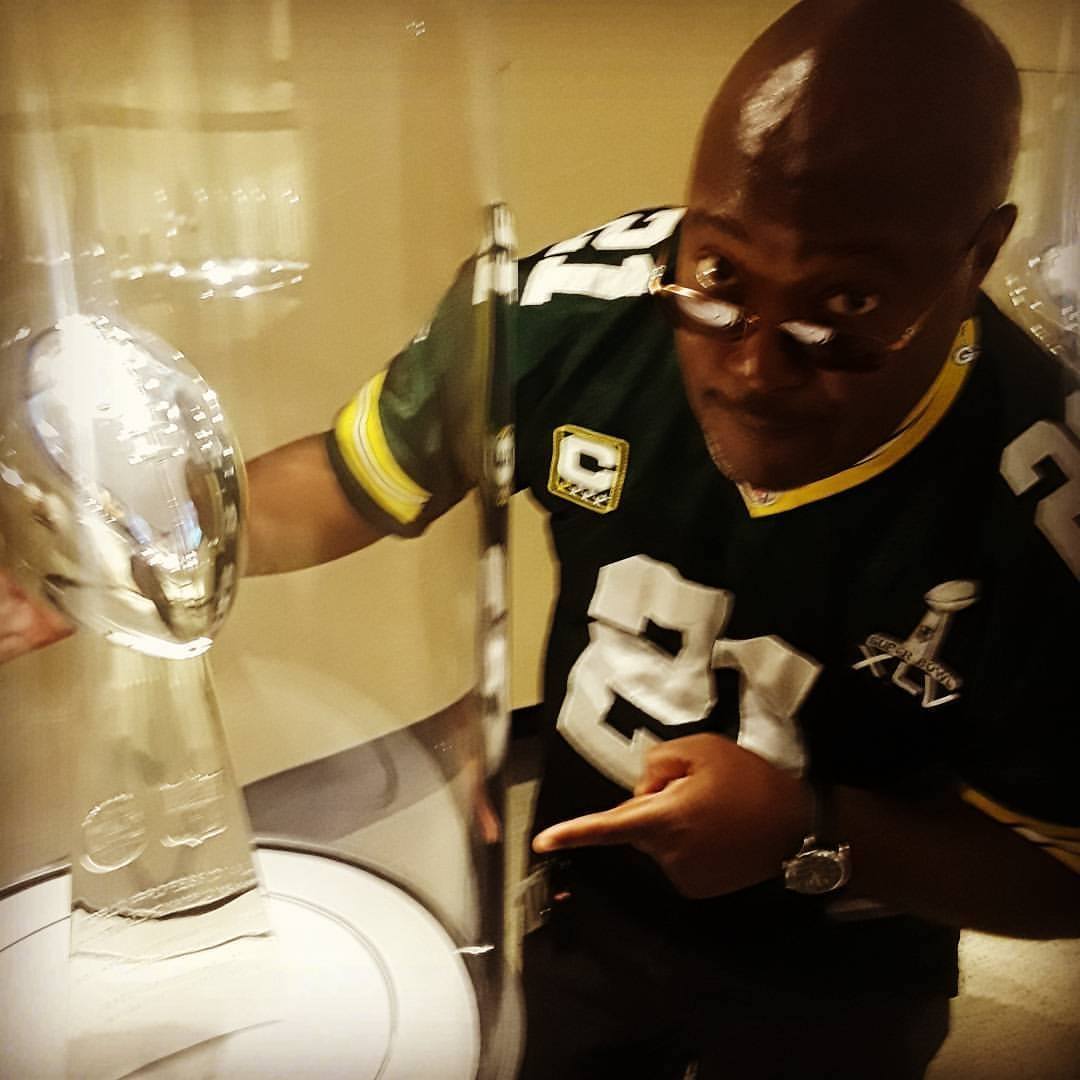
Super Bowl I Trophy sits in the Green Bay Packer Hall of Fame.
This is where he received his dubious ownership distinction and awkward title President of the Managing General Partner for the Raiders. He had only been a coach before, yet one of the items that seemed spineless is the NFL made the AFL’s teams pay $3 million in reparation damages each and had Al Davis been there would never have acquiesced to such a demand. Not when they had the NFL crawling to the table. It was this animosity toward Pete Rozelle, Bud Adams and especially the Kansas City Chiefs and Lamar Hunt that raged on for many years. *This is where the animosity between Davis and Rozelle fostered…remember the court battles of the 1980s between the Oakland Raiders v the NFL??*
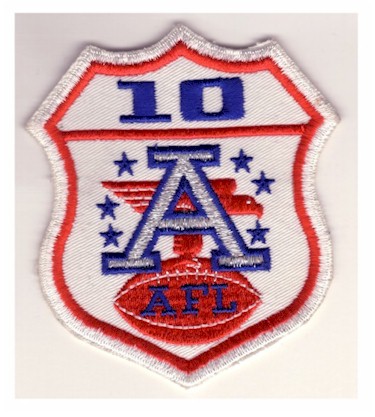
The patch worn by the Kansas City Chiefs on January 11, 1970 for Super Bowl IV. The final game of the AFL
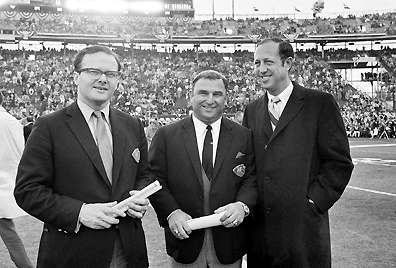 In the first two Super Bowls Green Bay bested Kansas City and Oakland respectively. The landmark win came when the Jets upset Baltimore to show that the AFL was on a par in Super Bowl III. Then with a twist of fate, the ownership group who traitorously tried to sink the AFL by defecting, came into Super Bowl IV against the Kansas City Chiefs and AFL founder Lamar Hunt. In the last game ever for the AFL, Kansas City buried the Minnesota Vikings 23-7 to bring not only the Super Bowl record to 2-2 between the two leagues, but able to have the satisfaction of kicking Judas’ ass in the process.
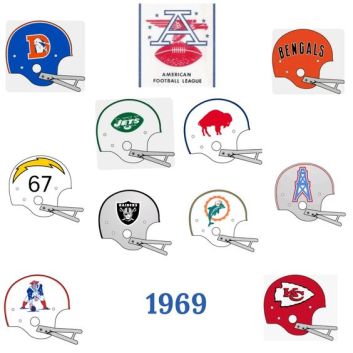 In conclusion: It was wrong to not include Davis and to me is the one of the few black eyes in this success story. The AFL was swallowed into the monolith that is the NFL after expanding the AFL to 10 teams with Cincinnati, and Miami emerging. These 10 teams were joined by the Pittsburgh Steelers, Cleveland Browns, and Baltimore Colts, yes the Baltimore Colts who gave the NFL a black eye with that first loss. They didn’t go empty handed, each club was paid $3 million to move to the new AFC. Yet AFL loyalists such as Davis wished the two leagues stay separate, and he truly believed they would have eventually folded the NFL.
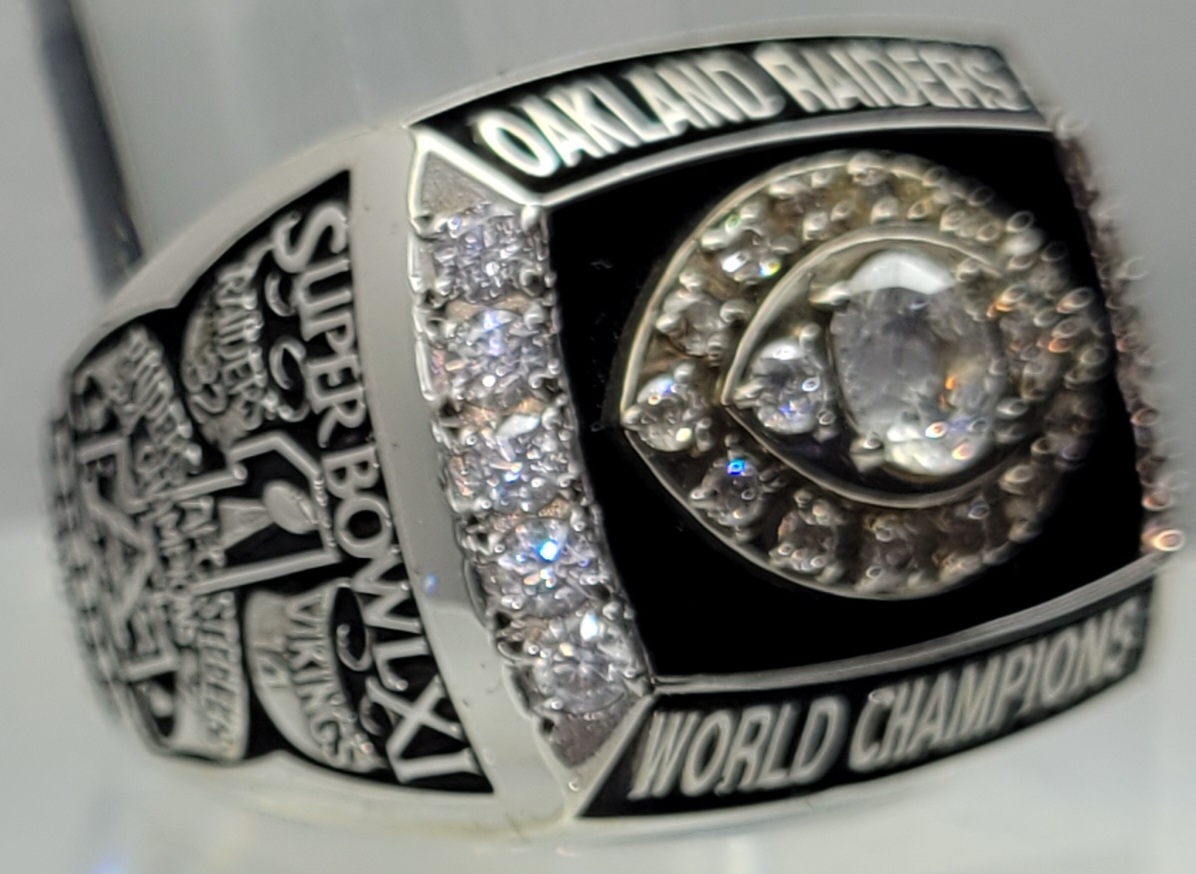 In fact in the 3 Super Bowls the Raiders won in the post merger NFL, Davis always used the AFL logo and not the bold modified block “A” of the AFC on their Super Bowl rings. He didn’t relent until the 2002 AFC championship ring where he finally used the AFC “A”.
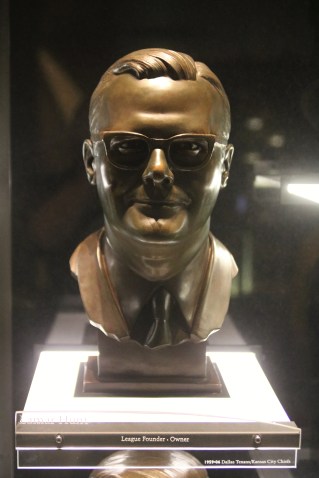 There you have it…how the AFL changed the sporting landscape after the first shot was fired by the folding of their predecessors, the AAFC. San Francisco’s entering the NFL doesn’t get the impact that it should because so much focus was on champion Cleveland coming over. The western expansion of American Football owes a debt of gratitude to the 49ers yet even more to those original owners.
Thanks for reading and please share the article.

 Before we get into
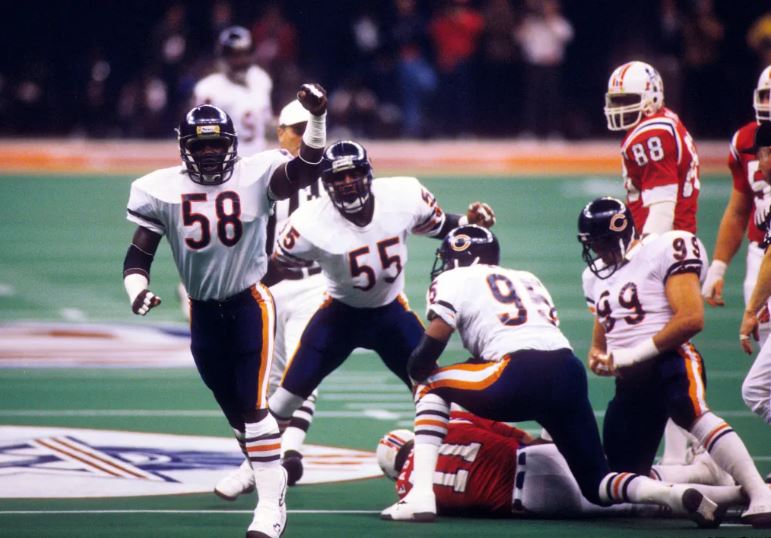
 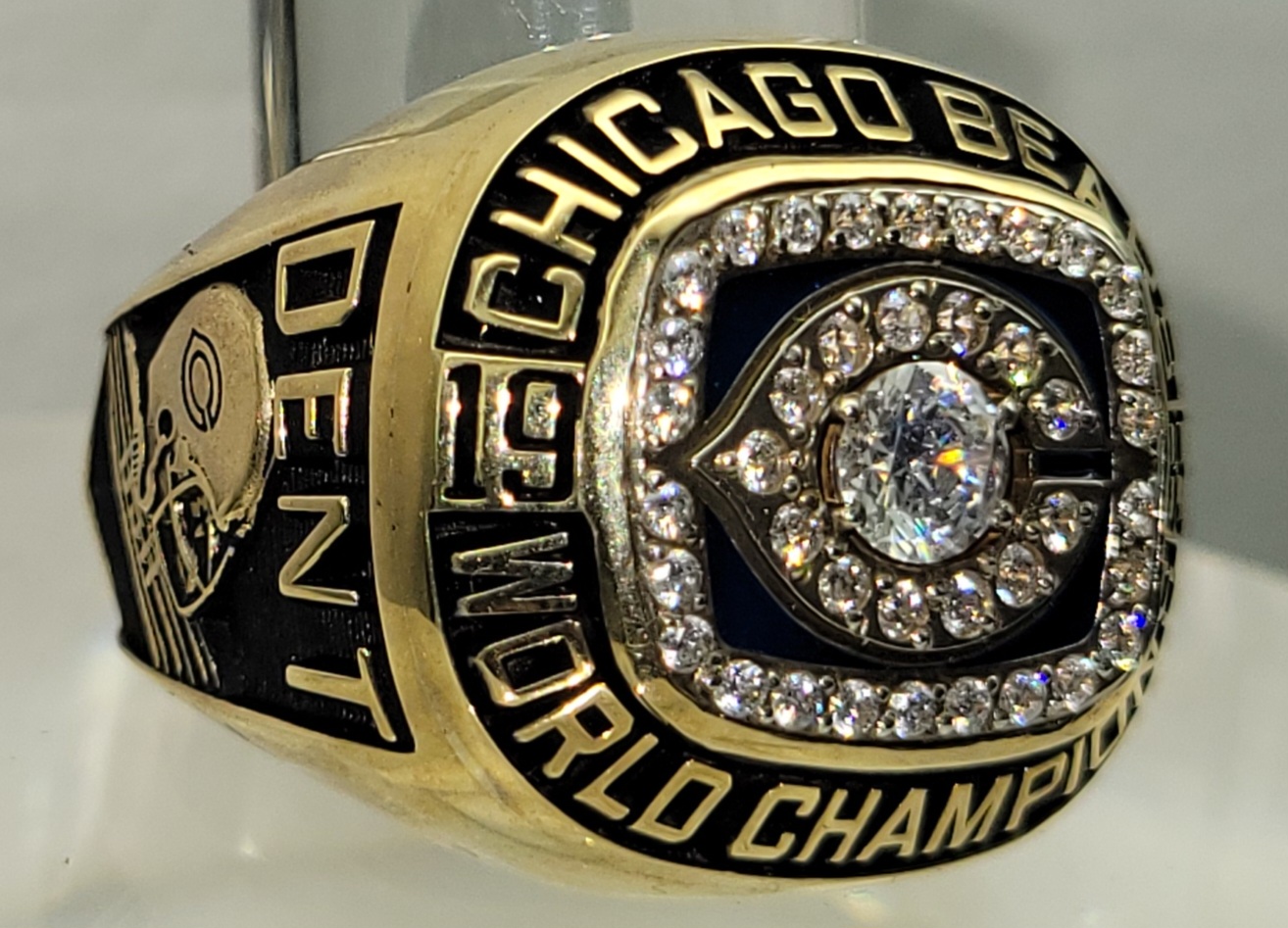 Look at the competition they faced and look what they did to them. In 1985 the NFC East champion Cowboys were trounced 44-0, wildcard Giants 21-0 in the playoffs, and the 10-6 Redskins slaughtered 45-10. That’s 110-10 against the “best division in football” yikes!!
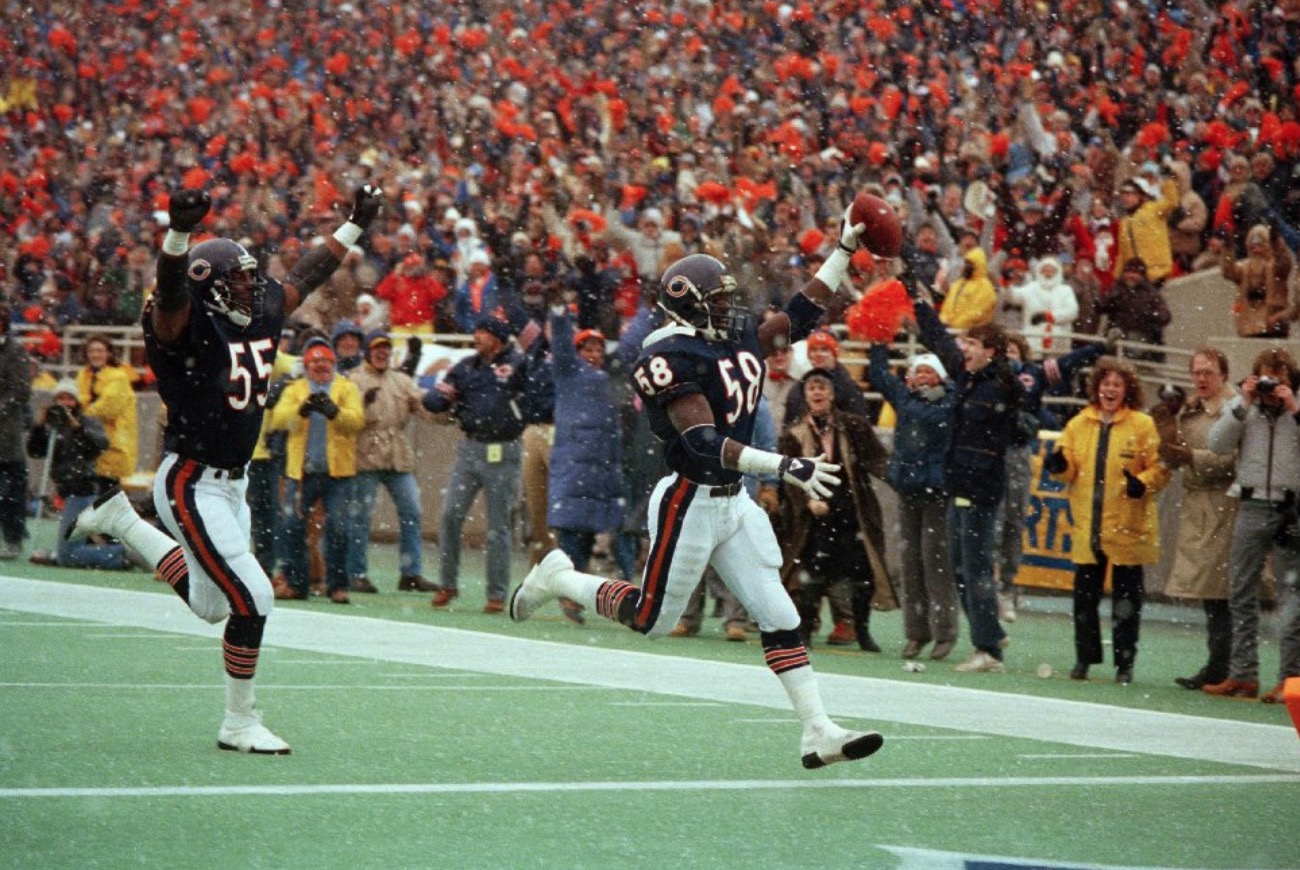 * So the Bears gave up 20 points combined to the 5 best teams in their conference and avg. more than 4TDs margin of victory (31-4 avg. score)…damn!

 Thanks for reading and please share the article.
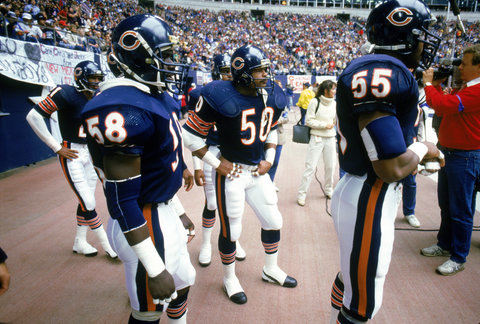
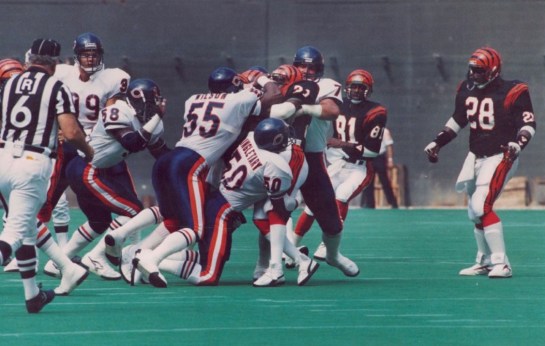 Then they pasted Boomer Esiason and the NFL’s #1 offense 44-7 on the road. By the way the Bengals were 10-6 that year and the Browns were 12-4 and played for the AFC Championship. The Bears beat them also. In fact they were 4-1 on the year vs top ten offenses.

You must be logged in to post a comment.