Vincent T. Lombardi – Growing Up Lombardi & The 1965 NFL Championship Season

Vince Lombardi carried off the field by Jerry Kramer at the end of Super Bowl II

Vince Lombardi carried off the field by Jerry Kramer at the end of Super Bowl II

When the NFL talks about winning coaches, one name towers above all others…Vince Lombardi. He was a leader of men and motivated the Green Bay Packers to great heights in the 1960’s. His team won half the NFL championships of the 1960’s while appearing in 6 total. No team has won more than four in a decade in the modern era. Yet when folks talk about a three-peat, everyone keeps forgetting Lombardi and his Packers achieved this feat.

Think about that for a second… Chuck Noll would have had to take the 1970’s Pittsburgh Steelers to two more Super Bowls to equal that feat. Yet there is debate on who was the greater team. You have to give the edge to Green Bay because they did win three in a row. When they say no one has achieved this in the Super Bowl era, that isn’t entirely true.

The two that concluded this 3 year period were victories in Super Bowl I & II. Yet there is one season that seems to go overlooked of the Lombardi Packers…the 1965 NFL Championship team.

The 1961 Packers were known for Lombardi’s first championship. It’s the 1962 team that was remembered as Lombardi’s greatest and strongest team. Only a Thanksgiving Day ambush 26-14 loss to the Lions kept them from going undefeated. They were 13-1 while outscoring the opposition 415-148 while repeating as champions. Of course his ’66 squad won the first Super Bowl and the ’67 team was known for winning The Ice Bowl then Lombardi’s last game, Super Bowl II.

However when you go back to 1965, the Green Bay Packers were trying to re-establish themselves among the NFL elite. They had a chance to win 3 in a row after ’61 & ’62, however Paul Hornung’s season long suspension for gambling short circuited that effort. After watching the Bears and Colts win their conference in 1963 and 1964, the Packers were back to contend.  However there was a new bully on the block. The Cleveland Browns powered by Jim Brown had won it all in 1964, and were looking to repeat in 1965 to take their place among greatest league champions.

In their 23-12 victory over Cleveland, the Packers not only ended Jim Brown’s playing career on a down note, they would be the last to hold the rotating NFL trophy that moved from champion to champion. The following year was the first to be played under the merger agreement and the Tiffany Company started to produce a Super Bowl Trophy every year. Lombardi had driven his team back to prominence where they would sit atop the football world for three years. They had unseated a reigning champion to do it. That can’t be underscored.
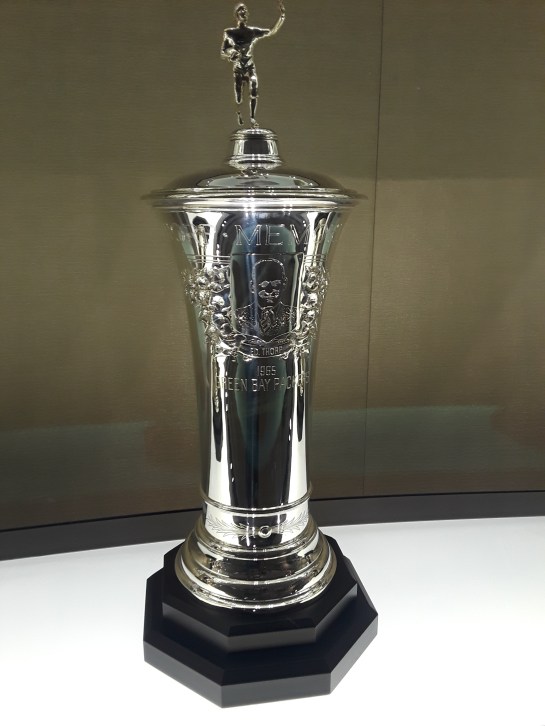
65.edthorpetrophy

The Ed Thorpe NFL Championship Trophy for 1965. No one knows where the one all the teams held is.

After defeating the Oakland Raiders in Super Bowl II, Vince Lombardi stepped down as coach. He had his secretary draft his resignation letter which sits in the Packers Hall of Fame:
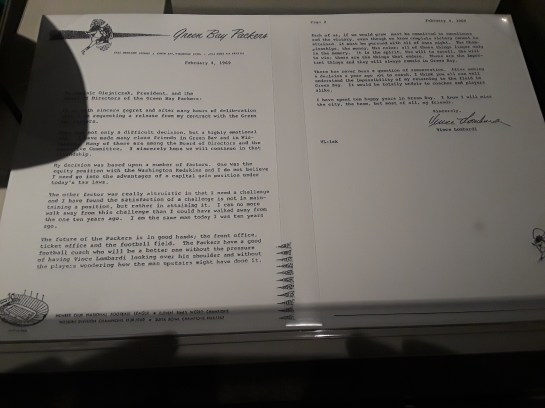
20170922_143522

After winning 99 games in 9 years, 6 conference championships, and five world championships, how does one follow that type of success?? Most of the Packers players had mainly played for Vince Lombardi and were used to his demanding, driving spirit. Bart Starr, Jerry Kramer, Fuzzy Thurston, Ray Nitschke, Willie Davis, Forrest Gregg, and Herb Adderley had all grown up Lombardi. Now as we look back should they have replaced the Green Bay legend with a coach that was similar in temperament??

Vince Lombardi will always be seen as the gold standard when it comes to NFL coaches. One unique aspects of his tenure and times are the broken stereotypes that were forged through his career. It was thought of at the time he wouldn’t become a head coach or be successful because of his Italian and Catholic roots. It was one of the reasons he didn’t succeed New York Giant Head Coach Jim Lee Howell, whom he served as Offensive Coordinator during the championship years 1956-1958. Only once he was hired and successful in Green Bay did they try to lure him back. Ironically he beat the Giants for his first two championships. Prejudice is bad for business.

Furthermore the NFL during that time was one where black players were unable to play the “thinking” positions on defense such as linebacker or safety. There had to be a sensitivity to that plight because of the stigmas Lombardi himself faced. Although Willie Wood was unable to play quarterback in the pros, he went on to be an 8 time Pro bowl participant and became a Hall of Fame player. The same for Linebacker Dave Robinson, who was just elected to the Pro Football Hall of Fame this past February.
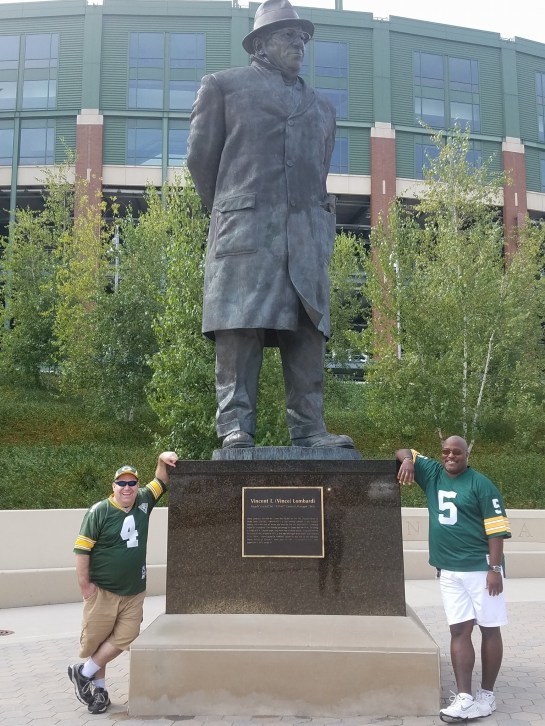
me.ryan.lombardistatue

Ryan and The Chancellor at Vince Lombardi’s statue outside Lambeau Field 9/21/17.

One reason his legend has become so large is he passed away in 1970, just 3 seasons removed from coaching his great Packer teams. This leads to several question. He coached the Washington Redskins to a 7-5-2 record in his only season of 1969. Ironically his first season in Green Bay was 7-5 in 1959.

  • Would he have completed the rebuild of the Washington Redskins?? Remember they did play in Super Bowl VII just 3 years later.
  • Would his legend have been damaged had he only a  moderately successful career had he lived longer and coached the Redskins into the mid 1970’s??
  • If he had gone back to New York and coached the Giants in 1960 would he have been as successful as he went on to become in Green Bay??
Green Bay Packers 1965 NFL Championship Ring

Green Bay Packers 1965 NFL Championship Ring

After his passing in September of 1970, the NFL decided to name the Super Bowl Trophy in his honor.  In such a condensed time of 9 years, his teams won 5 championships. Don Shula, the NFL’s all time winningest coach won 2 in 33 years. Tom Landry won 2 in 29 years. All time greatest coach in NFL history?? You better believe it. Of all his great teams, it’s the 1965 team that seems to be forgotten. After all they were the first in the only successful three-peat in NFL history won on the field, and is the chief reason he’s immortalized.
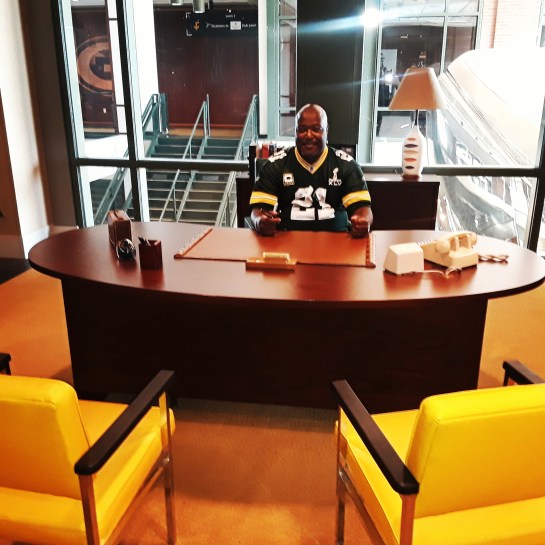
thechancellor.lombardidesk.jpg

Sitting at Vince Lombardi’s Desk inside The Packers Hall of Fame at Lambeau.

Thanks for reading and please share the article.

Adderley

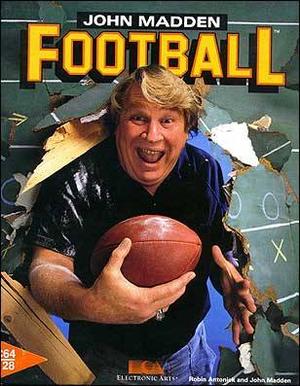
Happy Birthday John Madden – One of The Chancellor of Football’s Mentors

To a new generation of football fans, John Madden was a colorful announcer that had his likeness on the front of the popular video game series. What many of them don’t realize is how much effort he put into the game of Pro Football during his tenure coaching the Oakland Raiders. He was the first person to win more than 100 games in less than a decade, and of the first dozen Super Bowl winners, his 13-1 Oakland Raiders had the second best record to win it next to the undefeated 1972 Dolphins. He was the first to leave the game citing coaching burnout.

One amazing aspect of John Madden’s football odyssey are the points he made in several books that showed his love of the game while translating it to something fun and everyone could understand. In Hey Wait A Minute, One Knee Equals Two Feet, and One Size Doesn’t Fit All, he popularized notions that are still a part of The Chancellor of Football’s repertoire today.

  • One knee equals two feet: When a receiver catches a pass and only has one knee touch the ground before going out of bounds, its a good catch as though two feet had touched. This is also good of one elbow or hitting the ground butt first before going out of bounds
  • One stepper: A term used for cornerbacks when reacting to a receiver breaking his route in or out. Whether they are in a back pedal or running side by side with a receiver, the good cornerbacks react in just one step where the marginal cornerback will take two or more before reacting.

These are a few of the nuggets that he showed how he saw the game and simplified it for millions while giving valued information to assessing players and talents. Why prattle on when we can offer you something better… John Madden himself.

For many years he teamed with Pat Summerall in the booth and was the most expressive color analyst in television history. They developed the telestrator for him to diagram plays and blocking assignments for live television. He was a pioneer. Its a shame he didn’t make it to Monday Night Football until late in his career. The casual fan would have learned a lot about the game from him instead of only seeing him for 4 or 5 times a regular season.

The one thing we want the video game generation to understand is he was a record setting coach before. He made it to a record 5 straight conference championship games in the 1970s, which was second to Vince Lombardi and Paul Brown. Or the most since the AFL / NFL merger. Do you realize how re-written history is if he wins the 1973, ’74, ’75’ and ’77 AFC Championship games??

If his Raiders had won, the Miami Dolphins don’t repeat as champions for Super Bowl VIII. You don’t have the back to back champion Pittsburgh Steelers of Super Bowl IX & X. After winning it all in 1976, they would have defended their title against the Dallas Cowboys for Super Bowl XII..,.but alas this happened in the 1977 AFC Championship Game:

Just like the Immaculate Reception back in 1972, his Raiders got jobbed in the playoffs. Yet Madden would go on to coach through the 1978 season before retiring as coach of the Raiders. His record was 103-32-7 over a 10 year period. Note that he had 7 ties during his career which started in 1969 as head coach but the NFL didn’t adopt regular season overtime until 1974, hence all the ties. He made the playoffs in 8 of his 10 years and had the best winning percentage of all time of those who coached 10 or more years. He was inducted into the Pro Football Hall of Fame in 2006.

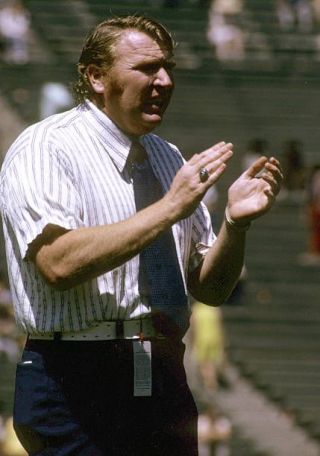
John Madden, Pro Football Hall of Famer.

John Madden, Pro Football Hall of Famer.

He was one of the game’s greatest coaches before becoming the best color analyst of the television era covering the NFL. His coaching tenure actually started in the old AFL which became the AFC. Then he started having his All Madden Teams when he covered the game for CBS & Fox.

He was more than just the name sake on Electronic Arts video game that bears his name. Year after year he challenged them to make more realistic game play and was a part of that game’s overall growth and success. We mention it here because a complete generation learned intricacies of football through the Madden video game series starting in 1989.

So today, we celebrate John Madden’s 76th birthday. Happy Birthday!! Thanks for your contributions to the NFL.

RIP Al Davis, Gene Upshaw, & Jack Tatum who appeared in the video.

Thanks for reading and please share the article.

Taylor Blitz Times new logo!!

Taylor Blitz Times new logo!!

The Soul Of The Game: Bill Brown

Our choice for first special teams player to go to the Hall of Fame would be Bill Brown.

Our choice for first special teams player to go to the Hall of Fame would be Bill Brown.

When Steve Tasker was about to retire from the Buffalo Bills in 1997, many pundits talked about is candidacy for the Pro Football Hall of Fame. Aside from former Chiefs kicker Jan Stenerud, no player who played primarily on special teams has made it into the halls of Canton. Everyone thought Steve should be the first along with Pat Tillman and possibly Hank Bauer. However if you ask our CEO who should be the first person to make the Hall of Fame when it comes to special teams players, Bill Brown of the 1960s-1970s Minnesota Vikings would be the first.

Our The Soul of The Game series is about hitting and defense. Its still the essence of the sport. Although Bill Brown was a Full Back, he played special teams through his entire career. Most notably when the Vikings decided to get younger and drafted Full Back Chuck Foreman out of the University of Miami (The [[_]]) in 1973. In most instances an aging player goes to another team or sits the bench quietly. Out of the offensive limelight Brown still crashed on special teams as the Vikings became a Super Bowl team again in 1973 & 1974.


After the Vikings played in Super Bowl IX, a 16-6 loss to the Pittsburgh Steelers, Brown retired after a 14 year career. He had been a Pro Bowl Full Back 4 times back in the 1960s and finished his career with 5,838 yards rushing and 52 touchdowns. So his career did have real merit.

The only issue is the tackles weren’t being recorded on special teams to further showcase his contributions. However Brown’s career concluded well over a decade before the first Pro Bowl slot for a special teams player was introduced. He did go down and hit as the video will attest. What is sprinkled in the video as well are the many tackles he made after a fumble or an interception against the Vikings offense. Notice how many times he hits a linebacker wearing a 50s series number. Bill Brown was a complete football player and should be the first special teams player to go into the Pro Football Hall of Fame as a special teams ace.

Thanks again and please share the article.

Bill Brown (June 29, 1938- Nov. 4, 2018)

Taylor Blitz Times new logo!!

Taylor Blitz Times new logo!!


The Soul of The Game: Jack Tatum

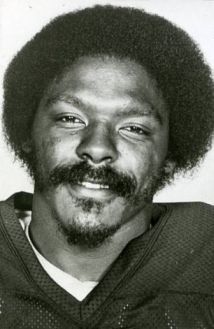
When it comes to the soul of the game, purists like our CEO thinks of games being dominated by fierce and aggressive defense. One player that embodied that spirit was Jack Tatum of the Oakland Raiders.

tatum.whiteXIWhen his name is brought up it’s hard to not think of the unfortunate paralysis injury suffered by Darryl Stingley in 1978. However he was much more than that.  During the 1970’s he made the Oakland Raiders defensive secondary the forceful equivalent of the Pittsburgh Steelers front four.

tatum

Jack Tatum, one of the NFL’s hardest hitters ever.

The Raiders weren’t a great defense from a statistical standpoint. In fact their highest ranking against the pass during the 1970’s was 5th in 1975, and 8th in 1973. As a matter of fact the year the Raiders went 13-1, won Super Bowl XI & the Raiders were 22nd against the pass. However for a record 5 straight years (1973-1977) the Raiders made it to the AFC Championship Game and Jack Tatum was a main reason why.

It was his physical style of play the Raiders fed off of and his mentality became that of the Oakland Raiders defense. Even SS George Atkinson, who began his career as a corner with the Raiders in the late 1960s’, had Jack’s playing style rub off and become his style of play. Nowhere in football history were there ever more cases of “alligator arms” than there were going across the middle when Jack Tatum was on patrol. His hits were like car collisions.

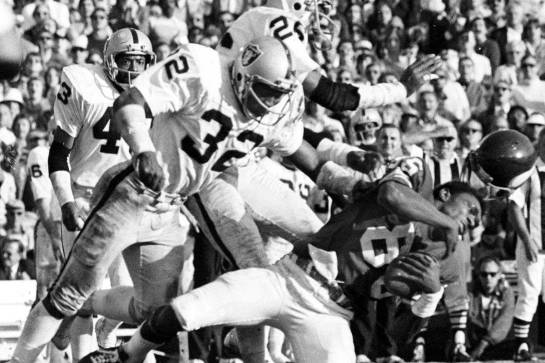
One of his most famous hits occurred in what has been called the single greatest touchdown in NFL history, The Immaculate Reception. The famous Franco Harris touchdown with :22 left in the 1972 AFC Divisional Playoff the Steelers won 13-7. Initially on 4th and 10, Terry Bradshaw was trying to complete a pass to John “Frenchy” Fuqua when the ball and Tatum all arrived at the same time.

NFL rules at the time didn’t permit a pass to be tipped by a receiver then caught by another receiver. Had that occurred the play would be ruled incomplete and penalized for “illegal touching”. The problem was it was so close you couldn’t call what happened from the naked eye.

When the Steelers were awarded the touchdown it touched off a bitter 5 year playoff rivalry and controversy over that play rages to this day. Tatum had another famous hit that you saw in the first video when he knocked Sammy White of the Vikings out in Super Bowl XI. It was the fourth quarter and the Vikings were forced to pass and the Raiders knew it.

However, 11 months later in what would be John Madden’s last playoff game as coach of the Raiders, another Tatum hit was in the middle of another controversy. It was during the 3rd quarter of the 1977 AFC Championship with Oakland trailing the Denver Broncos 7-3. The Raiders had fumbled to put the Broncos in business inside the Raiders 20 yard line. Several plays later when it was 1st and goal with the momentum teetering toward the Denver sideline, Tatum comes through with a thunderous shot…


Another case of the Raiders coming up on the short end of the stick and was one of the reasons they lost 20-17. Although our CEO lived in Denver at the time and was cheering for the Broncos, he believes they were robbed. Rob Lytle clearly fumbled. Had they won they would have gone to Super Bowl XII with a chance to defend their Super Bowl title. They could have beat Dallas and would have been crowned a dynasty had they made it there. Jack Tatum would play two more years with the Raiders before joining the Houston Oilers in 1980.

He and quarterback Ken Stabler were traded to the Oilers to help Bum Phillips “Kick In The Door” which was the slogan used that year. Ironically they didn’t face Pittsburgh in the playoffs, instead they lost in Oakland to the Raiders in the 1980 AFC Wildcard Game 27-7. For his 10 year career, he did intercept 37 passes with a high of 7 in the lone year he played in Houston. Yet it was the fierce way he hit that brought Tatum his notoriety.

Epilogue: However fame and memory of his play has been purposely obscured by NFL Films selectively after the event where Darryl Stingley was paralyzed. For every fearsome defender that has come through the NFL, there are videos of these tough players, many of which we feature here, yet Tatum is a glaring omission. Contrary to popular belief he did try to see Darryl Stingley while he was in the hospital in Oakland but the family turned him away. John Madden chronicles it in one of his books. Former Ohio St teammate John Hicks said Stingley’s paralysis had an affect on Jack Tatum, saying he became a recluse.

Tatum would have looked sick in a black helmet.

Tatum would have looked sick in a black helmet.

He seemed to be be caught between the tough guy persona and the humanity that did lie within. He’s been quoted from his book They Call Me Assassin that “I like to believe that my best hits border on felonious assault.” Trying to capitalize on his bad boy persona since that was what he had to go off of in future years. We don’t know what was said to Jack Tatum by the Stingley family that night in that hospital.

Yet defensive players using hyperbole to describe what they perceive as the perfect hit isn’t anything new. In the Soul of the Game article with Dick Butkus, he describes a scene from Hush, Hush Sweet Charlotte. Where he describes how a decapitated head rolls down the stairs and he liked to project those things happening (to his opponent) on the football field.

In other writings and videos we celebrate the over the top intensity and meanness of an Ed Sprinkle, a “Bulldog” Turner, a Wilber Marshall, a Hardy Brown, a Cliff Harris, a “Mean” Joe Greene, a “Mad Dog” Mike Curtis, or what about the comments and actions of a one Jack Lambert?? None of these men were asked to apologize for the way they played nor should they have to.

Well, neither should Jack Tatum. The question remains: Did  Jack Tatum handle the whole situation with Darryl Stingley the right way?? In my opinion he could have done more to make amends with him but it’s not up to me to be the complete judge on all that took place. Again we don’t know what was said between the Stingley family to him that fateful night. Understand I’m not trying to make the villain into the victim, but it’s high time that someone says something in Tatum’s defense. Quit treating him like a pariah, almost like he didn’t exist.

From THE Ohio State University, Jack Tatum!! RIP

From THE Ohio State University, Jack Tatum!! RIP

Ronnie Lott, Kenny Easley, Todd Bell, Dennis Smith, Dennis Thurman, Leonard Smith and the generation of NFL Safeties that came onto the scene as he was retiring patterned much of their game after his. On July 27, 2010, Jack Tatum passed away, but the way he played lives on as the generation who saw him play share memories of him with grandchildren like a Paul Bunyan type. There isn’t a lot of footage on him so the stories have to be told of how he was such a hitter. Well he was an intimidating performer and definitely a Soul of the Game defender.

Dedicated to the memory of Jack Tatum (November 18, 1948 – July 27, 2010)

RIP Darryl Stingley (September 18, 1951 – April 5, 2007)

RIP Rob Lytle (November 12, 1954 – November 20, 2010)

Thanks for reading and please share the article.
Taylor Blitz Times new logo!!

Taylor Blitz Times new logo!!

The Soul of The Game: Kenny Easley

Kenny Easley rocks former Raider TE Todd Christensen

Kenny Easley rocks former Raider TE Todd Christensen

Some of the best players in NFL history are those who had their careers cut short due to injury. Yet they had great seasons that had them on the path to Canton. Such was the case with former Seattle Seahawk Kenny Easley. At 6’3 and 205 lbs, he was tall, fast, had range and could hit.

He was the team’s first true superstar, one that teammates looked up to for big hits, big plays, and leadership. Until the Seahawks drafted RB Curt Warner to be his offensive equal on the other side of the ball, never had a team followed the lead of a safety before. At his peak he may have been the best safety in the last 25 years of pro football.

In 1981 Seattle drafted Easley in the first round out of UCLA. He was one of the new breed of safety coming into the NFL. Everyone points to the new breed of linebacker that hit at the same time, but along with Easley came the Dennis Smiths, the Joey Browners, and the Todd Bells who were taller and more physical than the prior generation of NFL safeties. The game was evolving after the 1978 rule changes favoring the passing game. Teams were going to more multiple receiver sets and safeties were being asked to do more. Especially in the hey-day of the AFC West.

Kenny Easley was a ball hawk and a big hitter. A rarity among safeties.

Kenny Easley was a ball hawk and a big hitter. A rarity among safeties.

This was the time of “Air Coryell” with Dan Fouts, the defending NFL champion Raiders with they’re deep passing game, and the Denver Broncos would soon draft John Elway to add to the prowess throwing the football within the division. It was Easley that brought the team superior confidence with his strong hits and leadership that changed the culture of the organization. He started gaining notoriety when he picked off 4 passes and was named AFC Defensive Rookie of the Year. The following season saw him intercept 7 passes and 3 sacks as he made the Pro Bowl for the first time as well as making the All Pro team for the first of three times.

Before his arrival, the Seahawks hadn’t made the playoffs or even been competitive within the AFC West going back to their 1976 inception. Easley led Seattle to their first playoffs in his third year. Once there they topped rookie John Elway and the Broncos 31-7 at home in the wild card round. The following week Easley and the defense led the way in a 27-20 victory over rookie Dan Marino and the Dolphins in Miami. They fell to the eventual champion LA Raiders, whom they swept during the season, in the AFC Championship Game 31-14. Many experts believed Easley’s Seahawks were primed for a Super Bowl run with a healthy Curt Warner coming back.

Easley had his greatest season in 1984, picking off 10 passes returning those for 126 yards and 2 touchdowns on his way to NFL Defensive Player of the Year honors. Yet it was his thunderous hits and reckless play that set him apart. In most instances you have ball-hawks that are tacklers but not great hitters. Easley was both. Yet the 12-4 Seahawks lost the rematch to Miami in the AFC Divisional round 31-10, and wouldn’t get any closer for the rest of his career.

This video in microcosm showcases his great 1984 season.

As you look at the first 20 years of the Seattle Seahawks history (1976-1995) they didn’t make the NFL playoffs until Easley led them there in 1983. They were among the league’s elite for the next five years but couldn’t capitalize on the momentum of that first AFC Championship appearance. The Seahawks did make the playoffs in 1988, but would return to the playoffs only once in the next 18 years following his retirement.

Easley’s career was cut short due to kidney failure before the 1988 season. However he had left thunderous hits and many broken tackles and spirits along with 32 interceptions, returning 3 for scores.  He was a five time Pro Bowler and voted All Pro 3 times, yet is  he a Hall of Famer?? That’s a debate for another day and another article, for Kenny Easley was the prototype safety of the modern era. The skill-set and intensity that he brought to the secondary was equal to what Lawrence Taylor brought to the fore for outside linebackers.

Thanks for reading and please share the article.

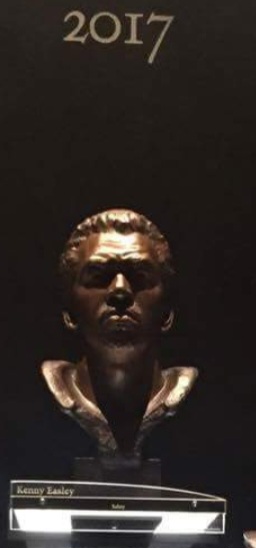
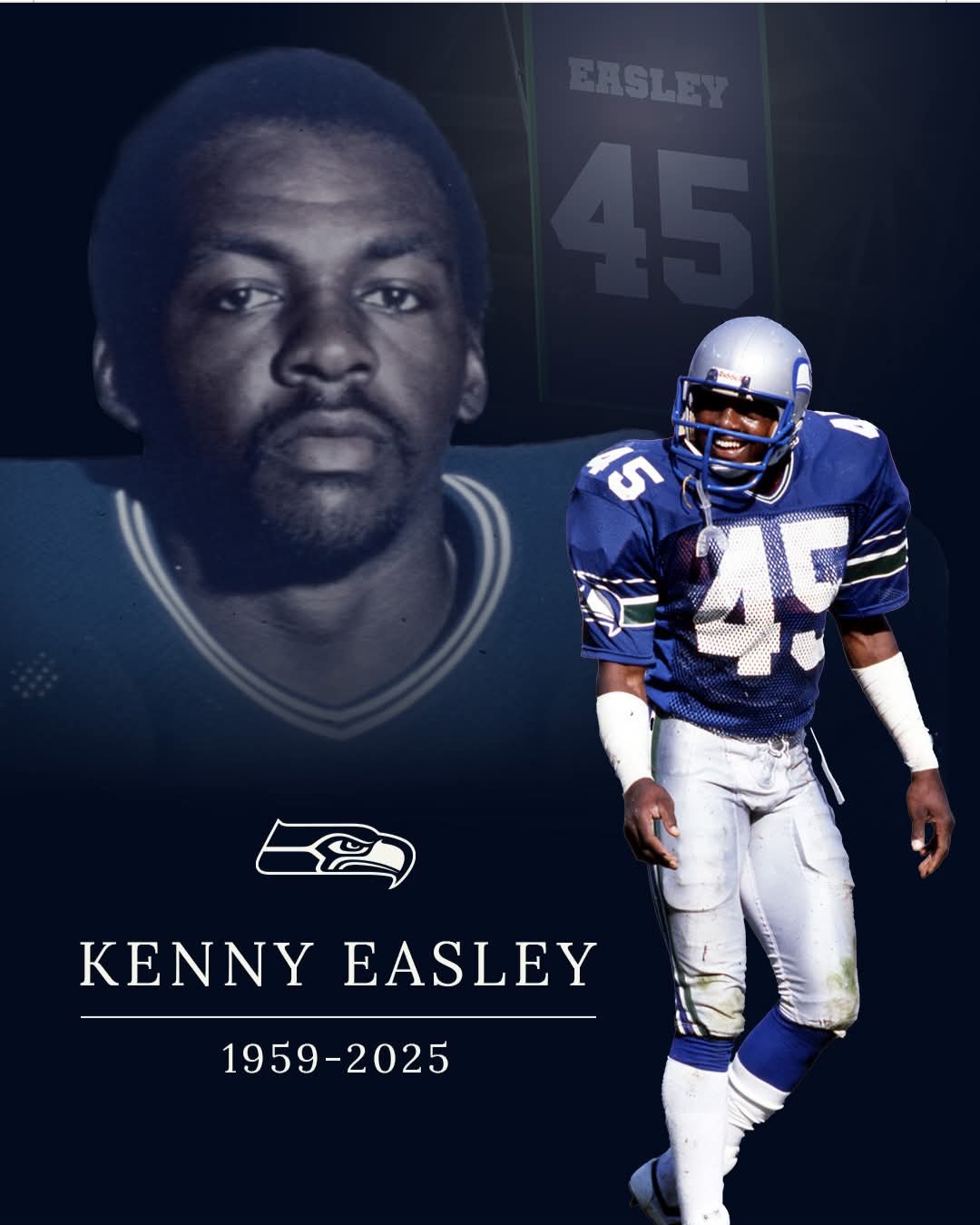
Epilogue – November 16, 2025: With Kenny’s passing yesterday we lost a true warrior who took years to get his due in the Pro Football Hall of Fame. I wanted to write an article to advocate for him but time just didn’t permit. Thank God Ronnie Lott stepped up and advocated for the player he was compared to the most coming out of their 1981 NFL draft. However I wrote this article in 2013 as I was a huge fan and wanted something to showcase how great a player he was.
I was able to catch him in a game once in Ohio Stadium when his UCLA Bruins faced the Ohio St Buckeyes while he was in college back in 1980. Was able to see Easley, Todd Bell, and Ray Ellis deliver big hits one glorious fall afternoon. I remember recalling the game with Easley’s late UCLA teammate Luis Sharpe who passed earlier this year. Undoubtedly Sharpe was there to greet him at the pearly gates.

RIP Kenny Easley – Pro Football Hall of Famer

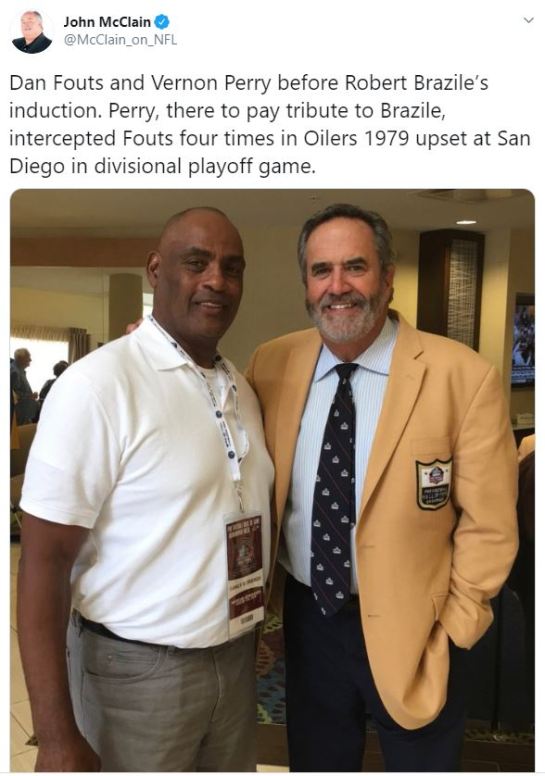
Greatest Defensive Performance in an NFL Game – Vernon Perry

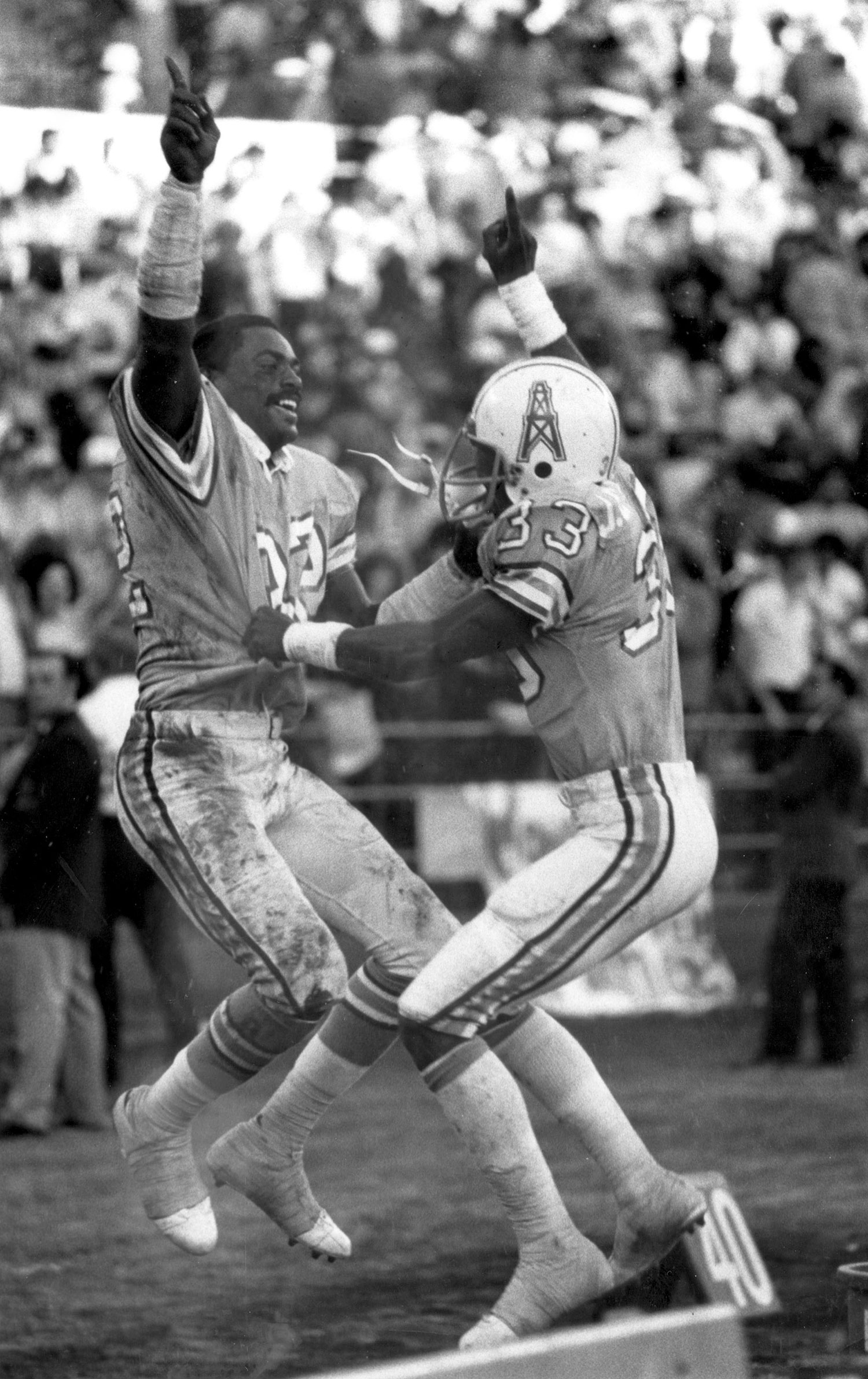
Celebrating after a performance for the ages.

When it comes to great performances in the NFL we tend to think of superstars having spectacular days. However there are times when a player finds himself totally in tune with a situation and turns in the game of a lifetime.

Such was the case with SS Vernon Perry of the late 70’s Houston Oilers. He was the college teammate of the late Walter Payton and Oiler teammate Robert Brazile at Jackson State. After a stint in Canada, Perry only played five seasons in the NFL (1979-1983) and the only distinction he gained was being named 2nd team All Pro in 1980.

In 1979, the Oilers were chasing perennial champion and division rival Pittsburgh, to whom they lost the 1978 AFC Championship Game to. Perry’s rookie year helped solidify a secondary that picked off 34 passes for the season. They were built as a run heavy team behind legendary Hall of Fame running back Earl Campbell. In week 15 the Oilers beat the Steelers 20-17 to give them both identical 11-4 records. A loss to the Philadelphia Eagles in the final week relegated the Oilers to the wild card role and the Steelers the division championship.

The wild card game was one of the most physical games in NFL history. The Denver Broncos “Orange Crush” defense battled tooth and nail in the 13-7 loss to the Oilers. They knocked out Earl Campbell, leading receiver Ken Burrough, and starting quarterback Dan Pastorini.

So a team that had serious aspirations of reaching Super Bowl XIV, or at least a rematch with the Steelers, would have to do so without Campbell’s 1,697 yards in the divisional round. Since the game would be on Saturday and not Sunday, they would be without Pastorini and Burrough as well.

Air Coryell - Dan Fouts, Charlie Joiner, John Jefferson, and Kellen Winslow

Air Coryell – Dan Fouts, Charlie Joiner, John Jefferson, and Kellen Winslow

Picture the 1990’s Dallas Cowboys going into a playoff game without Troy Aikman, Emmitt Smith, and Michael Irvin all not being in the game. This was that equivalent.

Their opponent was the AFC West Champion San Diego Chargers who also had Super Bowl aspirations. In 1979 they became the first team since the merger to make the playoffs passing more then they ran. Dan Fouts had thrown for 4,082 yards which was an NFL record at the time. They too finished with a 12-4 record to tie Pittsburgh for best record in the conference, and had their confidence boosted in week 12 with a 35-7 blowout of those Steelers. They had Pro Bowlers in John Jefferson (61 rec. 1,090 yds 10TDs), Charlie Joiner (72 rec. 1,008 yds 4TDs) along with Hall of Fame DE Fred Dean and DT Gary “Big Hands” Johnson.

The Chargers finished winning 6 of their last 7 and had held 4 of their last 5 opponents to 7 points or less. For the year, finished 5th in the NFL in defense and were healthy and home for the divisional round. This was a Super Bowl ready group… All they had to do was get past an Oiler team without it’s starting quarterback, running back, and leading receiver.

Naturally the Chargers scored on their first possession to take a 7-0 lead and were driving to take a two score lead when Vernon Perry struck…

The Chargers were undaunted but found the Oiler defense was tougher than anticipated. Once they drove inside the red-zone on the next drive, they stalled at the 7 yard line. They were up 7-3 when they lined up for a 26 yard field goal in the second quarter when:

A pensive crowd started to sit on their hands as their high-flying Chargers were clinging to that same 7-3 lead and couldn’t increase it. The Oilers were also struggling to finish drives. The Chargers were coming out with 3:24 to go and they were sure they’d score on the last drive of the half when Vernon Perry decided to undercut Charlie Joiner crossing the middle.

Thanks to the field position caused by Perry’s 2nd theft, the Oilers scored to take a 10-7 halftime lead. With a team that scored 411 points, 2nd most in the NFL in 1979, it was only going to be a matter of time before the Charger juggernaut got rolling.

Or so San Diego fans thought.

Truth be told they had moved the football early and it was becoming clear the Oilers weren’t going away. The team traded 3rd quarter touchdowns and the Oilers were on top 17-14 after Mike Renfro’s 47 yard touchdown. From that point on an upset seemed imminent and the Chargers started pressing. With just over 3:00 to go in the game, Fouts led his team into field goal range when:

Complete disappointment had set in when the San Diego offense took the field with 1:00 to go. Even though they were only behind by 3 and needed a field goal, their body english was that of a defeated team. Yet with under 10 seconds to go, Dan Fouts could get them into field goal range or hope for a pass interference when he heaved his last pass…

After the game Oiler Head Coach Bum Phillips addressed his team “We were short on man power but we were long on guts” was an understatement. Not once can our CEO remember where a team had to go into a playoff game missing 80% of their season’s offensive production due to injury.

Behind Vernon Perry’s NFL playoff record 4 interceptions, 8 tackles, 2 passes defensed, and a blocked field goal he returned 57 yards, the Oilers pulled off the biggest upset since Super Bowl III. Not only did it come when the Oilers desperately needed it in a playoff game, he set up the Oilers’ first 10 points which gave the team confidence believing they could win.  It was the best defensive performance in NFL history by an individual in The Chancellor of Football’s estimation.

It set up an AFC Championship rematch with the champion Pittsburgh Steelers. Armed with their hot rookie safety they made it to the gunlap in the race for Super Bowl XIV. Once there Perry got the Oilers off to a great start early in the game.

Yet alas the Oilers fell 27-13 in a game made famous by the Mike Renfro no touchdown call that sparked the instant replay debate. At the time the score would have been tied 17-17 late in the third quarter and the Oilers would have had the momentum in a quiet Three Rivers Stadium. However that is another story for another day. For it was the week before when Vernon Perry made NFL history that was the story of the 1979 playoffs and a game for the ages.


Thanks for reading and please share the article.

Taylor Blitz Times new logo!!

Taylor Blitz Times new logo!!