Special Teams: Alone, Can They Win You An Important Game??

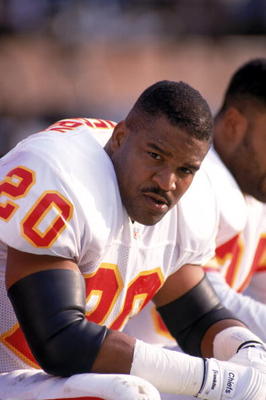
FS Derron Cherry was the centerpiece of this secondary who was voted 5 times All Pro and a 6 time Pro Bowler…

How often do you hear NFL, collegiate, or even high school football coaches say that “Special teams is a third of the game”?? Then rarely use their special teams as more than a field position element of the game. Aside from the Chicago Bears of recent years with Devin Hester, very few use their special teams as a weapon. Nor do most teams use their superstars on this third unit.

Well in 1986, the Kansas City Chiefs fielded the best special teams and they were powered by the “Million Dollar Secondary” which was one of the best in NFL history. Safeties Derron Cherry and Lloyd Burruss coupled with the great cornerback tandem of Kevin “Rock” Ross and Albert Lewis manned the last line of defense.

You have to remember these were dark times for a once proud franchise. Not since the Christmas Day 1971 game of Ed Podolak in the longest game ever played vs the Dolphins, had the Chiefs participated in postseason play. Nothing was really expected of the ’86 version as well.

There was an impasse at quarterback where the team went back and forth between quarterback’s Bill Kenney and Todd Blackledge with moderate success. They ran the football by committee between ex Browns Boyce Green and Mike Pruitt and as the season was concluding was down to KR Jeff Smith running the football. Smith’s real claim to fame was the National Championship upset where the Miami Hurricanes upset Nebraska, 31-30 in the ’84 Orange Bowl. It was Smith (Mike Rozier’s backup) who scored the final touchdown before the fateful two point attempt. Aside from Stephone Paige who once held the NFL record with 309 receiving yards in a game, none of these players were of distinction or Pro Bowl performers.

However there was hope in the #4 rated defense in the NFL that kept games close and special teams coach Frank Gansz utilized the best players on the team. This included Pro Bowlers Cherry, Burruss, and NT Bill Maas. Albert Lewis was a master at blocking punts as well. Cherry was All Pro at safety, having picked off 9 passes, to share that distinction with Ronnie Lott. Strong safety Lloyd Burruss (5int.s) enjoyed his best season in 1986 leading the NFL in both int. return yards 193 and touchdowns with 3.

In fact it was Burruss with 2 interception returns for touchdowns against eventual AFC Champion Denver in week 14, that put the Chiefs in position to make the playoffs. It was this 37-10 victory that allowed the Chiefs to control their destiny with an 8-6 record. A win the following week against the Los Angeles Raiders set the Chiefs up for a do or die game in Pittsburgh to make the playoffs.
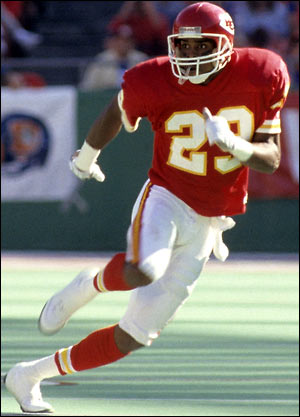
…as was 4 time Pro Bowl CB Albert Lewis.

What took place was one of the oddest games in NFL history in one regard, and one where a team taught everyone what it meant to use their special teams as a weapon. The Chiefs defense actually had one of it’s worse games of the year as they allowed 515 yards to Mark Malone and the Steeler offense. It was actually the Chiefs special teams fault they gave up so many yards. However they kept the Steelers out of the endzone for much of the day.  Of course the Chiefs offense disappointed only gaining 171 yards with the football. So what happened??

They took control in the 1st quarter when they had the Steelers backed up near their own goal line. Where most teams set up for a midfield return, Gansz and the Chiefs attacked. Cornerback Albert Lewis flew in from the wing to block the punt which was recovered by Derron Cherry in the endzone to take a 7-0 lead, silencing Three Rivers Stadium. Funny thing was had Lewis not blocked the punt, Lloyd Burruss would have as they crisscrossed right in front of the punter.

After trading field goals in the 2nd quarter, Boyce Green returned the subsequent kickoff 97 yards to extend the Chief lead to 17-3. A team with less than 100 yards of total offense had nearly a two touchdown lead in a game they needed to make the playoffs. Go figure…yet before the Steelers could get to halftime and make adjustments their offense raced downfield to narrow the score following another field goal.

The Steelers were in position for a Gary Anderson field goal to bring Pittsburgh to within a touchdown. The crowd would be back in the game and with the Steelers defense totally stifling the Chiefs offense, the game would turn in the second half right?? Well not quite. Pro Bowl Nose Guard Bill Maas charged through two Steeler linemen and blocked the kick. Lloyd Burruss snatched the loose ball and sailed 78 yards to an insurmountable halftime lead of 24-6. The Steelers made it close but with a chance to win it late in the 4th quarter, LB Tim Cofield forced an errant throw by Malone that was intercepted by Lewis to preserve a 24-19 win.

This great secondary who rarely got their due outside of Kansas City had performed a game for the ages on defense and special teams. They kept scoring and putting themselves on the field yet only allowed 1 Steelers touchdown. If I were to wake you and tell you that you missed a game where a team won the game without scoring an offensive touchdown and were outgained 515-171 on the road, would you believe me?? Folks it happened.

For 1986, this group led the NFL in interceptions and blocked kicks with 5. Burruss, Cherry, Lewis, and Ross intercepted 18 passes themselves. This team lost the AFC Wild Card to the New York Jets 35-15 to end their season, yet before they went away quietly Albert Lewis scored one of the Chiefs touchdowns with another blocked punt.  After this teams more and more started putting some of their best players on special teams. It was this special unit in 1986 that showed how lethal your special teams can be utilizing your best talent.

Thanks for reading and please share the article.

The Soul of The Game: Remembering Joe Delaney

On this date in 1983, the Kansas City Chiefs and the football world were shocked to hear Joe Delaney had died. He had been a lightning rod of excitement for two years as their featured back after being drafted out of Northwestern State. The Chiefs franchise had been down for the better part of a decade when Delaney burst onto the scene in 1981.

He ran for 1,121 yards on 234 carries with 3 TDs while winning AFC Rookie of the Year and Pro Bowl honors. He was the team’s lone legitimate star. He set the Chiefs all time rushing record of 196 yards against the Houston Oilers with Earl Campbell on the other sideline.

The strike shortened year of 1982 saw his numbers cut down significantly having only played 9 games. He was nicked with injuries and defenses were better prepared for him as he rushed for only 380 yards. He had the same injury that Sugar Ray Leonard made famous a year earlier, a detached retina. Yet what was going to be a bounce back year in 1983 for him didn’t come to be.

Aside from his untimely death, it’s sad to think what might have been. How great could he have possibly become as a player, father, or man of his community. As you’ll see in the short film he was one to donate his time to the youth of Houghton, Louisiana.

His loss was felt all around the NFL as teammates and foe alike all pondered what might have been. On October 7, 1984 at the press conference when Walter Payton broke Jim Brown’s NFL All Time rushing record, Joe Delaney’s name was the first he mentioned when he spoke of those with the same spirit that were unable to complete their careers who died before their time.

Joe Delaney left us 29 years ago today. His number 37 was retired for the Kansas City Chiefs and his #44 from Northwestern State was also retired. He was enshrined in the Chief’s Ring of Honor and team Hall of Fame. Gone but never forgotten and definitely a hero always.

Dedicated in remembrance of Joe Delaney (October 30, 1958 – June 29, 1983)

The Soul Of The Game: Herb Adderley

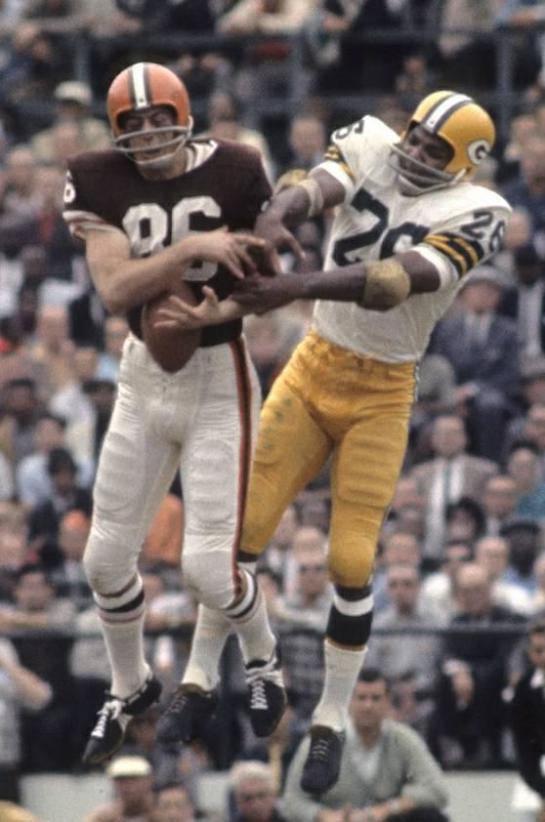
When we look back at NFL history, we know one of the greatest teams was the Green Bay Packers of the 1960’s. Lombardi’s teams were tough teams that played simple football on offense. Defensively they ran the traditional 4-3 and may have had the best set of cornerbacks in Bob Jeter and Herb Adderley. The Packers were always ahead in games and pressure was on the secondary to shut down an opponents passing attack and along with Hall of Fame safety Willie Wood, they performed that task perfectly.

Adderley was one of the best athletes of his era and could blanket receivers and was an aggressive tackler. At 6’0 205 lbs he could run in the open field with the tallest and fastest receivers and compete for the ball.  He was the Deion Sanders, the Hanford Dixon, or the Lester Hayes of his day. Or we could call him the Charles Haley of his day. Do you realize he played on 6 NFL championship teams?? Had Jim O’Brien missed a late game field goal in Super Bowl V, it could have been 7!!

In the 1960s, cornerbacks played a more physical game than they do now. Not only were they able to hit or chuck a receiver all over the field before the ball was thrown, they had to be better tacklers in a run oriented NFL. As you’ll see in the video, Adderley was a hitter. Yet when Packers opponents took to the air Adderley was ready. In his second season (1962)  he exploded onto the scene with 7 interceptions in which he returned 132 yards and 1TD.  It was the first of his four All Pro selections in Green Bay. Was All Pro 5 times for his career.  However he had an even better season in 1965. He picked off 6 passes returning them for 175 yards and 3 touchdowns as the Packers dethroned the Cleveland Browns to become NFL Champions…again. His 3 touchdowns on interception returns was a league record that stood until 1972.

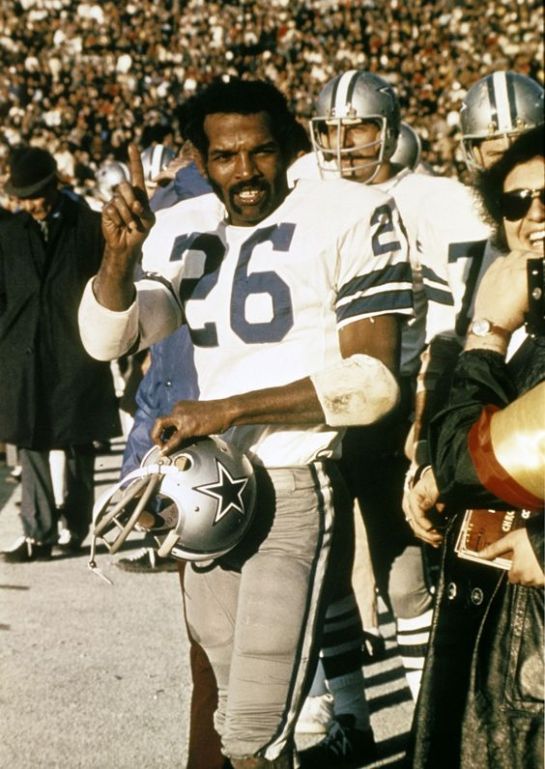
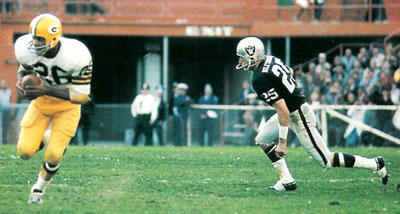
After the Packers championship years the team had aged and Adderley was traded to the Dallas Cowboys and helped that team get over the hump. They lost Super Bowl V yet came back the following year and won it all. For his career he intercepted 48 passes and returned 7 for touchdowns, the most famous, being a 60 yard interception return in Super Bowl II against the Oakland Raiders. He played in 4 of the first 6 Super Bowls. He was a member of the 60’s All Decade team and made the Pro Bowl 5 times. If ever there was a Hall of Fame resume for a career, it was Adderley’s. For all his championships even in his last season in Dallas, they made it to the 1972 NFC Championship Game.

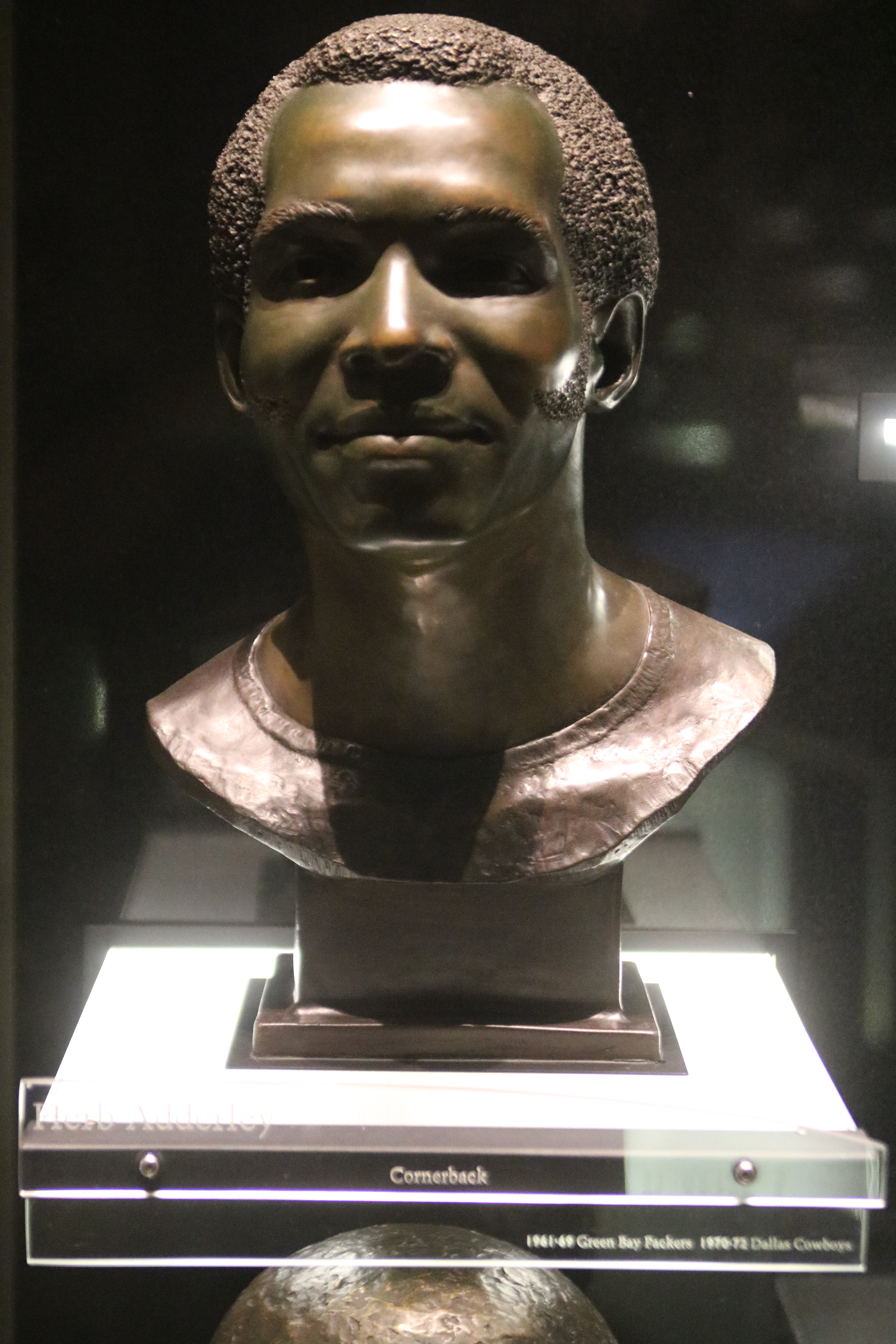
With his speed, instincts, and physicality, Adderley is the one corner that could have played in any era in NFL history.


Herb Adderley was a 6 time world champion. Hall of Fame cornerback who could have played in any era. What would he have looked like in the modern NFL with today’s training methods and equipment??

hof-adderley

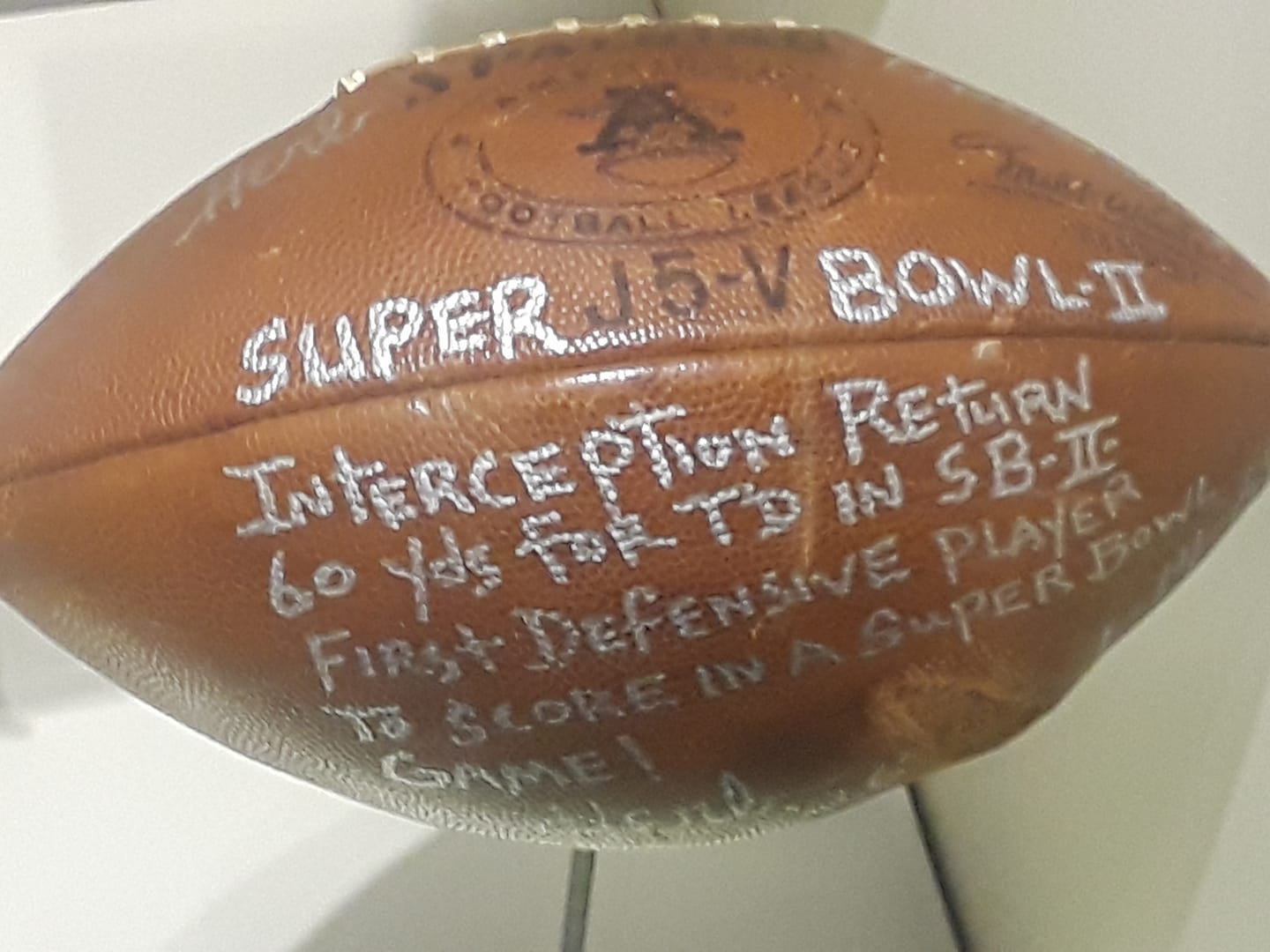
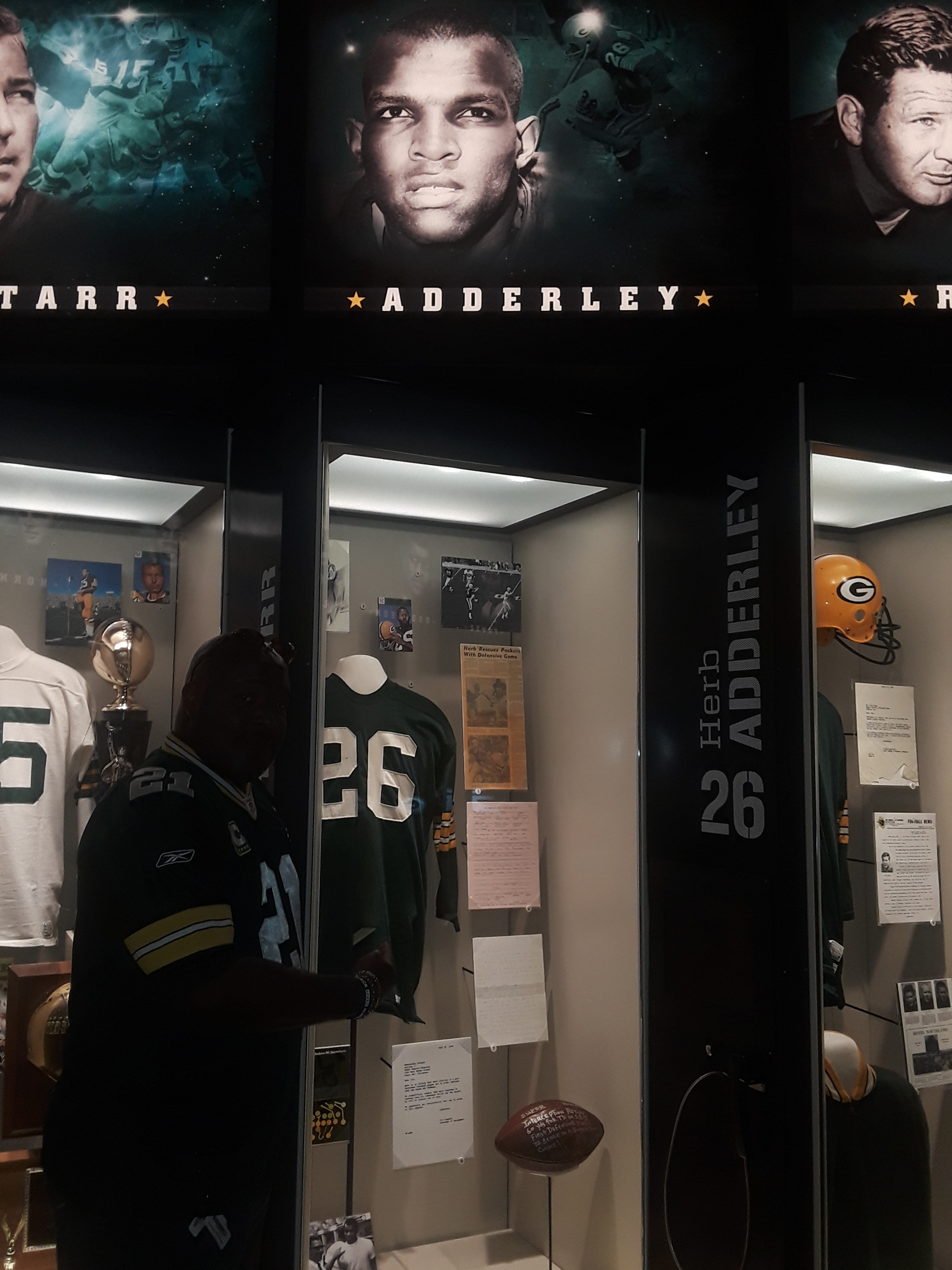
Prologue: One spoil of war that sits in the Green Bay Packer Hall of Fame inside Lambeau Field is this football.

AdderleyIntercepts

During the first 4 Super Bowls each team used footballs from their league when on offense. Wilson NFL footballs for Green Bay and Spalding AFL footballs for the Chiefs and Raiders in I & II. When Adderley returned a pass intended for Fred Biletnikoff 60 yards for the 1st defensive touchdown in Super Bowl history, he carried an AFL football with him. It made it to Green Bay where it is on display forever.

adderley.ball


Thanks for reading and please share the article.
adderley.packer.hof.jpg


Lester Hayes Belongs In The Hall of Fame

As the NFL changed the rules in 1978 to liberate the passing game, many thought the big physical cornerback would give way to smaller quicker men. Those who could turn and run with receivers after the 5 yard “chuck” zone (The Mel Blount Rule) would be highly sought after. Yet one team held steadfast to the belief of not allowing that receiver a free ride off the line of scrimmage.

The Oakland Raiders who in 1977, just one year removed from winning Super Bowl XI, selected Lester Hayes out of Texas A&M. Where the league saw smaller cornerbacks at 175-180 lbs enter the league at that time. Hayes was a converted college safety who stood 6’0 and weighed 200 lbs.

Does he have on enough stickum??

His inclusion into the Raiders organization was at the right time as Hall of Fame cornerback Willie Brown retired and took over as secondary coach. Under his tutelage Hayes became a master of bump and run coverage and with his size, manhandled receivers at the line of scrimmage. Sure a receiver could run free after 5 yards but he had to get there first.

Another retiring Hall of Fame Raider was WR Fred Biletnikoff who went against Hayes in practice. Fred ran crisp routes and was a slower version of Steve Largent or a Charlie Joiner. Going up against he and Cliff Branch, who was the one of the league’s perennial deep threats, honed his skills to that of one of the greatest cornerbacks the game had ever seen. He also borrowed Biletnikoff’s use of stickum and took it to obscene levels. Take a look at the pic on the right if you think we’re joking.

Stickum talk aside, his true coming out party was the 1979 season where he led the team with 7 interceptions, returning 2 for touchdowns in the only losing season for the Raider organization during the 1970’s. John Madden had retired and Tom Flores had taken over as Head Coach and the Raiders were a team in transition.

Most teams make a transition in personnel with a defensive leader being a linebacker or a star defensive lineman being a marquee player yet here was a cornerback just starting to make a name for himself at the helm. However he couldn’t unseat Louis Wright of Denver, Mel Blount of Pittsburgh, or Mike Haynes of New England on the 1979 AFC Pro Bowl roster. Naturally you’ll conclude they had better seasons yet Blount and Haynes made it on reputation with only 3 interceptions each and Wright only had 2. A gross injustice just because Hayes team had slipped that year.

Enter the greatest single season for a cornerback in NFL history and the greatest coaching job in NFL history…the 1980 Oakland Raiders. In the second season for Tom Flores, the Raiders became the first team to win the Super Bowl from a wildcard position. The team had replaced nine defensive starters from a Super Bowl team just four years before.

Lester Hayes intimidating style at cornerback belied his agility to cover the fastest and best route runners in the NFL.For the season, he picked off 13 passes, just one short of the NFL record by “Night Train” Lane in 1951.  Not only was that the highest total in 29 years, no cornerback has come within 2 of that performance since then (Everson Walls in 1981). He returned those passes for 273 yards and one touchdown and went on to be the Associated Press NFL Defensive Player of the Year.

He was the first player to receive the award while playing for a team that didn’t finish as a top 10 defense with the Raiders finishing 11th. He did this while facing Hall of Fame WRs Steve Largent in Seattle, Charlie Joiner and Kellen Winslow in San Diego, and the electrifying John Jefferson also of the Chargers with whom he had epic battles with.

During the 1980 season teams kept testing him and coming up snake eyes. If you added his 4 interceptions during the playoffs he finished with 17 interceptions in one season. If you look at that against the year Hall of Famer Deion Sanders won his NFL MVP (1994 with San Francisco) from the same position, 6 interceptions for 303 yards and 3 TDs with 2 more ints. in the postseason, it dwarfs it tremendously. Sanders needed another NINE interceptions just to tie him!!!  You would have to add Deion’s next FOUR seasons with Dallas just to tie him with 17!! Tremendous

Oakland went on to win Super Bowl XV and the 80 playoffs began with a wildcard battle against Houston and former quarterback Ken Stabler. The Raiders prevailed 27-7 with the final points scored on Hayes intercepting Stabler and returning it 20 yards hand held high to send the Raiders to Cleveland and the divisional round.

He intercepted Stabler twice then intercepted 1980 NFL MVP Brian Sipe twice in the 14-12 upset of the Browns. In the AFC Championship against the Chargers and the Super Bowl with the Eagles, Dan Fouts and Ron Jaworski just didn’t throw into his area. How do we know this?? In Super Bowl XV Hayes was the left cornerback. Jaworski threw exclusively to his left and Right OLB Rod Martin picked off a Super Bowl record 3 interceptions in a 27-10 win.

The NFL outlawed stickum after that 1980 season in anther decision that Raider loyalist felt was the offspring from the court battle between Raiders’ owner Al Davis and commissioner Pete Rozelle. Some thought that Hayes inability to use stickum had a lot to do with his interception total dropping, when in fact quarterbacks just flat didn’t throw into his area. He never intercepted more than 3 passes in a season from that point forward.

Lester Hayes showing off both rings from Super Bowl XV and XVIII

After being overshadowed by Mike Haynes for that 1979 Pro Bowl slot, he was joined by his former counterpart in 1983 to form one of the greatest CB tandem in NFL history. In that year the Washington Redskins became the highest scoring team in NFL history scoring 541 points on their way to Super Bowl XVIII. Washington’s quarterback Joe Theismann was the NFL’s MVP and the Redskins were being hailed as the greatest team in NFL history…yet they had to defend their title against Los Angeles.

The Raiders started their charge in the 83 playoffs with a 37-10 devastation of the Pittsburgh Steelers which ironically began with Hayes getting the team started with an 18 yard TD interception return. After a 30-14 win against the Seahawks in the AFC Championship experts had the Redskins winning a high scoring game.

What took place in Super Bowl XVIII was a dismantling of epic proportions. Charlie Brown, who had caught 78 for 1,225 and 8 TDs during the regular season, was smothered along with Art Monk and held to a combined 4 receptions by Hayes and Haynes. The coverage was so superb the Raiders blitzed their linebackers and recorded 6 sacks as Joe Theismann had his worst game of the year. His stat-line?? Theismann was held to 16 of 35 for 243 yards and 2 ints. Only one pass was completed in Lester Hayes area the entire day. He won his second championship ring as the Raiders won in dominating fashion 38-9.

Hayes at this point was the best cornerback in all of football. He played in 5 straight Pro Bowls from 1980-1984 and was the player most future NFL’ers modeled their game after. Most notably Hanford Dixon of the Cleveland Browns. Everything from the three foot long towel hanging from his waist to his aggressive play against a receiver at the line. Dixon and Frank Minnifield are the tandem that Lester Hayes and Mike Haynes are most often compared to. As a combo… Dixon and Minnifield were the best tandem in NFL history. Yet the man who coined the Brown’s “Dawg Defense”, was a 3 time Pro Bowler who modeled himself to be like Lester, what would you call Hayes?? In The Chancellor’s book, he’s a Hall of Famer.

Please lend your thoughts as well by writing in to the Pro Football Hall of Fame to the address below. Please be respectful and positively lend your voice:

Please write & nominate #37 Lester Hayes
Send letters to:
Pro Football Hall of Fame
Attention Senior Selection Committee
2121 George Halas Dr NW, Canton, 
OH 44708

For induction into the Pro Football Hall of Fame, I present to you Lester Hayes

lester

The Soul Of The Game: The Purple People Eaters

The Minnesota Vikings front four was anchored one of the greatest defenses in NFL history. They were the NFL’s first super front four and it’s members consisted of Hall of Famers Carl Eller & Alan Page. Gary Larsen was the other DT, later replaced by Doug Sutherland, and DE and team captain Jim Marshall who should be. Although the 1968 Baltimore Colts were heralded as the greatest defense in NFL history for giving up a record 144 points on the way to Super Bowl III, it was this group that broke that record with 133 allowed  in 1969. They also powered the Vikings to 12 straight wins (longest win streak in 35 years) and carried the team on it’s back to Super Bowl IV.

All four made the Pro Bowl in 1969.

All four made the Pro Bowl in 1969.

This defense made history as well. DT Alan Page was the first defensive player in NFL history to win the MVP of the league in 1971. No player would win that honor again until New York Giants LB Lawrence Taylor, who won the honor in 1986. What is interesting was the year Page won the award the Vikings didn’t make it to the Super Bowl. They lost to the Dallas Cowboys, who went on to win Super Bowl VI.

Yet this team was remembered for having reached the Super Bowl 4 times. Although they came up short in the big game as a team, what this defensive unit was able to do from 1968-1977 was spectacular. The team won 9 division championships on the way to 4 conference championships. It’s possible that they would have won a fifth conference championships and played in 4 straight Super Bowls had Dallas not completed the Hail Mary in the 1975 divisional playoff game. They preceded the Dallas Cowboys Doomsday Defense, the Steelers Steel Curtain, or the Denver Broncos Orange Crush.  These were the super defenses of the 1970s immortalized by nicknames to accompany their fierce play. At the head of that pack for a decade of dominance wrests the Purple People Eaters.

Thanks for the years of great play gentlemen.vikings today

The Soul Of The Game: Harry Carson

Over the course of an NFL career there may not have been a more overlooked Middle Linebacker than the heavy hitting Harry Carson of the New York Giants. For 13 years he was the man in the middle for the Giants, first as the guy in a 4-3 defense. Then once the Giants drafted Lawrence Taylor he shared inside linebacker duties in a 3-4 unit. Adulation and praise for his play was slow and coming from NFL fans everywhere but Giants fans knew his true value. His peers voted him to a record (at the time) nine Pro Bowls with the last coming in 1987.

He was the most physical inside linebacker in the heyday of the NFC East, which at that time had 1,000 yard rushers in Hall of Famer John Riggins of the Redskins, Hall of Famer Tony Dorsett of the Cowboys, Wilbert Montgomery of the Eagles, and Ottis OJ Anderson out of St Louis. The success of the Giants in the early to mid 80s began with Carson stuffing the opponents running game, then unleashing Lawrence Taylor and Leonard Marshall after opposing quarterbacks.

At 6’2 235lbs, Carson looked even bigger in his oversized shoulder pads and thigh pads. He was a more imposing presence in the middle which includes Mike Singletary as one of his contemporaries. Yet make no mistake about it, Carson was a cerebral player who reduced his position to one of angles and leverage. He read offensive blocking schemes and reduced the number of steps needed to get to the ball carrier and never took the wrong angle. In that aspect he was a modern day version of Willie Lanier of the 1960s Kansas City Chiefs.


Carson was the lone defensive stalwart on a losing Giants team for much of his career. Once the Giants surrounded him with other defensive stars during the 1980’s with Taylor, Carl Banks, and Leonard Marshall to go along with long time DE George Martin to form one of the finest defenses of the 1980s.  He led them through the losing years, then all the way to the Super Bowl XXI triumph over the Denver Broncos. In 1988 Carson retired and was enshrined in the Pro Football Hall of Fame in 2006.

Thanks for reading and please share the article.