The Chancellor Of Football’s Take: Hall of Fame Voting

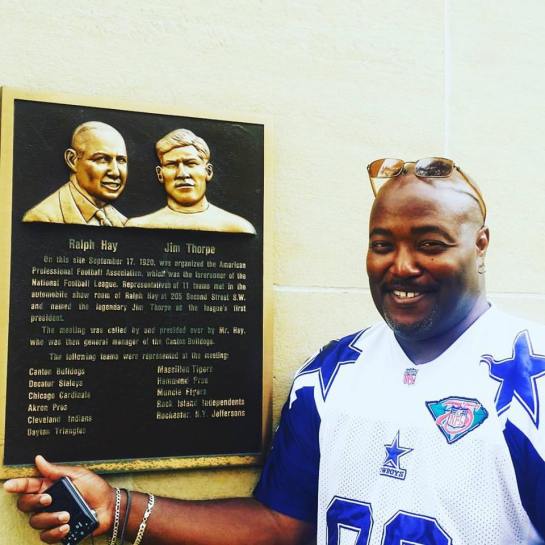
The Pro Football Hall Of Fame in Canton, Ohio

Aritcle Reissue: 29, August 2012

The world has been rocked with the snub of Bill Belichick not being selected for the PFHoF on the first ballot and the selection process has now been scrutinized. Well 12 1/2 years ago during the height of my advocating for players for the Hall I brought this up. This was before even the Terrell Owens snub. For those new here, 13 of the 22 men (links below) I advocated for are now enshrined and I’ll send a letter to the PFHoF asking to  become a voter. I’ve kept it respectful and wrote out what I would argue in the same room with those voters. I touched this up over the years but here is the original article:

When I learned that Jerry Kramer was skipped over as a senior nominee for the Pro Football Hall of Fame, I just had utter contempt for the sportswriters who seem to be the gatekeepers of history. It felt like they were going to work against the groundswell of support for Kramer and the passion from fans talking about his exclusion. I think the selection committee needs to have a few more wrinkles thrown into the mix.

Sure there are personal reasons as to why I would think a player deserves to be in the Hall and is the foremost problem with the voting. There is no way to ignore your own thoughts or feelings about a person’s nomination being put before you. There will be partiality. You’ll remember that last year (______) didn’t vote for my guy so I won’t vote for his this year. That is human nature. So you have to do it by a committee there would be no other way.

Chancellor.halloffameWhen I think of the Pro Football Hall of Fame, I think of a treasured museum for everyone who ever played the game, at ANY level, could appreciate. The ongoing history to the greatest sport there is and the telling of that story. Don’t tell me that Emmitt Smith is the greatest if you can’t tell me who Jim Brown was, or OJ Simpson, Ernie Nevers, or who Steve Van Buren was. Someone saying he didn’t see Bronko Nagurski or Red Grange isn’t enough. There are books, the Taylor Blitz Times or more important this incredible museum housing all this history. That’s what makes this building significant.

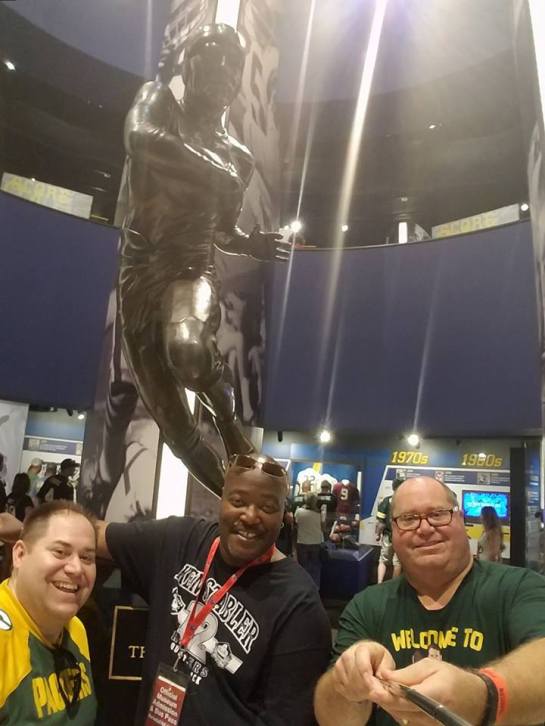
hof_gallery_visit-1With it’s enshrinees and special wings to memorable moments, the 92 year history of the NFL, the 10 years of the AFL, and early football pioneers before the NFL, come to life. This is where fathers get to teach sons moments in history… Like the famous “wristband” of Baltimore Colt running back Tom Matte from the 1960s. When injuries to the Colts quarterbacks pressed Matte into service, Don Shula supplied him with a “wristband” with the play calls on it for him to remember. That is how he got through the game as a fill in quarterback.

Not only does that legacy live on to this day with every NFL quarterback wearing one, but right now as you read this…there is a father or mother teaching their son that story and looking at the actual “wristband”. What dreams and goals will that kid aspire to upon learning that and tossing the ball with his father the next day?? What if that kid grows up to be the next Dan Marino or Johnny Unitas??

chancellor.blackcollegeThis is why it is important the players, coaches, innovators, owners and their stories should be here to be told. Its for us to relive moments and future generations to learn how things came to be. The special men who were the embodiment of  the very spirit of football.

Which brings us back to The Chancellor’s thoughts on the matter. A few things should be changed which would allow for a  smoother selection process. First things first… we couldn’t just turn the vote over to the fans. This would significantly cheapen the situation and dumb it down to just a popularity contest. We would just have Dallas Cowboys or Pittsburgh Steelers enshrined from this point on…so this one gets thrown out yet not entirely…

The first item to be changed is there should be 30 Hall of Fame players involved in the voting. Who would be better at this than those players who played with or against players coming up for nomination?? How has it gone this far without their inclusion?? A Hall of Famer would best know what another Hall of Famer would look like and play like. Here a nominee would need a majority vote. These votes are confidential…

Secondly, scale back the number of non football playing voters to 30, which would include the Chancellor, and these accounts along with enshrined members would be a better panel to debate who is a Hall of Famer than not. Those writers would be able to hear accounts from the inside that they wouldn’t be aware of without hearing from those players peers. Here a nominee would need half of the vote to make it. Not only that…there needs to be new blood in this pool with the advent of successful blog writers and historians in the mix, the terms for limitation to be on this committee should be 7-10 years. These votes aren’t confidential…

ryan.ronLast would be one where the fans would have a vote. A write in candidate with a specific number of write in votes by the fans and former players. That number to be determined and the fans (who are the paying customers) would have a little say. Number to be determined later by a committee.

If this were to be done there would be a better selection process and those voting would be held accountable for their vote. Why have the Hall of Famers votes confidential?? They belong to an exclusive club. Its like the Ray Nitschke luncheon. That is not for us… that is for those players who belong to that club to share in it’s exclusivity about what it means to be there and how they are their brother’s keeper. They don’t have to share who they think should be in and why. They do so with a vote.

My feelings on the selection process has been this way for many years yet I had the chance to see it from the other side. Those of you who have been following this blog know that I have my own nominations for players who should be in the Hall of Fame. One of the first articles I wrote was on Jerry Kramer last year on July 26th. Now I’m not exactly sure as to where it took place but I shared many videos of the 1960’s Green Bay Packers here and on Facebook. I came to know Alicia Kramer who spearheaded a great campaign to help her father get inducted to his rightful place. She asked me to be an administrator to the facebook page Jerry KramerHOF to which I was honored.

Seriously, I read two of his books as a kid including Distant Replay, which is one of the reasons I love and write about Pro Football. The fact that he had read and enjoyed a few of my stories on Facebook were a reciprocal part of the journey and why I share with other fans what is on my mind about football and the history of the game.  I contributed as often as I could with videos and such and wrote a letter to “The Hall” pleading for his nomination. I remember uploading the 1968 Green Bay Packers America’s Game to the page. To be right there from the start of that page and watch her work grow to include Hall of Fame members lending their support and passionate fans as well, it is something incredible to be a part of.

When the senior nomination came back without Jerry Kramer’s name on it, I took it personally…and still am. There were countless letters written by enshrinees such as Lem Barney, Jim Kelly, Bob Lilly, Dave Wilcox just to name a few yet Kramer’s nomination comes down to writers over former players?? No way. All the while from my first article to placing it on my Facebook page several times, at least one person would ask “Jerry Kramer is not in the HOF?” every single time.

I also shared an email exchange with Kevin Greene when he didn’t make the finalist round this year. These players who deserve their legacies to be secured earned this right. Those gatekeepers to history need to be guarded more by the enshrinees themselves than writers. That is what I learned from this last year through Alicia’s work. If it were up to them, Kramer wins by a landslide. Yet its time for forward and positive energy. Onward to 2013 and his certain nomination.

kramer.hof

Dedicated to the memory of Hall Of Fame Member Steve Van Buren who passed away last week. RIP You were a great running back and a true warrior of the game. Thank you!!

Other articles on who The Chancellor thinks should be in the Hall

Kevin Greene

Chuck Foreman

Lester Hayes

Tom Flores

Cris Carter

Everson Walls

Terrell Davis

Randy Moss

Sterling Sharpe

Robert Brazile

Drew Pearson

Cliff Branch 

Ken Stabler

Ken Riley

Corey Dillon

Roger Craig

Andre Reed

Edgerrin James

Hardy Nickerson

Wilber Marshall

Mike Holmgren

Todd Christensen

Eli Manning

Thanks for reading and please share the article.

Roger Craig Belongs in the Pro Football Hall of Fame


Those high knees

Reissue of original Article: 13, November 2013

When you think back to Bill Walsh’s great 49er teams, who are the first players you think of?? Right there with the Joe Montanas, the Jerry Rices, and Ronnie Lotts it only takes a fraction of a second to think of Roger Craig. His high knee running style brought a physicality to the San Francisco offense that was seen as a finesse group up until his arrival. In fact he came to San Francisco as a fullback when they drafted him from Nebraska before the 1983 season.

In college he had been primarily a blocking back in the Cornhuskers wishbone offense. Normally he paved the way for Jarvis Redwine and then Mike Rozier. Yet when Bill Walsh decided to revamp San Francisco’s dismal backfield after a 3-6 season in 1982, he drafted Craig in the second round.

Although the 49ers had won it all in 1981, it had become apparent Bill Ring, Amos Lawrence, Walt Easley, and Earl Cooper just wasn’t cutting it in the backfield. To raise the stakes in the NFC for 1983, Craig and newly acquired Wendell Tyler would form a more potent backfield.

After posting the worst yards per carry average (3.4) and yardage (742) in 1982, the new backfield duo of Craig and Tyler turned that around completely. The much improved ground game of 1983 ranked 8th with 2,257 yards rushing and a gaudy 4.4 yard average. Ironically just ahead of the Los Angeles Rams, who had traded Tyler to San Francisco so they could draft Eric Dickerson.

You had to give the nod to Craig who ran for 783 yards a team leading 8 TDs, while catching 42 passes for 427 yards and another 4 scores. This more dynamic backfield, along with Joe Montana, powered San Francisco to the NFC Championship Game. A 24-21 loss to the Washington Redskins was shrouded in controversy, thanks to some questionable calls, yet Walsh had the backfield he envisioned. Craig had reinvented himself from a collegiate player who rarely touched the football to a dual threat pro.
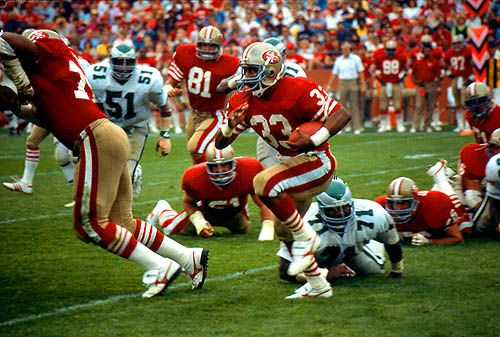
The 1984 49ers were a juggernaut becoming the first team to go 15-1 during the regular season. Everyone of the 49 man roster played their role so no one had outstanding stats. However once the 49ers moved past the New York Giants and Chicago Bears during the playoffs, the stage was set for a coming out party in Super Bowl XIX. With all eyes on Joe Montana’s possible second Super Bowl trophy and the electrifying record setting Dan Marino, Craig’s name didn’t even make the marquee.


Roger Craig graces the cover of Sports Illustrated after his record breaking performance in Super Bowl XIX.

Roger Craig graces the cover of Sports Illustrated after his record breaking performance in Super Bowl XIX.

It was his 1985 that set Craig apart as he amassed his 1,000/ 1,000 yard seasons both rushing and receiving. The first player in league history to do so. Some 27 years later, only Hall of Famer Marshall Faulk shares that accomplishment when he did it in 1999. How dominating was his performance?? Well his 1,050 yards rushing doesn’t jump out at you until you realize he only ran 214 times for a whopping 4.9 yards per carry. The league average is always around 4.0.

Oh by the way, he led the NFL in receiving that year with 92, which set a record for running backs, that amassed 1,016 more yards. His 15 total touchdowns was second to Joe Morris and was 1 better than NFL MVP Marcus Allen. In fact many pundits, including our CEO believes Craig should have been the MVP in 1985 with that dominating performance.

Now buoy his 1985 record setting season not culminating with the league MVP, on the backdrop of a Super Bowl record 3 TDs yet not winning that MVP and you’ll see where we’re going in a minute. Don’t forget he did this on a 10-6 San Francisco team that was a defending champion with Jerry Rice being a rookie that didn’t have 1,000 yards receiving and only 3 touchdowns. Craig quite simply fueled that offense.

Once the 49ers won Super Bowl XIX, they were forced to retool and become a bigger physical team. In 1985, the Chicago Bears emerged with one of the most imposing defenses in NFL history. The Giants followed suit with an overwhelming defense that featured 4 linebackers in the 250 lbs category. When Bill Walsh and his 49ers were dominated 49-3 in the 1986 NFC Divisional Playoffs by the Giants something had to be done.

These were teams the 49ers had beaten on their way to the ’84 championship, now they had taken the game to a new level of brute force. In reinventing the offense from a size perspective, it was Craig who was switched from fullback to halfback to allow for the insertion of Tom Rathman at fullback. The entire offensive line was overhauled.

You have to keep in mind the average career for a runner in pro football is less than 4 years. Yet here Craig was making the switch in year 5 to a position that called for him to be quicker. This at a time where he should have been slowing down from a physical standpoint. Yet he, Jerry Rice and Joe Montana spearheaded one of history’s most accomplished runs. From 1987-1990 the 49ers went 51-12 in the regular season, winning back to back Super Bowls in ’88 & ’89 and were the prohibitive favorites to win it all in 1987 as well as 1990. They finished #1 in offense in ’87 and ’89 and #2 in ’88 and ’90. In each year they made it to at least the divisional round of the playoffs and 3 straight NFC Championship Games as they were trying to threepeat.

Playing in only 12 games due to the ’87 strike, Craig ran for 815 yards which projects out to 1,086 over a full season. The 13-2 Niners were poised to become the greatest team of the modern era yet were upset by the Vikings in the playoffs. They were #1 in both offense and defense yet proved fallible in the playoff loss. Craig went on to his greatest performance in the 1988 campaign. In rushing for a career high and club record 1,502 yards, he also caught 76 passes for an additional 534  yards for his second season with over 2,000 yards from scrimmage. More important, he powered San Francisco to another Super Bowl championship with a win over Cincinnati in the XXIII’d edition.

Roger Craig was a hard nosed runner.

Roger Craig was a hard nosed runner.

Yet go back to 1988 being his second season with more than 2,000 yards from scrimmage. Keep in mind this was no sleek, make ’em miss halfback. He brought a punishing style to his position where he bludgeoned the opposition. As you’re reading this you can picture his high knee running style like when he trampled through the Rams on his most famous run in 1988.

Yet did you know that Emmitt Smith, Thurman Thomas, and Barry Sanders only had 2 different seasons amassing 2,000 yards from scrimmage also?? Did you also know that Marcus Allen and Adrian Peterson have only had one?? Only Edgerrin James, Marshall Faulk, Ladainian Tomlinson, and Eric Dickerson had more. What do all of these runners have in common?? Peterson and Tomlinson will be in the Hall of Fame and all the others are in. Roger Craig is right there with them.

Now going into the Hall of Fame is based on impact on the game. By the time we bring up the 1989 team that won Super Bowl XXIV, Craig was a driving force behind the team of the decade. Again he was a 1,000 yard rusher as the team won their fourth Super Bowl and Roger had his 3rd ring. When he left the game in 1993, his 566 career receptions was #1 among running backs all time and still remains 7th.

He is in the linear line of great NFL running backs when it comes to catching the football and is a part of the game’s evolution. He took the mantle from Chuck Foreman and propelled it forward. Since then, only a handful of every down running backs have provided that type of versatility. Now everyone has a receiving running back who comes in on 3rd downs where Roger was in every play.

It was Craig’s play that allowed a young Jerry Rice to flourish as teams concentrated their efforts to stop him. If Craig’s move to halfback in 1987 hadn’t panned out, what would have been the legacy of Bill Walsh’s “West Coast Offense”?? It was the run from 1987-1990 that made the offense spread it’s wings throughout the National Football League. During this time is when it proved it could take on the big bad Chicago Bears defense (see 41-0 1987 Monday Night shutout) and 28-3 NFC Championship win in Soldier Field in ’88. Then you add the rivalry with the New York Giants.

From Mike Holmgren to Denny Green to Mike White to Jon Gruden ( who had just begun coaching on the 1990 SF coaching staff) and George Seifert succeeding Bill Walsh. They all could attribute their Head Coaching jobs to some extent to Craig’s performance along with Montana and Rice. Yet the foundation of that offense running and receiving along with goal line and short yardage was #33.

By the way, when did Roger Craig become the the first running back to have a 100 yard receiving game in a Super Bowl?? You guessed it… Super Bowl XXIII against Cincinnati and not his record setting performance against Miami. Now had he won the Super Bowl XIX MVP, or the 1985 NFL MVP, would that have propelled him to winning the NFL MVP in 1988?? Give it some thought.

For induction into the Pro Football Hall of Fame, I present to you…Roger Craig

Lester Hayes Belongs In The Pro Football Hall of Fame

Originally Written June 1, 2012 -Reissued August 12,2025

As the NFL changed the rules in 1978 to liberate the passing game, many thought the big physical cornerback would give way to smaller quicker men. Those who could turn and run with receivers after the 5 yard “chuck” zone (The Mel Blount Rule) would be highly sought after. Yet one team held steadfast to the belief of not allowing that receiver a free ride off the line of scrimmage.

The Oakland Raiders who in 1977, just one year removed from winning Super Bowl XI, selected Lester Hayes out of Texas A&M. Where the league saw smaller cornerbacks at 175-180 lbs enter the league at that time. Hayes was a converted college safety who stood 6’0 and weighed 200 lbs.

Does he have on enough stickum??

His inclusion into the Raiders organization was at the right time as Hall of Fame cornerback Willie Brown retired and took over as secondary coach. Under his tutelage Hayes became a master of bump and run coverage and with his size, manhandled receivers at the line of scrimmage. Sure a receiver could run free after 5 yards but he had to get there first.

Another retiring Hall of Fame Raider was WR Fred Biletnikoff who went against Hayes in practice. Fred ran crisp routes and was a slower version of Steve Largent or a Charlie Joiner. Going up against he and Cliff Branch, who was the one of the league’s perennial deep threats, honed his skills to that of one of the greatest cornerbacks the game had ever seen. He also borrowed Biletnikoff’s use of stickum and took it to obscene levels. Take a look at the pic on the right if you think we’re joking.

Stickum talk aside, his true coming out party was the 1979 season where he led the team with 7 interceptions, returning 2 for touchdowns in the only losing season for the Raider organization during the 1970’s. John Madden had retired and Tom Flores had taken over as Head Coach and the Raiders were a team in transition.

Most teams make a transition in personnel with a defensive leader being a linebacker or a star defensive lineman being a marquee player yet here was a cornerback just starting to make a name for himself at the helm. However he couldn’t unseat Louis Wright of Denver, Mel Blount of Pittsburgh, or Mike Haynes of New England on the 1979 AFC Pro Bowl roster. Naturally you’ll conclude they had better seasons yet Blount and Haynes made it on reputation with only 3 interceptions each and Wright only had 2. A gross injustice just because Hayes team had slipped that year.

Enter the greatest single season for a cornerback in NFL history and the greatest coaching job in NFL history…the 1980 Oakland Raiders. In the second season for Tom Flores, the Raiders became the first team to win the Super Bowl from a wildcard position. The team had replaced nine defensive starters from a Super Bowl team just four years before.

Lester Hayes intimidating style at cornerback belied his agility to cover the fastest and best route runners in the NFL.For the season, he picked off 13 passes, just one short of the NFL record by “Night Train” Lane in 1951.  Not only was that the highest total in 29 years, no cornerback has come within 2 of that performance since then (Everson Walls in 1981). He returned those passes for 273 yards and one touchdown and went on to be the Associated Press NFL Defensive Player of the Year.

He was the first player to receive the award while playing for a team that didn’t finish as a top 10 defense with the Raiders finishing 11th. He did this while facing Hall of Fame WRs Steve Largent in Seattle, Charlie Joiner and Kellen Winslow in San Diego, and the electrifying John Jefferson also of the Chargers with whom he had epic battles with.

During the 1980 season teams kept testing him and coming up snake eyes. If you added his 4 interceptions during the playoffs he finished with 17 interceptions in one season. If you look at that against the year Hall of Famer Deion Sanders won his NFL MVP (1994 with San Francisco) from the same position, 6 interceptions for 303 yards and 3 TDs with 2 more ints. in the postseason, it dwarfs it tremendously. Sanders needed another NINE interceptions just to tie him!!!  You would have to add Deion’s next FOUR seasons with Dallas just to tie him with 17!! Tremendous

Oakland went on to win Super Bowl XV and the 80 playoffs began with a wildcard battle against Houston and former quarterback Ken Stabler. The Raiders prevailed 27-7 with the final points scored on Hayes intercepting Stabler and returning it 20 yards hand held high to send the Raiders to Cleveland and the divisional round.

He intercepted Stabler twice then intercepted 1980 NFL MVP Brian Sipe twice in the 14-12 upset of the Browns. In the AFC Championship against the Chargers and the Super Bowl with the Eagles, Dan Fouts and Ron Jaworski just didn’t throw into his area. How do we know this?? In Super Bowl XV Hayes was the left cornerback. Jaworski threw exclusively to his left and Right OLB Rod Martin picked off a Super Bowl record 3 interceptions in a 27-10 win.

The NFL outlawed stickum after that 1980 season in anther decision that Raider loyalist felt was the offspring from the court battle between Raiders’ owner Al Davis and commissioner Pete Rozelle. Some thought that Hayes inability to use stickum had a lot to do with his interception total dropping, when in fact quarterbacks just flat didn’t throw into his area. He never intercepted more than 3 passes in a season from that point forward.

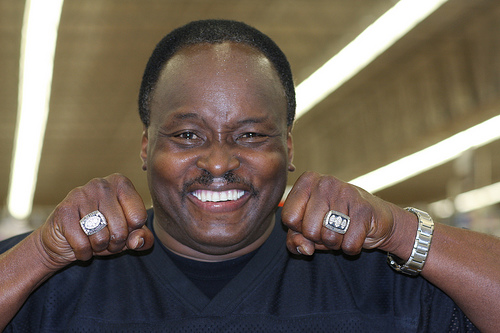
Lester Hayes showing off both rings from Super Bowl XV and XVIII

After being overshadowed by Mike Haynes for that 1979 Pro Bowl slot, he was joined by his former counterpart in 1983 to form one of the greatest CB tandem in NFL history. In that year the Washington Redskins became the highest scoring team in NFL history scoring 541 points on their way to Super Bowl XVIII. Washington’s quarterback Joe Theismann was the NFL’s MVP and the Redskins were being hailed as the greatest team in NFL history…yet they had to defend their title against Los Angeles.

The Raiders started their charge in the 83 playoffs with a 37-10 devastation of the Pittsburgh Steelers which ironically began with Hayes getting the team started with an 18 yard TD interception return. After a 30-14 win against the Seahawks in the AFC Championship experts had the Redskins winning a high scoring game.

What took place in Super Bowl XVIII was a dismantling of epic proportions. Charlie Brown, who had caught 78 for 1,225 and 8 TDs during the regular season, was smothered along with Art Monk and held to a combined 4 receptions by Hayes and Haynes. The coverage was so superb the Raiders blitzed their linebackers and recorded 6 sacks as Joe Theismann had his worst game of the year. His stat-line?? Theismann was held to 16 of 35 for 243 yards and 2 ints. Only one pass was completed in Lester Hayes area the entire day. He won his second championship ring as the Raiders won in dominating fashion 38-9.

Hayes at this point was the best cornerback in all of football. He played in 5 straight Pro Bowls from 1980-1984 and was the player most future NFL’ers modeled their game after. Most notably Hanford Dixon of the Cleveland Browns. Everything from the three foot long towel hanging from his waist to his aggressive play against a receiver at the line. Dixon and Frank Minnifield are the tandem that Lester Hayes and Mike Haynes are most often compared to. As a combo… Dixon and Minnifield were the best tandem in NFL history. Yet the man who coined the Brown’s “Dawg Defense”, was a 3 time Pro Bowler who modeled himself to be like Lester, what would you call Hayes?? In The Chancellor’s book, he’s a Hall of Famer.

Please lend your thoughts as well by writing in to the Pro Football Hall of Fame to the address below. Please be respectful and positively lend your voice:

Please write & nominate #37 Lester Hayes
Send letters to:
Pro Football Hall of Fame
Attention Senior Selection Committee
2121 George Halas Dr NW, Canton, 
OH 44708

For induction into the Pro Football Hall of Fame, I present to you Lester Hayes!

Past Hall of Fame Articles:

Robert Brazile 2011 (inducted 2018)

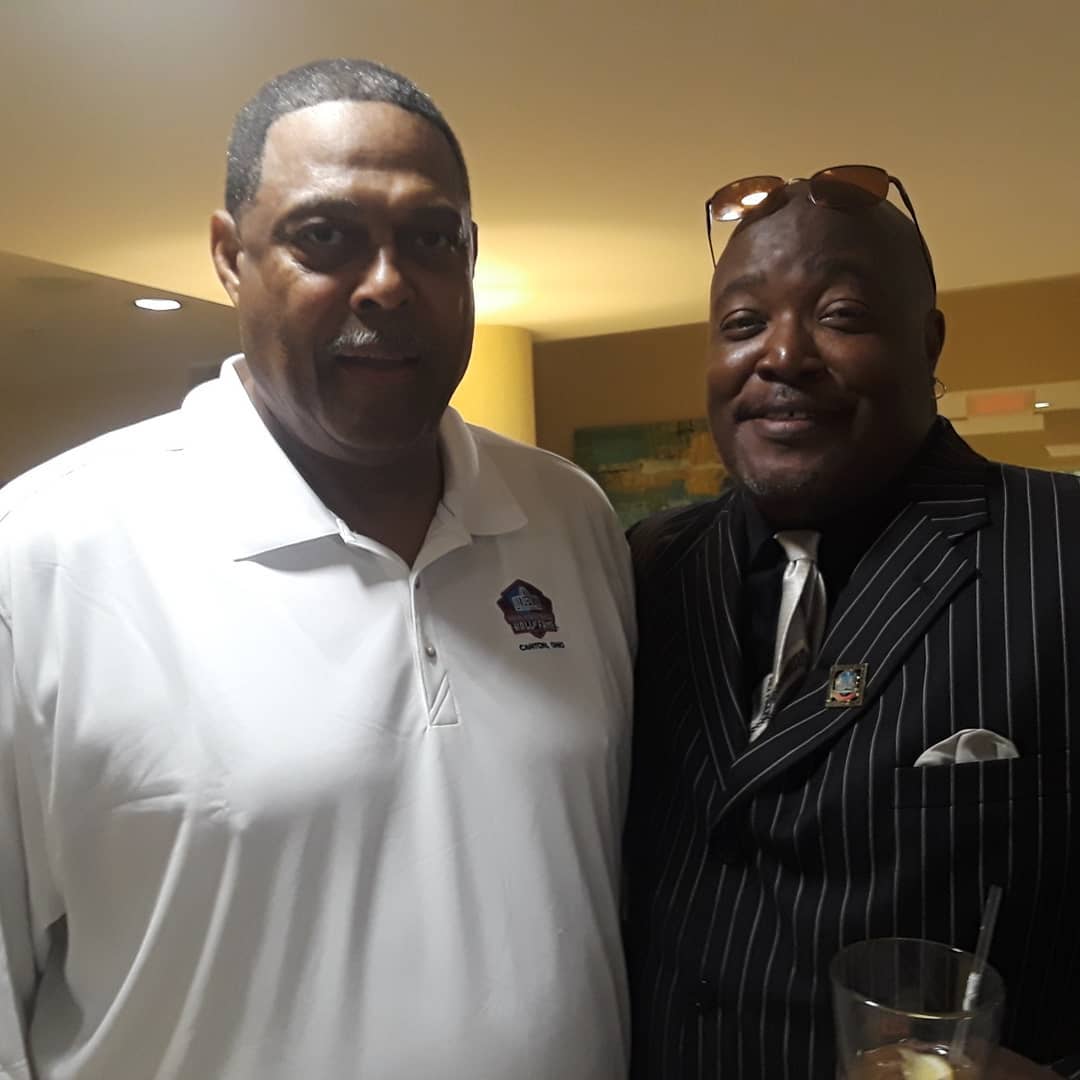
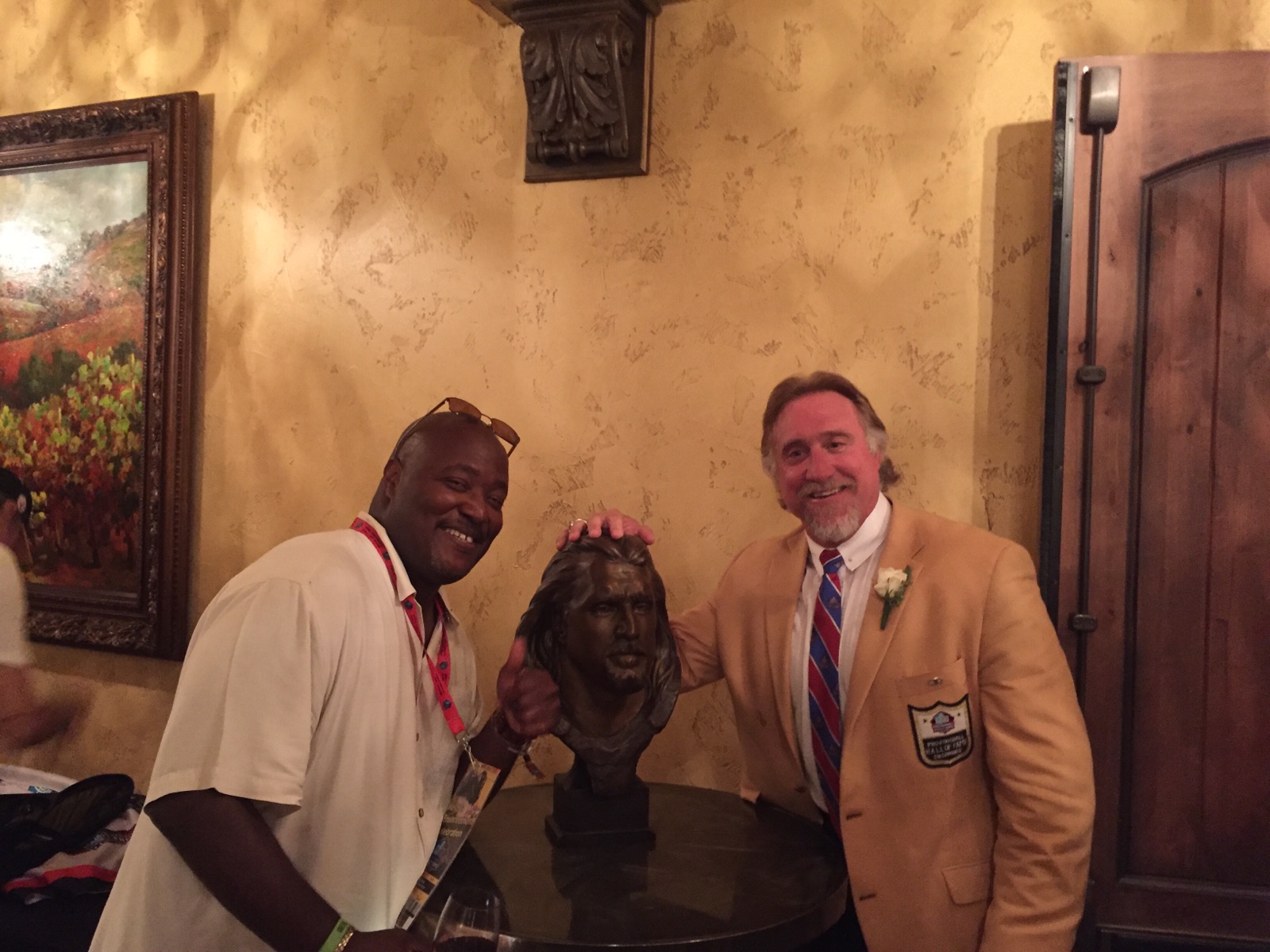
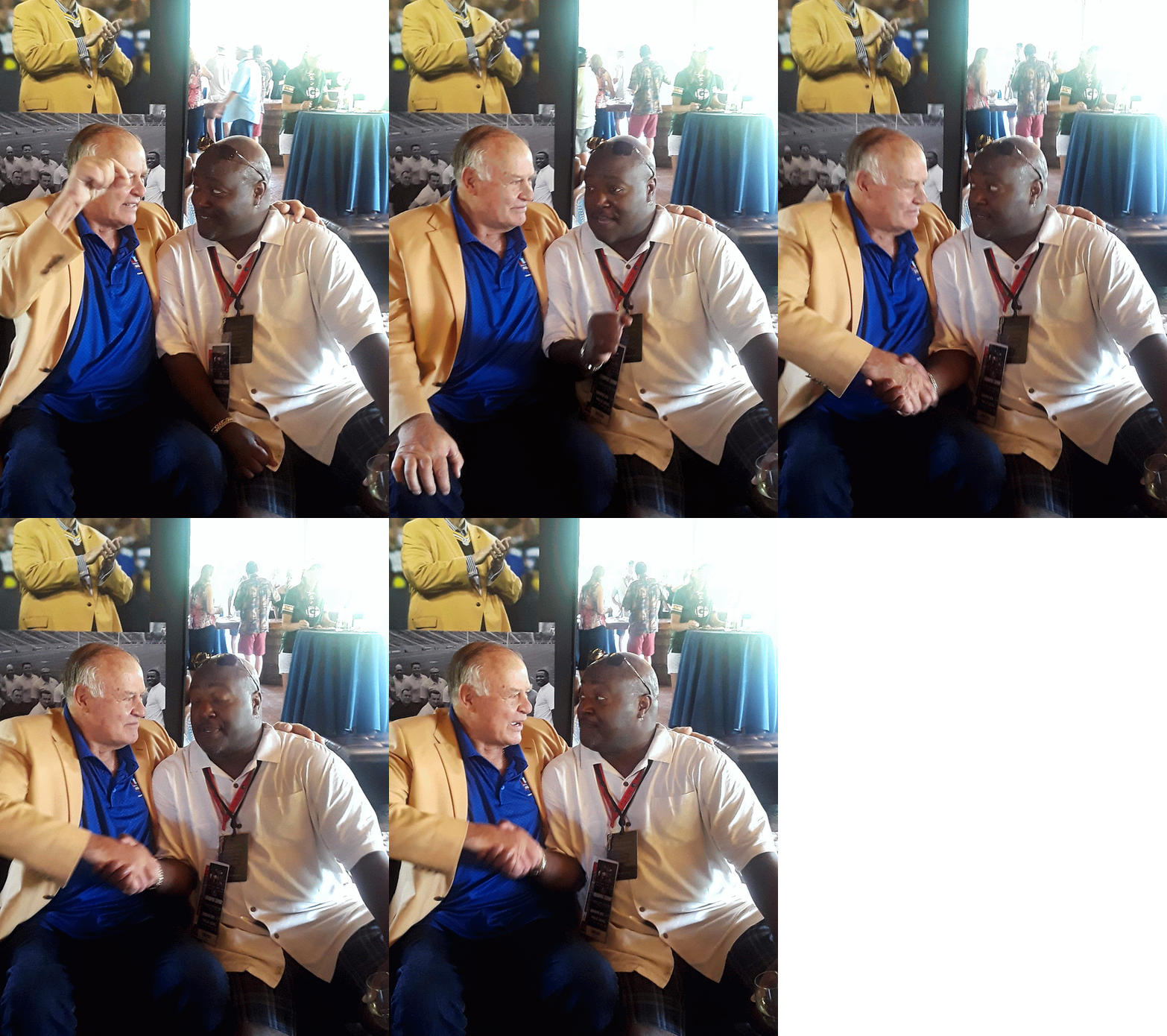
Ran into Robert Brazile after the Gold Jacket Dinner. Great time.

Kevin Greene 2011 (inducted 2016)

With Kevin Greene after the Induction ceremony.

Sterling Sharpe 2011 (will be inducted 2025)

Terrell Davis 2011 (inducted 2017)

Jerry Kramer 2011 (inducted 2018)

“Hey big guy!” ’18 HOF

Everson Walls 2011

Randy Moss 2011 (inducted 2018)

Cris Carter 2011 (inducted 2013)

Tom Flores 2012 (inducted 2021)

Lester Hayes 2012

Chuck Foreman 2012

Edgerrin James 2013 (inducted 2020)

Andre Reed 2013 (inducted 2014) 

Roger Craig 2013

Corey Dillon 2014

Ken Riley 2015 (inducted 2023)

Ken Stabler 2015 (inducted 2016)

Drew Pearson 2016 (inducted 2021) 

Cliff Branch 2016 (inducted 2022)

Todd Christensen 2017

Hardy Nickerson 2020

Wilber Marshall 2024


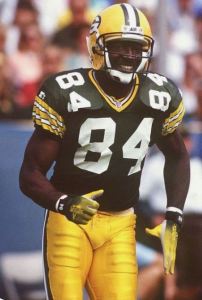
Sterling Sharpe Belongs in the Pro Football Hall of Fame

Originally published May 17, 2011 – Reissued August 2, 2025

As those in and Packerland celebrate the team’s 13th championship in NFL history, the mind travels back to when Green Bay was the desolate outpost that few players wanted to go to.  The team had a celebrated past yet the years after Vince Lombardi’s team won Super Bowl II were lean with very few postseason appearances.

Everyone points to the hiring of GM Ron Wolf  or Mike Holmgren, or Reggie White’s free agent signing in 1993, or even Brett Favre being picked up in 1992 as the first step in the team returning to prominence.  Each were significant but weren’t the first step.  That distinction belongs to former All Pro receiver Sterling Sharpe who became the preeminent receiver of his time and was outplaying the legendary Jerry Rice at the time of his forced retirement because of a neck injury.

The Packers selected Sharpe in the ’88 NFL Draft and he played for 7 seasons. During that time he would go on to produce….nope not going to tell the story in that fashion. This was Terrell Owens before Terrell Owens meaning he would run over cornerbacks who tried to jam him or tackle him on slants.  I can still see the touchdown in ’92 when he drug CB Darryl Henley and half the LA Rams secondary into the endzone from the 5 yard line, knocking out Safety Pat Terrell in the process.

In an era where receivers were sleek, run and shoot quick guys like Earnest Givins, Drew Hill, & Andre Rison as the preferred types.  Michael Irvin and Sterling Sharpe were breaking in a new mold later carried on by Detroit’s Herman Moore and Minnesota’s Cris Carter.  The muscular intermediate receiver who were physical with cornerbacks then would slip by them for 40 yard gains later in the game once they beat up on them a bit.

Sterling started rather slow with a 55 catch rookie season where he only scored 1 touchdown and vowed to improve his approach to the game.  He felt the media was harsh in how they treated him and nearly went the rest of his career without granting an interview…well almost.  In 1989 he burst onto the national scene with 90 receptions for 1,423 yards and 12 TDs, earning the first of his 5 Pro Bowl and All Pro appearances.

He teamed with Don Majkowski to power The Pack to a stellar record of 10-6 which included a late season win over the World Champion 49ers in Candlestick.  He became the focal point of Head Coach Lindy Infante’s offense and gave the Packers a legitimate star to help attract Plan B free agents. Sharpe went on to Pro Bowl and All Pro status in the 1990, 1992-1994 seasons.

The greatness of this talent was showcased in 1992, he had to learn a new offense from a new coach in Mike Holmgren and during the third game learn to play with first time starter Brett Favre. How did he perform?

Well he went on to break Art Monk’s all time NFL record of 106 catches in a season, going for 108.  He totaled a career high 1,461 yards and scored another 13 TDs.  Sharpe won the triple crown as he led the NFL in receptions, yards, and touchdowns in 1992 which is amazing considering the coach & quarterback scenario.

Think about it for a sec… Jerry Rice’s most prolific years were 1987 and 1995 where he totaled 22 TDs receiving (87) and 122 catches / 1,808 yards gained in 1995.  These were achieved with league MVPs & Super Bowl MVPs Joe Montana and Steve Young in their 8th and 5th seasons as starters respectively. So naturally he would get better in the ensuing years with a new system in place right?

In 1993, his second year in Holmgren’s system, he broke his previous All Time NFL record of 108 catches going for 112 rec., 1,274 yard and 11TDs.  He also introduced “turf toe” as an injury to the sporting world lexicon which was a dislocated large toe basically.  The painful injury not only kept him from practicing ALL YEAR, he had to wear a shoe 1 1/2 sizes larger on the foot with the injury. What would he have done had he been able to hone his pass routes in practice?

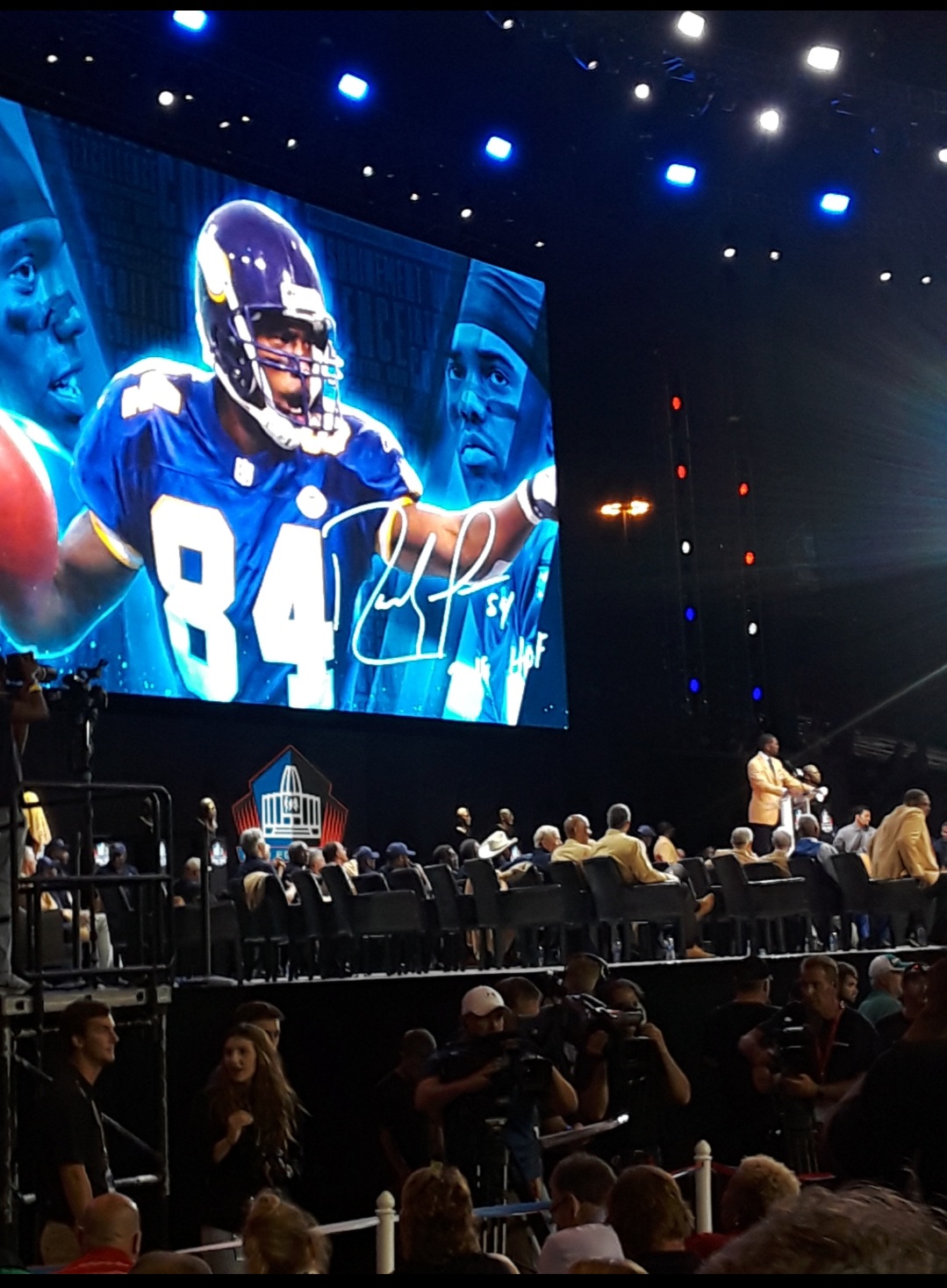
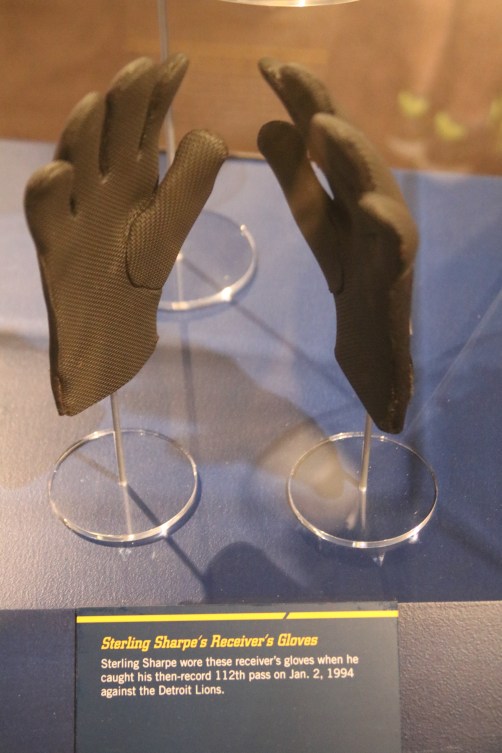
sterling-sharpe-record-glovesThe Packers went 9-7 and made the playoffs as a wild card.  They played their division rival Detroit Lions in the Silverdome and Sharpe electrified with a 5 rec., 101 yd 3TD performance.  His 3TD receptions tied the NFL All-Time Post season record which still stands.  The last of which (pictured above) was a 40 yard TD from Favre with less than a minute to play.  Not bad for his first playoff game huh? It was a day so interesting and exciting that he broke his 5 year boycott of granting interviews and spoke at the post game press conference.
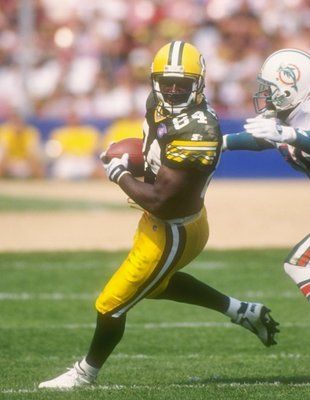
The next week the Packers lost to the world champion Dallas Cowboys 27-17 yet Sharpe caught 6 passes for 128 yards and 1 TD.  He showed he was a prime time performer even in the postseason.  He had led the league in receptions in back to back years and was still improving with a young up and coming quarterback.  What more could the future hold?

Yet 1994 proved to be the last season in the NFL for Sterling Sharpe. A promising career cut short with a serious neck injury that robbed us of viewing the best receiver in the league at the time. Really? Yes really! Sharpe went out with a bang. In ’94 he amassed 94 rec. for 1,119 yards and an astounding 18 touchdowns.
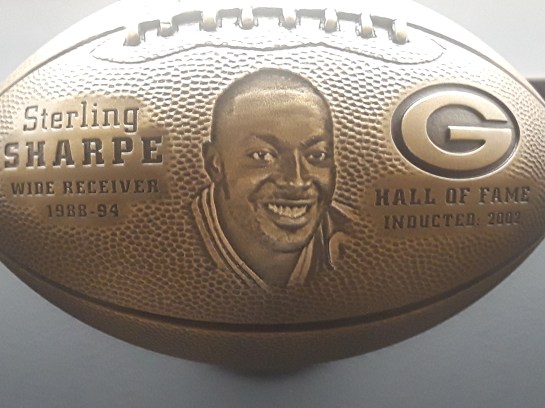
The 18 receiving TDs were the second most in NFL history (at that time) tying the old all time record with Mark Clayton (who did it in ’84) and who ironically was Sharpe’s teammate in ’93.  Along the way there was a much ballyhooed showdown on Thanksgiving in Dallas to show the nation Sharpe and the Packers had arrived.  They lost 42-31, but again Sharpe dazzled the nation with a 9 rec. 122 yards and 4 TDs on the league’s #1 defense,  totally outperforming counterpart Michael Irvin.  Both players, along with Andre Rison, battled Jerry Rice in the stat sheets for league supremacy at receiver in the early 90’s.  However Sharpe missed the playoff rematch and retired after the season.

Sterling Sharpe left the game after 7 super productive seasons with 595 rec. for 8,134 yards and 65 TDs which doesn’t truly paint the full picture. In his last 3 years he caught 314 passes for 3,854 yards and 42 TDs averaging 104 receptions per season. At that rate over 3 more seasons he would have crossed 900 catches for almost 12,000 yards and 107 TDs which he easily would have done.  How do we know this? Brett Favre’s next three years in ’95,’96, and ’97, not only was he league MVP all 3 years, he threw for 38, 39 and 35TDs in those seasons.

Those three seasons the Packers lost the NFC Championshp Game in ’95 yet made the Super Bowl the next two years. It’s a shame that the team he led back to NFL prominence would go on to be league champion without him.  Ironically his brother Shannon gave him his first Super Bowl ring when the Broncos defeated the Packers in Super Bowl XXXII, citing Sterling as his greatest male influence.

How do you gauge impact? Well you need to ask yourself a few questions.  In 1992 Mike Holmgren was the hottest coaching commodity when the Vikings, Steelers, and Packers were vying for his services.  Seeing that Holmgren wanted to install his “west coast offense”, don’t you think Green Bay won out by having Sterling Sharpe as his Jerry Rice already in tow to play his “Z” receiver?  What happens if the star receiver wasn’t on hand to aid a nervous young Brett Favre, allowing him to gain confidence?

If he would have struggled, Don Majkowski gets his job back 7 weeks later and we may never have known of Brett… think about it. Favre only became the NFL’s all time quarterback in ….well everything. In fact it was Sharpe who got Favre rolling in his first start against Pittsburgh absolutely scorching Rod Woodson on a stutter-go 76 yard touchdown to settle Favre down.  Without Sterling Sharpe, NFL history and certainly Green Bay Packers history would have been altered drastically.

20170922_131551

This was a talent that blocked in the running game and didn’t dance in the endzone when he did score.  He didn’t jump up signaling first down when he made a catch.  He was the absolute antithesis of the “me” receiver that has overtaken the league over the last 20 years.  After Charlie Hennigan in 1961 ( 101 rec. /AFL’s Houston Oilers), Art Monk in ’84 (106 rec. / Washington Redskins), and ’90 Jerry Rice (100 rec. / San Fran 49ers) it was Sharpe who made the 100 catch season a staple in league totals, going for 108 receptions then 112 the following year.

The fact that he didn’t self promote on every television camera he saw yet isn’t in the Hall of Fame, may give way to why we see receivers that do.  Gale Sayers isn’t the only great player to have his career cut short by injury so Sharpe needs to be more than considered.  His play and on field conduct was a celebration of how and why football is played and loved by millions.

Please lend your thoughts as well by writing in to the Pro Football Hall of Fame to the address below. Please be respectful and positively lend your voice:

Please write & nominate #84
Send letters to:
Pro Football Hall of Fame
Attention: Senior Selection Committee
2121 George Halas Dr NW, Canton, 
OH 44708

Thanks for reading and please share the article.

corey harris

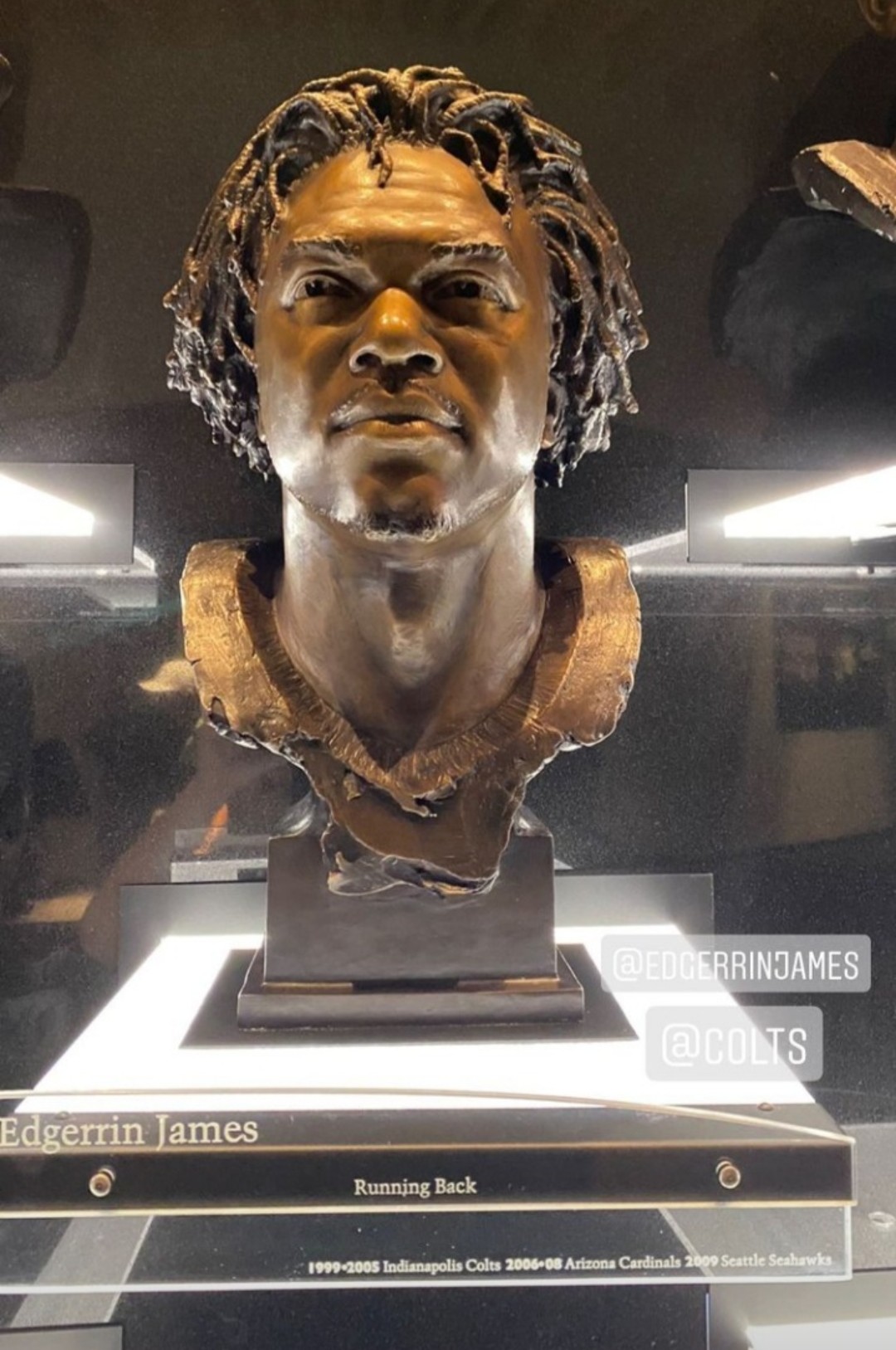
Edgerrin James Belongs In The Pro Football Hall of Fame – Hall of Fame Edition

Originally published: 19, January 2013 w/Postscript 16, July 2025

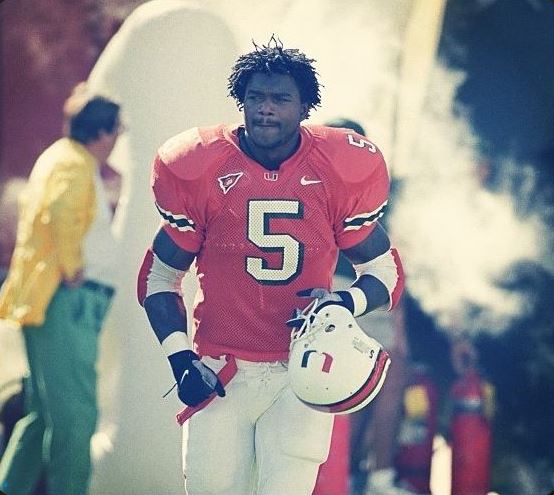
When you stop and think of professional athletes, so few live up to their potential. In the case of Edgerrin James, no other NFL player had to live up to more coming out of college and he had a hurricane to thank. Although he played for the Miami Hurricanes (The [[_]]), it was Hurricane George that postponed a Miami v UCLA game that was supposed to be played in September of 1998 to December 5th. For many, the college football season was over and the nation watched Heisman hopeful Cade McNown and the 10-0 Bruins who were 1 win away from playing for the national championship. In a wild 49-45 upset, James burst onto the national scene with a 39 carry 299 yard 3 touchdown performance that returned the [[_]] to national prominence and made himself a top NFL prospect.

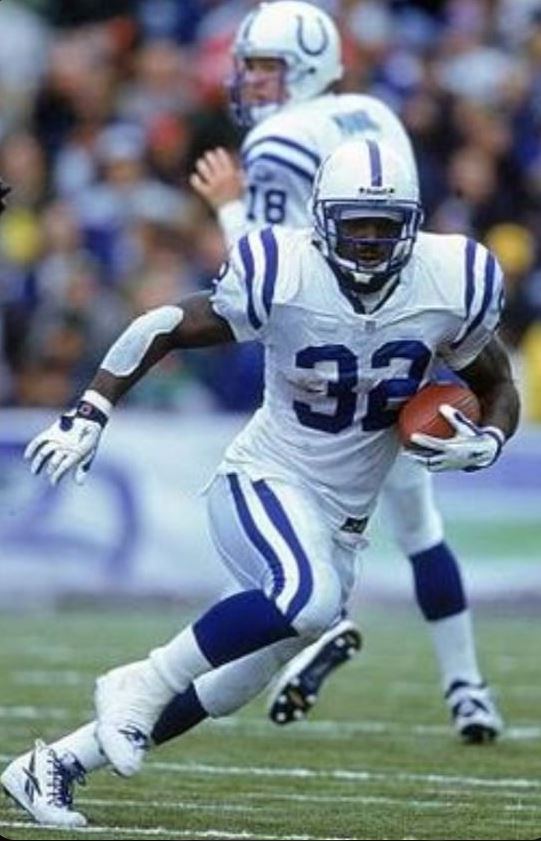
Since Miami had been down for years following NCAA sanctions, this was the first national glimpse of this immense talent. What followed in the April draft 4 months later added more pressure. Everyone forgets the Indianapolis Colts had drafted Marshall Faulk to resurrect the franchise in 1994 and had just drafted Peyton Manning in the previous year. Having traded Faulk away, it was a forgone conclusion they needed a running back in the #4 spot and Heisman winner Ricky Williams from Texas was there for the taking. General Manager Bill Polian opted to take Edgerrin James instead and it was this move that solidified the franchise. Some experts doubted James calling him a one game wonder.
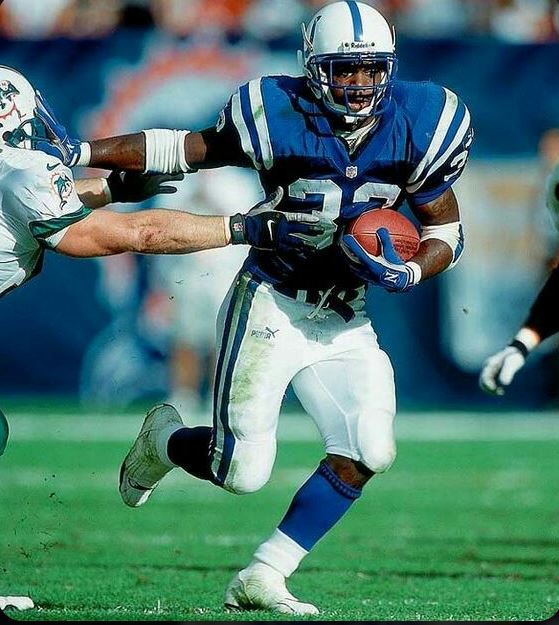
Going into the 1999 NFL season Edgerrin had a lot to live up to. Could he consistently show the power and speed he displayed to a nation when he dismantled UCLA in that landmark game?? How in the world did he get selected ahead of a Heisman winner who just rushed for 2,124 yards and 28 TDs and was considered a can’t miss NFL superstar by pundits and coaches?? If that weren’t enough, Faulk had been a 1,000 yard rusher 4 times in 5 years including 1,319 yards rushing and 908 yards receiving in 1998. Marshall caught 86 passes and had scored 10 touchdowns in a Pro Bowl season and a rookie that wasn’t Ricky Williams was supposed to top that?? The Colts had been 3-13 in 1998 and now Edgerrin is going to be paired with a second year QB that threw an NFL record 28 interceptions as a rookie?? No way….

In leading the NFL in rushing with 1,553 yards and scoring 17 TDs he laid to rest the competition with Ricky Williams who gained 884 and only 2 touchdowns in an injury plagued year. In the video you just heard that he had a rookie year better than 5 of the 6 who had been rookie rushing champions. First include Hall of Fame member Earl Campbell who gained 1,450 yards in his initial campaign. He also outrushed Hall of Fame member Jim Brown in his. Now someone will scoff Brown played in a shorter season and he did, but his 942 yards in 12 games comes out to 78.5 per game. Far fewer than the 97 yards per game James accumulated while helping the Colts go 13-3 and win their first AFC East division championship since 1987.

For an encore he became the first back since Eric Dickerson to start his career with back to back rushing titles in 2000. In his greatest season he ran for 1,709 yards with 13 TDs while catching 63 passes for 594 yards and another 5 scores. If you’re keeping score at home that is 4,444 yards from scrimmage and 35 touchdowns in just 2 years. The only back that could compete with that was Marshall Faulk who had gone on to power The Greatest Show on Turf Rams.
In 2001 James suffered a devastating knee injury and missed 10 games which sank the Super Bowl aspirations of the Colts. In the following season he only rushed for 989 yards and 2 touchdowns. His average had dropped from 4.4 in the previous 3 years to 3.6 and the whispers around the league were he’d never be the same. Not only did he bounce back, over the next 5 seasons he topped 1,000 yards rushing including 2 with over 1,500 yards in 2004 & 2005. Five seasons with over 1,000 yards rushing after reconstructive knee surgery…what was there left to accomplish??

Unfortunately the Colts regular season successes didn’t equal playoff success. The ’99 season ended when Indianapolis was upset 19-13  by the eventual AFC Champion Tennessee Titans. Post season losses to the Jets, Patriots, and finally the Steelers in 2005 kept James from winning it all with Peyton Manning and Marvin Harrison. The three had been the face of the team for 7 years together and his contract was up. The salary they would have to bring him back as a free agent would have crippled the franchise. Yet Colts owner Jim Irsay thought so much of James and his contribution to the organization that when the Colts did win it all in 2006, he presented him with a Colts Super Bowl ring even though he now played for the Arizona Cardinals. A classy move.

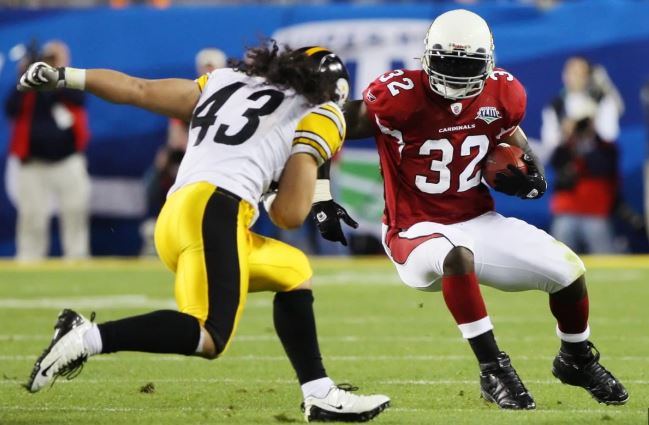
Edge making a move on PFHoF Safety Troy Palamalu in XLIII.

What looked like the swan song for James turned out to be false, he had one more surprise for critics that claimed he had lost a step. In 2007 he teamed with Kurt Warner and Larry Fitzgerald on an improbable run to Super Bowl XLIII the very next year. Most of the publicity went to Warner since he was a reclamation project that arose like Lazarus, yet they don’t make it without James’ 1,222 yards rushing and 7 touchdowns.The combination of James on the ground, Anquan Boldin and Larry Fitzgerald downfield proved too much as the 9-7 Cardinals soared through the playoffs. They beat Atlanta, Carolina, and finally the Philadelphia Eagles 32-25 in the NFC Championship. Only to lose the Super Bowl on a last second touchdown to the Steelers 27-23 in one of the best games ever.

However every good thing must come to an end and James had led an incredible football life. Think about his accomplishments and what can be attributed to him. How many recruits chose to go to Miami after watching his exploits against UCLA that day when all other teams were not playing?? Miami had received the Death Penalty and had been down for four years after dominating college football for a decade. His performance announced the return of Hurricane football. In the next three years after his 1999 graduation, Miami won the Sugar Bowl and played in two straight national championships winning one in 2001. How many running backs went to The [[_]] because of his influence?? Clinton Portis, Willis McGahee, and Frank Gore came right after him. It was alleged he even donated $250,000 to the school at one time.

How about his low-key personality and league wide respect he garnered while he played with the Colts?? He was one of the first superstars that wore dreadlocks and coming from Miami he broke many stigmas that are unfairly attached to Hurricanes from a nation wide perspective. He was never in trouble away from the field and was thought of so highly he was given a Super Bowl ring by the team he no longer played for. Think about that for a second. All of this in the era of the “ME” athlete. When was the last time you heard of such things in the era of free agency?? Did the San Francisco 49ers give Joe Montana a Super Bowl ring when they won in 1994 after Joe left in 1993?? Give that some thought…

James and Colts Owner Jim Irsay at the Ring of Honor Ceremony.

James and Colts Owner Jim Irsay at the Ring of Honor Ceremony.

He completed his career with seven 1,000 yard seasons.  Finishing with 12,246 yards 80TDs, to go along with 443 receptions 3,364 yards and another 11 TDs. Up until his arrival in 1999 the Indianapolis Colts hadn’t won their division in 12 years. Afterward they won it 5 times during his tenure. In Arizona, the Cardinals had not played for the NFL championship since 1947 until James arrived. 1947??? That is 60 years!! He was voted All Pro four times and led the league in rushing twice. In a Hoosier Dome that once had Eric Dickerson and Marshall Faulk as tenants, it’s James who is the franchise’s all time leading rusher with 9,226 yards and 64 touchdowns. He’s also been inducted into the ring of honor for both the Miami Hurricanes and the Indianapolis Colts.

Did you know James, Barry Sanders, and Eric Dickerson are the only backs since 1980 to have 4 different 1,500 yard seasons?? Do you realize dating back to 1957, only James, Jim Brown, Earl Campbell, and Eric Dickerson are the only runners who began their careers as back to back rushing champions in their first two years?? Did you recognize every back mentioned with him in this paragraph are all in the Pro Football Hall of Fame??

For induction into the Pro Football Hall of Fame, I present to you, from The [[_]], Edgerrin James!!

“Started with these gold teeth and ended in this gold jacket.” My man brought the house down with this one. It was a speech that was unmistakably Edge and was surrounded by his teammates including Peyton Manning, Marvin Harrison, and Coach Dungy who preceded him in Canton.
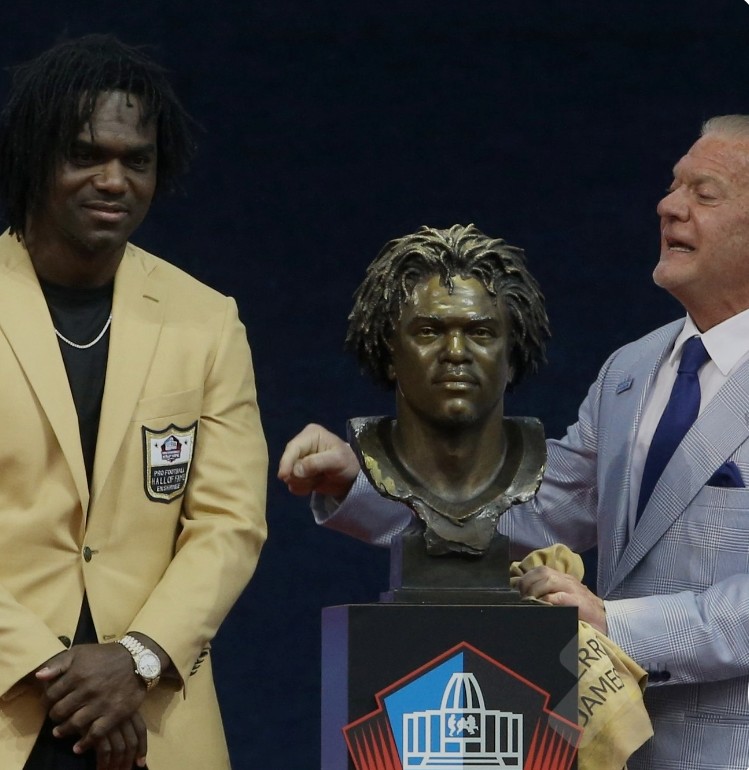
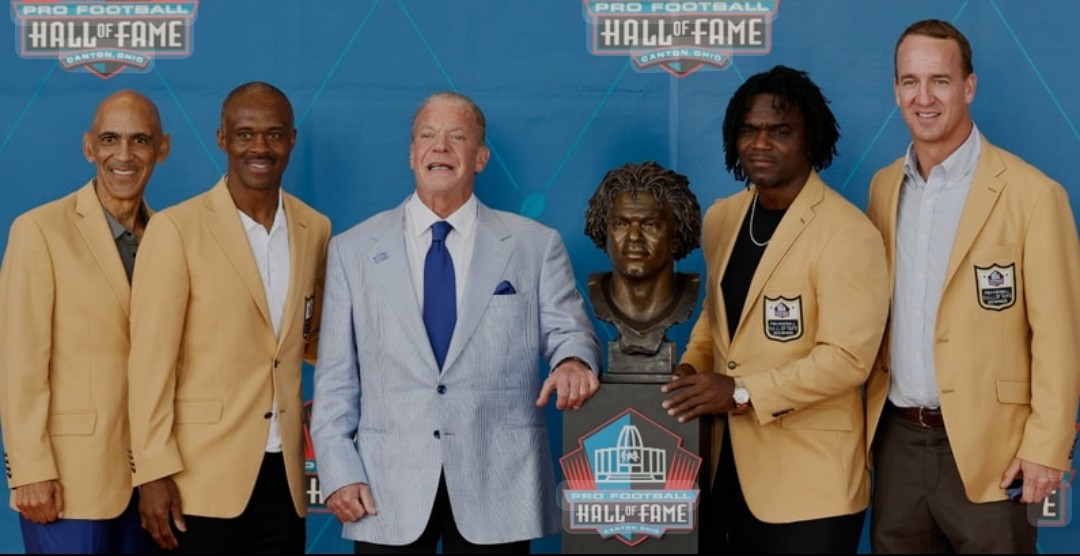
Just as I had described a decade prior his relationship with now deceased Jim Irsay, he had him as his Hall of Fame presenter. The picture above is from his “Ring of Honor” ceremony in Sept. 2012. The one below is Canton.

Now PFHoFs Coach Tony Dungy & Bill Polian have their “triplets” immortalized in Canton with them. Their now teammates on the greatest football team ever. When I began this conversation back in 2013 I’d hear so many tell me he didn’t belong until I explained he was one of only 4 backs to have 4-1,500 yd seasons and you’d see their stance start to bend.

Now he is in Canton forever and a nation of youngsters will read about his exploits. This is what keeps the game going.

Thanks for reading and please share the article.

Past Hall of Fame Articles:

Robert Brazile 2011 (inducted 2018)

Ran into Brazile at 2018 Gold Jackets Dinner.

Kevin Greene 2011 (inducted 2016)

With Kevin Greene after the Induction ceremony.

Sterling Sharpe 2011 (will be inducted 2025)

Terrell Davis 2011 (inducted 2017)

Jerry Kramer 2011 (inducted 2018)

“Hey big guy!”

Everson Walls 2011

Randy Moss 2011 (inducted 2018)

Cris Carter 2011 (inducted 2013)

Tom Flores 2012 (inducted 2021)

Lester Hayes 2012

Chuck Foreman 2012

Edgerrin James 2013 (inducted 2020)

Andre Reed 2013 (inducted 2014) 

Roger Craig 2013

Corey Dillon 2014

Ken Riley 2015 (inducted 2023)

Ken Stabler 2015 (inducted 2016)

Drew Pearson 2016 (inducted 2021) 

Cliff Branch 2016 (inducted 2022)

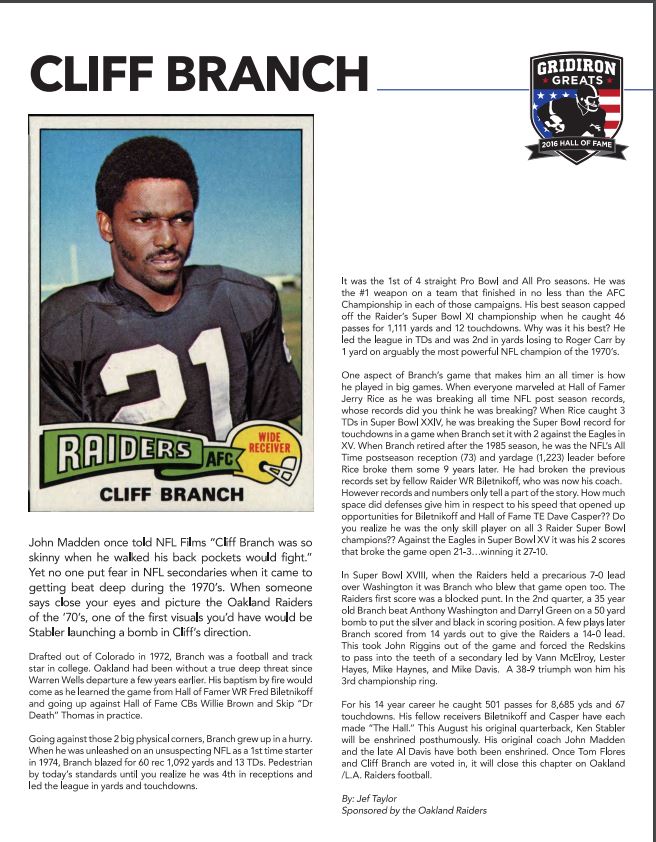
This TBT article was used to induct Cliff Branch into Gridiron Greats Hall of Fame


Todd Christensen 2017

Hardy Nickerson 2020

Wilber Marshall 2024

Mike Holmgren 2025

Mike Holmgren Belongs In The Pro Football Hall of Fame

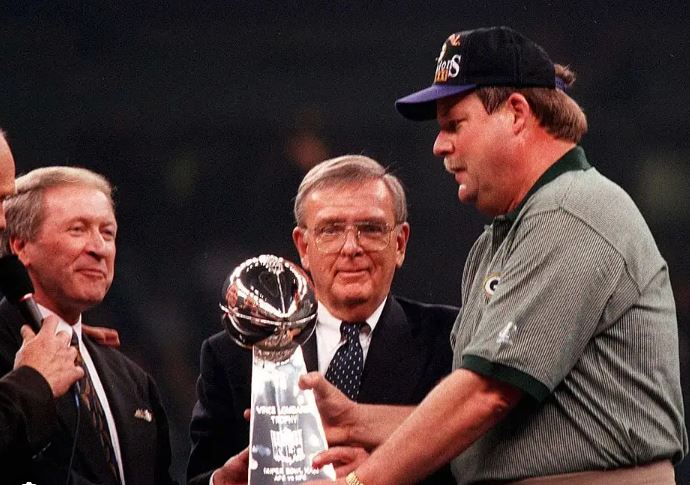
There are several acccomplishments which set a coach apart where they reach the status as a coaching great. Of course winning a Super Bowl is the ultimate prize however when we look at the legacy of their coahing tree, PFHoF players the coach produces, and the ability to turn around a franchise. Mike Holmgren has soared every hurdle and has turned around 2 franchises.
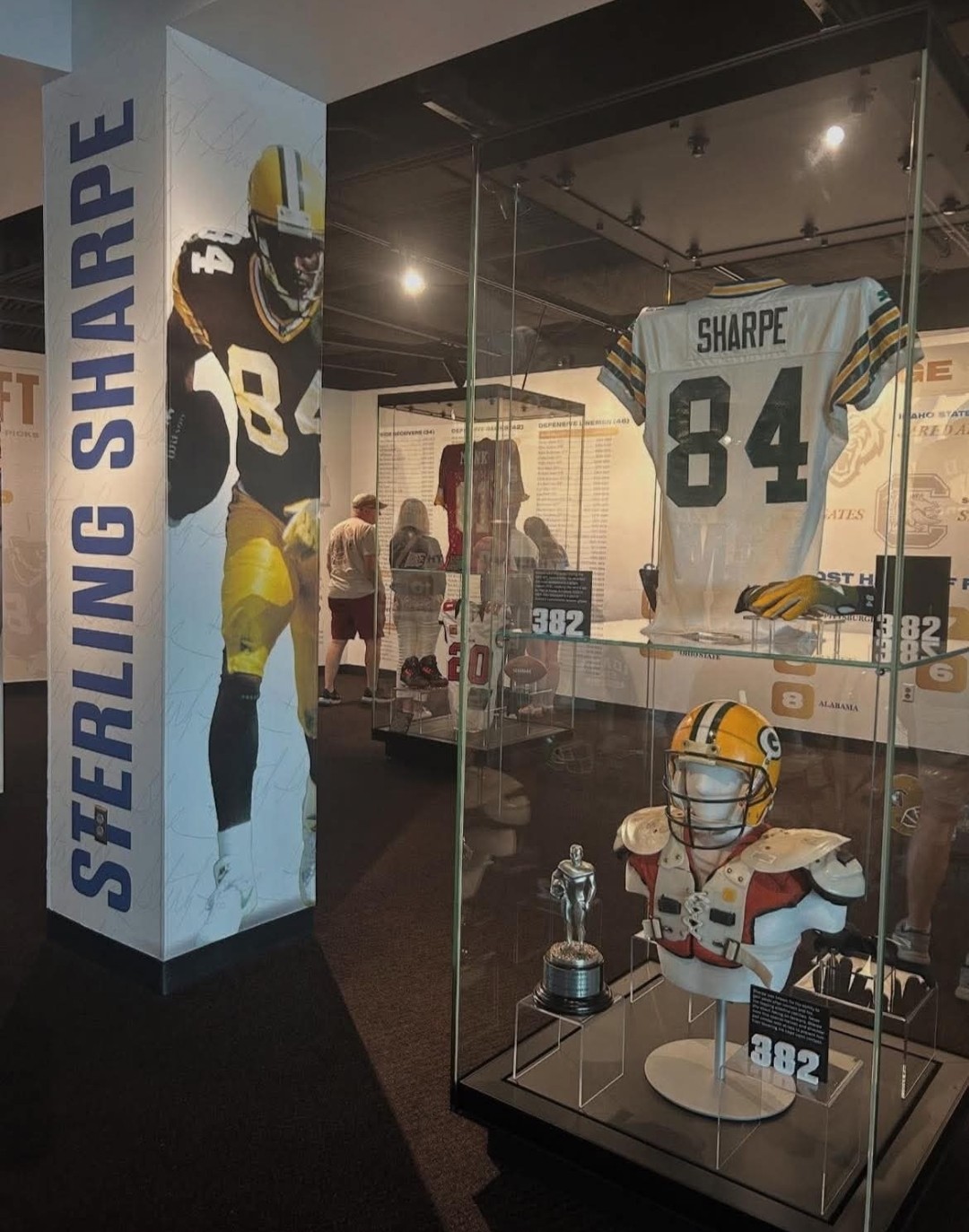
Do you realize when Sterling Sharpe gives his speech this August, he’ll be the 6th player enshrined in Canton that played for Holmgren? That is 1 fewer than Tom Landry who coached Dallas 29 seasons and 2 less than Don Shula who coached for 33. Mike Holmgren was head coach in Green Bay & Seattle for just 17 seasons. The late Reggie White, Brett Favre, LeRoy Butler, T Walter Jones, & G Steve Hutchinson are the others with bronze busts.
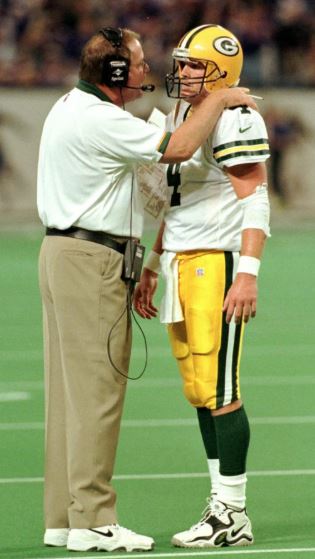
Try this on… The Mike Holmgren coaching tree with branches Andy Reid, Jon Gruden, Steve Mariucci, Jim Mora Jr, & Tom Coughlin have gone on to take their teams to 22 conference championship games! This includes 6 Super Bowl Championships (XXXVII, XLII, XLVI. LIV, LVII, & LVIII) in 9 appearances. In contrast when you compare this to Hall of Fame Coach Bill Walsh, you have to include Holmgren’s 4 conference championship appearances just to make it to 13. You know the reverence Coach Walsh is kept here at Taylor Blitz but that is an astounding measure.

No other coach has had 3 staff members move on to become Super Bowl winning head coaches. Bill Walsh & Bill Parcells each had 2 but that is it. Not Jimmy Johnson, not Chuck Noll, not Bill Belichick, not George Seifert, not even Tom Landry. Keep in mind 5 of these coaches are already enshrined in Canton with Belichick eligible in 3 years.
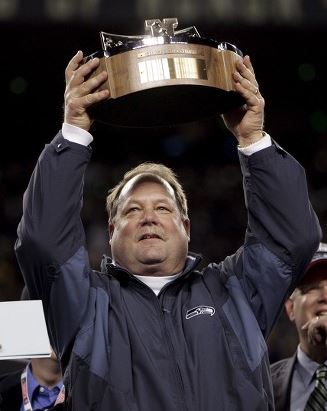
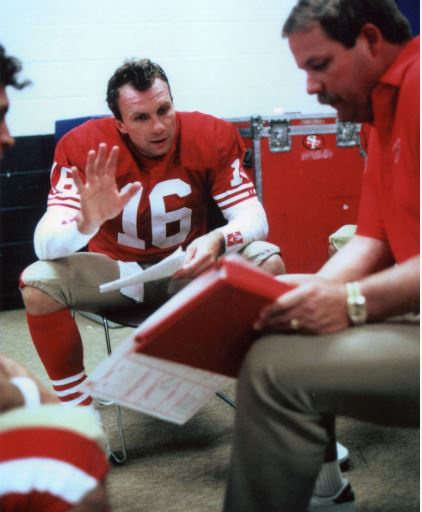
He was also able to win in different fashions. He developed a young Brett Favre and won with his passing prowess featuring Hall of Fame receiver Sterling Sharpe. Sharpe set back to back NFL records for receptions in a season (1992 -108rec/1993 -112 rec) while Favre went on to be NFL MVP 3 straight years 1995-1997. He set NFC record with TD passes with 38 in ’95 & 39 in ’96. They were a pass first West Coast offense that leaned on the run to close out games.

Then in Seattle he leans on a bellcow running back Sean Alexander who wins the 2005 NFL MVP rushing for 1,880 yards with 28 rushing TDs. They made it to Super Bowl XL where several questionable calls kept Holmgren from becoming the 1st coach to win Super Bowls with 2 different franchises. He was “this” close…

2005 NFC Championship Trophy

Of course his most notable stop was resurrecting a Green Bay franchise that had been flat on its back since the Lombardi era in the 1960s. No coach could sustain excellence in what had become a desolate place where other coaches would use the threat of “sending” players off to Green Bay as a banishment. There is an NFL Films clip of the late John McKay saying this on the Buccaneer sideline. This was a team that had been 0-26!

In bringing the team to respectability from a competitive standpoint, his rise came at the advent of free agency at the beginning of the 1993 season. One of the principle arguments that persisted was ‘how could Green Bay attract black free agents?’ He was instrumental in landing the 1st prized free agent in Hall of Fame DE Reggie White. He actually pranked him by leaving a voicemail saying he “was Jesus and he should come to Green Bay.” He won over Reggie White when no pundit thought he had a snowballs chance to sign him.

That move attracted key black free agents TE Keith Jackson, WR Andre Rison, FS Eugene Robinson, DE Sean Jones who spearheaded Holmgren’s Super Bowl XXXI champion. Yes there were other great notable signings in WR Don Beebe, QB Jim McMahon, and FS Mike Prior but in ’92 while the players were suing for free agency Keith Jackson was the #1 free agent. Reggie White’s name was on the lawsuit and he was ’93s prize free agent every team was after. Holmgren charmed them both.

He needed them to get over the top after taking the Packers to 9-7, 9-7, 9-7 and 11-5 records 1992-1995. His 13-3 masterpiece returned the Vince Lombardi Trophy to Green Bay making Holmgren a legend:

His final two years in Green Bay, he was on the precipice of winning back to back Super Bowls when they charged into XXXII as a defending champion. Needless to say Holmgren’s team fell behind and he took the ball out of Dorsey Levens hands chronicled here

In 1998 the Packers entered the playoffs as a wildcard and lost in dramatic fashion to San Francisco 30-27 on a last second TD from Young to Owens. His final game as a Packer. I was disappointed he didnt win in XXXII and believe he would have been in Canton years ago had he gone back to back. Referee whistles and flags against his Seahawks in XL  withstanding… however as The Chancellor of Football I wanted to offer this piece.

For his career he is tied with Don Shula & George Seifert as the only head coaches to produce 4 NFL MVPs with Brett Favre (1995,96,97) & Shawn Alexander in 2005. Considering 2 of the MVPs won under Seifert, Joe Montana ’89 & ’90, Holmgren was the Offensive Coordinator calling those plays. Winning Super Bowls XXIII and XXIV. The latter a 55-10 blowout in one of the most artistic games ever called. Peyton Manning won his with 3 coaches & Aaron Rodgers won his with 2.
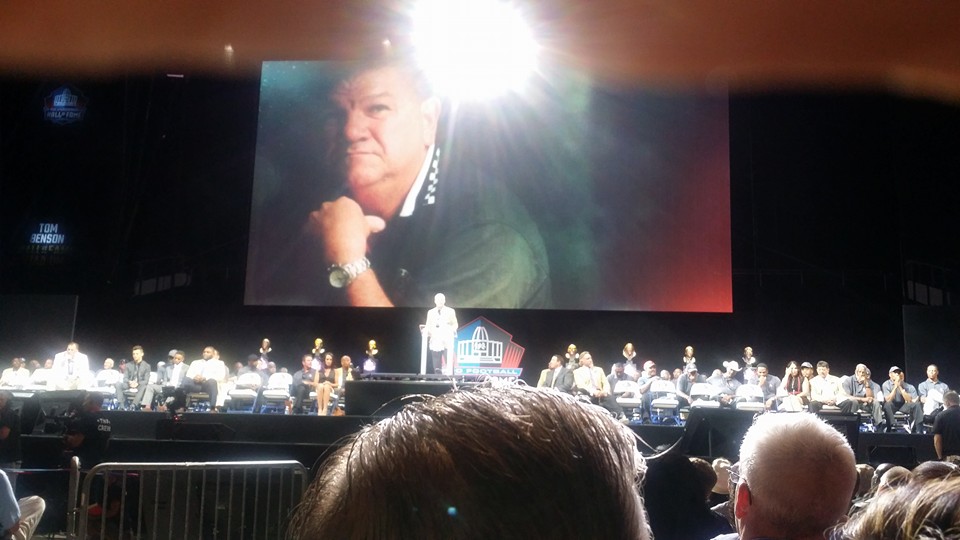
If you’re keeping score at home:

  1. Tied for producing the most NFL MVPs in history with 4.
  2. Coaching tree has produced 22 conference title appearances, 9 Super Bowl appearances winning 6.
  3. 4th in history producing PFHoF players with 6 & Shawn Alexander talk is heating up. Could tie Landry at 3.
  4. Had a 161-111 record as a head coach winning 1 Super Bowl, appearing in 2 more.
  5. Hired to be Packers HC after a 3 year run in SF as OC ’88, ’89, ’90 winning 2 Super Bowls and an NFC Championship Game.

This is the epitome of a Pro Football Hall of Fame coach! In multiple Super Bowls in multiple decades? He needs to be enshrined just as I said to him back in 2016 he would. Well…

Back in 2012 when he was enshrined in The Packers Hall of Fame I was upset Brett Favre wasn’t there as he was still at odds with the organization. By the midnight hour I wrote “The Chancellor’s Take: Green Bay Packers & Brett Favre’s Broken Relationship” pleading they get their act together as the time was coming to immortalize recently retired greats as Favre soon would be. Never once figuring I’d be able to witness history up close.

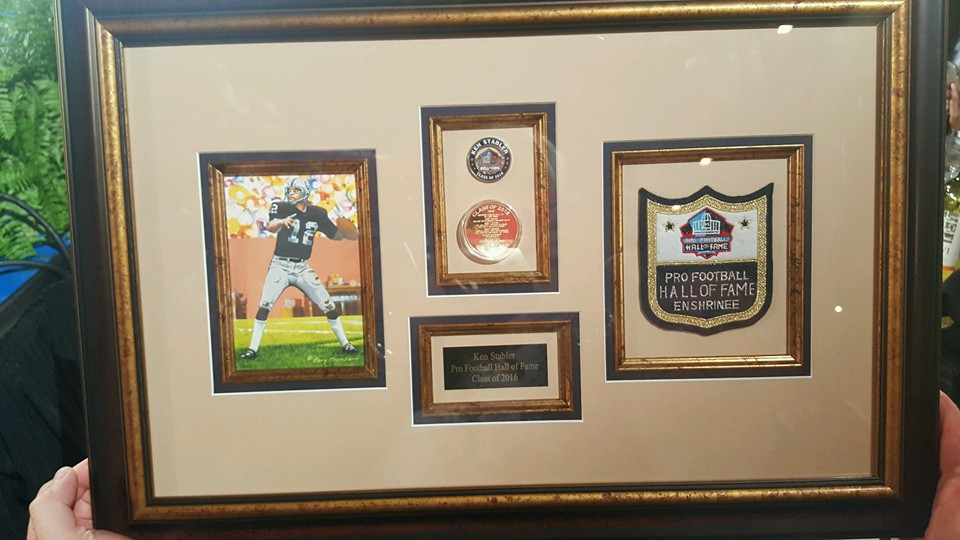
As fate would have it I attended the 2016 Pro Football Hall of Fame enshrinement ceremony as a guest of Kevin Greene, for penning a similar article for him years before. The Favre & Greene contingents were right in front of the stage. When the ceremony ended I walked toward the stage to congratulate Kevin for an awesome speech and hug his wife Tara who sang the national anthem…and right next to me was this old football coach… Mike Holmgren congratulating Favre on his. It was a surreal moment flashing me back to the 2012 Packers HOF ceremony… We greeted and as we were exiting toward the shuttles I told him to get ready as he had to prepare his speech. Of course he thanked me and gave a wry smile “maybe someday”… was gracious and gregarious as we chatted that evening.
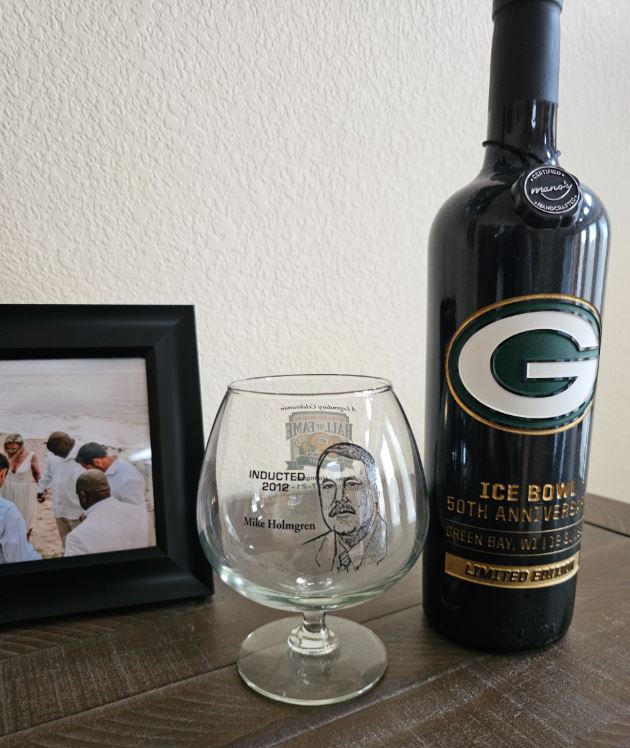
Yet here we are and somehow this man hasn’t been ensrined. If this isn’t a Pro Football Hall of Fame resume I don’t know what one is. its time for the writers to put Mike Holmgren in the hallowed halls of Canton. He had my vote years ago…

For induction into the Pro Football Hall of Fame, I present to you Mike Holmgren!

Past Hall of Fame Articles:

Robert Brazile 2011 (inducted 2018)

Ran into Robert Brazile after the Gold Jacket Dinner. Great time.

Kevin Greene 2011 (inducted 2016)

With Kevin Greene after the Induction ceremony.

Sterling Sharpe 2011 (will be inducted 2025)

Terrell Davis 2011 (inducted 2017)

Jerry Kramer 2011 (inducted 2018)

“Hey big guy!” ’18 HOF

Everson Walls 2011

Randy Moss 2011 (inducted 2018)

Cris Carter 2011 (inducted 2013)

Tom Flores 2012 (inducted 2021)

Lester Hayes 2012

Chuck Foreman 2012

Edgerrin James 2013 (inducted 2020)

Andre Reed 2013 (inducted 2014) 

Roger Craig 2013

Corey Dillon 2014

Ken Riley 2015 (inducted 2023)

Ken Stabler 2015 (inducted 2016)

Drew Pearson 2016 (inducted 2021) 

Cliff Branch 2016 (inducted 2022)

Todd Christensen 2017

Hardy Nickerson 2020

Wilber Marshall 2024