Well they made it to Super Bowl V in Miami where they faced the Baltimore Colts, a former NFL team that had moved over to the new AFC. These two pre-merger NFL antagonists were embroiled in a defensive struggle where Dallas clearly outplayed the Colts and were poised to take a 20- 6 3rd qtr lead when Duane Thomas fumbled at the 1 yard line. Are you kidding me, the 1 yard line?
Nothing demoralizes a team more than to drive the length of the field & come away without points. Especially, in a game where they’re hard to come by.
You can’t hurt your team worse than that Duane. The silent treatment that followed in 1971 was something he put everyone through when he didn’t get a raise from Tom Landry / Gil Brandt, who remembered that fumble. How can a player who ….sigh…you get the picture.
Nothing captured the desperation and passion of Doomsday’s effort like this shot.
The defense, which had a series of let downs in previous championship games played brilliantly. Tom Landry’s defense knocked Johnny Unitas out of the game, in fact the Colts first touchdown was a fluke double tipped pass. They even blocked the extra point and kept the Colt point total to 6 until deep in the 4th quarter.
If ever a team left a great defensive effort on the field, this was it. Has there ever been another NFL championship, or Super Bowl, where a team held its opponents two QBs to less than 50% completion rate and lost the game?? The Doomsday Defense forced 7 turnovers. Three of these were interceptions, two by MVP Chuck Howley.
Twice they stopped Colt scores in the red zone. In the 4th quarter!! One was an end zone interception by Howley at the start of the period. The other when S Cornell Green forced Eddie Hinton to fumble at the same 1 yard line Duane Thomas had in the 3rd. They had finally broken the Colts offense until their anemic offense gave the game away with Morton’s interception. You could feel the angst when Bob Lilly threw his helmet after Jim O’Brien winning field goal. Had they brought a semblance of an offense they would have won this game. They would have to wait another year for a chance at the title.
The Cleveland Browns are starting to demonstrate when subterfuge gives way to not knowing when to stop talking. General Manager Ray Farmer says that incumbent starter Brian Hoyer is ahead of Johnny Manziel by a wide margin. Really?? Then why were you looking for a quarterback in the first round again??
Manziel at his first rookie camp in Cleveland.
There is a difference between making a person earn their keep and when you can start to erode one’s confidence or irritate a player. Coming off like this in the press isn’t in your best interest. Be conservative with what you express outwardly. You’re Cleveland, not the Dallas Cowboys. Deflect the questions in a way that doesn’t come off as pompous or dismissive. Especially to one you want to develop into becoming the face of your franchise.
When grooming a quarterback to be a leader, you never tear him down publicly or even in front of his teammates. It has to happen behind closed doors. Manziel will have enough critics trying to break him down in AFC North defenses, than in the coming competition with Hoyer for the starting QB spot. You have to show more of a partnership approach so Manziel knows you’re in it with him. Otherwise he’ll develop as a quarterback but you could erode his stance to be viewed as a leader within the structure of the team.
So my message is simple… close ranks. Be the quiet Cleveland Browns and leave everyone guessing how Manziel is doing in the OTAs. Go so far as limiting how much press can even be around Manziel to minimize the circus on the inside. Make Roger Goodell fine you because of the secrecy kept in limiting the press access to your team. Then stop talking altogether to build anticipation while others speculate on what they will see when the 2014 Browns take the field in preseason.
While its important to know how to sell, it’s just as important to know when to sell. Be very quiet in the front office Cleveland. Go groom Manziel behind an iron curtain.
When you think of the old Baltimore Colts, the first flashback that comes to mind are the black and white films with Johnny Unitas leading the team in the 1950’s. Then another thought stirs up images of Bert Jones, Lydell Mitchell and the mid 1970’s version with Head Coach Ted Marchibroda. You follow-up that thought with the green and yellow Mayflower trucks moving the team to Indianapolis in the middle of the night in 1984. Yet sandwiched between the first and second of these events is the most forgotten champion in modern football history. The 1970 Baltimore Colts.
There are varied reasons why this team is so overlooked when you think of this franchise. Did you know this is the only Super Bowl winner where the franchise was sold just one year later?? Before the 1972 season, Robert Irsay (Los Angeles Rams) and Carroll Rosenbloom swapped franchises.
Morrall came in for an injured Unitas and did just enough for the Colts to win.
Carroll had one of the most successful tenures as an owner in NFL history. Yet after losing Super Bowl III, one of the landmark games in league history, he lost Head Coach Don Shula to the Miami Dolphins after the 1969 season.
So is it ironic or part of the story that his last game as Colts owner, was a 21-0 loss to Shula’s Miami Dolphins in the 1971 AFC Championship Game?? Another twist was it was played in the Orange Bowl which had been the site of Super Bowl III.
The last ring won by John Constantine Unitas and Carroll Rosenbloom.
Another reason this champion wasn’t remembered is there wasn’t a main powerful character. Yes the Colts had an aging fading John Unitas at quarterback. In 1970, he finished with a career low 51.7% completion percentage, and was the only qb to win the Super Bowl in a year he threw more interceptions (18-14) than touchdowns. He was 3 seasons removed from 11 straight Pro Bowl seasons and 5 player of the year awards.
By this time he was getting by on inspiration and finding the touch at the right time. As was the case in the first ever AFC Championship Game. Clinging to a 20-17 lead late in the 4th,Unitas had reserve WR Ray Perkins motion from the backfield and lofted a perfect sideline floater just past Raider CB Nemiah Wilson for the decisive touchdown. It was the only touchdown he threw in the game as he went 11 of 30 for 245 yards.
Super Bowl V was the first NFL championship game not played on natural grass.
It was echoed in Super Bowl V as he went 3 for 9 for 88 yards with 2 interceptions and 1 TD before being knocked out of the game. The lone touchdown was the bizarre 75 yarder to John Mackey where the ball bounced from Colt Eddie Hinton and Cowboy Mel Renfro first. So the late Earl Morrall had to come off the bench to save the Colts season just as Unitas tried to in Super Bowl III.
The game was played at a frantic pace with 11 total turnovers in what was nicknamed The Blunder Bowl. The Colts outlasted the Dallas Cowboys, they didn’t beat them. A last second interception by Mike Curtis put them in position for Jim O’Brien to win it with a field goal 16-13.
Another reason they weren’t remembered were they were coached by the late Don McCafferty. He was the hand picked successor once Don Shula departed for Miami having been the long time Offensive Coordinator. By the time we make it to 1972 the Colts were winless in their first five games. General Manager Joe Thomas wanted Unitas benched. When McCafferty refused he was fired.
Less than 1 1/2 years after winning Super Bowl V, Carroll Rosenblom was no longer the owner, John Unitas was no longer the quarterback, Don McCafferty was no longer the coach, and the magic was gone from 33rd Street in Baltimore. The romantic era starting with the 1958 NFL Championship Game win over the Giants, ended with the 1971 AFC Championship loss in Miami.
In many ways the Super Bowl V championship had a lifetime achievement feel more than a best of the league feel. Would they have won Super Bowl VI had they rematched with the Cowboys?? How different would Don McCafferty’s legacy been had they won it? As a matter of fact, the Dolphins split their games with the Colts in 1970 and 1971. Would the Colts even make it to Super Bowl V had the Dolphins been able to get past Oakland in the ’70 playoff game??
Epilogue: Carroll Rosenbloom’s Rams won the NFC West 5 times from 1973-1978 but lost the NFC Championship 4 times. He died from a heart attack and drowned before the 1979 season when the Rams did make it to Super Bowl XIV. Which left the team to his wife…. Georgia Rosenbloom who later remarried. Georgia Rosenbloom-Frontiere.
Don McCafferty died of a heart attack in 1974 after he coached the Detroit Lions for one season.
John Unitas remains one of the greatest players in NFL history and was the first to throw for more than 40,000 yards. A staple at Baltimore Ravens games well into the 2000s. Unitas passed away on Sept 11th, 2002.
Bubba Smith, the giant Defensive End passed away in August 2011. Smith played the majority of his career in Baltimore and stated in 2007 “Super Bowl III, I still haven’t gotten over it.”
Earl Morrrall, the journeyman quarterback who was player of the year in 1968 with Unitas out. Was with the team when they lost Super Bowl III. Afterward he would duplicate his 1968 with a great performance leading the Dolphins to the undefeated season in Bob Griese’s absence. He won 2 more Super Bowls (VII & VIII) with Don Shula’s Miami Dolphins. Morrall died last month on April 25, 2014.
To these men I dedicate this article… they were a champion. NFL champions for 1970.
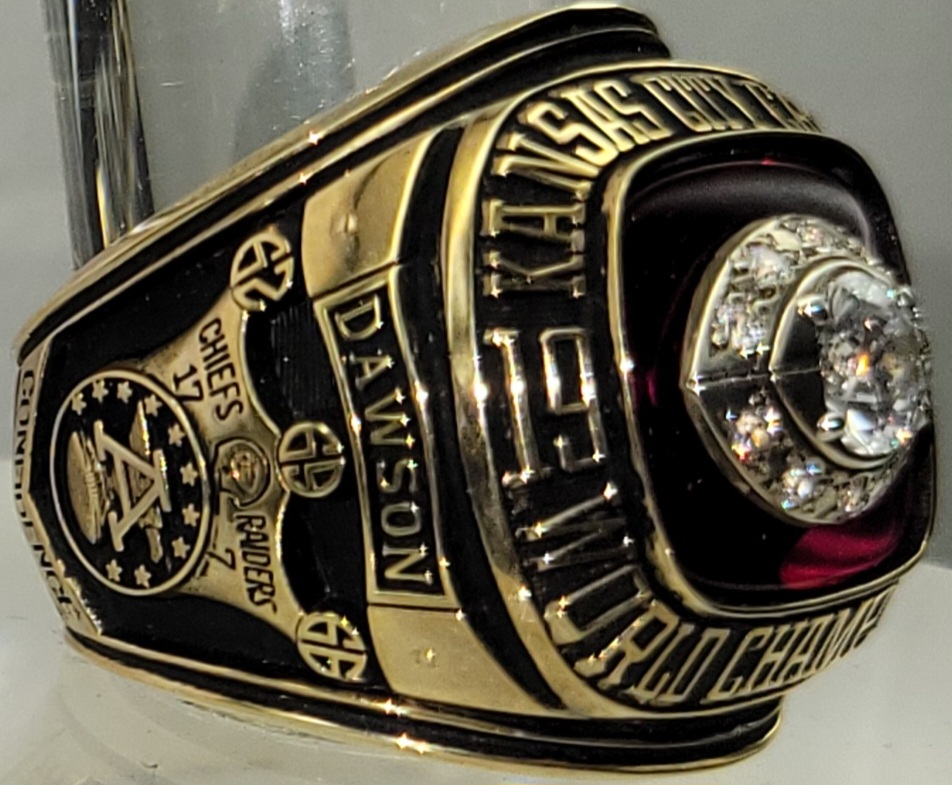
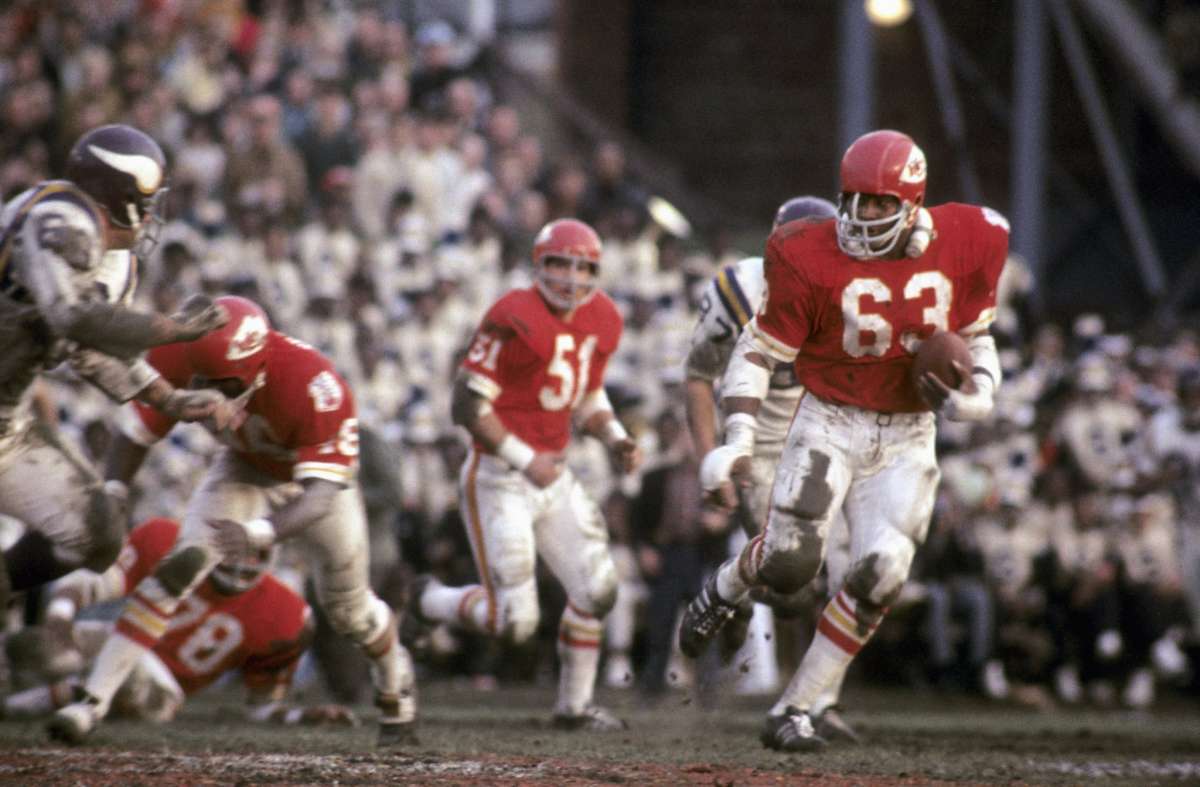
Super Bowl IV in ancient Tulane Stadium, the scene for Kansas City’s 23-7 win over the Minnesota Vikings in the last ever AFL game. The merger followed this game and to have the score after 4 games: AFL 2 wins, NFL 2 wins, was poetic justice since the two leagues battled for a decade. So many ironies during this era it’s hard to choose where to begin…but we have to start somewhere right?
We’ll start with an epilogue I posted with the 1966 Chief’s AFL Championship ring on the origins of the Kansas City Chiefs and the Minnesota Vikings and the irony of those two teams facing each other in the last ever game of the AFL.
The AFL was originally going to have a franchise in Minnesota and in a move of espionage out of James Bond, cold war, double agent dealing, the NFL told the owners of that franchise to stay quiet and at the last minute award them an NFL franchise in 1960 to try to sink the new league. The AFL couldn’t’ operate with only 7 teams. Fittingly the last game in the history of the AFL, Super Bowl IV, Kansas City beat Minnesota 23-7 to offer some payback.
What happened to the team that would have been in Minnesota you ask? They went west and became the Oakland Raiders the Chiefs main rival. As irony would have it, they too bested Minnesota in a Super Bowl winning the 11th edition 32-14. So when you think of the Vikings of the 70’s and their 4 Super Bowl losses, karma caught up to them for what happened in 1960…folks I can’t make this stuff up.
This game was significant because NFL loyalists still weren’t giving the AFL its due after the crushing loss in Super Bowl III. Thought it was just a fluke. One of the great things about the AFL was its close camaraderie between the players and teams, knowing they were only part of an overall league fighting for their respect. They each played their part and they represented their league.
Joe Namath recalled when the New York Jets returned to their hotel after beating Baltimore in Super Bowl III, he could remember being greeted by Emmitt Thomas, Buck Buchanan, and Willie Lanier (Chiefs) as told on HBO’s History of the AFL circa 1995. Len Dawson (Chiefs QB) was also in the stands for the Jets monumental win over Baltimore so to have this group carry the banner into the last Super Bowl and last game in the AFL’s history had personal weight, league-wide weight, and TOTAL legitimacy for the AFL’s legacy with another win.
Hall of Fame CB Emmitt Thomas and MLB Willie Lanier of the 69 AFL Champion Chiefs.
Another significant point to this team is that this was the first Super Bowl champion that African American’s comprised half their roster and had the first Mexican American QB to get a ring in Tom Flores. However the 1969 Minnesota Vikings sported the first Mexican American to quarterback his team to the Super Bowl in Joe Kapp (never understood why they don’t have larger Hispanic followings with these significant historic backdrops).
The Minnesota Vikings had departed with Fran Tarkenton and brought Joe Kapp (California Bears) from Canada to play quarterback. He threw ugly passes and played football from his gut and as a fearless leader who avenged a playoff loss the year before against Baltimore. In 1968 the Colts were regarded as the greatest team with the greatest defense ever. The Colts beat Minnesota 24-14 in a divisional playoff match where they sacked and hit Kapp repeatedly.
In 1969, game 2 he threw for a record 7TDs in a rematch with the Colts to wrest the NFL dominance mantle from them winning 52-14. The Vikings went on to finish the season on a 12 game winning streak and break the Colts 1968 defensive record of 144 points allowed with 133. The 12 game winning streak to finish the season was the longest the NFL had seen in 35 years. Yikes, they were steamrolling to the Super Bowl…all they have to do was win this last game.
Kansas City, like Green Bay before them resembled what future NFL teams would look like. That defense with Willie Lanier, Bobby Bell, and Jim Lynch at the linebacker spots. Two that are in the Hall of Fame (Bell and Lanier…in fact Bobby Bell was the first outside linebacker inducted into the Hall of Fame) and one that should be in Jim Lynch. Jim Marsalis, and Emmitt Thomas at the cornerback spots. To imagine Emmitt Thomas, think of a little lighter Mel Blount. Johnny Robinson and Patrick Kearney were interchangeable safeties.
Lanier’s 4th quarter interception sealed the Vikings fate in Super Bowl IV.
Then you have the front four: Aaron Brown, Jerry Mays (AFL all decade team member), Buck Buchanon, and Curley Culp were as physical as the Steelers of the 70’s with less notoriety because they played in the AFL. They made it to the big stage this day. All this before I get into Hall of Famer Len Dawson and WR Otis Taylor who should be…then versatile Mike Garrett, Warren McVea, and Robert Holmes running the ball as a group. This was a complete team and one of the most powerful Champions ever.
Thanks for reading and by the way if you wanted to see Super Bowl IV in its entirety, click the link “Super Bowl IV” at the start of this article.
The Jets 16-7 win over the Baltimore Colts in Super Bowl III was one of those events that defined an era. Everyone has spoken of the great accomplishment, the AFL arriving on the big stage but so few people talk about the vanquished 15-1 Baltimore Colts and Don Shula.
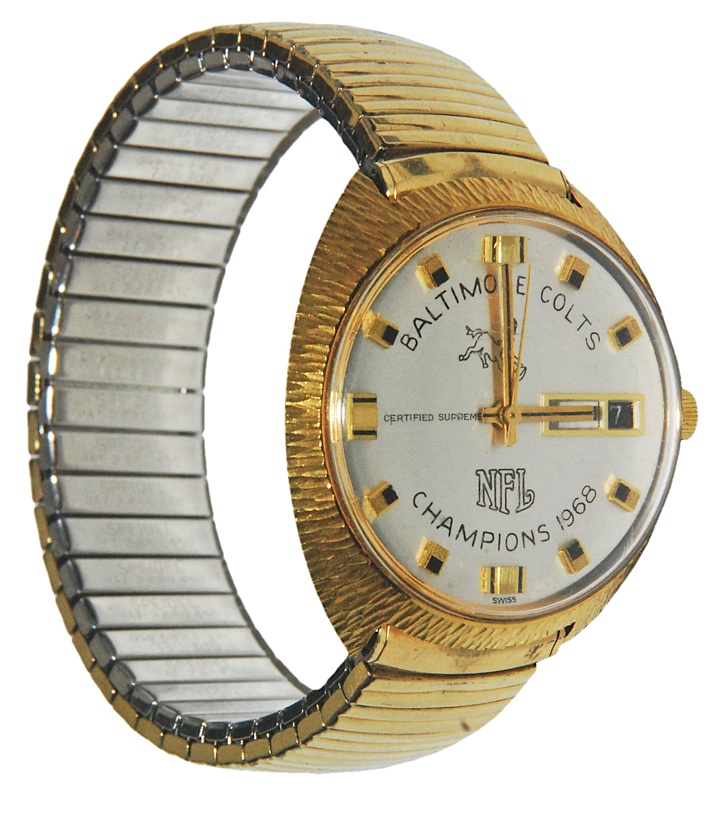
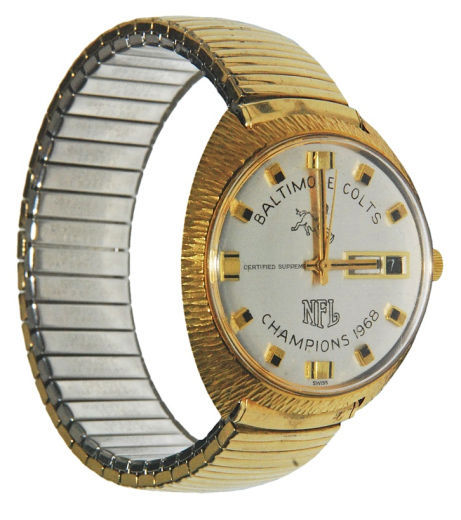
The loss was so devastating and embarrassing that the NFL didn’t issue a championship ring. A team that was 3hrs away from being the greatest team in NFL history received THIS WATCH when they failed to win the game…wow! Think the NFL thought highly of their championship season? Now before you ask, the answer is yes the teams that lost Super Bowls I, II, and IV did receive rings.
Let’s take you back to 1968…The Colts were motivated to win it all in 1968 because in 1967 they had the BEST record ever to NOT make the playoffs:11-1-2 including a win over the Packers who would go on to win Super Bowl II. The Rams had an identical record and won the tiebreaker for giving the Colts their one loss. The Colts were in the Western Conference and for the better part of the 60’s couldn’t unseat the Packers.
Except in 1964 when Paul Hornung was suspended for gambling, yet the Colts were upset in Cleveland in the Championship game. Yes you heard me correctly…the Packers and Colts were in the WESTERN CONFERENCE back then. So Vince Lombardi steps down and the Packers run out of steam and the Colts go 13-1 in 1968. So in TWO seasons they had only lost 2 games going 24-2-2. No regular season overtime back then hence the two ties.
Like other teams I’ve mentioned, this team that DIDNT win it all was the strongest Baltimore Colts team ever. They had a defense that set the league record for fewest points allowed in a 14 game season with 144 points. They held 11 of their 14 opponents to 10 pts or less including 3 shutouts.
The great Johnny Unitas got hurt and Earl Morrall replaced him and became league MVP at quarterback. They had Tom Matte and Jerry Hill as arguably the best running tandem in football. Their only regular season loss in 1968 was to the Cleveland Browns who they would go on to blow out 34-0 in the NFL Championship game IN CLEVELAND. So with that it was as though they practically had an undefeated season and were lauded as the best team in NFL history.
Then came January 12th, 1969…wow!! One look at this watch shows you how embarrassed the NFL was to lose to the upstart AFL. The corporate pressures, corporate culture and such were so great that within 2 years coach Don Shula was gone. Within 4 years Carroll Rosenbloom would swap franchises with Robert Irsay (then Rams owner), become owner of the Rams, would later marry Georgia, drown and she became Georgia Rosenbloom-Frontiere owner of the Los Angeles / St. Louis Rams. Of course this legitimized the AFL and NFL merging as well. Everyone talks about the champion but take a look across the river and pay attention to the team that loses it. The after affects can be frightening…
Would all of this have happened had the Colts WON Super Bowl III?
Epilogue: Although the Colts would go on to win Super Bowl V, how redemptive was it?
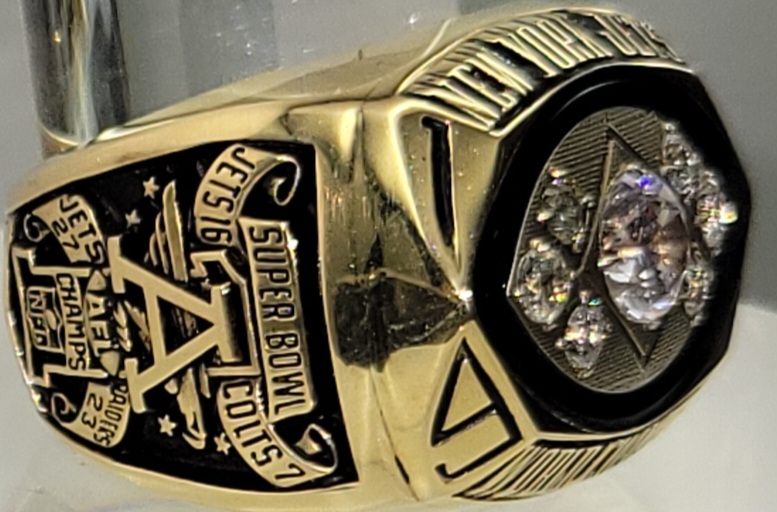
One of the great things about the NFL and its history are the stories behind the men. Unfortunately the greatest lessons come from those that come up short in big games. Everyone loves a David v. Goliath scenario when the underdog pulls off an upset. When a landmark incident takes place like Super Bowl III, all eyes follow the winner who have vanquished a favored foe and the game is revered and talked about for years to come.
Super Bowl III has been rehashed, talked about, re-shown, and re-released in 1997 (as a video broadcast) for a generation to see for themselves a landmark game that changed the course of the NFL. It validated the AFL , its history, along with legitimizing the merger between the two leagues. It was the centerpiece to a Hall of Fame career for Joe Namath and allowed Weeb Ewbank to become the only coach to win a championship in both leagues. Yet what does all this fallout do to the men who lost that event?? Is the harm irreparable for the men who came up short in Super Bowl III?? How easy is it to forget and move on??
Surely the Baltimore Colts could go on and win another championship and set things straight, right?? Here are the accounts of Bill Curry, Mike Curtis, and the late Bubba Smith. As you listen to the recount through their eyes, you will get a different feeling about Super Bowl III than ever before.
Copy of Joe Namath’s Super Bowl III ring.
What is ironic, these are interviews celebrating their Super Bowl V championship for the America’s Game series. What makes these poignant is the honesty reflected in their voices. What makes these stories resonate is this was a game 45 years ago and made even more impactful is this was the last interview for Bubba Smith to talk about this with his passing away in August 2011.
CHAPTER I: The updated story from our upcoming book as written July 12, 2010 and showcased online:
SUPER BOWL III RUNNER UP 1968 BALTIMORE COLTS
Wow Talk about shock and awe!!!
The Jets 16-7 win over the Baltimore Colts in Super Bowl III was one of those events that defined an era. Everyone has spoken of the great accomplishment, the AFL arriving on the big stage but so few people talk about the vanquished 15-1 Baltimore Colts and Don Shula. The loss was so devastating and embarrassing that the NFL didn’t issue a championship ring. A team that was 3hrs away from being the greatest team in NFL history received THIS WATCH when they failed to win the game…wow! Think the NFL thought highly of their championship season? Now before you ask, the answer is yes the teams that lost Super Bowls I, II, and IV did receive rings.
Let’s take you back to 1968…The Colts were motivated to win it all in 1968 because in 1967 they had the BEST record ever to NOT make the playoffs:11-1-2 including a win over the Packers who would go on to win Super Bowl II. The Rams had an identical record and won the tiebreaker for giving the Colts their one loss. The Colts were in the Western Conference and for the better part of the 60’s couldn’t unseat the Packers. Except in 1964 when Paul Hornung was suspended for gambling, yet the Colts were upset in Cleveland in the Championship game. Yes you heard me correctly…the Packers and Colts were in the WESTERN CONFERENCE back then. So Vince Lombardi steps down and the Packers run out of steam and the Colts go 13-1 in 1968. So in TWO seasons they had only lost 2 games going 24-2-2. No regular season overtime back then hence the two ties.
Like other teams I’ve mentioned, this team that DIDNT win it all was the strongest Baltimore Colts team ever. They had a defense that set the league record for fewest points allowed in a 14 game season with 144 points. They held 11 of their 14 opponents to 10 pts or less including 3 shutouts. The great Johnny Unitas got hurt and Earl Morrall replaced him and became league MVP at quarterback. They had Tom Matte and Jerry Hill as arguably the best running tandem in football. Their only regular season loss in 1968 was to the Cleveland Browns who they would go on to blow out 34-0 in the NFL Championship game IN CLEVELAND. So with that it was as though they practically had an undefeated season and were lauded as the best team in NFL history.
Then came January 12th, 1969…wow!! One look at this watch shows you how embarrassed the NFL was to lose to the upstart AFL. The corporate pressures, corporate culture and such were so great that within 2 years coach Don Shula was gone. Within 4 years Carroll Rosenbloom would swap franchises with Robert Irsay, become owner of the Rams, would later marry Georgia, drown and she became Georgia Rosenbloom-Frontiere owner of the Los Angeles / St. Louis Rams. Of course this legitimized the AFL and NFL merging as well. Everyone talks about the champion but take a look across the river and pay attention to the team that loses it. The after affects can be frightening…
Would all of this have happened had the Colts WON Super Bowl III?
CHAPTER II: A vignette of what was shared by Bill Curry, Bubba Smith, Mike Curtis, and Ernie Accorsi as the events and aftermath of Super Bowl III were recounted in 2007.
CHAPTER III/EPILOGUE: Again, what makes this unique are the events that take place hastening Don Shula’s departure, where he became the NFL’s All Time winning coach in Miami and not Baltimore. Even after winning Super Bowl V, Carroll Rosenbloom was still disenchanted with being the owner of the Baltimore Colts and swapped franchises with the Rams Robert Irsay in 1972.
Was it ironic or a part of the story, that after winning Super Bowl V, the Baltimore Colts made it to the AFC Championship to defend their title?? Who did they lose to 21-0 to bring about the end of an era (1958-1971) where the Colts were among the NFL elite?? Don Shula and the Miami Dolphins in the Orange Bowl. Another irony is Don Shula went on to become the winningest coach in NFL history in the stadium where Super Bowl III was held. The Orange Bowl. Don Shula went on to exorcise his demons. As for Carroll Rosenbloom, Ernie Accorsi, Bubba Smith, Mike Curtis, and Bill Curry??
So remember to pay close attention to the men and these moments. What will become of the principles of a landmark event for those on both sides of the equation?? A compelling study in the psychology of man and sport. This is one of the reasons we love bringing you these real life stories with such richness.
Now before you scoff this is the view of former players whose lament intensified with age, try this view from many of the same players on the 25th anniversary of Super Bowl III. This was right before Super Bowl XXVIII in January 1994.
Thanks for reading and share this with those who love football and football history. Teach them something that scores on ESPN won’t tell them.

 Well they made it to Super Bowl V in Miami where they faced the Baltimore Colts, a former NFL team that had moved over to the new AFC. These two pre-merger NFL antagonists were embroiled in a defensive struggle where Dallas clearly outplayed the Colts and were poised to take a 20- 6 3rd qtr lead when Duane Thomas fumbled at the 1 yard line. Are you kidding me, the 1 yard line?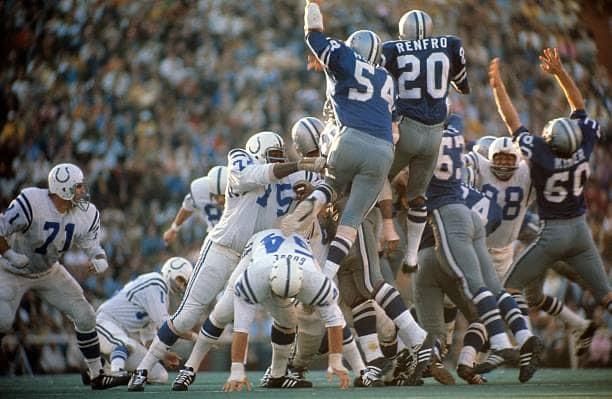
 If ever a team left a great defensive effort on the field, this was it. Has there ever been another NFL championship, or Super Bowl, where a team held its opponents two QBs to less than 50% completion rate and lost the game?? The Doomsday Defense forced 7 turnovers. Three of these were interceptions, two by MVP Chuck Howley.
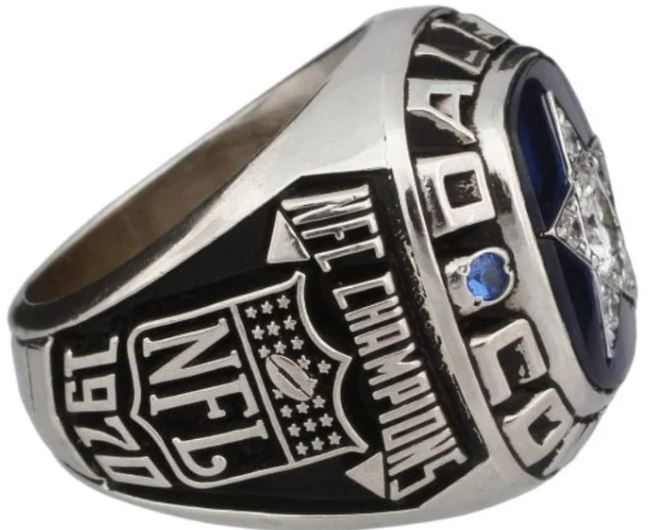 Twice they stopped Colt scores in the red zone. In the 4th quarter!! One was an end zone interception by Howley at the start of the period. The other when S Cornell Green forced Eddie Hinton to fumble at the same 1 yard line Duane Thomas had in the 3rd. They had finally broken the Colts offense until their anemic offense gave the game away with Morton’s interception. You could feel the angst when Bob Lilly threw his helmet after Jim O’Brien winning field goal. Had they brought a semblance of an offense they would have won this game. They would have to wait another year for a chance at the title.


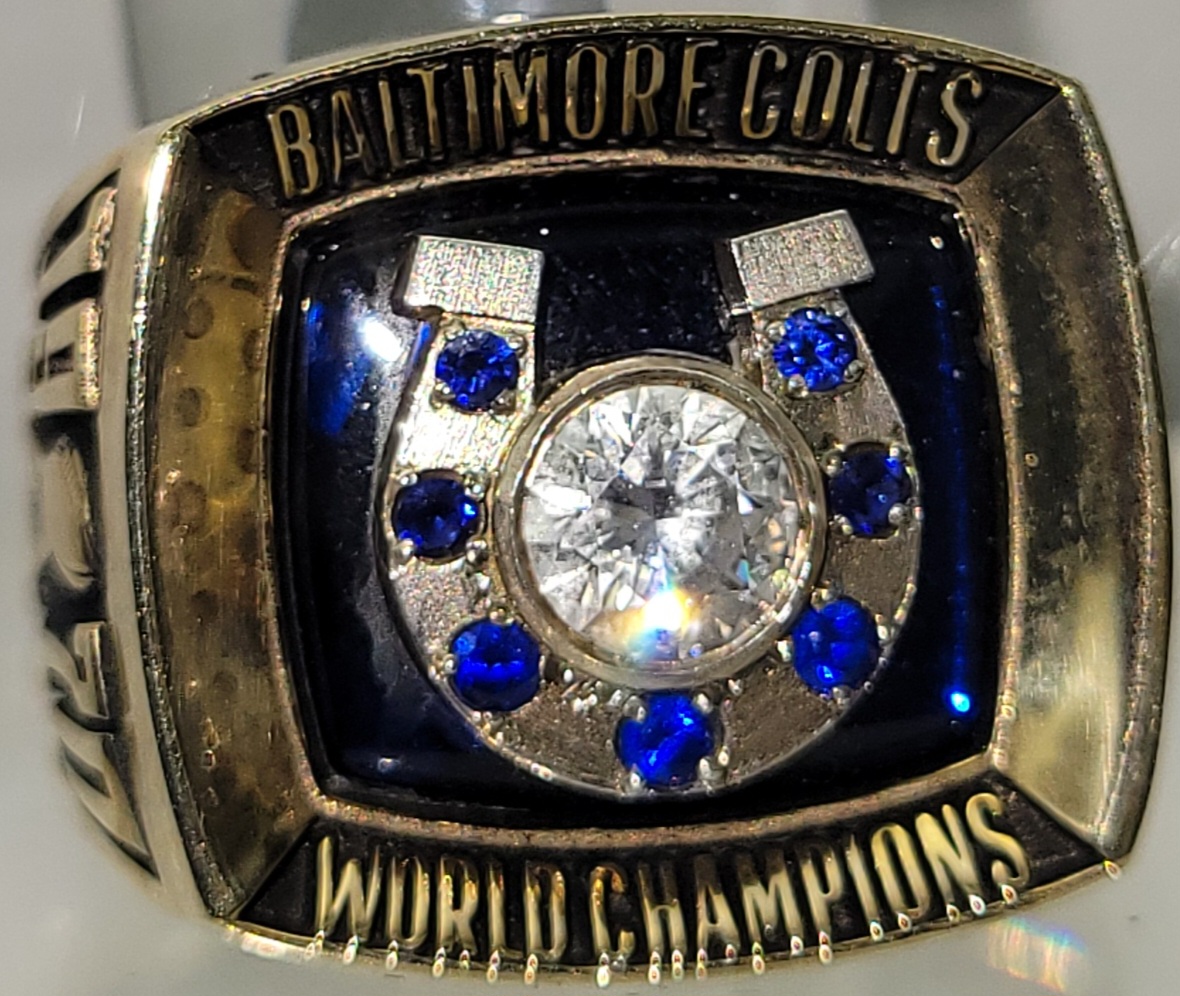 There are varied reasons why this team is so overlooked when you think of this franchise. Did you know this is the only Super Bowl winner where the franchise was sold just one year later?? Before the 1972 season, Robert Irsay (Los Angeles Rams) and Carroll Rosenbloom swapped franchises.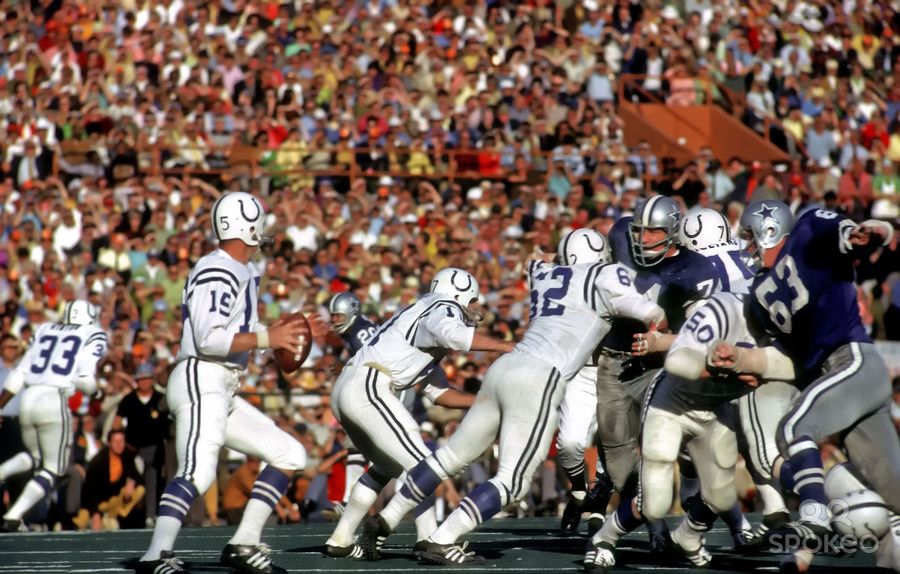






 The great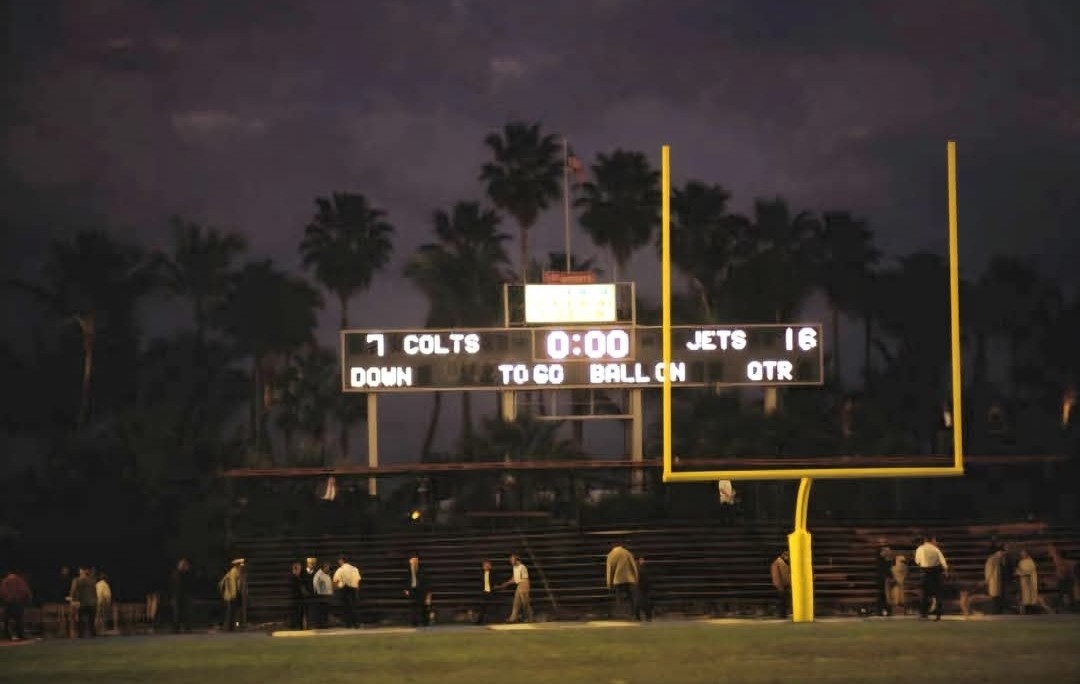

 One of the great things about the NFL and its history are the stories behind the men. Unfortunately the greatest lessons come from those that come up short in big games. Everyone loves a David v. Goliath scenario when the underdog pulls off an upset. When a landmark incident takes place like Super Bowl III, all eyes follow the winner who have vanquished a favored foe and the game is revered and talked about for years to come.


You must be logged in to post a comment.