Roger Craig Belongs in the Pro Football Hall of Fame


Those high knees

Reissue of original Article: 13, November 2013

When you think back to Bill Walsh’s great 49er teams, who are the first players you think of?? Right there with the Joe Montanas, the Jerry Rices, and Ronnie Lotts it only takes a fraction of a second to think of Roger Craig. His high knee running style brought a physicality to the San Francisco offense that was seen as a finesse group up until his arrival. In fact he came to San Francisco as a fullback when they drafted him from Nebraska before the 1983 season.

In college he had been primarily a blocking back in the Cornhuskers wishbone offense. Normally he paved the way for Jarvis Redwine and then Mike Rozier. Yet when Bill Walsh decided to revamp San Francisco’s dismal backfield after a 3-6 season in 1982, he drafted Craig in the second round.

Although the 49ers had won it all in 1981, it had become apparent Bill Ring, Amos Lawrence, Walt Easley, and Earl Cooper just wasn’t cutting it in the backfield. To raise the stakes in the NFC for 1983, Craig and newly acquired Wendell Tyler would form a more potent backfield.

After posting the worst yards per carry average (3.4) and yardage (742) in 1982, the new backfield duo of Craig and Tyler turned that around completely. The much improved ground game of 1983 ranked 8th with 2,257 yards rushing and a gaudy 4.4 yard average. Ironically just ahead of the Los Angeles Rams, who had traded Tyler to San Francisco so they could draft Eric Dickerson.

You had to give the nod to Craig who ran for 783 yards a team leading 8 TDs, while catching 42 passes for 427 yards and another 4 scores. This more dynamic backfield, along with Joe Montana, powered San Francisco to the NFC Championship Game. A 24-21 loss to the Washington Redskins was shrouded in controversy, thanks to some questionable calls, yet Walsh had the backfield he envisioned. Craig had reinvented himself from a collegiate player who rarely touched the football to a dual threat pro.

The 1984 49ers were a juggernaut becoming the first team to go 15-1 during the regular season. Everyone of the 49 man roster played their role so no one had outstanding stats. However once the 49ers moved past the New York Giants and Chicago Bears during the playoffs, the stage was set for a coming out party in Super Bowl XIX. With all eyes on Joe Montana’s possible second Super Bowl trophy and the electrifying record setting Dan Marino, Craig’s name didn’t even make the marquee.


Roger Craig graces the cover of Sports Illustrated after his record breaking performance in Super Bowl XIX.

Roger Craig graces the cover of Sports Illustrated after his record breaking performance in Super Bowl XIX.

It was his 1985 that set Craig apart as he amassed his 1,000/ 1,000 yard seasons both rushing and receiving. The first player in league history to do so. Some 27 years later, only Hall of Famer Marshall Faulk shares that accomplishment when he did it in 1999. How dominating was his performance?? Well his 1,050 yards rushing doesn’t jump out at you until you realize he only ran 214 times for a whopping 4.9 yards per carry. The league average is always around 4.0.

Oh by the way, he led the NFL in receiving that year with 92, which set a record for running backs, that amassed 1,016 more yards. His 15 total touchdowns was second to Joe Morris and was 1 better than NFL MVP Marcus Allen. In fact many pundits, including our CEO believes Craig should have been the MVP in 1985 with that dominating performance.

Now buoy his 1985 record setting season not culminating with the league MVP, on the backdrop of a Super Bowl record 3 TDs yet not winning that MVP and you’ll see where we’re going in a minute. Don’t forget he did this on a 10-6 San Francisco team that was a defending champion with Jerry Rice being a rookie that didn’t have 1,000 yards receiving and only 3 touchdowns. Craig quite simply fueled that offense.

Once the 49ers won Super Bowl XIX, they were forced to retool and become a bigger physical team. In 1985, the Chicago Bears emerged with one of the most imposing defenses in NFL history. The Giants followed suit with an overwhelming defense that featured 4 linebackers in the 250 lbs category. When Bill Walsh and his 49ers were dominated 49-3 in the 1986 NFC Divisional Playoffs by the Giants something had to be done.

These were teams the 49ers had beaten on their way to the ’84 championship, now they had taken the game to a new level of brute force. In reinventing the offense from a size perspective, it was Craig who was switched from fullback to halfback to allow for the insertion of Tom Rathman at fullback. The entire offensive line was overhauled.

You have to keep in mind the average career for a runner in pro football is less than 4 years. Yet here Craig was making the switch in year 5 to a position that called for him to be quicker. This at a time where he should have been slowing down from a physical standpoint. Yet he, Jerry Rice and Joe Montana spearheaded one of history’s most accomplished runs. From 1987-1990 the 49ers went 51-12 in the regular season, winning back to back Super Bowls in ’88 & ’89 and were the prohibitive favorites to win it all in 1987 as well as 1990. They finished #1 in offense in ’87 and ’89 and #2 in ’88 and ’90. In each year they made it to at least the divisional round of the playoffs and 3 straight NFC Championship Games as they were trying to threepeat.

Playing in only 12 games due to the ’87 strike, Craig ran for 815 yards which projects out to 1,086 over a full season. The 13-2 Niners were poised to become the greatest team of the modern era yet were upset by the Vikings in the playoffs. They were #1 in both offense and defense yet proved fallible in the playoff loss. Craig went on to his greatest performance in the 1988 campaign. In rushing for a career high and club record 1,502 yards, he also caught 76 passes for an additional 534  yards for his second season with over 2,000 yards from scrimmage. More important, he powered San Francisco to another Super Bowl championship with a win over Cincinnati in the XXIII’d edition.

Roger Craig was a hard nosed runner.

Roger Craig was a hard nosed runner.

Yet go back to 1988 being his second season with more than 2,000 yards from scrimmage. Keep in mind this was no sleek, make ’em miss halfback. He brought a punishing style to his position where he bludgeoned the opposition. As you’re reading this you can picture his high knee running style like when he trampled through the Rams on his most famous run in 1988.

Yet did you know that Emmitt Smith, Thurman Thomas, and Barry Sanders only had 2 different seasons amassing 2,000 yards from scrimmage also?? Did you also know that Marcus Allen and Adrian Peterson have only had one?? Only Edgerrin James, Marshall Faulk, Ladainian Tomlinson, and Eric Dickerson had more. What do all of these runners have in common?? Peterson and Tomlinson will be in the Hall of Fame and all the others are in. Roger Craig is right there with them.

Now going into the Hall of Fame is based on impact on the game. By the time we bring up the 1989 team that won Super Bowl XXIV, Craig was a driving force behind the team of the decade. Again he was a 1,000 yard rusher as the team won their fourth Super Bowl and Roger had his 3rd ring. When he left the game in 1993, his 566 career receptions was #1 among running backs all time and still remains 7th.

He is in the linear line of great NFL running backs when it comes to catching the football and is a part of the game’s evolution. He took the mantle from Chuck Foreman and propelled it forward. Since then, only a handful of every down running backs have provided that type of versatility. Now everyone has a receiving running back who comes in on 3rd downs where Roger was in every play.

It was Craig’s play that allowed a young Jerry Rice to flourish as teams concentrated their efforts to stop him. If Craig’s move to halfback in 1987 hadn’t panned out, what would have been the legacy of Bill Walsh’s “West Coast Offense”?? It was the run from 1987-1990 that made the offense spread it’s wings throughout the National Football League. During this time is when it proved it could take on the big bad Chicago Bears defense (see 41-0 1987 Monday Night shutout) and 28-3 NFC Championship win in Soldier Field in ’88. Then you add the rivalry with the New York Giants.

From Mike Holmgren to Denny Green to Mike White to Jon Gruden ( who had just begun coaching on the 1990 SF coaching staff) and George Seifert succeeding Bill Walsh. They all could attribute their Head Coaching jobs to some extent to Craig’s performance along with Montana and Rice. Yet the foundation of that offense running and receiving along with goal line and short yardage was #33.

By the way, when did Roger Craig become the the first running back to have a 100 yard receiving game in a Super Bowl?? You guessed it… Super Bowl XXIII against Cincinnati and not his record setting performance against Miami. Now had he won the Super Bowl XIX MVP, or the 1985 NFL MVP, would that have propelled him to winning the NFL MVP in 1988?? Give it some thought.

For induction into the Pro Football Hall of Fame, I present to you…Roger Craig

Lester Hayes Belongs In The Pro Football Hall of Fame

Originally Written June 1, 2012 -Reissued August 12,2025

As the NFL changed the rules in 1978 to liberate the passing game, many thought the big physical cornerback would give way to smaller quicker men. Those who could turn and run with receivers after the 5 yard “chuck” zone (The Mel Blount Rule) would be highly sought after. Yet one team held steadfast to the belief of not allowing that receiver a free ride off the line of scrimmage.

The Oakland Raiders who in 1977, just one year removed from winning Super Bowl XI, selected Lester Hayes out of Texas A&M. Where the league saw smaller cornerbacks at 175-180 lbs enter the league at that time. Hayes was a converted college safety who stood 6’0 and weighed 200 lbs.

Does he have on enough stickum??

His inclusion into the Raiders organization was at the right time as Hall of Fame cornerback Willie Brown retired and took over as secondary coach. Under his tutelage Hayes became a master of bump and run coverage and with his size, manhandled receivers at the line of scrimmage. Sure a receiver could run free after 5 yards but he had to get there first.

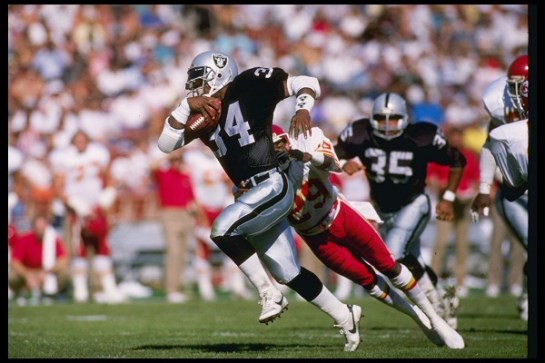
Another retiring Hall of Fame Raider was WR Fred Biletnikoff who went against Hayes in practice. Fred ran crisp routes and was a slower version of Steve Largent or a Charlie Joiner. Going up against he and Cliff Branch, who was the one of the league’s perennial deep threats, honed his skills to that of one of the greatest cornerbacks the game had ever seen. He also borrowed Biletnikoff’s use of stickum and took it to obscene levels. Take a look at the pic on the right if you think we’re joking.

Stickum talk aside, his true coming out party was the 1979 season where he led the team with 7 interceptions, returning 2 for touchdowns in the only losing season for the Raider organization during the 1970’s. John Madden had retired and Tom Flores had taken over as Head Coach and the Raiders were a team in transition.

Most teams make a transition in personnel with a defensive leader being a linebacker or a star defensive lineman being a marquee player yet here was a cornerback just starting to make a name for himself at the helm. However he couldn’t unseat Louis Wright of Denver, Mel Blount of Pittsburgh, or Mike Haynes of New England on the 1979 AFC Pro Bowl roster. Naturally you’ll conclude they had better seasons yet Blount and Haynes made it on reputation with only 3 interceptions each and Wright only had 2. A gross injustice just because Hayes team had slipped that year.

Enter the greatest single season for a cornerback in NFL history and the greatest coaching job in NFL history…the 1980 Oakland Raiders. In the second season for Tom Flores, the Raiders became the first team to win the Super Bowl from a wildcard position. The team had replaced nine defensive starters from a Super Bowl team just four years before.

Lester Hayes intimidating style at cornerback belied his agility to cover the fastest and best route runners in the NFL.For the season, he picked off 13 passes, just one short of the NFL record by “Night Train” Lane in 1951.  Not only was that the highest total in 29 years, no cornerback has come within 2 of that performance since then (Everson Walls in 1981). He returned those passes for 273 yards and one touchdown and went on to be the Associated Press NFL Defensive Player of the Year.

He was the first player to receive the award while playing for a team that didn’t finish as a top 10 defense with the Raiders finishing 11th. He did this while facing Hall of Fame WRs Steve Largent in Seattle, Charlie Joiner and Kellen Winslow in San Diego, and the electrifying John Jefferson also of the Chargers with whom he had epic battles with.

During the 1980 season teams kept testing him and coming up snake eyes. If you added his 4 interceptions during the playoffs he finished with 17 interceptions in one season. If you look at that against the year Hall of Famer Deion Sanders won his NFL MVP (1994 with San Francisco) from the same position, 6 interceptions for 303 yards and 3 TDs with 2 more ints. in the postseason, it dwarfs it tremendously. Sanders needed another NINE interceptions just to tie him!!!  You would have to add Deion’s next FOUR seasons with Dallas just to tie him with 17!! Tremendous

Oakland went on to win Super Bowl XV and the 80 playoffs began with a wildcard battle against Houston and former quarterback Ken Stabler. The Raiders prevailed 27-7 with the final points scored on Hayes intercepting Stabler and returning it 20 yards hand held high to send the Raiders to Cleveland and the divisional round.

He intercepted Stabler twice then intercepted 1980 NFL MVP Brian Sipe twice in the 14-12 upset of the Browns. In the AFC Championship against the Chargers and the Super Bowl with the Eagles, Dan Fouts and Ron Jaworski just didn’t throw into his area. How do we know this?? In Super Bowl XV Hayes was the left cornerback. Jaworski threw exclusively to his left and Right OLB Rod Martin picked off a Super Bowl record 3 interceptions in a 27-10 win.

The NFL outlawed stickum after that 1980 season in anther decision that Raider loyalist felt was the offspring from the court battle between Raiders’ owner Al Davis and commissioner Pete Rozelle. Some thought that Hayes inability to use stickum had a lot to do with his interception total dropping, when in fact quarterbacks just flat didn’t throw into his area. He never intercepted more than 3 passes in a season from that point forward.
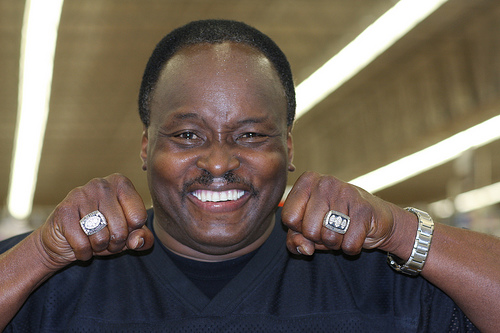
Lester Hayes showing off both rings from Super Bowl XV and XVIII

After being overshadowed by Mike Haynes for that 1979 Pro Bowl slot, he was joined by his former counterpart in 1983 to form one of the greatest CB tandem in NFL history. In that year the Washington Redskins became the highest scoring team in NFL history scoring 541 points on their way to Super Bowl XVIII. Washington’s quarterback Joe Theismann was the NFL’s MVP and the Redskins were being hailed as the greatest team in NFL history…yet they had to defend their title against Los Angeles.

The Raiders started their charge in the 83 playoffs with a 37-10 devastation of the Pittsburgh Steelers which ironically began with Hayes getting the team started with an 18 yard TD interception return. After a 30-14 win against the Seahawks in the AFC Championship experts had the Redskins winning a high scoring game.

What took place in Super Bowl XVIII was a dismantling of epic proportions. Charlie Brown, who had caught 78 for 1,225 and 8 TDs during the regular season, was smothered along with Art Monk and held to a combined 4 receptions by Hayes and Haynes. The coverage was so superb the Raiders blitzed their linebackers and recorded 6 sacks as Joe Theismann had his worst game of the year. His stat-line?? Theismann was held to 16 of 35 for 243 yards and 2 ints. Only one pass was completed in Lester Hayes area the entire day. He won his second championship ring as the Raiders won in dominating fashion 38-9.

Hayes at this point was the best cornerback in all of football. He played in 5 straight Pro Bowls from 1980-1984 and was the player most future NFL’ers modeled their game after. Most notably Hanford Dixon of the Cleveland Browns. Everything from the three foot long towel hanging from his waist to his aggressive play against a receiver at the line. Dixon and Frank Minnifield are the tandem that Lester Hayes and Mike Haynes are most often compared to. As a combo… Dixon and Minnifield were the best tandem in NFL history. Yet the man who coined the Brown’s “Dawg Defense”, was a 3 time Pro Bowler who modeled himself to be like Lester, what would you call Hayes?? In The Chancellor’s book, he’s a Hall of Famer.

Please lend your thoughts as well by writing in to the Pro Football Hall of Fame to the address below. Please be respectful and positively lend your voice:

Please write & nominate #37 Lester Hayes
Send letters to:
Pro Football Hall of Fame
Attention Senior Selection Committee
2121 George Halas Dr NW, Canton, 
OH 44708

For induction into the Pro Football Hall of Fame, I present to you Lester Hayes!

Past Hall of Fame Articles:

Robert Brazile 2011 (inducted 2018)
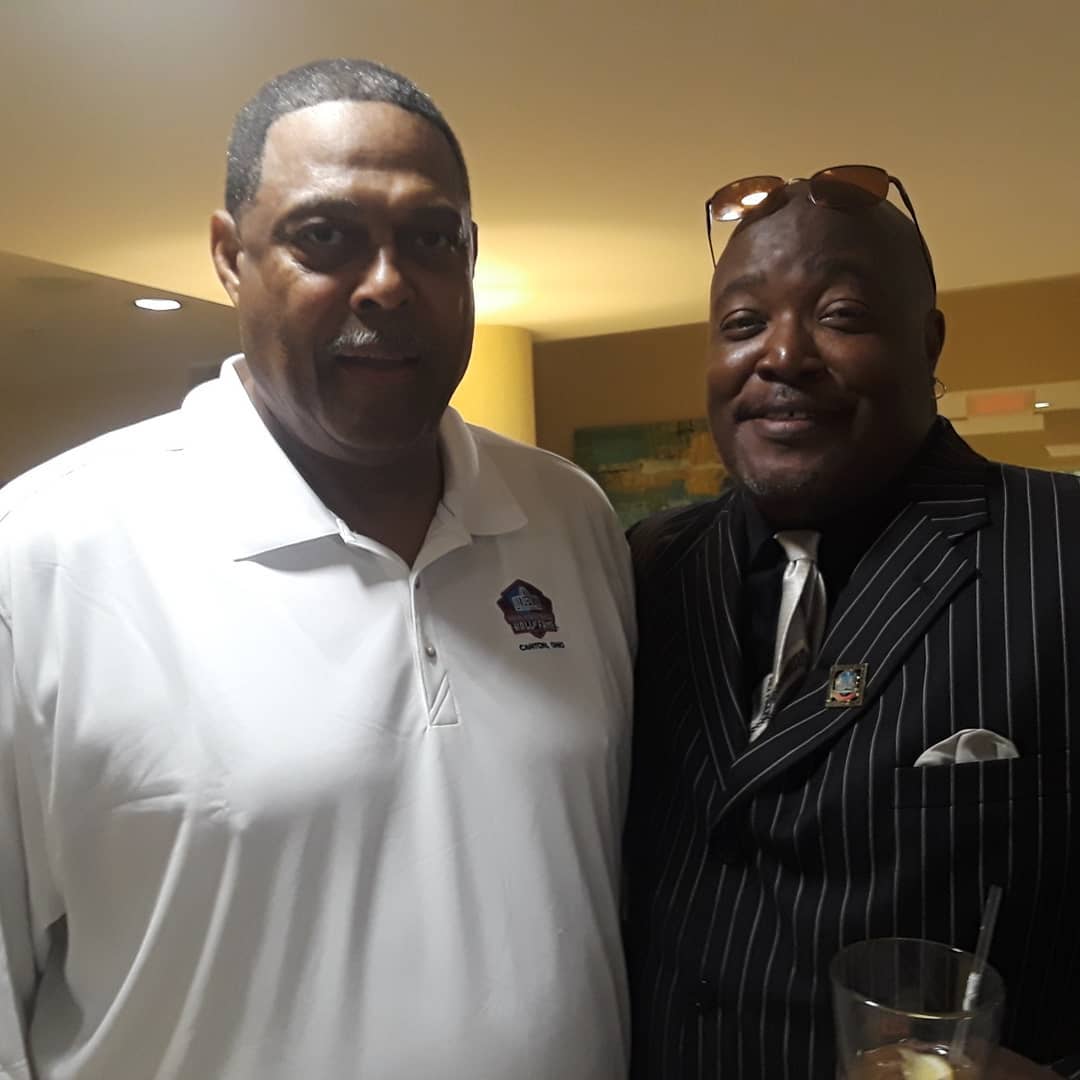
Ran into Robert Brazile after the Gold Jacket Dinner. Great time.

Kevin Greene 2011 (inducted 2016)
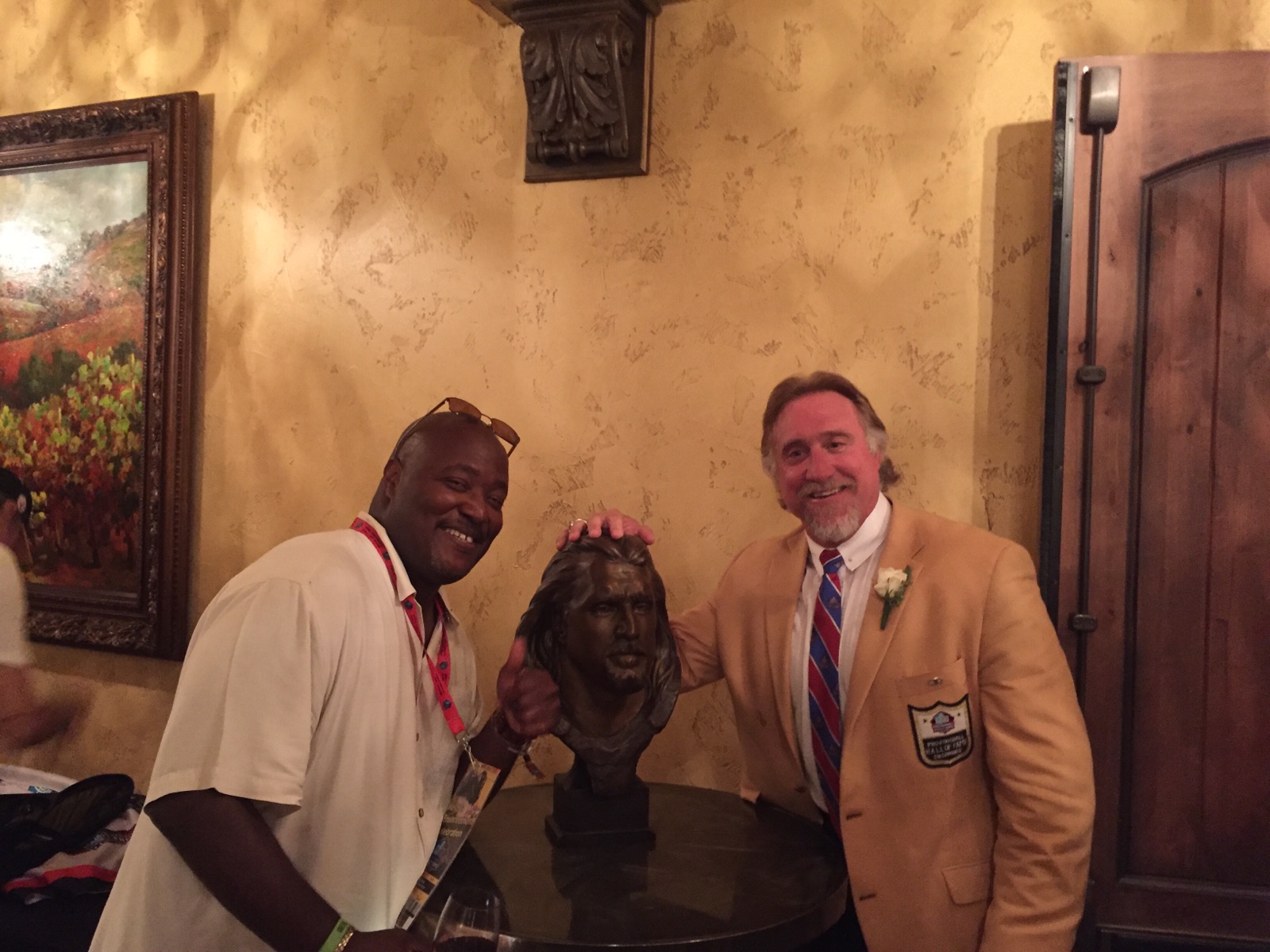
With Kevin Greene after the Induction ceremony.

Sterling Sharpe 2011 (will be inducted 2025)

Terrell Davis 2011 (inducted 2017)

Jerry Kramer 2011 (inducted 2018)
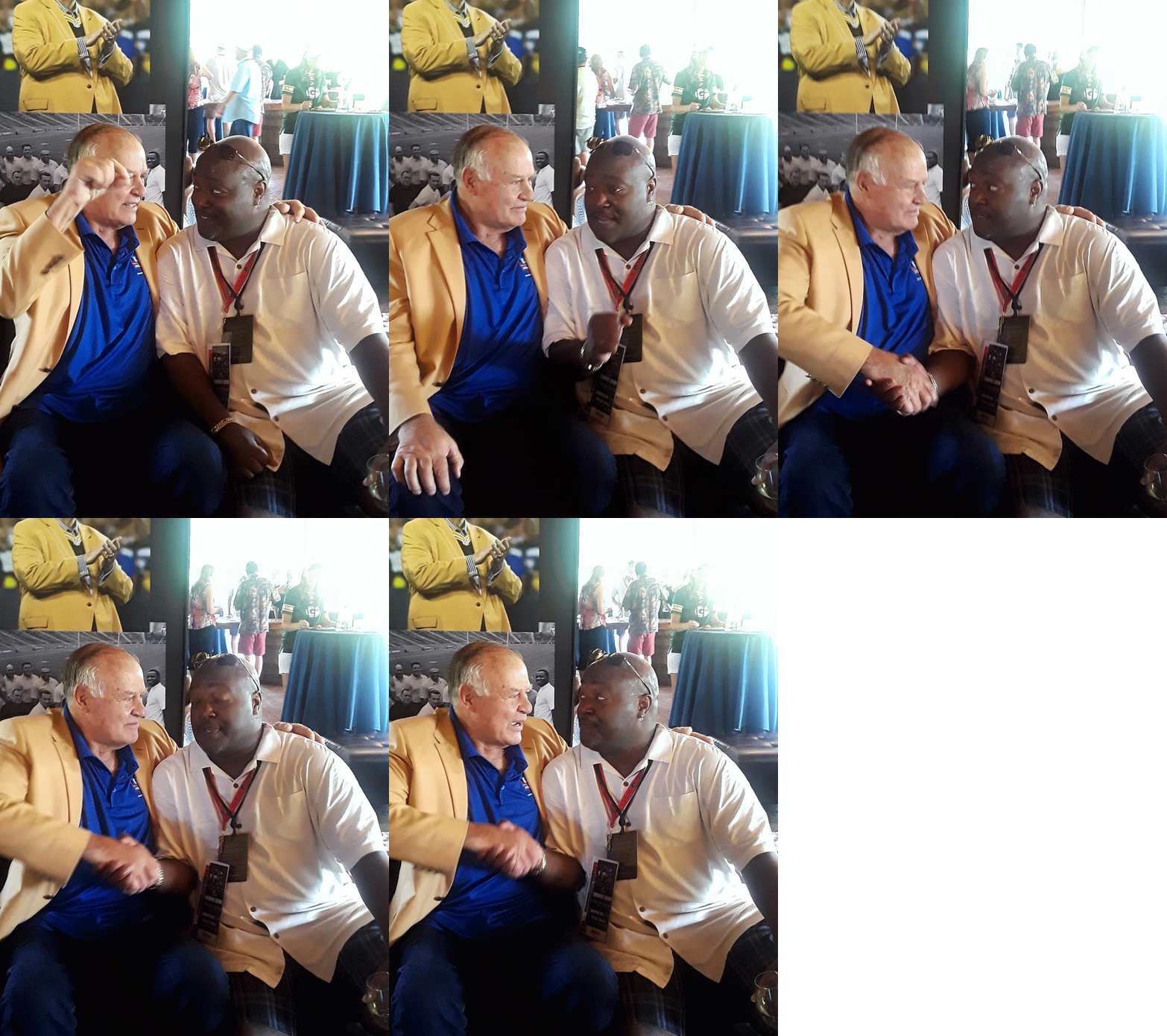
“Hey big guy!” ’18 HOF

Everson Walls 2011

Randy Moss 2011 (inducted 2018)

Cris Carter 2011 (inducted 2013)

Tom Flores 2012 (inducted 2021)

Lester Hayes 2012

Chuck Foreman 2012

Edgerrin James 2013 (inducted 2020)

Andre Reed 2013 (inducted 2014) 

Roger Craig 2013

Corey Dillon 2014

Ken Riley 2015 (inducted 2023)

Ken Stabler 2015 (inducted 2016)
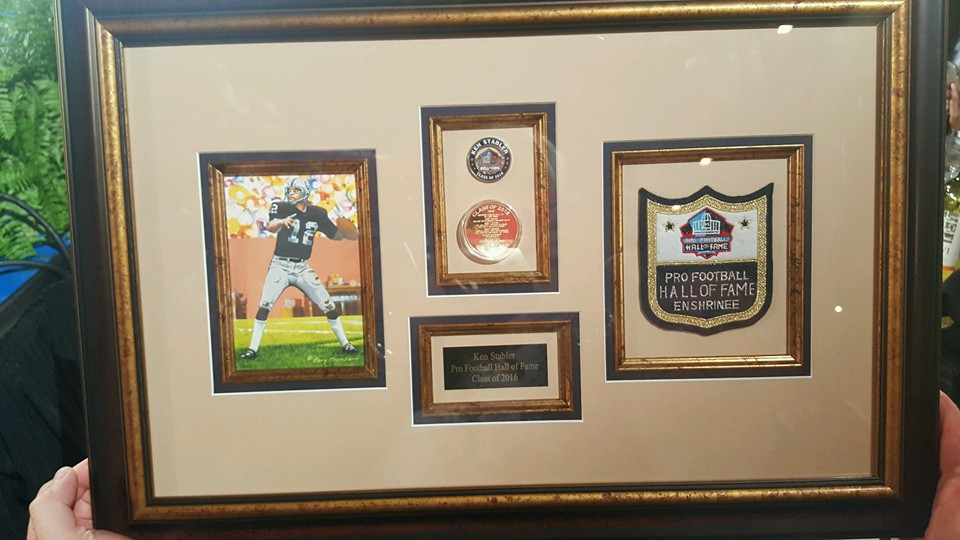
Drew Pearson 2016 (inducted 2021) 

Cliff Branch 2016 (inducted 2022)

Todd Christensen 2017

Hardy Nickerson 2020

Wilber Marshall 2024


Legends of The Fall: When Auburn Running Backs Ruled the NFL

In the annals of college football there was a time where USC had earned the moniker “Tailback U”. Then in the late 80s Oklahoma St churned out back to back Pro Football Hall of Famers Thurman Thomas and Barry Sanders. Yet go back another decade and you’ll have a hard time topping the talent Auburn sent to the NFL over a 10 year period.

From 1979 -1989 William Andrews, Joe Cribbs, James Brooks, Lionel “Litte Train” James, and Bo Jackson took the NFL by storm. While each touched a level of greatness during this era none would make it to the hallowed halls of Canton. Although injuries derailed 2 of these promising careers right at their zenith.
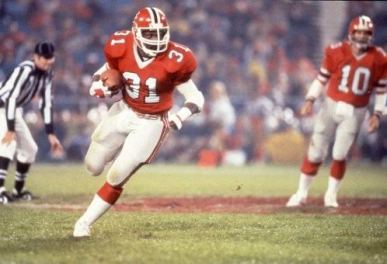
Of this list most think of Bo Jackson as the leading ground gainer who lost his prime to an injury. Not true the 1st of our super backs who had their career cut short was the punishing William Andrews. He’s the man that began this era of excellence unexpectedly as a 3rd round pick by the Atlanta Falcons in the ’79 draft.
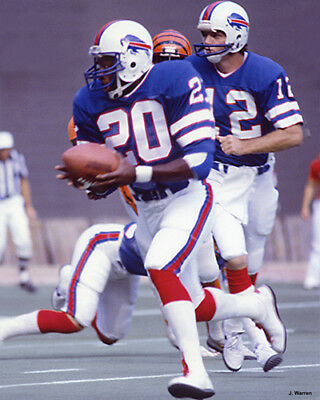
To offer some context consider Andrews was the powerful fullback blocking for the shifty and elusive Joe Cribbs and James Brooks. In ’78 Cribbs led the Tigers with 1,278 yards while Brooks spelled him gaining 514 more. Andrews was the 3rd choice with the fewest carries at 72.

He exploded onto the NFL scene rushing for 1,023 yards in his rookie campaign in ’79. Then followed it up with back to back 1,300 yards seasons in ’80 & ’81 yet came to be known as the running back who once knocked out Hall of Fame hitter Ronnie Lott. We don’t have that hit but we do have one encounter on a Monday Night fans everywhere remember during that era…

By 1983 Andrews had supplanted Hall of Fame Member Earl Campbell as the NFL’s premier power back. His ’83 rushing total of 1,567 yards stood as a team record until Jamal Anderson broke it in 1998. He was 2nd in the league in rushing to another Hall of Famer Eric Dickerson. It was the 2nd time Andrews gained over 2,000 yards from scrimmage in 3 years. Yet he was derailed with a knee injury that shortened a potential trip to Canton.

Take a look at how lethal he was both running and receiving from 79-83.

  • 79 – 239 car. 1,023 yds 3TDs / 39 rec. 309 yds 2TDs
  • 80 – 265 car. 1,308 yds 4TDs / 51 rec. 456yds 1TD
  • 81 – 287 car. 1,301 yds 10TDs / 81 rec. 735 yds 2 TDs
  • 82 – 139 car. 573 yds 2TDs (strike shortened year)
  • 83 – 331 car. 1,562 yds 7 TDs / 59 rec. 609 yds 4TDs

Andrews was either 1st or 2nd team All Pro 4 straight years and was in the Pro Bowl as well from 80-83. Guess who joined him in Hawaii for 3 of those Pro Bowls in ’80, ’81 and ’83?? Former “War Eagle” backfield mate Joe Cribbs. Do you realize in 1980 these former backfield mates wound up the #4 (Andrews 1,308 yds) and #6 (Cribbs 1,185 yds) rushers in the NFL??

In ’80 Cribbs blossomed into the AFC’s Rookie of the Year as he was the sparkplug in the Bills 1st division championship dating back to 1966. Cribbs juked his way to 1,185 yards rushing 11 TDs while gaining another 415 yards on 52 receptions. Quite simply he was Thurman Thomas before Thurman Thomas as he was a threat out of the backfield. He tortured linebackers trying to cover him.
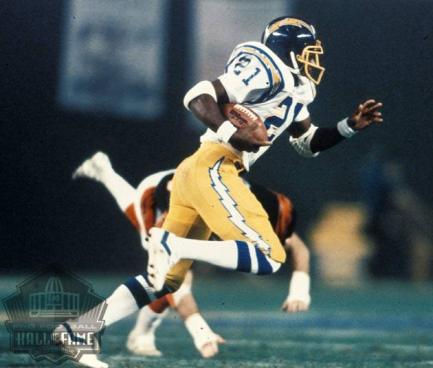
Check out the move on the 1st vid at the 2:32 mark when he rushes for a 16 yard TD against New England. He makes 4 unblocked Patriots miss in a phone booth… just sick…

While being a Bills fan up close, it’s hard to choose between his rookie year or his 2nd year as his best. Both years the Bills were in the playoffs and in ’81 he rushed for 1,097 yards and only 3 TDs but made up for it with 7 TD receptions and another 603 yards on 40 receptions. He flashed on big play after big play as a the Bills rose to prominence challenging the NFL’s elite.

Amazingly Cribbs and Andrews were rarely used as receivers at Auburn and they’re game fully maturing on the NFL level is what elevated both. Auburn in ’78 completed just 5 passes a game in a run heavy offense.

Ironically this was the role James Brooks also found himself as the 3rd down back in his rookie season with “Air Coryell” in ’81. Chuck Muncie was the feature back and he scored an NFL record 19TDs rushing. Brooks was the change of pace scatback who recorded 46 receptions for 329 yards and 3 TDs and had to fit in where he could. He only ran the ball 109 times for 525 yards but had a whopping 4.8 yard average.
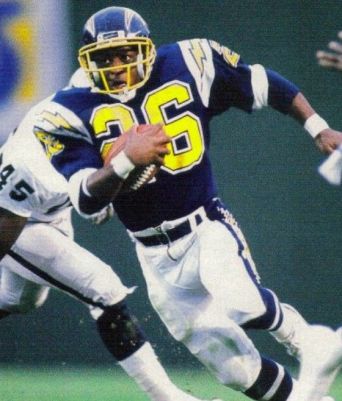
He was the AFC’s leading punt returner in 1981 and led the NFL in kickoff return yardage in 1982… so of course you’re asking “How is that dominant at the pro level?”

With a potential contract dispute looming, he was traded to the Cincinnati Bengals in 1984. His 2nd season in the Queen City saw him improve with 929 yards rushing and 7 TDs. Out of the backfield he caught 55 aerials for 576 yards and crossed the goal line 5 more times.

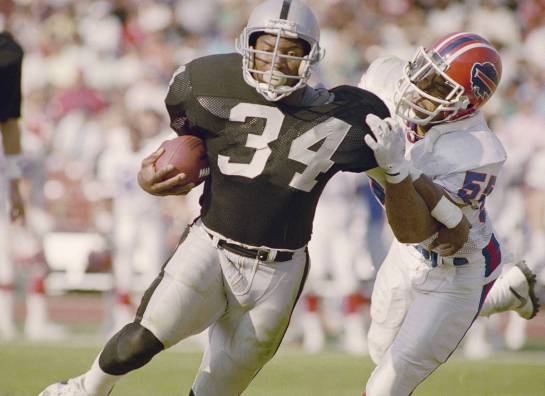
Over the next 5 seasons Brooks would make the Pro Bowl as a runner 4 times while being selcted All Pro in the same seasons. He had 3 1,000 yard season and in 1988 finished with 931 yards. Had he gained another 69 he and Ickey Woods (1,066) would have been just the 4th set of 1,000 yard rushers in the same backfield in a season. Brooks and Woods powered the #1 offense to Super Bowl XXIII that year.

His 1989 season of 1,239 yards rushing was the most in Bengals history up to that point. Corey Dillon broke it in 2000. Try this vignette:

So if you’re keeping score, between 1980 and 1990, these 3 running backs accounted for 11 Pro Bowls, 11 All Pro selections, a Super Bowl appearance (Brooks XXIII) and 10 – 1,000 yard campaigns. Each saw success as the Bills and Falcons twice made it to the divisional round of the playoffs and 1 trip to the AFC Championship Game with Brooks in ’81.

While these men were killing it on the NFL level, Bo Jackson and Lionel “train” James were the new set of Auburn backs to make names for themselves. James was thought of to be too small for the NFL standing at 5’6 and 171 lbs soaking wet. Yet he would have to make a name on special teams and spot duty in the backfield.

As a rookie in ’84 James led the NFL in kick returns (49) and kick return yards (949) to prove he belonged. Of course you’re asking “How is that dominating in the NFL?” Well…then came 1985…

In a season where Roger Craig became the first 1,000/1,000 yard performer both rushing and receiving & led the NFL with 92 receptions out of the backfield. Guess who was 3rd with 86 receptions 1,027 yards and 6 TDs? “Little Train” James. He actually outgained the more celebrated Craig in yardage 1,027 – 1,016. This was an NFL record for receiving yards out of the backfield.

However by the time you add James 516 yds on 105 carries & 949 yards on 43 kickoffs, he set an NFL All Purpose Yardage record with 2,535 yards. This didn’t count another 205 yards on punt returns!
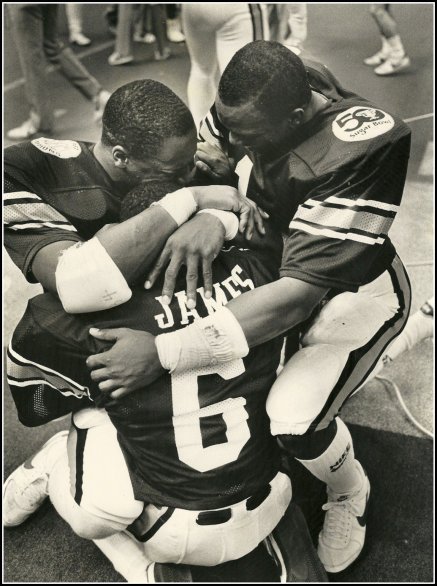
His reception yardage record didn’t fall until 1999 when Marshall Faulk broke it with 1,048. His all purpose yardage mark stood until 2000 when Derrick Mason of the Titans broke it. Do you realize James’ ’85 season still ranks 4th in history?? He’s been gone from the NFL 31 years. His last season with the Chargers was 1988.

His best game ever?? His 345 yard performance against the LA Raiders where he won it in overtime:

By the way… that was the 2nd most all purpose yardage in a game in NFL/AFL history. In a brief 5 year career… James could fly. His 1985 was so dominant that it changed the Pro Bowl voting as the following year special team kick returner was added to the vote. In 1986 Bobby Joe Edmonds of Seattle became the 1st voted in but we know who’s play created that spot. Lionel James!

Bo powering past perennial all pro Cornelius Bennett of Buffalo.

Then we finish with the Heisman winning Bo Jackson. He was so great that 30 years later we’re still watching Bo Knows in a 30 for 30 documentary of what could have been. He shocked the world when he didn’t play for Tampa who drafted him in ’85 and we know of his baseball and football exploits. When he came back to “take on another hobby” in ’87 with the Raiders, it didnt sit well with a young Chancellor. It seemed arrogant and then we saw what happened on the Monday Night in Seattle:

Yikes! Bo can do whatever the hell he wants. To watch him just dust Hall of Famer Kenny Easley who had the angle on him… I was done. Apparently so was the rest of America. For the next 4 years every football season began with “When is Bo coming over from baseball?” He had other great games but not as electric as that Monday Night.

In 1990 Bo Jackson became the 1st backup to ever make the Pro Bowl as he ran for just 698 yards and 5 TDs. League wide respect poured out over what he could do if he turned to football full time. He was an adonis with sprinter speed that made the best athletes in the world view his exploits in awe.

But alas … we never saw Bo get to full potential as he went out with a fractured and dislocated hip in a 1990 AFC divisional playoff against Cincinnati. He never played again.

“Little Train” James had knee injries slow a once promising career that lasted just 5 seasons.

None of these men will make the Pro Football Hall of Fame but each left an indelible mark on the NFL of the 1980s. They arrived on the scene and turned lesser than franchises into teams that contended for championships. What was remarkable was how complete these backs were catching the ball out of the backfield when they rarely exhibited this in college.

This was one of the great runs from one school in NFL history. Even USC’s best was really OJ Simpson and Marcus Allen. Two Hall of Famers that came out 12 years apart in ’68 and ’81 respectively. Not a series of game changing backs.
To think that 3 players out of the same ’78 Auburn Tiger backfield, Andrews, Brooks, & Cribbs would go on to produce 27,771 yards from scimmage and 162 TDs in the NFL is nothing short of brilliant. Especially with Andrews and Cribbs having brief careers.

An era of dominance to be remembered for all time.

Thanks for reading and please share the article.

Todd Christensen Belongs in The Pro Football Hall of Fame

When Shannon Sharpe was inducted into “The Hall” back in 2011, pundits began to voice which of the new breed would be the next TE to get into Canton. Would it be Tony Gonzalez, Jason Witten, or Antonio Gates?? There is even outside talk of former Patriot Ben Coates as these were the dominant men at the position over the last 25 years. Uhhh… wait a minute… How did we get this far without mention of former  Oakland/L.A. Raider Todd Christensen??

A man once cut by the Dallas Cowboys found a home in Oakland and became one of the main targets in the heyday of the AFC West. The question that arises is how did we forget Christensen?? Was it the fact he was a specials teams player who didn’t start until his 4th year?? Or is this more bias against the late Al Davis’ Raiders??

In 1980 the NFL was marveling at the performance of future Hall of Fame TE Kellen Winslow in San Diego. When he burst onto the scene with 89 receptions, a record for Tight Ends at the time, for 1,290 and 9TDs. He became the measuring stick for all who would play his position especially with this only his 2nd season.

When he completed the ’81 season with 88 receptions only future Hall of Famer Ozzie Newsome was anywhere near Winslow on the marquee. Or so pundits thought.

In 1981 after becoming the 1st defending Super Bowl champion to finish with a losing record (7-9) the following season, the Raiders had to make changes. The 1st is they moved to L.A. then drafted super back Marcus Allen then following an old Raider tradition, converted a former running back into a Tight End…. Todd Christensen. If you went back 2 decades before, the Raiders converted former Heisman Trophy winner Billy Cannon from RB to TE and sparked their run to Super Bowl II.

The ’82 Raiders had the NFL’s best record in a strike shortened season at 8-1, and Christensen finished 5th in receiving among TEs with 42 receptions for 510 yds and 4 TDs. Although the Raiders were upset 17-14 by the NY Jets in the AFC playoffs, a star was born.  The next year saw the Raiders cement the notion they had supplanted the Air Coryell Chargers as the best of the AFC West.
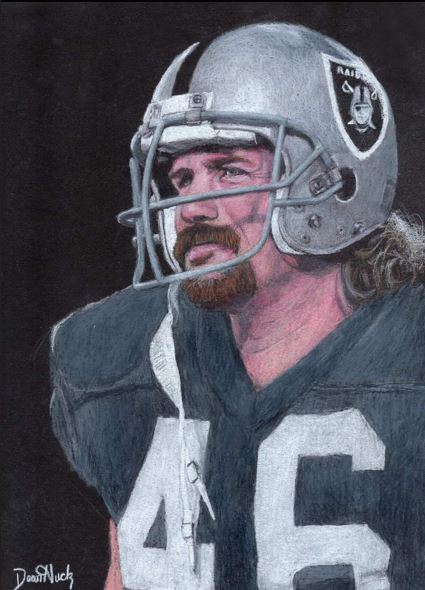
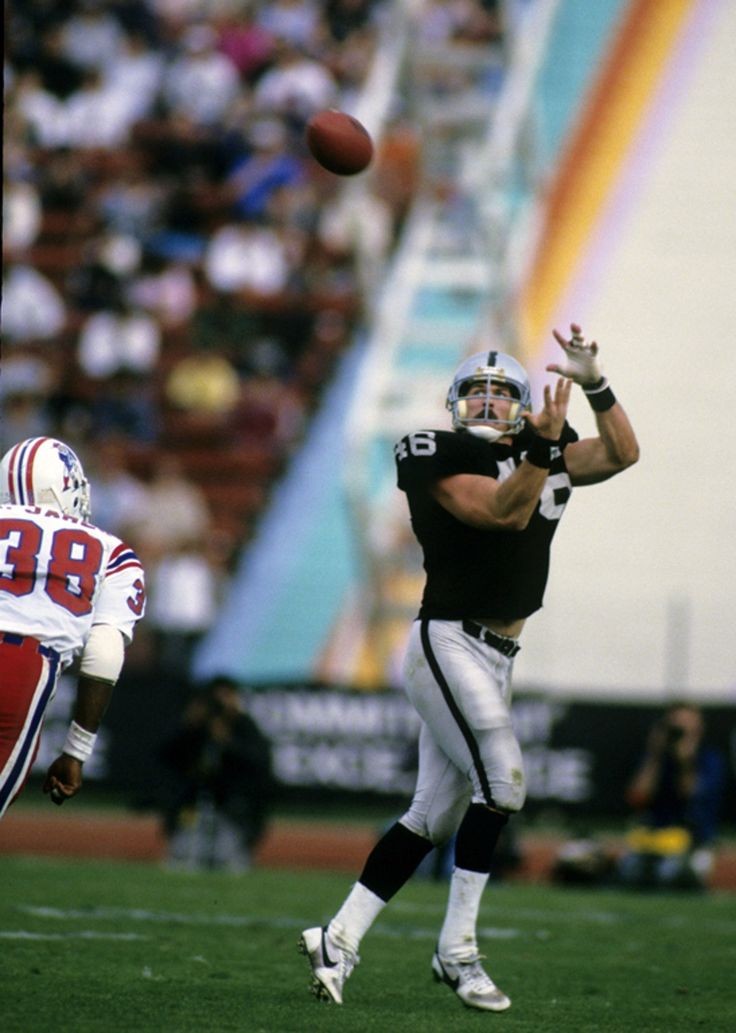
Every great player needs a signature game and in the 14th week of 1983 the Chargers were hosting the Raiders in a special Thursday Night telecast. To add to the excitement both Christensen and Winslow were on pace to tie or break Kellen’s TE record of ’89 receptions set in 1980. In front of a nationwide audience Todd proved his worth.

Buoyed by this great performance the Raiders propelled themselves to the AFC’s best record at 12-4. Not only did the Raiders go on to win Super Bowl XVIII, Christensen unseated Winslow as the game’s premiere tight end as the loss also ended the reign of “Air Coryell”. His 8 receptions 140 yards and 3 TDs completely outshone his Charger Hall of Fame counterpart’s 4 catches for 30 yards. This was the difference between Todd’s NFL record of 92 receptions to Winslow’s 88 to conclude ’83. The most ever by a Tight End at the time.

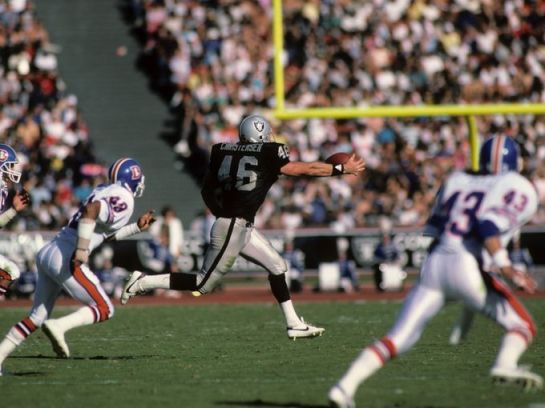
Los Angeles Raiders tight end Todd Christensen (46) blocks New York Giants linebacker Carl Banks (58) during a 14-9 Giants victory on September 21, 1986, at the Los Angeles Memorial Coliseum in Los Angeles, California. (AP Photo/NFL Photos)

As injuries slowed Winslow it was Christensen who went on to maintain Pro Bowl level of play through 1987 when he went to his 5th straight. One aspect of a Tight End is to remember the primary role is to be a blocker. In the ’85 campaign he helped pave the way for NFL rushing champion Marcus Allen who ran for 1,759 yards. The following season he broke his previous NFL record for TEs as he nabbed 95 balls for 1,153 yards and 8 scores.

He led the NFL in receptions in 1983 and 1986 for all receivers not just Tight Ends.

In an era with 2 other Hall of Fame TEs Christensen had the best peak years.

  • Christensen ’83-’86: 349 rec. 4,394 yards 33 TDs *5 Pro Bowls*
  • Winslow ’80-’83: 319 rec. 4,258 yards 33 TDs *4 Pro Bowls*
  • Ozzie Newsome ’81-’84: 296 rec. 3,626 yards 20 TDs *3 Pro Bowls*
  • *Career Pro Bowls listed*

Now to be fair, Winslow and Newsome’s years include the strike shortened ’82 stanza which only had 9 regular season games. However keep in mind Todd was on special teams as a long snapper, set 2 receiving records at TE and blocked for 1985’s MVP and NFL rushing champion Marcus Allen. Then don’t forget one of those record setting season was for a world champion when they won Super Bowl XVIII 38-9 over Washington.

Keep in mind his record for receptions in a season at TE was broken in 1994 by Ben Coates by 1 reception (96). Tony Gonzalez broke it in 2004 with 102 receptions, however Todd is the only one to have set the all time receptions record for a TE twice.

This isn’t to take away from the 2 gentlemen in “The Hall” from the same position, but how can Winslow (inducted in 1995) and Newsome (inducted in 1999) be in and we don’t even hear Christensen mentioned?? Is it because he was a late bloomer who went on to star on the 3rd team he played for?? Is this more of the media bias against Al Davis’ Raiders who seem to come up on the short end when it comes to Hall of Fame consideration??

A part of this has to do with the Raiders moving from Oakland to Los Angeles and then back to Oakland in 1995. Those Los Angeles sportswriters didn’t honor the team and campaign for those players once the team went back up north. Many sportswriters campaign for players whom they lobbied for their team to draft originally and usually in the 1st round. His rocky path to Oakland through Dallas and New York is why he didn’t have that.

Yet they have/had a responsibility and shouldn’t have taken it out on those player’s legacies. I see Bill Plaschke and J.A. Adande all the time on talk shows over on ESPN when they have an obligation as history’s gatekeepers with their fellow writers and they have failed. They are why Todd, Head Coach Tom FloresLester Hayes, and Cliff Branch are on the outside looking in. It’s time to right these injustices. Christensen deserves to be enshrined in Canton.

Although we lost Todd, who passed in 2013, his family and Raider teammates should be able to share in that final honor.

Please lend your thoughts as well by writing in to the Pro Football Hall of Fame to the address below. Please be respectful and positively lend your voice:

Please write & nominate #46 Todd Christensen
Send letters to:
Pro Football Hall of Fame
Attention Senior Selection Committee
2121 George Halas Dr NW, Canton, 
OH 44708

For induction into the Pro Football Hall of Fame, I present to you, Todd Christensen.

Dedicated in his memory:(August 3, 1956 – November 13, 2013)


Thanks for reading and please share the article.

Cliff Branch Belongs In The Pro Football Hall of Fame

John Madden once told NFL Films “Cliff Branch was so skinny when he walked his back pockets would fight.” Yet no one put fear in NFL secondaries when it came to getting beat deep during the 1970’s. When someone says close your eyes and picture the Oakland Raiders of the ’70’s, one of the first visuals you’d have would be Stabler launching a bomb in Cliff’s direction.

BranchBWDrafted out of Colorado in 1972, Branch was a football and track star in college. Oakland had been without a true deep threat since Warren Wells departure a few years earlier. His baptism by fire would come as he learned the game from Hall of Famer WR Fred Biletnikoff and going up against Hall of Fame CBs Willie Brown and Skip “Dr Death” Thomas in practice.

Going against those 2 big physical corners, Branch grew up in a hurry. When he was unleashed on an unsuspecting NFL as a 1st time starter in 1974, Branch blazed for 60 rec 1,092 yards and 13 TDs. Pedestrian by today’s standards until you realize he was 4th in receptions and led the league in yards and touchdowns.

It was the 1st of 4 straight Pro Bowl and All Pro seasons. He was the #1 weapon on a team that finished in no less than the AFC Championship in each of those campaigns. His best season capped off the Raider’s Super Bowl XI championship when he caught 46 passes for 1,111 yards and 12 touchdowns. Why was it his best? He led the league in TDs and was 2nd in yards losing to Roger Carr by 1 yard on arguably the most powerful NFL champion of the 1970’s.

One aspect of Branch’s game that makes him an all timer is how he played in big games. When everyone marveled at Hall of Famer Jerry Rice as he was breaking all time NFL post season records, whose records did you think he was breaking? When Rice caught 3 TDs in Super Bowl XXIV, he was breaking the Super Bowl record for touchdowns in a game when Branch set it with 2 against the Eagles in XV. When Branch retired after the 1985 season, he was the NFL’s All Time postseason reception (73) and yardage (1,223) leader before Rice broke them some 9 years later. He had broken the previous records set by fellow Raider WR Biletnikoff, who was now his coach.

However records and numbers only tell a part of the story. How much space did defenses give him in respect to his speed that opened up opportunities for Biletnikoff and Hall of Fame TE Dave Casper?? Do you realize he was the only skill player on all 3 Raider Super Bowl champions?? Against the Eagles in Super Bowl XV it was his 2 scores that broke the game open 21-3…winning it 27-10.

In Super Bowl XVIII when the Raiders held a precarious 7-0 lead over Washington it was Branch who blew that game open too. The Raiders first score was a blocked punt. In the 2nd quarter, a 35 year old Branch beat Anthony Washington and Darryl Green on a 50 yard bomb to put the silver and black in scoring position. A few plays later Branch scored from 14 yards out to give the Raiders a 14-0 lead. This took John Riggins out of the game and forced the Redskins to pass into the teeth of a secondary led by Vann McElroy, Lester Hayes, Mike Haynes, and Mike Davis. A 38-9 triumph won him his 3rd championship ring.

For his 14 year career he caught 501 passes for 8,685 yds and 67 touchdowns. His fellow receivers Biletnikoff and Casper have each made “The Hall.” This August his original quarterback, Ken Stabler will be enshrined posthumously. His original coach John Madden and the late Al Davis have both been enshrined. Once Tom Flores and Cliff Branch are voted in, it will close this chapter on Oakland /L.A. Raiders football.

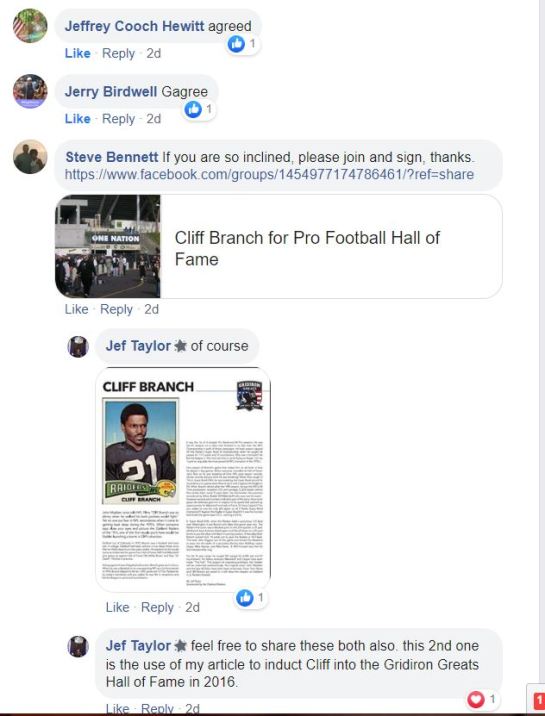
**In 2016 the words from this article were used to induct Cliff into the Gridiron Greats Hall of Fame. Hopefully it will be the first on his way to Canton.**

Please lend your thoughts as well by writing in to the Pro Football Hall of Fame to the address below. Please be respectful and positively lend your voice:

Please write & nominate #21
Send letters to:
Pro Football Hall of Fame
Attention Joe Horrigan
2121 George Halas Dr NW, Canton, 
OH 44708

Thanks for reading and please share the article.

For enshrinement into the Pro Football Hall of Fame, I present to you Cliff Branch.

This article was used to induct Cliff Branch into Gridiron Greats Hall of Fame

branch2

Branch3

Branch4

Branch5

Branch6

Branch7

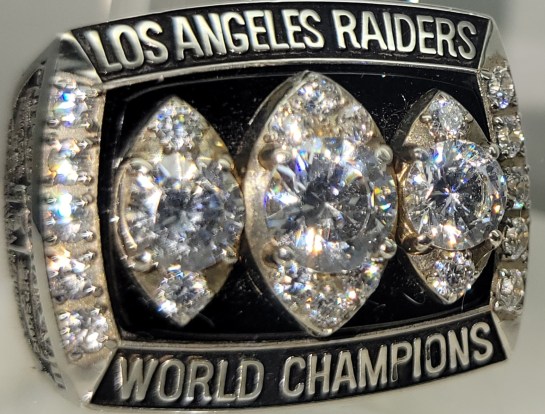
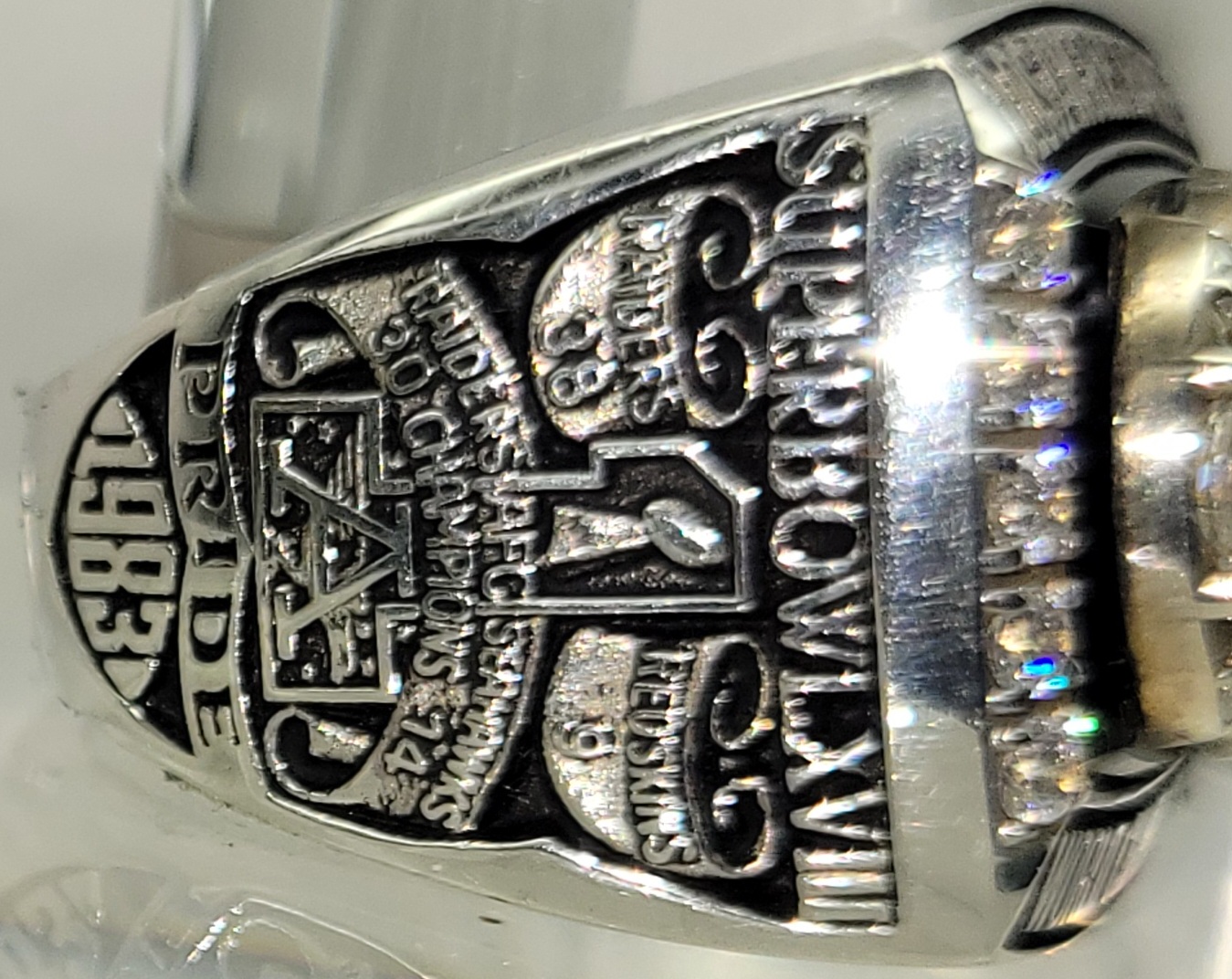
SUPER BOWL XVIII CHAMPION 1983 LOS ANGELES RAIDERS

When Marcus Allen broke out with that famous run for LA in Super Bowl XVIII, you knew Al Davis was going to go with something similar to the past two rings…anyway Raiders 38-9 over the Redskins. Tom Flores became a great coach with not only his second Super Bowl win in 4 years. He knocked off a defending champion that was 1 game away from being labeled a dynasty.

How did the Raiders kill the defending Redskins like that?  Beating the Redskins yes but dismantling them like that?  It’s still baffling some 31 years later.  The highest scoring team in history only scoring 9 points?  NFL Films shows you and tells the story. Raiders defense, Raiders defense, Raiders defense!  John Madden called the game, what more could a Raider fan want?
What most fans don’t remember was going into the ’83 AFC Championship Game, the Raiders had been swept by their division rival Seahawks during the year.  So Seattle was a formidable foe.  The game had a weird feel to it because it was drizzly and grey.  I remember Marcus Allen playing with a black eye, swollen like a boxer.  They ran over Seattle 30-14 and rewrote history.

Had Lyle Alzado controlled himself, the Raiders could have won that game in the 1982 playoffs (loss to Jets 17-14) and could have won Super Bowl XVII.  How do we know this?  The Redskins (who won XVII) was exceedingly stronger in 83 and that beating the Raiders gave them was epic.
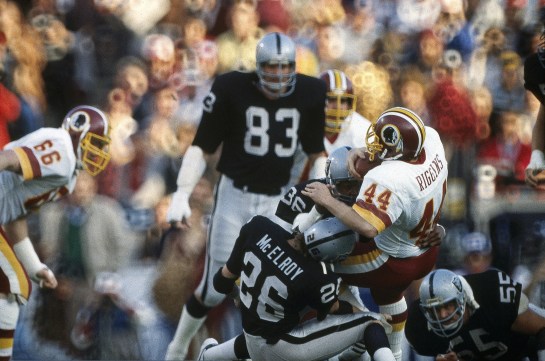
Easily the strongest team in Raiders history with a mixture of old pros and young players that made up the core of this team.  Two Heisman winners on offense with Jim Plunkett and Marcus Allen.  Old pros like Cliff Branch and Todd Christensen.  Greg Pruitt was brought in to return kicks and set a league record for punt return yards.

Really solid defense…Reggie Kinlaw dominated from nose tackle with Hall of Famer Howie Long, the late Lyle Alzado, Greg Townsend on the defensive line were hard to move on the point.  They had the heaviest set of inside linebackers in Bob Nelson and Matt Millen. At 250lbs. each could take on and shed guards if they had too.  Rod Martin and Ted Hendricks ( the U) were the outside ‘backers with a lot of range.  Mike Davis and Vann McElroy were really solid safeties.

This defense had no real holes and then we get to Lester Hayes and Hall of Famer Mike Haynes.  One on one coverage at its finest that culminated in this performance against the Redskins receivers.

Charlie Brown and Art Monk combined for 125 receptions for 1,971 yards and 13 TDs during the season. Hayes and Haynes held them to 4 rec. for 119 yards…60 came on one play. It reduced the highest scoring team in NFL history to 1 scoring drive in the 3rd quarter. The next year in 1984 they started to give up some passing yards.  Yet Super Bowl XVIII they were at their zenith.

sbxviii5Remember that whole NFC 13 straight Super Bowl wins (19-31) and NFC dominance talk back when?  It was really worse than that.  After Pittsburgh’s win in XIV, only the Raiders won for the AFC in XV and XVIII. So it was really (16-31) that the NFC dominated but could not beat the Raiders winning 15 of 17.  Talk about carrying the torch for the conference…

It was also the last championship won by the Raiders under Al Davis. An original AFL pioneer who remained a separatist at heart and on all of the Raider’s Super Bowl winning rings, used the AFL “A” and not the AFC “A”.

Long live the American Football League, as we lost a pioneer back in 2011 when Al Davis passed.  In 2010 I attended a game in the Oakland Alameda County Coliseum and the ghosts of all those great Raider moments played out as I looked around that stadium. I met many former Raiders at the game and just missed Coach Flores but definitely would have loved to have met Al Davis.

bdavisThis is dedicated to the memories of Al Davis, along with Al LoCasale, Todd Christensen, Lyle Alzado, Earl Leggett, John Facenda, Mike Davis, Bruce Davis and Charlie Sumner.

Thanks for reading and please share the article.