Legends of The Fall: John Constantine Unitas (Johnny Unitas)

Article Reissue

The name that comes to mind when it comes to quarterback – John Constantine Unitas…or Johnny Unitas.  I can’t remember hearing his complete name for the first time, yes I can, it was when his presenter at the Pro Football Hall of Fame said it, but feel it needs to be brought up for the fans who need to know the greatness of this man. So glad they finished the documentary in 1999 before he passed. An old school hero. The best ever quarterback conversation has this man’s name in it. Not Peyton Manning and Tom Brady where all the rules have been changed to manufacture what looks like greatness.

At the time of Unitas retirement, he held the record for passing yards (40,239) & touchdown passes (290). He was the first NFL quarterback to throw for 3,000 yards in 1960 and once held the record for TD passes in a 12 game season with 32. In an era where the NFL game was rooted in the ground, Unitas took to the air where purists scoffed he was ruining the game. Through it all he raised quarterbacking to an art form by the way he played, his play calling ability, and field generalship in leading the Baltimore Colts. In fact, it was Unitas that invented the 2 minute drill in the most important game in NFL history…. the 1958 NFL Championship.

The ’58 NFL Championship ignited the passion for pro football for the masses as it overtook baseball for America’s heart. Lamar Hunt after this game decided to start the American Football League on the heels of this game’s popularity. A sense of irony between the AFL and Unitas’ would come to the fore later. Yet it was Unitas that became a superstar. Football had been booming with television in the 1950’s and it culminated with his championship heroics.

For an encore, when all eyes were upon him, he had his greatest season in 1959. Johnny U went 193 of 367 (52.6%) for 2,899 yards 32 touchdowns to just 14 interceptions in leading the Colts to a 2nd consecutive championship. By the way for those keeping score, this was in a 12 game season and the yardage and touchdowns were NFL records at the time. At the pace he was on, had it been a 16 game season, he would have thrown for 42 touchdowns. This was in an era where his receivers were hit everywhere on the field not just within a 5 yard contact zone. Legacy cemented.

His 47 straight games with a touchdown pass stood for nearly 50 years. After 40 of those years no one had come within 18 of that record. Drew Bees finally broke it because of all the rule changes…but if you dared to say Brees is in league with Unitas, you and I can’t talk football anymore. A final look back at his jersey retirement at Baltimore’s Memorial Stadium in 1977.

In watching the HBO documentary Unitas is where I first learned the plight of former players fighting for benefits from the NFL. When the elbow injury came up I immediately yelled out “1968!” That was the year he tore the tendons that attached the lower and upper arm, causing him to sit out the season and the late Earl Morrall played in his absence. They wound up losing Super Bowl III. Unitas wound up losing the ability to fully use the right hand that made the NFL what it is today. Not only was that a travesty but the anger that swelled in me is why I back all the former player’s groups, Footballer’s Wives, Dignity After Football, and Gridiron Greats to this day.

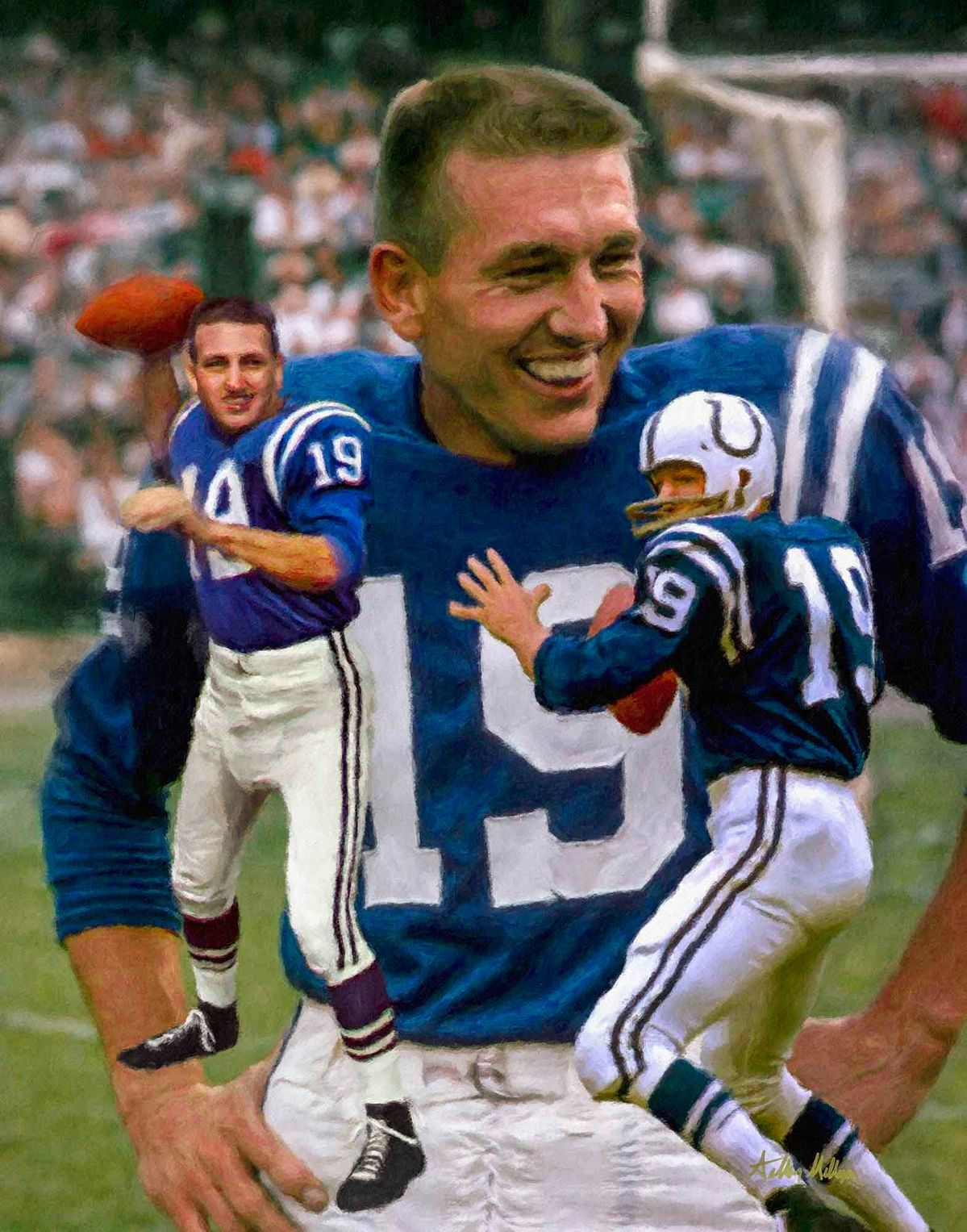
Sports Illustated cover featuring Johnny U.

Sports Illustated cover featuring Johnny U.

Whenever the mantle of greatness at the quarterback position is cheaply thrown around, as a historian I bristle. What would Unitas accomplish playing in the rules set up today?? How much greater would he have become training all year around like today’s players?? What would his stats look like if he played where he could hardly be hit??  He dwarfs all quarterbacks without the changes. With them he would have left marks that quarterbacks would still be chasing.

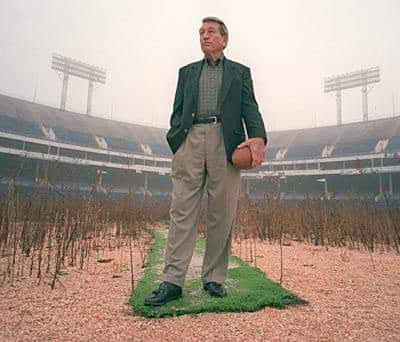
In youth as we remember him.

Unitas and his receivers, Lenny Moore, and Raymond Berry all made it into the Pro Football Hall of Fame. The next time someone mentions greatest ever quarterbacks, start with Unitas and work your way down.

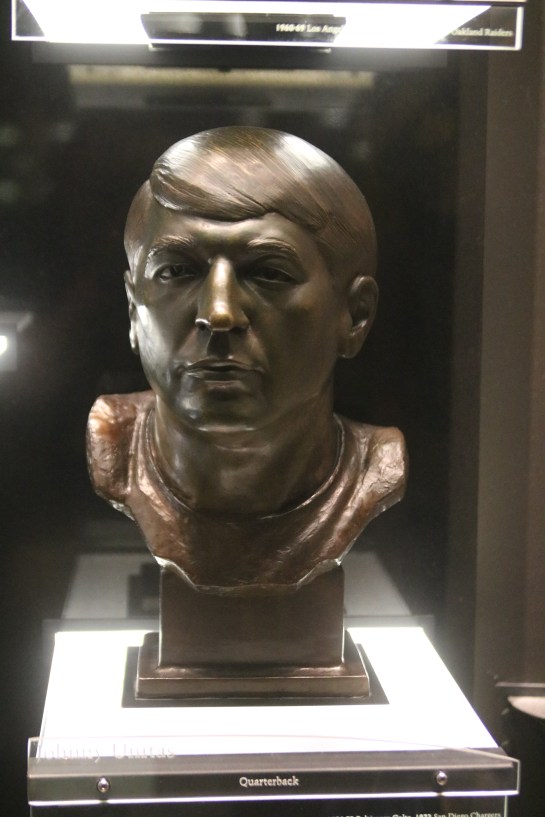
hof-unitasJohn Constantine Unitas: May 7, 1933- September 11, 2002

Thanks for reading and please share the article.

SUPER BOWL III CHAMPION 1968 NEW YORK JETS: The Demons From Super Bowl III

Article Reissue: 4, May 2014

“With the Super Bowl upon us, everyone is sharing pictures of the previous games and box scores. Thats amateurish. Who doesn’t know Joe Namath’s guarantee?? This was written on a rainy Friday in 2010 between classes looking at the ring and the first story that popped in my mind to tell what no one knew. The Colts didn’t get a ring… Past stories have much more meaning when given context and the butterfly effect after the event. Not the same old story either. Over the years I added video to help shape it. In fact it was this short written many moons ago that touched former players from the ’60s & ’70s who to contact me & catapulted Taylor Blitz Times into existence…”

One of the great things about the NFL and its history are the stories behind the men. Unfortunately the greatest lessons come from those that come up short in big games. Everyone loves a David v. Goliath scenario when the underdog pulls off an upset. When a landmark incident takes place like Super Bowl III, all eyes follow the winner who have vanquished a favored foe and the game is revered and talked about for years to come.

Super Bowl III has been rehashed, talked about, re-shown, and re-released in 1997 (as a video broadcast) for a generation to see for themselves a landmark game that changed the course of the NFL. It validated the AFL , its history, along with legitimizing the merger between the two leagues. It was the centerpiece to a  Hall of Fame career for Joe Namath and allowed Weeb Ewbank to become the only coach to win a championship in both leagues. Yet what does all this fallout do to the men who lost that event?? Is the harm irreparable for  the men who came up short in Super Bowl III?? How easy is it to forget and move on??

Surely the Baltimore Colts could go on and win another championship and set things straight, right?? Here are the accounts of  Bill Curry, Mike Curtis, and the late Bubba Smith. As you listen to the recount through their eyes, you will get a different feeling about Super Bowl III than ever before.

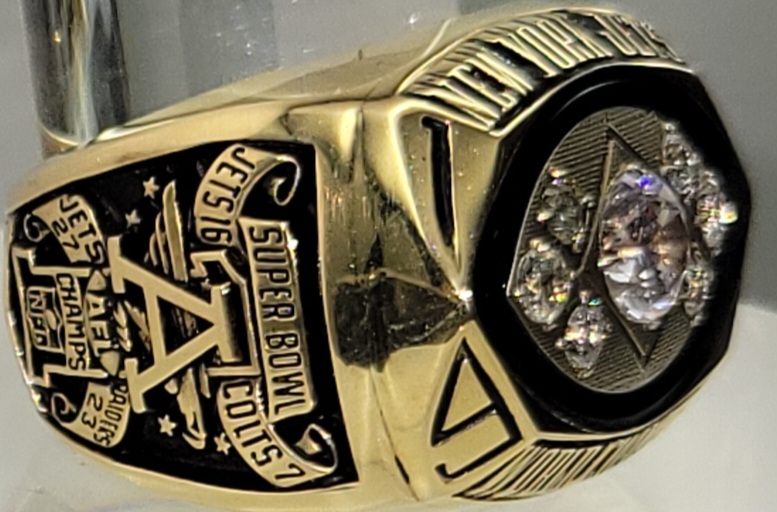
Copy of Joe Namath's Super Bowl III ring.

Copy of Joe Namath’s Super Bowl III ring.

What is ironic, these are interviews celebrating their Super Bowl V championship for the America’s Game series. What makes these poignant is the honesty reflected in their voices. What makes these stories resonate is this was a game 45 years ago and made even more impactful is this was the last interview for Bubba Smith to talk about this with his passing away in August 2011.

CHAPTER I:  The updated story from our upcoming book as written July 12,  2010 and showcased online:

SUPER BOWL III RUNNER UP 1968 BALTIMORE COLTS
Wow Talk about shock and awe!!!

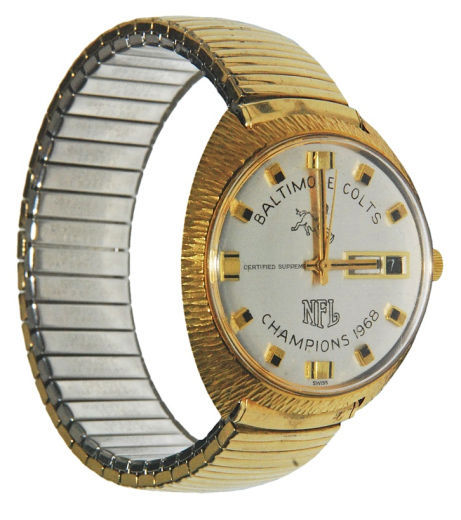
The Jets 16-7 win over the Baltimore Colts in Super Bowl III was one of those events that defined an era. Everyone has spoken of the great accomplishment, the AFL arriving on the big stage but so few people talk about the vanquished 15-1 Baltimore Colts and Don Shula. The loss was so devastating and embarrassing that the NFL didn’t issue a championship ring. A team that was 3hrs away from being the greatest team in NFL history received THIS WATCH when they failed to win the game…wow! Think the NFL thought highly of their championship season? Now before you ask, the answer is yes the teams that lost Super Bowls I, II, and IV did receive rings.

superbowliiiwatch

Let’s take you back to 1968…The Colts were motivated to win it all in 1968 because in 1967 they had the BEST record ever to NOT make the playoffs:11-1-2 including a win over the Packers who would go on to win Super Bowl II. The Rams had an identical record and won the tiebreaker for giving the Colts their one loss. The Colts were in the Western Conference and for the better part of the 60’s couldn’t unseat the Packers. Except in 1964 when Paul Hornung was suspended for gambling, yet the Colts were upset in Cleveland in the Championship game. Yes you heard me correctly…the Packers and Colts were in the WESTERN CONFERENCE back then. So Vince Lombardi steps down and the Packers run out of steam and the Colts go 13-1 in 1968. So in TWO seasons they had only lost 2 games going 24-2-2. No regular season overtime back then hence the two ties.

Like other teams I’ve mentioned, this team that DIDNT win it all was the strongest Baltimore Colts team ever. They had a defense that set the league record for fewest points allowed in a 14 game season with 144 points. They held 11 of their 14 opponents to 10 pts or less including 3 shutouts. The great Johnny Unitas got hurt and Earl Morrall replaced him and became league MVP at quarterback. They had Tom Matte and Jerry Hill as arguably the best running tandem in football. Their only regular season loss in 1968 was to the Cleveland Browns who they would go on to blow out 34-0 in the NFL Championship game IN CLEVELAND. So with that it was as though they practically had an undefeated season and were lauded as the best team in NFL history.

Then came January 12th, 1969…wow!! One look at this watch shows you how embarrassed the NFL was to lose to the upstart AFL. The corporate pressures, corporate culture and such were so great that within 2 years coach Don Shula was gone. Within 4 years Carroll Rosenbloom would swap franchises with Robert Irsay, become owner of the Rams, would later marry Georgia, drown and she became Georgia Rosenbloom-Frontiere owner of the Los Angeles / St. Louis Rams. Of course this legitimized the AFL and NFL merging as well. Everyone talks about the champion but take a look across the river and pay attention to the team that loses it. The after affects can be frightening…

Would all of this have happened had the Colts WON Super Bowl III?

CHAPTER II: A vignette of what was shared by Bill Curry, Bubba Smith, Mike Curtis, and Ernie Accorsi as the events and aftermath of Super Bowl III were recounted in 2007.

CHAPTER III/EPILOGUE: Again, what makes this unique are the events that take place hastening Don Shula’s departure, where he became the NFL’s All Time winning coach in Miami and not Baltimore. Even after winning Super Bowl V, Carroll Rosenbloom was still disenchanted with being the owner of the Baltimore Colts and swapped franchises with the Rams Robert Irsay in 1972.

super bowl iii3Was it ironic or a part of the story, that after winning Super Bowl V, the Baltimore Colts made it to the AFC Championship to defend their title?? Who did they lose to 21-0 to bring about the end of an era (1958-1971) where the Colts were among the NFL elite?? Don Shula and the Miami Dolphins in the Orange Bowl. Another irony is Don Shula went on to become the winningest coach in NFL history in the stadium where Super Bowl III was held. The Orange Bowl. Don Shula went on to exorcise his demons. As for Carroll Rosenbloom, Ernie Accorsi, Bubba Smith, Mike Curtis, and Bill Curry??

So remember to pay close attention to the men and these moments. What will become of the principles of a landmark event for those on both sides of the equation?? A compelling study in the psychology of man and sport.  This is one of the reasons we love bringing you these real life stories with such richness.

Now before you scoff this is the view of former players whose lament intensified with age, try this view from many of the same players on the 25th anniversary of Super Bowl III. This was right before Super Bowl XXVIII in January 1994.

Thanks for reading and share this with those who love football and football history. Teach them something that scores on ESPN won’t tell them.

Super Bowl III Logo

Super Bowl XLVI Preview:Bill Belichick & His Place In History

The best coach of the last 50 years and possibly in the history of the NFL

Reissue of Article: 31, January 2012

“With the disgraceful indignity of not being a 1st ballot Hall of Famer this week,I thought it a great time to rehash an article discussing his place some 14 Super Bowls ago. If I was telling you he would rank with Vince Lombardi had he triumphed, where does it leave him now he coached in another 4 Super Bowls after this game winning XLIX, LI, and LIII. He even lost another one to the Eagles in LII. Think about that a second…

For the idiots saying it was all Tom Brady. Who do you think taught him all that situational football to be that prepared? Don’t be a dummy. Anyway…”

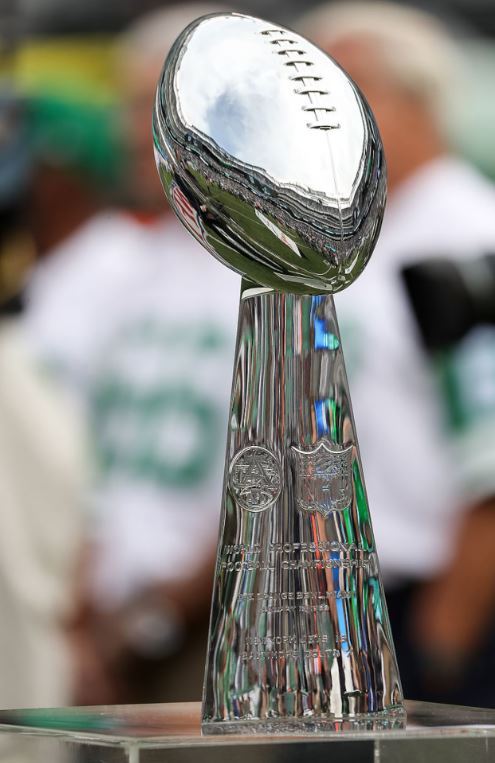
When you talk of the great coaches in NFL history, even the ardent Patriot hater has to put Bill Belichick on the short list. If his team leaves Lucas Oil Stadium with the Vince Lombardi Trophy, it’s namesake will be the only coach he can be compared to. It would be his fourth championship as a head coach and sixth overall. All of this coming in the modern era with player movement in true free agency?? Yikes!! You’d have to look at it like this… Vince Lombardi was the greatest coach in the first 50 years of NFL history (1920-1969) and Belichick would be the greatest from 1970 to the present.

How can we say that?? First let’s dispel the “Spy Gate” situation. In a game of simulated war with blitzes and bombs and protecting zone areas on a field / map: wouldn’t you expect some sort of espionage?? Dont forget that in 1958 John Steadman of the Baltimore Sun Times reported that Baltimore Colts owner Carroll Rosenbloom had an assistant watch the New York Giants practice before the NFL Championship Game. Rosenbloom assured him that if he were caught, he’d have a job for life with the team. Watch the NFL Films production on the 1958 Championship and you can hear it first hand.

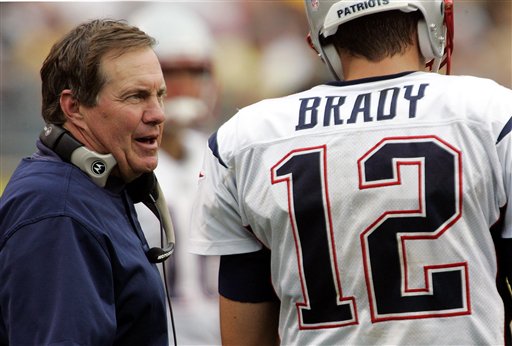
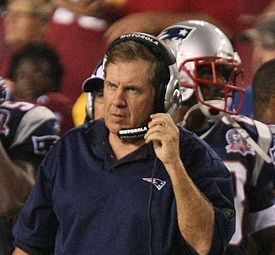
A long time I watched Bill’s work.

Then somewhere in the 60’s to put an end to this, Pete Rozell put in Tuesday film swap day. That way the teams could share intel on each other to put the spy thing to bed. Yet everyone is always trying to steal other team’s signals. Fast forward to Bill Walsh in 1979 who was the first to script his 15 plays and have an elaborate sheet with plays in front of him.  He was the first head coach to be completely under a headset all game long. Whenever he would call plays he would use his play sheet to cover his mouth to protect himself from lip readers. This practice is still in place today. Watch the playcaller on the sideline and where once teams had elaborate hand signals, now hold up a play sheet. Quarterbacks have transmitters in their helmets now.

So quit hawking Belichick about that already. Now back to what we were saying…

If you look at his tenure against other coaches from 1970 on, you can’t come up with a more successful coach. He just made his 5th Super Bowl to tie Tom Landry. If he wins he’ll have tied Chuck Noll with 4 Super Bowl titles. Yet what sets him apart is only Tom Brady remains from his 2001 championship where Noll won with primarily the same players.

Hell, only 1 defensive starter remains from the 2007 defense that went 16-0. That would be Vince Wilfork. Noll never returned to the Super Bowl and only made 1 AFC Championship after the 70’s run. Belichick has won with 3 incarnations of the Patriots since 2001. Tom Landry and Don Shula did that but neither could get past 2 championships with Belichick going for number 4. Which would put him ahead of Bill Walsh who has 3.

So it’s at this point, the New York Giants are the gatekeepers to history. With this win Belichick will ascend to the rank of the greatest coach in the last 50 years of the NFL. Ironically he won his first two as a defensive co-ordinator for the New York Giants. Another irony is he doesn’t seem to be close to retirement. If there are other championships in his future he would even have to best Lombardi and be thought of as the greatest ever coach.

Thanks for reading and share the article.

Top Ten Single Season Defenses in NFL History: Honorable Mention

Reissue of Original Issue 21. June 2014 

With the Seattle Seahawks back in the NFC Championship with a new iteration of a great defense that could land in Super Bowl LX, here is a blast from the past inspired by The Legion of Boom and where they stood in history. In this study every season’s #1 defense, record setting defenses, trend setting defenses, and every Super Bowl & NFL championship defenses dating back to 1960. The nod would lend to those post the AFL/NFL merger of 1970. That wasn’t enough as now lets take each defense and cover what they did vs Pro Bowl QBs that season, 1,000 yard rushers, and playoff teams and talk about their effectiveness along with their statistics. Here turnovers forced is a big marker. Nothing watered down so a favorite team can’t be given favor. So The Chancellor of Football took over 200 defenses and boiled it down to this 11 article series…
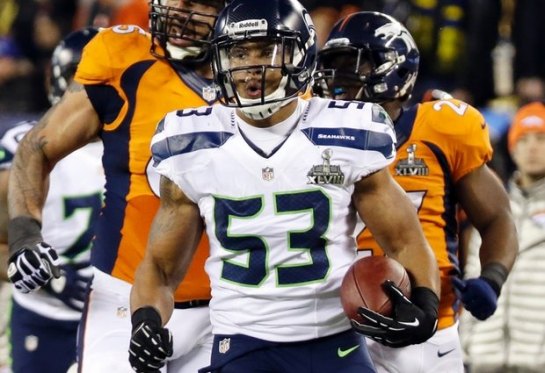
Smith's 69 yard interception in Super Bowl XLVIII ended the competitive phase of the game.

Smith’s 69 yard interception in Super Bowl XLVIII ended the competitive phase of the game and trumpeted the question: Where would you rank Seattle’s defense with  the all-time greats??

When Malcolm Smith crossed the goal line to put Seattle up 22-0 in last February’s Super Bowl, pundits were already arguing where they ranked among the NFL’s greatest defenses. Here at Taylor Blitz Times we wanted to let some time pass before we waxed too philosophical about their exploits. As the keeper of the flame, it’s up to The Chancellor of Football to accurately place each great defense. We will do this in 3 parts.

One of the criteria for greatest ever defenses you have to ask is: How dominant were they at their peak? They had to bring the lumber over an entire season. These defenses had to be stout with a performance that stands the test of time in remembrance. Without further adieu we have to get on with the Honorable Mention. Those right outside the top ten.

1977 Denver Broncos – The original Orange Crush defense that led the Broncos to Super Bowl XII and Denver’s first ever winning season. This was the first great full time 3-4 defense that yielded only 148 points (10.6 pts / game) and just 18 touchdowns for the season. Holding 7 of their opponents to 10 points or less.
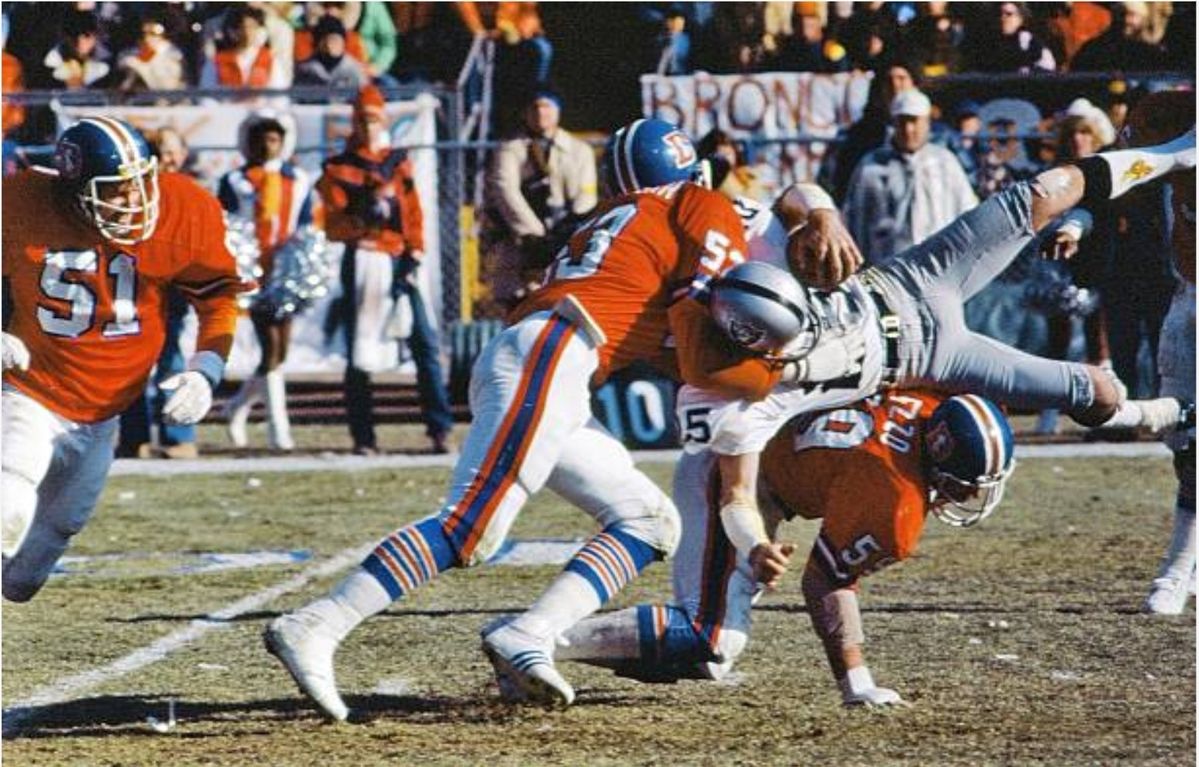
Led by Randy Gradishar, ESPN’s Tom Jackson, and the late Lyle Alzado this defense had an unheard of 4 All Pros concentrated on this defense and 5 Pro Bowlers. This not ready for primetime group came out of nowhere and swallowed the Steelers and Raiders in the playoffs before falling to Dallas in New Orleans in Super Bowl XII. This group swarmed like bees and ushered in the era where 3-4 defenses took over the NFL.

1978 Pittsburgh Steelers – In the first year in which the NFL moved to a 16 game schedule, this group set the new record with fewest points allowed in a season with 195. Powered by the Steel Curtain, they held 8 of 16 opponents to 10 or fewer points. This group did more blitzing than in years past to get to the quarterback. They did have 5 Pro Bowl defenders and 1 All Pro in Jack Ham, but there were stronger incarnations of the Steeler defense.

A fact that gets lost is going into Super Bowl XIII, the consensus was Pittsburgh force vs the finesse Cowboys. Yet it was Dallas whose defense was ranked #2 and Pittsburgh’s #3, For the season they yielded 260.5 yards per game, unofficially had 52 sacks and 27 interceptions which ranked 7th. They peaked in the playoffs holding both Denver and Houston to 10 points and 5 points respectively. Yet gave up some serious candy to the Dallas offense (320 yards & 31 points)

1968 Baltimore Colts – The team that is best known for coming up short in Super Bowl III against the AFL’s New York Jets. In The Chancellor of Football’s estimation, this was the best team that Don Shula ever coached and one of his defensive assistants was the late Chuck Noll. This defense held 10 of 14 regular season opponents to 10 or fewer points. At one point late in the season, they gave up 1 touchdown over 25 quarters including a string of 16 straight quarters w/out a touchdown allowed.
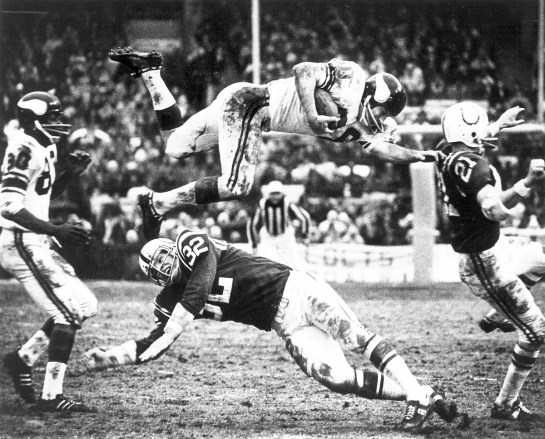
md-darkroom-hutchins-curtisThe Colts of ’68 shut out 3 regular season opponents and the fourth was against the Browns who gave the 13-1 team their only loss. That drubbing was avenged 34-0 in the NFL Championship Game. They even set the record with only 144 points allowed. Between 1967 & 1968 their record was 24-2-2. If only this team had won on January 12th 1969…..but….

2000 Tennessee TitansLost in the delirium over the great 2000 Ravens defense, is the fact they finished #2 to the Titans that year in rankings. Jeff Fisher’s bunch only allowed 238.9 yards per game and held 6 opponents to 10 points or less over the campaign.

Second year DE Jevon Kearse led the team with 11.5 sacks and 4 forced fumbles. Samari Rolle had 7 interceptions he returned for 140 yards and a touchdown. SS Blaine Bishop had 84 tackles to go with 2.5 sacks but 0 interceptions. All three were Pro Bowlers but only Samari was an All Pro Player. One issue is they didn’t force enough turnovers (29) and they finished just +1 in turnover ratio. These are poor marks considering they only saw 1 Pro Bowl quarterback the entire season. Yet they were #1 against the pass (151 yds /gm) and #3 against the run (86 yds /gm).

1987 San Francisco 49ersOne of the last teams to finish with the NFL’s #1 offense and defense happened with this group in 1987. They were gaining momentum allowing only 1 touchdown in the final 16 quarters of the season and none in the final 12 as the playoffs beckoned. They held 5 opponents to 10 or fewer points including two shutouts in their final three games. One of which was a 41-0 hammering of the NFC Central Champion Chicago Bears on Monday Night Football. 

Led by All Pro and Pro Bowler Ronnie Lott (5 ints) this group was #1 against the pass (165 yds /gm) while only yielding 273 yards for the game. What makes this more remarkable are 3 games were played with replacement players due to the strike. Had the season been 16 games instead of 15 and no strike, these numbers could have been even better. They were also #5 against the run (107.4 yds / gm) thanks to All Pro and Pro Bowl Nose Tackle Michael Carter.
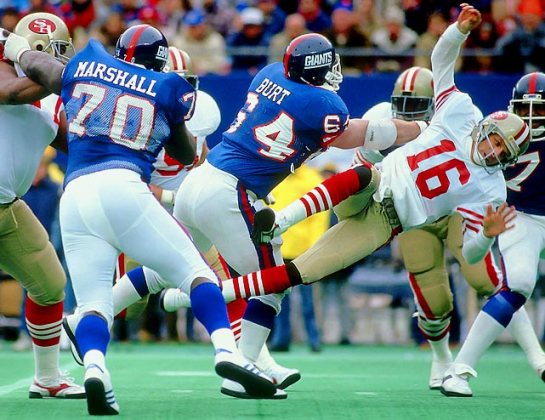
Jim Burt knocking Joe Montana out with a concussion in their 49-3 rout in the '86 playoffs.

Jim Burt knocking Joe Montana out with a concussion in their 49-3 rout in the ’86 playoffs.

1986 New York Giants – A romanticized defense that knocked 5 quarterbacks out on their way to the Super Bowl XXI championship. Yet they were #2 in 1986 and allowed 39 more yards per game than the #1 Chicago Bears with 297.3 yards per game. Second biggest discrepancy between #1 and #2 since 1970.

Led by League MVP and Defensive Player of the Year Lawrence Taylor’s 20 sacks, New York held 5 teams to 10 points or fewer during the regular season. They held their 2 NFC playoff opponents to 3 & 0 points respectively. There were 4 Pro Bowl defenders on this defense in LB Harry Carson, NT Jim Burt, DE Leonard Marshall, and the aforementioned LT.

2008 Pittsburgh Steelers – Close but no cigar. This team finished with the #1 ranking allowing just 237.2 yards per game. They held 8 opponents to 10 or fewer points yet gave up 223 for the season. One mark against them is they only faced 2 Pro Bowl QBs and lost both games. Losing 24-20 to Peyton’s Colts and 21-14 against Eli’s Giants. This was also the year they beat the Patriots 33-10 with Matt Cassel at QB not an injured Tom Brady. Big difference. This group had 51 sacks but only 20 interceptions. The last time we saw them, Kurt Warner passed for 377 yards, 2nd highest in Super Bowl history, and needed Big Ben to bail them out with a game winning pass with :32 left.

This group did have NFL Defensive Player of the Year James Harrison and Pro Bowl SS Troy Palamalu who would win the award 2 years later. Harrison had 16 sacks with 7 forced fumbles. James Farrior (122 tackles) was the 3rd and final Pro Bowler on a talented roster which included LaMarr Woodley (11 sacks).  They were a world champion but this group didn’t perform high enough against the best competition. The top ten is a Sugar Ray Leonard’s list, the honorable mention is where Thomas Hearns resides.
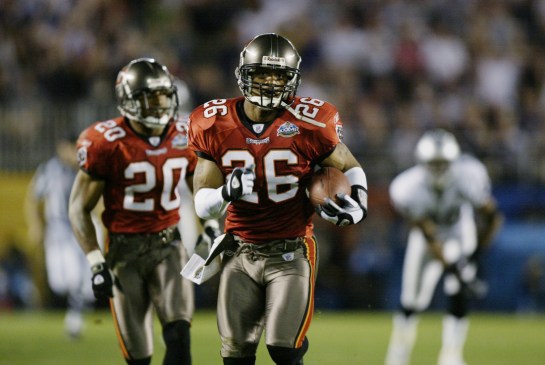
Dwight Smith capped off Super Bowl XXXVII with 2 defensive touchdowns. Should have been the MVP.

Dwight Smith capped off Super Bowl XXXVII with 2 defensive touchdowns. Should have been the MVP.

2002 Tampa Bay Buccaneers – The final team to miss the call to the top ten was the 2002 Buccaneers. The undisputed #1 defense that year. However playing in the new NFC South they feasted on patsies. On 3 occasions they took on top 10 offenses and they lost two of those games to Philadelphia (10th) and Pittsburgh (5th).

This team yielded 252.8 yards per game had 43 sacks and 31 interceptions which ranked 6th and 1st respectively. This team only gave up 196 points while holding 9 regular season opponents to 10 or fewer points. However a closer look reveals they came against offenses ranked 26th, 18th, 14th, 23rd, 31st, 31st, 12th, 14th, and 29th. Chris Redman (who??) quarterbacked the Ravens who was the first in this group. While NFL journeyman Jim Miller led the Bears in the last game.

This team fielded 5 Pro Bowl players in NFL Defensive Player of the Year Derrick Brooks, Shelton Quarles, Hall of Famer Warren Sapp, Simeon Rice (15.5 sacks), and S John Lynch. This group scored on defense. Brooks tied the NFL record with 4 defensive touchdowns and CB Dwight Smith set a Super Bowl record with 2 interception returns for touchdowns. Their numbers and performance should get them in until you look at the competition. Someone reading this is going to describe how they throttled the #1 Raider offense in the Super Bowl. Yet how much do you attribute to Monte Kiffin’s defense or Jon Gruden knowing his former Raider offense and personnel??

Thanks for reading and now its time for the top 10.

Legends of The Fall: Dan Marino (Reissue)

(Reissue of an article originally published 19, April 2014)

With the Netflix doc on John Elway holding sway its time to remind fans of the greatness of Dan Marino. With the sporting world overreacting to this new “ring culture” its time to provide a reminder…

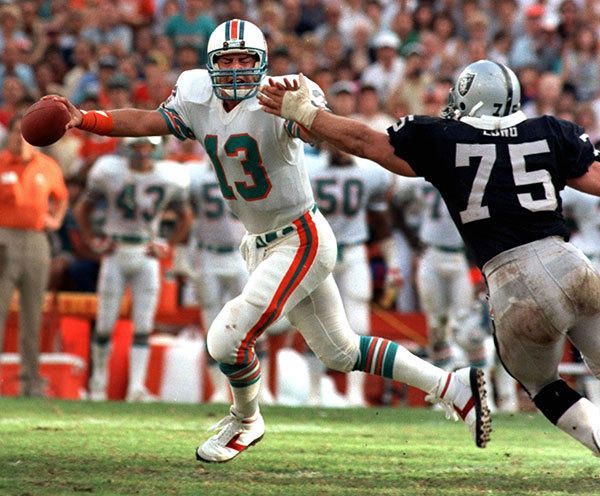
When you ask someone what their definition of a great quarterback is, you invariably wind up with several answers. The one attribute in everyone’s criteria is that of a great passer. It can be argued that Dan Marino was the best pure passer in NFL history. Everyone mentions his quick release but forgets how fiery his delivery of the football was.

To define his quick release, for the football coaching impaired, is the time it took to complete his throwing motion. The easiest way to measure this back then were to slow film down to individual frames. The average QB release would take 15 frames where Marino was routinely between 8 & 9. So the ball was coming out half a second sooner.

Marino's legendary release.

Marino’s legendary release.

The direct results were more passes getting downfield and less sacks. If we look at his peak years of 1984-1986, Marino was only sacked 48 times while attempting 1,754 passes. The Dolphins led the league in fewest sacks all 3 seasons. Yet through that explosive delivery was the zip and hutzpah he put on the football. For he had one of the strongest arms in league history.

Unlike Peyton Manning and Drew Brees, who had league rules altered year after year to make them record breakers, Marino came in and shattered records through sheer ability. People talk of the great class of 1983 and most want to talk about John Elway first. Oh yeah?? Take a look at something:

  • Marino ’84-’86 – 1076 of 1754 for 13,967 yards & 122 TDs
  • Elway ’84-’86 – 821 of 1489 for 9,974 yards & 59 TDs

* To match Marino’s 122 TD total you would have to have Elway’s total from 1984 to the 13th week of the 1990 season! Almost 4 more years!

During this time both Marino and Elway had taken their teams to Super Bowl XIX and XXI respectively. Of these vids, if you only watch one, watch the 1986 vignette. Yet I digress… take a look at Marino’s record breaking fast pitch 1984:

Then you have 1985 where he led the Dolphins back to the AFC Championship Game. Had they won, we would have had a rematch between Marino and Chicago’s 46 defense in Super Bowl XX. Considering Miami gave the 18-1 Bears their only defeat, its something to think about.

Then you have perhaps his greatest season in 1986:

What made his 1986 season special is he was truly all they had and teams still couldn’t stop him. In 1984 he still had many teammates who had made it to Super Bowl XVII the year before he was drafted. The Killer Bs defense was there but aging. By 1986 most of those teammates were gone as a rebuliding phase had started. Still he went 378 of 623 for 4,746 yards and 44 touchdowns. The 44 was 8 more than the previous record and he was within 56 yards of Fouts’ other mark of 4,802.

Dan Marino bust

Also because it was the second time scaling those heights. He had set the record of 5,084 yards and 48 touchdowns in his 1984 campaign. He shattered the old record of 36 touchdowns which had stood for 21 years. He did it in his first full season as a starter. Not his 7th or 8th when Manning and Brady finally topped his mark.

Or lets really bake your noodle for perspective: In 2004, Peyton Manning broke Marino’s record of 48 with 49TD tosses. If he destroyed Marino’s record to the degree Dan had in 1984, Manning would have needed to throw for 64 f’n touchdowns! Not just one more

Ultimately it was the fact that the game had passed by Don Shula as to why Marino didn’t make it back to the Super Bowl. The rest of his career the Dolphins failed to get a prime time receiver or runner. In 1995 they were the poster child for why the quick fix free agent route wasn’t the best place to build a team.

Yet when you look back at the promise of a young Dan Marino, the sky was the limit. He was definitely a legend of the fall.

Thanks for reading and please share the article. Don’t forget to subscribe!

On This Date 1971: The Longest Game Ever Played – Kansas City Chiefs v Miami Dolphins

The Miami Dolphins outlasted the Kansas City Chiefs 27-24 in the longest game in NFL history. Christmas Day 1971 they played well into 6 quarters or more than 82 minutes of playing time.

Here at Taylor Blitz Times, we for one don’t like the fact the NFL buckled and gave in to juvenile thinking when it came to the NFL’s overtime rule. Everyone must touch the ball once?? What is this, second grade girl’s soccer??

Our CEO loved the thought of sudden death overtime. You had four full quarters to win a football game. The two point conversion was introduced in 1994 so that a team can win it in regulation yet NFL coaches are too soft and won’t roll the dice and win it in one play. If you don’t, you’re involved in a winner take all overtime where the game can be won on offense, defense, or special teams. Play was heightened with players realizing one mistake, a blown coverage, fumble, interception, or penalty could cost your team its season. It made for great theater.
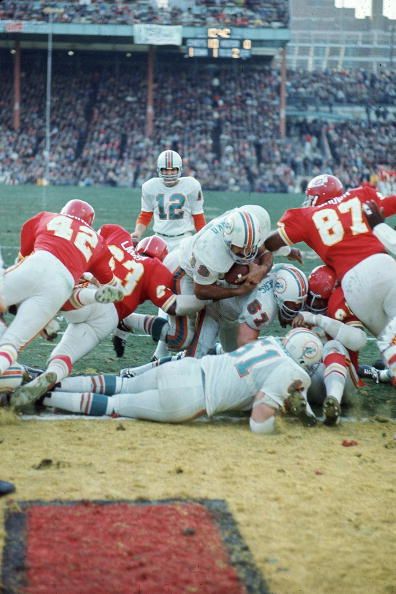
One such game happened shortly after the AFL/NFL merger in 1970. The upstart Miami Dolphins were facing a perennial heavyweight in the Kansas City Chiefs in an AFC Divisional playoff.

Why do we mention the AFL??

For one, both teams were rooted in the rival league. Second, it was the Baltimore Colts with Head Coach Don Shula that lost Super Bowl III that legitimized the merger. In the aftermath of the Baltimore Colts’ embarrassment losing that game, Don Shula amid tense corporate pressure, decided to move on and take the head coaching job in Miami.  He quickly whipped the Dolphins into shape and they made the playoffs in each of his first two seasons there. In 1970 they were bested by a veteran Raider team in an AFC Divisional Playoff in Oakland and many felt the same way about them traveling to Kansas City for the ’71 playoff.

Another reason we mention the AFL was this was the last game ever to be played in Municipal Stadium. One of the AFL’s great stadiums through the 1960’s as the Kansas City Chiefs had been perennial winners there. It would be left behind as the Chiefs moved on to Arrowhead Stadium as the NFL moved on to future years of prosperity with new antiseptic ballparks.
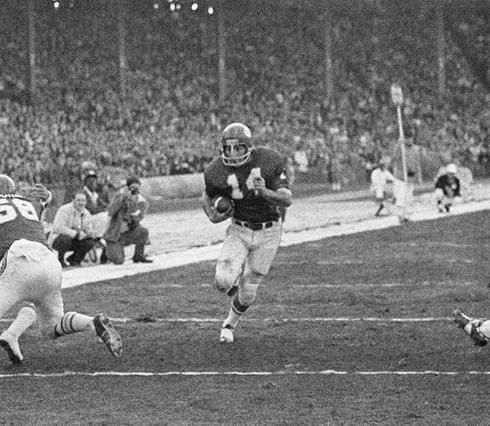
The newer stadiums lacked individual culture as the 70’s dawned and it was as though teams were leaving a piece of their soul when they left old places behind. This was where Lamar Hunt had moved his team in 1963, to keep the fight along with league brothers against the NFL and won. Sure they were going to live on in the American Football Conference of the NFL, but it wasn’t going to be the same.

The Kansas City Chiefs were an older team and 1972 would be their last hurrah. They had finished as the AFL’s winningest team going 87-48-3, appearing in the first Super Bowl, then winning the fourth edition over Minnesota down in New Orleans. The team had just parted ways with All-time All AFL DE Jerry Mays and team leader C/LB E.J. Holub to retirement  in 1970. Even RB Mike Garrett was gone to the San Diego Chargers by this time, replaced by Ed Podolak.
These men along with holdovers QB Len Dawson, WR Otis Taylor, LBs Bobby Bell, and Willie Lanier had led the Chiefs for much of the 1960s as they worked to get owner and AFL Founder Lamar Hunt that elusive Super Bowl trophy. They were an older team lead by Dawson 36 yrs of age, Taylor turning 30 within a year, Bobby Bell was 31 and FS Johnny Robinson was 33. Various retirements were coming but they had finished 1971 with a 10-3-1 record and if they could get through this postseason, win it all, then they could go their separate ways. All they had to do was get through Miami and…

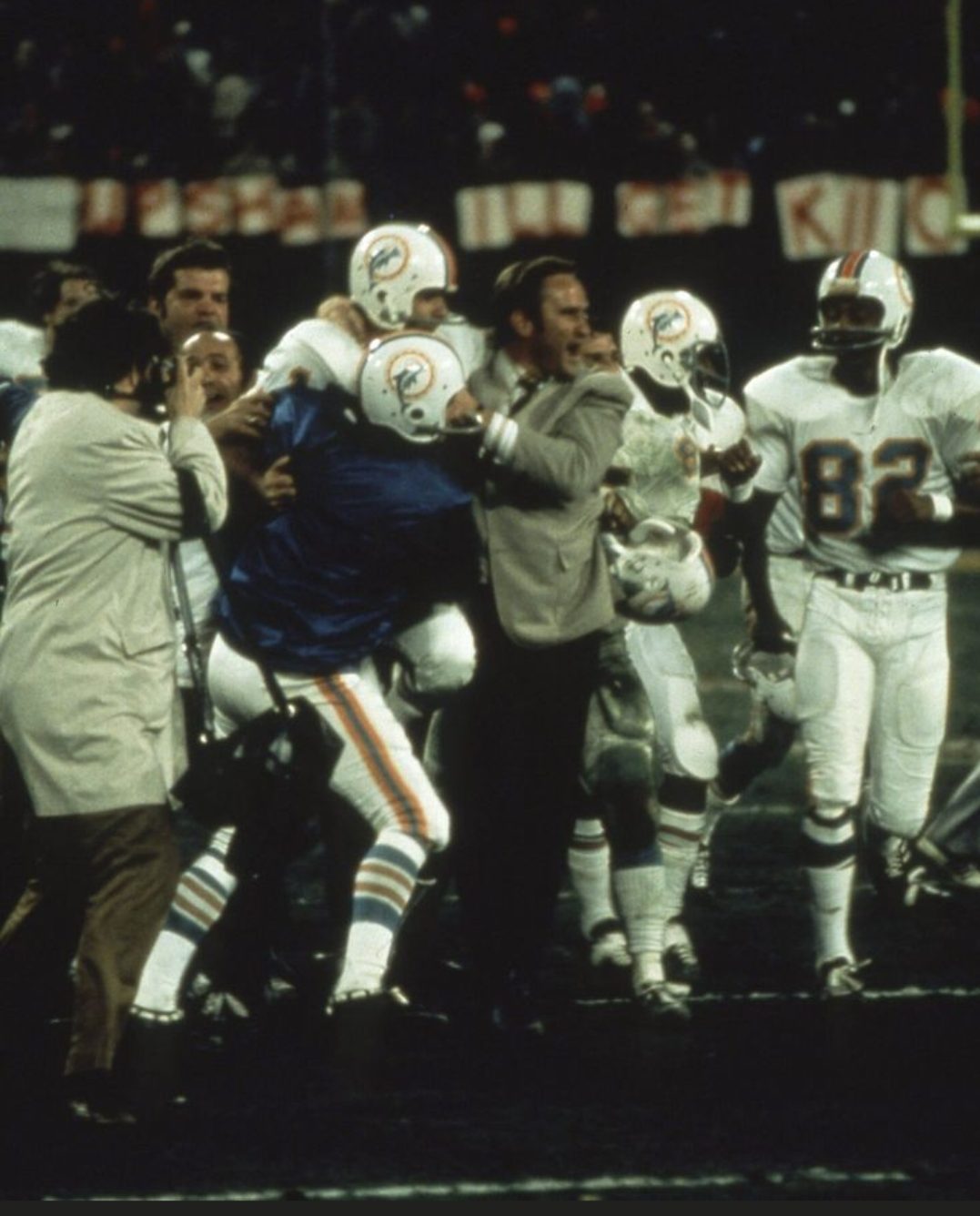
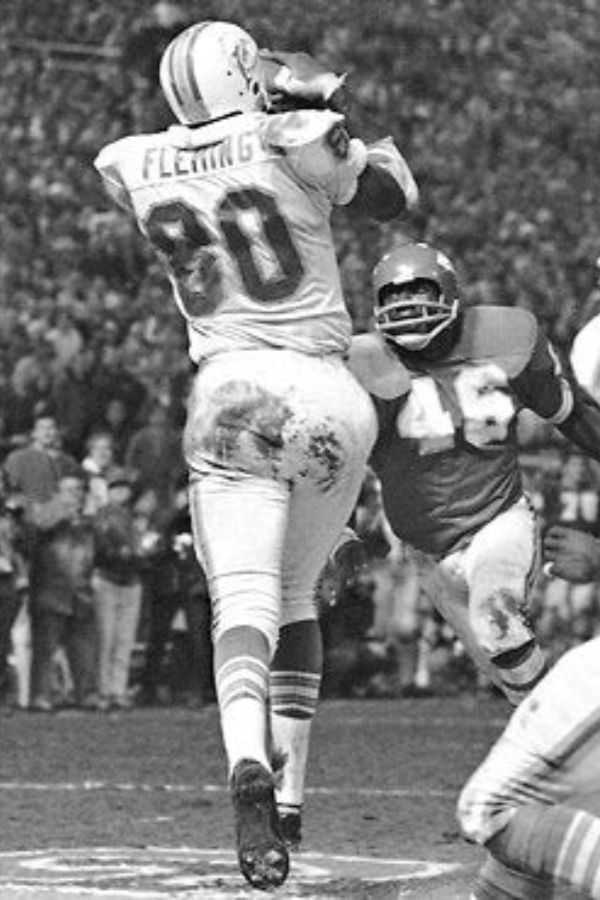
Fleming scores the tying TD that forced the game to overtime.

After this game the Dolphins went on to defeat the Baltimore Colts 21-0 in the AFC Championship Game which put them in Super Bowl VI. It was further satisfying for Shula for he defeated Carroll Rosenbloom and the Colts for whom he once coached. In the same stadium as Super Bowl III no less. Within a year, Rosenbloom was so disenchanted with owning the Colts who would have to rebuild, he swapped franchises with Robert Irsay who owned the Los Angeles Rams. Within 6 years he would marry Georgia, drown and that is how Georgia Rosenbloom-Frontiere became owner of the Rams. All aftermath of Super Bowl III.

Don Shula’s Dolphins would lose Super Bowl VI but would return and win VII & VIII becoming one of the great teams in NFL history. He went on to coach Miami through the 1995 season where he went on to win more games than any other coach with 347 wins. This was his first postseason win with the Dolphins that launched them as an NFL elite member for many years to come.

The AFL Logo of the Kansas City Chiefs

The AFL Logo of the Kansas City Chiefs

As for the Chiefs, the mystique of who they were as an AFL power was gone as they would not return to the playoffs for 15 years. Len Dawson, Bobby Bell, and Head Coach Hank Stram went on to the Pro Football Hall of Fame. However Johnny Robinson and Jerry Mays have been glaring omissions.

Each of which played most of their careers over in the “other league” and have been treated like such by the writers who make up the voting panel for the Hall of Fame. The late Jerry Mays should have had that honor bestowed upon him before his death in 1994. Although he didn’t play in this game, the legacy /era of the old AFL Kansas City Chiefs closed Christmas of 1971.

The Miami Dolphins outlasted the Kansas City Chiefs 27-24 in the longest game in NFL history. Christmas Day 1971 they played well into 6 quarters or more than 82 minutes of playing time.

Thanks for reading and please share the article.