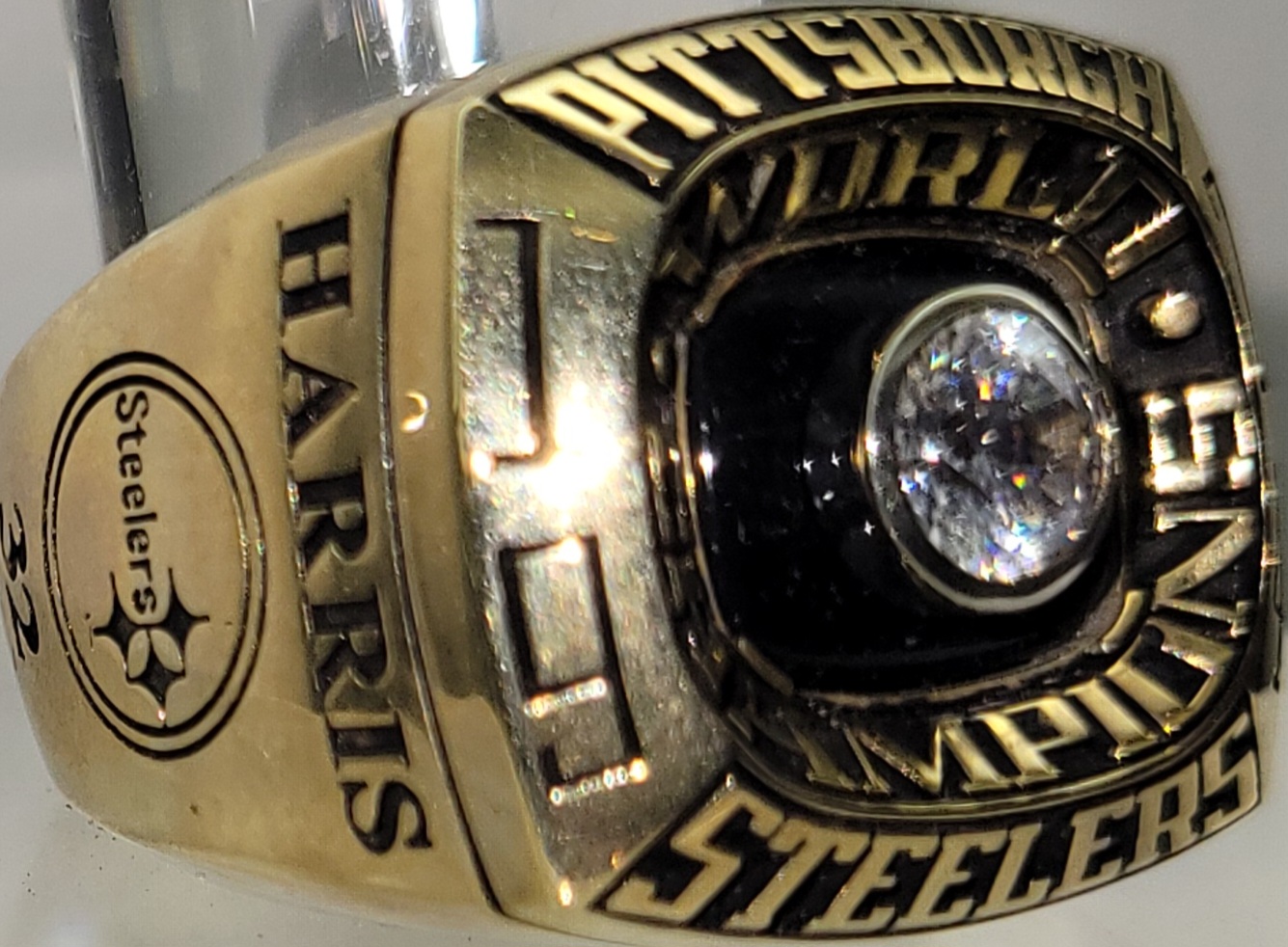
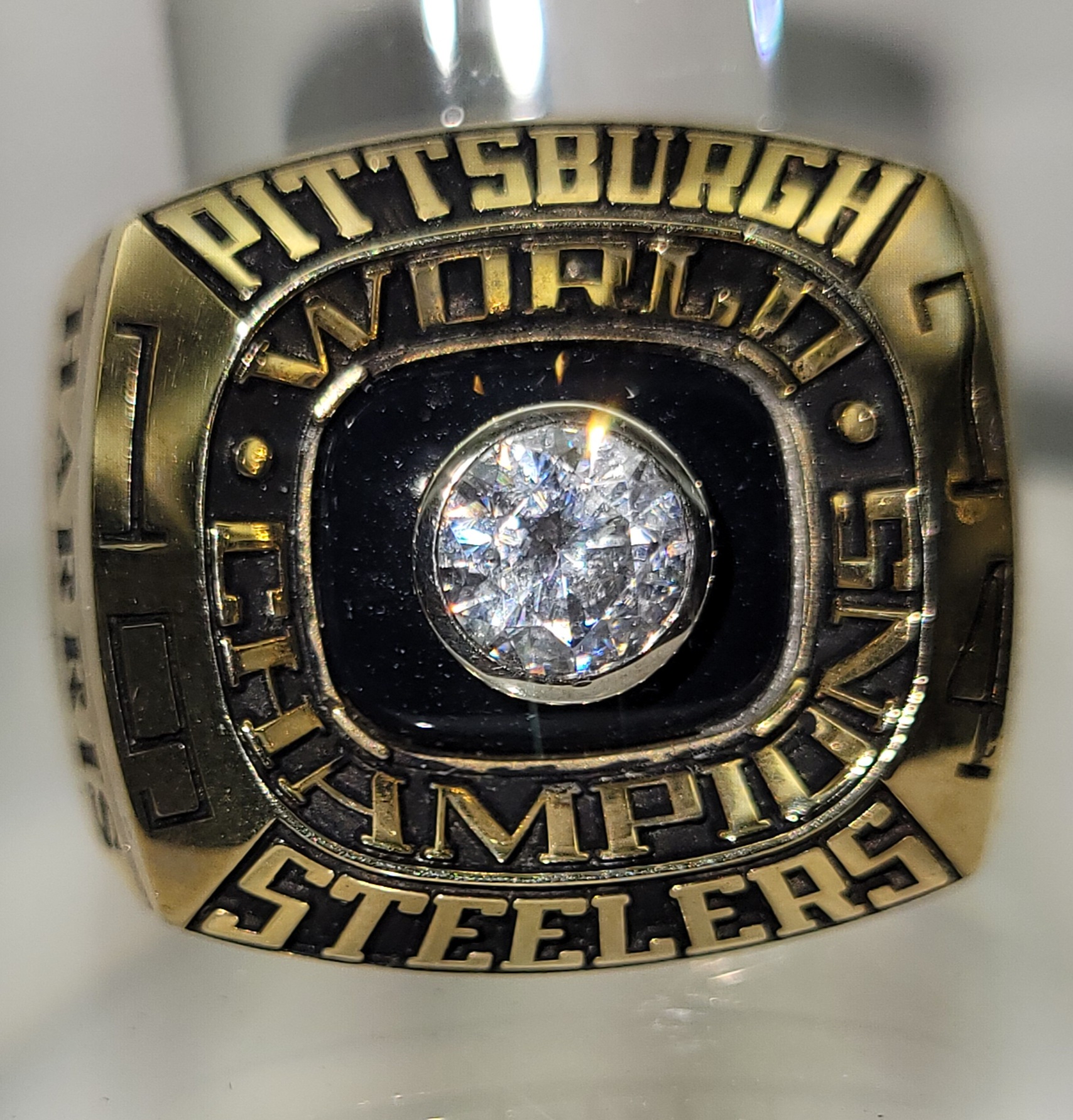
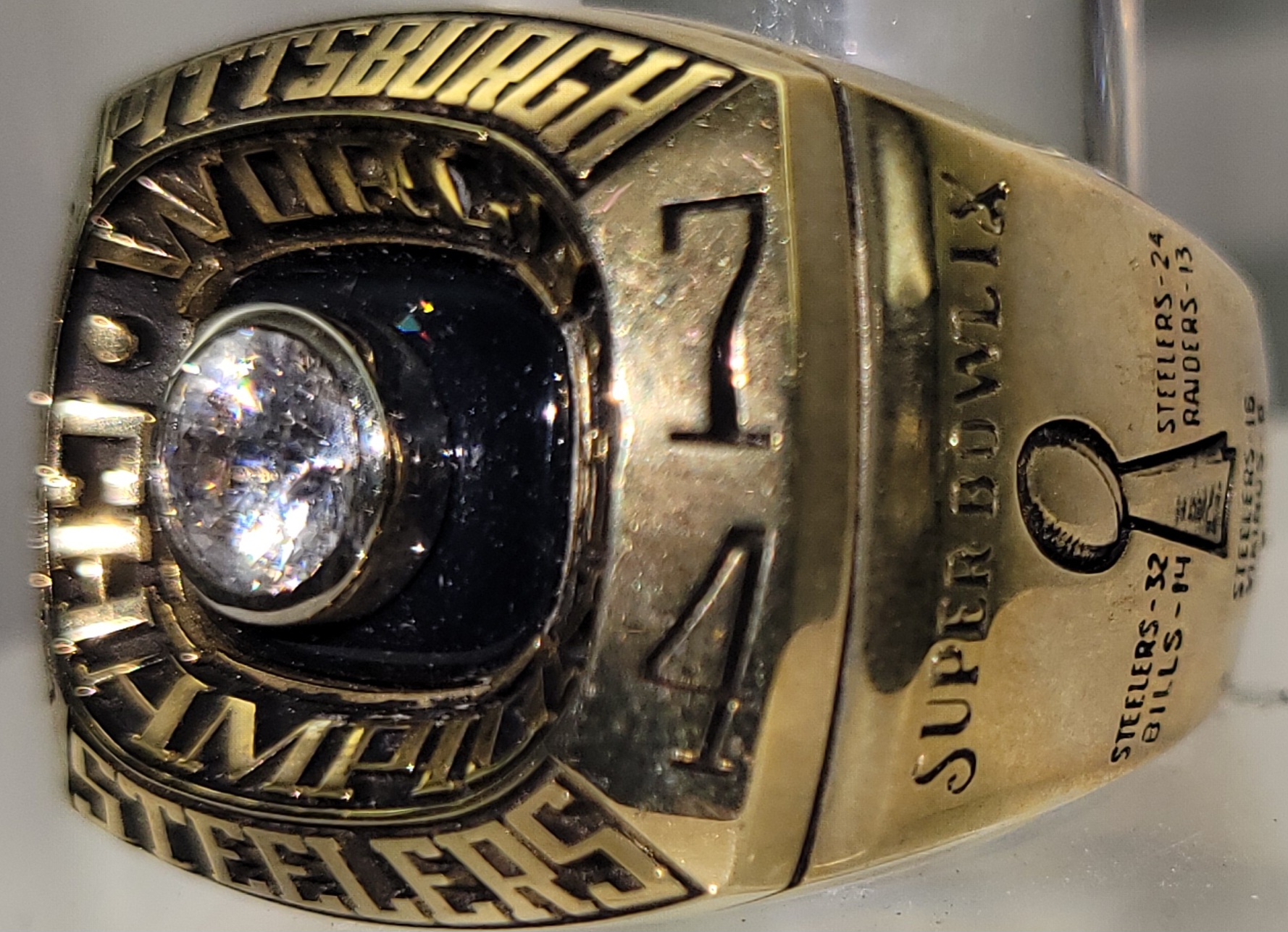
SUPER BOWL IX CHAMPION 1974 PITTSBURGH STEELERS

The first NFL championship in 42 years where the game ball was given to Steeler patriarch, the late Art Rooney. It had been a long time coming for all the decades of despair this team had been through. From the war time merging with the Philadelphia Eagles to form the “Steagles”. To the failed ability to recognize quarterback talent by cutting future Hall of Famers Len Dawson and Johnny Unitas. Nothing good had happened for this organization for decades.

Enter Chuck Noll.

Noll was hired to be the Head Coach after serving under Don Shula’s Baltimore Colts regime in 1969. His last game with the organization was the loss to the New York Jets in Super Bowl III. By then Noll was defensive coordinator after serving for years as a defensive line coach, most notably with the early 60’s San Diego Chargers in the AFL.

They say the player is the father to the coach a man becomes and Noll had been a lineman in his playing days. So instead of building his team first with a quarterback or featured runner, he drafted defensive tackle Joe Greene. He would build his defensive masterpiece from the ground up. A point often forgotten is the selection of LC Greenwood in the 10th round that same year.

In 1970, quarterback Terry Bradshaw was selected as the #1 overall pick. They finally had their quarterback of the future but the chief building block was Noll’s defense and in particular his defensive line. Five years later they were the best in pro football and came to be known as “The Steel Curtain”

Of course the Steelers had the great class of 1974 to put the finishing touch on what would become a football dynasty. However a look back and you can truly see how Pittsburgh’s first NFL championship had AFL roots.

If the AFL hadn’t been around to offer Chuck Noll his first coaching job at the professional level in 1960, would he have been in place to take the Steelers job in 1969?? Also look at the make up of the Steeler team from a draft and racial standpoint. Mining talent from historically black colleges and smaller schools was an AFL trait, not an NFL one. What Noll did in Pittsburgh was recreate the San Diego defensive line of the early 1960s he wasn’t allowed to in Baltimore.Steel_Curtain_Time_Magazine

  • Joe Greene – North Texas St.
  • LC Greenwood – Arkansas AM & N
  • Ernie Holmes – Texas Southern
  • Dwight White – East Texas State

So think of Joe Greene as a latter day Earl Faison or Ernie Ladd who had come from Grambling. By the time we include the late quarterback “Jefferson Street” Joe Gilliam from Tennessee State, Mel Blount from Southern, and John Stallworth from Alabama A&M, this team resembles the 1965 San Diego Chargers or 1969 Kansas City Chiefs of the AFL more than it did the 1968 Baltimore Colts.

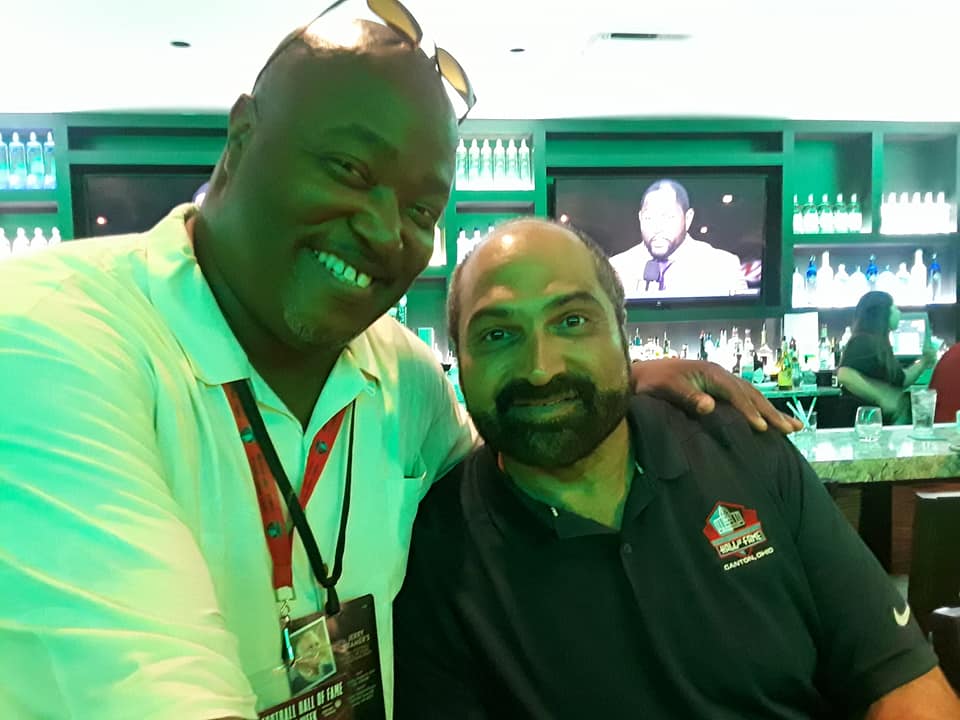
The Chancellor with Franco Harris, MVP of Super Bowl IX.

super-bowl-logo-1974Many former players have talked about the racial quota that existed in the NFL back when. Well along with Vince Lombardi and Hank Stram, Chuck Noll broke that system for good and let talent flourish. First the Steelers took $1 million to move in with the AFL teams to form the AFC in 1970 with the league merger. Than Chuck Noll built the best AFL team he could through the draft.

In doing so he brought Pittsburgh a championship it so desperately sought. It would not be the last.

RIP Coach Noll

RIP Coach Noll

Thanks for reading and please share the article.

This bauble was what each player and coach received after their 16-6 win vs the Minnesota Vikings in Super Bowl IX.

Top Ten Single Season Defenses in NFL History: #5 1991 Philadelphia Eagles

A recurring theme that seems to be running through these greatest defenses were they had to carry anemic, inefficient offenses through the season. One such incident took place when the Philadelphia Eagles lost the 1990 NFL MVP Runner Up Randall Cunningham in the first week 1991. All appeared to be lost as they attempted to go on without their #1 weapon. This defense turned in one of the last truly great performances finishing #1 against the run, #1 against the pass, and obviously #1 overall.

When you carry a team that played five quarterbacks during the season, you’ve done something. We’re sure you remember that renowned NFL quarterback Brad Goebel or Pat Ryan, right?? Who?? Brad Goebel not Stan Gable…that’s a fictitious character from Revenge Of the Nerds.

As for real quarterbacks they had two games against the Redskins Mark Rypien, that year’s Super Bowl MVP. Two more against Hall of Famer Troy Aikman then one against Steve Young and Warren Moon. Also Hall of Fame members. All but Young made the Pro Bowl in 1991. They went 3-3 against them and held Young’s 49ers (#3 offensively) and Aikman’s Cowboys (#9 offensively) to less than 100 yards passing in two complete games that year.

Remember, Aikman and Young went on to face each other in 3 consecutive NFC Championships starting the following year and won the next four Super Bowls.

They faced 6 top 10 offenses going 3-3 against them. Defensively they held 6 opponents to 10 points or fewer. Two of those games were against top ten offenses as we mentioned earlier. Counting match-ups with divisional foes as individual games, 8 times they held their opposition to their lowest offensive output for the season.

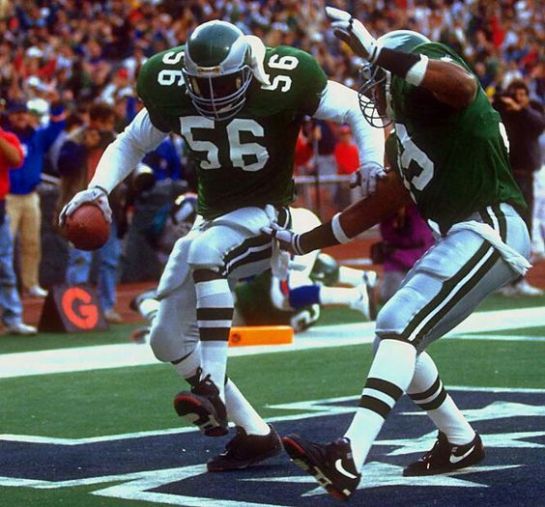
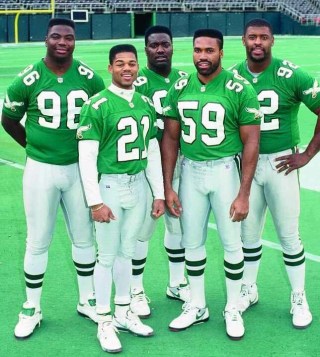
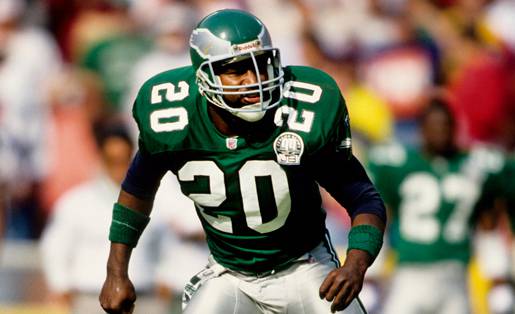
1991 Pro Bowl members of the Eagles defense.

1991 Pro Bowl members of the Eagles defense.

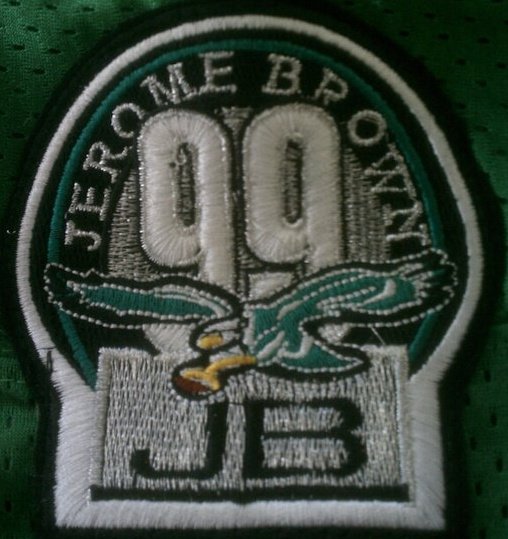
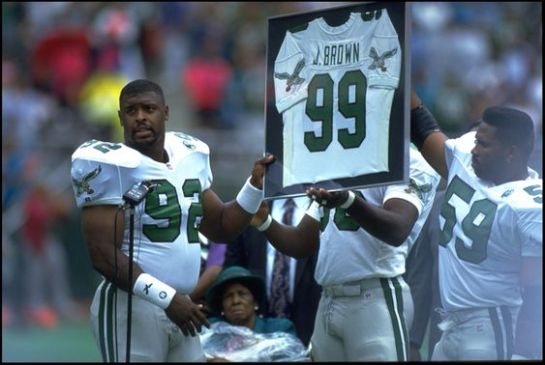
Half the defense made the Pro Bowl starting with the late Reggie White, the late Jerome Brown, and Clyde Simmons from the defensive line. These three accounted for 37 of the Eagle’s 55 sacks. Those 3 alone had just 7 sacks fewer than the 2013 NFL champion Seahawks had as a team. OLB Seth Joyner (110 tck / 6.5 sacks / 6 ff /3 ints) and CB Eric Allen who picked off 5.

The only reason SS Andre Waters didn't make the Pro Bowl was his reputation.

The only reason SS Andre Waters didn’t make the Pro Bowl was his reputation.

Amazingly the late SS Andre Waters didn’t make the Pro Bowl even though he had 156 tackles. It was he and FS Wes Hopkins that sent the early message in their signature game against the Oilers. Did you know starting the very next week, when others used their 13-6 destruction against Houston as a blueprint, stats diminished for the Run & Shoot?? This historic performance was the impetus for the abolition of the Run & Shoot as a complete offensive approach in the NFL.

In winning 7 of their last 8 attempting to make the playoffs, the quarterback rating allowed was around 40.0. For the season, 206 of 467 (44.1%) for 2,807 yards 16 TDs and 26 interceptions would get a quarterback cut and ripped by NFL Network or ESPN shows. Well this was the passing given up by the 91′ Eagles all year.

Or think of it like this: Look at the ’91 Eagles performance against 6 top 10 offenses and 4 HOF QBs. Compare those stats to Geno Smith who was the worst rated starting QB last year. Yes 32nd!!:

  • ’13 Geno Smith – 247 of 443 (55.8%) 3,046 yds 12tds 21 ints
  • ’91 Eagles – 206 of 467 (44.1%) for 2,807 yards 16 TDs and 26 interceptions

One of the best in history and #5 on The Chancellor of Football’s list.apicofme3.

Dedicated to the memories of: Reggie White, Jerome Brown, Andre Waters, Wes Hopkins, Mike Pitts, Buddy Ryan, and Bud Carson.

Thanks for reading and please share the article.

Top Ten Single Season Defenses in NFL History : #7 1977 Dallas Cowboys

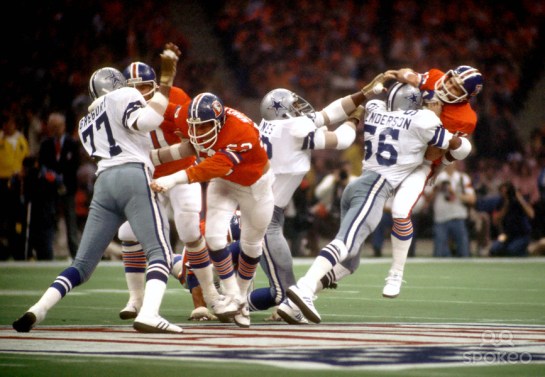
For all the talk of the Gritz Blitz and the Orange Crush Defense in 1977, it was the year of The Doomsday Defense II. They faced off with the Denver Broncos down in New Orleans in Super Bowl XII and the better defense won. They carried their season statistical domination into that game and forced a then Super Bowl record 8 turnovers. This was the last NFL champion to finish #1 on defense and #1 on offense. In giving up just 229.5 yards per game, most don’t realize that was better than the 1978 champion Pittsburgh Steelers (260.5) or even the great ’76 version (237.5).

After Craig Morton was benched, Hollywood Henderson and Doomsday treated Norris Weese to a rough outing. Super Bowl XII

After Craig Morton was benched, Hollywood Henderson and Doomsday treated Norris Weese to a rough outing. In Super Bowl XII

Unofficially that year was the little known fact that DE Harvey Martin recorded 26 sacks. The league didn’t start keeping that statistic until 1981 or that would still be a record. It was arguably his best season as he was named All Pro and made the Pro Bowl. Surprisingly he was only joined by SS Charlie Waters, OLB Hollywood Henderson, FS Cliff Harris, and DT Randy White.

Yet this group does have some knocks against it. They only faced 3 top ten offenses that year and gave up  212 points  for the season. The highest of our top ten. However they were 2-1 in those games and were the first Super Bowl champion to face their eventual Super Bowl opponent during the season. Winning the finale 14-6.

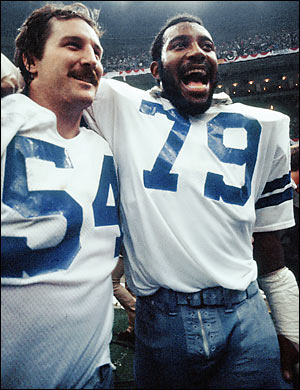
Supe Bowl XII Co-MVPs Randy White and the late Harvey Martin.

Supe Bowl XII Co-MVPs Randy White and the late Harvey Martin.

So why are they in the top ten??

The number one reason this group is here is this was the height of The Flex Defense. Their dominance was felt in a season long display. They held 7 of their 14 opponents to 10 points or less then became the first team since the merger to hold their 3 postseason opponents to 10 points or less. One of those was the #3 ranked offense of the  Chicago Bears and NFL rushing champion Walter Payton. He was held to 60 yards on 19 carries in a 37-7 win in the divisional round.

The havoc they raised in Super Bowl XII with 4 sacks, countless hurries that led to 4 interceptions on the biggest stage didn’t hurt. When half your line, DT Randy White and DE the late Harvey Martin, become the first defensive linemen to win Super Bowl MVP, that puts on an exclamation point on the season.

Other talents such as Ed “Too Tall” Jones, Thomas “Hollywood” Henderson who made his 1st Pro Bowl, made names for themselves as well. They would defend their championship in the following Super Bowl with the Pittsburgh Steelers where they ranked #2 in defense to the Steelers ranked third. That’s another story for a different time.

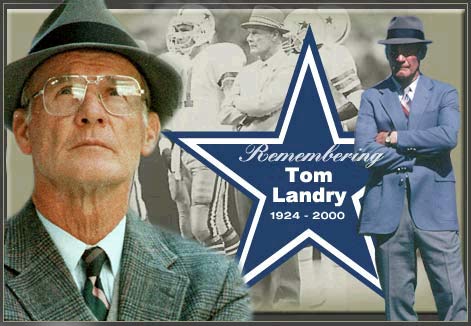
landry.2Epilogue: This was the crowning jewel in the late Tom Landry’s coaching career. Where he engineered a majority of the tactics to bring the 4-3 to be the modern staple of defense in the NFL. It was his ability to innovate that defense and come up with the Flex Defense to read and react as well as keep the Middle Linebacker (Bob Breunig) free of potential blockers.

Dedicated in the memory of both Tom Landry and Harvey Martin.

Thanks for reading and please share the article.

My man Hollywood’s parting shot:

Hollywood Strikes Back!

Hollywood Strikes Back!


Top Ten Single Season Defenses in NFL History: Honorable Mention

When Malcolm Smith crossed the goal line to put Seattle up 22-0 in last February’s Super Bowl, pundits were already arguing where they ranked among the NFL’s greatest defenses. Here at Taylor Blitz Times we wanted to let some time pass before we waxed too philosophical about their exploits. As the keeper of the flame, it’s up to The Chancellor of Football to accurately place each great defense. We will do this in 3 parts.

Smith's 69 yard interception in Super Bowl XLVIII ended the competitive phase of the game.

Smith’s 69 yard interception in Super Bowl XLVIII ended the competitive phase of the game and trumpeted the question: Where would you rank Seattle’s defense with  the all-time greats??

One of the criteria for greatest ever defenses you have to ask is: How dominant were they at their peak? They had to bring the lumber over an entire season. These defenses had to be stout with a performance that stands the test of time in remembrance. Without further adieu we have to get on with the Honorable Mention. Those right outside the top ten.

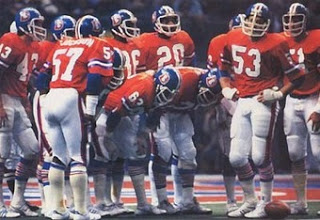
1977 Denver Broncos – The original Orange Crush defense that led the Broncos to Super Bowl XII and Denver’s first ever winning season. This was the first great full time 3-4 defense that yielded only 148 points (10.6 pts / game) and just 18 touchdowns for the season. Holding 7 of their opponents to 10 points or less.

Even with an offense that turned it over 8 times, the still held Dallas to 27 points in Super Bowl XII.

Even with an offense that turned it over 8 times, the still held Dallas to 27 points in Super Bowl XII.

Led by Randy Gradishar, ESPN’s Tom Jackson, and the late Lyle Alzado this defense had an unheard of 4 All Pros concentrated on this defense and 5 Pro Bowlers. This not ready for primetime group came out of nowhere and swallowed the Steelers and Raiders in the playoffs before falling to Dallas in New Orleans in Super Bowl XII. This group swarmed like bees and ushered in the era where 3-4 defenses took over the NFL.

1978 Pittsburgh Steelers – In the first year in which the NFL moved to a 16 game schedule, this group set the new record with fewest points allowed in a season with 195. Powered by the Steel Curtain, they held 8 of 16 opponents to 10 or fewer points. This group did more blitzing than in years past to get to the quarterback. They did have 5 Pro Bowl defenders and 1 All Pro in Jack Ham, but there were stronger incarnations of the Steeler defense.

A fact that gets lost is going into Super Bowl XIII, the consensus was Pittsburgh force vs the finesse Cowboys. Yet it was Dallas whose defense was ranked #2 and Pittsburgh’s #3, For the season they yielded 260.5 yards per game, unofficially had 52 sacks and 27 interceptions which ranked 7th. They peaked in the playoffs holding both Denver and Houston to 10 points and 5 points respectively. Yet gave up some serious candy to the Dallas offense (320 yards & 31 points)

1968 Baltimore Colts – The team that is best known for coming up short in Super Bowl III against the AFL’s New York Jets. In The Chancellor of Football’s estimation, this was the best team that Don Shula ever coached and one of his defensive assistants was the late Chuck Noll. This defense held 10 of 14 regular season opponents to 10 or fewer points. At one point late in the season, they gave up 1 touchdown over 25 quarters including a string of 16 straight quarters w/out a touchdown allowed.

md-darkroom-hutchins-curtisThe Colts of ’68 shut out 3 regular season opponents and the fourth was against the Browns who gave the 13-1 team their only loss. That drubbing was avenged 34-0 in the NFL Championship Game. They even set the record with only 144 points allowed. Between 1967 & 1968 their record was 24-2-2. If only this team had won on January 12th 1969…..but….

2000 Tennessee Titans – Lost in the delirium over the great 2000 Ravens defense, is the fact they finished #2 to the Titans that year in rankings. Jeff Fisher’s bunch only allowed 238.9 yards per game and held 6 opponents to 10 points or less over the campaign.

Second year DE Jevon Kearse led the team with 11.5 sacks and 4 forced fumbles. Samri Rolle had 7 interceptions he returned for 140 yards and a touchdown. SS Blaine Bishop had 84 tackles to go with 2.5 sacks but 0 interceptions. All three were Pro Bowlers but only Samari was an All Pro Player. One issue is they didn’t force enough turnovers (29) and they finished just +1 in turnover ratio. These are poor marks considering they only saw 1 Pro Bowl quarterback the entire season. Yet they were #1 against the pass (151 yds /gm) and #3 against the run (86 yds /gm).

1987 San Francisco 49ers – One of the last teams to finish with the NFL’s #1 offense and defense happened with this group in 1987. They were gaining momentum allowing only 1 touchdown in the final 16 quarters of the season and none in the final 12 as the playoffs beckoned. They held 5 opponents to 10 or fewer points including two shutouts in their final three games. One of which was a 41-0 hammering of the NFC Central Champion Chicago Bears on Monday Night Football. 

Led by All Pro and Pro Bowler Ronnie Lott (5 ints) this group was #1 against the pass (165 yds /gm) while only yielding 273 yards for the game. What makes this more remarkable are 3 games were played with replacement players due to the strike. Had the season been 16 games instead of 15 and no strike, these numbers could have been even better. They were also #5 against the run (107.4 yds / gm) thanks to All Pro and Pro Bowl Nose Tackle Michael Carter.

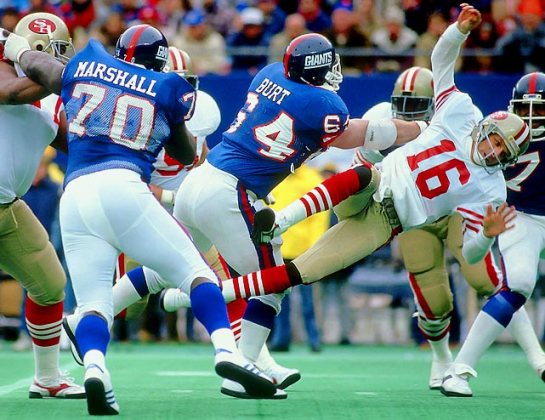
Jim Burt knocking Joe Montana out with a concussion in their 49-3 rout in the '86 playoffs.

Jim Burt knocking Joe Montana out with a concussion in their 49-3 rout in the ’86 playoffs.

1986 New York Giants – A romanticized defense that knocked 5 quarterbacks out on their way to the Super Bowl XXI championship. Yet they were #2 in 1986 and allowed 39 more yards per game than the #1 Chicago Bears with 297.3 yards per game. Second biggest discrepancy between #1 and #2 since 1970.

Led by League MVP and Defensive Player of the Year Lawrence Taylor’s 20 sacks, New York held 5 teams to 10 points or fewer during the regular season. They held their 2 NFC playoff opponents to 3 & 0 points respectively. There were 4 Pro Bowl defenders on this defense in LB Harry Carson, NT Jim Burt, DE Leonard Marshall, and the aforementioned LT.

2008 Pittsburgh Steelers – Close but no cigar. This team finished with the #1 ranking allowing just 237.2 yards per game. They held 8 opponents to 10 or fewer points yet gave up 223 for the season. One mark against them is they only faced 2 Pro Bowl QBs and lost both games. Losing 24-20 to Peyton’s Colts and 21-14 against Eli’s Giants. This was also the year they beat the Patriots 33-10 with Matt Cassel at QB not an injured Tom Brady. Big difference. This group had 51 sacks but only 20 interceptions. The last time we saw them, Kurt Warner passed for 377 yards, 2nd highest in Super Bowl history, and needed Big Ben to bail them out with a game winning pass with :32 left.

This group did have NFL Defensive Player of the Year James Harrison and Pro Bowl SS Troy Palamalu who would win the award 2 years later. Harrison had 16 sacks with 7 forced fumbles. James Farrior (122 tackles) was the 3rd and final Pro Bowler on a talented roster which included LaMarr Woodley (11 sacks).  They were a world champion but this group didn’t perform high enough against the best competition. The top ten is a Sugar Ray Leonard’s list, the honorable mention is where Thomas Hearns resides.

Dwight Smith capped off Super Bowl XXXVII with 2 defensive touchdowns. Should have been the MVP.

Dwight Smith capped off Super Bowl XXXVII with 2 defensive touchdowns. Should have been the MVP.

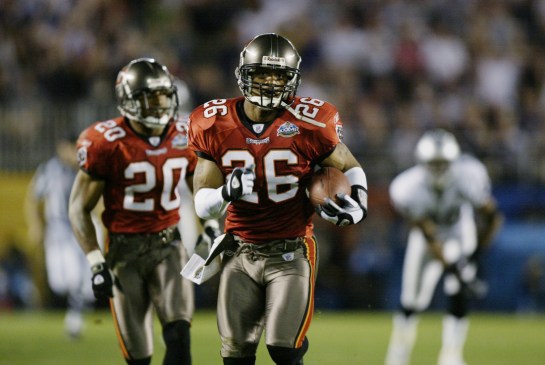
2002 Tampa Bay Buccaneers – The final team to miss the call to the top ten was the 2002 Buccaneers. The undisputed #1 defense that year. However playing in the new NFC South they feasted on patsies. On 3 occasions they took on top 10 offenses and they lost two of those games to Philadelphia (10th) and Pittsburgh (5th).

This team yielded 252.8 yards per game had 43 sacks and 31 interceptions which ranked 6th and 1st respectively. This team only gave up 196 points while holding 9 regular season opponents to 10 or fewer points. However a closer look reveals they came against offenses ranked 26th, 18th, 14th, 23rd, 31st, 31st, 12th, 14th, and 29th. Chris Redman (who??) quarterbacked the Ravens who was the first in this group. While NFL journeyman Jim Miller led the Bears in the last game.

This team fielded 5 Pro Bowl players in NFL Defensive Player of the Year Derrick Brooks, Shelton Quarles, Hall of Famer Warren Sapp, Simeon Rice (15.5 sacks), and S John Lynch. This group scored on defense. Brooks tied the NFL record with 4 defensive touchdowns and CB Dwight Smith set a Super Bowl record with 2 interception returns for touchdowns. Their numbers and performance should get them in until you look at the competition. Someone reading this is going to describe how they throttled the #1 Raider offense in the Super Bowl. Yet how much do you attribute to Monte Kiffin’s defense or Jon Gruden knowing the Raider offense and personnel??

Thanks for reading and now its time for the top 10.

SUPER BOWL IV RUNNER UP 1969 MINNESOTA VIKINGS

The NFL’s northern most outpost was originally an AFL territory yet the story has been told how they jumped ship and were given an NFL franchise. However the years that followed saw a team that struggled for respectability. superbowliv

However the 1969 Minnesota Vikings sported the first Mexican American to quarterback his team to the Super Bowl in Joe Kapp. Never understood why they don’t have a larger Hispanic following with such a significant historic backdrop.

The Minnesota Vikings had departed with Fran Tarkenton and brought in Joe Kapp (California Bears) from Canada to play quarterback. He threw ugly passes and played football from his gut. He was a fearless leader who avenged a playoff loss the year before against Baltimore. In 1968 the Colts were regarded as the greatest team with the greatest defense ever. The Colts beat Minnesota 24-14 in a divisional playoff match where they sacked and hit Kapp repeatedly.

superbowliv3

In 1969, game 2 he threw for a record 7TDs in a rematch with the Colts to wrest the NFL dominance mantle winning 52-14. It crushed the relationship between Don Shula & Carroll Rosenbloom hastening his departure to Miami following the season.

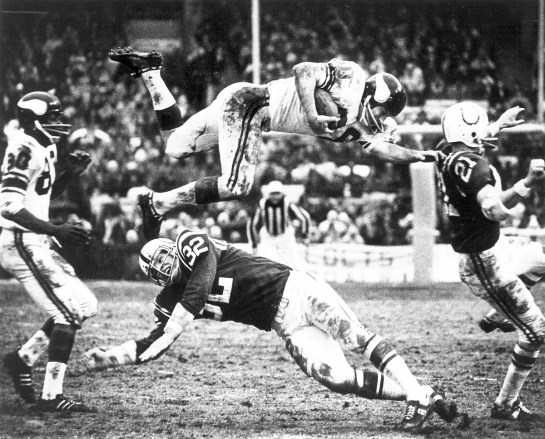
Led by The Purple People Eaters defensive line of Alan Page, Carl Eller, Gary Larson, and Jim Marshall, the league’s #1 unit carried the team through the season. The Vikings went on to finish on a 12 game winning streak and broke the Colts 1968 defensive record of 144 points allowed with 133. It was just the tonic the NFL needed as writers / loyalists established the Vikings an 11 point favorite. Not since the 1934 Chicago Bears rolled into the NFL Title Game undefeated had the league witnessed a winning streak as long as the Vikings.

It was during the NFL playoffs where Kapp cemented his legacy. On a routine pass play, protection breaks down and Kapp escapes the pocket. Coming up to make the tackle was Cleveland Brown linebacker Jim Houston. Joe gave a shoulder fake and went right into Houston. Unwittingly he kneed him in the head knocking him out cold. Quarterbacks don’t knock out linebackers. This further enhanced the image of the Vikings as a rough and tumble ball club.

super-bowl-logo-1969Although Super Bowl IV was the last game for Joe Kapp, he galvanized the team as they remained among the league’s elite over the next decade. They were the last NFL champion before the merger with the AFL and were a team in every sense of the word.

Legends of The Fall: Joe Montana

While being interviewed for the 1999 documentary Unitas, legendary writer Frank Deford offered “all great quarterbacks are descended from John Unitas.” To which I believe. However the narrative has changed to this generation being descendants of Joe Montana. Some of his performances were so impressive they left sports writers in awe and unlike many of today’s quarterbacks, he was rarely thought of as the best during his time. For all his greatness he was overlooked until the latter stages of his career where he took quarterbacking to an art form.
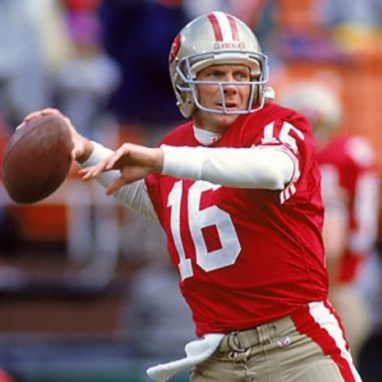
Joe Montana during his san Francisco heydey.

Joe Montana during his San Francisco heydey.

Yet if you think back to the 1981 season, folks were waiting for the cinderella 49ers to fall on their face than appreciate Joe that year. It wasn’t until after The Catch in the NFC Championship Game and we were getting ready for Super Bowl XVI did Montana start to get acclaim.  It was similar to the attention Colin Kaepernick was generating before last year’s Super Bowl. Part curiosity surrounding his play and part flavor of the month.

Remember many writers were reeling at the time having picked Dallas to vanquish him in that ’81 Title game. Then thanks to the surprising Super Bowl opponent being Cincinnati, they were almost forced to talk about him. It was a grudging respect they afforded him.

Back in that time the prototypical quarterback was the tall, stout, rocket arm passer. The Terry Bradshaw, Bert Jones, a young Doug Williams, a Ken Stabler, or a Dan Pastororini. The 6’3 guy who could stand amidst the masses and deliver the football 50 yards down field. The late Bill Wash even contemplated trading Montana for the right to draft John Elway. Even after that first Super Bowl triumph. 

Yet it was his size and mobility that set him apart. On every scouting press release Montana was listed at 6’2 200 lbs. but anyone who saw those skinny legs know better. He looked every bit of 180 lbs. They led to his gliding around the pass pocket and avoiding big hits. Whether he scrambled for yardage or he was biding time for a receiver to clear downfield. It was Montana’s nimble feet that kept him in rhythm with his receivers and had his feet ready to throw at a moments notice. Only later was it revealed that those steps were timed with specific receivers to break open and throw at precise moments. That specificity was where Montana elevated quarterbacking to an artform.

Joe Montana and Bill Walsh are linked forever in football lore.

Joe Montana and Bill Walsh are linked forever in football lore.

Another aspect was the ability to bring his Niner teams from behind. The confidence he could instill in his team was on full display during the 1983 playoffs. First he led a last second drive to hold off the Detroit Lions 24-23 to prove The Catch wasn’t a fluke. Then came the NFC Championship with the defending champion Washington Redskins and NFL MVP Joe Theismann. The Redskins jumped out to a 21-0 lead and going into the 4th quarter were laughing their way to Super Bowl XVIII. Then San Francisco Joe got hot.

At the time, the biggest come from behind win in an NFL postseason game was 20 points. Yet in the 4th quarter alone Montana threw 3 touchdowns to tie the game 21-21. Only an offensive pass interference (pick play) that derailed a late drive and two questionable defensive calls kept Joe from performing the greatest championship come back in league history. RFK Stadium was silent until those questionable calls robbed fans everywhere of another possible great moment. Motivated by the slight they felt in not being able to determine they’re fate in that championship game, propelled Joe and the 49ers through 1984.

The 49ers became the first team to go 15-1 in the regular season in NFL history. In defeating the New York Giants and Chicago Bears during the NFC playoffs, he tamed the next two Super Bowl champions that were led by their defenses. Don’t forget the ’84 Bears record of 72 sacks in an NFL season still stands. He lost the MVP to the power passing game of Dan Marino that year. What did he do to earn the media’s respect ?? He beat Marino in Super Bowl XIX 38-16 and along the way set a passing record of 331 yards and the team set another with 537 yards of total offense. Only when Montana forced the media to vote for him did they award him what he earned. He became a Hall of Famer based on his second Super Bowl MVP.

Over the next two years the 49ers retooled their personnel and Montana adjusted to new receivers. Freddie Solomon was phased out retiring in 1985. Dwight Clark was now facing the Jerry Rices and John Taylors that came aboard during ’85 and ’86. Even Roger Craig moved from fullback to halfback. Joe lent continuity to the offense and raised his level of play and took his teammates with him. Those same blood thirsty defenses he sidestepped started getting closer and 1986 ended in the Jersey Meadowlands with a major concussion suffered against the Giants.

Although the 49ers would go on to win Super Bowl XXIII and XXIV, it was the 1987 season that was Montana’s zenith. Not only were the ’87 Niners the last team in NFL history to finish #1 in both offense and defense, it was Joe’s greatest season. Due to the player’s strike and injuries, Montana only played in 11 games when he threw a career best 31 touchdowns. Projected over a full 16 games he would have thrown for 45 and possibly challenged Marino’s record of 48. Yet he was beaten for NFL MVP by class of ’83 quarterback and media darling John Elway. Now consider the 49ers had the best record with a 13-2 record vs Denver’s 10-4-1 record and show me where Elway was better??

  • Joe Montana 1987- 266 of 398 66.8% for 3,054 yds 31 TDs 13 ints
  • John Elway 1987- 224 of 410 54.6% for 3,198 yds 19 TDs 12 ints

So two years later when the 49ers were up 55-10 in the 4th quarter of Super Bowl XXIV over Elway’s Broncos, how satisfying must that have been?? The ’87 season ended with Montana having the flu and playing in his worst playoff game that saw him benched. The 36-24 upset loss to the Vikings in the NFC Divisional is what propelled the 49ers play in an unprecedented run during the 1988,1989, and 1990 NFL playoffs. They came within :02 of having the chance of a threepeat. However Joe was knocked from that game and was out of football for two years.

As we look back, think about some of Joe Montana’s exploits. To win Super Bowl XVI, XIX & XXIII, he beat reigning MVPs Ken Anderson, Dan Marino and Boomer Esiason. In winning his record 3rd Super Bowl MVP, he beat the QB he was almost traded away for in John Elway. During those 4 Super Bowl wins he went 83 of 122 for 1,142 yds 11 touchdowns and a completion rate of 68%. He never threw an interception in the Super Bowl. He came close when the late Lewis Billups of Cincinnati cut in front….but i digress.
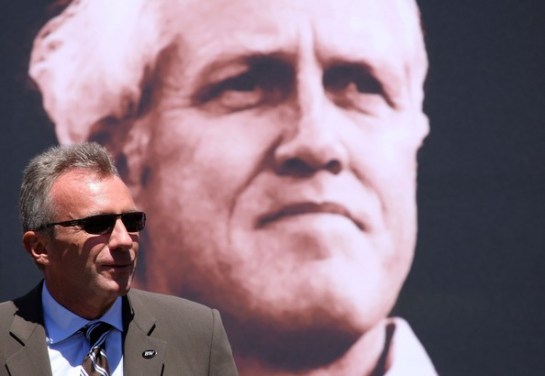
Joe Montana at the public memorial service for former coach Bill Walsh.

Joe Montana at the public memorial service for former coach Bill Walsh.

Now we talk about his coming back from back surgery, concussions, or being out of football for 2 years, then leading the Kansas City Chiefs to their only conference championship appearance in 40 years. Consider the greatest pass rush in NFL history was the ’84 Bears with 72 sacks. He beat them in the NFC Championship 23-0. The second greatest was the ’89 Minnesota Vikings of Chris Doleman and Keith Millard with 71 sacks. Montana carved them up something special in a 41-13 NFC Divisional blowout. In Super Bowl XXIV, he beat the #1 scoring defense with a 55 point scoring barrage where he threw a record 5 touchdowns.

It was the four year run from 1987-1990 that changed the landscape of quarterbacking in the NFL. Everyone was looking for their quarteback to run the “West Coast Offense” as Montana had. Then you had the coaches in Dennis Green, Mike Holmgren, and Mike White go abroad preaching the gospel of the offense.

Former Head Coach Bill Walsh had left the 49ers after 1988 and watched Montana’s mastery of the offense he fathered, reach record heights over the next few seasons. Maybe Walsh knew what he was doing when he let it out he was looking at Elway. Then challenged Joe when he brought in Steve Young from Tampa before the 1987 season. No matter what pundits make of these events, they pushed Montana to become the best quarterback he could be. He finished with a 4-0 record in Super Bowls and 16-7 playoff record along with countless completion records. NFL executives have changed the rules over the last 15 years to make pedestrian quarterbacks look more Montana-like.
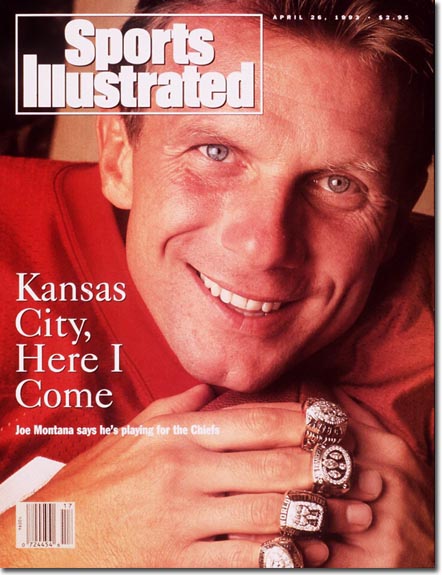
montana going to kcWhat made Montana special was he was the first Hall of Fame caliber quarterback who went on to success with his 2nd team. The magic spoken of in the vid followed him to Arrowhead while the 49ers lost back to back NFC Championship Games to Dallas.

Both years in Kansas City he carried the Chiefs to the postseason. His 1st season (’93) began with a 27-24 wildcard win over the Pittsburgh Steelers. Montana threw the game tying touchdown on 4th down to Tim Barnett with just seconds left. The 1st playoff win for the franchise since Super Bowl IV.

This would have been enough for most Chief fans but the encore was one for the ages. Kansas City earned an all expenses paid trip to Houston for the AFC Divisional playoff. The Oilers finished the ’93 season with an 11 game winning streak and had hired Buddy Ryan who recreated the ’85 Bears with a talented roster. During the streak Houston had knocked out 5 quarterbacks and now faced 37 year old Joe.

In one of the NFL’s defining games of the decade, Montana was battered in the 1st half yet bounced back with 3 touchdown passes in the 2nd half for a 28-20 win. You could see Montana breathing life into his offense as the game wore on. It was a triumph of perseverance as the Chiefs came within a game of the Super Bowl for the first time in 24 years.

An incredible run… had he won the AFC Championship in Buffalo, he could have faced the 49ers in a dream Super Bowl matchup. Alas it was not to be.

The next time someone wants to talk greatest ever quarterbacks and doesn’t start with this man, they clearly don’t know what they’re talking about. Don’t tell me what a quarterback was voted, show me what he earned on the field of battle. How did he fare against the best competition during his time?? Competition between his offense and opposing defenses and against opposing quarterbacks. Would his contemporaries pick him as the quarterback on their side in a big game they had to win?? You come to those conclusions and you have a best ever quarterback. Not the quarterback that sports writers want to be.  Big difference.
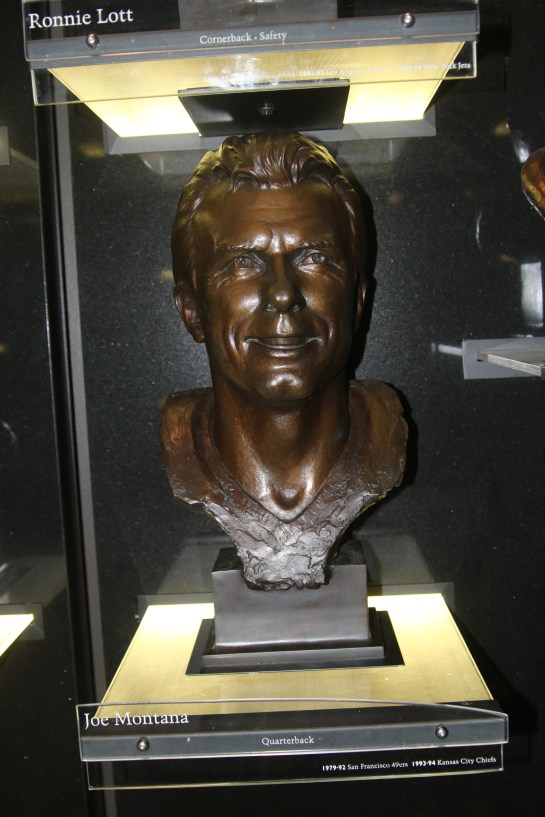
joe-montana-bust

Epilogue: So they’re arguing on the radio if Tom Brady wins this Super Bowl, will he be the best over Joe Montana?? The answer is no… I saw Montana play his best against history’s best defenses. Montana played when QBs got knocked out, Brady can’t get hit and ducks for cover when he faced the Giants pass rush twice in the Super Bowl.

Now Joe??

He beat the #1 defense in the ’84 Chicago Bears, who set the record for sacks (72) in the NFC Championship 23-0. In 1989 Joe beats the #1 defense in Minnesota Vikings, who were #2 in history with 71 sacks, carves them up 41-13 in the NFC playoffs. Then beats the #3 defense who gave up the fewest points in the league in Denver and drops 55 in a 55-10 Super Bowl win.

In the four Super Bowls he never threw an interception in, once (1989) he was the NFL MVP. Did you know to win his other 3 he had to beat the 81 MVP Ken Anderson to win Super Bowl XVI, the ’84 MVP in Dan Marino in Super Bowl XIX, then the ’88 MVP in Boomer Esiason in Super Bowl XXIII?? So Joe was great against great teams and great quarterbacks… bring your argument son!! I got Super Joe!!

Thanks for reading and please share the article.