Well the first domino to fall in the replacement of a starting quarterback happened in New York this weekend. Jaxson Dart was the exlixir the Giants needed for their 21-18 upset of the undefeated Chargers. He kept a few plays alive with his legs but lets face it the young players were excited and juiced to play with him. His energy along with fellow rookie Cam Scattebo & Malik Nabers had the whole team playing with a swagger missing since the preseason.
Dart was 13 of 20 for 111 yards 1TD while rushing 10 times for 54 yards and New York’s first touchdown. You saw his teammates around him celebrating and sharing in his enthusiasm and it propelled them this Sunday. They played with a confidence and spirit the rest of the game and played like they knew they were going to win.
There will be growing pains as Offensive Coordinator Mike Kafka scaled back playcalling for #6. Its one of the reasons he did take 5 sacks in the game. However you could see clearly he was instructed to go short to his checkdowns once Nabers left injured. Yet this is who “checkdowns” are for… A young quarterback unsure of where to go with the football not a 14 year signal caller gun-shy to take hits who should have the moxie to audible to a better play.
Hopefully this new temperament won’t be quelled with the injury to Malik Nabers but is a clear reminder that players can be inspired to do great things based off emotion and camaraderie. Its a game that goes beyond “x’s & o’s”. Will players rally around their quarterback?? Does the team play together and want their teammates to ball out? These questions were clearly on display in Gotham & this season now has some optimism for Coach Daboll.
By the way… how many Sundays are we going to keep watching the car wreck that is Cleveland’s offense under Joe Flacco?? Come on… 16, 17, 13, & 10 are the point totals through the 1st 4 games of the season. Averaging 14.75 points per game wouldn’t win you football games if we were back in the 1960’s unless you’re the NFL Champion 1963 Chicago Bears. Yet that team became legendary because of their #1 ranked defense.
Get this Cleveland’s defense is #1 against the run, 4th against the pass and #1 overall having allowed just 890 yards, well they’re 1-3 because Flacco has thrown for just 815 yards. Thats 18th in the league! Joe is 93 of 160 for 815 yards 2TDs and a whopping 6 interceptions. His 58.3% completion percentage ranks him at 31 while the Browns lead the league with 47 punts and have only scored 6TDs. Look Flacco was MVP of the 47th Super Bowl and we’re going to play the 60th edition in February.
He is a shot fighter and Father Time caught up to him 3 years ago and time to turn the reigns to Sheduer Sanders and see what he can do. Dillon Gabriel?? I watched him in the preseason and he is less athletic than “Tiny”Kyler Murray of the Cardinals & Bryce Young with the Carolina Panthers. Both of these guys won Heismans and have played poor enough their jobs are in jeopardy with the biggest reason…*drum roll* …they can’t see over the line with their short statures. Now at 5’11” and they’re being generous with that measurement, doesn’t engender confidence but they will go to him first.
Coach Kevin Stefanski you have an obligation to the other 52 players on the roster sacrificing for the team and you have a small window before you begin to lose that locker room. Especially with a defense that is playing up to a historic level. The team needs to see changes from you which show you’re trying to win now to keep them engaged. Not in your wildest dreams did you figure to have the same record as the loaded Baltimore Ravens but here you’re both 1-3 and your great defense is portable.
Knuckle up and called a scaled back offense like they’re doing in New York and give the ball to super rookie back Quinshon Judkins and play to your defense. You have a better defense and the Giants are the blueprint for what will work in Cleveland. Time is ticking boss…
In the annals of college football there was a time where USC had earned the moniker “Tailback U”. Then in the late 80s Oklahoma St churned out back to back Pro Football Hall of Famers Thurman Thomas and Barry Sanders. Yet go back another decade and you’ll have a hard time topping the talent Auburn sent to the NFL over a 10 year period.
From 1979 -1989 William Andrews, Joe Cribbs, James Brooks, Lionel “Litte Train” James, and Bo Jackson took the NFL by storm. While each touched a level of greatness during this era none would make it to the hallowed halls of Canton. Although injuries derailed 2 of these promising careers right at their zenith.
Of this list most think of Bo Jackson as the leading ground gainer who lost his prime to an injury. Not true the 1st of our super backs who had their career cut short was the punishing William Andrews. He’s the man that began this era of excellence unexpectedly as a 3rd round pick by the Atlanta Falcons in the ’79 draft.
To offer some context consider Andrews was the powerful fullback blocking for the shifty and elusive Joe Cribbs and James Brooks. In ’78 Cribbs led the Tigers with 1,278 yards while Brooks spelled him gaining 514 more. Andrews was the 3rd choice with the fewest carries at 72.
He exploded onto the NFL scene rushing for 1,023 yards in his rookie campaign in ’79. Then followed it up with back to back 1,300 yards seasons in ’80 & ’81 yet came to be known as the running back who once knocked out Hall of Fame hitter Ronnie Lott. We don’t have that hit but we do have one encounter on a Monday Night fans everywhere remember during that era…
By 1983 Andrews had supplanted Hall of Fame Member Earl Campbell as the NFL’s premier power back. His ’83 rushing total of 1,567 yards stood as a team record until Jamal Anderson broke it in 1998. He was 2nd in the league in rushing to another Hall of Famer Eric Dickerson. It was the 2nd time Andrews gained over 2,000 yards from scrimmage in 3 years. Yet he was derailed with a knee injury that shortened a potential trip to Canton.
Take a look at how lethal he was both running and receiving from 79-83.
Andrews was either 1st or 2nd team All Pro 4 straight years and was in the Pro Bowl as well from 80-83. Guess who joined him in Hawaii for 3 of those Pro Bowls in ’80, ’81 and ’83?? Former “War Eagle” backfield mate Joe Cribbs. Do you realize in 1980 these former backfield mates wound up the #4 (Andrews 1,308 yds) and #6 (Cribbs 1,185 yds) rushers in the NFL??
In ’80 Cribbs blossomed into the AFC’s Rookie of the Year as he was the sparkplug in the Bills 1st division championship dating back to 1966. Cribbs juked his way to 1,185 yards rushing 11 TDs while gaining another 415 yards on 52 receptions. Quite simply he was Thurman Thomas before Thurman Thomas as he was a threat out of the backfield. He tortured linebackers trying to cover him.
Check out the move on the 1st vid at the 2:32 mark when he rushes for a 16 yard TD against New England. He makes 4 unblocked Patriots miss in a phone booth… just sick…
While being a Bills fan up close, it’s hard to choose between his rookie year or his 2nd year as his best. Both years the Bills were in the playoffs and in ’81 he rushed for 1,097 yards and only 3 TDs but made up for it with 7 TD receptions and another 603 yards on 40 receptions. He flashed on big play after big play as a the Bills rose to prominence challenging the NFL’s elite.
Amazingly Cribbs and Andrews were rarely used as receivers at Auburn and they’re game fully maturing on the NFL level is what elevated both. Auburn in ’78 completed just 5 passes a game in a run heavy offense.
Ironically this was the role James Brooks also found himself as the 3rd down back in his rookie season with “Air Coryell” in ’81. Chuck Muncie was the feature back and he scored an NFL record 19TDs rushing. Brooks was the change of pace scatback who recorded 46 receptions for 329 yards and 3 TDs and had to fit in where he could. He only ran the ball 109 times for 525 yards but had a whopping 4.8 yard average.
He was the AFC’s leading punt returner in 1981 and led the NFL in kickoff return yardage in 1982… so of course you’re asking “How is that dominant at the pro level?”
With a potential contract dispute looming, he was traded to the Cincinnati Bengals in 1984. His 2nd season in the Queen City saw him improve with 929 yards rushing and 7 TDs. Out of the backfield he caught 55 aerials for 576 yards and crossed the goal line 5 more times.
Over the next 5 seasons Brooks would make the Pro Bowl as a runner 4 times while being selcted All Pro in the same seasons. He had 3 1,000 yard season and in 1988 finished with 931 yards. Had he gained another 69 he and Ickey Woods (1,066) would have been just the 4th set of 1,000 yard rushers in the same backfield in a season. Brooks and Woods powered the #1 offense to Super Bowl XXIII that year.
His 1989 season of 1,239 yards rushing was the most in Bengals history up to that point. Corey Dillon broke it in 2000. Try this vignette:
So if you’re keeping score, between 1980 and 1990, these 3 running backs accounted for 11 Pro Bowls, 11 All Pro selections, a Super Bowl appearance (Brooks XXIII) and 10 – 1,000 yard campaigns. Each saw success as the Bills and Falcons twice made it to the divisional round of the playoffs and 1 trip to the AFC Championship Game with Brooks in ’81.
While these men were killing it on the NFL level, Bo Jackson and Lionel “train” James were the new set of Auburn backs to make names for themselves. James was thought of to be too small for the NFL standing at 5’6 and 171 lbs soaking wet. Yet he would have to make a name on special teams and spot duty in the backfield.
As a rookie in ’84 James led the NFL in kick returns (49) and kick return yards (949) to prove he belonged. Of course you’re asking “How is that dominating in the NFL?” Well…then came 1985…
In a season where Roger Craig became the first 1,000/1,000 yard performer both rushing and receiving & led the NFL with 92 receptions out of the backfield. Guess who was 3rd with 86 receptions 1,027 yards and 6 TDs? “Little Train” James. He actually outgained the more celebrated Craig in yardage 1,027 – 1,016. This was an NFL record for receiving yards out of the backfield.
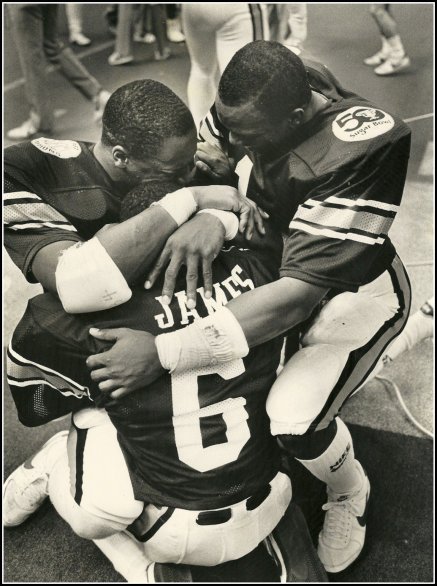
However by the time you add James 516 yds on 105 carries & 949 yards on 43 kickoffs, he set an NFL All Purpose Yardage record with 2,535 yards. This didn’t count another 205 yards on punt returns!
His reception yardage record didn’t fall until 1999 when Marshall Faulk broke it with 1,048. His all purpose yardage mark stood until 2000 when Derrick Mason of the Titans broke it. Do you realize James’ ’85 season still ranks 4th in history?? He’s been gone from the NFL 31 years. His last season with the Chargers was 1988.
His best game ever?? His 345 yard performance against the LA Raiders where he won it in overtime:
By the way… that was the 2nd most all purpose yardage in a game in NFL/AFL history. In a brief 5 year career… James could fly. His 1985 was so dominant that it changed the Pro Bowl voting as the following year special team kick returner was added to the vote. In 1986 Bobby Joe Edmonds of Seattle became the 1st voted in but we know who’s play created that spot. Lionel James!
Bo powering past perennial all pro Cornelius Bennett of Buffalo.
Then we finish with the Heisman winning Bo Jackson. He was so great that 30 years later we’re still watching Bo Knows in a 30 for 30 documentary of what could have been. He shocked the world when he didn’t play for Tampa who drafted him in ’85 and we know of his baseball and football exploits. When he came back to “take on another hobby” in ’87 with the Raiders, it didnt sit well with a young Chancellor. It seemed arrogant and then we saw what happened on the Monday Night in Seattle:
Yikes! Bo can do whatever the hell he wants. To watch him just dust Hall of Famer Kenny Easley who had the angle on him… I was done. Apparently so was the rest of America. For the next 4 years every football season began with “When is Bo coming over from baseball?” He had other great games but not as electric as that Monday Night.
In 1990 Bo Jackson became the 1st backup to ever make the Pro Bowl as he ran for just 698 yards and 5 TDs. League wide respect poured out over what he could do if he turned to football full time. He was an adonis with sprinter speed that made the best athletes in the world view his exploits in awe.
But alas … we never saw Bo get to full potential as he went out with a fractured and dislocated hip in a 1990 AFC divisional playoff against Cincinnati. He never played again.
“Little Train” James had knee injries slow a once promising career that lasted just 5 seasons.
None of these men will make the Pro Football Hall of Fame but each left an indelible mark on the NFL of the 1980s. They arrived on the scene and turned lesser than franchises into teams that contended for championships. What was remarkable was how complete these backs were catching the ball out of the backfield when they rarely exhibited this in college.
This was one of the great runs from one school in NFL history. Even USC’s best was really OJ Simpson and Marcus Allen. Two Hall of Famers that came out 12 years apart in ’68 and ’81 respectively. Not a series of game changing backs.
To think that 3 players out of the same ’78 Auburn Tiger backfield, Andrews, Brooks, & Cribbs would go on to produce 27,771 yards from scimmage and 162 TDs in the NFL is nothing short of brilliant. Especially with Andrews and Cribbs having brief careers.
An era of dominance to be remembered for all time.
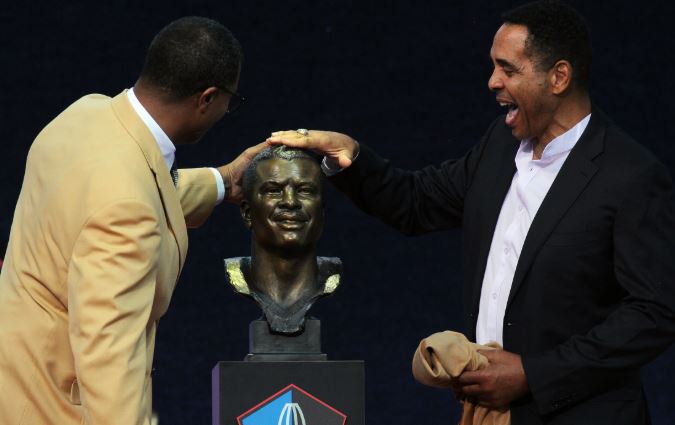
Whenever the 1980’s Denver Broncos are brought up the first player that comes to mind is John Elway. Rightfully so as he led one of the NFL’s most successful teams during the decade. However his teams did have some great talent on them. Did you know LB/DE Karl Mecklenburg & FS Dennis Smith have been Pro Football Hall of Fame semifinalists in the last couple years?? Atwater was immortalized in Bronze in 2020.
If we rewind the clock to 1989, Atwater was a wide-eyed rookie learning the ropes under Smith’s tutelage. Big hits rang up all year as receivers ducked for cover against these big safeties. Smith was a Pro Bowl player in 1989, the 3rd of 6 trips to Hawai’i after an 82 tackle 2 interception season.
Atwater was the team’s 1st round draft pick out of Arkansas and passed out big hits like Christmas presents. Much like Jack Tatum you heard Atwater. Whether it was the whole stadium giving a collective “Ooooh!” or thumping of the pads.
With 129 total tackles & 3 interceptions Atwater didn’t make the Pro Bowl but came in 2nd to KC’s Derrick Thomas for NFL Defensive Rookie of the year. Both are in the Pro Football Hall of Fame.
Think back to the ’87 team where Doug Williams consistently beat then FS Tony Lilly for several TDs in the 2nd quarter. They couldn’t stop the bleeding or deliver a big hit to send Redskin receivers a message. Not so 2 years later. In ’89 he rung more bells than a Christmas caroler. The intimidation factor Atwater & Smith brought led the Broncos to a #3 defensive ranking overall or #2 in the AFC, and yielding the fewest points in the league with 226.
Atwater career retrospective
Meanwhile Mecklenburg was a Pro Bowl player with 143 tackles, 7 1/2 sacks, 2 forced fumbles, and 4 fumble recoveries. The 1989 season was the 4th of his 6 Pro Bowl trips and where there are a ton of vids showcasing Smith and Atwater, Mecklenburg is largely forgotten in circles outside of Denver. This vignette from ’86 showcases his talent best
In each of the Denver Broncos Super Bowl seasons they fielded a top 10 defense. Unsung players like Simon Fletcher and Michael Brooks made the back 7 one of the best during this era.
Another factor in 1989 was the Broncos finally landing a top running back in rookie RB Bobby Humphrey out of Alabama. He was Denver’s first true breakaway threat since Floyd Little. He rushed for 1,151 yards and 7 TDs after starting the season on the bench. Denver climbed to #6 in rushing where they had ranked 20th in the 1st Elway era Super Bowl team in 1986.
However history outside Taylor Blitz doesn’t bring up the excellent play from defenders who played with John Elway. When this team is discussed they make it seem as though there was John Elway and nothing else. Ask those receivers, QBs, and running backs on other teams how lethal this defense was. They’re not as heralded as the original “Orange Crush” but shouldn’t be in the dustbin of history either for coming up short in XXIV. It would be great to see Dennis Smith or Mecklenburg from this era make it to Canton since they weren’t on the Super Bowl winning Broncos a decade later.
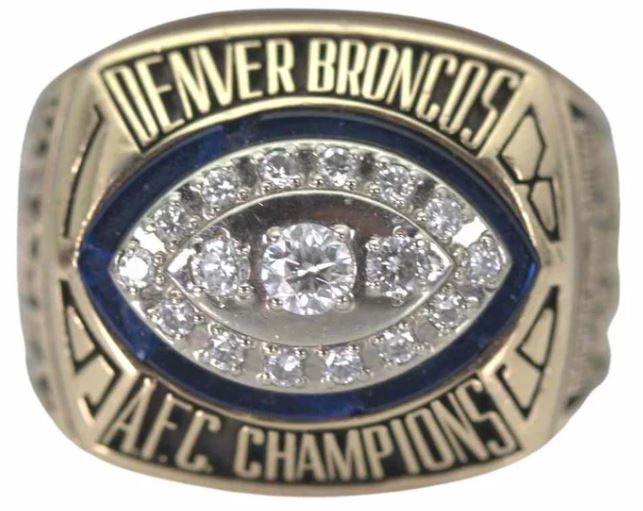
Yet alas this team ran into one of the all time great teams in Super Bowl history. This is the championship ring won by Denver after beating Cleveland for their 3rd AFC championship in 4 years.
Please lend your thoughts as well by writing in to the Pro Football Hall of Fame to the address below. Please be respectful and positively lend your voice:
Write & nominate Karl Mecklenburg / Dennis Smith
Send letters to:
Pro Football Hall of Fame
Attention Hall of Fame Selection Committee
2121 George Halas Dr NW, Canton,
OH 44708

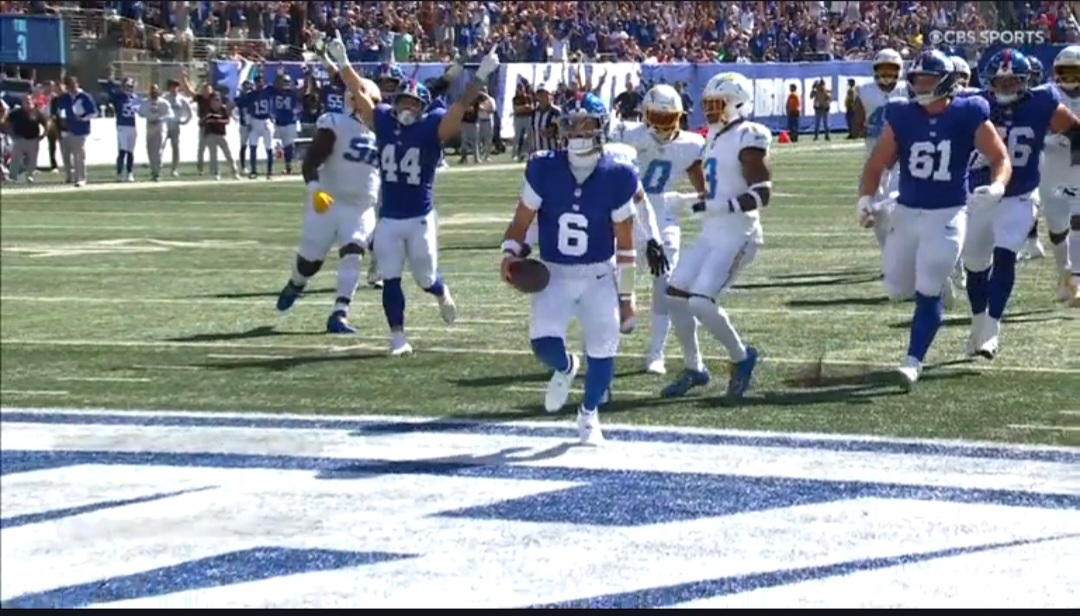 Well the first domino to fall in the replacement of a starting quarterback happened in New York this weekend. Jaxson Dart was the exlixir the Giants needed for their 21-18 upset of the undefeated Chargers. He kept a few plays alive with his legs but lets face it the young players were excited and juiced to play with him. His energy along with fellow rookie Cam Scattebo & Malik Nabers had the whole team playing with a swagger missing since the preseason.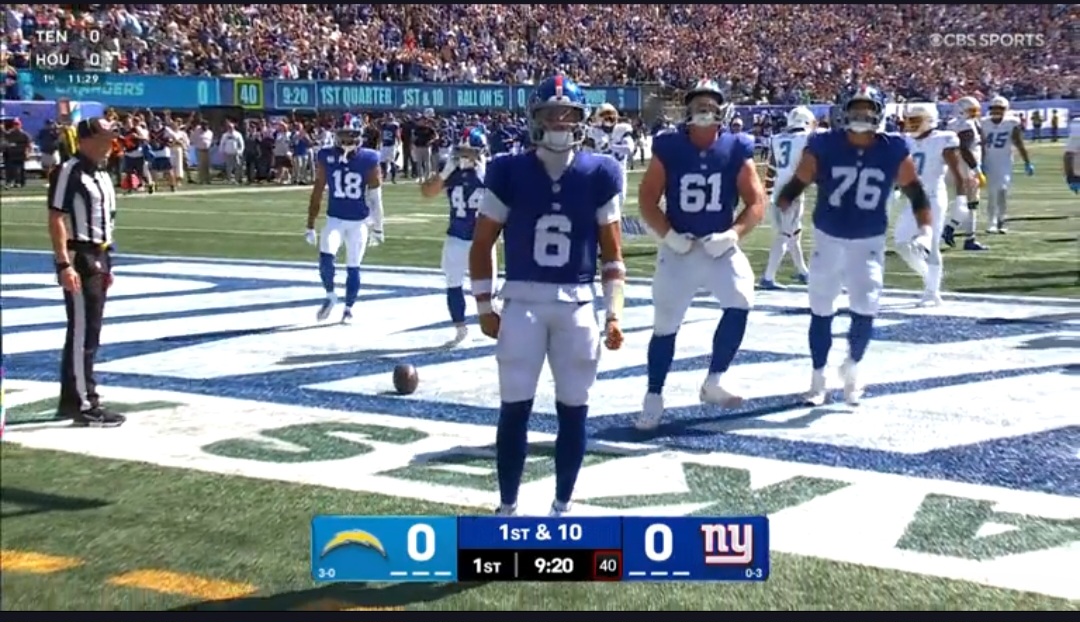
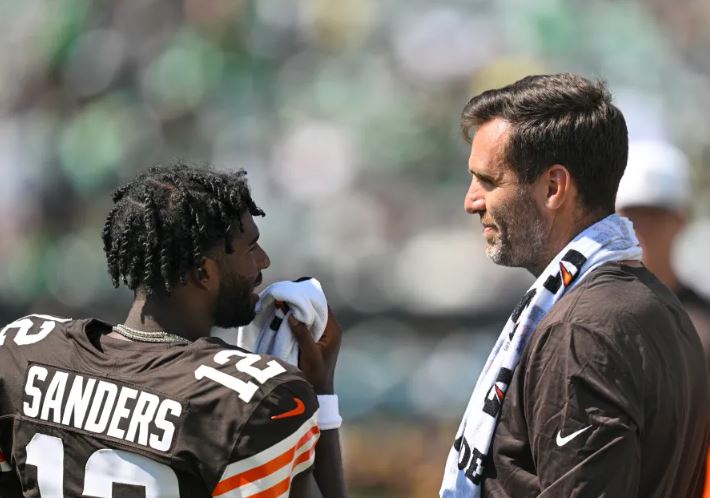 He is a shot fighter and Father Time caught up to him 3 years ago and time to turn the reigns to Sheduer Sanders and see what he can do. Dillon Gabriel?? I watched him in the preseason and he is less athletic than “Tiny”Kyler Murray of the Cardinals & Bryce Young with the Carolina Panthers. Both of these guys won Heismans and have played poor enough their jobs are in jeopardy with the biggest reason…*drum roll* …they can’t see over the line with their short statures. Now at 5’11” and they’re being generous with that measurement, doesn’t engender confidence but they will go to him first.
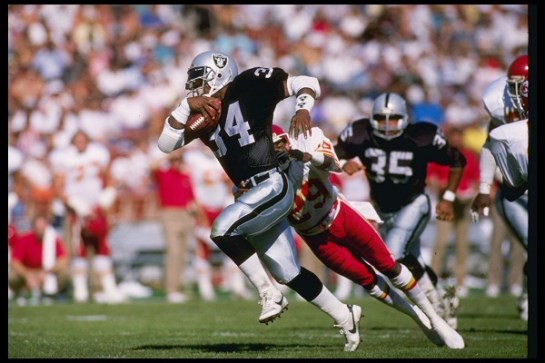 From 1979 -1989 William Andrews, Joe Cribbs, James Brooks, Lionel “Litte Train” James, and Bo Jackson took the NFL by storm. While each touched a level of greatness during this era none would make it to the hallowed halls of Canton. Although injuries derailed 2 of these promising careers right at their zenith.
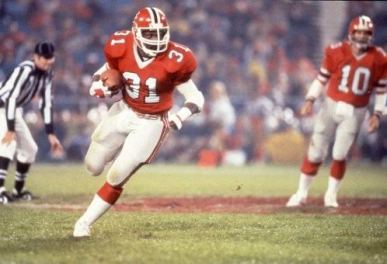 Of this list most think of Bo Jackson as the leading ground gainer who lost his prime to an injury. Not true the 1st of our super backs who had their career cut short was the punishing William Andrews. He’s the man that began this era of excellence unexpectedly as a 3rd round pick by the Atlanta Falcons in the ’79 draft.
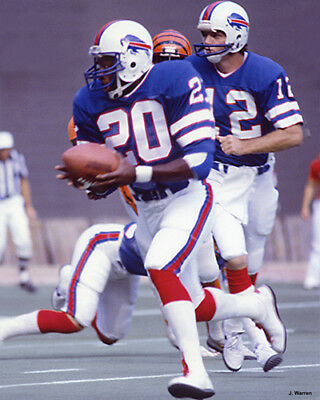 In ’80 Cribbs blossomed into the AFC’s Rookie of the Year as he was the sparkplug in the Bills 1st division championship dating back to 1966. Cribbs juked his way to 1,185 yards rushing 11 TDs while gaining another 415 yards on 52 receptions. Quite simply he was Thurman Thomas before Thurman Thomas as he was a threat out of the backfield. He tortured linebackers trying to cover him.
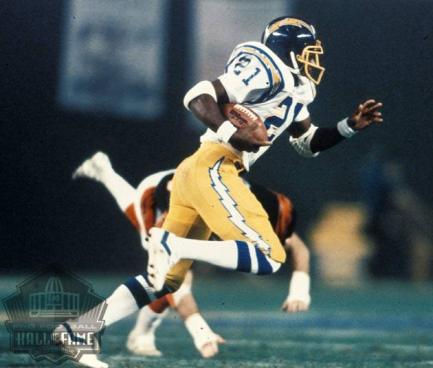 Ironically this was the role James Brooks also found himself as the 3rd down back in his rookie season with “Air Coryell” in ’81. Chuck Muncie was the feature back and he scored an NFL record 19TDs rushing. Brooks was the change of pace scatback who recorded 46 receptions for 329 yards and 3 TDs and had to fit in where he could. He only ran the ball 109 times for 525 yards but had a whopping 4.8 yard average.
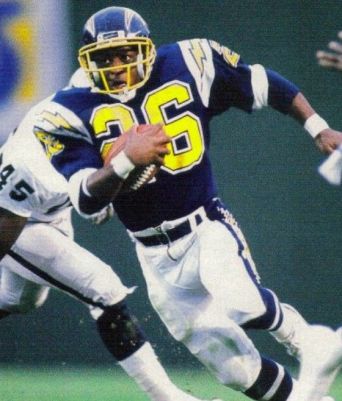 However by the time you add James 516 yds on 105 carries & 949 yards on 43 kickoffs, he set an NFL All Purpose Yardage record with 2,535 yards. This didn’t count another 205 yards on punt returns!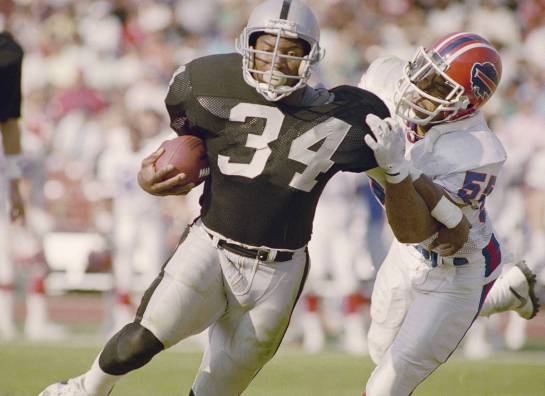
 This was one of the great runs from one school in NFL history. Even USC’s best was really OJ Simpson and Marcus Allen. Two Hall of Famers that came out 12 years apart in ’68 and ’81 respectively. Not a series of game changing backs.
 Another factor in 1989 was the Broncos finally landing a top running back in rookie RB Bobby Humphrey out of Alabama. He was Denver’s first true breakaway threat since Floyd Little. He rushed for 1,151 yards and 7 TDs after starting the season on the bench. Denver climbed to #6 in rushing where they had ranked 20th in the 1st Elway era Super Bowl team in 1986.
 Yet alas this team ran into one of the all time great teams in Super Bowl history. This is the championship ring won by Denver after beating Cleveland for their 3rd AFC championship in 4 years.


You must be logged in to post a comment.