Missing Rings: 1993 Houston Oilers

Everyone can tell you when an era ends but when was its zenith?? The truly great teams burn bright for some time while winning championships. Others burn almost as bright for a long time but memory fades on those that don’t bring home Super Bowl rings. When it comes to the case of the Houston Oilers between 1987-1993, the zenith came at the end and the fall was so dramatic it killed the franchise.
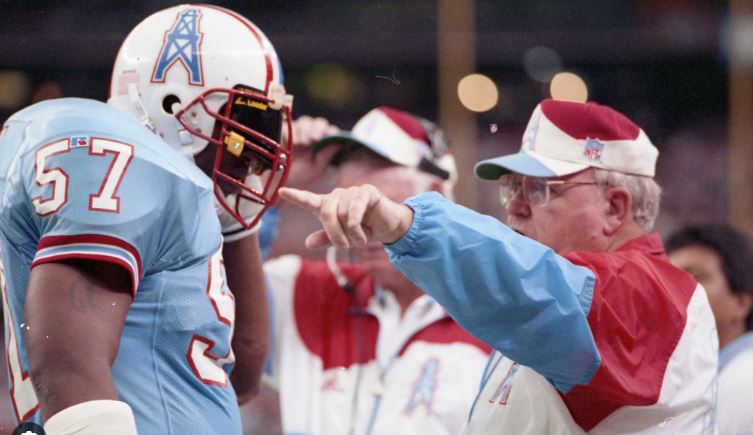
Yet as we look back at the Houston Oilers of 1993, you have to stretch back a little further and remember what happened during the playoffs of 1991 and 1992.

The Oilers had become one of the most talented teams in football. They were the vanguard of the teams that ran the Run & Shoot offense. Their trigger man, Warren Moon had made it into the upper echelon of NFL quarterbacks. He had orchestrated the league’s #1 offense in 1990 and 1992. in 1991 they dropped to second in the league behind the K Gun of the Buffalo Bills.

Warren Moon was building his Hall of Fame resume with Pro Bowl performances 8 straight years.

Moon was starting at a time when black quarterbacks were just getting their start in the NFL on a league wide basis. Yet despite those pressures he approached Dan Marino’s passing records with 4,689 yards in 1990, and 4,690 yards in 1991. However his team coming up short in the playoffs was starting to become an issue. Similar to what was once a concern of Peyton Manning and continues to dog Tony Romo, Moon had only won 1 playoff game between 1987-1990. In reality, the Oilers were expected to ascend to be the best team in the AFC as they stockpiled talent around him. Make no mistake Moon was playing to erase the stigma that a black quarterback could lead his team to a championship. It hadn’t been done since Doug Williams in 1987.

He had diminutive and quick receivers in Ernest Givins, the late Drew Hill, Curtis Duncan, and a tall wideout in Haywood Jeffires. In 1991, 4 yards kept Moon from having 3 – 1,000 yard receivers as the Oilers opened 7-1 and looked like the AFC’s best rival to knock off the defending champion Bills.  However they ran into John Elway and the Denver Broncos in the AFC Divisional Playoff. On a mission they ran out to a 21-6 lead in Mile High Stadium. However Elway rallied his team back to a last second 26-24 win that sent the Oilers home after a total collapse. A team with 7 Pro Bowlers and 3 All Pros was sent home by a hodgepodge rebuilding Denver team that hadn’t made the playoffs in 1990 and wouldn’t in 1992.

Andre Reed scores the go ahead touchdown in the greatest comeback in NFL history.

Andre Reed scores the go ahead touchdown in the greatest comeback in NFL history.

The team was still in it’s prime as they approached 1992. Age was becoming a factor as the 36 year old Moon missed 6 games during the middle of the year. Houston entered the playoffs with a 10-6 record courtesy of a 27-3 win over Buffalo in a Sunday night finale. It set up a rubber match at Rich Stadium in a wild card game against the two time defending AFC Champion.

Not only were the Bills without future Hall of Fame quarterback Jim Kelly, they would be without Pro Bowlers Cornelius Bennett and Thurman Thomas as well. Moon had a first half for the ages as he went 18 of 22 for over 220 yards and 4 touchdowns in the first half. At an 81% completion rate, broadcasters Charlie Jones and Todd Christensen waxed philosophical about the possibility of breaking the record of 88% Phil Simms had accomplished in Super Bowl XXI. Houston was up 28-7 at the half and then SS Bubba McDowell returned an interception to give the Oilers a 35-3 lead in the 3rd quarter.  They had outscored the Bills 62-6 in 6 quarters in less than a week. They were hitting on all 8 cylinders.

Then came the greatest collapse in the history of the NFL. A 32 point lead was washed away as Buffalo just put on a performance for the ages in a 41-38 win. Once the Bills took the momentum from the shell-shocked Oilers the game was almost inevitable. Moon’s crispness in the first half, where he led the Oilers to touchdowns on all four of their drives, went 3 and out on the first four of the second half. Also completely befuddled was defensive coordinator Jim Eddy, who never changed the nickle package or calls for the entire second half of that game. Bills receivers and backup QB Frank Reich knew exactly which plays would work and kept waiting for adjustments that didn’t come.

If the Oilers would have won a Super Bowl between 1987-1993, would Ray Childress be in the Pro Football Hall of Fame??

If the Oilers would have won a Super Bowl between 1987-1993, would Ray Childress be in the Pro Football Hall of Fame??

Psychologically, the jury was in on the Houston Oilers of that era for many pundits. They just couldn’t win the big game despite the talent they had on the field. Pro Bowl defenders Ray Childress, Al Smith were possibly tarnishing Hall of Fame careers at this point. Former Pro Bowl talents such as CB Cris Dishman, DE Willam Fuller, and DE Sean Jones were all on the field in Buffalo and none could make a play to turn that game around. Just as they hadn’t in Denver the year before.

Owner Bud Adams had seen enough and decided the defense was the reason for the collapse and hired Buddy Ryan. That’s right the same Defensive Coordinator of the 1985 Bears and former Head Coach of the Philadelphia Eagles. Adams did this and forced him onto then Head Coach Jack Pardee. Ryan had total autonomy just as he had in Chicago. In fact he was able to hire his own assistants and player requests. In came former Ryan disciple Wilber Marshall, a fiery linebacker that was one of the unsung performers on that ’85 Bears team.

Ryan also forced the team to draft a MLB in Miami Hurricane Michael Barrow and draft a tight end in John Heny Mills. With a defense that had 6 former pro bowlers on it and a soon to be Pro Bowler Lamar Lathon at that point, this was going to be a sight to behold. Ryan resurrected the 46 defense deep in the heart of Texas yet how much of the leadership of that team was stripped of Pardee?? 1993 looked like the last year for the Oilers to make it to the Super Bowl or the team would be broken up. All or nothing.

When Buddy Ryan brought in former All Pro Wilber Marshall, the defense took on a totally different tone.

When Buddy Ryan brought in former All Pro Wilber Marshall, the defense took on a totally different tone.

The preseason began with Ryan firing off comments about Offensive Coordinator Kevin Gilbride and the Run & Shoot offense. The “Chuck & Duck” Ryan scoffed at the high penchant for passing and not running the football and prone to turnovers.

The team however sputtered out of the gate as the defense had some growing pains and the offense started slow.

In fact, a 1-4 start to the 1993 season looked similar to the Houston Texans of this year. A lot of talent, although a little old and they should be able to turn it around. That fourth loss came in a return trip to Buffalo. With Warren Moon’s benching, it looked to all the world this era of Oilers football was about to come to a crashing end.

However the defense not only grew into it’s shoes, it became the scourge of the league. Gone was the passive 4 man rushes of the Jim Eddy defense and in was the confusing blitz packages Ryan had made famous in Chicago. His Philadelphia Eagles didn’t use as many packages as he did in Houston. Over the next eight games they had 35 sacks, 30 takeaways and had knocked 5 quarterbacks from the game. A defense full of star quality talent left opponents without a focal point to game plan against. The league hadn’t seen heavy focus on the 46 defense in over 5 years. They also hadn’t played against this personnel in these new positions. Teams were thoroughly over matched as the last 11 opponents never scored beyond 20 points.

As the defense helped turn the season around Warren Moon came off the bench when his backup Cody Carlson was injured in week 6. His play was more efficient than it was spectacular as defenses had caught up to the Run & Shoot by ’93. However the Oilers were running the ball more and inserted a bigger back to try and wear down defenses. Former special teamer Gary Brown took over due to injuries and rushed for 1,002 yards on 195 carries. He was the first player in league history to rush for 1,000 yards while only starting half the season. Gone was the scat back presence of Lorenzo White and Allen Pinkett and a bruiser was now running the football in the Run & Shoot. Now teams couldn’t go with pass specialists at linebacker with a hammer in the backfield.

However all wasn’t rosey.

The team operated in the awkward vacuum of two camps within a football squad. Buddy Ryan had complete autonomy with his players and coaches. The season long tension was always there as Ryan said what he wanted to at press conferences, even if it wasn’t supportive of the offensive side of the ball or the team as a whole. Head Coach Jack Pardee and Offensive Coordinator Kevin Gilbride acquiesced some of their game planning to accomodate Ryan. Think not?? Brown in half of the ’93 season carried the ball nearly 200 times where in 1991, Allen Pinkett started all 16 games and only ran it 171 times.

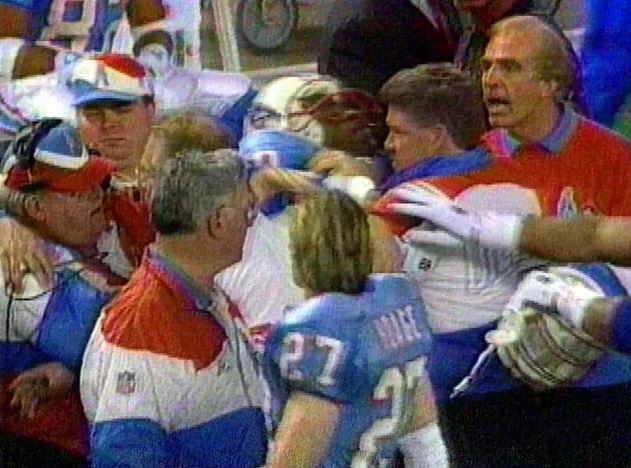
What bothered Ryan the most was the offense continuing to pass the football at the end of halves when they should have run the clock out and gone into the locker room. This resulted in two of his starting defensive backs being lost for the season on meaningless plays right before halftime. So when starting FS Marcus Robertson was injured with just seconds left before the half in the last game, Ryan exploded and threw a punch at Gilbride. Now heading into the NFL playoffs he would be missing 3 of his 4 starters in the secondary.
The Oilers of 1993 were a lab experiment about how a team with such disjointed chemistry could actually band together to be the tough minded team no one thought of them as. They survived “Baby-gate” when OT David Williams missed a game early in the season to witness the birth of a child. Media scrutiny was less intense and more forgiving when DT Jeff Alm committed suicide before their week 14 match-up with the Pittsburgh Steelers. Dedicating the game ball to his parents and their fallen teammates memory, they went on the road and whipped the Steelers 26-17 to capture the AFC Central.  Ten months after a collapse branded this team as one of the psychologically weak teams in modern history, they had forged an identity tougher than any could remember.

Houston concluded the regular season 12-4, finishing on an 11 game winning streak. Which had only been equaled by the ’72 Dolphins, the ’69 Minnesota Vikings, and the 1934 Chicago Bears in all of NFL history. No question did they look across state and see a possible match-up with the defending champion Cowboys. When they went out and hit Steve Young so often in a 10-7 win out in Candlestick on Christmas Day, league wide fear of this team only grew. This was not going to be the same team that wilted under playoff pressure come playoff time in 1993.
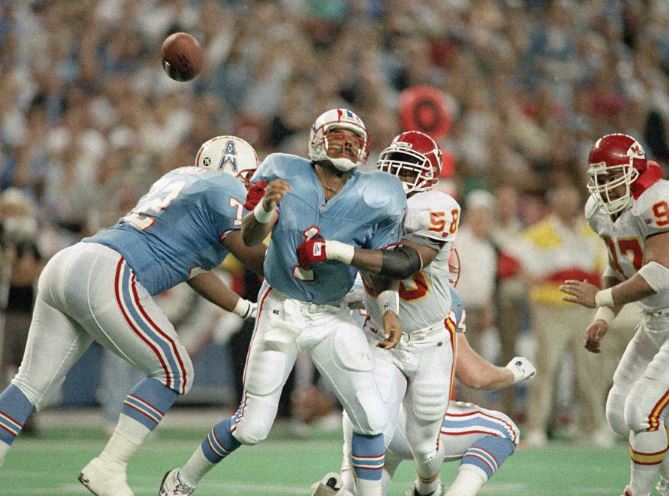
Everyone feared this group except one team, the Kansas City Chiefs. The Oilers had run over the Chiefs 30-0 early in the season and had talked a big game while doing it. As the AFC Divisional slate put these two together again, talk of knocking out Chief quarterback Joe Montana drew the ire of Chief defenders. The late Derrick Thomas and Neil Smith talked about their knocking Moon out if Montana left the game simiarly. What hadn’t been thought of was beating the bully at their own game.

The Chiefs came into the game as a team that didn’t blitz a lot. They stayed with bookend pass rush All Pros Smith and Thomas and played coverage behind them…or so the Oilers thought. The Chiefs threw blitzes at Warren Moon tying an NFL playoff record with 9 sacks and knocking the offense out of continuity from the very start. They held the Oilers to only 277 yards of offense. Their season low?? 246 yards ironically against the Chiefs in their 30-0 loss to the Oilers at the beginning of the season.

It was Joe Montana and moving on half rollouts away from the blitz that kept him upright in this game. A veteran of 20 previous playoff games, with a 15-5 record that featured 4 Super Bowl championships, he may have played his best game at 37 years of age. He completed 22 of 38 passes for 299 yards 3 TDs and 2 interceptions. Once he adjusted to the Oilers and their fleet of second string people in the secondary, he and Marcus Allen kept the ball away from Moon in the second half. The 28-20 win by the Chiefs came at great delight to both Buffalo and Dallas who no longer had to think of facing this monster team from Houston. They would go on to play each other in a second straight Super Bowl once Buffalo DID knock Montana from the AFC Championship Game.
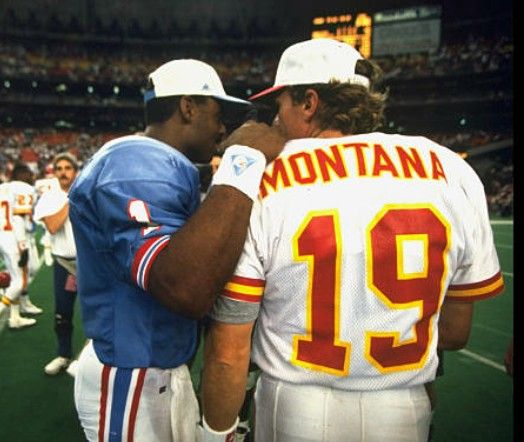
As for the Oilers, they were broken up after 1993. Gone was Warren Moon who went on to sign with the Minnesota Vikings. Buddy Ryan received another Head Coaching position in Arizona taking Wilber Marshall with him. The defense was turned over to Ryan disciple Jeff Fisher, who would succeed Jack Pardee once he was fired in week 10 of 1994. Present Titans coach Mike Munchak played his last game for the Oilers in that 93 playoff loss and began his coaching career that same year. Former Offensive Coordinator Kevin Gilbride was let go once Pardee was dismissed. They had been the men responsible for bringing the Run & Shoot to Houston and it left with them.

Ironically the offense that didn’t win it all as a complete scheme lived on in offenses around the league. It was Gilbride teaching some of the Run & Shoot principles to New York Giant receivers as they have won Super Bowls XLII and XLVI. Even the team of the 2000’s, the New England Patriots run variations of offensive principles that were a staple of Gilbride’s down in Houston. Especially the screen plays that Gilbride designed. Below is a copy of one of the pages from the Patriots Super Bowl playbook of 2003 and you can clearly read “Run and Shoot screen”. 

RunAndShootScreen

The largest fall had been with the fan base that was there from the Luv ya Blue days through this era of Oiler football. The heart of the fan base drained drastically as the team fell to 2-14 in 1994. Within two years, Bud Adams moved the team to Tennessee and renamed the franchise the Titans. It was a sad and sudden end to the Oiler franchise but it came off the heels of promise that was the best team in Oiler history that didn’t make it to the Super Bowl.

Thanks for reading and please share the article.
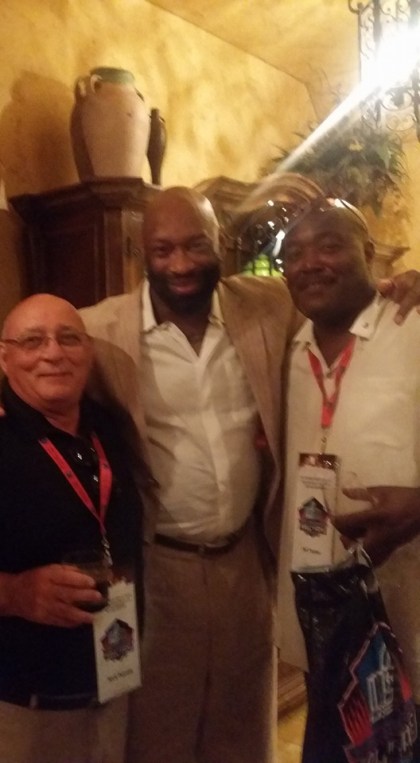
CoachP.LLathonandChancellor

Met Lamar Lathon with Coach Petrillo at 2016 HoF party for KG

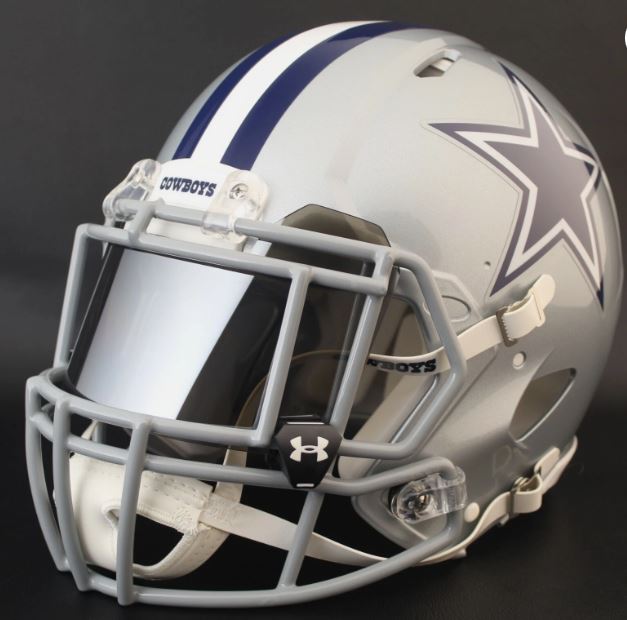
The Golden Age of Hating The Dallas Cowboys

It was a feeling which manifested sometime during the 1970’s. We can put it on the late George Allen, former coach of the Washington Redskins, who was first to voice a total disdain for everything Dallas Cowboys. It raised the level of rancor between the Redskins and Cowboys elevating the rivalry to the national level.
Below the surface the rivalry began to take shape when the Cowboys became the NFL’s southern most team when they began play in 1960. Prior to this, the Redskins of George Preston Marshall were. It’s one of the reasons they sang “Dixie” at their welcome back luncheon when the team reported to camp. Yet this new team came along and began to eat into their fan base.

Keep in mind the Atlanta Flacons and. New Orleans Saints werent founded for another half decade. With the Falcons beginning play in ’66 and the Saints following in ’67. By then the Cowboys were had grown in stature and had taken the Packers for NFL supremacy.

However the disdain Allen felt during the early 1970’s was more palpable. More real.

A growing resentment felt by many teams and fans. The feeling was the late Tom Landry and his Dallas Cowboys were given too much publicity by the networks and the print media. CBS was constantly covering the Cowboys and the level of success they had in the 1970’s, with 5 Super Bowl visits, seeded hatred in their rivals. Especially within their division. Yet none of them were good enough to challenge them in the NFC East.

By the time NFL Films made the 1978 Dallas Cowboys yearbook and labeled it “America’s Team” hatred was at an all time high. Even jealousy if you will. It was the arrogance and air of supremacy the Cowboys organization painted during those CBS days that fueled two schools of fans.

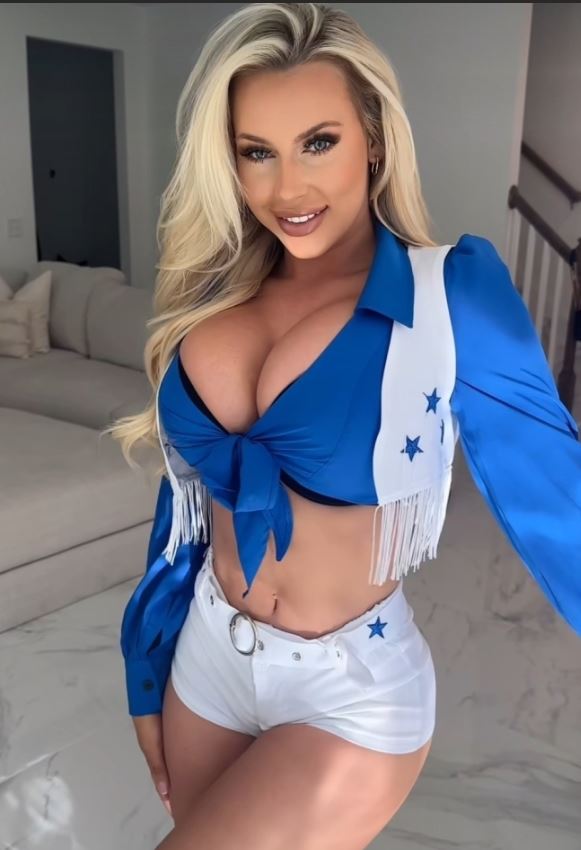
You had those who thought of themselves as beautiful and carried themselves with a sense of arrogance and identified with the team and their cheerleaders. Then you had the regular meat and potatoes folks who loved when the Pittsburgh Steelers punched them square in the mouth during Super Bowls X and XIII. They were also fans of all other teams. Yet when your team is no longer in it, they cheered for whoever was facing Dallas in the playoffs or Super Bowl.

Ironically, this is where the Steelers gained their nationwide fan base. It had nothing to do with the fact they won 4 Super Bowls in the 1970’s, it was the fact they beat the Cowboys in two of those Super Bowls that made them remain as fans.

As the 1980’s beckoned, many of the teams that Dallas had squashed the last decade began to grow anew. A fresh generation of coaches and players started to internalize the disdain for the bully on the block and began their ascent. It was known that you had to take out Landry’s Cowboys if you really want to be recognized as champions. Although the Redskins were the one with the more acknowledged rivalry, it was the Philadelphia Eagles under Dick Vermeil that got the first crack at the boys from the Lone Star State.

Much of the animosity started at the beginning of the week, when the Eagles were cast as underdogs against Landry’s Cowboys in the 1980 NFC Championship Game. Although they were hosting, the Eagles were made underdogs by Vegas. Right on cue, the Eagles were being treated as bit role players even though they split their games with Dallas that year.

An upset Dick Vermeil made a declaration that ratcheted feelings up when he vowed “Never allow anyone to take you for granted! I get the feeling the Dallas Cowboys are taking us for granted right now. We’re here because we earned the right to be here. If the Dallas Cowboys are going to take us for granted, we’ll whip their ass!”

To further irk Tom Landry, Vermeil opted to play in their white uniforms forcing the Cowboys to play in the blue jerseys, which they felt were jinxed. Dallas complained to the league office yet for once the powers that be didn’t allow Gil Brandt and Tex Schramm to get their way. The crowd at Veteran’s Stadium was unforgiving as the two teams emerged from the tunnel. It was 4* and -17* windchill when on the Eagles second play from scrimmage:

The roar of the crowd during Wilbert Montgomery’s touchdown was the loudest ever at Veteran’s Stadium. Cowboy haters everywhere delighted as the Eagles held the early upper hand on the Cowboys 7-0. As the game wore on and Landry’s charges behind 17-7 late in the fourth quarter, they were able to punt and pin the Eagles to their own 5 yard line. From their own 5 yard line the Eagles ended fading hopes for Dallas when in 3 runs Philadelphia moved the football to the Dallas 25. Montgomery was putting the finishing touches on a signature day when he struck with this 54 yard masterpiece.

The Eagles vanquished the Cowboys 20-7 on their way to Super Bowl XV. Wilbert Montgomery etched his name into Philadelphia lore with a 194 yard performance. They had destroyed the Flex Defence, rushing for 263 yards on 40 carries averaging 6.575 yards a pop!! Cowboy haters everywhere rejoiced in hearing Landry, Danny White and Cowboy apologists have to answer the questions as the defeated football team. In fact many Cowboy haters pulled for the Oakland Raiders in the Super Bowl two weeks later. People weren’t cheering for the Eagles as much as they were for Dallas to lose.

The following year the Cowboys had revamped their secondary & national press covered the exploits of rookies Everson Walls (who should be a Hall of Famer), Michael Downs, and Ron Fellows. Although the publicity was on this group in Big D, they were overshadowing an even greater group in San Francisco. Where Bill Walsh had drafted and started rookie CB Ronnie Lott, CB Eric Wright, and S Carlton Williamson to go along with scrappy veteran S Dwight Hicks. Yet through most of the 1981 season, you didn’t hear about the 49ers. Even after a 45-14 devastation of the Cowboys in week 5 with Ronnie Lott scoring the decisive touchdown.

Did you know the 49ers didn’t make the Monday Night Football highlight package?? Don’t tell our CEO there was no media bias. Nor can you say the coverage of Dallas’ rookie trio of defensive backs didn’t motivate the group by the bay. Was it borne from the Cowboys propaganda and success of the 1970s?? Or was it borne from Tom Landry’s ties to the New York media since his pro coaching career started there??

Did you know the late Pat Summerall who broadcast many of the Cowboys games in that era, was a teammate and friend of Landry back in New York?? So when they didn’t make the ABC Monday Night package it fed into the hating Dallas mantra that much more by the 1981 NFC Championship Game.

There had been a history between the San Francisco 49ers and Dallas. In fact you could say the 49ers were who Dallas had built their reputation on with wins over them in the 1970 and 1971 NFC Championship Games. At that point the Cowboys were called “Next Year’s Champions” for four straight playoff defeats to Vince Lombardi’s Packers and the Cleveland Browns. As a new decade beckoned it was the Niners and the Cowboys who stepped to the fore.

Once Dallas emerged and won Super Bowl VI, their prestige soared where the vanquished 49ers went into a tailspin the rest of the decade. Yet before that happened, there was the 1972 NFC Divisional playoff where a measure of revenge was going to be exacted against Landry’s troops when Roger Staubach led a furious 4th quarter rally. Staubach led Dallas to a 30-28 win after they were behind 28-13 with 5:00 to go in the game. This is when he earned the nickname Captain Comeback.

Fast forward to the 1981 NFC Championship where the resurrected 49er franchise, now under Eddie DeBartolo, were preparing for the game. Still smarting from the lack of respect afforded his group after the 45-14 win and no media coverage, set the tone of a franchise when talking to a reporter. “They ate it once and they can eat it (defeat) again.” Reminiscent of Dick Vermeil the year before, Cowboy haters were all pulling for the 49ers in this game when they took the field.

The final stint came when the Washington Redskins had their turn to climb over Dallas to make it to the summit of pro football. After a strike shortened season where the 8-1 Redskins entered a playoff tournament to make it to Super Bowl XVII, most pundits picked the media darling Cowboys to win the NFC Champoinship citing the Redskins only loss was courtesy of the Cowboys. Our CEO can remember being fired up for the NFC Championship between Washington and Dallas and knew it was going to be a thing of beauty.

It actually started when the Redskins were putting the finishing touches on a 21-7 win over the Vikings to set up the NFC Conference final when the chant “We want Dallas!! We want Dallas!!” resonated from the jam packed crowd at RFK. Just moments before, John Riggins who had rushed for 185 yard was in the midst of a curtain call, turned and gave a bow to the crowd sending them into a frenzy. Those sights and sounds reverberated throughout the stadium and CBS chose instead of showing the final plays of that game, panoramic views of the raucous fans.

As for the rest of the Cowboy haters who gathered to watch this team go down again. Look no further than another bulletin board comment that jump started the festivities. It started with Dexter Manley professing in the paper that he “hated Dallas” that Monday that got the ball rolling. Then back and forth in the newspaper ensued from Danny White of the Cowboys, to Redskin owner Jack Kent Cooke, EVERYONE was stoking the fire. How bad did it get? There was even a heated argument about the game within the House of Representatives the Friday before the game and the late Thomas “Tip” O’Neill adjourned session an hour early. It was on!!!!

Over a football game? Yes over a football game. The hating of Dallas really grew wings in the George Allen era. He preached it, lived it, and over all the treatment America’s Team received as a media darling kept breeding that hatred within rival teams. Real Redskin fans will talk with high regard of the fact that they beat Dallas in the ’72 NFC Championship when the Cowboys were defending champions. So here we were some 10 years later and all that animosity was a thing of the past right? After all new owner, new coach, new quarterback and cast of characters comprised the Redskins roster. Right?

For a more visceral look:

With that we were at an end of an era where other NFL teams were able to get their due as the 1980’s moved on. Media coverage transferred from Dallas to new teams coming from Chicago, the New York Giants, Denver Broncos, of course the 49ers and the Redskins who were dominant the rest of the decade. From this era came the nationwide fan base of the San Francisco 49ers much like the Steelers. The backlash of the “America’s Team” name and over favorable coverage brewed hatred from the majority of NFL fans and players.

Notice in these videos, the look in their eye and the description of elation for vanquishing the Dallas Cowboys of that era. In all three cases before the NFC Championship, where decorum was to be quiet, and not give the Cowboys bulletin board material. Coaches and owners in these instances were doing it let alone players. It set the table for things to come and put their organizations on high alert of what was expected of them.

The hatred for everything Dallas began to dissipate at this time. There was some animosity left when the ’85 Bears bloodied them 44-0 in Texas Stadium after 9 straight losses to them. Yet by the time of Tom Landry’s departure, people felt bad about what happened to the Cowboys and watched the dismantling of a franchise with mixed emotions.

You were almost mad that they were 1-15 in 1989, because the villain from Texas was gone. The Jimmy Johnson Cowboys of the 1990’s were an envied team, not a hated one. To be hated you had to be more than a good football team, and in retrospect that was what made hating the Dallas Cowboys worthwhile.

The way they were marketed, branded, and packaged. The way their coach was treated like a God and their quarterback in Roger Staubach was the idol which gave way to Danny White. Well until these NFC Championship losses tarnished White’s legacy.

Their cheerleaders were even made famous. They had telvision specials and still do to this very day. All of this tapped into the inferiority complex of many players and fans of other teams. When it came time to beat them for a championship or a game of importance, it was the Holy Grail.

One of Taylor Blitz’s finest shrugs it off and has this message “How ’bout them Cowboys?”

Thanks for reading and please share the article.

Taylor Blitz Times new logo!!

Taylor Blitz Times new logo!!

’88 Cincinnati Bengals: What Is A Champion?? What Does One Look Like??

1988 AFC Championship Ring: Bengals 21-10 over Buffalo

Are you a champion only because you won the championship over your competition? Can there be another definition for one?? Are you to tell me that before 1985, Walter Payton wasn’t a champion? I remember Aeneas Williams firing up his Arizona Cardinals sometime around 1999, when he gathered his team and said “Champions aren’t born in the ring, they’re (only) recognized there”.  Why do I ask these questions, I think there are other definitions of a champion.  To show a champion’s will to win.  To not concede to the onslaught of another team even when you’re hopelessly behind. The greatest efforts of championship teams gone by weren’t games they won they were games that they lost.

On multiple occasions I heard Michael Irvin, Troy Aikman, and Emmitt Smith speak with the most pride on how they handled the ’94 NFC Championship Game.  They fell behind 21-0 in the last game before trying for the elusive Super Bowl 3-peat. Against the 1993 Pro Bowl defense (6 defensive signees) geared to stop them they fought on and came within a controversial call of coming back in that game, losing 38-28.

Jack Lambert and the Late Art Rooney Sr. spoke reverently of their beloved 1976 Steelers who did not win the Super Bowl.  This defense was the reason that the rule changes of ’78 took place to open the passing game. In an 8 game stretch to finish the ’76 season, the Steelers gave up only 28 points and shut out 5 of their last 8 opponents to catch the Bengals and make the playoffs. They lost in the AFC Championship Game to the Oakland Raiders 24-7 because BOTH Franco Harris and Rocky Bleier, who each rushed for 1,000 yards in ’76, missed the championship game. Many including the Steelers themselves hold this team with a greater degree of pride than the 4 teams that did win it.

What are we getting at here? A champion is defined by the magnificence of their effort no matter the odds.  Our society loses sight of this from time to time.  Please don’t misunderstand this as though winning it all isn’t the ultimate, just saying that there are even greater stories of those who put in a monumental effort only to come up a tad short.  Yet they maximized all they could give…which is what we all teach to kids all over. Give all you can and that is all you can do… so without further adieu we bring you a story of one of those great champions in the 1988 Cincinnati Bengals.

SUPER BOWL XXIII RUNNER UP 1988 CINCINNATI BENGALS <————-CLICK LINK (Word 2007 Document)

This story is from an upcoming book.

Thanks for reading,

**TOMORROW’S ARTICLE: 2011 Minnesota Vikings preview**

Super Bowl XXI Giants v. Super Bowl XXV Giants

SUPER BOWL XXV CHAMPION 1990 NEW YORK GIANTS <————————————Click Link

Ghost of Vince Lombardi

SUPER BOWL II CHAMPION 1967 GREEN BAY PACKERS <—————-Click Link

Vince Lombardi Trophy

Top Ten Quarterbacks Ever!

The position of quarterback is unique in the sports world. No other position commands more respect, need to process information in a more condensed timeframe, or expected to lead his team with his play and demeanor like that of a quarterback. Point guards in basketball call out the plays but the team is defined by their big men and scoring comes from either forward positions or the shooting guard.  Pitchers share pitch calls with the catcher and the relief pitcher finishes a tight game to help the pitcher get a win.  The quarterback has to do all of these things which include last second touchdown drives in a two-minute drill. He doesn’t get to turn the game over to a reliever.  He is easily the central nervous system of the team and without his efforts they’re paralyzed to move the ball or win.

The greatest quarterbacks ever master all of these qualities.  The art of the pre-snap read, then to decipher what the defense is doing in under 2 seconds and where his teammate are going to be, while making the right throw.  All the while 4 to 5 fire-breathing defenders are closing in to do bodily harm.  So what makes the great ones, who stand amidst the masses, and calmly deliver the football?  There are all time quarterbacks who are winners and championship teams whose quarterback went along for the ride. The all time greats willed their team to victory through their play.  Here is my all time list.

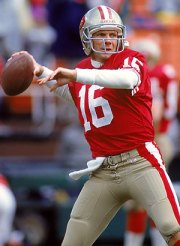
  1.  Joe Montana: First 3 time Super Bowl MVP while quarterbacking 4 Super Bowl Champions in San Francisco. Performed the signature play of a dynasty with “The Catch” in the 1981 NFC Championship. Beginning in 1983 as a starting QB he led 10 straight teams to the playoffs (49ers ‘83-’90, Chiefs 93 & 94). Ushered in the West Coast offense as a staple while leading more than 30 4th quarter come from behind drives.  Had 8 3,000 yard seasons including his last.  Although 1989 was statistically his best season, in 11 games in 1987 he threw for his career high of 31 TDs.  The best.

  2. Johnny Unitas: Frank DeFord once said that “All quarterbacks today are descendants of Johnny Unitas.”  The benchmark every quarterback is still be measured by.  Retired with more than 40,000 yards passing, 3 NFL Championships, a 4th with a Super Bowl III loser.  Engineered the first two minute drill in the last minutes of the 1958 NFL Championship.   His leadership, demeanor, throwing style, and playing style molded the next two generations of youngsters with how the game should be played.  Still holds the equivalent of Joe DiMaggio’s 56 game hitting streak with 47 straight games with a touchdown pass.  I think Unitas feat is greater.  Had 11 seasons with over 2500 yards passing.

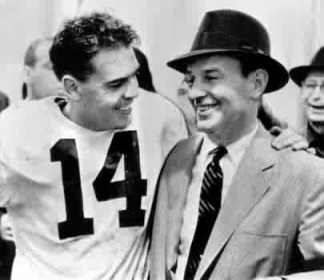
  3. Otto Graham and Paul Brown

    Otto Graham: The first quintessential winner who was part of a system (Paul Brown’s) that led Cleveland to 10 straight championship appearances. From 1946-1949 the Cleveland Browns ruled the AAFC winning all for league titles.  Then once merged into the NFL: 1950-1955 the Cleveland Browns were in every championship game winning 3 of them while battling the Detroit Lions and Cleveland Rams.  The first quarterback on a Wheaties Box and Mapo Oatmeal commercials so youngsters could “be like Mike.” Statistics don’t measure the man and what he meant for his football team as a leader.

  4. Brett Favre: Winningest quarterback ever. Embodied the epitome of a gunslinger and was durable. He broke the record of most consecutive starts for a QB in October of 1999 at 114 straight and kept it going until he retired after 2011 with over 290, nearly tripling it. First MVP of the league in 3 consecutive seasons.  He brought the Packer’s franchise out of the doldrums of the NFL and made them winners in Super Bowl XXXI.  Favre threw for a conference record for TD passes with 38 and 39 respectively in 95 and 96. Would go on to throw for the most yards & TDs in history.  A gunslinger from the word go, his first taste of NFL action in 1992, he replaced Don Majkoski and hit Kittrick Taylor with a game winning TD with under a minute to go.  A flair for the dramatic.  Had 1 stretch to begin 1999 where he engineered 4 straight 4th quarter comebacks in successive weeks with under 2 minutes to go.   One of a kind.

  5. Our #4 Brett Favre and #5 Dan Marino

    Dan Marino: A completely transcendent performer with a quick release that burst onto the scene in 1983.  His record breaking year of 1984 was the single greatest passing performance ever.  He shattered the single season record for TDs in a season at 48, blowing by the old record of 36.  He became the first to throw for 5,000 yards in a season.  Also threw for 44TDs in 1986.  His attitude and throwing motion struck fear in defenses for most of his career.   His undermanned Dolphins never won the Super Bowl during his tenure. Went on to throw for 61,000 yards and 420TDs over his career.  His release (on film) was under 9 frames when the typical frame rate for most QBs was 12 – 13.  So when you see film of someone almost sacking him, had they been someone else it would have been. By the way, it was Marino who has the most 4th quarter comebacks at 36 to John Elway’s 34…just so you know.

  6. Tom Brady: A 3-time Super Bowl champion who quarterbacked the Patriots to team of the decade status in the ‘00s.  A technical quarterback with an emotional streak that went from being a serviceable player to one of the best ever. He holds the single season record for TDs at 50, directed the only 16-0 regular season, and still in his prime can achieve another milestone or two.  Entering the latter stages in his career and still writing his history.

  7. Terry Bradshaw: The number one draft pick in 1970 who became the first 4 time Super Bowl winner and MVP of the 13th and 14th editions.  He led the Steelers to 4 championships in 6 years.  Had a rocket arm and was a tough runner early in his career.  Became a more complete quarterback as the Steelers attack took to the air in 1978 with the rules changes.  Played big in big games.  He iced Super Bowl IX with a TD to Larry Brown and had his first 300 yard game in Super Bowl XIII while setting the TD pass record in Super Bowl’s at 4.  Held the Super Bowl record for longest TD (to Stallworth75 yards) and nearly matched it with a game winning TD pass to Stallworth at 73yds in Super Bowl XIV against the Los Angeles Rams.

  8. Roger Staubach: Tremendous quarterback who began as a scrambler, evolved into a true pocket passer and retired as the highest rated quarterback ever in 1979.  Was efficient and led the Cowboys to 8 playoff appearances in 9 years. A fearless leader who brought Dallas from behind 23 times in the final two minutes or in overtime.  Roger the Dodger morphed into Captain Comeback and was one of sport’s biggest icons.

  9. John Elway: The rocket arm quarterback who brashly demanded a trade before he ever played a game.  The heir to Staubach’s comeback mantle by producing 30 wins in the final two minutes or in overtime. Produced some of the most breathtaking drives in playoff history.  Passed for numerous 3,000 yard seasons and won a record 5 conference championships including 2 Super Bowl championships.  Had one of the strongest arms in NFL history and the architect of 34 4th quarter comebacks and many of the breath taking variety.

  10.  Steve Young: Greatest left hander in history.  Replaced Joe Montana and led the NFL in passer rating 4 straight years, made 3 NFC Championships, and won one Super Bowl during that era.  He went on to set a record for passing efficiency in 1994 and led the 49ers to the playoffs 7 straight seasons and 4 berths in the NFC Championship Game.  He was also a fearless and rugged runner.  A weapon that allowed the 49ers to play offense 11 on 11 since teams rarely account for the quarterback.   Saved many drives with his ability to run. 

So who’s your top ten?!?!