
Terrell Davis in Super Bowl XXXII
When you think back to the Denver Broncos of the late 90s, Terrell Davis is usually the first player you think of. He brought an NFC toughness to the AFC in terms of running the football.
You have to remember that the NFC was in the midst of a 13 game winning streak before the Broncos broke through with their win in Super Bowl XXXII. The AFC had been filled with primarily scat backs and finesse runners when Davis was drafted in the 6th round of the 1995 draft. He ran with power between the tackles and had the speed to pull away once he made his upfield cut.
For four years he was one of the best runners in football. An all time great until a knee injury in ’99 derailed a promising career. Just like Gale Sayers he was a whirlwind of production before that injury so why should he be denied Hall of Fame consideration??
In 1995, Davis became the lowest draft pick ever to rush for 1,000 yards when he bolted for 1,117 on a Denver team that was retooling itself. Coach Shanahan had just come over from the World Champion 49ers and combined a single back set and merged it with a version of the “west coast” offense. Davis was an affective runner in that system but it was once the team moved to an offset I formation with the addition of FB Howard Griffith in ’96 did Davis’ production reach the stratosphere.
It was the ’96 season that Davis wrested the mantle of best power back from a fading Emmitt Smith with a 1,538 yard, 13TD rushing performance. If we add in his receiving totals he had 1848 all purpose yards and 15 total touchdowns. Yet despite the 13-3 record, his ’96 Broncos were upset in the divisional round of the playoffs by Jacksonville 30-27.

Davis in the ’97 AFC Divisional Playoff win over KC 13-10
Davis’ numbers would have been higher for the ’96 season yet Shanahan rested he and most of the starters after jumping out to an 11-1 start. The team rusted before the playoffs and Davis lost 3 second halves where he could have piled up more yards and should have been an 1,800 yard rusher.
The ’97 season saw the Broncos move to a 12-4 record yet were cast in the roll of wildcard by virtue of Kansas City’s 13-3 record. Again Davis was the driving force running for 1,750 yards and 15TDs leading the AFC in rushing and the NFL in touchdowns. He then ran for over 100 yards against the Jaguars, Chiefs, and Steelers enroute to Super Bowl XXXII. Now their physical running game would be put to the test against the defending Super Bowl champion Green Bay Packers and their mammoth defensive line.
In one of the best performances in Super Bowl history, Davis ran for 157 yards and a Super Bowl record 3 touchdowns propelling the Broncos to a 31-24 upset win. Davis had a superb performance and may have broken Tim Smith’s record of 204 yards had he not missed the 2nd quarter with a migraine headache. In the game he punished the Green Bay defense with physical, tackle breaking runs that broke the former world champions down. He was MVP of the NFL’s signature game in his own hometown what more could be on the horizon??
One year after the sporting press celebrated Barry Sanders rushing for 2,053 yards in ’97, there was speculation that Terrell Davis could repeat that feat in 1998. Terrell Davis and his Broncos ran out to a 13-0 record and threatened the ’72 Dolphins unbeaten streak but an upset by the Giants then the Dolphins relegated the AFC West champions to a 14-2 record. Davis ran for over 170 yards in the final game of the season to finish with 2,008 yards, 23 TDs and he was voted NFL Most Valuable Player in the process.
His total was even more impressive than Eric Dickerson’s, Barry Sanders or O.J. Simpson’s total for one reason: his 2,000 yard season came with his sitting out over 8 quarters in blowout wins. With his average per game divided out over a 14 game season his numbers project out to 2,294 yards and 26 TDs. Had that happened he would have broken Emmitt Smith’s record of 25 TDs and Marshall Faulk never would have had the record in 2000. Keep in mind he attained all this while playing for a defending Super Bowl champion with a bullseye on their back for the entire season. Something the other 2,000 yard rushers didn’t have to contend with.
After leading the Broncos to another Super Bowl triumph in the XXXIIIrd edition, a 34-19 win over the Falcons. Davis was on pace for a record setting career yet in the 3rd game of the ’99 season he tore ligaments in his knee making a tackle against the Jets and was never the same player after a year and a half off to recover. He retired after the 2001 season with 7,607 yards rushing and 60TDs in 7 seasons.
Now it’s at this point where you have to realize the greatness of Davis. At the current rate he was running the ball at the time of his injury, he was on pace to gain 12,824 yards in only EIGHT years! Only comparison to that is Jim Brown who ran for 12,312 in 9 years. This was a north south runner who didn’t rely on moves to gain his yards so its very likely that he could have maintained his pace. His 56 touchdown total swells out past 110 given he would have made it injury free for those same 8 years. Thats production..
 Here is another talent who didn’t play for a long career but as a comet burned bright as any ever seen in the football heavens. He was the power and impetus for a two time league champion, a celebrated 2,000 yard rusher, a Super Bowl MVP, and NFL MVP. What more could he have done? Those 3 years (96-98) he was an All Pro and Pro Bowl performer.
Just like Gale Sayers his career was cut short and he was never the same yet Davis deserves the same Hall of Fame distinction. He wasn’t as flashy as Sayers but he was more productive with a bullseye on his back and powered a league champion. That has to be worth something more than distinction. He was a great player and ambassador of the game. Never an off field issue uttered with his name and came off as an affable likeable player and person. He has to be considered the top Bronco running back of all time and that includes Hall of Famer Floyd Little who came three decades earlier.
Yet thats another debate for a different day…For induction into the Pro Football Hall of Fame I present to you: Terrell Davis





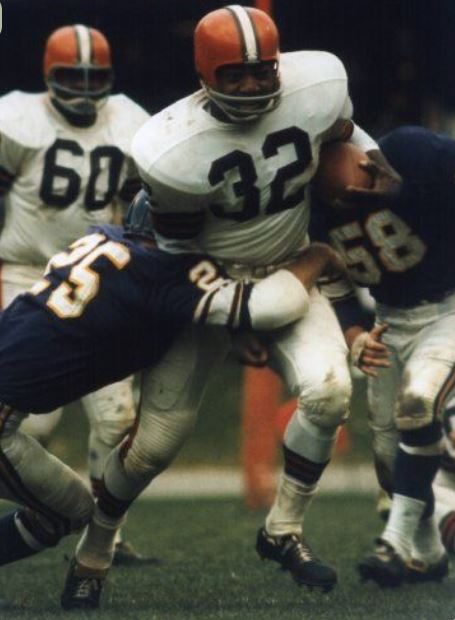 Ironically, the team that bears the name of Paul Brown, won this championship without him. In a power struggle he was removed by new majority owner Art Modell. They were coached by Blanton Collier. More irony can be found in the fact that in Cleveland 4 years later, the Colts got revenge shutting out the Browns 34-0 in the NFL Championship Game on their way to Super Bowl III. Then the obvious irony of losing not only their last NFL Championship appearance to Baltimore, but then lost their original incarnation of the Browns to Baltimore when Art Modell moved them there following the 1995 season.


You must be logged in to post a comment.