
 Article Reissue: “There have been several leaks stating Roger will make it in and announced this Thursday. I hope this is true!”
When you think back to Bill Walsh’s great 49er teams, who are the first players you think of?? Right there with the Joe Montanas, the Jerry Rices, and Ronnie Lotts it only takes a fraction of a second to think of Roger Craig. His high knee running style brought a physicality to the San Francisco offense that was seen as a finesse group up until his arrival. In fact he came to San Francisco as a fullback when they drafted him from Nebraska before the 1983 season.
In college he had been primarily a blocking back in the Cornhuskers wishbone offense. Normally he paved the way for Jarvis Redwine and then Mike Rozier. Yet when Bill Walsh decided to revamp San Francisco’s dismal backfield after a 3-6 season in 1982, he drafted Craig in the second round.
Although the 49ers had won it all in 1981, it had become apparent Bill Ring, Amos Lawrence, Walt Easley, and Earl Cooper just wasn’t cutting it in the backfield. To raise the stakes in the NFC for 1983, Craig and newly acquired Wendell Tyler would form a more potent backfield.
After posting the worst yards per carry average (3.4) and yardage (742) in 1982, the new backfield duo of Craig and Tyler turned that around completely. The much improved ground game of 1983 ranked 8th with 2,257 yards rushing and a gaudy 4.4 yard average. Ironically just ahead of the Los Angeles Rams, who had traded Tyler to San Francisco so they could draft Eric Dickerson.
You had to give the nod to Craig who ran for 783 yards a team leading 8 TDs, while catching 42 passes for 427 yards and another 4 scores. This more dynamic backfield, along with Joe Montana, powered San Francisco to the NFC Championship Game. A 24-21 loss to the Washington Redskins was shrouded in controversy, thanks to some questionable calls, yet Walsh had the backfield he envisioned. Craig had reinvented himself from a collegiate player who rarely touched the football to a dual threat pro.
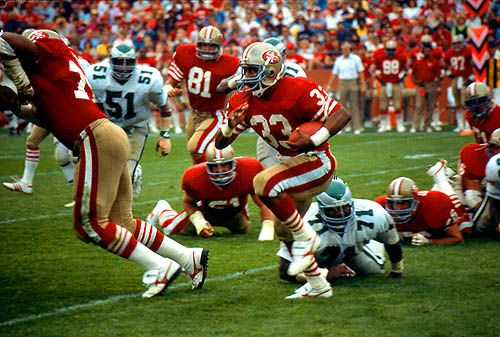 The 1984 49ers were a juggernaut becoming the first team to go 15-1 during the regular season. Everyone of the 49 man roster played their role so no one had outstanding stats. However once the 49ers moved past the New York Giants and Chicago Bears during the playoffs, the stage was set for a coming out party in Super Bowl XIX. With all eyes on Joe Montana’s possible second Super Bowl trophy and the electrifying record setting Dan Marino, Craig’s name didn’t even make the marquee.

Roger Craig graces the cover of Sports Illustrated after his record breaking performance in Super Bowl XIX.
It was his 1985 that set Craig apart as he amassed his 1,000/ 1,000 yard seasons both rushing and receiving. The first player in league history to do so. Some 27 years later, only Hall of Famer Marshall Faulk shares that accomplishment when he did it in 1999. How dominating was his performance?? Well his 1,050 yards rushing doesn’t jump out at you until you realize he only ran 214 times for a whopping 4.9 yards per carry. The league average is always around 4.0.
Oh by the way, he led the NFL in receiving that year with 92, which set a record for running backs, that amassed 1,016 more yards. His 15 total touchdowns was second to Joe Morris and was 1 better than NFL MVP Marcus Allen. In fact many pundits, including our CEO believes Craig should have been the MVP in 1985 with that dominating performance.
Now buoy his 1985 record setting season not culminating with the league MVP, on the backdrop of a Super Bowl record 3 TDs yet not winning that MVP and you’ll see where we’re going in a minute. Don’t forget he did this on a 10-6 San Francisco team that was a defending champion with Jerry Rice being a rookie that didn’t have 1,000 yards receiving and only 3 touchdowns. Craig quite simply fueled that offense.
Once the 49ers won Super Bowl XIX, they were forced to retool and become a bigger physical team. In 1985, the Chicago Bears emerged with one of the most imposing defenses in NFL history. The Giants followed suit with an overwhelming defense that featured 4 linebackers in the 250 lbs category. When Bill Walsh and his 49ers were dominated 49-3 in the 1986 NFC Divisional Playoffs by the Giants something had to be done.
These were teams the 49ers had beaten on their way to the ’84 championship, now they had taken the game to a new level of brute force. In reinventing the offense from a size perspective, it was Craig who was switched from fullback to halfback to allow for the insertion of Tom Rathman at fullback. The entire offensive line was overhauled.
You have to keep in mind the average career for a runner in pro football is less than 4 years. Yet here Craig was making the switch in year 5 to a position that called for him to be quicker. This at a time where he should have been slowing down from a physical standpoint. Yet he, Jerry Rice and Joe Montana spearheaded one of history’s most accomplished runs. From 1987-1990 the 49ers went 51-12 in the regular season, winning back to back Super Bowls in ’88 & ’89 and were the prohibitive favorites to win it all in 1987 as well as 1990. They finished #1 in offense in ’87 and ’89 and #2 in ’88 and ’90. In each year they made it to at least the divisional round of the playoffs and 3 straight NFC Championship Games as they were trying to threepeat.
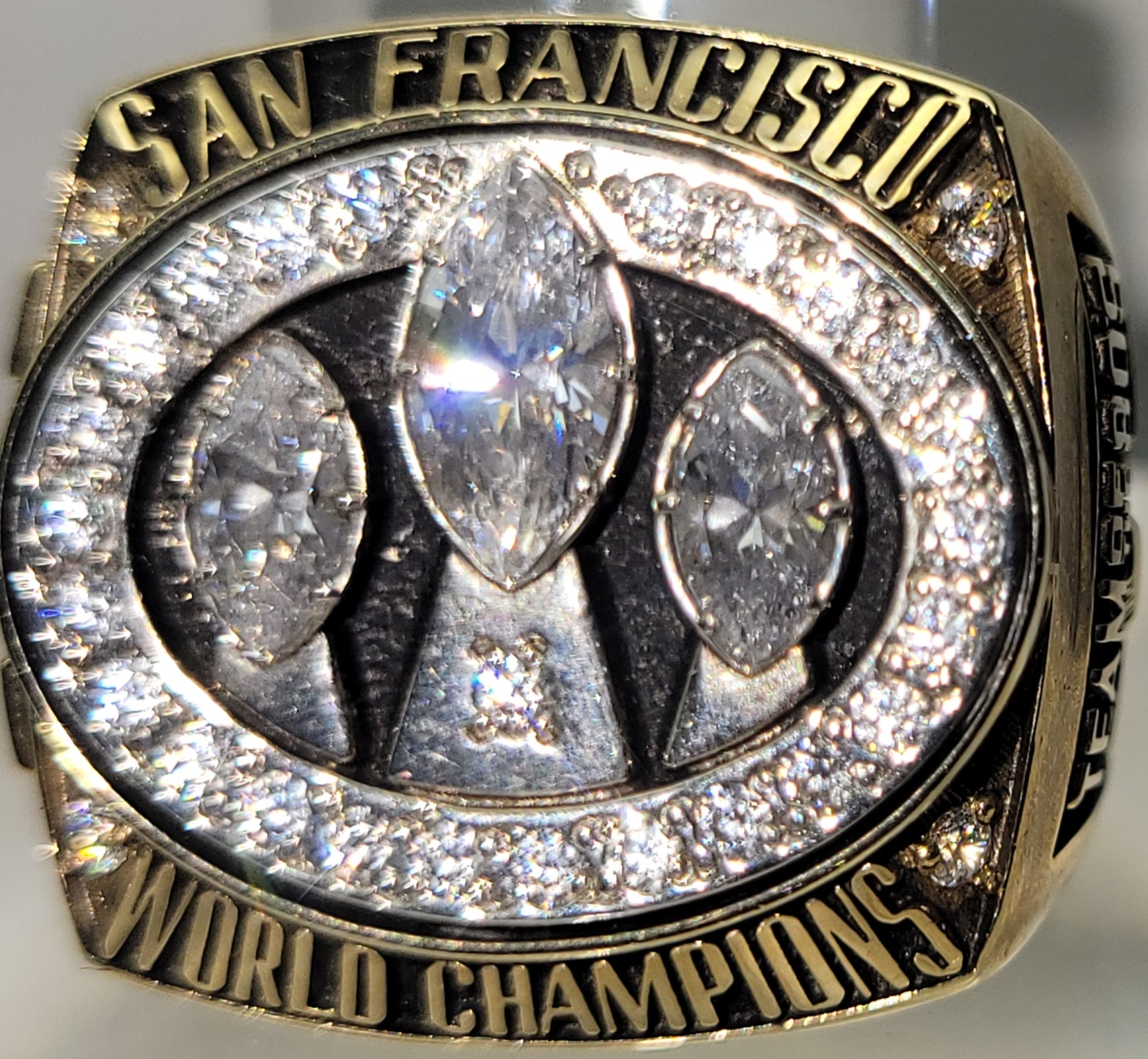
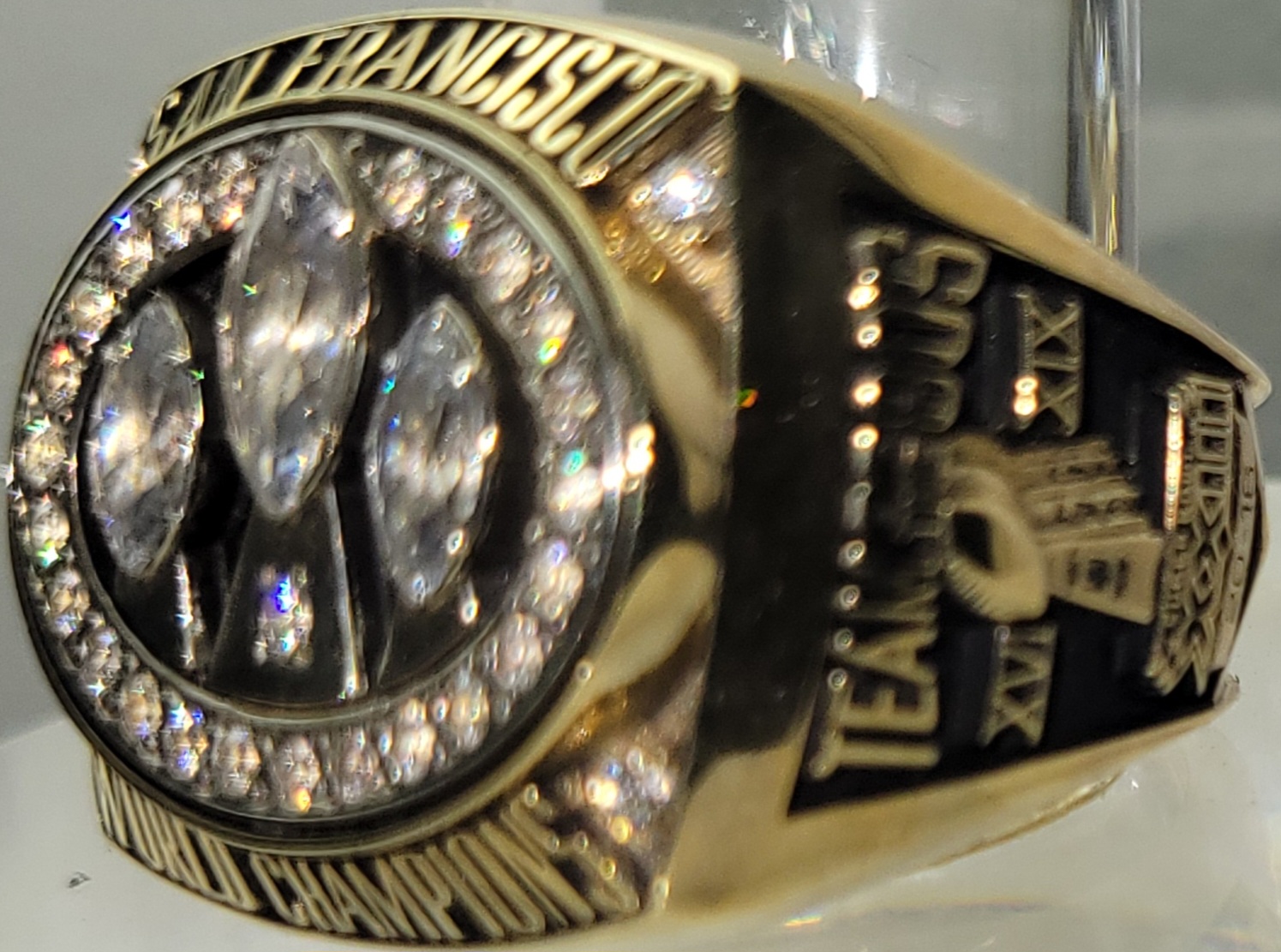
Playing in only 12 games due to the ’87 strike, Craig ran for 815 yards which projects out to 1,086 over a full season. The 13-2 Niners were poised to become the greatest team of the modern era yet were upset by the Vikings in the playoffs. They were #1 in both offense and defense yet proved fallible in the playoff loss. Craig went on to his greatest performance in the 1988 campaign. In rushing for a career high and club record 1,502 yards, he also caught 76 passes for an additional 534 yards for his second season with over 2,000 yards from scrimmage. More important, he powered San Francisco to another Super Bowl championship with a win over Cincinnati in the XXIII’d edition.

Roger Craig was a hard nosed runner.
Yet go back to 1988 being his second season with more than 2,000 yards from scrimmage. Keep in mind this was no sleek, make ’em miss halfback. He brought a punishing style to his position where he bludgeoned the opposition. As you’re reading this you can picture his high knee running style like when he trampled through the Rams on his most famous run in 1988.
Yet did you know that Emmitt Smith, Thurman Thomas, and Barry Sanders only had 2 different seasons amassing 2,000 yards from scrimmage also?? Did you also know that Marcus Allen and Adrian Peterson have only had one?? Only Edgerrin James, Marshall Faulk, Ladainian Tomlinson, and Eric Dickerson had more. What do all of these runners have in common?? Peterson and Tomlinson will be in the Hall of Fame and all the others are in. Roger Craig is right there with them.
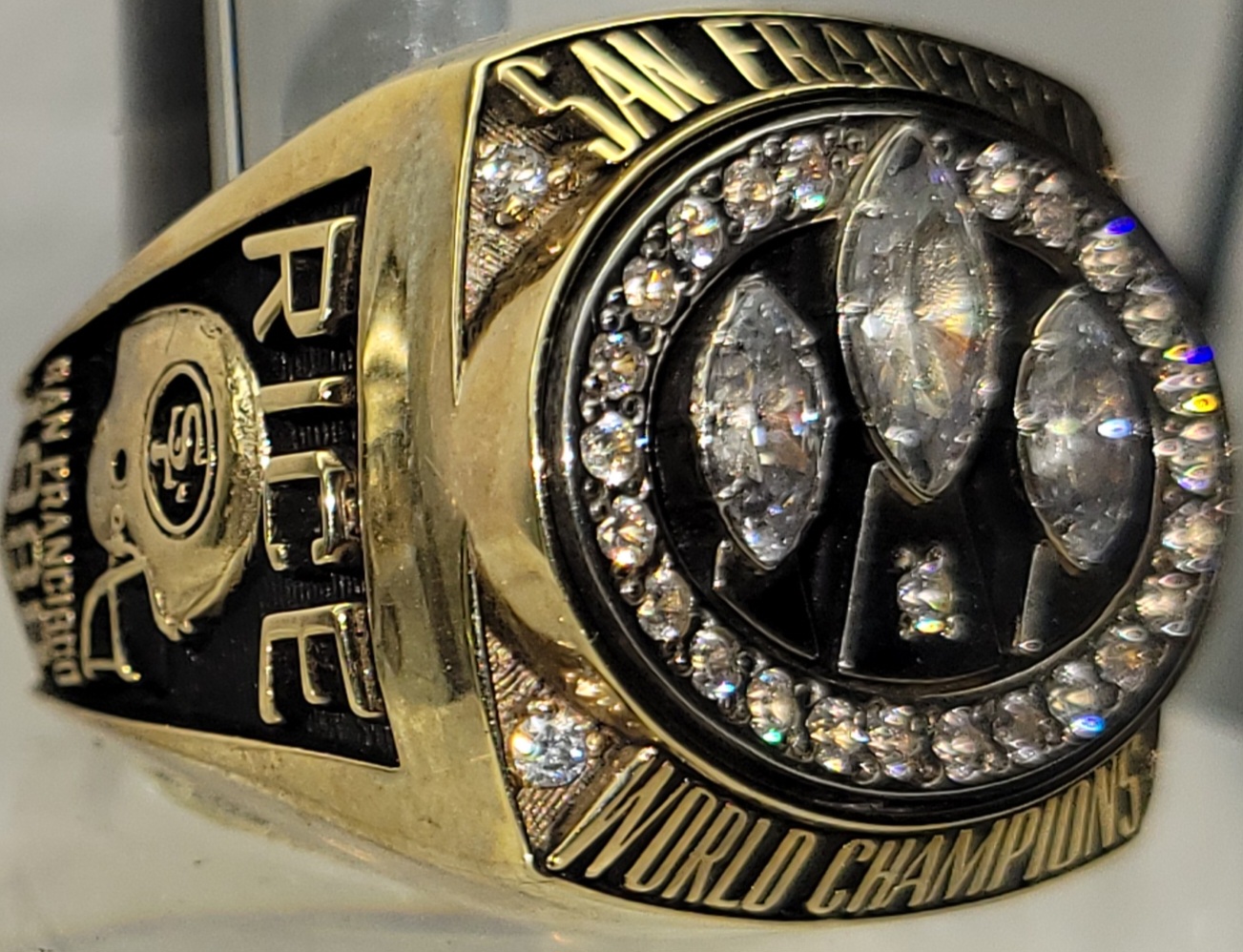
Now going into the Hall of Fame is based on impact on the game. By the time we bring up the 1989 team that won Super Bowl XXIV, Craig was a driving force behind the team of the decade. Again he was a 1,000 yard rusher as the team won their fourth Super Bowl and Roger had his 3rd ring. When he left the game in 1993, his 566 career receptions was #1 among running backs all time and still remains 7th.
He is in the linear line of great NFL running backs when it comes to catching the football and is a part of the game’s evolution. He took the mantle from Chuck Foreman and propelled it forward. Since then, only a handful of every down running backs have provided that type of versatility. Now everyone has a receiving running back who comes in on 3rd downs where Roger was in every play.
It was Craig’s play that allowed a young Jerry Rice to flourish as teams concentrated their efforts to stop him. If Craig’s move to halfback in 1987 hadn’t panned out, what would have been the legacy of Bill Walsh’s “West Coast Offense”?? It was the run from 1987-1990 that made the offense spread it’s wings throughout the National Football League. During this time is when it proved it could take on the big bad Chicago Bears defense (see 41-0 1987 Monday Night shutout) and 28-3 NFC Championship win in Soldier Field in ’88. Then you add the rivalry with the New York Giants.
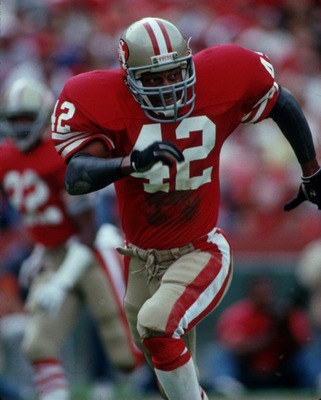
From Mike Holmgren to Denny Green to Mike White to Jon Gruden ( who had just begun coaching on the 1990 SF coaching staff) and George Seifert succeeding Bill Walsh. They all could attribute their Head Coaching jobs to some extent to Craig’s performance along with Montana and Rice. Yet the foundation of that offense running and receiving along with goal line and short yardage was #33.
By the way, when did Roger Craig become the the first running back to have a 100 yard receiving game in a Super Bowl?? You guessed it… Super Bowl XXIII against Cincinnati and not his record setting performance against Miami. Now had he won the Super Bowl XIX MVP, or the 1985 NFL MVP, would that have propelled him to winning the NFL MVP in 1988?? Give it some thought.
For induction into the Pro Football Hall of Fame, I present to you…Roger Craig

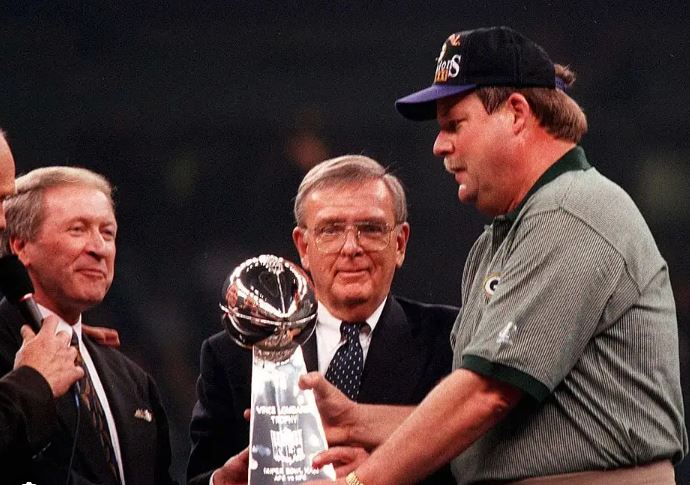 There are several acccomplishments which set a coach apart where they reach the status as a coaching great. Of course winning a Super Bowl is the ultimate prize however when we look at the legacy of their coahing tree, PFHoF players the coach produces, and the ability to turn around a franchise. Mike Holmgren has soared every hurdle and has turned around 2 franchises.
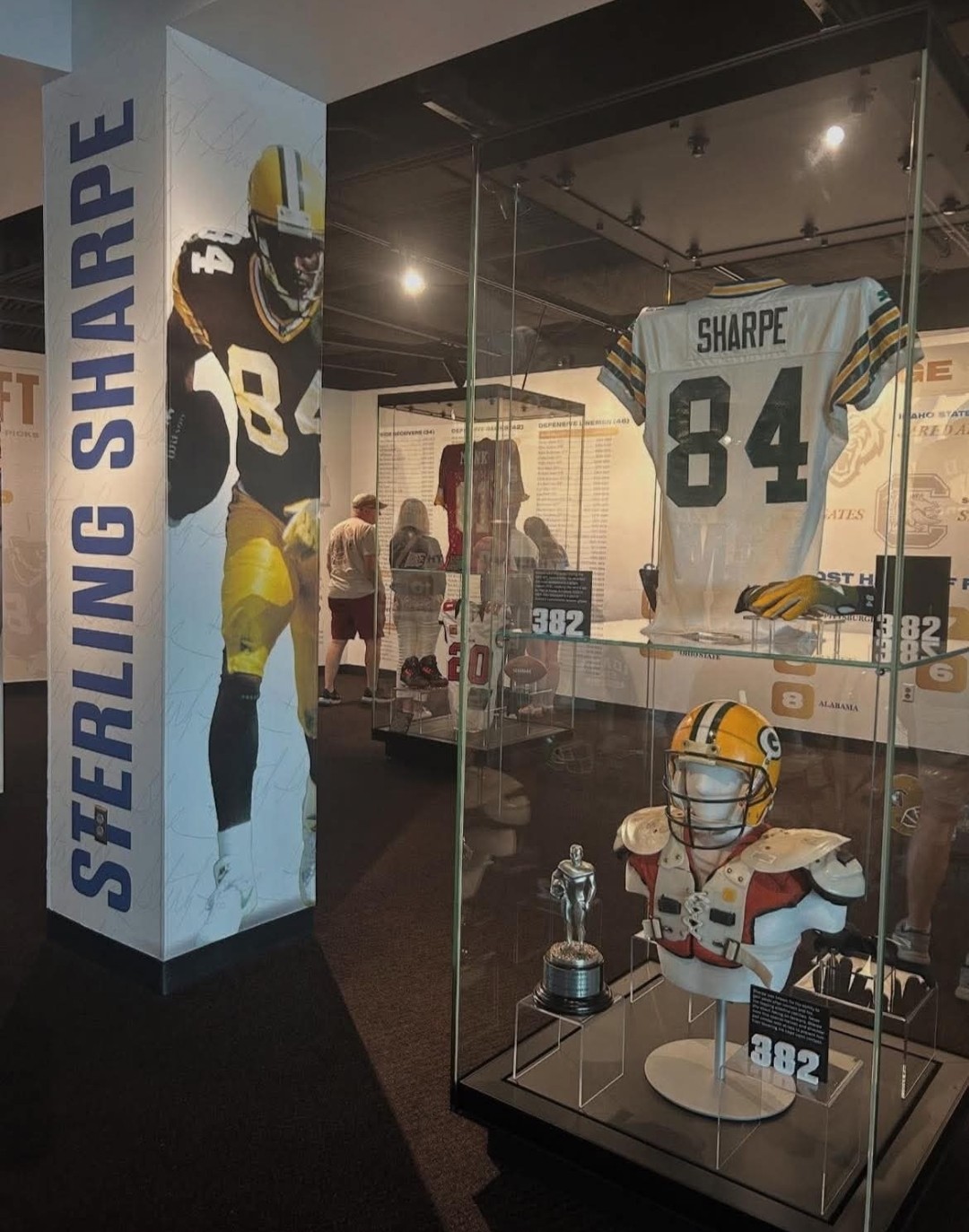 Do you realize when Sterling Sharpe gives his speech this August, he’ll be the 6th player enshrined in Canton that played for Holmgren? That is 1 fewer than Tom Landry who coached Dallas 29 seasons and 2 less than Don Shula who coached for 33. Mike Holmgren was head coach in Green Bay & Seattle for just 17 seasons. The late Reggie White, Brett Favre, LeRoy Butler, T Walter Jones, & G Steve Hutchinson are the others with bronze busts.
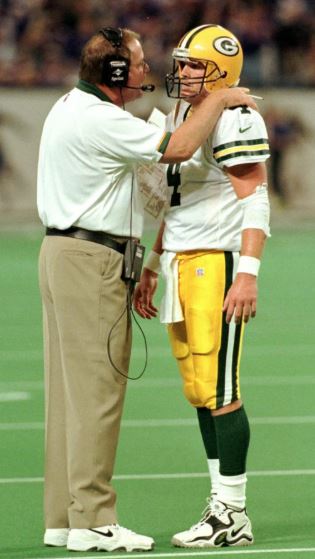 No other coach has had 3 staff members move on to become Super Bowl winning head coaches. Bill Walsh & Bill Parcells each had 2 but that is it. Not Jimmy Johnson, not Chuck Noll, not Bill Belichick, not George Seifert, not even Tom Landry. Keep in mind 5 of these coaches are already enshrined in Canton with Belichick eligible in 3 years.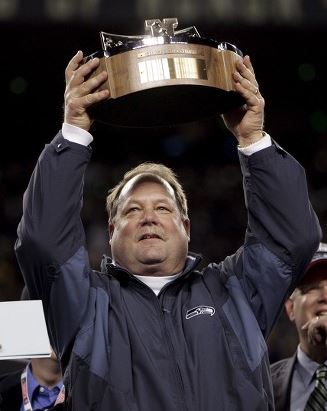
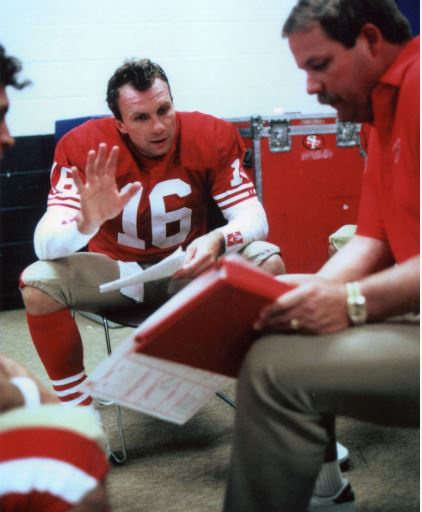 For his career he is tied with Don Shula & George Seifert as the only head coaches to produce
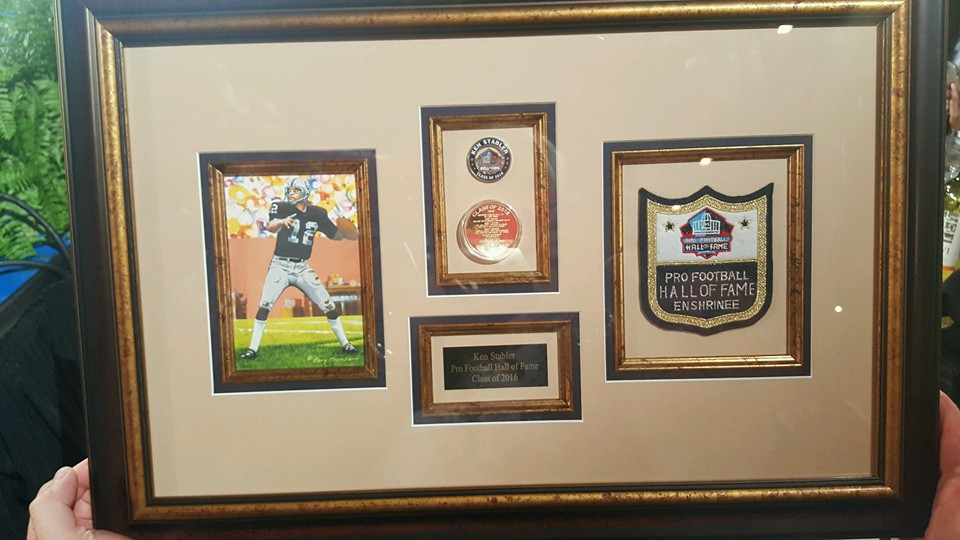
 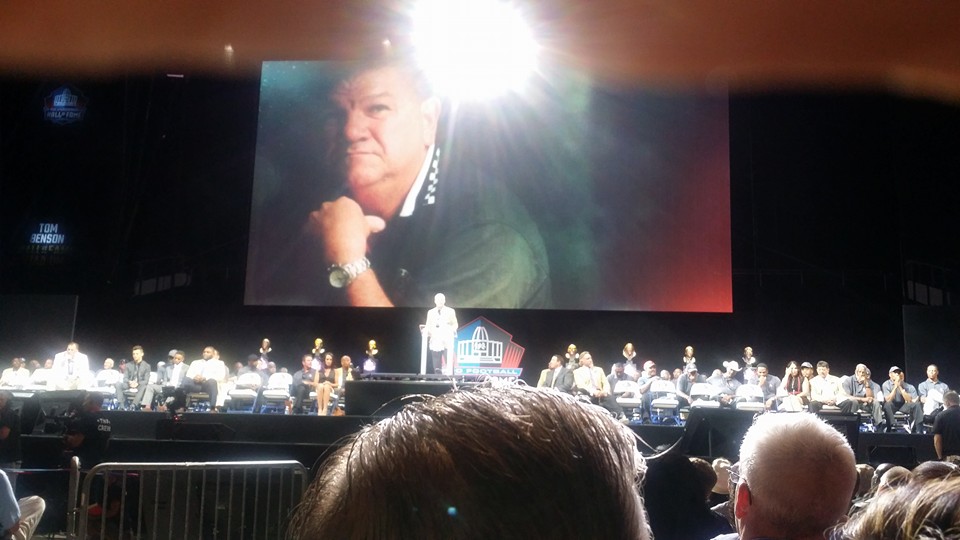 As fate would have it I attended the 2016 Pro Football Hall of Fame enshrinement ceremony as a guest of
 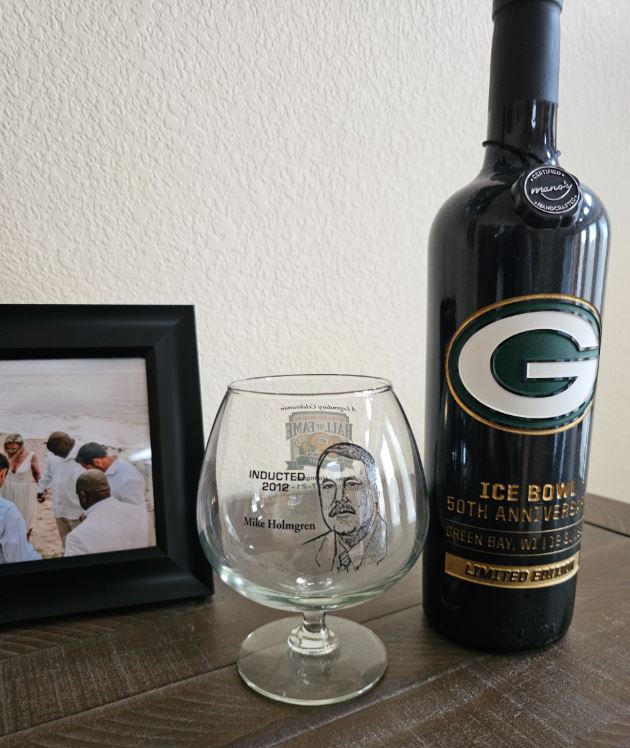 Yet here we are and somehow this man hasn’t been ensrined. If this isn’t a Pro Football Hall of Fame resume I don’t know what one is. its time for the writers to put Mike Holmgren in the hallowed halls of Canton. He had my vote years ago…


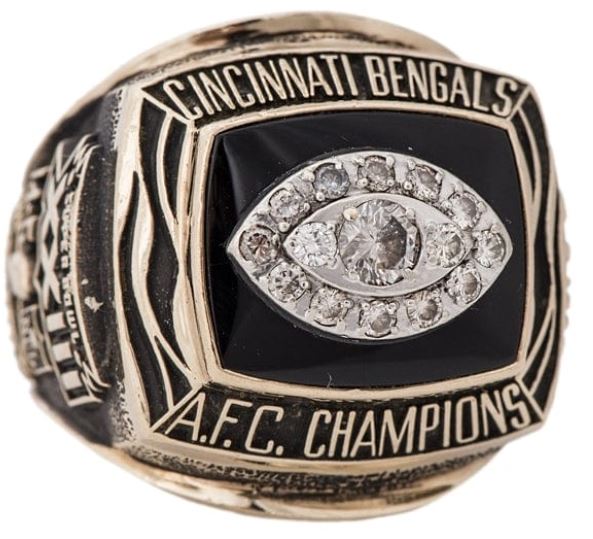 This team was led by a genius named Sam Wyche, easily one of my favorite coaches ever. And right before you scoff “He didn’t win a Super Bowl”. Don’t forget he was quarterback coach with a glistening Super Bowl XVI ring for coaching Joe Montana, ironically against the Cincinnati Bengals some 6 yrs earlier. So Sam Wyche is/was Bill Walsh the 2nd and I’ll explain.
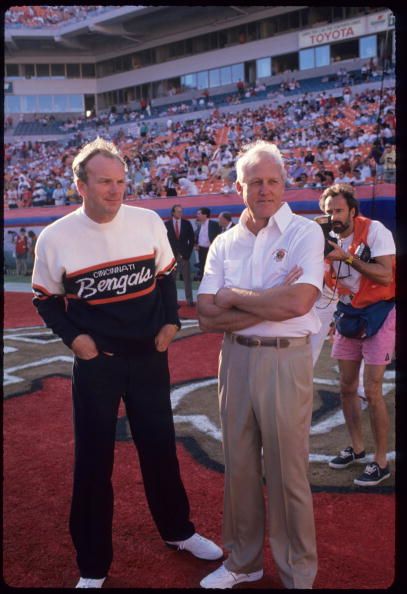 Paul Brown owned and coached the Cincinnati Bengals and had Bill Walsh as his Offensive Coordinator, and Wyche was the heady backup quarterback. When Brown failed to make Walsh his successor he lost Wyche who joined Walsh in San Francisco and ironically they beat the Bengals in the Super Bowl. Having been burned by not hiring his protégé’ and losing to him taught him a lesson. The next time Brown needed a coach he tapped into the Bengals past and brought back Sam Wyche, who had a keen offensive mind and unconventional ideas. So what turnaround am I speaking of?
 On defense DT Tim Krumrie, OLB Reggie Williams, and SS David Fulcher were the undisputed leaders of an opportunistic defense. Throw in CB Eric Thomas, who made the Pro Bowl in ’88 and the late Lewis Billups made up a superior secondary along with FS and present NFL Network analyst Solomon Wilcots.
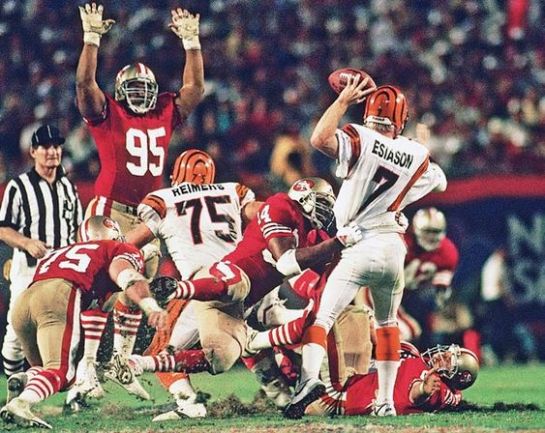 They were 34 seconds away….from erasing a history that they didn’t deserve. Yet they did win the 1988 AFC Championship and I applaud them for an olympian effort to force the league to give them a respect that was earned.
 With the Bengals leading 13-6 early in the 4th quarter, Stanford Jennings had just returned a kickoff 93 yards to put the Bengals up by a touchdown. The 49ers were driving for the tying touchdown when the late Lewis Billups cut in front of Mike Wilson and had a clear endzone interception, then dropped the ball.
 The 1987 season was the best 49er team in history (up to that time) in The Chancellor of Football’s opinion. This was the first team since the 1977 Dallas Cowboys to finish #1 on both offense and defense in the same season. So prolific was this team in a strike shortened year of 15 games, Montana led the NFL with 31 TDs in only 12 games played with the regulars and Steve Young throwing for 10 more. It was the most prolific season of Montana’s career. Projected over a 16 game season, he would have thrown for 45 TDs at a time when only Dan Marino had surpassed the 40 mark.
 They outscored their last 3 opponents 124-7 including a 41-0 trouncing of the NFC Central Champion Bears on a Monday Night in front of the nation. So what happened?? Two things…the flu and Anthony Carter got hot and did a Larry Fitzgerald thru the 1987 playoffs with this being the centerpiece game of that run and his career.
 However the upset playoff loss to the Vikings caused tensions throughout the organization. Embarrassed by the biggest upset since Super Bowl III, it was rumored Eddie DeBartolo nearly parted ways with Head Coach Bill Walsh. This led to changes within the organization and corporate pressure was one of the reasons Walsh stepped down after Super Bowl XXIII a year later.


You must be logged in to post a comment.