Top Ten Single Season Defenses in NFL History : #4 1976 Pittsburgh Steelers

Reissued Article

“In this study every season’s #1 defense, record setting defenses, trend setting defenses, and every Super Bowl & NFL championship defenses dating back to 1960. The nod would lend to those post the AFL/NFL merger of 1970. That wasn’t enough as now lets take each defense and cover what they did vs Pro Bowl QBs that season, 1,000 yard rushers, and playoff teams and talk about their effectiveness along with their statistics. Here turnovers forced is a big marker. Nothing watered down so a favorite team can’t be given favor. So The Chancellor of Football took over 200 defenses and boiled it down to this 11 article series and this was the 8th..”

Now how could we have a category on the best defenses and defenders in NFL history and not include the Pittsburgh Steelers?? As we moved into the 1970′s following the merger, we saw the hashmarks narrowed in 1974 and the goal posts moved to the end line to provide offenses more room to operate. Scoring had been down for much of the first half of the decade and it was thought this additional field to cover would hamper defenses. Especially those with burly MLB types that had limited range tracking sideline to sideline, or defending the pass.

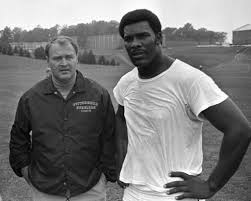
Enter Jack Lambert. A converted outside linebacker who stood 6’4 and stayed at a playing weight of 220 lbs. the majority of his career. What he brought to the table was the speed to get further back than the Willie Lanier’s and the Dick Butkus’, a prior generation’s middle linebackers who were mainly there to stuff the run. His ability to get past twenty yards in pass defense was the impetus for the Steelers to run what is NOW misnamed the “Tampa 2″.

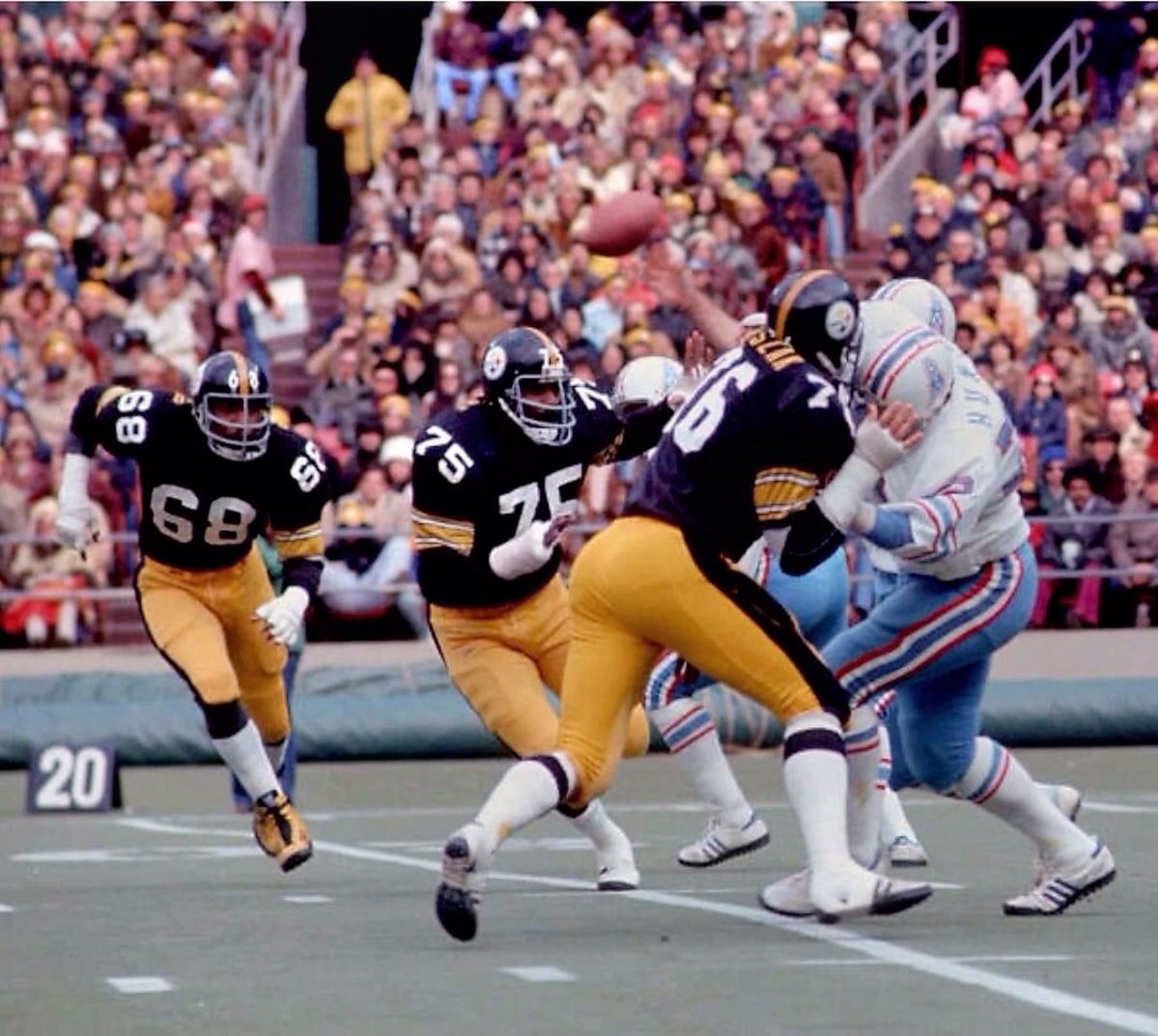
It started in Pittsburgh because against the run and rushing the passer, Ernie Holmes, Joe Greene, Dwight White, and LC Greenwood were the finest front four of their era….possibly football history. Lambert, along with outside linebackers Andy Russell, and Jack Ham, only needed to clean up against the run and were already a step back ready to clog the middle and flat areas against the slower tight ends of that era. The result??
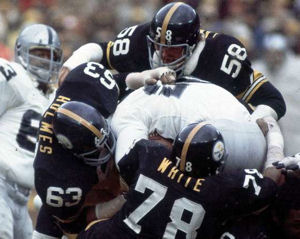
No one could run on the '76 Steelers

No one could run on the ’76 Steelers

A defense put together from astute drafting grew into one of menace that powered the Steelers to victories in both Super Bowls IX and X. In Super Bowl IX the Steelers held the Vikings to just 17 yards rushing for the game. A record that stood until Super Bowl XX. They stood tall and defended against a frantic last second effort in Super Bowl X. So strong was the Steeler defense, Coach Chuck Noll ran the ball on 4th and 9 and let the Cowboys have the ball at their own 40 yard line leaving it up to the defense to win the game. While winning a second straight world title they set the Super Bowl record for sacks with 7.

A young team with an unprecedented chance to win a third straight Super Bowl went into the 1976 season with their front four in their prime.With Terry Bradshaw growing up as a quarterback and growing receivers John Stallworth and Lynn Swann with one of history’s finest defense….What would they do for an encore?? Could they threepeat??


However there were a couple issues as this defemse was 2-2 against Pro Bowl QBs. They lost to Fran Tarkenton and Minnesota 17-6, and Ken Stabler’s Raiders 31-28 in a wild come back out by the East Bay. Another notch against the Steelers was their performance against 1976’s Top Ten offenses where they went 1-3 in the regular season.  They allowed the 2nd ranked Raiders 31 in a loss. The Vikings were 6th in offense and lost 17-6 and New England’s 8th ranked offense dropped 30 in a loss (30-27) at Three Rivers no less.

The only win was against the Kansas City Chiefs who had the league’s 7th best offense. The one thing they did do was blow out the #1 offense in the Baltimore Colts 40-14 but that did come in an AFC Divisional  Playoff and they didn’t hold any To; Ten offense to 10 points or less. Another best ever defense hallmark.
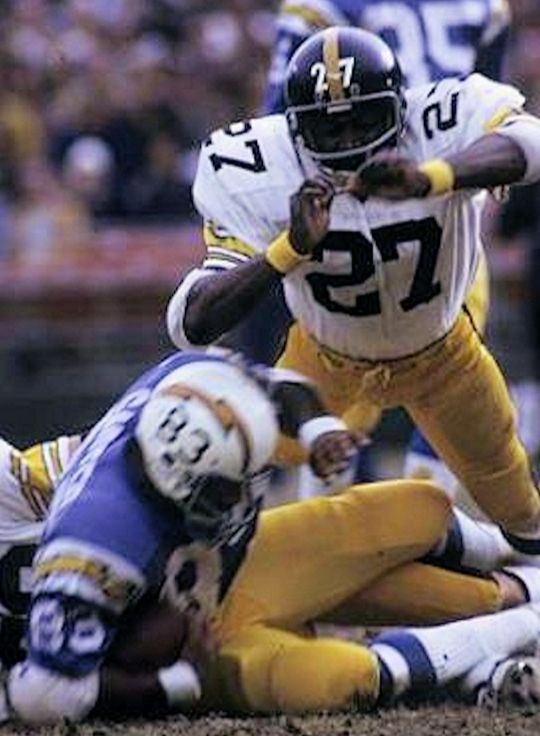
Glen Edwards laid the wood at FS on those Steeler defenses. A forgotten player.

These bleemishes against top ten offenses dropped this unit out of out Top 3. This is for statistical dominance over a season not just a particular streak that happened during one. How did you fare against Pro Bowl QBs & Top Ten offenses is a staple to this study to eliminate biases.

One thing to note, this team was primarily responsible for the upcoming rule changes of 1978 and this was their best season. For the year they were #1 overall (237.4 y/pg) gave up just 138 points and held 7 of 8 straight opponents to 10 points or less. Five of those came by shutout and the first modern team to record 3 in a row. In fact they only allowed 2 touchdowns in the last 10 games and those came in the same game. A 32-16 win over the Oilers.

They had a string of 22 uqarters where they didn’t allow a touchdown. They were so good they had to be legislated out of business.

Starting in 1978 they instituted the “Mel Blount Rule” where receivers could only be jammed / hit within the first five yards of the scrimmage line. Blount was bludgeoning receives all down the field until the pass was thrown. Pass protectors were allowed to extend their arms to better protect against the Steel Curtain. The head slap was another tactic taken away from Pittsburgh’s charging front four in 1978. All of these rule changes can be traced back to this group.
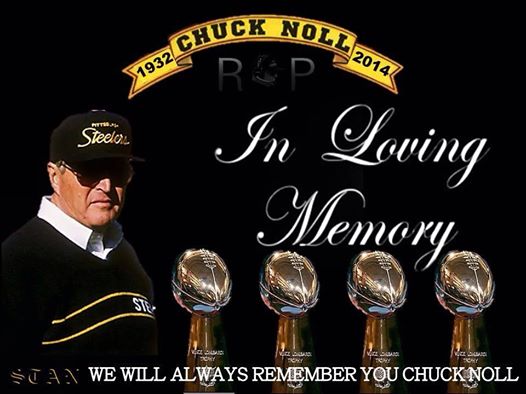
RIP Coach Noll

RIP Coach Noll

One of the best in history and number 4 on The Chancellor of Football’s list.

Dedicated to the memories of Art Rooney, Chuck Noll, Ernie Holmes, LC Greenwood, & Dwight White.

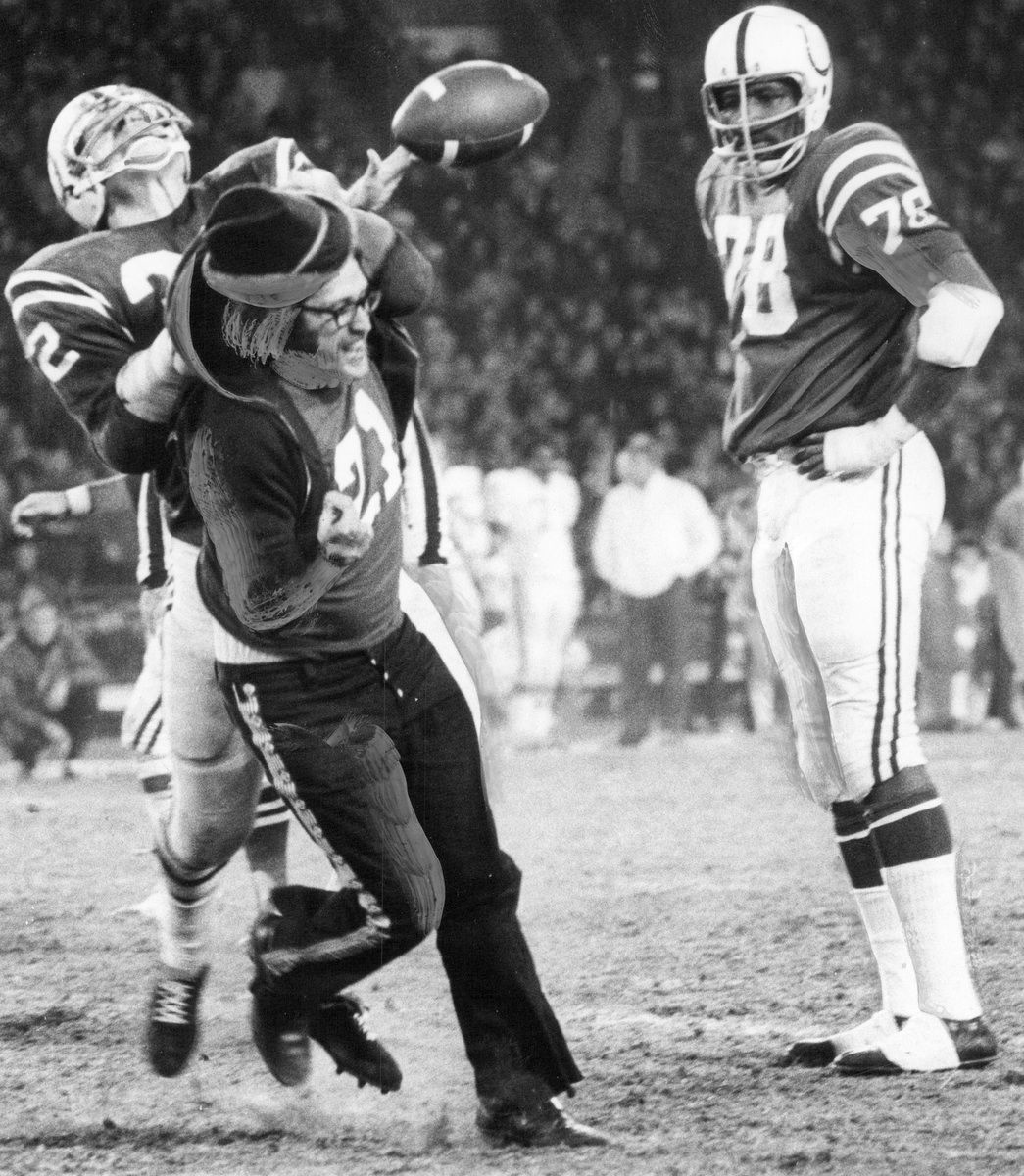
Top Ten Single Season Defenses in NFL History : #6 1971 Baltimore Colts

Article Reissue: 29, June 2014

“In this study every season’s #1 defense, record setting defenses, trend setting defenses, and every Super Bowl & NFL championship defenses dating back to 1960. The nod would lend to those post the AFL/NFL merger of 1970. That wasn’t enough as now lets take each defense and cover what they did vs Pro Bowl QBs that season, 1,000 yard rushers, and playoff teams and talk about their effectiveness along with their statistics. Here turnovers forced is a big marker. Nothing watered down so a favorite team can’t be given favor. So The Chancellor of Football took over 200 defenses and boiled it down to this 11 article series and this team was a surprising 6th…”

One of the greatest defensive performances in NFL history happened in 1971. The defending Super Bowl champion Colts had the #1 defense and drug a struggling offense to the AFC Championship Game. They allowed the 2nd fewest yards per game mark in the NFL since 1970 with 203.7 yards. With only 140 points allowed, it would have been an NFL record had the ’69 Vikings not broken the ’68 Colts old scoring record of 144 with 133.

Another interesting aspect of the ’71 Colts was how anemic their once great passing offense had become.  The 38 year old Unitas completed just 52.3% of his passes for 3 TDs and 9 interceptions. Earl Morrall, who was 37, fared no better with an even lower 50.3% with 7 TDs to 12 ints. They were 21st in passing offense and 12th overall making the defense work harder.

Kill, Bubba, Kill!

During the ’71 season the defense held 7 of their 14 opponents to 10 points or less. Including 5 of their first 6. Baltimore’s D recorded 3 shutouts and held their first playoff opponent to 3 points. In facing 5 top ten offenses that year, they were 4-1 and held two of those to 10 points or less. Yet why aren’t they remembered?? The sporting press of that era never forgave the 1968 Colts for losing Super Bowl III and the media tarnished this once great defense in the memory.

Now the media anoints others of that era and obscures this team…lets compare a few:

  • 1971 Baltimore Colts – #1 overall / 203.7 yds all. / 140 points given up / 28 int
  • 1971 Dallas Cowboys – #3 overall / 243.3 yds all. / 222 points given up / 26 int
  • 1972 Miami Dolphins – #1 overall / 235.5 yds all. / 171 points given up / 26 int
  • 1970 Minnesota Vikings – #1 overall / 200.2 yds all. / 143 points given up / 28 int
  • 1975 Pittsburgh Steelers – #4 overall / 261.5 yds all. / 162 points given up / 27 ints

Right now fans of the Doomsday Defense, The No Name Defense, and the Steel Curtain are saying to themselves ‘Its not all about stats”. Which is true until you realize this was a defending Super Bowl champion that made it back to the AFC Championship Game despite its offense. Had they won against Miami, they would have taken on the Dallas Cowboys in Super Bowl VI. Well that is who they beat in Super Bowl V to become champions in the first place.

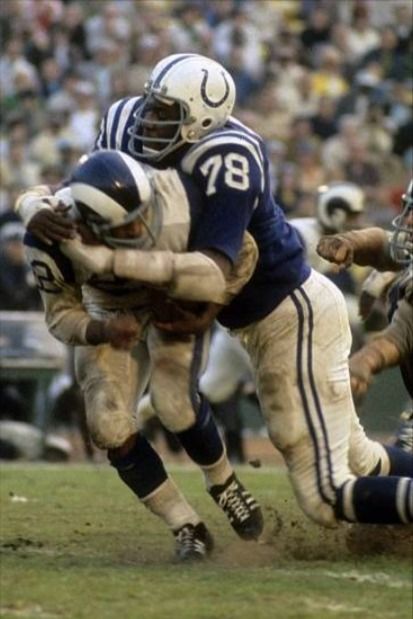
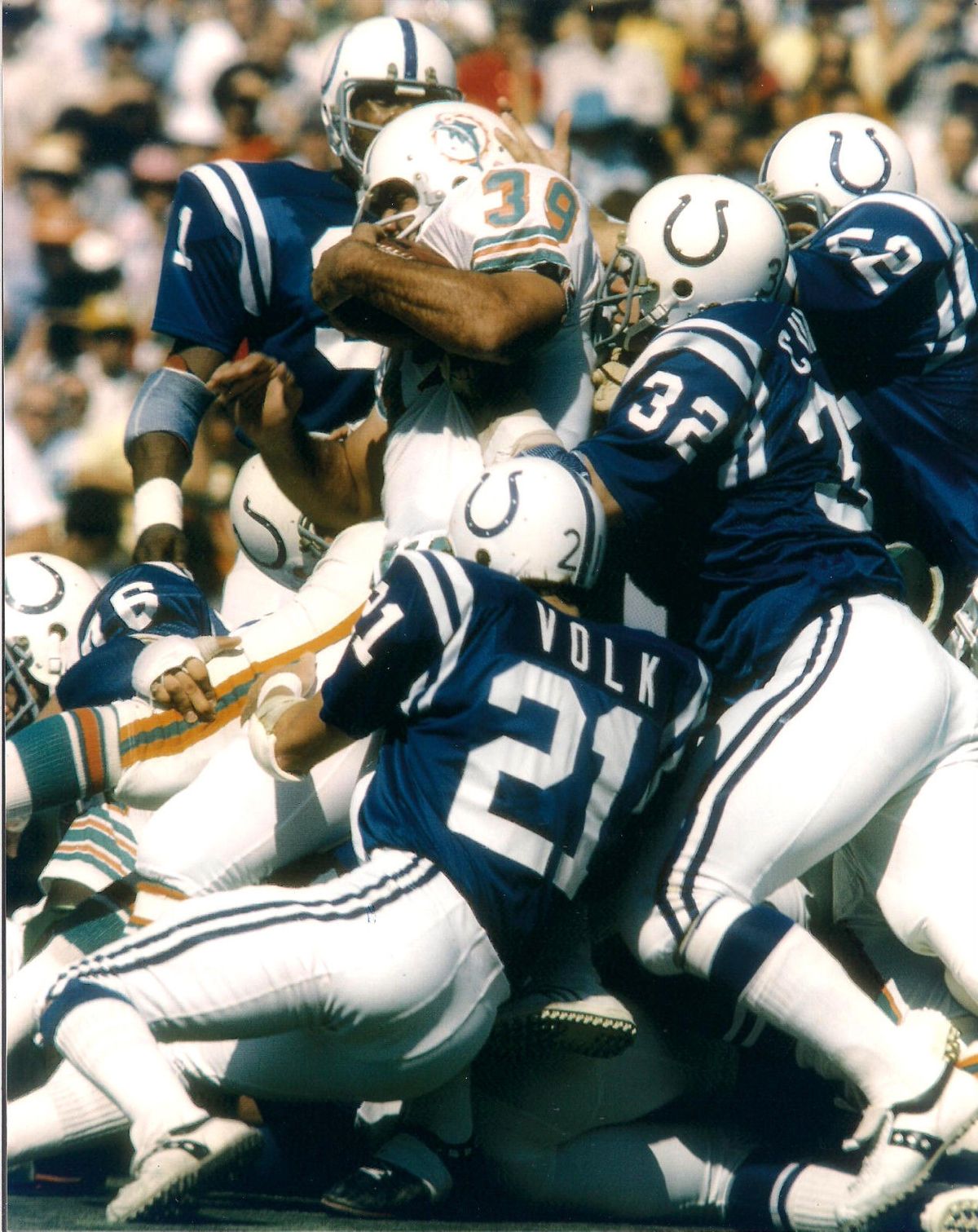
Led by Pro Bowlers DE Bubba Smith, MLB Mike Curtis, LB Ted Hendricks, SS Jerry Logan, and FS Rick Volk, its amazing only Hendricks is in the Hall of Fame. Curtis definitely should be but when you think of Hendricks making the Hall that is primarily from his work with the Raiders.

This was the last hurrah for the Colts as everything came apart starting in 1972. That was the year owner Carroll Rosenbloom swapped franchises with Robert Irsay. Head Coach Don McCafferty fired, John Unitas sent to the bench and the run as an NFL elite team ended.

Yet a tremendous performance by the defense in 1971 allowed them to hang on for one more season.

Dedicated to the memories of Don McCafferty, Bubba Smith, & Carroll Rosenbloom

Top Ten Single Season Defenses in NFL History : #9 1975 Pittsburgh Steelers

Article Reissue 23, June  2014

This is the 3rd installment on the 10 greatest defenses in NFL history. Truth of the matter is all bias has to be removed and the great equalizers lie in the season statistics, play against strongest offenses during their year, and what precedents they set.  If one team is sitting in front of another for having set a precedent, a team with less stature or ranking cannot sit above them on the list.

The Pittsburgh Steelers of the 1970s were definitely known as a defensive football team. They came of age during their run leading up to Super Bowl IX, but it was in the following two seasons they were at their zenith. The late Chuck Noll had a roster that entered its prime on the defensive side first after drafting DT “Mean” Joe Greene in 1969.

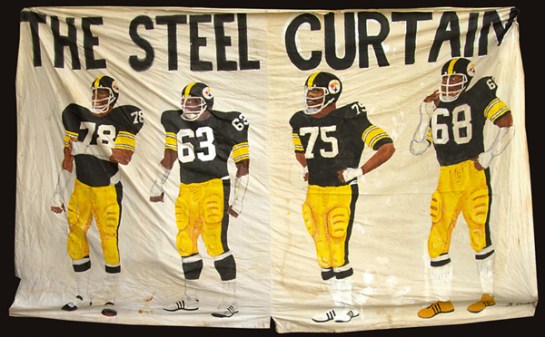
The banner that hung in Three Rivers Stadium honoring the Front Four.

The banner that hung in Three Rivers Stadium honoring the Front Four.

As defending Super Bowl champion, everyone gave them their best shot. For all the talk of the ’76 version, this team was equally stout. They only allowed 162 points while holding 8 of 14 opponents to 10 or fewer points. This didn’t include the Cincinnati Bengals, who under Paul Brown and Bill Walsh fashioned the league’s #2 ranked offense. The Steelers did hold them to 24 and 14 points to sweep them as they finished 12-2 to Cincy’s 11-3.

In fact the ’75 AFC Central was the first time in history 3 teams finished with at least 10 wins thanks to the 10-4 Oilers. Take away the games with the Steelers and the Bengals finished 11-1 and Houston 10-2 v the rest of the NFL. Pretty significant to go 4-0 against these two then wouldn’t you say??

When it comes to quality opponents, two of the Steeler’s 8 games of 10 or less allowed  came against top 10 offenses that year. Now add in both the AFC Divisional playoff and the AFC Championship where they gave up 10 points in both wins over Baltimore (12th offense) and Oakland (4th in offense). Then they made it to Super Bowl X and beat the 3rd best offense in the Dallas Cowboys while only yielding 17.

Joe Greene was the 1st Steeler drafted in the Chuck Noll era.

Joe Greene was the 1st Steeler drafted in the Chuck Noll era.

Now this is a heavyweight champ that left little standing in their wake defensively. The lone blemish?? OJ Simpson and Buffalo’s #1 ranked offense got off on them in a 30-21 win. “The Juice” broke for over 200 yards in Three Rivers Stadium. Buffalo ran for 308 yards in that game.

All that withstanding, the Steelers sent 3/4ths of their secondary to the Pro Bowl. Cornerback Mel Blount, who led the league with 11 interceptions, joined FS Mike Wagner and SS Glen Edwards. These guys were behind a good group of Linebackers that included fellow Pro Bowlers Jack Lambert, Andy Russell, and Jack Ham. Yes all three made the Pro Bowl. Once you follow that up with DT “Mean” Joe Greene and DE LC Greenwood, you have 8 of the starting 11 in the Pro Bowl….. Eight!! Come on…that is beyond the college try. Now you know why the ’78 Steelers didn’t make the top ten.

RIP Coach Noll

RIP Coach Noll

This article is dedicated in the memory of DT Ernie Holmes, DE LC Greenwood, DE Dwight White, and former Head Coach Chuck Noll who passed last week.

Thanks for reading and lease share the article.


Top Ten Single Season Defenses in NFL History: Honorable Mention

Reissue of Original Issue 21. June 2014 

With the Seattle Seahawks back in the NFC Championship with a new iteration of a great defense that could land in Super Bowl LX, here is a blast from the past inspired by The Legion of Boom and where they stood in history. In this study every season’s #1 defense, record setting defenses, trend setting defenses, and every Super Bowl & NFL championship defenses dating back to 1960. The nod would lend to those post the AFL/NFL merger of 1970. That wasn’t enough as now lets take each defense and cover what they did vs Pro Bowl QBs that season, 1,000 yard rushers, and playoff teams and talk about their effectiveness along with their statistics. Here turnovers forced is a big marker. Nothing watered down so a favorite team can’t be given favor. So The Chancellor of Football took over 200 defenses and boiled it down to this 11 article series…

Smith's 69 yard interception in Super Bowl XLVIII ended the competitive phase of the game.

Smith’s 69 yard interception in Super Bowl XLVIII ended the competitive phase of the game and trumpeted the question: Where would you rank Seattle’s defense with  the all-time greats??

When Malcolm Smith crossed the goal line to put Seattle up 22-0 in last February’s Super Bowl, pundits were already arguing where they ranked among the NFL’s greatest defenses. Here at Taylor Blitz Times we wanted to let some time pass before we waxed too philosophical about their exploits. As the keeper of the flame, it’s up to The Chancellor of Football to accurately place each great defense. We will do this in 3 parts.

One of the criteria for greatest ever defenses you have to ask is: How dominant were they at their peak? They had to bring the lumber over an entire season. These defenses had to be stout with a performance that stands the test of time in remembrance. Without further adieu we have to get on with the Honorable Mention. Those right outside the top ten.

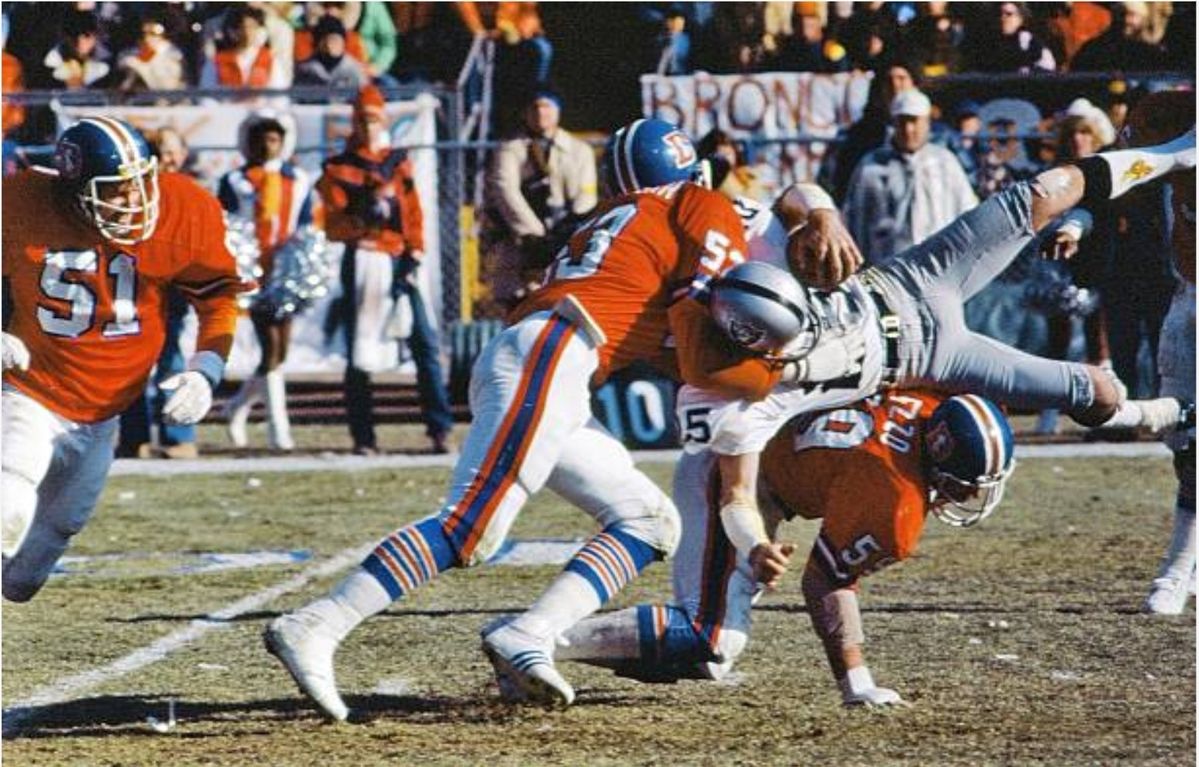
1977 Denver Broncos – The original Orange Crush defense that led the Broncos to Super Bowl XII and Denver’s first ever winning season. This was the first great full time 3-4 defense that yielded only 148 points (10.6 pts / game) and just 18 touchdowns for the season. Holding 7 of their opponents to 10 points or less.

Led by Randy Gradishar, ESPN’s Tom Jackson, and the late Lyle Alzado this defense had an unheard of 4 All Pros concentrated on this defense and 5 Pro Bowlers. This not ready for primetime group came out of nowhere and swallowed the Steelers and Raiders in the playoffs before falling to Dallas in New Orleans in Super Bowl XII. This group swarmed like bees and ushered in the era where 3-4 defenses took over the NFL.
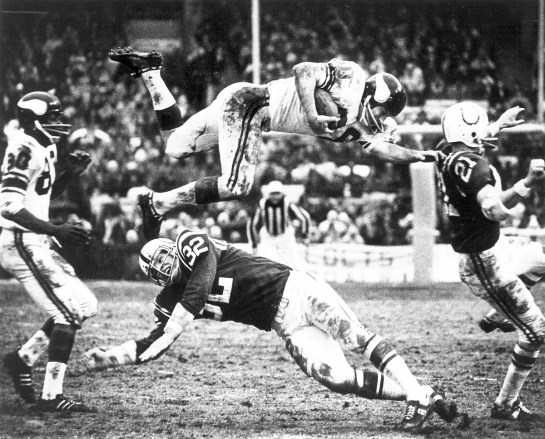
1978 Pittsburgh Steelers – In the first year in which the NFL moved to a 16 game schedule, this group set the new record with fewest points allowed in a season with 195. Powered by the Steel Curtain, they held 8 of 16 opponents to 10 or fewer points. This group did more blitzing than in years past to get to the quarterback. They did have 5 Pro Bowl defenders and 1 All Pro in Jack Ham, but there were stronger incarnations of the Steeler defense.

A fact that gets lost is going into Super Bowl XIII, the consensus was Pittsburgh force vs the finesse Cowboys. Yet it was Dallas whose defense was ranked #2 and Pittsburgh’s #3, For the season they yielded 260.5 yards per game, unofficially had 52 sacks and 27 interceptions which ranked 7th. They peaked in the playoffs holding both Denver and Houston to 10 points and 5 points respectively. Yet gave up some serious candy to the Dallas offense (320 yards & 31 points)

1968 Baltimore Colts – The team that is best known for coming up short in Super Bowl III against the AFL’s New York Jets. In The Chancellor of Football’s estimation, this was the best team that Don Shula ever coached and one of his defensive assistants was the late Chuck Noll. This defense held 10 of 14 regular season opponents to 10 or fewer points. At one point late in the season, they gave up 1 touchdown over 25 quarters including a string of 16 straight quarters w/out a touchdown allowed.

md-darkroom-hutchins-curtisThe Colts of ’68 shut out 3 regular season opponents and the fourth was against the Browns who gave the 13-1 team their only loss. That drubbing was avenged 34-0 in the NFL Championship Game. They even set the record with only 144 points allowed. Between 1967 & 1968 their record was 24-2-2. If only this team had won on January 12th 1969…..but….

2000 Tennessee TitansLost in the delirium over the great 2000 Ravens defense, is the fact they finished #2 to the Titans that year in rankings. Jeff Fisher’s bunch only allowed 238.9 yards per game and held 6 opponents to 10 points or less over the campaign.

Second year DE Jevon Kearse led the team with 11.5 sacks and 4 forced fumbles. Samari Rolle had 7 interceptions he returned for 140 yards and a touchdown. SS Blaine Bishop had 84 tackles to go with 2.5 sacks but 0 interceptions. All three were Pro Bowlers but only Samari was an All Pro Player. One issue is they didn’t force enough turnovers (29) and they finished just +1 in turnover ratio. These are poor marks considering they only saw 1 Pro Bowl quarterback the entire season. Yet they were #1 against the pass (151 yds /gm) and #3 against the run (86 yds /gm).

1987 San Francisco 49ersOne of the last teams to finish with the NFL’s #1 offense and defense happened with this group in 1987. They were gaining momentum allowing only 1 touchdown in the final 16 quarters of the season and none in the final 12 as the playoffs beckoned. They held 5 opponents to 10 or fewer points including two shutouts in their final three games. One of which was a 41-0 hammering of the NFC Central Champion Chicago Bears on Monday Night Football. 

Led by All Pro and Pro Bowler Ronnie Lott (5 ints) this group was #1 against the pass (165 yds /gm) while only yielding 273 yards for the game. What makes this more remarkable are 3 games were played with replacement players due to the strike. Had the season been 16 games instead of 15 and no strike, these numbers could have been even better. They were also #5 against the run (107.4 yds / gm) thanks to All Pro and Pro Bowl Nose Tackle Michael Carter.

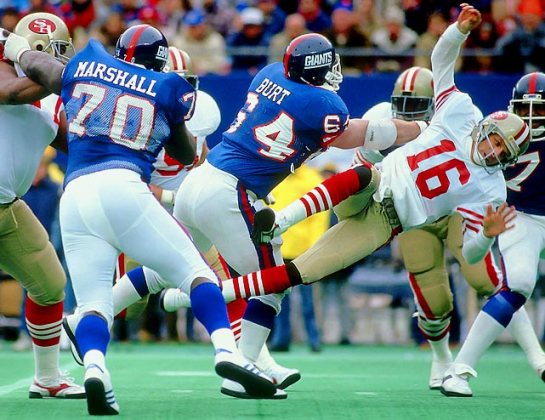
Jim Burt knocking Joe Montana out with a concussion in their 49-3 rout in the '86 playoffs.

Jim Burt knocking Joe Montana out with a concussion in their 49-3 rout in the ’86 playoffs.

1986 New York Giants – A romanticized defense that knocked 5 quarterbacks out on their way to the Super Bowl XXI championship. Yet they were #2 in 1986 and allowed 39 more yards per game than the #1 Chicago Bears with 297.3 yards per game. Second biggest discrepancy between #1 and #2 since 1970.

Led by League MVP and Defensive Player of the Year Lawrence Taylor’s 20 sacks, New York held 5 teams to 10 points or fewer during the regular season. They held their 2 NFC playoff opponents to 3 & 0 points respectively. There were 4 Pro Bowl defenders on this defense in LB Harry Carson, NT Jim Burt, DE Leonard Marshall, and the aforementioned LT.

2008 Pittsburgh Steelers – Close but no cigar. This team finished with the #1 ranking allowing just 237.2 yards per game. They held 8 opponents to 10 or fewer points yet gave up 223 for the season. One mark against them is they only faced 2 Pro Bowl QBs and lost both games. Losing 24-20 to Peyton’s Colts and 21-14 against Eli’s Giants. This was also the year they beat the Patriots 33-10 with Matt Cassel at QB not an injured Tom Brady. Big difference. This group had 51 sacks but only 20 interceptions. The last time we saw them, Kurt Warner passed for 377 yards, 2nd highest in Super Bowl history, and needed Big Ben to bail them out with a game winning pass with :32 left.

This group did have NFL Defensive Player of the Year James Harrison and Pro Bowl SS Troy Palamalu who would win the award 2 years later. Harrison had 16 sacks with 7 forced fumbles. James Farrior (122 tackles) was the 3rd and final Pro Bowler on a talented roster which included LaMarr Woodley (11 sacks).  They were a world champion but this group didn’t perform high enough against the best competition. The top ten is a Sugar Ray Leonard’s list, the honorable mention is where Thomas Hearns resides.

Dwight Smith capped off Super Bowl XXXVII with 2 defensive touchdowns. Should have been the MVP.

Dwight Smith capped off Super Bowl XXXVII with 2 defensive touchdowns. Should have been the MVP.

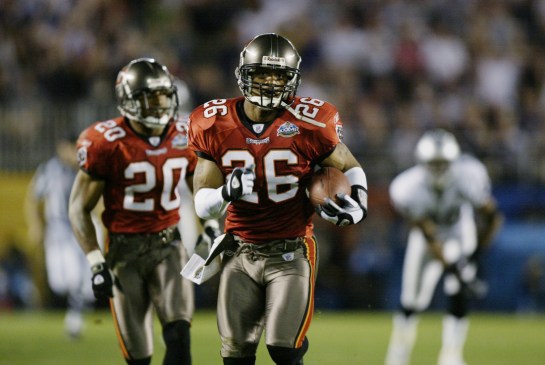
2002 Tampa Bay Buccaneers – The final team to miss the call to the top ten was the 2002 Buccaneers. The undisputed #1 defense that year. However playing in the new NFC South they feasted on patsies. On 3 occasions they took on top 10 offenses and they lost two of those games to Philadelphia (10th) and Pittsburgh (5th).

This team yielded 252.8 yards per game had 43 sacks and 31 interceptions which ranked 6th and 1st respectively. This team only gave up 196 points while holding 9 regular season opponents to 10 or fewer points. However a closer look reveals they came against offenses ranked 26th, 18th, 14th, 23rd, 31st, 31st, 12th, 14th, and 29th. Chris Redman (who??) quarterbacked the Ravens who was the first in this group. While NFL journeyman Jim Miller led the Bears in the last game.

This team fielded 5 Pro Bowl players in NFL Defensive Player of the Year Derrick Brooks, Shelton Quarles, Hall of Famer Warren Sapp, Simeon Rice (15.5 sacks), and S John Lynch. This group scored on defense. Brooks tied the NFL record with 4 defensive touchdowns and CB Dwight Smith set a Super Bowl record with 2 interception returns for touchdowns. Their numbers and performance should get them in until you look at the competition. Someone reading this is going to describe how they throttled the #1 Raider offense in the Super Bowl. Yet how much do you attribute to Monte Kiffin’s defense or Jon Gruden knowing his former Raider offense and personnel??

Thanks for reading and now its time for the top 10.

SUPER BOWL X CHAMPIONS 1975 PITTSBURGH STEELERS

At what point do you begin to erase an earlier label that was given to you as a player?  Can you totally overcome a negative stigma associated with that label?  At what point does a team peak with its full talent on display??
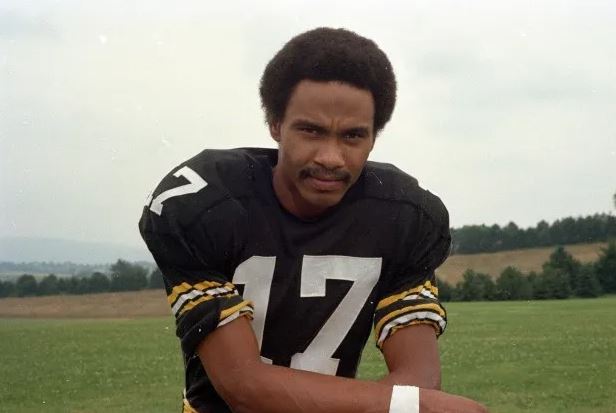
Just think that only a year and a half earlier, the Steelers were 3-1-1 at midseason, and mired in a quarterback controversy between “Jefferson St” Joe Gilliam and Terry Bradshaw. Pittsburgh won with defense and a running attack in spite of the quarterback. After alternating between the ineffective Gilliam and Bradshaw, Noll finally gave the nod to Bradshaw.

Many speculated Pittsburgh wasn’t ready for a black quarterback. Did you know the 1974 Steelers were the only Super Bowl champion that completed less than 50% of their passes?? Gilliam went 4-1-1 in his starts completing 45.3% of his passes (96 of 212) for 1,242 yards 4TDs and 8 interceptions. Bradshaw finished completing 45.3% of his throws (67 of 148) for 785 yards 7 TDs with 8 interceptions. Terry, having gone 5-2, was sacked more and threw interceptions at a higher rate than Gilliam. So he really never beat him out. Terry Hanratty started the 14th game.

superbowlxblack2After an upset victory in Super Bowl IX established them as league champion, the confident Steelers rolled through the next year with Terry Bradshaw at the helm. The Steelers were led by their famous front four known as the “Steel Curtain”, their powerful running game, and Bradshaw received some credit for being the quarterback of the champs.  Yet the respect afforded the Steelers QB was begrudging and not to the level of previous winners like Unitas, Staubach, Greise, Dawson, Starr, or even Fran Tarkenton who hadn’t won one yet appeared in Super Bowls twice.

The 1975 season began with a first time champion who was one of the youngest teams in football.  They were just developing as a team having come through the ’74 season with 8 rookies on the roster.  They hadn’t hit their peak as a team. Even Bradshaw was just shaking off the bad play that had him labeled as “Lil Abner” and a “dumb” quarterback.

He hadn’t lived up to his billing as the number 1 player in the 1970 draft until now, but with a pair of second year receivers in Swann and Stallworth, they were developing to complement the running game.  The strength of this team was its defense and punishing ground attack.  Franco Harris again rushed for 1000 yards and the Steelers went 12-2 in the regular season. The Steelers were beginning to become bigger than life with Joe Greene, LC Greenwood, Ernie Holmes, Jack Lambert and company.

Bradshaw had improved as a quarterback in 1975 as he emerged as a leader. He completed 57.7% (165 of 286) for 2,055 yards 18 TDs to just 9 picks. Yet his moment finally came in a Super Bowl performance that put him on the level of the quarterbacks who were treated with more acclaim. His stats were good but it was the way he stood strong in the pocket to deliver the game clinching 64 yard touchdown to Lynn Swann in Super Bowl X while being knocked out.

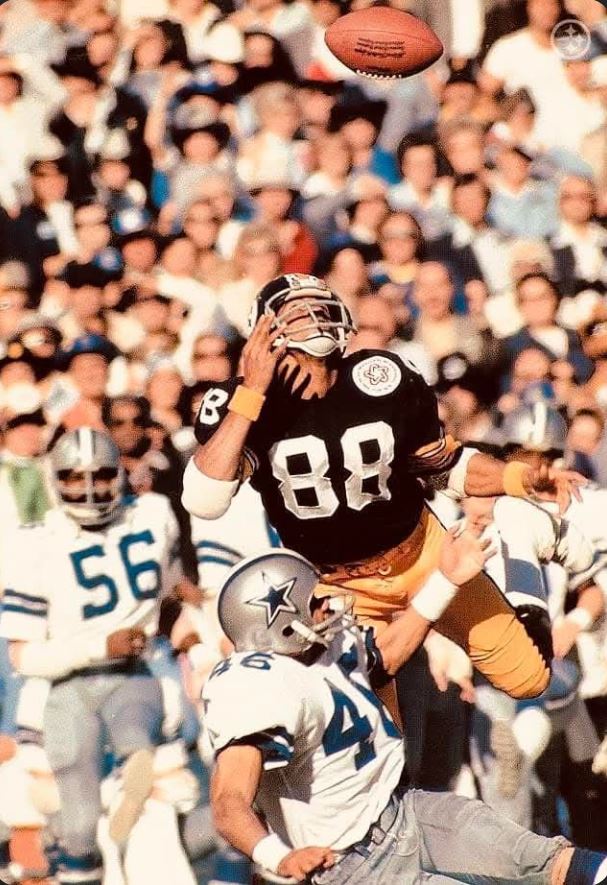
Swann’s “Levitating Leap” 53 yard pass reception in X was the lasting highlight of a great game.

You could see he knew was going to get clocked as he side stepped Cowboy linebacker DD Lewis and gathered himself to throw deep. Much like present Steeler quarterback Ben Roethlisberger is thought of now. He was carried to his first Super Bowl by his teammates. In his second, he validated himself among the great quarterbacks by making the play to win the game.

I disagree with the assessment in the video as its a retrospectively blurring the facts. It was after his 1975 season and his heroic throw to Swann that became legend.
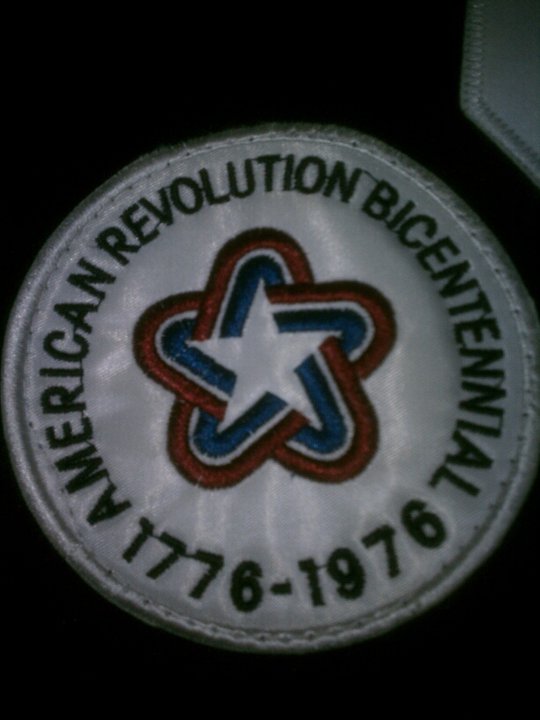
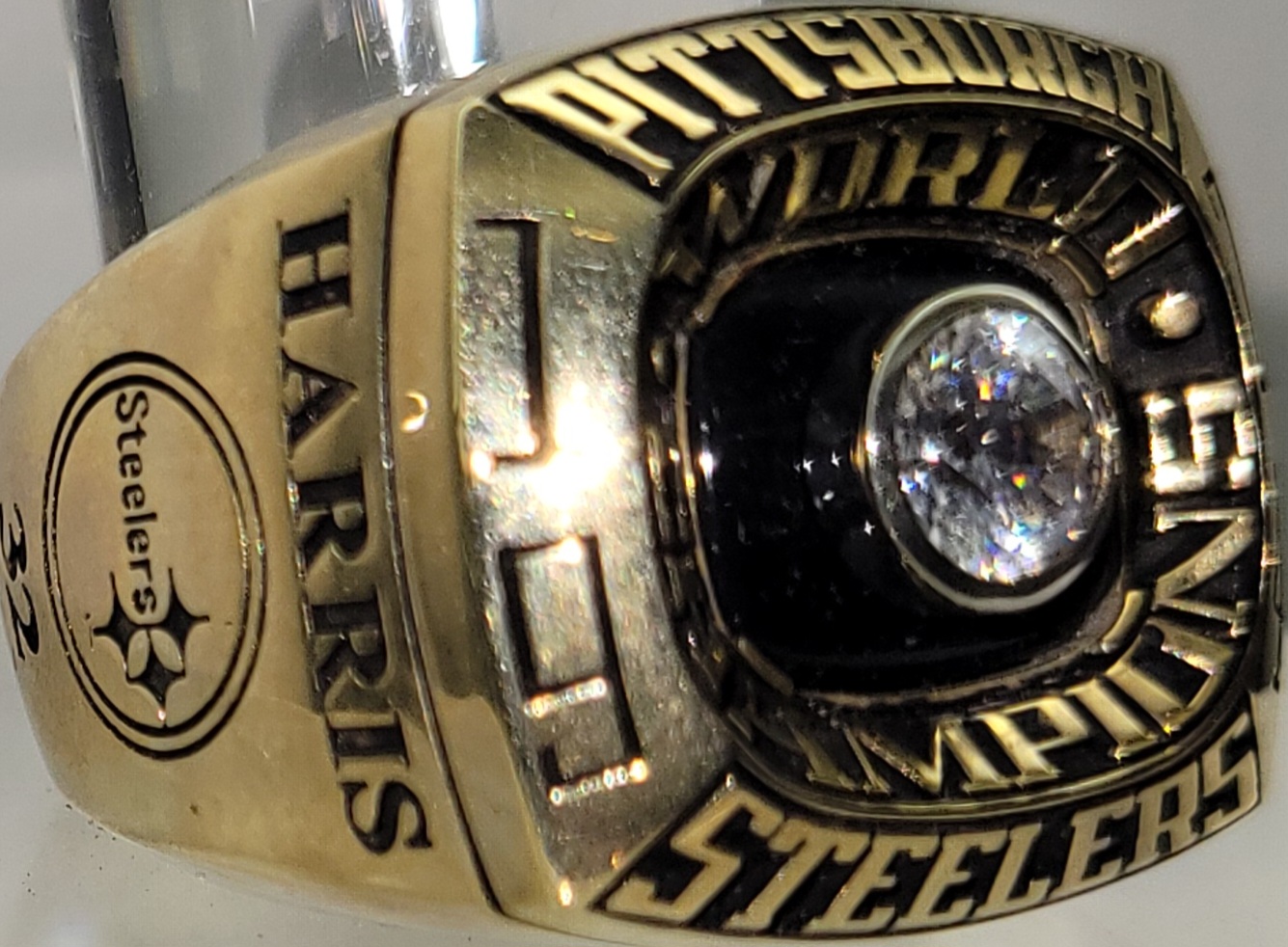
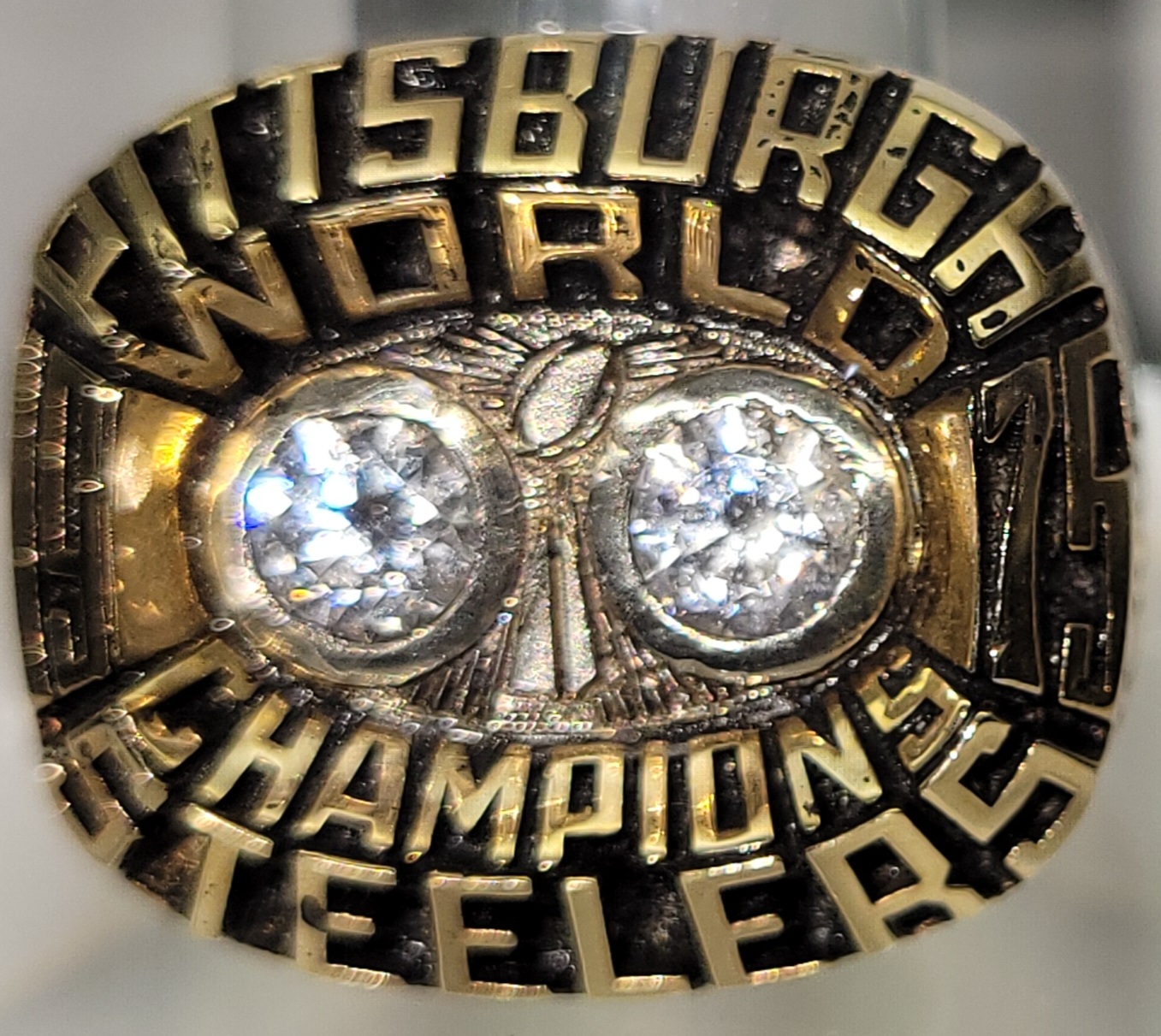
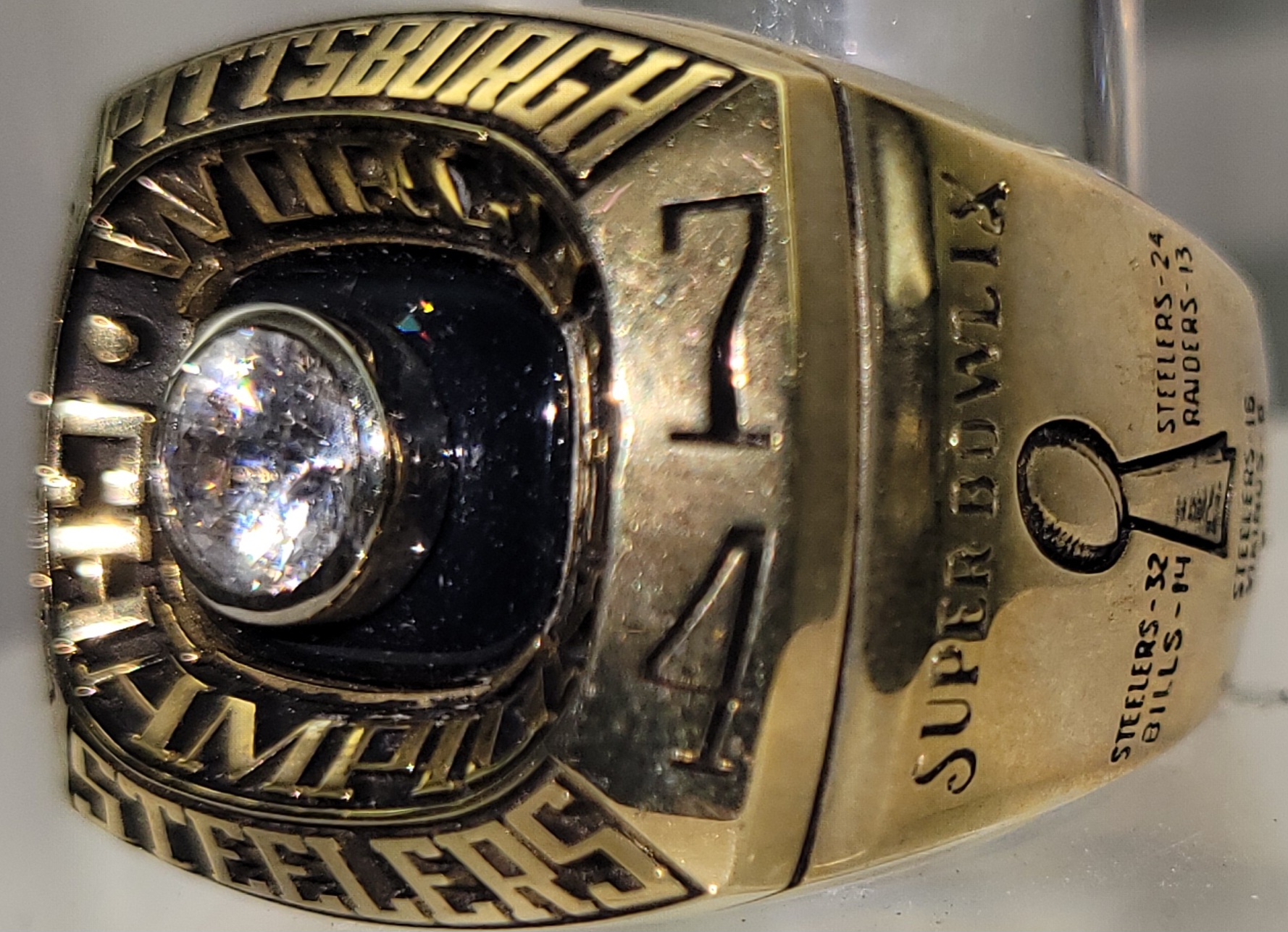
Super Bowl X validated the career of Terry Bradshaw and he didn’t have to look over his shoulder the rest of his career. Two more championship triumphs were to follow and this ring commemorated the Steelers becoming a dynasty. Bradshaw would go on to make the Pro Football Hall of Fame, however the contributions of “Jefferson St” Joe Gilliam shouldn’t be forgotten.

Thanks for reading and please share the article.

This article is dedicated in the memory of Joe Giliam.

The patch worn by each team in Super Bowl X.

SUPER BOWL IX CHAMPION 1974 PITTSBURGH STEELERS

The first NFL championship in 42 years where the game ball was given to Steeler patriarch, the late Art Rooney. It had been a long time coming for all the decades of despair this team had been through. From the war time merging with the Philadelphia Eagles to form the “Steagles”. To the failed ability to recognize quarterback talent by cutting future Hall of Famers Len Dawson and Johnny Unitas. Nothing good had happened for this organization for decades.
Enter Chuck Noll.

Noll was hired to be the Head Coach after serving under Don Shula’s Baltimore Colts regime in 1969. His last game with the organization was the loss to the New York Jets in Super Bowl III. By then Noll was defensive coordinator after serving for years as a defensive line coach, most notably with the early 60’s San Diego Chargers in the AFL.

They say the player is the father to the coach a man becomes and Noll had been a lineman in his playing days. So instead of building his team first with a quarterback or featured runner, he drafted defensive tackle Joe Greene. He would build his defensive masterpiece from the ground up. A point often forgotten is the selection of LC Greenwood in the 10th round that same year.

In 1970, quarterback Terry Bradshaw was selected as the #1 overall pick. They finally had their quarterback of the future but the chief building block was Noll’s defense and in particular his defensive line. Five years later they were the best in pro football and came to be known as “The Steel Curtain”
Of course the Steelers had the great class of 1974 to put the finishing touch on what would become a football dynasty. However a look back and you can truly see how Pittsburgh’s first NFL championship had AFL roots.

If the AFL hadn’t been around to offer Chuck Noll his first coaching job at the professional level in 1960, would he have been in place to take the Steelers job in 1969?? Also look at the make up of the Steeler team from a draft and racial standpoint. Mining talent from historically black colleges and smaller schools was an AFL trait, not an NFL one. What Noll did in Pittsburgh was recreate the San Diego defensive line of the early 1960s he wasn’t allowed to in Baltimore.Steel_Curtain_Time_Magazine

  • Joe Greene – North Texas St.
  • LC Greenwood – Arkansas AM & N
  • Ernie Holmes – Texas Southern
  • Dwight White – East Texas State

So think of Joe Greene as a latter day Earl Faison or Ernie Ladd who had come from Grambling. By the time we include the late quarterback “Jefferson Street” Joe Gilliam from Tennessee State, Mel Blount from Southern, and John Stallworth from Alabama A&M, this team resembles the 1965 San Diego Chargers or 1969 Kansas City Chiefs of the AFL more than it did the 1968 Baltimore Colts.

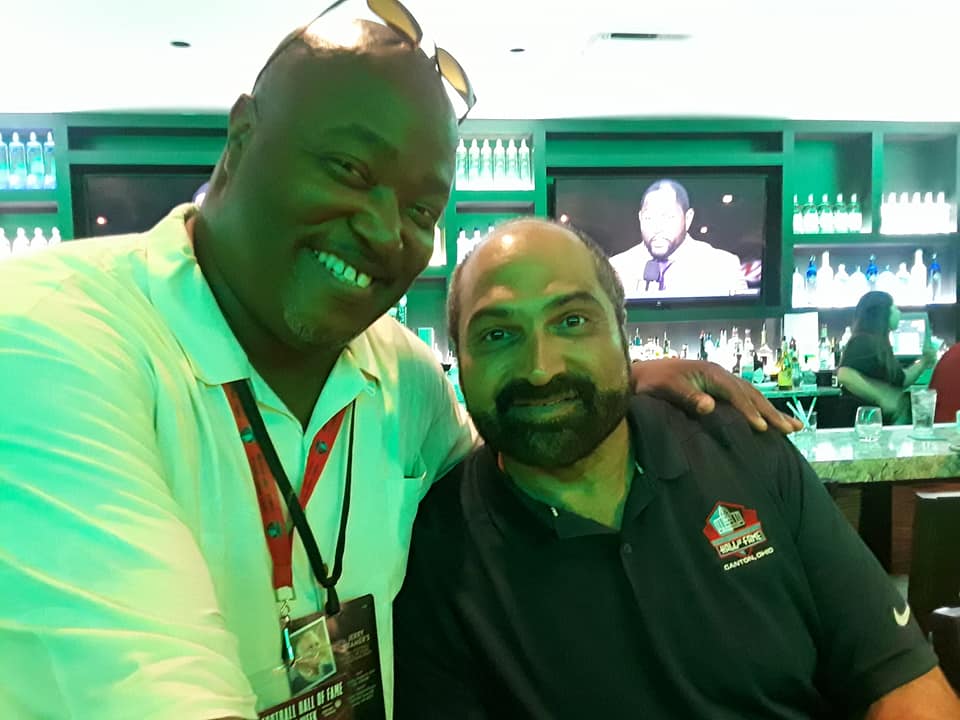
The Chancellor with Franco Harris, MVP of Super Bowl IX.

super-bowl-logo-1974Many former players have talked about the racial quota that existed in the NFL back when. Well along with Vince Lombardi and Hank Stram, Chuck Noll broke that system for good and let talent flourish. First the Steelers took $1 million to move in with the AFL teams to form the AFC in 1970 with the league merger. Than Chuck Noll built the best AFL team he could through the draft.

In doing so he brought Pittsburgh a championship it so desperately sought. It would not be the last.

RIP Coach Noll

RIP Coach Noll

Thanks for reading and please share the article.

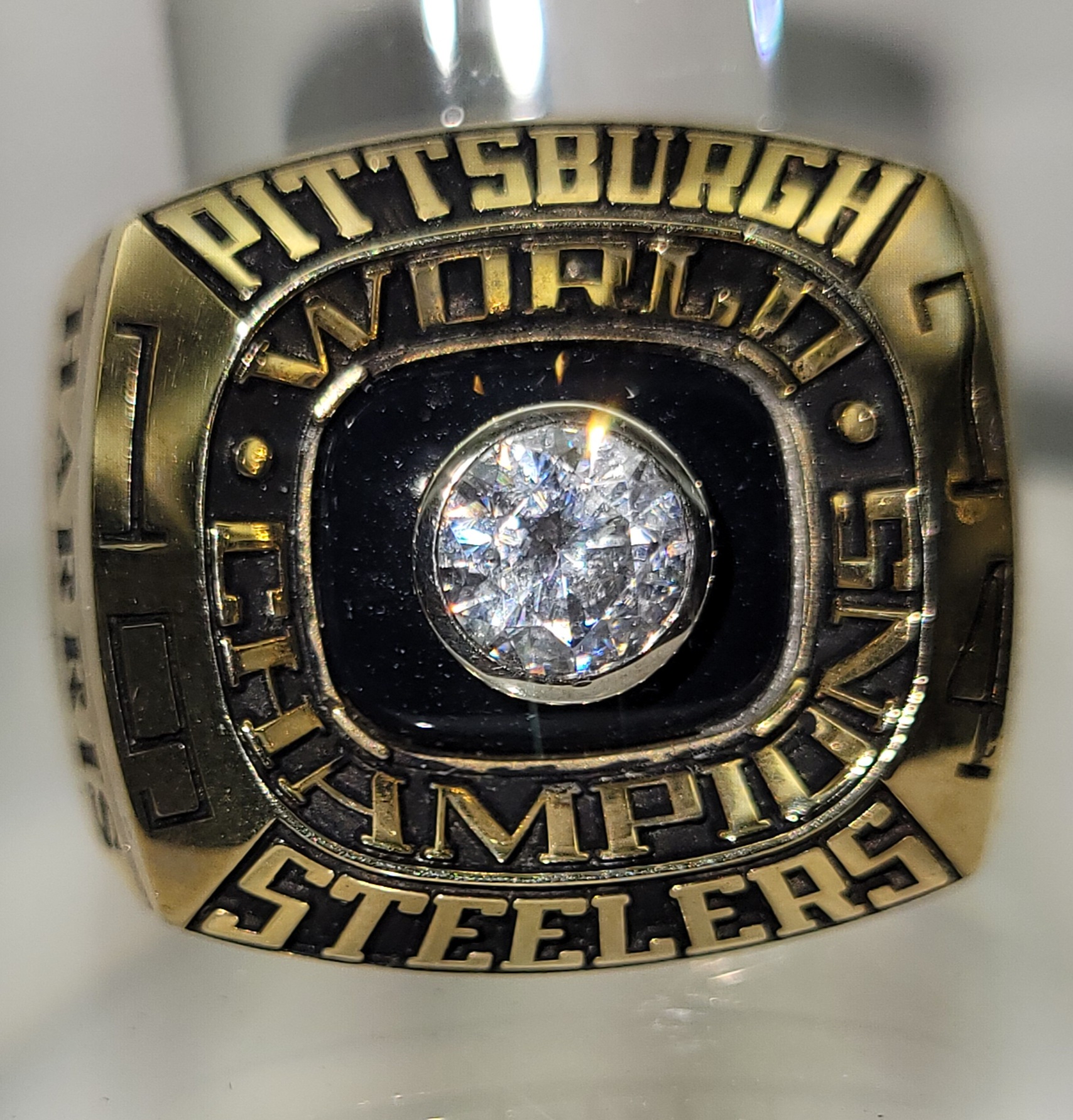
This bauble was what each player and coach received after their 16-6 win vs the Minnesota Vikings in Super Bowl IX.