I read a comment where someone was talking about money ruining the game of football. Yet I remember uploading a vid of Bernie Casey in 1967 telling Steve Sabol he played football purely for the money. I remember another interview I recorded with the late Deacon Jones and the late Paul Hornung discussing free agency and Michael Strahan and Tim Brown were egging them on when Hornung said (and yes I have this interview recorded to upload) saying that yes if Wellington Mara approached him with a doubling of his salary he would have left the Green Bay Packers. Many tend to overromanticize the past to fit an ideal that only exists in their mind. I have recordings of Johnny Unitas, Don Maynard, Dick Night Train Lane and many players from the 50s and 60s negotiating and arguing compensation.
Some romanticize when Packers Center Jim Ringo had an agent coe to speak to Lombardi and Vince walking out. When he came back in said “Youre in the wrong city he plays in Philadelphia now.” That excites you? You dont ask for a raise or move to another company professionally to grow that pays you more?? You really think that Vince Lombardi tactic would work today? You dont think Vince would have been forced to change with the times?
You’re living in an ideal world in your imagination… Vince was a forward thinker. One who had a homosexual brother and did have homosexual players on his roster in Washington when he was with the Redskins. Started black safeties and linebackers (Willie Wood and Dave Robinson) when it was practice by the rest of the NFL not to. They weren’t smart enough remember?? …. well both went to the Pro Football Hall of Fame in Canton and the Packers won half the decades championships also…
He would have adjusted to free agency and a changing world if he were here. Nothing stays the same. Some of you old fans need to change also to the times.
A decade or so back I had completed a journey to find the greatest single season defense in NFL history and had a childhood friend Gerald “Honeybun”Johnson claim “Hey you have to redo that study and include the 2015 Broncos.” To which I said they were a great defense but they weren’t good enough. Now everyone has their criteria but I know my method had been pretty fool proof. Take every Super Bowl champion, every #1 defense, every record setting defense, every trend setting defense. Now lets see how they fared against Pro Bowl QBs and Top Ten offenses and held opponents to 10 points or less in their season of dominance to knock out all biases.
In recent years you’ve had people inventing their own unofficial stats to make a team seem better than they were. Official defensive rankings have always gone by yardage per game, not points allowed. Now looking at points allowed after yardage, then add in yardage rankings passing, rushing, sacks, and interceptions, then you have methodology to begin a study. My study had over 200 defenses and included all 48 and now 60 Super Bowl champion defenses. So no one can flippantly say “They won the Super Bowl” when every one of them are here.
My online arguments with “Honeybun” (childhoood nickname sincehe always ate ’em lol) had long since ended and then former Bronco Aqib Talib revived it on The Arena Gridiron’s Podcast. Both argued the ’15 Broncos were better than the Legion of Boom from 2013:
Time for The chancellor of Football to break this down and the Seahawks wound up #3 all time on my list
2013 Seahawks – Super Bowl XLVIII champions /2015 Broncos – Super Bowl 50 champions
Keep in mind in ’15 it was the 2nd ranked Seahawks (291.5 ypg) who actually led the league in fewest points allowed with 277 in the Broncos dominant season. The Broncos were ranked #1 by giving up 138 yds less for the season than #2 ranked Seattle (4,668 to 4,530) but in Seattle’s 2013 season?? *sucks teeth* A much wider chasm between #1 Seattle and #2 Carolina Panthers (4,378 yds to 4,820 yds)
This group was #1 overall (273.6 ypg. v #2 301.25 ypg) while finishing #1 against the pass allowing 172 yards per game. Those stats were 28 and 22 ypg. better than the Panthers ranked 2nd.
Now that the games are big for everyone, Seattle can apply pressure to opponents.
The Legion of Boom held 7 regular season opponents to 10 points or fewer where The No Fly Zone had 3. The Broncos were 3-1 v top ten offenses which includes the Panthers in the Super Bowl where Seattle only beat 2.
The ’13 Seahawks were 4-1 v Pro Bowl QBs where DC Wade Phillip’s Broncos were 3-2. In those 2 losses they allowed Andrew Luck’s Colts 27 points and Big Ben’s Steelers 34 points and these weren’t top ten offenses in 2015. Yet the Broncos were stronger against the run in ’15 ranking 3rd where Seattle was only 8th in their season. Sooooo Seattle wins this but…
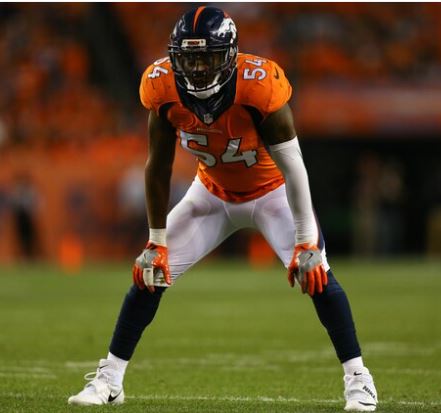
What makes the Broncos so memerable is their front 7 had more flash and substance with Super Bowl 50 MVP LB Von Miller (11 sacks) and PFHof DeMarcus Ware (7.5 sacks) crashing the pocket. We see his sacks on Cam Newton all the time but folks forget his 3 sacks and an interception of Tom Bardy in the AFC Championship to get them there:
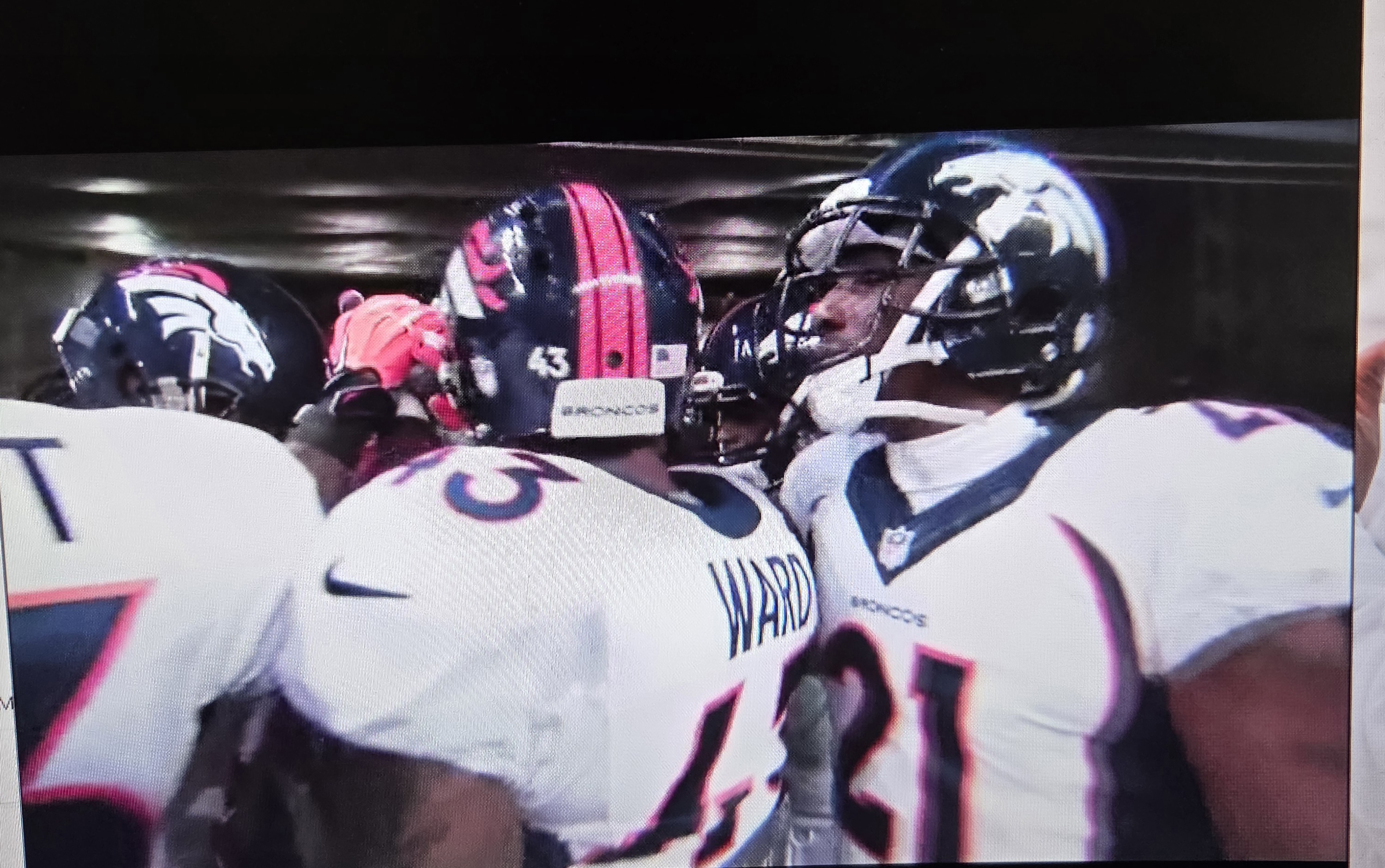
Miller, Aqib Talib, Chris Harris Jr, TJ Ward and DeMarcus Ware all made the Pro Bowl back when it meant something. Teh No Fly Zone was #1 against the pass and # 3 against the run with DEs Malik Jackson (45 tack/5.5 sacks) Derek Wolfe (49 tack/ 5.5 sacks) & NT Sylvester Williams bearing the brunt up front. Then think about this…. Shaq Barrett who would be Taylor Blitz Times Defensive Player of the Year in 2019 (in Tampa Bay) was a backup linebacker on this squad where he had 5.5 sacks in relief of Ware. Yes the same Barrett that chased Patrick Mahomes out of the stadium in Super Bowl LV. he tied Miller in ’15 for the team lead with 4 forced fumbles.
Danny Trevathan (109 tackles/ 6 pbu / 2 ints 1TD) & Brandon Marshall (102 tackles/4 pbu/ 2ff) were rangier than most Inside Linebackers and cleaned up everything between the hashmarks under 15 yards.
The strength of The No Fly Zone was blanket coverage where as a unit they had 83 pass break ups over the season. Talib led the unit with 3 Ints returning 2 for touchdowns and Harris and Stewart finished with 1 each. Against other statistical defenses the lack of interceptions (14) hurt in comparison. Even against The Legion of Boom with 28 in their 2013 year. Yet they were in man to man knocking down passes rather than being in a zone and breaking on throws.
Like many in this group the Broncos incredible defensive run in ’15 came while dragging an anemic offense to a title. Did you know the Broncos had the lowest ranked offense in the Super Bowl era to win it all?? They were ranked 19th beating out the 2000 Ravens where Trent Dilfer led the 16th best offense. Yet you had the feeling had they played Super Bowl 50 another 10 quarters the Panthers weren’t going to score.
Seriously in this day and age Peyton Manning (9TDs/ 17 ints) & Brock Osweiler (10TDs/6 ints) threw for less than 4,000 yards and completed just 60.7% of their passes. This ranks as low as the ’71 Colts with 2 aging QBs and the ’91 Eagles who had 5 QBs on the season. Their 6.55 yards per attempt might be the worst of any champion as well.
Are they a best ever defense?? They’re the 2nd best of the decade and 3rd best defense dating back to 2000. The short answer for The Chancellor of Football is yes, they were phenomenal. They would definitely be in the honorable mention category of this list. Remember every Super Bowl champion and every #1 ranked defense for over 60 years is included. See for yourself. Don’t just look at the names…the total arguments are in each article. Ohhh… and by the way “It was a different era” is an agument that doesn’t fly here. I love Talib’s takes on The Arena and I wouldnt watch it without him on there but here is where I brought conjecture and complete historical data to support.
“In this study every season’s #1 defense, record setting defenses, trend setting defenses, and every Super Bowl & NFL championship defenses dating back to 1960. The nod would lend to those post the AFL/NFL merger of 1970. That wasn’t enough as now lets take each defense and cover what they did vs Pro Bowl QBs that season, 1,000 yard rushers, and playoff teams and talk about their effectiveness along with their statistics. Here turnovers forced is a big marker. Nothing watered down so a favorite team can be given favor. So The Chancellor of Football took over 200 defenses and boiled it down to this 11 article series and this valedictorian is the culmination of that study…
This is The Chancellor of Football’s choice for the NFL’s greatest single season defense and there is a serious gap between #1 and the #2 Baltimore Ravens. We’ll cover why at the end of this article. However welcome to the perfect storm of dynamic personnel, innovative defensive tactics and an intensely focused unit. One interesting aspect of the 1985 Chicago Bears performance is they did so without ’84 All Pro Safety Todd Bell who held out that season.
This was the era of the 46 Defense of Buddy Ryan. A Nickle defense where DBs were substituted for more athletic linebackers which allowed Ryan to use it as an every down formation. He could spring it on a team at any time without substitution.
Contrary to misinformed sportswriters he had been using the defense since 1981. Considering he named the formation for the number Safety Doug Plank wore which moved him into a Linebackers position. Plank’s last full season was 1981 and was replaced by Bell in 1982.
The 46 covered the Guard, Center, Guard which kept the MLB from being blocked. Furthermore if either the Center or Guard pulled, a DLineman would be in the backfield to disrupt any running play.
Although this formation gave the Bears an edge over their competition they only used it 30-40% of the time. It was the element of surprise that caught the NFL off guard. What is overlooked is how great the personnel fit every scheme Ryan used. In 1984, this group set the NFL record for sacks with 72. After he departed they set the record for fewest points allowed in 1986 yielding 187 points. It’s the season in between, 1985, that was their crowning achievement.
Take a look at a few stats:
#1 overall ranking
#1 against the run #3 against the pass
#1 in turnovers w/ 54 forced
#1 in interceptions w/ 34
#1 in passer rating allowed w/ 51.4
#1 in points allowed: 198 for the season
#1 in 1st downs allowed per game: 14.8
#1 in opp. completion percentage allowed 47.7%
#1 in touchdowns allowed w/ 23
#1 in rushing touchdowns allowed w/ 6
Now add to the fact they were #3 in sacks with 64, #3 against the pass giving up yardage in garbage time with blowout leads. It was the venomous way they attacked strong competition that makes this defense the valedictorian of NFL units.
Look at the competition they faced and look what they did to them. In 1985 the NFC East champion Cowboys (10-6) were trounced 44-0, the wildcard Giants (10-6) 21-0 in the playoffs, and the 10-6 Redskins slaughtered 45-10. Outscoring them 110-10 when they were the “best division in football” yikes!! Then you have the NFC West Champion LA Rams (11-5) killed 24-0 in the NFC Championship, and the last wildcard team? The defending champion San Francisco 49ers (10-5-1), who were pounded 26-10 in Candlestick. Funny thing was the 49er touchdown was a Carlton Williamson interception, so the 49er offense scored 3 at home.
* So the Bears gave up 20 points combined to the 5 best teams in their conference and avg. more than 4TDs margin of victory (31-4 avg. score)…damn! All were 10 win teams.
Then of course each division faces another division in the other conference which in the 85 Bears case was the AFC East. Thank God they didn’t play my Bills… The AFC East champion Dolphins won 38-24, but both wildcards in the AFC went to the Jets and Patriots. What happened to those teams you ask? The Jets (11-5) were clobbered in the Meadowlands 20-6 and the Patriots (11-5) twice. The Bears beat the Patriots 20-7 in week 2, then the 46-10 smashing in Super Bowl XX.
*So the only loss was to defending AFC Champion Miami & where did the Dolphins season conclude? They lost the AFC Championship at home to the Patriots where had they won there would have been a rematch with the Bears in the Super Bowl. So you could say that they were a pretty strong team…fair to say? The Bears beat EVERY playoff team in 1985 from the NFC, and faced three from the AFC…all teams had 10 wins or more and the Bears basically laughed at ’em. This is what a heavyweight champion should look like!!
They were 4-1 against top 10 offenses and in those 4 wins held each team to less than 10 points. In fact, the ’85 Bears held 11 of their 16 opponents to less than 10 points and recorded back to back shutouts over the Falcons and Cowboys. In the playoffs they set another record not allowing a point in back to back playoff shutouts to make it to Super Bowl XX. Once there they set records for holding the Patriots to -19 yards at the half, 7 yds rushing for the game, record 7 sacks, and allowed the fewest yards in Super Bowl history with 127.
This second look shows a few plays from the 46 front look but the final play with Steve McMichael’s sack was one of the secrets of the ’85 Bears. They lined up in a 3-4 and had DE Richard Dent the rushing weakside ‘backer a la Lawrence Taylor. Ironically the 46 defense didn’t die it evolved into teams running it from 3-4 alignments and not 4-3 alignments as Buddy Ryan originated this from. If you’ve watched the Steelers over the last 15 years they have used DEs that were built like DTs and would squeeze them down to cover the Guard,Center, Guard and position an Inside Linebacker right next to the Strong side Linebacker. They just made it interchangeable in elements to surprise their opponents from time to time.
They had NFL Defensive Player of the year and Hall of Famer Mike Singeltary, All Pro Gary Fencik, Hall of Fame DEs Richard Dent and Dan Hampton. Pro Bowl Linebacker Otis Wilson and OLB Wilber Marshall who should be in the Hall of Fame.
In 2000 when the Ravens gave up 165 points and the question was raised- “Were they better than the ’85 Bears defense?” HELL NO!!! The Ravens didn’t face 1984 MVP Dan Marino, 3-time Super Bowl MVP Joe Montana, Super Bowl MVP Phil Simms, 1983 MVP Joe Theismann, and Danny White was a pro bowl quarterback as was Ken O’Brien of the Jets. ALL WERE IN THEIR PRIME! Had the 2000 Ravens seen these quarterbacks they give up another 150 points easy and wouldn’t make the mythical Super Bowl if they played the 85 Bears schedule!!
Spurgeon Wynn. Who?? Spurgeon Wynn, Tim Couch, Anthony Wright, Kent Graham, Gus Frerotte, Brian Griese, Ryan Leaf, Scott Mitchell, and Akili Smith were some of the QBs those Ravens faced so….no way do they get this nod. I loved those Ravens don’t get me wrong, but what would the ’85 Bears have given up against the 2000 Ravens schedule? That’s frightening to think about.
Hall of Fame linebacker Mike Singletary and The Chancellor of Football on the Ravens sideline in 2003.
The best ever defense from the historian view of The Chancellor of Football’s view was the 1985 Chicago Bears hands down. How badly they trounced sound competition has resonated for decades. In compiling this list every #1 defense from 1960 to the present was used, every championship defense, and every record setting defense with the nod going to those that played since the merger in 1970. Hundreds of defenses boiled down to the 1985 Bears sitting atop as the best.
Dedicated to the memory of James David “Buddy” Ryan (February 17, 1931 – June 28, 2016)
“In this study every season’s #1 defense, record setting defenses, trend setting defenses, and every Super Bowl & NFL championship defenses dating back to 1960. The nod would lend to those post the AFL/NFL merger of 1970. That wasn’t enough as now lets take each defense and cover what they did vs Pro Bowl QBs that season, 1,000 yard rushers, and playoff teams and talk about their effectiveness along with their statistics. Here turnovers forced is a big marker. Nothing watered down so a favorite team can’t be given favor. So The Chancellor of Football took over 200 defenses and boiled it down to this 11 article series and this was the 7th..”
A recurring theme that seems to be running through these greatest defenses were they had to carry anemic, inefficient offenses through the season. One such incident took place when the Philadelphia Eagles lost the 1990 NFL MVP Runner Up Randall Cunningham in the first week 1991. All appeared to be lost as they attempted to go on without their #1 weapon. This defense turned in one of the last truly great performances finishing #1 against the run, #1 against the pass, and obviously #1 overall.
When you carry a team that played five quarterbacks during the season, you’ve done something. We’re sure you remember that renowned NFL quarterback Brad Goebel or Pat Ryan, right?? Who?? Brad Goebel not Stan Gable…that’s a fictitious character from Revenge Of the Nerds.
As for real quarterbacks they had two games against the Redskins Mark Rypien, that year’s Super Bowl MVP. Two more against Hall of Famer Troy Aikman then one against Steve Young and Warren Moon. Also Hall of Fame members. All but Young made the Pro Bowl in 1991. They went 3-3 against them and held Young’s 49ers (#3 offensively) and Aikman’s Cowboys (#9 offensively) to less than 100 yards passing in two complete games that year.
Remember, Aikman and Young went on to face each other in 3 consecutive NFC Championships starting the following year and won the next four Super Bowls.
They faced 6 top 10 offenses going 3-3 against them. Defensively they held 6 opponents to 10 points or fewer. Two of those games were against top ten offenses as we mentioned earlier. Counting match-ups with divisional foes as individual games, 8 times they held their opposition to their lowest offensive output for the season.
1991 Pro Bowl members of the Eagles defense.
Half the defense made the Pro Bowl starting with the late Reggie White, the late Jerome Brown, and Clyde Simmons from the defensive line. These three accounted for 37 of the Eagle’s 55 sacks. Those 3 alone had just 7 sacks fewer than the 2013 NFL champion Seahawks had as a team. OLB Seth Joyner (110 tck / 6.5 sacks / 6 ff /3 ints) and PFHoF CB Eric Allen who picked off 5.
The only reason SS Andre Waters didn’t make the Pro Bowl was his reputation.
Amazingly the late SS Andre Waters didn’t make the Pro Bowl even though he had 156 tackles. It was he and FS Wes Hopkins that sent the early message in their signature game against the Oilers. Did you know starting the very next week, when others used their 13-6 destruction against Houston as a blueprint, stats diminished for the Run & Shoot?? This historic performance was the impetus for the abolition of the Run & Shoot as a complete offensive approach in the NFL.
In winning 7 of their last 8 attempting to make the playoffs, the quarterback rating allowed was around 40.0. For the season, 206 of 467 (44.1%) for 2,807 yards 16 TDs and 26 interceptions would get a quarterback cut and ripped by NFL Network or ESPN shows. Well this was the passing given up by the 91′ Eagles all year.
Or think of it like this: Look at the ’91 Eagles performance against 6 top 10 offenses and 4 HOF QBs. Compare those stats to Geno Smith who was the worst rated starting QB last year. Yes 32nd!!:
’13 Geno Smith – 247 of 443 (55.8%) 3,046 yds 12tds 21 ints
’91 Eagles – 206 of 467 (44.1%) for 2,807 yards 16 TDs and 26 interceptions
One of the best in history and #5 on The Chancellor of Football’s list..
Dedicated to the memories of: Reggie White, Jerome Brown, Andre Waters, Wes Hopkins, Mike Pitts, Buddy Ryan, and Bud Carson.
“In this study every season’s #1 defense, record setting defenses, trend setting defenses, and every Super Bowl & NFL championship defenses dating back to 1960. The nod would lend to those post the AFL/NFL merger of 1970. That wasn’t enough as now lets take each defense and cover what they did vs Pro Bowl QBs that season, 1,000 yard rushers, and playoff teams and talk about their effectiveness along with their statistics. Here turnovers forced is a big marker. Nothing watered down so a favorite team can’t be given favor. So The Chancellor of Football took over 200 defenses and boiled it down to this 11 article series and this is the 5th…”
For all the talk of the Gritz Blitz and the Orange Crush Defense in 1977, it was the year of The Doomsday Defense II. They faced off with the Denver Broncos down in New Orleans in Super Bowl XII and the better defense won. They carried their season statistical domination into that game and forced a then Super Bowl record 8 turnovers. This was the last NFL champion to finish #1 on defense and #1 on offense. In giving up just 229.5 yards per game, most don’t realize that was better than the 1978 champion Pittsburgh Steelers (260.5) or even the great ’76 version (237.5). That is both sides of the liberal passing rule changes of 1978 so…..
After Craig Morton was benched, Hollywood Henderson and Doomsday treated Norris Weese to a rough outing. In Super Bowl XII
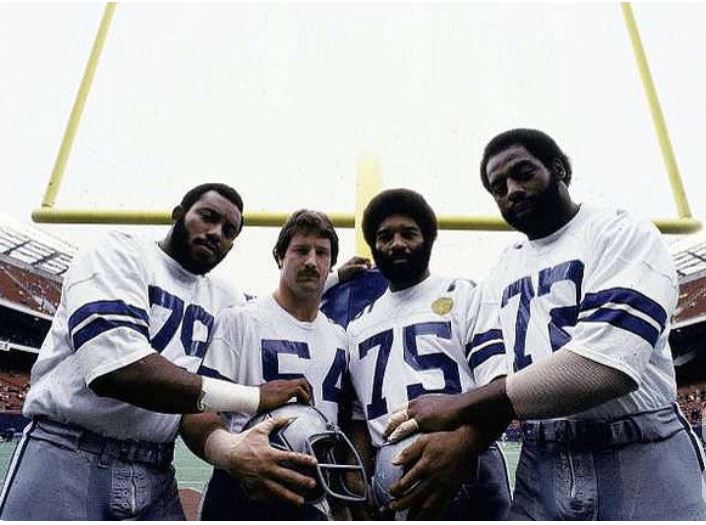
Unofficially that year was the little known fact that DE Harvey Martin recorded 26 sacks. The league didn’t start keeping that statistic until 1981 or that would still be a record. It was arguably his best season as he was named All Pro and made the Pro Bowl. Surprisingly he was only joined by SS Charlie Waters, OLB Hollywood Henderson, FS Cliff Harris, and DT Randy White.
Yet this group does have some knocks against it. They only faced 3 top ten offenses that year and gave up 212 points for the season. The highest of our top ten. However they were 2-1 in those games and were the first Super Bowl champion to face their eventual Super Bowl opponent during the season. Winning the finale 14-6.
So why are they in the top ten??
The number one reason this group is here is this was the height of The Flex Defense. Their dominance was felt in a season long display. They held 7 of their 14 opponents to 10 points or less then became the first team since the merger to hold their 3 postseason opponents to 10 points or less. One of those was the #3 ranked offense of the Chicago Bears and NFL rushing champion Walter Payton. He was held to 60 yards on 19 carries in a 37-7 win in the divisional round.
The havoc they raised in Super Bowl XII with 4 sacks, countless hurries that led to 4 interceptions on the biggest stage didn’t hurt. When half your line, DT Randy White and DE the late Harvey Martin, become the first defensive linemen to win Super Bowl MVP, that puts on an exclamation point on the season.
Supe Bowl XII Co-MVPs Randy White and the late Harvey Martin.
Other talents such as Ed “Too Tall” Jones, Thomas “Hollywood” Henderson who made his 1st Pro Bowl, made names for themselves as well. They would defend their championship in the following Super Bowl with the Pittsburgh Steelers where they ranked #2 in defense to the Steelers ranked third. That’s another story for a different time.
Epilogue: This was the crowning jewel in the late Tom Landry’s coaching career. Where he engineered a majority of the tactics to bring the 4-3 to be the modern staple of defense in the NFL. It was his ability to innovate that defense and come up with the Flex Defense to read and react as well as keep the Middle Linebacker (Bob Breunig) free of potential blockers.
Dedicated in the memory of both Tom Landry and Harvey Martin.
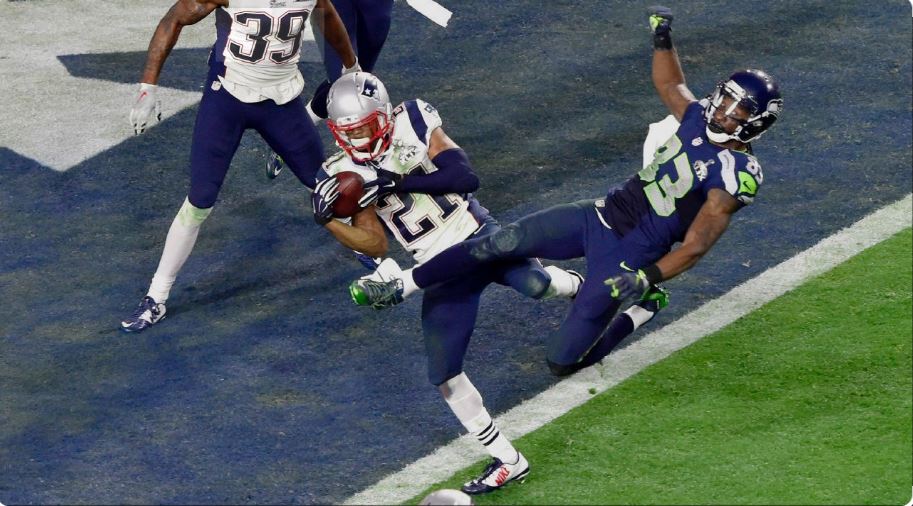
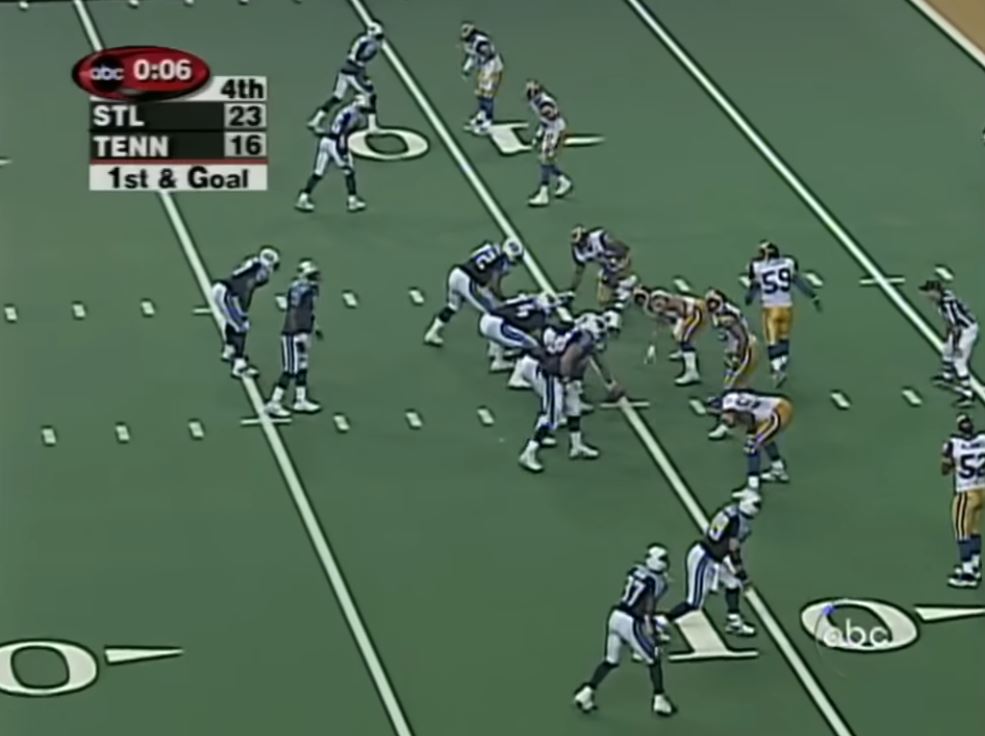
“One of the dumbest calls in Super Bowl history that robbed the Seattle Seahawks from establishing a dynasty. Became the turning point in the way Russell Wilson was seen as a leader. He lost his PFHoF status on the goal line in Pheonix and his descent in stature began at that point. Its impossible to see the Seahawks v Patriots in the Super Bowl and not think back to the game and that stupid call at the goal line. Do you realize the play run was the exact same play concept the Tennessee Titans ran that didn’t work in Super Bowl XXXIV?? They just ran it with Kevin Dyson cutting behind TE Frank Wycheck. Gave you the link. Go look… but after you read this…”
Super Bowl XLIX was a great game but the end left a lot of fans empty as Seattle opted for a pass from the 1 with seconds left to play. Immediately I railed it was the worst play call in Super Bowl history on social media. Many former NFLers agreed. So after a small hiatus my thought hadn’t changed and now it was time to revisit another classic case of overcoaching in the NFL.
First off… if anyone thinks the Seattle throwing that pass at the one yard line was the right play call, then they think Vince Lombardi called the wrong play on the final play of the Ice Bowl. Its that simple. One of his philosophies played out at the goal line during the final seconds of both the 1966 & 1967 NFL Championship Games.
Lombardi’s philosophy was in a pressure situation, players would make mistakes in Tom Landry’s complicated offense. The Cowboys had the ball at the 2 with less than 2 minutes to go down 34-27. They had momentum and had just scored on the drive previous. True to form T Jim Bokeim had a false start… remember they did a lot of shifting on the line. On the final play, which was a rollout, RG Leon Donohue ran past Packer LB Dave Robinson instead of blocking him. Robinson hurried Don Meredith into a game ending endzone interception.
The rubber match for the Ice Bowl (1967 championship) saw the reverse as the Packers were down to the 2 yard line with less than 2 minutes to go. After two plays and a final timeout, Green Bay was at the 1 with :16 left down 17-14. Where Tom Landry was heard yelling “watch Starr on the rollout”, Lombardi’s Packers went with a QB sneak to win the game. A simplified play. Years later in recalling Lombardi’s philosophy, G Jerry Kramer said “When the game or life is on the line, you don’t gamble and you put your faith in the defensive player’s chest.”
A philosophy the Seattle Seahawks had believed in until the 1 minute mark of Super Bowl XLIX. Some new age philosophies have made coaches overthink and overcoach situations lately. Ever since that Monday Night game where Brian Westbrook had that breakaway run at the end of the game against the Dallas Cowboys and slid down to run out the clock, people have been overcoaching end of game scenarios.
However I said it right after…that was the same play call the Titans went with in Super Bowl XXXIV when Mike Jones tackled Kevin Dyson at the 1 yard line also. That stacked receiver slant is 0-2 in late Super Bowl moments. Truth is they should have run the ball twice with the read option and kept it on the ground. They should have immediately run a play after Lynch made it to the 1.
Fist lets take a look at the early stages of the game when Marshawn Lynch scored to tie the game at 7.
You’ll note the first run Lynch face initial contact at the 9 ans made it to the 6 1/2 yard line. Then on the touchdown he faced initial contact at the two and powered to more than a yard into the endzone. He’s the best contact runner since Corey Dillon and he was constantly falling forward during the game.
Now we get to the fateful last plays of Super Bowl XLIX.
Had Seattle rushed to the line of scrimmage with the 1:06 left (after Lynch made it to the 1) New England may have let them score (another bone head new age move) to ensure Brady would have a chance with the football and more clock. Don’t tell me Belichick doesn’t think that way because he was lauded for his taking a late game safety against Denver 10 years ago so the Patriots would get the ball back with time and field position… Had Seattle got up and rushed to the line, New England also wouldn’t have sent in their goal line 3 corners package where Seattle would have been better suited to block. Wasn’t that why Pete Carroll said they were wasting a play??
By not rushing back to the line the Seahawks overcoached the situation. There comes a time where coaches have to drop those silly play charts and coach on guts. Lynch had gained positive yards after contact on all of his runs. Even his last carry he broke a tackle at the 4 and made it to the 1. Had they hurried and faced the same defense the next play you don’t think he scores from the 1?? That same personnel he powered through for their first touchdown and 3 yards after contact.
Bill Belichick was saving all of his timeouts and let the clock run down to :32 seconds before Seattle snapped the football.
Yet alas Malcolm Butler ended the Seahawks bid for back to back Super Bowl championships. Coaches have to get back to owning each situation and score first and win the game. Don’t sit and speculate when you can or even if you will score on a later play. You just have to trust your defense. If you can think back to Super Bowl XLVI between the Patriots and the Giants, Ahmad Bradshaw tried not to score when he “accidently” fell in the endzone. Taking a 17-15 lead, the Giant defense held off Tom Brady in that one. You have to rely on your defense.
Another clear case of overcoaching and now Seattle has to let this fester as they ponder an opportunity lost. It could fuel their trip to Super Bowl L in San Francisco’s new stadium. Stay tuned…

 I read a comment where someone was talking about money ruining the game of football. Yet I remember uploading a vid of Bernie Casey in 1967 telling Steve Sabol he played football purely for the money. I remember another interview I recorded with the late Deacon Jones and the late Paul Hornung discussing free agency and Michael Strahan and Tim Brown were egging them on when Hornung said (and yes I have this interview recorded to upload) saying that yes if Wellington Mara approached him with a doubling of his salary he would have left the Green Bay Packers. Many tend to overromanticize the past to fit an ideal that only exists in their mind. I have recordings of Johnny Unitas, Don Maynard, Dick Night Train Lane and many players from the 50s and 60s negotiating and arguing compensation.



 .
. Thanks for reading and please share the article.


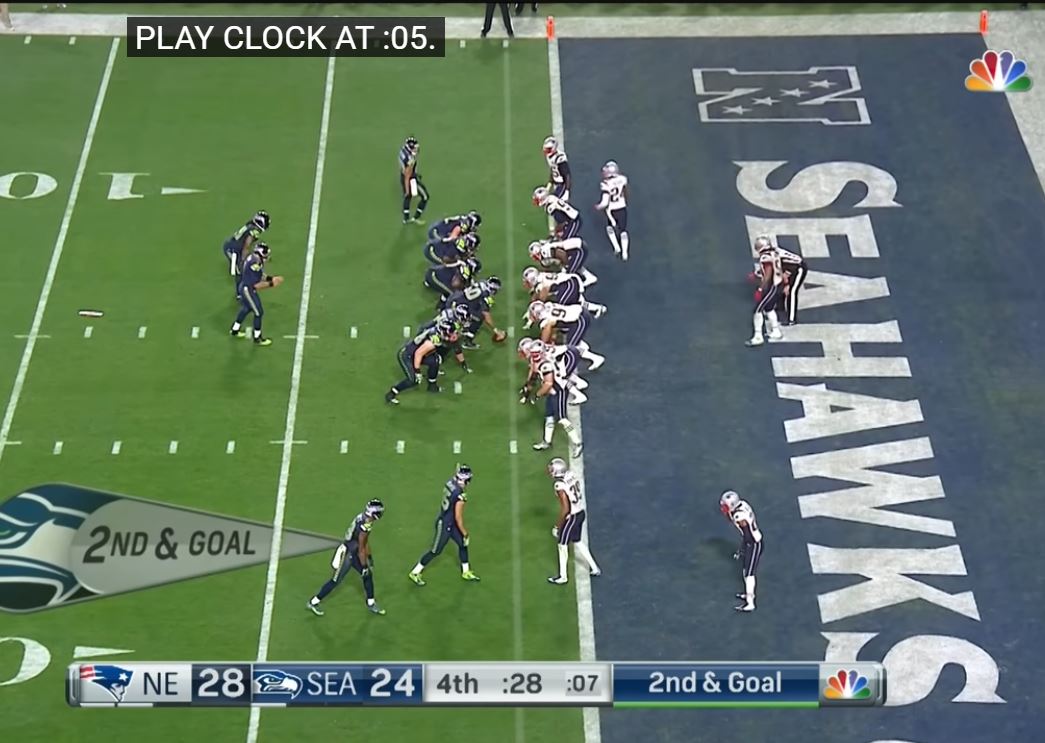 Super Bowl XLIX was a great game but the end left a lot of fans empty as Seattle opted for a pass from the 1 with seconds left to play. Immediately I railed it was the worst play call in Super Bowl history on social media. Many former NFLers agreed. So after a small hiatus my thought hadn’t changed and now it was time to revisit another classic case of overcoaching in the NFL.
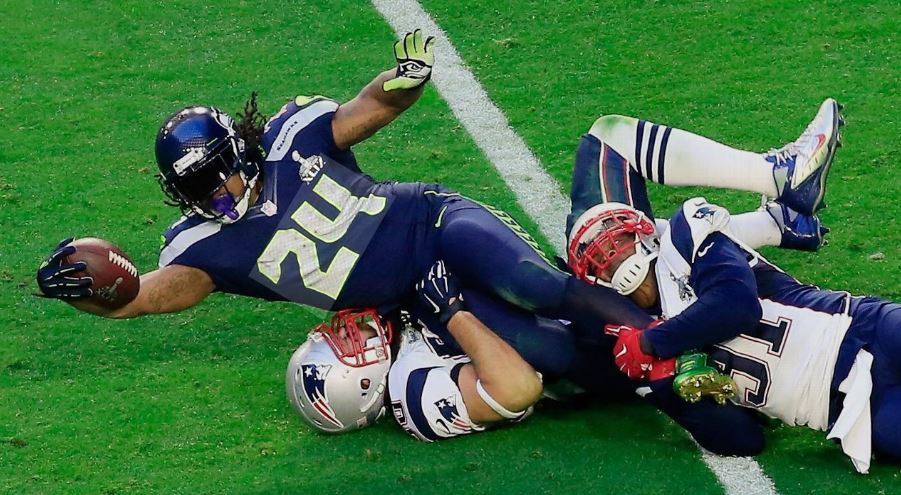 By not rushing back to the line the Seahawks overcoached the situation. There comes a time where coaches have to drop those silly play charts and coach on guts. Lynch had gained positive yards after contact on all of his runs. Even his last carry he broke a tackle at the 4 and made it to the 1. Had they hurried and faced the same defense the next play you don’t think he scores from the 1?? That same personnel he powered through for their first touchdown and 3 yards after contact.
 Thanks for reading and please share the article.

You must be logged in to post a comment.