Randy Moss Belongs In The Hall of Fame

Randy Moss after a “lambeau leap” into the Metrodome Stands

With the advent of the bigger, stronger athlete on the defensive side of the ball starting in the mid 1980s, one of the plays that seemed to fade in the NFL was the bomb. As more teams mimicked the West Coast (hate that term) offense, quarterbacks were being taught to be more docile in their decisions on where to throw the ball. Gone was the daring of Darryle Lamonica, Dan Marino, Dan Fouts, Terry Bradshaw, and Kenny Stabler to throw the ball deep and give your receiver a fighting chance to catch a bomb. Teams were teaching quarterbacks to throw where the defense wasn’t and not take chances. Enter Randy Moss

Absolutely one of the most electrifying players ever when you think of explosive wide receivers, burst onto the scene after a 1997 collegiate season in which he should have won the Heisman Trophy. At 6’4 210lbs, Moss ran a sub 4.3 40yard dash and by some accounts ran a 4.2 with great leaping ability. As a junior at Marshall, he had 96 receptions for 1,820 yards and 26 touchdowns in a season so great, it could only be rivaled by Barry Sanders 1988 Heisman campaign.

Even though it was his second season with huge numbers, it was his checkered past that kept him from getting Heisman votes and Charles Woodson, became the first defensive player ever to win the coveted collegiate award. It was this reluctant acceptance of him that fueled him as a player and brought out some of his broodish behavior. Yet going into the 1998 draft, he certainly would be taken early, on the fact that he was tremendously talented.

Although teams had told him that they were interested, he slipped in the draft all the way to Minnesota where Head Coach Dennis Green had Cris Carter on board to mentor their prized #1 pick.  Offensive Co-ordinator Brian Billick realized that at 6’4, Randy had the speed to run by most NFL cornerbacks and at the same time was normally 5-6 inches taller also. Why not throw it deep to him?? He epitomized the old John Madden axiom of “when he’s even, he’s leavin’.” Which meant that once a wide receiver reduced the cushion between he and a covering defensive back to the point they were side by side, the receiver would run by the defender giving him a scoring advantage.

Daring returned to the NFL and in Dennis Green’s words Moss “reinvented the bomb in the National Football League” as described in the NFL Films production “Missing Rings”. Moss electrified as he made good on his promise to “wreck the whole league.”  He gathered in 69 receptions for 1,313 yards and an NFL rookie record 17TDs. Never had a rookie had that type of impact. He was the impetus for turning a good Viking offense into a great one. They went on to become the highest scoring team in league history to that point with 556 yards. Randall Cunningham won the Miller Lite NFL Player of the Year Award and Bert Bell Award winner for “Chuck it up there Dawg”,  the matra spoken by Randy Moss which meant throw it up there and give him the chance to make a play.

Randy Moss hauls in his record breaking 23rd TD pass in the 4th quarter against the Giants

Yet we dont’ have time to go over all his career moments for so many of us already know them. His exploits on the football field are of legendary status. After being exiled in Oakland for several years, teams crept back up in their coverage with all these short throws.  Bill Belichick resurrected his career teaming him with Tom Brady and the bomb was alive and well again in the NFL. Randy Moss again became the scourge of the league hauling in 98 passes for 1,493 yards and an NFL record 23 receiving touchdowns, which broke the old mark of 22 set by Jerry Rice. Tom Brady (NFL MVP) went on to throw for 50TDs to set the all time mark while the Patriots broke the record of the ’98 Vikings for most points ever with 589 to 556. Where the ’98Vikings went 15-1, the ’07 Patriots went 16-0.

Now it’s at this point that Moss detractors leap on the bandwagon. “Oh his team didn’t win a ring” and there is something that can be said for that, as short sighted as it may be. In the 1998 NFC Championship, he helped the Vikings to a 20-7 lead. Well before Gary Anderson’s missed FG with 3:00 left gave the Falcons hope. Had he made it, the Vikings are up 10 points and headed to Super Bowl XXXIII. As a result a great team went unfulfilled.

The same can be said for 2007 when the undefeated Patriots were held down in Super Bowl XLII, yet it was Randy Moss who scored the game winner with a little over 2:00 to go in the game at 14-10. Well, they thought was the game winner until the frantic final drive of the Giants. Randy Moss didn’t drop the interception that would have sealed the game, that was Asante Samuel. He didn’t let David Tyree catch the ball, Rodney Harrison did. He didn’t get burned on a post corner fade route into the back corner for the real winning score, that was Ellis Hobbs. They lost 17-14. Yet some folks want to point to his not winning a ring as his not being worthy of the Hall.

Lets face facts, with 954 receptions 14,858 yards for 153 TDs, these are worthy numbers on their own. Its for those that can’t separate personal feeling from assessment that cant see past their blind spot. Many cite his attitude and his “I play when I want” mantra as to why they feel his candidacy is invalid.  How can he not make the Hall of Fame?? Because of a few down years in Oakland?? He wouldn’t give former Head Coach Mike Tice his own vote of confidence?? Or was it the mock moon that Joe Buck, who was announcing the 2004 Minnesota v Green Bay Wildcard Game, voiced complete outrage to set another wave of bad publicity to descend on Moss.

First off Joe Buck, just announce the game, no one gives a rat’s ass what you think?? The next day other players up to and including Coach Tony Dungy came to Moss’ defense, explaining that he was mocking a ritual the Packer fans have in really mooning the other team as they approach the stadium. Sure there were a few times in his career he didn’t help himself with his antics yet the media painted him in a very terrible way. The truth is Randy Moss understood the reluctant acceptance of him and in interviews didn’t always channel it in a politically correct way… but on the field??

Aside from Barry Sanders, he was the one player defenses feared. You could see it in the demeanor of rival cornerbacks that knew he would get deep on them at least twice in that ball game. On all the offenses he ever played on, his deep threat capabilities backed off safeties which allowed teammates to flourish underneath. This is how and where a Wes Welker got his sea legs with a Tom Brady in 2007… This is how a Duante Culpepper thew for 4,717 yards and 39TDs with only 13 int. in 2004, Randy’s last year in Minnesota, then returned to throw 6TDs to 12 int in 2005. His career decline started the second Moss left town after shattering team records the year before.

Moss pulling away from the Saints in a 2000 NFC Playoff game

Randy Moss’ legacy? The greatest deep threat the NFL has ever seen! He is in league with the Lance Alworths, the Cliff Branchs, the Don Hutsons. Yet he was even bigger and faster than those Hall of Fame talents. For a career he averaged 73 rec. 1,142 yards and 11TDs for his 13 year career. Those numbers would get another player to the pro bowl. Yet he only made the Pro Bowl 7 times and couldn’t escape the negative stint the media portrayed him as until his play forced them to say something great. That is what happened during the 2007 season.

What fuels the fire for a player to be great is to overcome slights, even if they’re perceived slights, to force colleagues or officials  to recognize you. As it is with many minorities it’s hard to overcome a negative stigma once its placed upon you. The media never let him run away from his demons as easily as he could defenses. Even when all was said and done in New England…he towed the company line. Accepted his trade to Minnesota and was still lambasted for his praising Bill Belichick as a coach.

Well The Chancellor of Football likes to think of Randy Moss and remember the 10, 1,000 yard seasons. The nine seasons with double digit touchdowns with 3 of which 17 TDs or more including a record 23 in 2007.  The numerous records achieved in both a Viking uniform and a Patriots uniform. To remember that he is the only link to the two highest scoring teams in NFL history. The 556 points scored by the ’98 Vikings only to be surpassed by the 589 scored by the ’07 Patriots. Thats too much talent to go overlooked….way too much

For induction to the Hall of Fame, I present to you Randy Moss

Jerry Kramer Belongs In The Hall of Fame – HOF Edition

Jerry Kramer leads Elijah Pitts on a sweep during Super Bowl I

Originally Published 26, July 2011 w/Postscript 29, May 2019

When you think of the Green Bay Packers of the 1960’s, two images come to mind. Of course that of Vince Lombardi, and then the image of Jerry Kramer and Fuzzy Thurston leading Paul Hornung or Jim Taylor on a power sweep. It was this fundamental approach to football that made the Packers perennial champions and lifted their greatest players to Hall of Fame status. Except for one glaring omission. Packers Guard Jerry Kramer.

Vince Lombardi once said that football will always be a game of blocking and tackling. His teams executed the blocking side of that equation with lethal precision. The great Green Bay Packer machine that churned out 5 NFL championships in the 1960s was powered by the offensive line and the power sweep was their principle play.

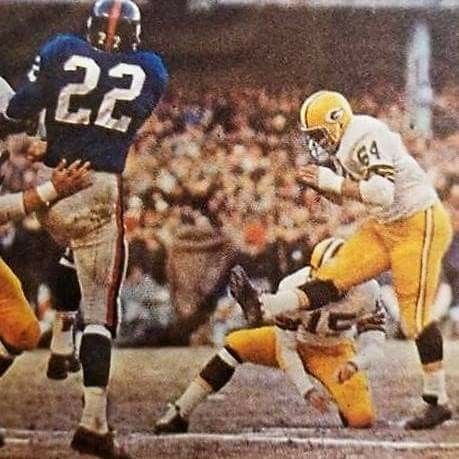
On many a Sunday afternoon, Kramer would do battles with the likes of Dick Modzelewski, Stan Jones, and his battles with All Pro Alex Karras were epic. Kramer led the way for both Taylor and Hornung to both make the Pro Football Hall of Fame. In fact, it was a sweep where Kramer led Hornung to the clinching touchdown to defeat the defending champion Cleveland Browns in the 1965 title game at Lambeau. This was the first of a series of three straight championships won by the Packers and the only such 3-peat achieved in the championship game era.

An unlikely odyssey began with his being drafted out of the University of Idaho and being driven to be the best he could be by hard nosed coach, Vince Lombardi. Fourth round draft picks are not assured roster spots and Jerry didnt crack the starting lineup until his 2nd season in 1959. He was sandwiched between two Pro Bowl linemen in C Jim Ringo and T Forrest Gregg.  Yet by 1960, all 3 were making the NFL’s signature all star team where Jerry became a regular.

Kramer was voted All Pro 5 times and was a member of the NFL’s 50th anniversary team.

How do you gauge impact?? For most NFL linemen this would be hard to equate because rarely can a specific game or play come down to a key block that everyone saw. After missing the 1961 NFL Championship Game with a badly injured ankle in Green Bay, Kramer not only returned to play in the 1962 Title Game, he also handled place kicking duties that day. While blocking Giant Dick Modzelewski all day he also kicked 3 field goals for the difference in Green Bay’s 16-7 victory. A feat that is unsung in football annals. Where winds gusted up to 50 m.p.h., and forced each team to run the football even more than usual.

Kramer went 3 for 4 on field goals and an extra point on battered legs from blocking on a brutally cold day. One so cold one of the cameramen suffered from frostbite as the stadium had many bonfires to keep players and officials warm. Although fellow Packer Ray Nitschke was voted game MVP, we find it hard to believe Kramer didn’t get the vote for being able to kick on a day when even YA Tittle and Bart Starr passed sparingly. This was a season in which Tittle had thrown for an NFL record 33 TDs on the year.

Just like any skill position, you’re gauged by how well you play in the big games. Aside from the great line play of the Packers in their run to 5 titles there are individual efforts where Kramer’s greatness was showcased. In the 1965 NFL Championship Game the clinching touchdown was a Green Bay sweep to the left where Kramer can be seen making two blocks as he escorts Paul Hornung into the endzone.

After the 1967 season the Packers found themselves in position for that elusive 3 peat when they faced the Dallas Cowboys. However conditions were worse for this game than they were in the 1962 NFL Championship Game.  The famed “Ice Bowl” was played at a -15*F and a negative wind chill close to -70* below zero.

Yet with the game on the line the Packers began a march that culminated in their being stuck just 1 yard from the winning touchdown. After 2 shots at it, Bart Starr took the Packers final timeout. With the season and perhaps the dynasty of the Packers in his hands, it was his wedge block on Jethro Pugh that Bart Starr followed into the endzone to win it with :16 left. So of the 3 NFL Championship Games that concluded the dynasty he had a hand in several key plays.

Ice Bowl Sneak in Progress

Bart Starr follows Jerry Kramer’s block to clinch the Ice Bowl 21-17 to give the Green Bay Packers 3 championships in a row

Did you know that Kramer has already been picked as the Guard for the 1960’s NFL’s All Decade Team as selected by the Pro Football Hall of Fame’s Selection Committee??  How can he not be in the Hall of Fame as a player??

jerry's spotSome think it could be due to having an injury plagued career but he lined up for 11 years and made countless blocks that led to his entire backfield being immortalized in Canton when you include Bart Starr. If Jim Parker of the 1950’s Colts and Johnny Unitas’ chief protector, was the standard bearer for all tackles and made the Hall of Fame. The same can be said for Mike Webster at center for the Pittsburgh Steelers and one of the team’s anchors. He too made the Hall of Fame. Where does that leave a guard who:
  • Was a 5 time All Pro,
  • Was a 5 time World Champion,
  • Member of the All Decade Team for the 1960’s voted by the Pro Football Hall of Fame Selection Committee
  • Was voted one of the Guards on the NFL’s 50th Anniversary Team commemorating the greatest players from the league’s 1st 50 seasons.
I’ll tell you where that leaves him, an overdue member of the Pro football Hall of Fame. One of the unique aspects is that most offensive linemen live in a world of anonymity. Yet Jerry Kramer is one of the most recognizable faces of all the famous Packers. He has been the keeper of the flame for his former Packer teammates through a series of books and has been a great ambassador of the game.  A long overdue title he has rightfully deserved is that of a Hall of Famer.
Ladies and Gentlemen, for induction into the Pro Football Hall of Fame, I present to you Green Bay Packer legend, Jerry Kramer.
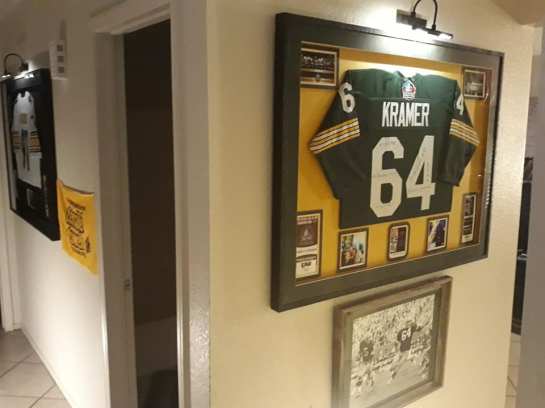
chancellor.hallofame.kramer.crest

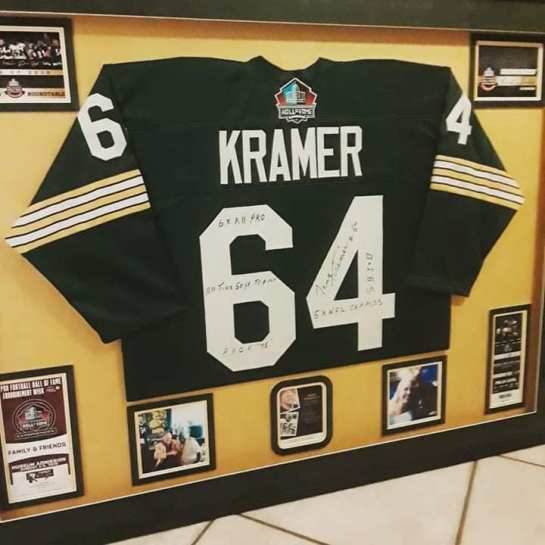
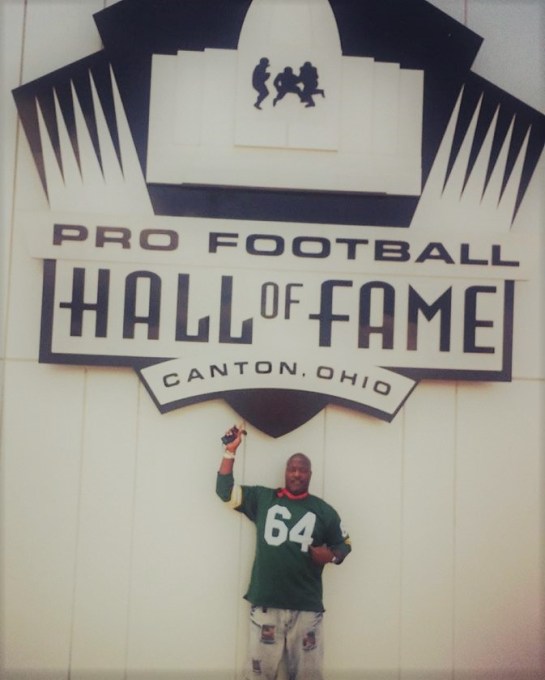
The Chancellor right before entering The Pro Football Hall of Fame wearing an autographed Jerry Kramer jersey from the family. Its time he is enshrined.

We have to get this right and I believe they will in 2018. Please lend your thoughts as well by writing in to the Pro Football Hall of Fame to the address below. Please be respectful and positively lend your voice:

Please write & nominate #64
Send letters to:
Pro Football Hall of Fame
Attention Senior Selection Committee
2121 George Halas Dr NW, Canton,
OH 44708

Thanks for reading and please share the article.

 me.jerrykramer
Postscript: 28, May 2019: An end to an incredible journey happened last August in Canton at the Pro Football Hall of Fame. Jerry’s long awaited induction was a celebration for of course Green Bay Packer fans, and all of us who were a part of the Facebook campaign Alicia had begun back in 2011. To which Alicia asked me to be a part of when her idea was just taking shape.
20180803_191754Once Jerry announced it would be Alicia who would be his presenter, the months leading up to the ceremony had a double celebration feel to it. We joked about the time when it really hit you the moment was going to happen. For me it was when we took this picture as Rich Eisen was right above us announcing everyone take your seats. The Gold Jacket broadcast was just minutes away.
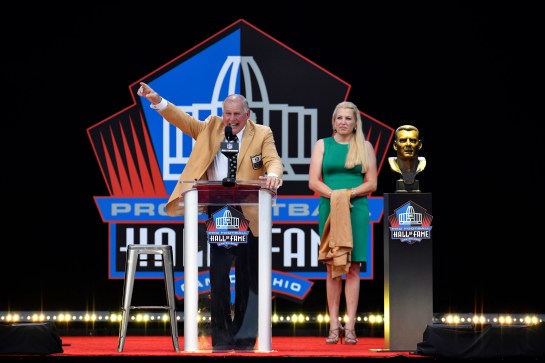
The highs and lows shared over the years made it one where the ultimate high of Jerry’s enshrinement could only be matched by the smile he had that entire weekend.
The reverence, class, love and respect for Jerry was evident in the moment he “officially” had on his Gold Jacket as PFHoF David Baker and Commissioner Goodell applauded on stage. There wasn’t a dry eye in the house,, including yours truly. The triumphant end of a 40 year post career odyssey.
jerry.halloffame
There was only time for smiles while enjoying Jerry’s triumphant moment.
jerry.chancellor

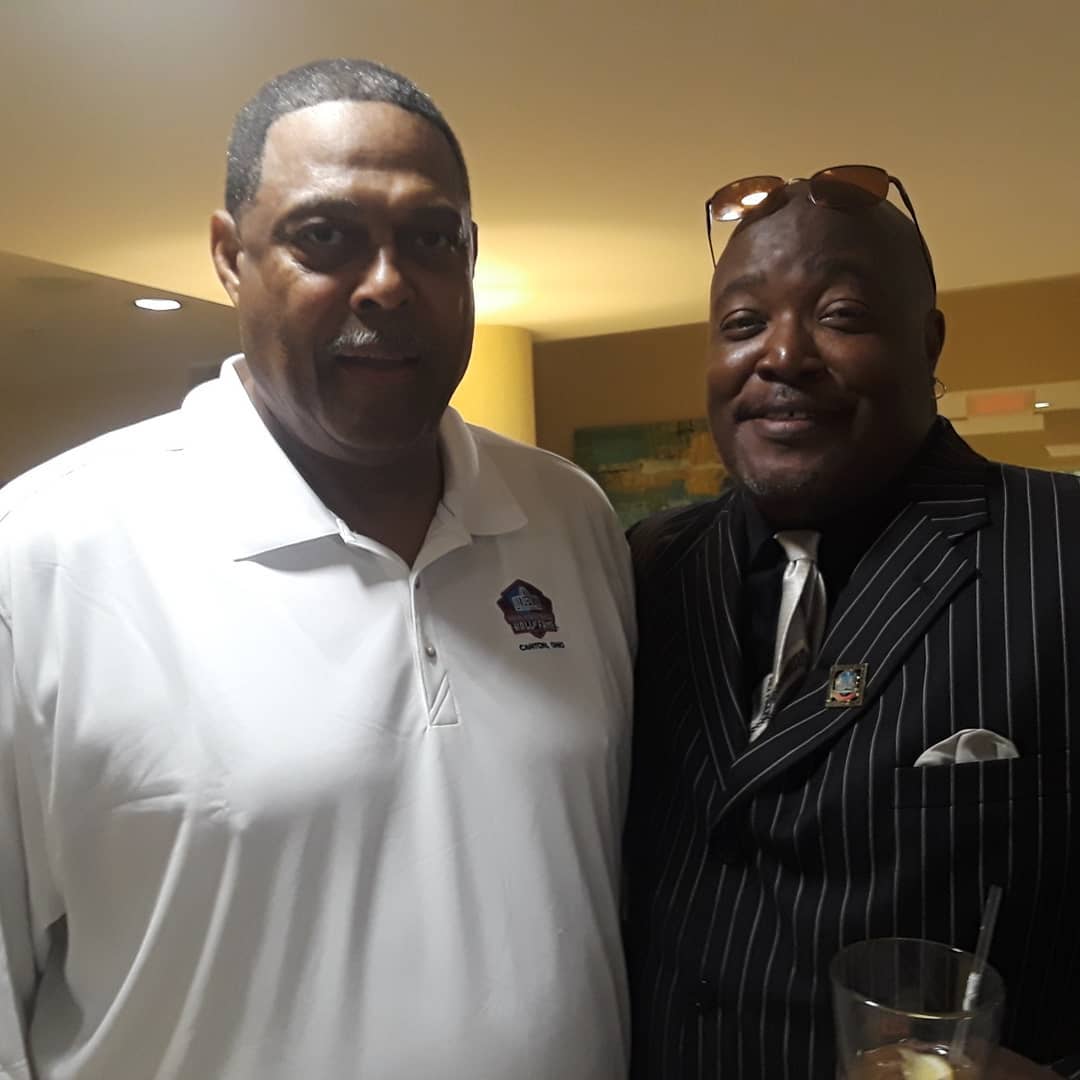
“Hey big guy!” The laughs at the Hall of Fame party were priceless.

An enshrinement celebration for an immortal finally having his moment in the sun was shared exponentially with the entire Kramer family.

Jerry was besieged by fellow Hall of Famers in Gold Jackets offering congratualtions. These were not only his Packer teammates.. we’re talking Hall of Famers from the 1960’s through the 2000’s from all over the NFL & AFL. The Chancellor was right there to soak it all in and share in the celebration.
At an event of a lifetime of course you take as many pics as you can yet the lasting images are the snapshots captured in your mind.
The best one for me was as we revelled into the evening snapping pics,  Chris Berman, Jerry, and Jeremy Schapp regaled and told stories in a lounge area right behind us. Jeremy, a sports journalist in his own right, is the son of legendary sportswriter Dick Schapp.
The two books Dick cowrote with Jerry, “Farewell To Football” and “Instant Replay” were the books given to me to read back in 1977 that cemented my love of football in the first place. So you can understand why this moment stood out…

I can’t fully express my gratitude to Jerry, his daughters Alicia, Diana and sons Daniel, Matthew Cole, and Tony for the invitation to be there. It was an event so uplifting all of us that were in Canton continue to share pics and stories as though it happened yesterday.  Thank you.
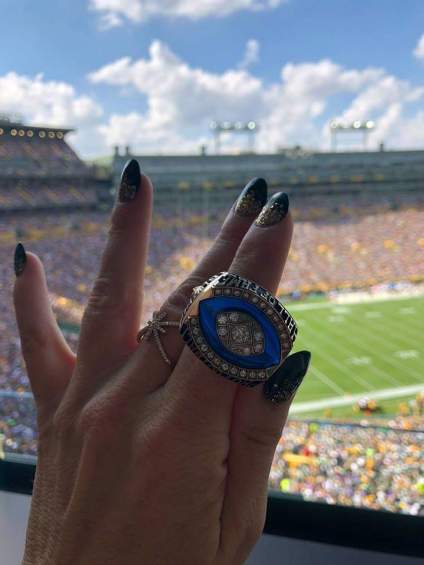
Alicia.ring.Lambeau

Alicia admiring her father’s HOF ring last year after reception ceremony at Lambeau.

Thanks for reading please share the article!
Hall of Fame postscript on Kevin Greene & 2016 trip
Hall of Fame postscript on Robert Brazile
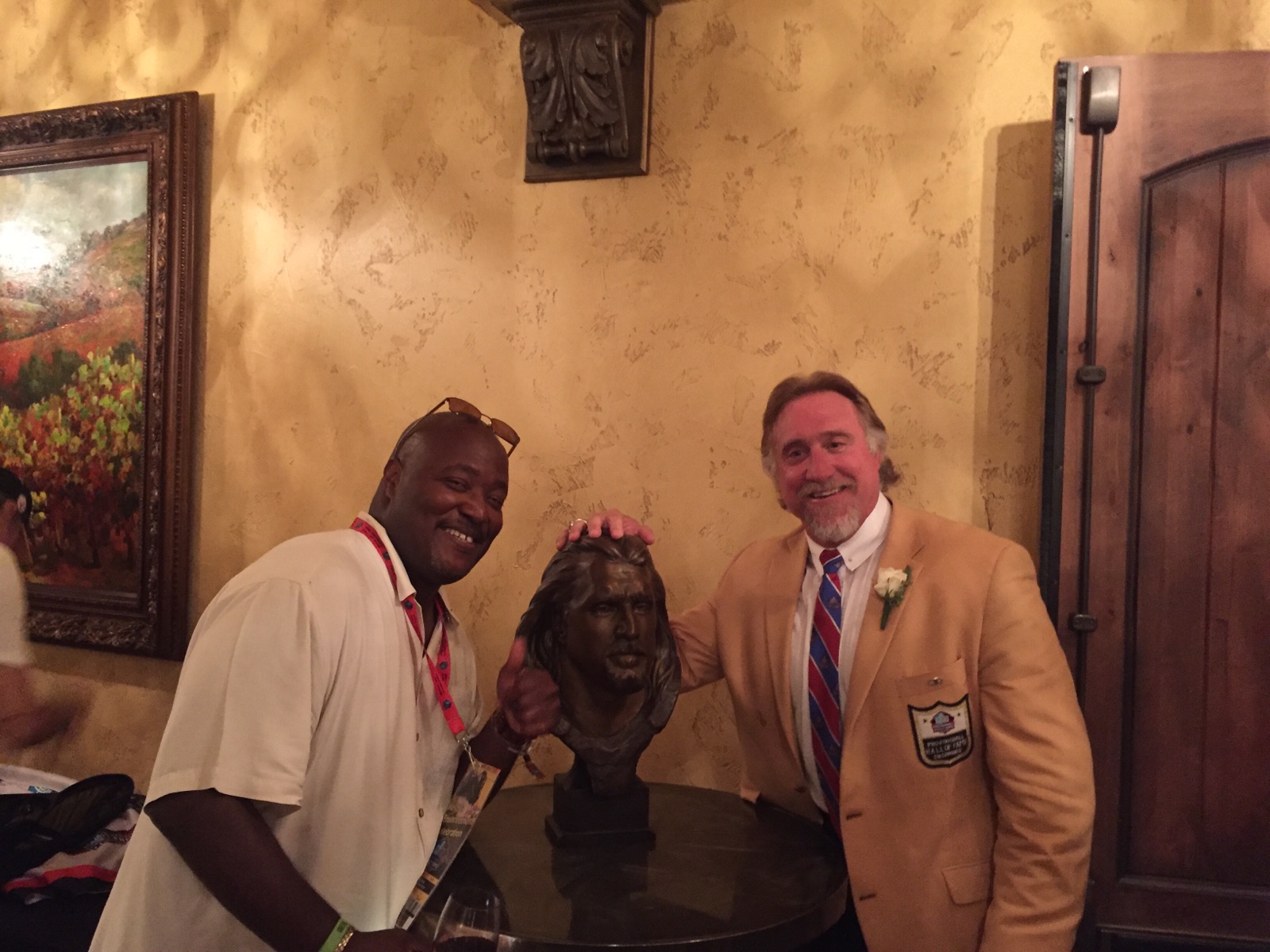
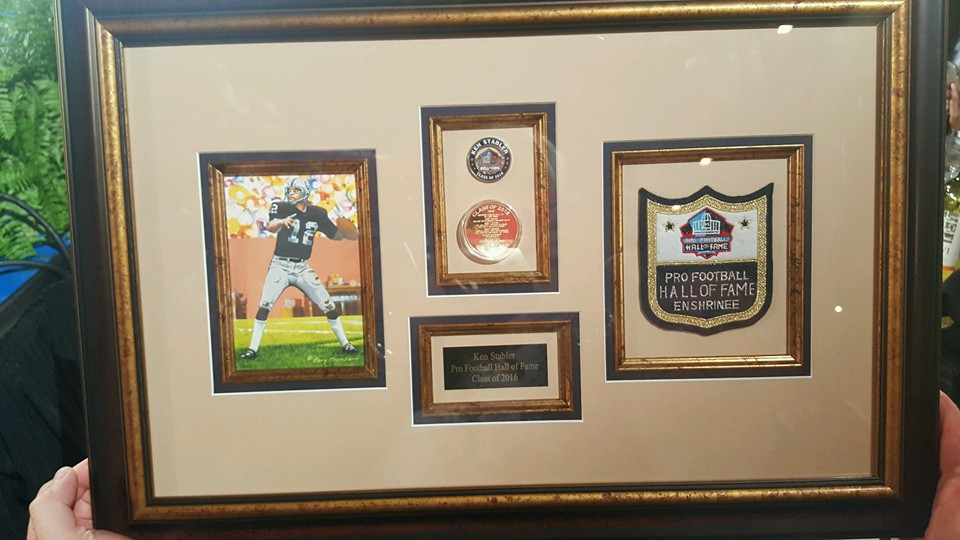
Hall of Fame postscript on Ken Stabler

Everson Walls Belongs In the Hall of Fame

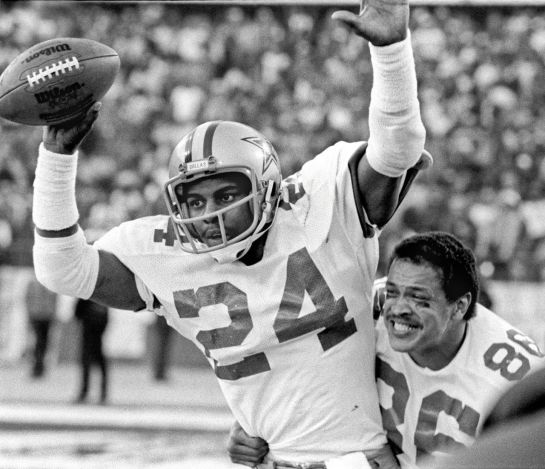
Butch Johnson and Everson celebrate Walls 4th quarter redzone interception in the ’81 NFC Championship Game. Yes, same quarter as The Catch

In the history of football, one of the hardest positions to judge or gauge performance is cornerback. Many times they’re overlooked when we speak of their careers as a whole because they rarely have a lot of tackles or hard hits.  So we tend to think of defenisve linemen or linebackers first. However after the NFL instituted rule changes that favored the passing game in 1978.  A more fluid athlete was needed to turn and run with receivers who could no longer be hit beyond 5 yards of the scrimmage line. The day of the super physical Mel Blount type cornerback was over and a new type of player would emerge.

The Dallas Cowboys of 1980 saw a secondary in flux with many of their great ’70s players aging, and teams piled points on ’em  after years of abuse. They gave up 311 points or nearly 20 a game. Mel Renfro had retired a few years back and Cliff Harris’ left after the 1979 season and the secondary was having epic breakdowns.

Even in Roger Staubach’s famous come from behind victory over the Redskins in the 1979 finale, the defense had given up 34 points at home in that game. So losing an All Decade performer in Cliff Harris and injuries to Randy Hughes magnified Cowboys problems.  By the time the 1980 playoffs began, the Cowboys couldn’t cover a child with a blanket. Cornerback Aaron Mitchell got lit up by Alfred Jenkins ( 4 rec. 155 yds, 1 TD) of the Atlanta Falcons in a playoff game known for being Danny White’s first great comeback. They prevailed 30-27 but a defensive back upgrade was top priority in the 1981 NFL Draft.

Enter Everson Walls, a lanky fast cornerback the Dallas Cowboys drafted out of Grambling in 1981.  He was a clearly brought in to be a cover man first and run supporter second.  He burst onto the scene in his rookie year when he led the NFL in interceptions with 11 while making the Pro Bowl as a rookie. Coming a year after Lester Hayes breakout 1980 campaign when he totaled 13 interceptions, Walls season was somewhat overlooked. While pundits duked it out over which cornerback was the best of the new breed, Walls interception totals didn’t drop over the ensuing years as Hayes did once stickum was outlawed.

After the strike shortened year of 1982 in which the NFL only played 9 regular season games, Walls led the NFL again in interceptions with 7.  Teams were avoiding throwing in his area and he gambled his way to a better season than his first.  Projected over a 16 game season, he would have equaled the 13 that Lester Hayes had in his near record breaking campaign in 1980.  After having 11 the year before?? Now that is an encore.

Everson Walls battling a rookie Jerry Rice in 1985

One of the reasons that Walls gets overlooked is he played for the Dallas Cowboys after their Super Bowl appearances of the late 70s.  This was the era in which the Dallas Cowboys lost three consecutive NFC Championship games, so the stars of this time weren’t lionized by NFL pundits like their 70’s counterparts. Much of this can be attributed to the 1981 NFC Championship Game in which Dwight Clark soared high to make “The Catch” and Walls was falsely treated as a goat for allowing it.

Yet many of those same pundits forget that earlier in the game Walls had made several key plays which included 2 interceptions to halt 49er drives. One of which occurred at the goal line.  He had played an exceptional game even in that defeat.

The Cowboys were a playoff team in 1983 yet teams threw away from Everson Walls at all costs.  However in 1985 he re-emerged to lead the NFL again with 9 interceptions. By doing so he became the only player in league history to lead 3 times in interceptions. It was at this point there had to be a reason for this gambler from Grambling picking off so many passes.

In John Madden’s second book “One Knee Equals Two Feet”, John cited the reason for Walls high totals a byproduct for teams having to throw over 6 foot 9, Ed “Too Tall” Jones. Jones was the defensive end on Walls side but that isn’t true. If you look at the 1977 and 1978 seasons, the Doomsday Defense II and “Too Tall” were at their zenith. In ’77 the Cowboys were the last team to win the Super Bowl with a team that was #1 on offense and defense yet the highest interception total was 5 by Benny Barnes. In the ’78 season in which they returned to the Super Bowl the highest cornerback total was 3. Walls with 11, 7 (projected 13), and 9 interception totals dwarf those with an aging Jones in front of him.

What are we saying?  Its time to give credit where credit is due. When you think of impact at cornerback you think of interceptions and the ability to battle the league’s best. Walls faced Roy Green, Hall of Famer Art Monk, and Mike Quick who were the NFC’s best and came out on top in many battles. Walls would go on to finish with 57 interceptions over his 12 year career.  He was a 4 time Pro Bowler yet was a first team All Pro just once. How does that happen when he led the league in interceptions 3 times?? Sportswriters are at fault for the All Pro snub and none pushed for him since he wasn’t a high round draft pick the beat writers would advocate for.

The Cowboys were penalized after losing the Battle of Champions to the Pittsburgh Steelers in Super Bowl XIII, and the fallout includes the early 80s Cowboys when it comes to Hall of Fame consideration. While most short sighted columnists would remind you that his Dallas Cowboys never won a Super Bowl as reason for the snub.

Yet one of the most important roles in his career was when he teamed with Mark Collins, and Perry Williams to give the New York Giants 3 excellent corners to shut down the Buffalo Bills 3 receivers in Super Bowl XXV. Early in that game it was Walls who caught James Lofton after a deflected pass gained Buffalo 61 yards and into Giant territory.  Three plays later on a crucial 3rd down it was Walls who broke up a pass for Thurman Thomas that forced the Bills to settle for a field goal. Had he not caught Lofton or stopped the Bills from gaining a first and goal, how could that have affected a game in which the Giants won just 20-19??   So he was a Super Bowl champion, so scratch that off the list of why he doesn’t belong.

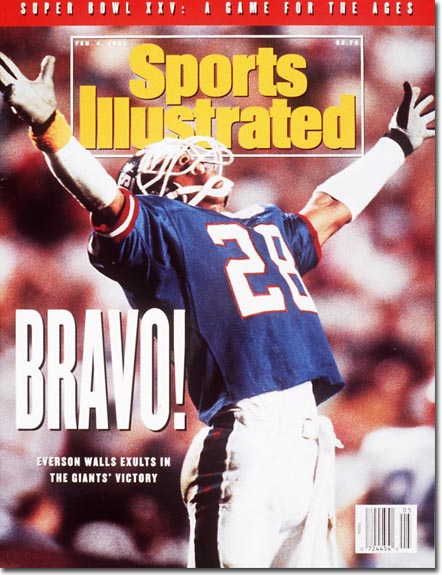
He was forever immortalized on the cover of Sports Illustrated after that game.

Super Bowl XXV Cover Pic of Everson Walls

Two weeks ago, Everson Walls was inducted into the Grambling Hall of Fame.  In recent years this consummate teammate made headlines by donating a kidney to former Cowboy Ron Springs in a gesture that says more about the man than his playing ability. He is an excellent ambassador to the game of football, signing autographs and constantly meets and communicates with fans through social media and Cowboys engagements. However it was his exploits as one of “Thurman’s Thieves” that made it all possible.

Please lend your thoughts as well by writing in to the Pro Football Hall of Fame at the address below. Please be respectful and positively lend your voice:

Please write & nominate #24 Everson Walls
Send letters to:
Pro Football Hall of Fame
Attention Senior Selection Committee
2121 George Halas Dr NW, Canton, 
OH 44708

For induction into the Pro Football Hall of Fame, I present to you Everson Walls

Coaches and players from the past advocated for on Taylor Blitz Times in order:

Robert Brazile 2011 (inducted 2018)

Ran into Robert Brazile after the Gold Jacket Dinner. Great time.


Kevin Greene 2011 (inducted 2016)

With Kevin Greene after the Induction ceremony.


Sterling Sharpe 2011 (induction Aug. 2025

Terrell Davis 2011 (inducted 2017)

Jerry Kramer 2011 (inducted 2018)

“Hey big guy!” The laughs at the Hall of Fame party were priceless.


Everson Walls 2011

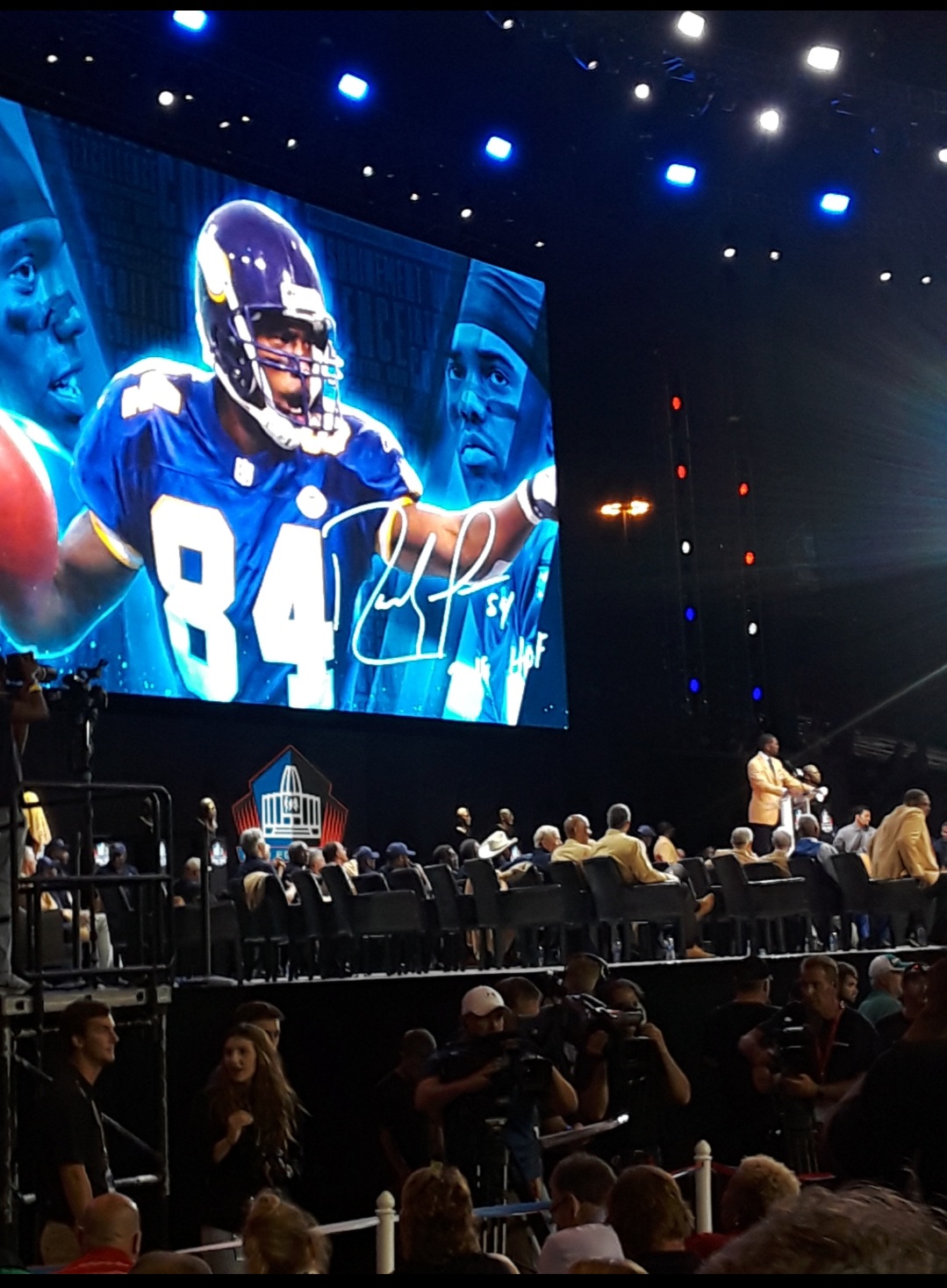
Randy Moss 2011 (inducted 2018)

Cris Carter 2011 (inducted 2013)

Tom Flores 2012 (inducted 2021)

Lester Hayes 2012

Chuck Foreman 2012

Edgerrin James 2013 (inducted 2020)

Andre Reed 2013 (inducted 2014) 

Roger Craig 2013

Corey Dillon 2014

Ken Riley 2015 (inducted 2023)

Ken Stabler 2015 (inducted 2016)

Drew Pearson 2016 (inducted 2021) 

Cliff Branch 2016 (inducted 2022)

Todd Christensen 2017

Hardy Nickerson 2020

Wilber Marshall 2024

Terrell Davis Belongs In The Hall of Fame

Terrell Davis Belongs In The Hall of Fame.

Terrell Davis Belongs In The Hall of Fame


Terrell Davis in Super Bowl XXXII

When you think back to the Denver Broncos of the late 90s, Terrell Davis is usually the first player you think of.  He brought an NFC toughness to the AFC in terms of running the football.

You have to remember that the NFC was in the midst of a 13 game winning streak before the Broncos broke through with their win in Super Bowl XXXII.  The AFC had been filled with primarily scat backs and finesse runners when Davis was drafted in the 6th round of the 1995 draft.  He ran with power between the tackles and had the speed to pull away once he made his upfield cut.

For four years he was one of the best runners in football. An all time great until a knee injury in ’99 derailed a promising career.  Just like Gale Sayers he was a whirlwind of production before that injury so why should he be denied Hall of Fame consideration??

In 1995, Davis became the lowest draft pick ever to rush for 1,000 yards when he bolted for 1,117 on a Denver team that was retooling itself. Coach Shanahan had just come over from the World Champion 49ers and combined a single back set and merged it with a version of the “west coast” offense. Davis was an affective runner in that system but it was once the team moved to an offset I formation with the addition of FB Howard Griffith in ’96 did Davis’ production reach the stratosphere.

It was the ’96 season that Davis wrested the mantle of best power back from a fading Emmitt Smith with a 1,538 yard, 13TD rushing performance. If we add in his receiving totals he had 1848 all purpose yards and 15 total touchdowns. Yet despite the 13-3 record, his ’96 Broncos were upset in the divisional round of the playoffs by Jacksonville 30-27.

Davis in the ’97 AFC Divisional Playoff win over KC 13-10

Davis’ numbers would have been higher for the ’96 season yet Shanahan rested he and most of the starters after jumping out to an 11-1 start.  The team rusted before the playoffs and Davis lost 3 second halves where he could have piled up more yards and should have been an 1,800 yard rusher.

The ’97 season saw the Broncos move to a 12-4 record yet were cast in the roll of wildcard by virtue of Kansas City’s 13-3 record. Again Davis was the driving force running for 1,750 yards and 15TDs leading the AFC in rushing and the NFL in touchdowns. He then ran for over 100 yards against the Jaguars, Chiefs, and Steelers enroute to Super Bowl XXXII. Now their physical running game would be put to the test against the defending Super Bowl champion Green Bay Packers and their mammoth defensive line.

In one of the best performances in Super Bowl history, Davis ran for 157 yards and a Super Bowl record 3 touchdowns propelling the Broncos to a 31-24  upset win.  Davis had a superb performance and may have broken Tim Smith’s record of 204 yards had he not missed the 2nd quarter with a migraine headache. In the game he punished the Green Bay defense with physical, tackle breaking runs that broke the former world champions down. He was MVP of the NFL’s signature game in his own hometown what more could be on the horizon??

One year after the sporting press celebrated Barry Sanders rushing for 2,053 yards in ’97, there was speculation that Terrell Davis could repeat that feat in 1998. Terrell Davis and his Broncos ran out to a 13-0 record and threatened the ’72 Dolphins unbeaten streak but an upset by the Giants then the Dolphins relegated the AFC West champions to a 14-2 record.  Davis ran for over 170 yards in the final game of the season to finish with 2,008 yards, 23 TDs and he was voted NFL Most Valuable Player in the process.

His total was even more impressive than Eric Dickerson’s, Barry Sanders or O.J. Simpson’s total for one reason: his 2,000 yard season came with his sitting out over 8 quarters in blowout wins. With his average per game divided out over a 14 game season his numbers project out to 2,294 yards and 26 TDs. Had that happened he would have broken Emmitt Smith’s record of 25 TDs and Marshall Faulk never would have had the record in 2000. Keep in mind he attained all this while playing for a defending Super Bowl champion with a bullseye on their back for the entire season. Something the other 2,000 yard rushers didn’t have to contend with.

After leading the Broncos to another Super Bowl triumph in the XXXIIIrd edition, a 34-19 win over the Falcons. Davis was on pace for a record setting career yet in the 3rd game of the ’99 season he tore ligaments in his knee making a tackle against the Jets and was never the same player after a year and a half off to recover. He retired after the 2001 season with 7,607 yards rushing and 60TDs in 7 seasons.

Now it’s at this point where you have to realize the greatness of Davis. At the current rate he was running the ball at the time of his injury, he was on pace to gain 12,824 yards in only EIGHT years! Only comparison to that  is Jim Brown who ran for 12,312 in 9 years. This was a north south runner who didn’t rely on moves to gain his yards so its very likely that he could have maintained his pace. His 56 touchdown total swells out past 110 given he would have made it injury free for those same 8 years. Thats production..

Here is another talent who didn’t play for a long career but as a comet burned bright as any ever seen in the football heavens. He was the power and impetus for a two time league champion, a celebrated 2,000 yard rusher, a Super Bowl MVP, and NFL MVP. What more could he have done? Those 3 years (96-98) he was an All Pro and Pro Bowl performer.

Just like Gale Sayers his career was cut short and he was never the same yet Davis deserves the same Hall of Fame distinction. He wasn’t as flashy as Sayers but he was more productive with a bullseye on his back and powered a league champion. That has to be worth something more than distinction. He was a great player and ambassador of the game. Never an off field issue uttered with his name and came off as an affable likeable player and person. He has to be considered the top Bronco running back of all time and that includes Hall of Famer Floyd Little who came three decades earlier.

Yet thats another debate for a different day…For induction into the Pro Football Hall of Fame I present to you: Terrell Davis

Sterling Sharpe Belongs In The Hall of Fame (via Taylor Blitz Times)

Sterling Sharpe Belongs In The Hall of Fame As those in and Packerland celebrate the team’s 13th championship in NFL history, the mind travels back to when Green Bay was the desolate outpost that few players wanted to go to.  The team had a celebrated past yet the years after Vince Lombardi’s team won Super Bowl II were lean with very few postseason appearances.  Everyone points to the hiring of GM Ron Wolf  or Mike Holmgren, or Reggie White’s free agent signing in 1993, or even Brett Favr … Read More

via Taylor Blitz Times