Legendary Days: The 1981 NFC Championship Game – The Birth of Camelot

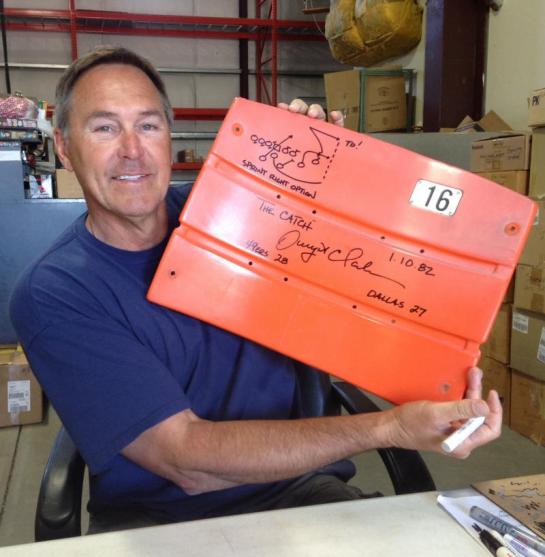
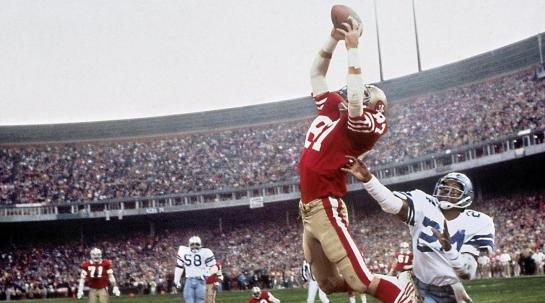
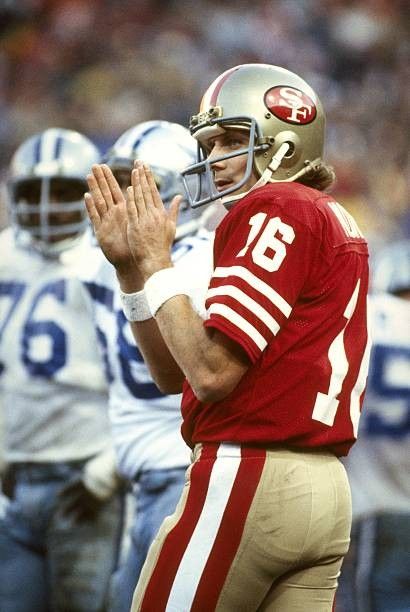
With Dwight Clark’s passing a few weeks ago it was nearly impossible to not think back to his signature play and this game. The Catch ushered in an era where the 49ers became the NFL’s signature franchise and brought Dallas down a notch. A win 2 weeks later in Super Bowl XVI in Pontiac gave Bill Walsh the platform to showcase his genius, The West Coast (Paul Brown’s) Offense, and launch an era he coined “Camelot”. Joe Montana became one of the NFL’s newest faces and would dominate the decade.

Dwight Clark as he will appear forever in the minds of fans everywhere.

Going into the ’81 NFC Championship the 49ers were an organization that not only hadn’t won a championship in their 36 year history. They were 0-3 against Dallas in the postseason. Even worse is they had left 2 NFL Championships on the table by celebrating victory prematurely then succumbing to huge comeback defeats.

In 1957, Y.A. Tittle, Hugh McElhenny and the Million Dollar Backfield bolted to a 27-7 3rd quarter lead in a playoff with the Detroit Lions. Detroit battled back and won 31-27. Then in ’72, a revenge minded 49er team fresh from back to back defeats in the first two NFC Championship Games to Dallas jumped to a 28-13 3rd quarter lead. Amid the taunts and trash talk Landry replaced ineffective QB Craig Morton for Roger Staubach. In another classic meltdown Dallas stormed to win 30-28.

Each of these losses crippled the franchise as they went into a tailspin for a decade both times.

When the 49ers traded for future Hall of Famer Fred Dean #74, the 49ers became a legitimate contender in 1981.

Now here was a 3rd trip to the summit for an organization fighting for respect. Why would this generation’s group get over the hump where previous teams had failed?? This was the dreaded Dallas Cowboys they were 0-3 against in the postseason.

At the time Hall of Fame Coach Tom Landry was the Bill Walsh / Bill Belichick of his era having taken the Cowboys to the postseason 15 of the last 16 years. Not only had he won 2 Super Bowls, his teams was playing in a championship game for the 10th time with this tilt out in Candlestick. The NFL up to this time hadn’t seen this type of extended success. Not nearing 2 decades worth. Well a berth in Super Bowl XVI was at stake and all he had to do was get past this bunch of no names out in California. Consensus at the time by the national media cited that he would:

Eric Wright’s clutch tackle on Drew Pearson saved the game but Dwight Clark’s catch remains it’s signature. Prestige is much like momentum. You can’t exactly define it yet you know it once you feel it and see it. The mantle of prestige and esteem the Cowboys held transferred to the 49ers the moment Clark came down with the football. From that point on the buzz from NFL media in print and television began with Bill Walsh and his organization. His West Coast offense became the dominant offensive approach for the next four decades.

Joe Montana and Bill Walsh are linked forever in football lore.

Epilogue:

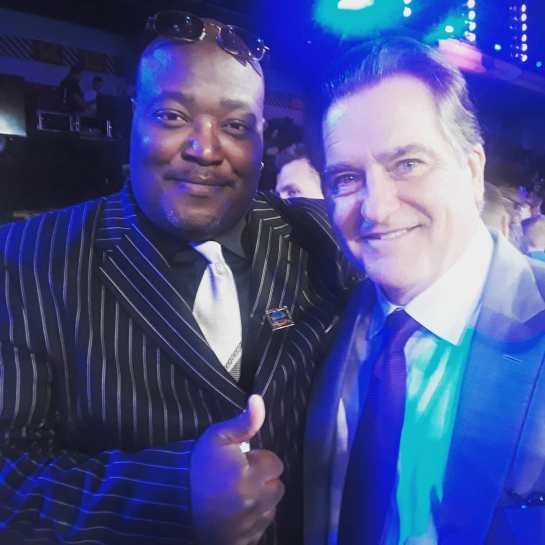
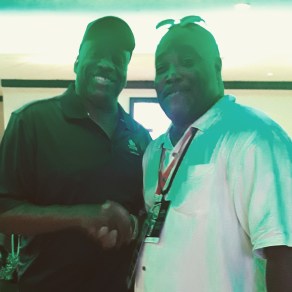
For those of us old enough to have watched this game and remember those years it was a unique time in NFL history. A young Chancellor of Football was watching this frozen in -63 wind chill in Columbus, Ohio. These were bigger than life characters that were shaping how I viewed the game and learned of all those making history. When we lose Dwight Clark, who was one of those figures, a piece of us go with them. Things won’t be the same but thanks for the memories. Thankfully former 49er Coach Steve Mariucci shared this on Twitter and I had the chance to thank Steve in Canton a few weeks later. *see pic at end of article*

Mariucci was a beneficiary of the prestige borne of The Catch. They were a well oiled and running dynasty 16 years in when he succeeded George Seifert in 1997. Hmmmm…isn’t that the same 16 year mark when Landry had the Cowboys in San Francisco back in ’81?? For irony…. Mariucci and the 49ers also lost the NFC Championship Game that year. Yet that story…can be told at another time.

Thanks for the memories Dwight Clark. RIP (January 8, 1957 – June 4, 2018)

Dedicated To The Memories of: Dwight Clark, Bill Walsh, Fred Dean, Tom Landry,  Freddie Solomon, Bob McKittrick, John Ayers, Fred Quillan, Keith Fahnhorst, Ernie Stautner, Larry Bethea, Harvey Martin, Ron Springs, narrator Harry Kalas, Ed Sabol & Steve Sabol

Thanks for reading please share the article.

me.mooch

Drew Pearson Should Be In The Pro Football hall of Fame

When you think of the great NFL teams of the 1970’s, the team that usually comes to mind first are Tom Landry’s Dallas Cowboys. Now Pittsburgh Steeler fans will argue they were the team of the decade and most fans and pundits should think of their team first. Yet think about it… Whenever the 1970’s Steelers are brought up, everyone points to the 2 Super Bowls when they defeated Dallas. Very rarely are the Super Bowls brought up over the Rams or Vikings. Therefore, Dallas was the most visible team. One of the most visible performers on the NFL’s most visible team was standout WR Drew Pearson.

pearson1To the casual observer, Pearson only had two 1,000 yard seasons, 3 All Pro & Pro Bowl seasons. In 1974, only Drew and Cliff Branch topped 1,000 yards that year in receiving in the NFL. Yet if you were cheering against the Cowboys, as many of us were in those years, no one struck more fear in you when the game was on the line.

From playing every year on Thanksgiving, to numerous appearances on Monday Night Football, and annually making the playoffs, we were always watching the Cowboys. The moment Pearson burst onto a nation’s conscience was the 1974 Thanksgiving tilt vs the hated Washington Redskins. Roger Staubach had been knocked from the game thrusting rookie Clint Longley into his 1st significant action.

In a nationally televised game, the Cowboys appeared headed for a loss down 16-3 in the 3rd quarter. Then out of nowhere Longley and the offense got hot. Two touchdown marches gave the Cowboys a 17-16 lead before the 4th quarter began. What gave the game a unique quality was the fact a rookie QB and Pearson, in only his 2nd season, were drawing up plays in the dirt. It was not Landry’s intricate precise passing game leading the charge.

After a Duane Thomas touchdown put the Redskins back on top, Landry’s unknown players had a chance to win it late. As they had turned this game around playing shoot from the hip football, Longley and Pearson drew up another play in the dirt with just seconds to go in the game. George Allen’s Redskins and Landry’s Cowboys coaching staff’s had been in place for 5 years at this point. They knew each other’s playbook. It took Pearson making an adjustment on a “16 Route” in Cowboys terminology, to what amounted to an in and up. The safety bit and Pearson blew by as Longley hit him with a last minute 50 yard bomb and a 24-23 triumph.

Millions of fans digesting Thanksgiving turkey fell out of their Lazy Boy’s as they watched a game still revered in Cowboy lore. Pearson had 5 rec. 108 yards and the game winning touchdown. Bolstered by the heroics performed and notoriety of this game, Pearson was voted All Pro and made his 1st Pro Bowl. In 1975 Pearson was a marked man and had less receptions and yardage yet combined with Staubach for 8 touchdowns during the regular season.

So what makes Drew Pearson Hall of Fame worthy?? The moments. To turn in clutch performances in the final minutes when many players shrink at the moment of truth. How many times have you heard a coach describe how they have to get their player into the game with play calling to keep him engaged?? Well the 10-4 wildcard Cowboys of 1975 made the trip to play the Minnesota Vikings in an NFC Divisional Playoff Game. Against one of history’s best defenses and on target to play in their 3rd straight Super Bowl, the Vikings had held Pearson without a catch. With the game on the line… it was 4th and 17 from their own 25 down 14-10 with :44 left when…

The Hail Mary to win the ’75 playoff in Minnesota not only propelled the Dallas Cowboys to Super Bowl X, it marked Pearson as one of the NFL’s best clutch performers. The next two seasons he was voted to the Pro Bowl and the All Pro team. The second of which the Cowboys won Super Bowl XII to conclude the 1977 season.

As the late ’70’s beckoned, Pearson shared more of the spotlight with newcomers Tony Dorsett and fellow wideout Tony Hill. His numbers suffered but they were a better team as they appeared in back to back Super Bowls in 77 & 78. Everyone thought the magic would be over with the retirement of Hall of Fame QB Roger Staubach after the 1979 season. Pearson had a mediocre season in ’80 (43 rec 568 yds 6TDs) as the Cowboys adjusted to new QB Danny White. Yet when the 12-4 wildcard Cowboys found themselves down 27-17 to the favored Atlanta Falcons in the divisional playoffs, it was Pearson to the rescue again. First he scored to close the gap to 27-24 midway through the 4th quarter.. then this happened with :49 left in the game.

Unfortunately this miracle touchdown didn’t propel the Cowboys to the Super Bowl as they fell in the first of 3 straight NFC Championships. However if you’re keeping count, from 1975-1982 Dallas played in at least the NFC Championship in 6 of 8 seasons and Pearson was the only featured performer on all 6. Staubach was only there for 3 of them. They played in 3 Super Bowls in a 4 year span and Pearson was able to make magic moments happen with 3 different quarterbacks.

Over the length of Drew’s 11 year career, he only scored 48 touchdowns. Yet he seemed to always score the money touchdowns that ruined opponent’s seasons. His career ended after a horrific car accident after the 1983 season and the Cowboys were never the same. In fact the very next year (1984) marked the first non playoff season for Dallas since 1974. In an era where the Dallas Cowboys became America’s Team, how can you talk about that era without mentioning his heroics??

Please lend your thoughts as well by writing in to the Pro Football Hall of Fame to the address below. Please be respectful and positively lend your voice:

Please write & nominate #88
Send letters to:
Pro Football Hall of Fame
Attention Seniors Committee
2121 George Halas Dr NW, Canton, 
OH 44708

For induction into the Pro Football Hall of Fame, I present Drew Pearson.

Epilogue 4/29/2017: In Philadelphia during the NFL draft, Pearson stepped to the mic and offered this passionate delivery in announcing Dallas’ 2nd round selection.  He honored every Dallas Cowboy who has ever played along with owner Jerry Jones and coach Jason Garrett:

Now it’s time for an induction speech from him.

Thanks for reading and please share the article.

SUPER BOWL XV RUNNER UP 1980 PHILADELPHIA EAGLES

As the 1980’s beckoned, many of the teams that Dallas had sat on for the previous decade began to grow anew.  A fresh generation of coaches and players started to internalize the disdain for the bully on the block and began their ascent. It was known that you had to take out Landry’s Cowboys if you really want to be recognized as champions. Although the Redskins were the one with the more acknowledged rivalry, it was the Philadelphia Eagles under Dick Vermeil that got the first crack at the boys from the Lone Star State.

superbowlxv3Much of the animosity started at the beginning of the week, when the Eagles were cast as underdogs against Landry’s Cowboys in the 1980 NFC Championship Game. Although they were hosting, the Eagles were made underdogs by Vegas. Right on cue, the Eagles were being treated as bit role players even though they split their games with Dallas that year.

An upset Dick Vermeil made a declaration that ratcheted feelings up when he vowed “Never allow anyone to take you for granted! I get the feeling the Dallas Cowboys are taking us for granted right now. We’re here because we earned the right to be here. If the Dallas Cowboys are going to take us for granted, we’ll whip their ass!”

To further irk Tom Landry, Vermeil opted to play in their white uniforms forcing the Cowboys to play in the blue jerseys, which they felt were jinxed. Dallas complained to the league office yet for once the powers that be didn’t allow Gil Brandt and Tex Schramm to get their way. The crowd at Veteran’s Stadium was unforgiving as the two teams emerged from the tunnel.  It was 4* and -17* windchill when on the Eagles second play from scrimmage:

The roar of the crowd during Wilbert Montgomery’s touchdown was the loudest ever at Veteran’s Stadium. Cowboy haters everywhere delighted as the Eagles held the early upper hand on the Cowboys 7-0. As the game wore on and Landry’s charges behind 17-7 late in the fourth quarter, they were able to punt and pin the Eagles to their own 5 yard line. From their own 5 yard line the Eagles ended fading hopes for Dallas when in 3 runs Philadelphia moved the football to the Dallas 25. Montgomery was putting the finishing touches on a signature day when he struck with this 54 yard masterpiece.

The Eagles vanquished the Cowboys 20-7 on their way to Super Bowl XV. Wilbert Montgomery etched his name into  Philadelphia lore with a 194 yard rushing performance. They had destroyed the Flex Defense, powering for 263 yards on 40  carries averaging 6.575 yards a pop!! Cowboy haters everywhere rejoiced in hearing Landry, Danny White and Cowboy apologists have to answer the questions as the defeated football team.

super-bowl-logo-1980Until the Philadelphia Eagles win a Super Bowl this will remain the greatest day in the team’s modern history. The ’60 NFL Championship was so long ago, generations of Eagle fans have passed on. Even this proud moment in Eagles history was 34 years ago.  Although they came up short in Super Bowl XV, the win against Tom Landry and the Dallas Cowboys for the NFC Championship was the most memorable gamein team history.

Thanks for reading and please share the article.
SUPER BOWL XIII RUNNER UP 1978 DALLAS COWBOYS

In the “Battle of Champions”,  XIII on January 21, 1979 the defending Super Bowl champion Cowboys took on the Steelers in deciding who was to be the team of the decade. There have only been a few occasions where a Super Bowl champion came back better the following season. The 1978 Dallas Cowboys were one of those teams.

16568_lg

Of all the teams coached by Tom Landry built by Tex Schramm and Gil Brandt, this was the apex of their work. In 1977 they finished #1 on both offense and defense. Rookies Tony Dorsett (1007 yds) and Tony Hill were just learning the offense and fighting for playing time. 1978 saw them each explode onto the scene as Pro Bowl performers with Dorsett flashing for 1,325 yards and 7 TDs. Hill supplanted Golden Richards, teaming with ’77 Pro Bowler Drew Pearson, gathering in 46 balls for 823 yards and 6 TDs. So they were much more explosive.

Finishing #2 in defense in 1978, nothing really changed from the season before. Pro Bowlers Randy White, Harvey Martin, Charlie Waters, and Cliff Harris were joined by 1st timer “Hollywood” Henderson. Whose athleticism had lethal impact on the Cowboys’ nickle packages. Although the NFL extended the regular season to 16 games in ’78, the Cowboys gave up fewer points (208) than they had as league champion the season before (212).

Did you know the ’78 Cowboys were .5 yards per game from being #1 on offense and 8 yards per game from being#1 on defense for a second straight year?? So when they vanquished the Los Angeles Rams and their #1 ranked defense, on the road 28-0 for the NFC Championship, their trip to Super Bowl XIII was for more than winning a title. They had a chance to finish as a dynasty and arguably the best in history.

The best Super Bowl of the first 25 had the Steelers scoring 1st then the Cowboys answering on the last play of the 1st quarter.

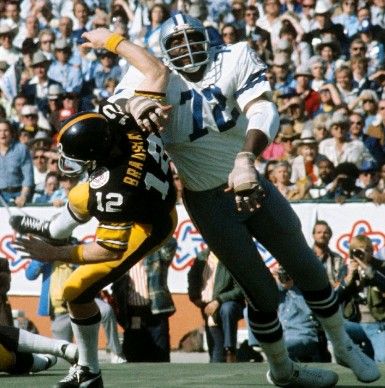
The Doomsday Defense II forced a fumble by league MVP and Super Bowl MVP Terry Bradshaw as the first quarter wore on. Just when the Steeler offense seemed to get it together, Doomsday struck again near midfield to take a 14-7 lead. Courtesy of Hollywood Henderson who taunted Bradshaw in the week preceding Super Bowl XIII.

The Steelers struck back with 2 scores to take a 21-14 halftime lead. Bradshaw had answered with several scoring drives and finished with 253 yards passing. A Super Bowl record… Dallas wasn’t living up to their defensive billing. After the first initial offensive drives, the Steelers had held Staubach and company in check.

Although the game had gone back and forth, the Steelers had outgained Dallas 271 to 102 yards. The teams had combined for 5 turnovers. However 1 aspect of the game had gone in Dallas’ favor, the Steelers trapping running game had been smothered. That trend continued in the second half as the Cowboy offense found it’s bearings. Down 21-14 late in the 3rd, Staubach drove the Cowboys to the Steelers 11 yard line. Poised to tie the game, the fickle hands of fate  interceded…

Having to settle for a 21-17 deficit, the momentum lost affected the Cowboys until late in the 4th quarter. In actuality neither team could move the ball for the balance of the second half. Only a pass interference that had impact beyond this Super Bowl gave the Steelers momentum.

The Steelers scored a few plays later to make it 28-17 on Franco Harris’ 22 yard trap up the middle. Another fickle bounce of the ball happened when kicker Roy Gerela slipped kicking off. It went right to DT Randy White. With a casted hand tried to handle the ball on a return when he fumbled it. The Steelers scored on the next play and viola…they were up 35-17 with 6:41 to go. The Cowboys were undone on a bad pass interference and two strange bounces of the football.

The Cowboys didn’t go quietly into the night.

Staubach led the Cowboys to back to back touchdown drives to cut the score to 35-31. They couldn’t get a second onside kick and the Steelers ran out the clock. The Steel Curtain finished the game on fumes. Dallas couldn’t be stopped on those last 2 drives. Comparing both defenses:

  • Steelers allowed 330 yards, 5 sacks, 2 forced fumbles, 1 int.
  • Cowboys allowed 357 yards, 4 sacks, 3 forced fumble, 1 int and 1 fumble recovery for a TD

sbxiiinew2Not bad when you compare two great defenses. However writers have gunned down hyperbole in the history books as Steeler strength vs Dallas finesse. When in fact the Cowboys were ranked 2nd and the Steelers 3rd on defense. The 86 yards gained by Pittsburgh in the 2nd half was the fewest by a Super Bowl winner. Well at least until XXX when the Steelers held the Cowboys to 61 in their loss.

super-bowl-logo-1978Even though the Steelers had bested Dallas in SuperBowl X, this  could have made things even at 3 wins a piece.  Anyway…to the victor went too many spoils when it comes to Hall of Fame inductions off these teams.  No Harvey Martin, no Drew Pearson?  really…Pittsburgh was better…but not 10 inductions to 3 better!  No chance.

Who knew this would be Tom Landry 's last Super Bowl team.

Who knew this would be Tom Landry ‘s last Super Bowl team.

Thanks for reading and please share the article.
SUPER BOWL X RUNNER UP 1975 DALLAS COWBOYS

Heading into Super Bowl VI, Cowboy coach Tom Landry referred to the Miami Dolphins defense as “a bunch of no named guys.” The Dolphins and the sporting press spun Landry’s comment into the nickname “The No Name Defense”, that they would forever be known for. Yet little did he know he would return with an equally set of anonymous guys to the title game four years later.

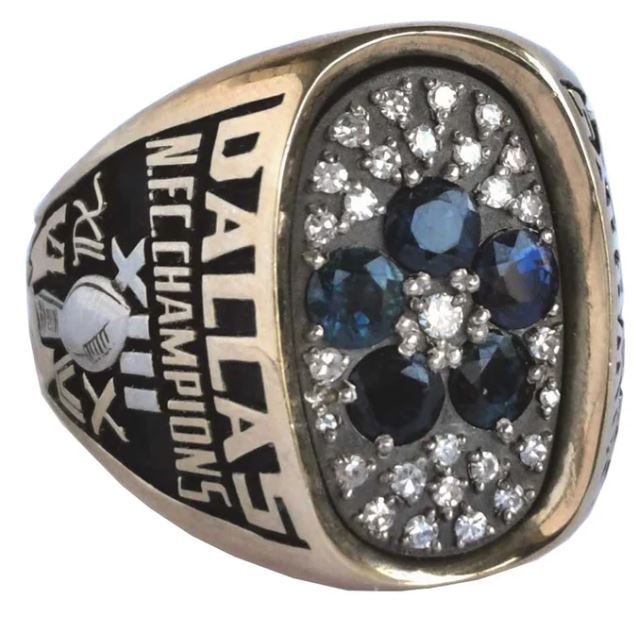
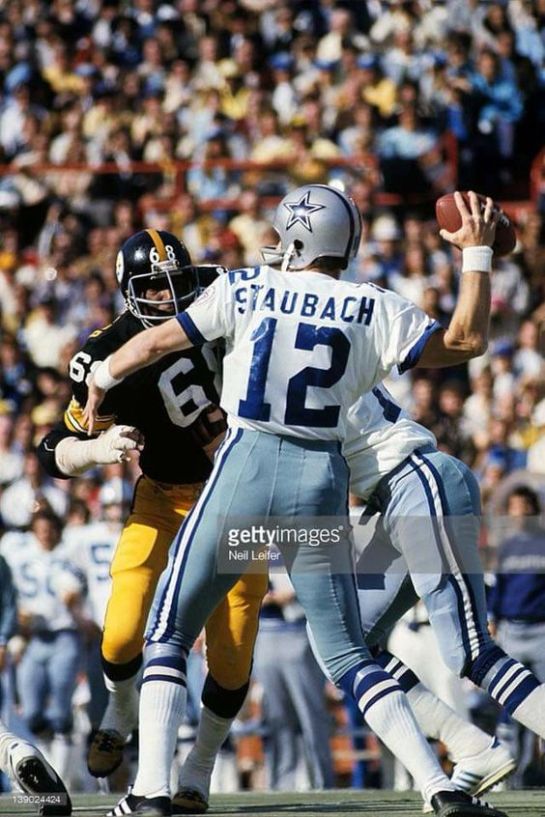
1975.Dallas-Cowboys-Roger-Staubach-Super-Bowl-Ring-0002Don’t get us wrong there were known players on the Cowboy’s roster, they were aging and on the downside of their careers. Quarterback Roger Staubach had come of age in the 1975 playoffs and was in his prime. He took the Cowboys to Super Bowl X after engineering a miracle in Minnesota. A play that came to be known as The Hail Mary. However it was holdovers from the 1960’s defenses which included Middle Linebacker Lee Roy Jordan #55, Outside Linebacker Dave Edwards #52, DT Jethro Pugh #75, and future Hall of Fame CB Mel Renfro, that lent familiarity to long time fans.

1975.Dallas-Cowboys-Roger-Staubach-Super-Bowl-Ring-0003The 1974 season saw the Cowboys say goodbye to Hall of Fame Defensive Tackle Bob Lilly, Hall of Fame receiver Bob Hayes, and longtime CB Cornell Green. To replenish the cupboard, Gil Brandt, Tex Shramm and Tom Landry loaded the roster with new players. An amazing 12 rookies made the team and became known as “The Dirty Dozen”. Yet none were stars or household names. Well at least not at the time.

The plain truth is the basis for a team that made the Super Bowl 3 times in 4 years, and 3 more NFC Championships games in the ensuing 4 years after came from this draft. Long time MLB Bob Breunig, Hall of Fame DT Randy White, OLB Thomas “Hollywood” Henderson, DE Ed “Too Tall” Jones, S Randy Hughes, OLineman Herbert Scott, Pat Donovan, and Burton Lawless became mainstays from this team. Had the bounce of the ball gone differently in Super Bowl X and/or Super Bowl XIII this group would have been remembered in many ways close to the Steelers 1974 draft class.

1975.Dallas-Cowboys-Roger-Staubach-Super-Bowl-Ring-0001Just think about it… had the Cowboys won Super Bowl X or XIII the tally would have been 3 wins by both Dallas and Pittsburgh. Dallas sends more players to the Hall of Fame and fewer Steelers would have been enshrined.

Speaking of Tom Landry’s no-name bunch: Roger Staubach, Tackle Rayfield Wright and Safety Cliff Harris were the only Pro Bowl selections. In fact, the ’75 Cowboys are one of 3 of the first 42 Super Bowl participants to have the fewest pro bowl players with 3. When you think of the ’75 Cowboys who were the runners?? Calvin Hill, Dwayne Thomas, Walt Garrison?? All were gone from the team and Tony Dorsett was 2 years away.

The Cowboys had offseason acquisition Preston Pearson who had appeared in Super Bowls with both his previous teams. The Steelers of 1974 and Baltimore Colts all the way back in III when they lost to the Jets. He teamed with FB Robert Newhouse for a steady ground attack that would in time need to be improved but provided balance in ’75.

super-bowl-logo-1975Staubach’s taking the Cowboys to Super Bowl X was similar to John Elway taking the Broncos to the title game with “The Drive”. He capitalized on the momentum from the Viking playoff win and drove his team to the title game. He was the lone marquee name and took Super Bowl X down to the final play before falling 21-17.

The greatest of the first ten of these games stamped the Cowboys as a team to watch as the late 70’s beckoned.

Thanks for reading and please share the article.
Top Ten Single Season Defenses in NFL History : #7 1977 Dallas Cowboys

For all the talk of the Gritz Blitz and the Orange Crush Defense in 1977, it was the year of The Doomsday Defense II. They faced off with the Denver Broncos down in New Orleans in Super Bowl XII and the better defense won. They carried their season statistical domination into that game and forced a then Super Bowl record 8 turnovers. This was the last NFL champion to finish #1 on defense and #1 on offense. In giving up just 229.5 yards per game, most don’t realize that was better than the 1978 champion Pittsburgh Steelers (260.5) or even the great ’76 version (237.5).

After Craig Morton was benched, Hollywood Henderson and Doomsday treated Norris Weese to a rough outing. Super Bowl XII

After Craig Morton was benched, Hollywood Henderson and Doomsday treated Norris Weese to a rough outing. In Super Bowl XII

Unofficially that year was the little known fact that DE Harvey Martin recorded 26 sacks. The league didn’t start keeping that statistic until 1981 or that would still be a record. It was arguably his best season as he was named All Pro and made the Pro Bowl. Surprisingly he was only joined by SS Charlie Waters, OLB Hollywood Henderson, FS Cliff Harris, and DT Randy White.

Yet this group does have some knocks against it. They only faced 3 top ten offenses that year and gave up  212 points  for the season. The highest of our top ten. However they were 2-1 in those games and were the first Super Bowl champion to face their eventual Super Bowl opponent during the season. Winning the finale 14-6.

Supe Bowl XII Co-MVPs Randy White and the late Harvey Martin.

Supe Bowl XII Co-MVPs Randy White and the late Harvey Martin.

So why are they in the top ten??

The number one reason this group is here is this was the height of The Flex Defense. Their dominance was felt in a season long display. They held 7 of their 14 opponents to 10 points or less then became the first team since the merger to hold their 3 postseason opponents to 10 points or less. One of those was the #3 ranked offense of the  Chicago Bears and NFL rushing champion Walter Payton. He was held to 60 yards on 19 carries in a 37-7 win in the divisional round.

The havoc they raised in Super Bowl XII with 4 sacks, countless hurries that led to 4 interceptions on the biggest stage didn’t hurt. When half your line, DT Randy White and DE the late Harvey Martin, become the first defensive linemen to win Super Bowl MVP, that puts on an exclamation point on the season.

Other talents such as Ed “Too Tall” Jones, Thomas “Hollywood” Henderson who made his 1st Pro Bowl, made names for themselves as well. They would defend their championship in the following Super Bowl with the Pittsburgh Steelers where they ranked #2 in defense to the Steelers ranked third. That’s another story for a different time.

landry.2Epilogue: This was the crowning jewel in the late Tom Landry’s coaching career. Where he engineered a majority of the tactics to bring the 4-3 to be the modern staple of defense in the NFL. It was his ability to innovate that defense and come up with the Flex Defense to read and react as well as keep the Middle Linebacker (Bob Breunig) free of potential blockers.

Dedicated in the memory of both Tom Landry and Harvey Martin.

Thanks for reading and please share the article.

My man Hollywood’s parting shot:

Hollywood Strikes Back!

Hollywood Strikes Back!