The AFL: A True American Success Story

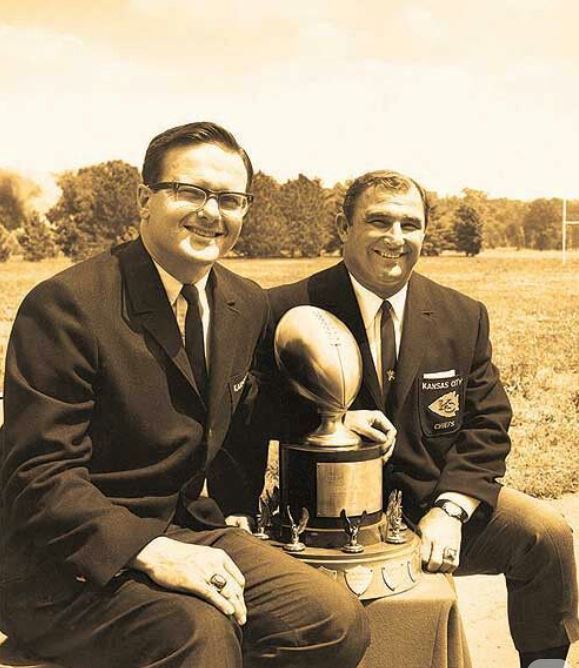
AFL Founder / Chiefs Owner Lamar Hunt with Hank Stram and the the 1966 AFL Trophy.

Article Reissue: 3, June 2011

As we just cleared the last hurdle on our way to Super Bowl LX in Santa Clara, its time to take a look back to the Super Bowl’s origins. The 1960’s when the upstart National Football League met its match with the American Fooball League horning into their territory. Keep in mind all of this started with a series of championship ring stories on social media a millenia ago. Without further adieu…

Unlike other leagues that popped up and died, the American Football League lives on in the American Football Conference of the modern NFL.  With a burgeoning economy after World War II, Americans turned their attention to a life of leisure during the 1950s. Sports became the outlet for most of America.

There was a clamor by many who felt slighted when it came to big league sports.  The furthest point west on the map where major professional sports was played, was Wisconsin & St Louis Missouri. Then something happened to change the landscape.  The AAFC football league folded and the San Francisco 49ers joined the NFL in 1950, along with the champion Cleveland Browns and Baltimore Colts.

This event helped propel the Cleveland Rams west to Los Angeles, where they joined San Francisco to be the first pro teams in California. Now other western cities wanted in on the action and all the other sports started to broaden their minds toward relocation.  Soon moves were made by an L.A. Councilwoman who massaged the beginnings of what came to be the Brooklyn Dodgers and New York Giants move to California in 1957.  Expansion was on soon with the Lakers in 1960 moving from Minneapolis.  Now Texans wanted an NFL team and had the money to gain an NFL franchise or so Lamar Hunt thought.
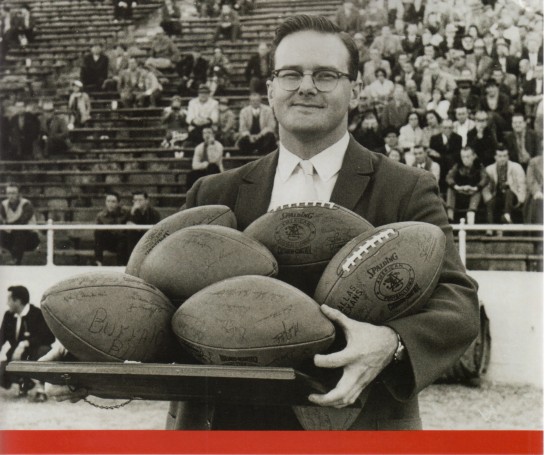
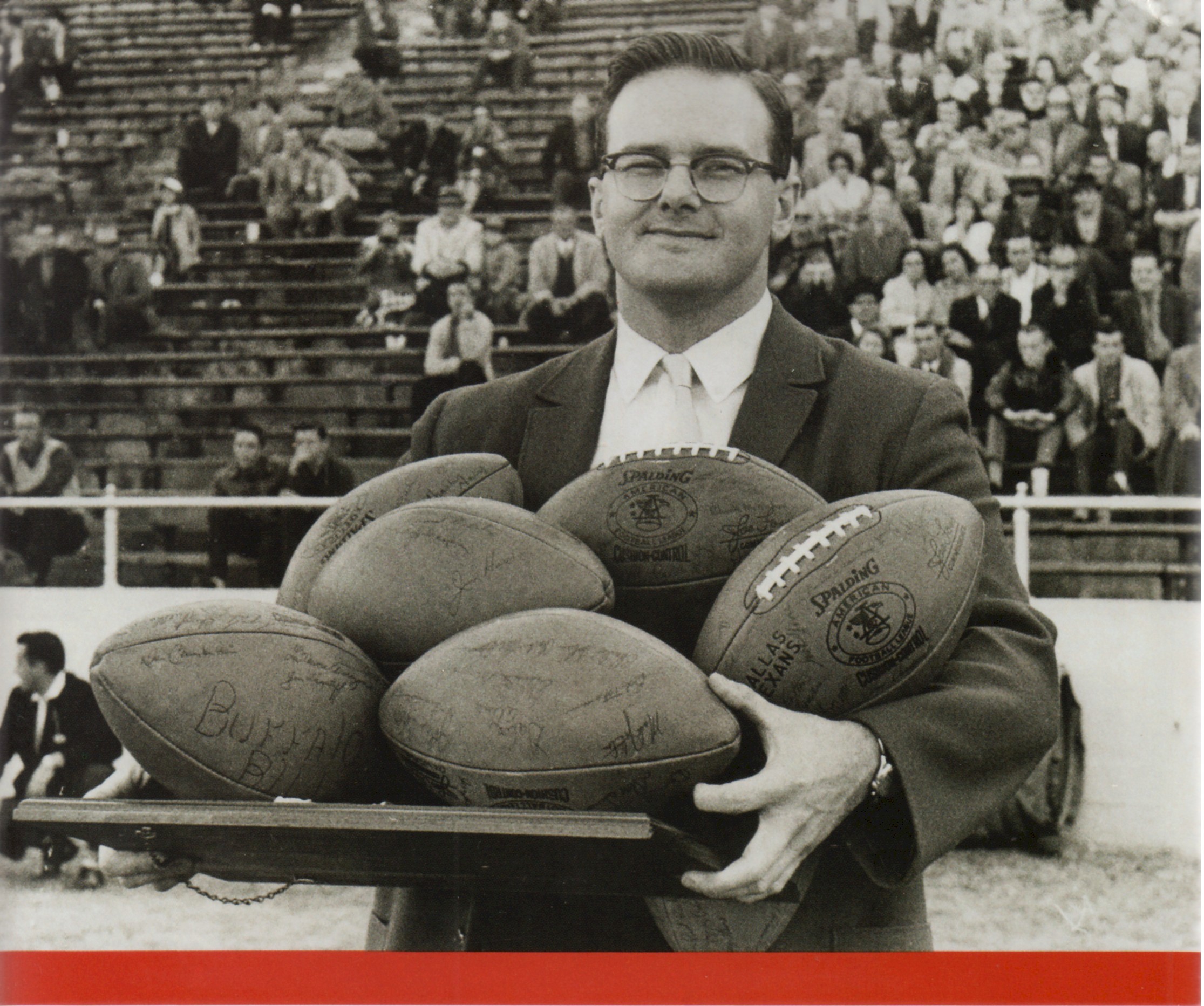
AFL and Kansas City Chief founder Lamar Hunt holding a platter of AFL footballs.

AFL and Kansas City Chief founder Lamar Hunt holding a platter of AFL footballs.

Then the NFL had the landmark 1958 NFL Championship overtime game between the New York Giants and Baltimore Colts that transformed the spark of interest into a flame. Hunt and principles moved quickly to form the American Football League since the NFL had thwarted their attempts to bring football to Texas. Now you have to understand who we’re talking about here for a second.  Lamar Hunt was son of H.L. Hunt of Hunt Brothers Oil! We’re talking seriously deep pockets here. The NFL in its arrogance thought they would outlast a fledgling league like the AAFC just a decade before….damn were they wrong.
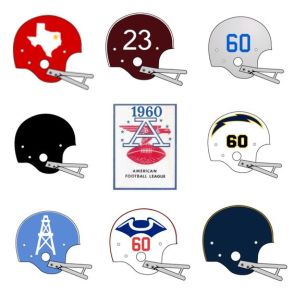
Once the idea of the AFL gained momentum, the NFL turned to espionage and tricky double dealing to sink the new league.  The eight cities that Hunt and the other AFL owners decided on were Dallas, Houston, Denver, Boston, New York, Los Angeles, Minneapolis, and Buffalo. However the NFL bent the ear of the Minnesota ownership group, and told them they would give them an NFL franchise if they would decieve their brethren, by defecting to the NFL at the last minute. It almost worked but the AFL scrambled to move the eighth team to its new home in Oakland. Meanwhile the NFL put a team in Dallas to compete with Hunt’s Dallas Texans, they were called the Cowboys.

The AFL had some seriously rich men that wanted to see it succeed in Bud Adams, Ralph Wilson, Lamar Hunt, and Barron Hilton yet there were other ownership groups that struggled to make ends meet as the league got off the ground in 1960. Many teams were losing money at record rates, some to the tune of a million dollars or more.

It was former Boston Patriot owner Billy Sullivan who coined the phrase “The Foolish Club” when listening to his colleagues joke about revenues lost.  However John Madden recalled a reporter asking Lamar’s father H.L. Hunt “What did he think of his son losing $1 million  a year??” Hunt’s answer was cryptic to the NFL and the sporting establishment’s ears when he replied “Well, he’ll be ok. At that rate he’ll only be able to go on for another 150 years.” Damn!!  On 1960’s dollars??  Yikes!!

Although the NFL had been around forever, for the first time they were up against wealthy men who gained their fortunes as titans of industry outside of football. NFL owners George Halas, Carroll Rosenbloom, Tim and Wellington Mara, George Preston Marshall, and Art Modell were primarily football men and knew their asses were in trouble.  If it came down to the AFL’s pockets they would be in for a battle they couldn’t win.

The first few years had the established sporting press scoffing at the league’s style of play, uniforms, retread players and coaches, you name it. This is an era where if you went against the establishment, you had more than an uphill battle just for acceptance….I mean the radical 60’s were not yet underway. Yet here they were continuing the plan on expanding professional football to more points within the United States.
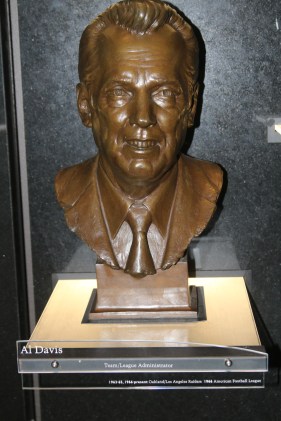
al-davis-bustOne of the first items the AFL did was secure a television contract to assist the teams that had financial problems like the Titans and Raiders.  The Raiders had also come to a point of folding when they contacted their fellow teams and said they couldn’t sustain operation financially.  Buffalo’s Ralph Wilson stepped in and lent the Raiders $450,000 to stay afloat because the league couldn’t operate with only 7 teams. As for the Titans and Harry Wismer, the Jets needed an ownership group that had the pockets and vision to rival that of the New York Giants. Enter Sonny Werblin.

Werblin spearheaded a group that purchased the bankrupt New York Titans, renamed them the Jets and helped negotiate the most lucrative television contract to date with NBC.  Over $1.8 million dollars went to each team in 1965 and with all of their teams solvent for future operation, new stadiums went up in San Diego (Los Angeles), Oakland, & Denver. Now the next move Werblin spearheaded was to draft Joe Namath and pay him a ridiculous $427,000 contract to be the star in New York. Uh oh…this single shot turned the draft into a who is going to pay the most for a players services between the two leagues.  Talk about impact.

An unwritten agreement existed between the two leagues to not sign each others current players.  Yet the NFL went underhanded, yet again, when the New York Giants signed kicker Pete Gogolak from the two time AFL Champion Buffalo Bills.  The AFL retaliated big time. It was recounted by Lamar Hunt, the founder of the Texans who had moved his team to Kansas City and renamed them the Chiefs, to meet Tex Schramm and discuss a possible merger. Hunt still lived in Dallas. They met at Love Field under the Texas Ranger statue and when the meeting was over, Hunt flew to Houston to elect Al Davis AFL Commissioner.  Joe Foss had been a good commissioner but now they needed a “war time President”.  Al Davis quickly helped teams realize they could bring the NFL to its knees if they created a bidding war by signing away their superstars.

The moves of signing away San Francisco quarterback John Brodie, Los Angeles’ Roman Gabriel, and Chicago’s Mike Ditka were the straw that broke the camel’s back.  The bidding for player’s talents had driven contracts up dramatically and the NFL grudgingly came to the table.  Al Davis was away about to sign another player when Hunt told him that they were going to meet the next day about a merger and they didn’t need the headlines. *Pay attention because this is the birthplace of the Chiefs / Raiders rivalry and the Al Davis against the world mentality takes place*  Davis signs the player which angers Hunt.

In the subsequent negotiations, the leagues agree to a merger with the two league’s champions playing in a new championship game, the Super Bowl, for the first four years and realignment into one all inclusive league in 1970.  Pete Rozelle remained commissioner over all of football, there was a common draft starting in 1966… and Al Davis….?? They left him out in the cold sort of…
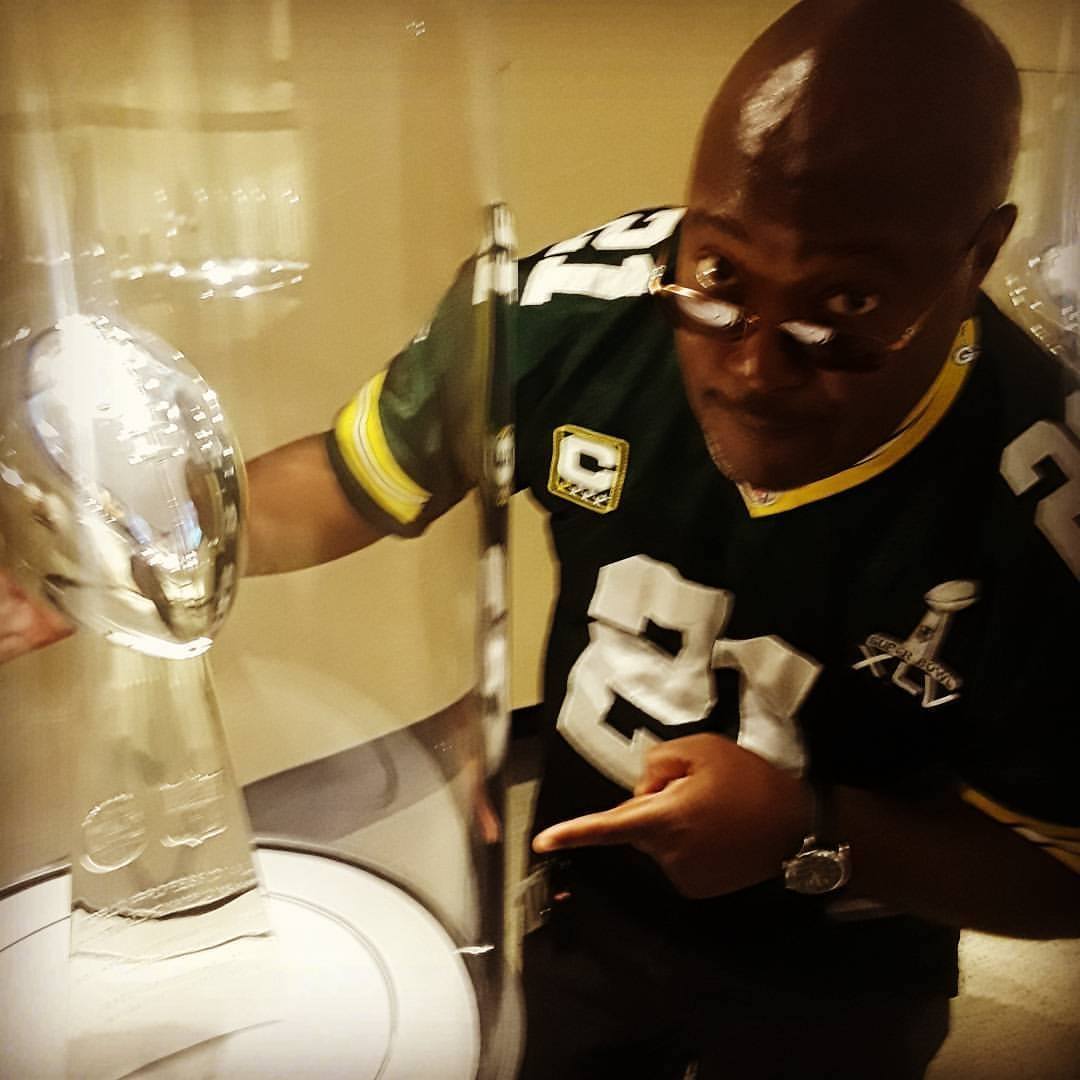
Super Bowl I Trophy sits in the Green Bay Packer Hall of Fame.

This is where he received his dubious ownership distinction and awkward title President of the Managing General Partner for the Raiders.  He had only been a coach before, yet one of the  items that seemed spineless is the NFL made the AFL’s teams pay $3 million in reparation damages each and had Al Davis been there would never have acquiesced to such a demand.  Not when they had the NFL crawling to the table.  It was this animosity toward Pete Rozelle, Bud Adams and especially the Kansas City Chiefs and Lamar Hunt that raged on for many years. *This is where the animosity between Davis and Rozelle fostered…remember the court battles of the 1980s between the Oakland Raiders v the NFL??*
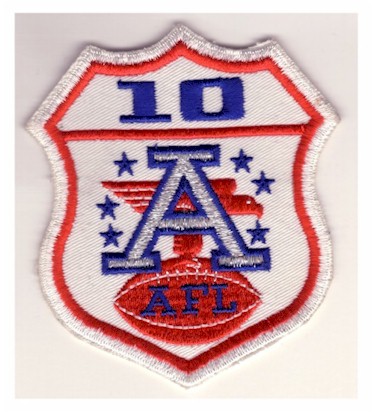
The patch worn by the Kansas City Chiefs on January 11, 1970 for Super Bowl IV. The final game of the AFL
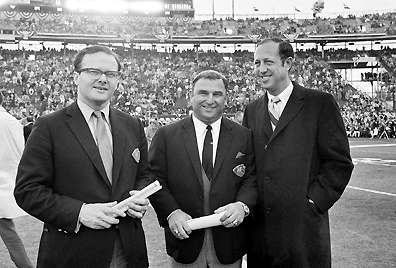
In the first two Super Bowls Green Bay bested Kansas City and Oakland respectively.  The landmark win came when the Jets upset Baltimore to show that the AFL was on a par in Super Bowl III.  Then with a twist of fate, the ownership group who traitorously tried to sink the AFL by defecting, came into Super Bowl IV against the Kansas City Chiefs and AFL founder Lamar Hunt.  In the last game ever for the AFL, Kansas City buried the Minnesota Vikings 23-7 to bring not only the Super Bowl record to 2-2 between the two leagues, but able to have the satisfaction of kicking Judas’ ass in the process.
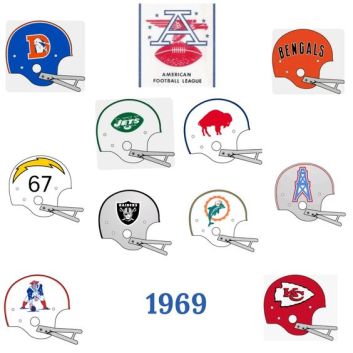
In conclusion: It was wrong to not include Davis and to me is the one of the few black eyes in this success story.  The AFL was swallowed into the monolith that is the NFL after expanding the AFL to 10 teams with Cincinnati, and Miami emerging.  These 10 teams were joined by the Pittsburgh Steelers, Cleveland Browns, and Baltimore Colts, yes the Baltimore Colts who gave the NFL a black eye with that first loss. They didn’t go empty handed, each club was paid $3 million to move to the new AFC.  Yet AFL loyalists such as Davis wished the two leagues stay separate, and he truly believed they would have eventually folded the NFL.
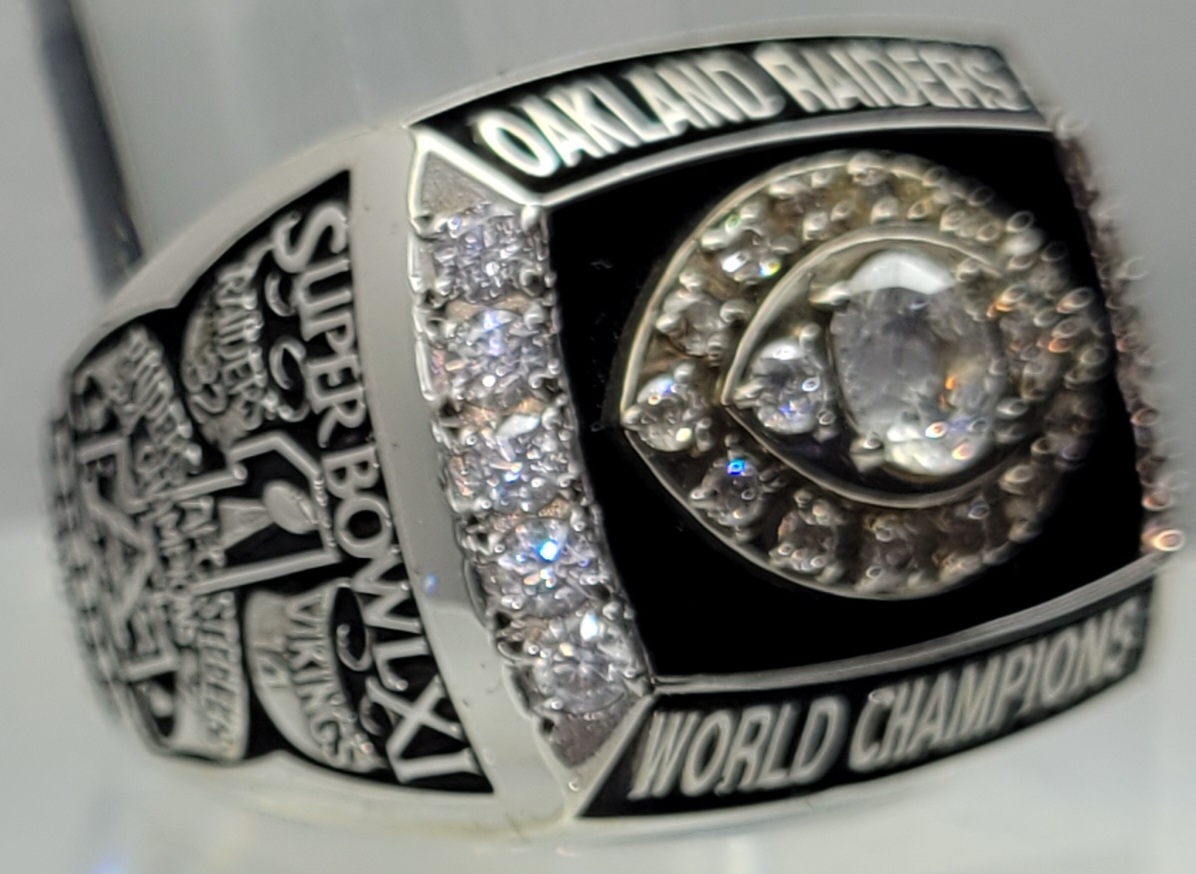
In fact in the 3 Super Bowls the Raiders won in the post merger NFL, Davis always used the AFL logo and not the bold modified block “A” of the AFC on their Super Bowl rings.  He didn’t relent until the 2002 AFC championship ring where he finally used the AFC “A”.
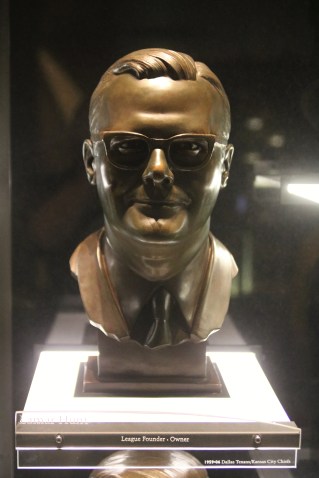
hof-lamar-huntThere you have it…how the AFL changed the sporting landscape after the first shot was fired by the folding of their predecessors, the AAFC.  San Francisco’s entering the NFL doesn’t get the impact that it should because so much focus was on champion Cleveland coming over.  The western expansion of American Football owes a debt of gratitude to the 49ers yet even more to those original owners.

Thanks for reading and please share the article.

Top Ten Single Season Defenses in NFL History : #9 1975 Pittsburgh Steelers

Article Reissue 23, June  2014

This is the 3rd installment on the 10 greatest defenses in NFL history. Truth of the matter is all bias has to be removed and the great equalizers lie in the season statistics, play against strongest offenses during their year, and what precedents they set.  If one team is sitting in front of another for having set a precedent, a team with less stature or ranking cannot sit above them on the list.

The Pittsburgh Steelers of the 1970s were definitely known as a defensive football team. They came of age during their run leading up to Super Bowl IX, but it was in the following two seasons they were at their zenith. The late Chuck Noll had a roster that entered its prime on the defensive side first after drafting DT “Mean” Joe Greene in 1969.

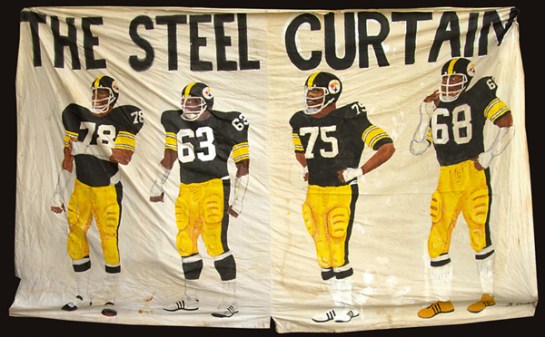
The banner that hung in Three Rivers Stadium honoring the Front Four.

The banner that hung in Three Rivers Stadium honoring the Front Four.

As defending Super Bowl champion, everyone gave them their best shot. For all the talk of the ’76 version, this team was equally stout. They only allowed 162 points while holding 8 of 14 opponents to 10 or fewer points. This didn’t include the Cincinnati Bengals, who under Paul Brown and Bill Walsh fashioned the league’s #2 ranked offense. The Steelers did hold them to 24 and 14 points to sweep them as they finished 12-2 to Cincy’s 11-3.

In fact the ’75 AFC Central was the first time in history 3 teams finished with at least 10 wins thanks to the 10-4 Oilers. Take away the games with the Steelers and the Bengals finished 11-1 and Houston 10-2 v the rest of the NFL. Pretty significant to go 4-0 against these two then wouldn’t you say??

When it comes to quality opponents, two of the Steeler’s 8 games of 10 or less allowed  came against top 10 offenses that year. Now add in both the AFC Divisional playoff and the AFC Championship where they gave up 10 points in both wins over Baltimore (12th offense) and Oakland (4th in offense). Then they made it to Super Bowl X and beat the 3rd best offense in the Dallas Cowboys while only yielding 17.

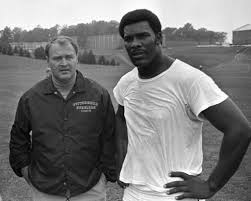
Joe Greene was the 1st Steeler drafted in the Chuck Noll era.

Joe Greene was the 1st Steeler drafted in the Chuck Noll era.

Now this is a heavyweight champ that left little standing in their wake defensively. The lone blemish?? OJ Simpson and Buffalo’s #1 ranked offense got off on them in a 30-21 win. “The Juice” broke for over 200 yards in Three Rivers Stadium. Buffalo ran for 308 yards in that game.

All that withstanding, the Steelers sent 3/4ths of their secondary to the Pro Bowl. Cornerback Mel Blount, who led the league with 11 interceptions, joined FS Mike Wagner and SS Glen Edwards. These guys were behind a good group of Linebackers that included fellow Pro Bowlers Jack Lambert, Andy Russell, and Jack Ham. Yes all three made the Pro Bowl. Once you follow that up with DT “Mean” Joe Greene and DE LC Greenwood, you have 8 of the starting 11 in the Pro Bowl….. Eight!! Come on…that is beyond the college try. Now you know why the ’78 Steelers didn’t make the top ten.

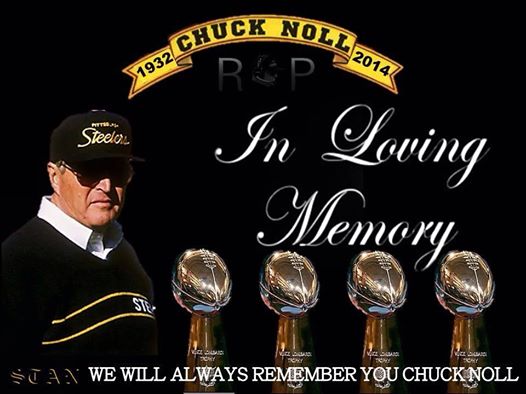
RIP Coach Noll

RIP Coach Noll

This article is dedicated in the memory of DT Ernie Holmes, DE LC Greenwood, DE Dwight White, and former Head Coach Chuck Noll who passed last week.

Thanks for reading and lease share the article.


Top Ten Single Season Defenses in NFL History : #10 1986 Chicago Bears

Article Reissue: 22, June 2014

Welcome to the second installment on the 10 greatest defenses in NFL history. We are off to a rousing start as folks are putting in their reasons for their teams and why the honorable mention units should have made the top ten list.

Truth of the matter is all bias has to be removed and the great equalizers lie in the season statistics, play against strongest offenses during their year, and what precedents they set.  If one team is sitting in front of another for having set a precedent, a team with less stature or ranking cannot sit above them on the list.

So now we have to countdown to the single season defenses in NFL history starting with #10.

10. 1986 Chicago Bears –  A season after bludgeoning their way to the NFL title, this group was poised to repeat. If Mike Ditka would have stayed the course and not played Doug Flutie at quarterback who was on the team for four weeks, they would have. Having done so he robbed NFL fans of the greatest 2 year dynasty the NFL had ever seen. They were 15-1 in 1985 then went 14-2 which tied for the best record in the league that year. 29-3 over two seasons?? So why is this group in and the ’86 Giants and ’02 Bucs left off??

  • ’86 Bears – 187 pts allowed *NFL record / 10 of 16 opponents held to 10 or fewer points / 258.1 yds per game (1st) / 62 sacks (2nd) / 31 int. (2nd)
  • ’86 Giants- 236 pts allowed / 5 of 16 opponents held to 10 or fewer points *2 more in playoffs* / 297.3 yds per game (2nd) / 59 sacks (4th / 24 int. (tied 7th)
  • ’02 Bucs – 196 pts allowed / 9 of 16 opponents held to 10 or fewer points / 252.8 yds per game (1st) / 43 sacks (6th) / 31 int. (1st) – 9 opponents ranked 14-31st on offense

Furthermore in compiling these statistics the yardage difference between #1 & #2 in 1986 (258.1 to 297.3) is the second biggest difference since 1970. No way in hell you could say the Giants defense in 1986 was better than Chicago’s…no way.

In a year where two future Hall of Famers Dan Hampton (10 sacks) and Richard Dent (11.5 sacks) didn’t make the Pro Bowl, LB Wilber Marshall, DT Steve McMichael, late SS Dave Duerson, and MLB Mike Singletary did. All this before we bring up FS Gary Fencik. They were 2-1 against Pro Bowl quarterbacks. They split with the Vikings and Tommy Kramer beating him once 23-0.

Then they pasted Boomer Esiason and the NFL’s #1 offense 44-7 on the road. By the way the Bengals were 10-6 that year and the Browns were 12-4 and played for the AFC Championship. The Bears beat them also. In fact they were 4-1 on the year vs top ten offenses.

This group had to drag a Bears offense that had been handicapped by the loss of Jim McMahon through several qbs that couldn’t complete 50% of their passes. The true reason the ’86 Bears didn’t win Super Bowl XXI and the ’86 Giants did was this incident right here.

The defense drug a team with no offensive continuity to the best record in the NFL at 14-2. However since the 2 losses came within the NFC and only 1 of the Giants had, New York got homefield advantage. The Bears fell to the Redskins in the divisional round 27-13 behind 3 turnovers on their own side of the 50 in the 2nd half. Even the 10th best defense in NFL history could save them from that.

As for would the ’86 Bears have beaten the ’86 Giants had they played?? The first game of 1987 had both teams healthy and the Bears, without McMahon again, won 34-19. Two of New York’s touchdowns were on defense and special teams. Couple this with the fact the Bears shut out New York in the ’85 playoffs 21-0. The Bears would have taken them as New York couldn’t score on this defense.

The Bears season in microcosm was this game against the Lions:

This defense really should be higher but we’re starting the top ten off with a bang. Thanks for reading and please share the article.
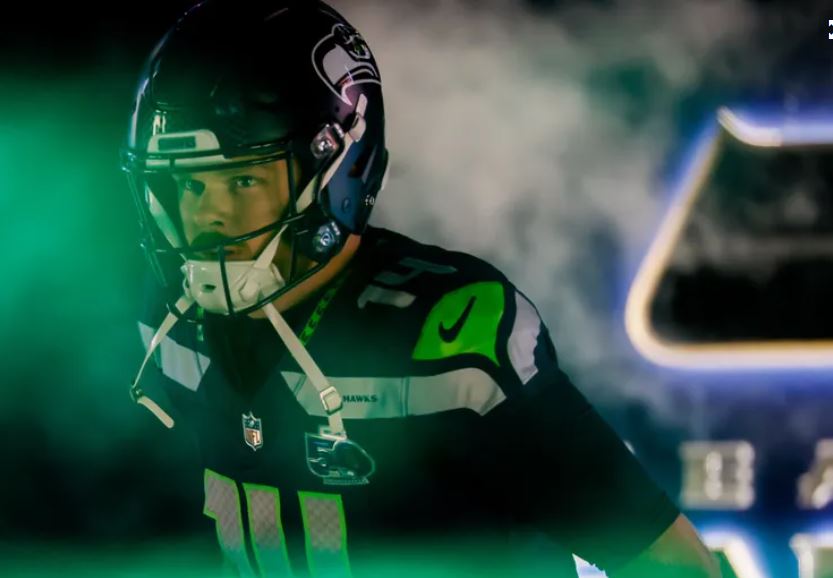
Thank You Taylor Blitz Time Readers!

Thank you Taylor Blitz Times readers as we had a record month in December that has drawn in more readers than ever before. 30,424 to be exact. To those new readers  who subscribed there are 725 articles covering all the players, teams, and historical articles. So please go to the search bar or subject categories and look for a particular team, player or subject, you’ll be surprised what you’ll find.

This endeavor was started to highlight defensive football and offer an alternative look at the game through the eyes of a historian. Most football shows have deevolved into staring at stats and only talking through the lense of a Walter Mitty type talking about the quarterback position. All the patterned nuance of hitting and visceral football that you and I both grew up playing gets lost. That essence that made us fall in love with the game.

So why The Chancellor of Fooball? Its simple… the love of the game is to cover every single football team and player throughout history, not just my Buffalo Bills. The American Football League and NFL teams before the merger. Writing and talking about your favorite team is too easy to me. It became a challenge to cover every single team with the same fervor than just who you are a fan of. That was my challenge to myself.

The new goal is to see Taylor Blitz Times hit our 1,000,000th read! So yes share the article, comment, agree with points or disagree with points, just be respectful while doing so. I want someone showing their son, nephew, or daughter a player from the past without stumbling across rancor in the comment section. Its not what I built here and as I curate my work its fun seeing articles showing up in places with youngsters because of such. Now you’ll see an occassional cute model for some eye candy but that’s all. Hey if the networks do it why can’t I? But no mudslinging back and forth you see on Twitter, Threads, or Youtube.

For those that are new here I want to encourage you to look around and there were several projects from the past that will be reissued this month. Some are having additional videos or pics loaded up with them to give them a fresher look. Then there are several projects from years gone by you’ll find interesting

Top Ten Single Season Defenses – An 11 article offering where the top 10 received their own article and my list of those that almost made the cut. Criteria? What were they ranked for the season, record vs ProBowl QBs, how many teams held under 10 points in their season and how they did against Top 10 offenses that year. There are 10 more criteria and too much to cover. This link takes you to the “honorable mention” once there go to the bottom and hit next to cycle through the 10 articles.

Where were you when Dwight Clark made “The Catch” to begin the 49ers dynasty of the 1980s? What about the hit in the 1990 NFC Championship that took out Joe Montana for two years? Well you can hear from Giant Leonard Marshall & Mark Collins and their thougts clicking the link. And Joe Montana , I loved seeing him get absolutely decked but this last link is for appreciating the greatest QB in the history of the game? Wouldn’t it be cool to see videos and NFL Films to show you how they were thought of at the time? Click the link… you’ll be right there.

What about The Pro Football Hall of Fame? Well I can tell you my first two subjects Robert Brazile & the late Kevin Greene were written on the same night. Kevin & his lovely wife Tara had me at his 2016 PFHoF induction and I was in attendance for Mr Brazile in 2018. I had the chance to meet him since I had been invited by Jerry Kramer to the induction ceremony in 2018.

With Kevin Greene after the Induction ceremony.

All of this stems from advocating for players and coaches who I believed belong in The Pro Football Hall of Fame. In all 14 of the 22 I’ve written about and sent letters for have been enshrined. I’m still connected with each family and its not lost on me as we head to Super B0wl LX in San Fran not to remember Kevin & Tara learning he had made it in San Francisco before Super Bowl L.

Who did I hear he had made it into Canton? NFL Network? ESPN? No Alicia Kramer, Jerry’s daughter after the disappointment he didn’t get in again. Which made this picture and the trip to Canton in 2018 so special! Very emotional hug right as Rich Eisen was telling everyone to sit down as The Gold Jacket broadcast was seconds from beginning. She was her father’s presenter on Saturday inside the stadium.

What about retrospecives on Ronnie Lott, Jack Tatum, OJ Simpson, Dick Butkus, or the legendary Johnny Unitas? I just gave you 14 links to articles out of 726 or 1.92% of all the articles compiled here with video and personal touch commentary. What other players or stories or conjecture pieces are in the other 712?? Thats for you to go and look for whatever you want to look up. Pay attention to the comment section also you never know what former players have stopped by to leave remarks.

Grab your old man and ask him who Jaguar Jon Arnett was and show him this.RIP he was a friend to Taylor Blitz Times and commented often. As did Chris Burford, do you know who that was? The first ever player signed by Lamar Hunt to play for the Dallas Texans/Kansas City Chiefs. Another friend to Taylor Blitz over the years.

Well enjoy and remember: If you enjoy or learn something like sometthing. Comment on it let me know you were here and what you thought. If you do that go ahead and share then subscribe.

Hey….another one of those cute football ladies again.

I’m off to have a dirty Martini with the Mrs. Thanks and I hope you come back and tell your friends to look up Taylor Blitz Times.


Top Ten Single Season Defenses in NFL History: Honorable Mention

Reissue of Original Issue 21. June 2014 

With the Seattle Seahawks back in the NFC Championship with a new iteration of a great defense that could land in Super Bowl LX, here is a blast from the past inspired by The Legion of Boom and where they stood in history. In this study every season’s #1 defense, record setting defenses, trend setting defenses, and every Super Bowl & NFL championship defenses dating back to 1960. The nod would lend to those post the AFL/NFL merger of 1970. That wasn’t enough as now lets take each defense and cover what they did vs Pro Bowl QBs that season, 1,000 yard rushers, and playoff teams and talk about their effectiveness along with their statistics. Here turnovers forced is a big marker. Nothing watered down so a favorite team can’t be given favor. So The Chancellor of Football took over 200 defenses and boiled it down to this 11 article series…

Smith's 69 yard interception in Super Bowl XLVIII ended the competitive phase of the game.

Smith’s 69 yard interception in Super Bowl XLVIII ended the competitive phase of the game and trumpeted the question: Where would you rank Seattle’s defense with  the all-time greats??

When Malcolm Smith crossed the goal line to put Seattle up 22-0 in last February’s Super Bowl, pundits were already arguing where they ranked among the NFL’s greatest defenses. Here at Taylor Blitz Times we wanted to let some time pass before we waxed too philosophical about their exploits. As the keeper of the flame, it’s up to The Chancellor of Football to accurately place each great defense. We will do this in 3 parts.

One of the criteria for greatest ever defenses you have to ask is: How dominant were they at their peak? They had to bring the lumber over an entire season. These defenses had to be stout with a performance that stands the test of time in remembrance. Without further adieu we have to get on with the Honorable Mention. Those right outside the top ten.

1977 Denver Broncos – The original Orange Crush defense that led the Broncos to Super Bowl XII and Denver’s first ever winning season. This was the first great full time 3-4 defense that yielded only 148 points (10.6 pts / game) and just 18 touchdowns for the season. Holding 7 of their opponents to 10 points or less.

Led by Randy Gradishar, ESPN’s Tom Jackson, and the late Lyle Alzado this defense had an unheard of 4 All Pros concentrated on this defense and 5 Pro Bowlers. This not ready for primetime group came out of nowhere and swallowed the Steelers and Raiders in the playoffs before falling to Dallas in New Orleans in Super Bowl XII. This group swarmed like bees and ushered in the era where 3-4 defenses took over the NFL.

1978 Pittsburgh Steelers – In the first year in which the NFL moved to a 16 game schedule, this group set the new record with fewest points allowed in a season with 195. Powered by the Steel Curtain, they held 8 of 16 opponents to 10 or fewer points. This group did more blitzing than in years past to get to the quarterback. They did have 5 Pro Bowl defenders and 1 All Pro in Jack Ham, but there were stronger incarnations of the Steeler defense.

A fact that gets lost is going into Super Bowl XIII, the consensus was Pittsburgh force vs the finesse Cowboys. Yet it was Dallas whose defense was ranked #2 and Pittsburgh’s #3, For the season they yielded 260.5 yards per game, unofficially had 52 sacks and 27 interceptions which ranked 7th. They peaked in the playoffs holding both Denver and Houston to 10 points and 5 points respectively. Yet gave up some serious candy to the Dallas offense (320 yards & 31 points)

1968 Baltimore Colts – The team that is best known for coming up short in Super Bowl III against the AFL’s New York Jets. In The Chancellor of Football’s estimation, this was the best team that Don Shula ever coached and one of his defensive assistants was the late Chuck Noll. This defense held 10 of 14 regular season opponents to 10 or fewer points. At one point late in the season, they gave up 1 touchdown over 25 quarters including a string of 16 straight quarters w/out a touchdown allowed.

md-darkroom-hutchins-curtisThe Colts of ’68 shut out 3 regular season opponents and the fourth was against the Browns who gave the 13-1 team their only loss. That drubbing was avenged 34-0 in the NFL Championship Game. They even set the record with only 144 points allowed. Between 1967 & 1968 their record was 24-2-2. If only this team had won on January 12th 1969…..but….

2000 Tennessee TitansLost in the delirium over the great 2000 Ravens defense, is the fact they finished #2 to the Titans that year in rankings. Jeff Fisher’s bunch only allowed 238.9 yards per game and held 6 opponents to 10 points or less over the campaign.

Second year DE Jevon Kearse led the team with 11.5 sacks and 4 forced fumbles. Samari Rolle had 7 interceptions he returned for 140 yards and a touchdown. SS Blaine Bishop had 84 tackles to go with 2.5 sacks but 0 interceptions. All three were Pro Bowlers but only Samari was an All Pro Player. One issue is they didn’t force enough turnovers (29) and they finished just +1 in turnover ratio. These are poor marks considering they only saw 1 Pro Bowl quarterback the entire season. Yet they were #1 against the pass (151 yds /gm) and #3 against the run (86 yds /gm).

1987 San Francisco 49ersOne of the last teams to finish with the NFL’s #1 offense and defense happened with this group in 1987. They were gaining momentum allowing only 1 touchdown in the final 16 quarters of the season and none in the final 12 as the playoffs beckoned. They held 5 opponents to 10 or fewer points including two shutouts in their final three games. One of which was a 41-0 hammering of the NFC Central Champion Chicago Bears on Monday Night Football. 

Led by All Pro and Pro Bowler Ronnie Lott (5 ints) this group was #1 against the pass (165 yds /gm) while only yielding 273 yards for the game. What makes this more remarkable are 3 games were played with replacement players due to the strike. Had the season been 16 games instead of 15 and no strike, these numbers could have been even better. They were also #5 against the run (107.4 yds / gm) thanks to All Pro and Pro Bowl Nose Tackle Michael Carter.

Jim Burt knocking Joe Montana out with a concussion in their 49-3 rout in the '86 playoffs.

Jim Burt knocking Joe Montana out with a concussion in their 49-3 rout in the ’86 playoffs.

1986 New York Giants – A romanticized defense that knocked 5 quarterbacks out on their way to the Super Bowl XXI championship. Yet they were #2 in 1986 and allowed 39 more yards per game than the #1 Chicago Bears with 297.3 yards per game. Second biggest discrepancy between #1 and #2 since 1970.

Led by League MVP and Defensive Player of the Year Lawrence Taylor’s 20 sacks, New York held 5 teams to 10 points or fewer during the regular season. They held their 2 NFC playoff opponents to 3 & 0 points respectively. There were 4 Pro Bowl defenders on this defense in LB Harry Carson, NT Jim Burt, DE Leonard Marshall, and the aforementioned LT.

2008 Pittsburgh Steelers – Close but no cigar. This team finished with the #1 ranking allowing just 237.2 yards per game. They held 8 opponents to 10 or fewer points yet gave up 223 for the season. One mark against them is they only faced 2 Pro Bowl QBs and lost both games. Losing 24-20 to Peyton’s Colts and 21-14 against Eli’s Giants. This was also the year they beat the Patriots 33-10 with Matt Cassel at QB not an injured Tom Brady. Big difference. This group had 51 sacks but only 20 interceptions. The last time we saw them, Kurt Warner passed for 377 yards, 2nd highest in Super Bowl history, and needed Big Ben to bail them out with a game winning pass with :32 left.

This group did have NFL Defensive Player of the Year James Harrison and Pro Bowl SS Troy Palamalu who would win the award 2 years later. Harrison had 16 sacks with 7 forced fumbles. James Farrior (122 tackles) was the 3rd and final Pro Bowler on a talented roster which included LaMarr Woodley (11 sacks).  They were a world champion but this group didn’t perform high enough against the best competition. The top ten is a Sugar Ray Leonard’s list, the honorable mention is where Thomas Hearns resides.

Dwight Smith capped off Super Bowl XXXVII with 2 defensive touchdowns. Should have been the MVP.

Dwight Smith capped off Super Bowl XXXVII with 2 defensive touchdowns. Should have been the MVP.

2002 Tampa Bay Buccaneers – The final team to miss the call to the top ten was the 2002 Buccaneers. The undisputed #1 defense that year. However playing in the new NFC South they feasted on patsies. On 3 occasions they took on top 10 offenses and they lost two of those games to Philadelphia (10th) and Pittsburgh (5th).

This team yielded 252.8 yards per game had 43 sacks and 31 interceptions which ranked 6th and 1st respectively. This team only gave up 196 points while holding 9 regular season opponents to 10 or fewer points. However a closer look reveals they came against offenses ranked 26th, 18th, 14th, 23rd, 31st, 31st, 12th, 14th, and 29th. Chris Redman (who??) quarterbacked the Ravens who was the first in this group. While NFL journeyman Jim Miller led the Bears in the last game.

This team fielded 5 Pro Bowl players in NFL Defensive Player of the Year Derrick Brooks, Shelton Quarles, Hall of Famer Warren Sapp, Simeon Rice (15.5 sacks), and S John Lynch. This group scored on defense. Brooks tied the NFL record with 4 defensive touchdowns and CB Dwight Smith set a Super Bowl record with 2 interception returns for touchdowns. Their numbers and performance should get them in until you look at the competition. Someone reading this is going to describe how they throttled the #1 Raider offense in the Super Bowl. Yet how much do you attribute to Monte Kiffin’s defense or Jon Gruden knowing his former Raider offense and personnel??

Thanks for reading and now its time for the top 10.

Legendary Days: The 1990 NFC Championship Game – The Death of Camelot 35th Anniversary Today!

Leonard Marshall clobbers Joe Montana and knocks him out of the 1990 NFC Championship Game. He doesn’t return to action until the final game of the 1992 season against the Detroit Lions.

Reissue of Original Piece 24, July 2018

There is an old axiom when it comes to boxing when you hear someone say “styles make great fights” meaning opposing styles colliding provide great theater. Never was this more evident when it came to the San Francisco 49ers and the New York Giants of the 1980’s. The identity of the men from Gotham was a blood thirsty defense led by Lawrence Taylor, arguably the greatest defensive player ever. Joe Montana had ascended to legendary status as he led the NFL’s most efficient offense to 4 Super Bowl titles that decade. They would meet in a fitting crescendo that still has ramifications to this day.

If you travel to 1978 the Giants and 49ers met in what was a forgettable season for both. New York won 27-10 out in Candlestick during the season’s 4th week. They only won 3 games the rest of the stanza while San Francisco only won twice. Both began by hiring coaches in 1979 in Bill Walsh and Ray Perkins which set the course as each regime rose to prominence in the decade to come.

The next step was the selection of franchise quarterbacks, first Phil Simms in New York in round one then Joe Montana in the third. Each turned to the draft for the same spark on defense a few years later when the Giants selected LB Lawrence Taylor and Walsh’s selection of FS Ronnie Lott both in the 1st round in 1981. Both would later be enshrined in Canton.

Walsh and company ended an 8 year playoff drought with a 13-3 record and homefield advantage as Montana and company had come of age. New York defeated Dallas 13-10 to earn their first trip to the NFL postseason in 18 years. Then after a 27-21 upset of the defending NFC Champion Eagles in the wildcard round, New York was one step away from the NFC Championship Game and traveled west to face San Fran.

Going into the game the question was could NFL Defensive Player of the year Lawrence Taylor get to Joe Montana?? Could the finesse passing game take down the Giants’ hard rock defense??

Walsh’s team was shattering the NFL paradigm by passing first to set up the run. Contrary to popular belief was the fact it was San Francisco’s defense ranked #2 to the Giants at #3.

Montana was 20 of 31 for 304 yards for 2 TDs in a 38-24 win under the lights in Candlestick. Next came the NFC Championship with Dallas & The Catch, then a Super Bowl XVI victory and all the prestige that came with it. Walsh became the toast of the league and christened with his “genius” label. Joe became one of the faces of the NFL and would be one for the decade of the 1980’s.

The vanquished?? Well New York Defensive Coordinator Bill Parcell’s unit collapsed giving up a season high 38 points. They had only given up 30 once the entire year up to that point. As is the case when teams come up short in the playoffs, they’re knocked off kilter for a couple of years.

Parcells succeeded Perkins after a 4-5 season in ’82 and was nearly fired after a disastrous 3-12-1 rookie year in ’83. Yet all the while Walsh was one of the NFL’s marquee coaches and his 49ers bounced back and came within a couple penalties from winning the NFC Championship a 2nd time in 3 years. They fell to Washington 24-21 yet the media further spread the moniker they anointed Walsh with….”genius.”

Parcells bristled at the attention Walsh and the 49ers “finesse” approach to the game was getting. It only intensified in ’84 as they went 15-1 and threatened to go undefeated. New York rebounded as Phil Simms finally emerged from the shadows and became a 4,000 yard passer and the Giants returned to the playoffs. Another NFC playoff loss to Joe and the Niners 21-10 relegated the Giants to the NFL’s jr varsity as Walsh and Joe went on to hoist another Lombardi trophy.

However over the years Parcells kept building a team of brute force. Although they had been effective he drafted 6-4 250lb OLB Carl Banks who was a blue chip strong side ‘backer. Brought in 288 lbs DE Leonard Marshall to replace a 259lb Gary Jeter. He kept building upon his defense and relying on a straight forward power rushing attack.

Finally in the 1985 playoffs, the Giants #2 ranked defense held Montana and the 49er offense out of the endzone for the first time in a 17-3 Wildcard win at home. For the first time ever Parcells and the Giants beat the Niners in the 80’s and in the locker room he scoffed “What do you think now about that west coast offense?” In a bit of irony he wound up coining the name Walsh’s offense would come to be known forever.

However the Giants were manhandled in Chicago 21-0 to the eventual champion Bears. Both teams were built in the same old school fashion. You win with brute force on the line of scrimmage with a heavy front 7 and a strong offensive line with an offense that relied on the run. Yet the Giants sent alarm bells off all around the NFL when they already had a strong defense yet spent their first 6 picks in the first 3 rounds all on defense.

They fortified their defensive line with 6’4 280 lbs DE Erik Dorsey, NT Eric Howard who stood 6’4 275, 250 lb ILB Pepper Johnson along with crafty CB Mark Collins who was nearly 5-10 200 lbs. Collins turned into one of the Giant defense’s greatest assets as he blanketed Jerry Rice and was the best in history covering him. This gave the Giants a tremendous advantage for years to come.

Jim Burt knocking Joe Montana out with a concussion in their 49-3 rout in the ’86 playoffs.

In the ’86 playoffs the Giants defense had come of age and starting with a 49-3 devastation of San Francisco in the NFC Divisional Round, it became clear the pendulum had completely swung. Jim Burt knocked Joe Montana out with seconds to go in the 1st half as Taylor returned an interception 34 yards to balloon the score to 28-3. In an embarrassing fashion Walsh’s squad was hammered into submission. Physically beat down unlike any game they had seen since they became one of the league’s elite a few years before.

This forced the 49ers to finish what they started in the ’85 draft fortifying their lines with bigger players to deal with the Bears and Giants. It came to fruition as the Niners went on to win Super Bowls XXIII and XXIV after the ’88 and ’89 seasons. Walsh had stepped down after the XXIII championship and former DC George Seifert took over head coaching duties. Offensive Coordinator Mike Holmgren began to be recognized as the 49er offense elevated their play to one of near perfection. Walsh’s legend only grew even in his departure for creating the offensive system which allowed his 49ers to become the team of the decade.

Going into 1990 pundits were debating not only were the 49ers the best ever team but was Joe Montana the best ever quarterback?? The same could be said of Jerry Rice as he had assaulted the record books and also had been a Super Bowl MVP. On their way to back to back championships they had set the NFL record with 18 consecutive road wins. Now they had the chance to win 3 straight Super Bowls where it would leave no doubt. They began the season with a 10-0 record and…

Waiting for them who also began 10-0 was the Giant team that had learned how to win from the 49ers and had taken it up a level. Now the more powerful rebuilt 49ers who had a 2-3 record (0-2 in the playoffs since ’85) staring them down. Were they lucky they hadn’t met the Giants in the playoffs in both ’88 and ’89?? Would they even have won back to back had New York had a shot at them??

The Chancellor definitely doesn’t think they would have.. yet I digress

In week 12 each team was 10-1 when they met in San Francisco on a Monday Night. In the 2nd highest watched MNF in history the 49ers beat the Giants 7-3 in a slugfest where the Giants inability to score a touchdown on offense did them in. In 3 shots inside the redzone they could only score 1 field goal. Yet to a man the Giants relished another shot at San Francisco. Finally they would have their chance in the NFC Championship Game. For the decade the playoff record between the two stood at 2-2 and they would meet in the last chance to halt “Camelot’s” greatest procession into history.

In the collective gasp after the Leonard Marshall hit you knew everything had changed. The silence that befell Candlestick Park as Montana writhed in pain for several minutes was palpable. Unlike most games where the network would take a commercial break, a nationwide audience sat glued to the football version of a tragic event. The greatest quarterback whose nimble feet that deftly dodged trouble in and out of the pocket forever in January’s past had been viciously taken down. The Camelot Bill Walsh so eloquently stated of that era ended in that moment.

The final kick by Matt Bahr for the 15-13 win was just icing on the cake made by a ferocious defense in one of the greatest games in NFL history.

90nfcchmpshp

A more visceral look:

The era closed with the Giants holding a 3-2 edge in postseason games although the Niners were team of the decade. Over the next 27 years coaches from both sides made it to the Super Bowl 15 times with Bill Belichick (9) Tom Coughlin (2) Mike Holmgren (3) and Jon Gruden (1). This doesn’t include Bill Parcells’ 2nd Super Bowl triumph 1 week after this game vs Buffalo in XXV. Much has been made of the Bill Walsh coaching tree but take a look at the one stemming from Parcells’ group. Its second to none and it all started with a championship win over Camelot in 1990.

Looking back each team had elevated the other and by the time the decade concluded they were head and shoulders above other teams. However the two contrasting styles made for great theater and one where most people forget who finished with the upper hand.

Thanks for reading and please share the article.

collins.marshall

collins.marshall2